Delaware Last Will and Testament for a Widow or Widower with Adult and Minor Children
About this form
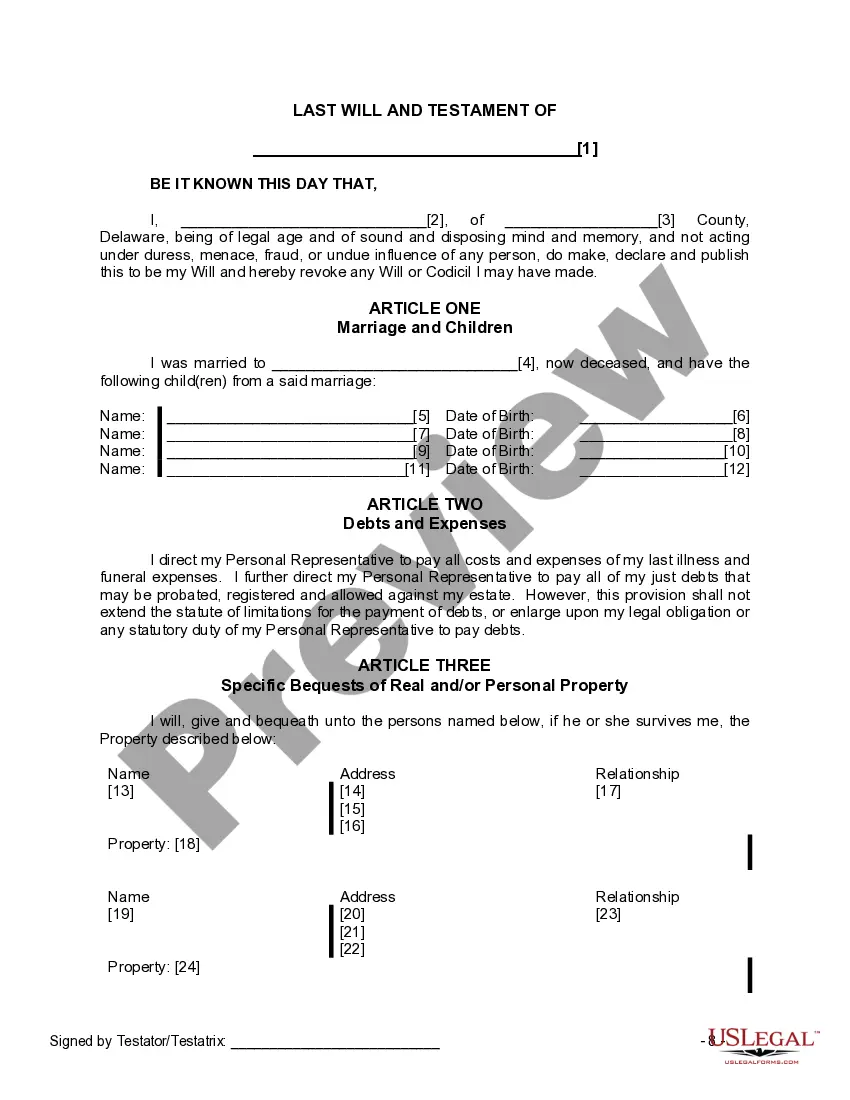
The Last Will and Testament for a Widow or Widower with Adult and Minor Children is a legal document that outlines how a deceased person's assets and properties will be distributed among their heirs. This form specifically caters to individuals who are widowed or widowers and have both adult and minor children, ensuring their wishes are clearly conveyed. Unlike a standard will, this form includes provisions for appointing guardians for minor children and managing their inheritance through trusts.
Key components of this form
- Appointment of a personal representative or executor to manage the estate.
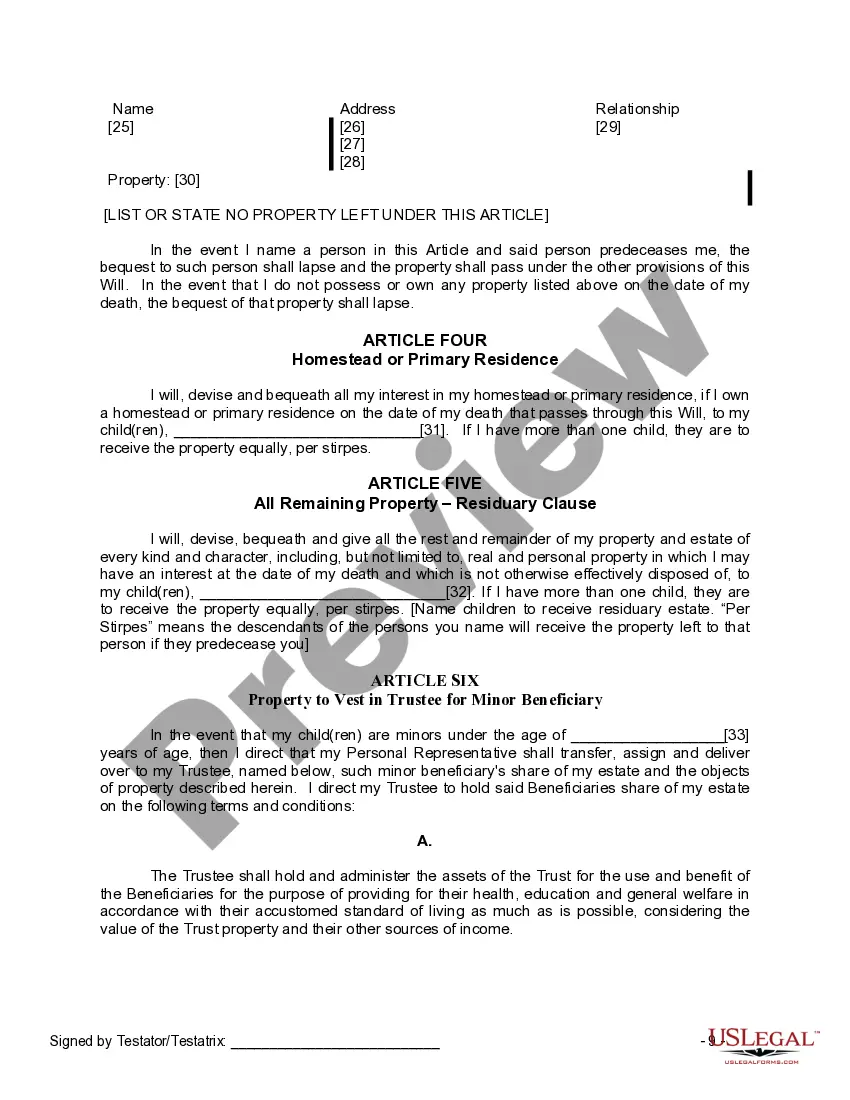
- Specification of beneficiaries and distribution of both real and personal property.
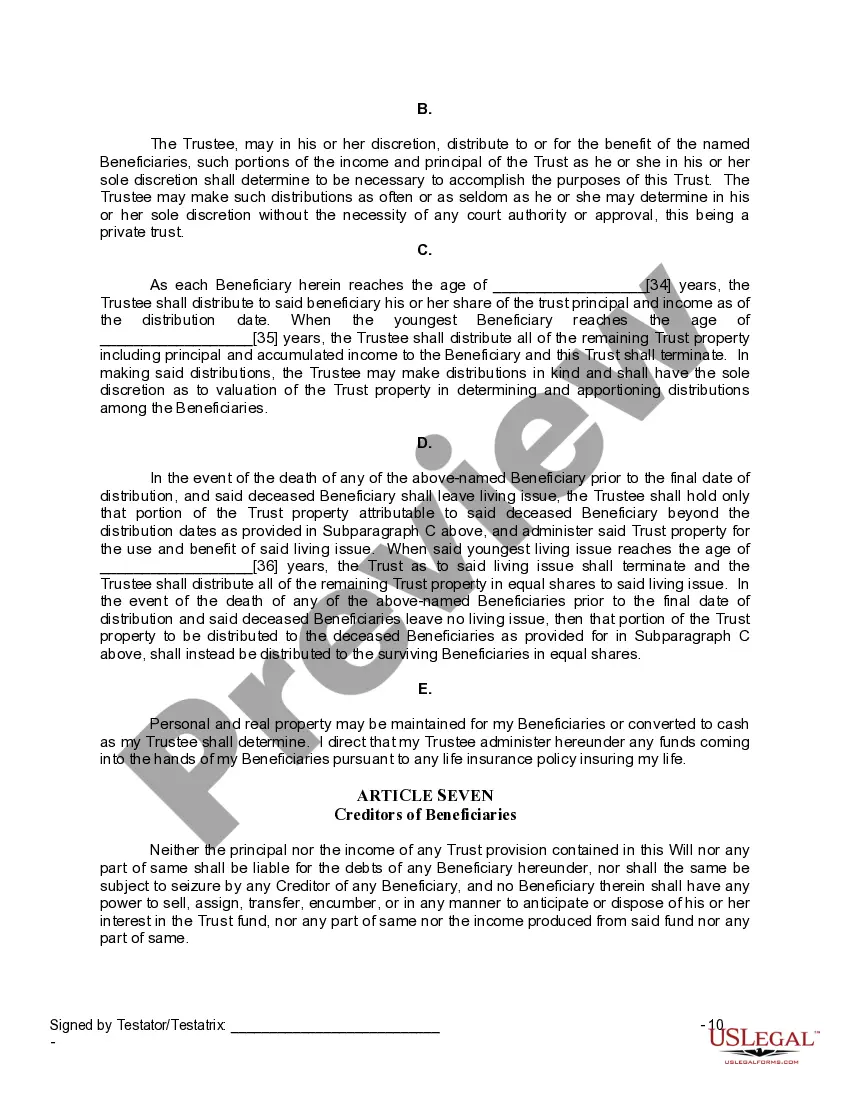
- Trust provisions for minor children to ensure their inheritance is managed until they reach adulthood.
- Appointment of a guardian for minor children in case of the death of the surviving parent.
- Self-proving affidavit provisions for simplifying probate processes.



When to use this document
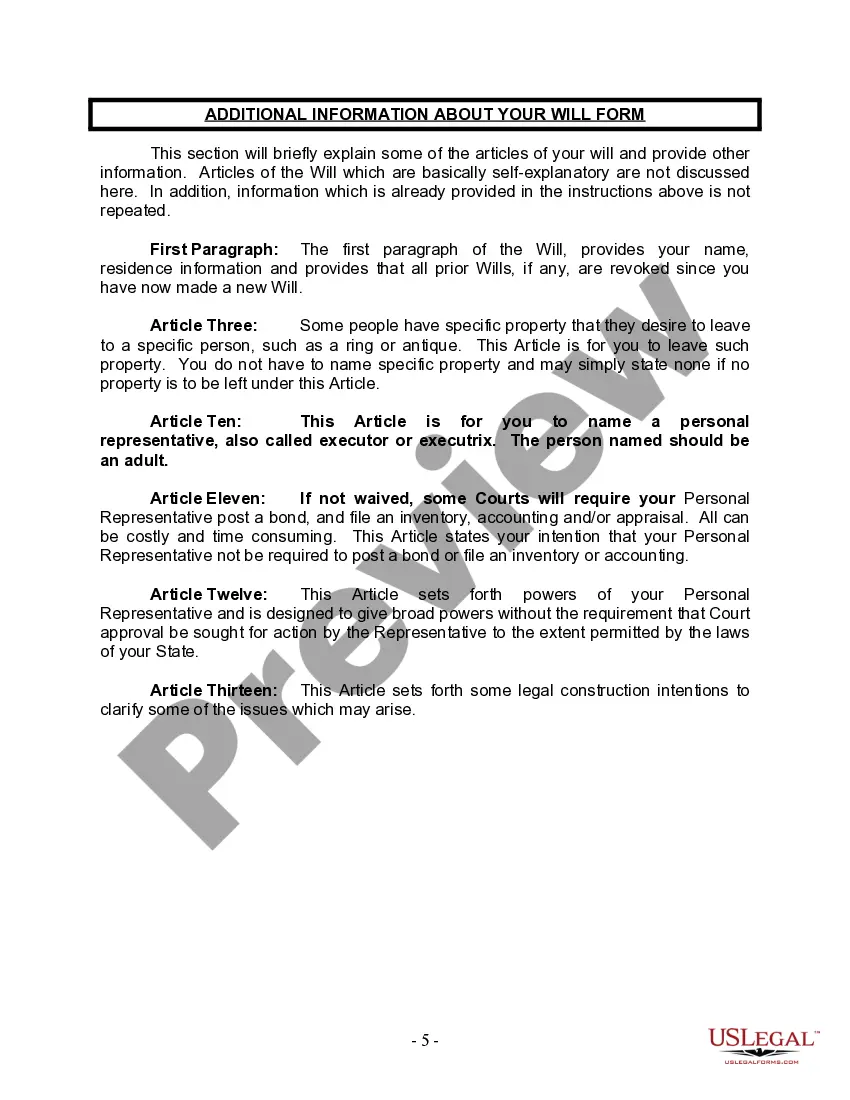
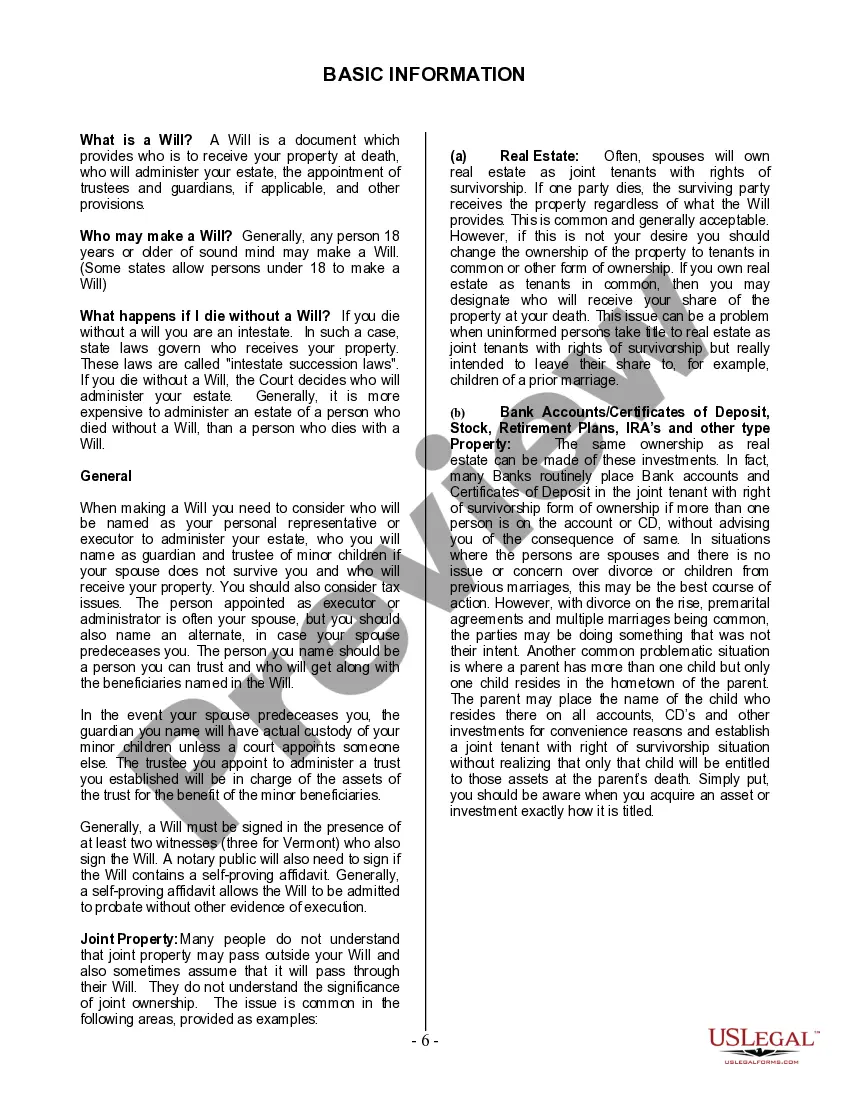
This form should be used when a widow or widower wishes to establish their final will, particularly when they have minor and adult children. It is important to create a will to ensure that assets are distributed according to personal wishes and to prevent state laws from deciding the asset distribution in the absence of a will. Consider using this form when you need to appoint guardians for minor children and establish trusts for their benefit.
Who needs this form
- Individuals who are widowed or widowers.
- Parents with both minor and adult children.
- Persons wishing to ensure specific distributions of their assets after death.
- Individuals looking to appoint guardians for their minor children in their absence.
- Those seeking to simplify probate by creating a self-proving will.
Instructions for completing this form
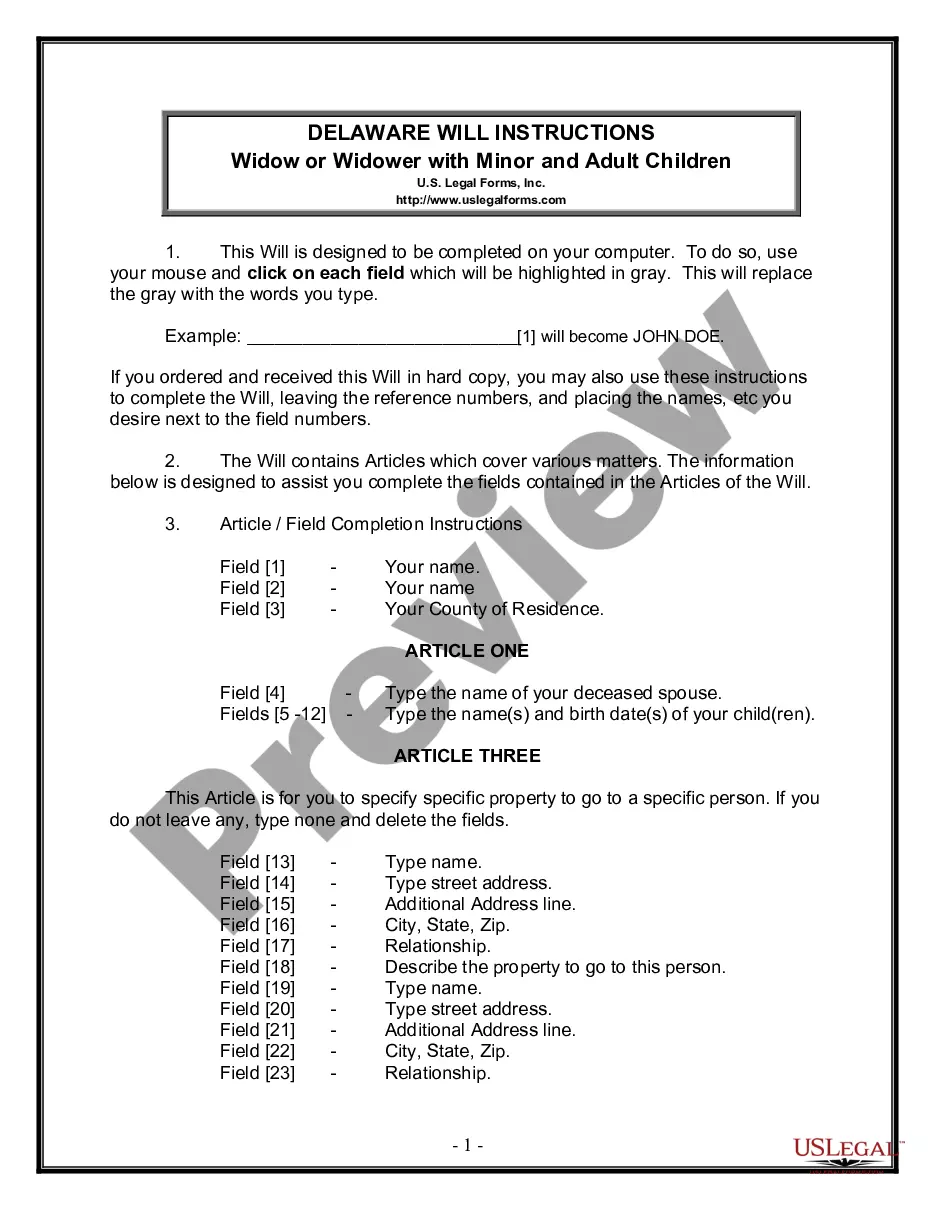
- Enter your name and county of residence at the beginning of the document.
- Specify your deceased spouse's name and provide the names and birthdates of your children.
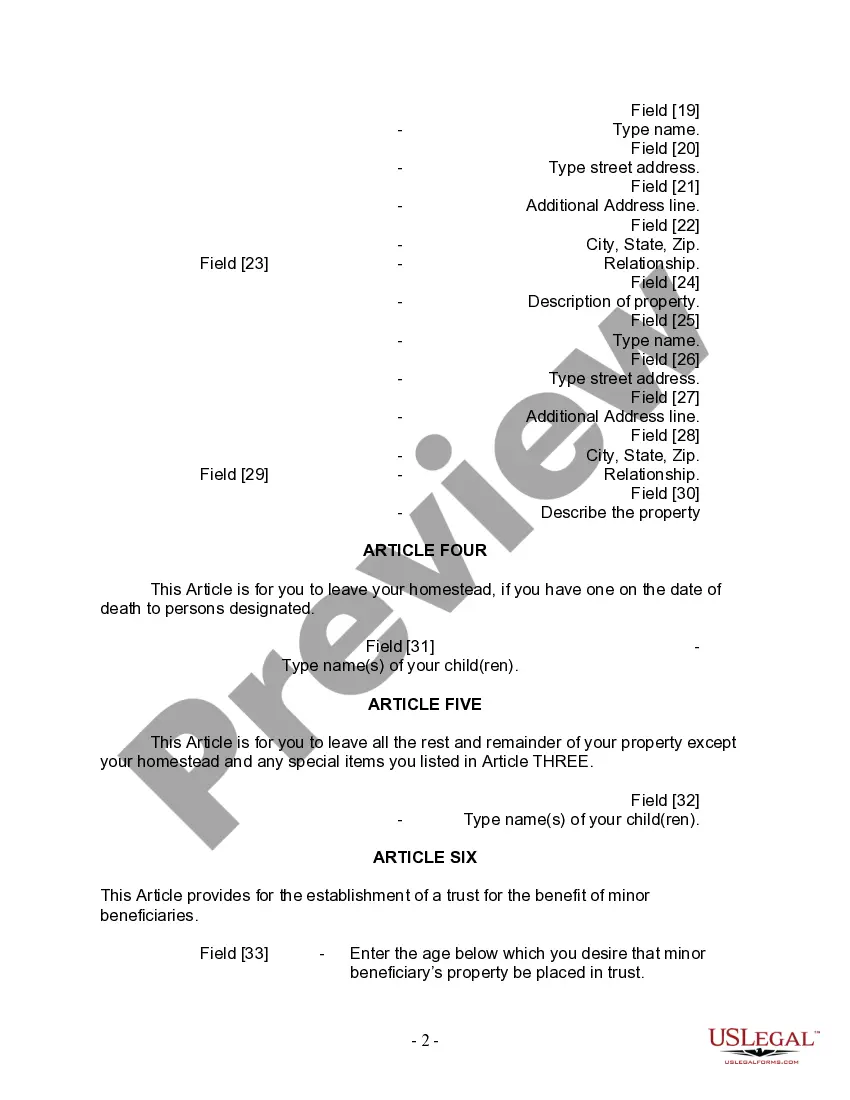
- Detail any specific property you wish to bequeath to individuals in the appropriate fields.
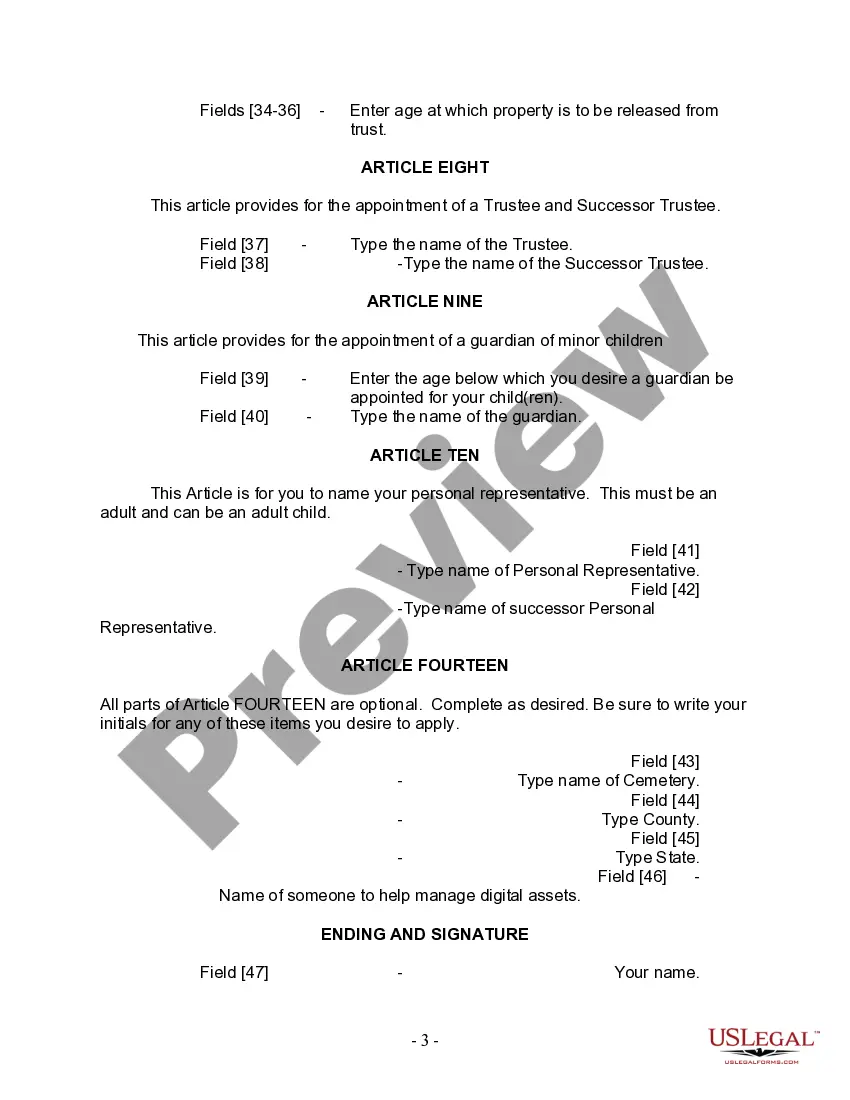
- Appoint a trustee for any assets designated for minor children and outline the terms of the trust, including age limits for distributions.
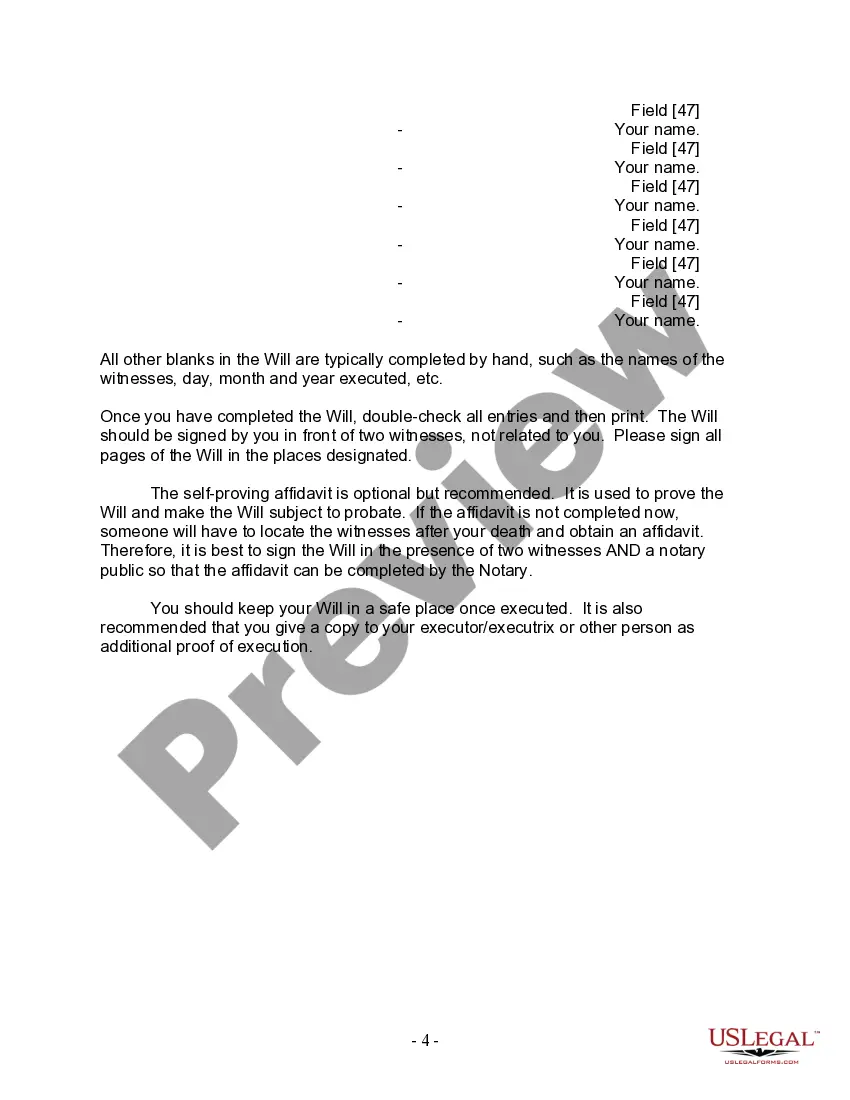
- Sign the document in front of two witnesses and a notary public if using a self-proving affidavit.
Notarization guidance
Yes, this form must be notarized to be legally valid. It is recommended to sign the will in the presence of a notary public, especially if you are using the self-proving affidavit option, as this streamlines the probate process.
Get your form ready online
Our built-in tools help you complete, sign, share, and store your documents in one place.
Make edits, fill in missing information, and update formatting in US Legal Forms—just like you would in MS Word.
Download a copy, print it, send it by email, or mail it via USPS—whatever works best for your next step.
Sign and collect signatures with our SignNow integration. Send to multiple recipients, set reminders, and more. Go Premium to unlock E-Sign.
If this form requires notarization, complete it online through a secure video call—no need to meet a notary in person or wait for an appointment.
We protect your documents and personal data by following strict security and privacy standards.

Make edits, fill in missing information, and update formatting in US Legal Forms—just like you would in MS Word.

Download a copy, print it, send it by email, or mail it via USPS—whatever works best for your next step.

Sign and collect signatures with our SignNow integration. Send to multiple recipients, set reminders, and more. Go Premium to unlock E-Sign.

If this form requires notarization, complete it online through a secure video call—no need to meet a notary in person or wait for an appointment.

We protect your documents and personal data by following strict security and privacy standards.
Avoid these common issues
- Failing to update the will after significant life changes, such as remarriage or the birth of additional children.
- Not signing the will in the presence of the required witnesses, as this can invalidate the document.
- Leaving out crucial details about specific property or beneficiaries.
- Not including a self-proving affidavit, which can complicate the probate process.
- Assuming that verbally expressed wishes will be honored without being documented in the will.
Benefits of using this form online
- Immediate access to a legally vetted document drafted by licensed attorneys.
- Conveniently fill out the form online, ensuring accuracy and completeness.
- Ability to save your progress and complete the form at your own pace.
- Peace of mind that you are using a comprehensive form tailored to your specific family situation.
Quick recap
- This Last Will and Testament form is specifically tailored for widows or widowers with both minor and adult children.
- It is essential for outlining how your estate will be handled and ensuring your children's needs are met.
- Proper execution, including witness signatures and notarization, is vital for the document's validity.
Looking for another form?
Form popularity
FAQ
In Minnesota, a will does not need to be notarized to be valid, but notarization can add an extra layer of security. When drafting a Delaware Last Will and Testament for a Widow or Widower with Adult and Minor Children, consider following best practices for your respective state. It's always wise to ensure your document meets all legal requirements for the best protection of your family's future.
You do not need a lawyer to create a will in Delaware, but it may be beneficial, especially for complex estates. Many individuals choose to draft a Delaware Last Will and Testament for a Widow or Widower with Adult and Minor Children using online services like USLegalForms. These platforms provide legal forms and guidance, simplifying the process.
In Delaware, when a husband passes away, the wife is generally entitled to a portion of the estate, particularly if there is no will. She may receive up to half of the marital property as part of her inheritance. It is crucial to have a clearly defined Delaware Last Will and Testament for a Widow or Widower with Adult and Minor Children to protect her rights and ensure her wishes are honored.
In Washington, notarization is not a requirement for a will to be valid. However, if you plan to create a Delaware Last Will and Testament for a Widow or Widower with Adult and Minor Children, including notarization can strengthen its validity. Consider checking your state’s specific regulations to ensure compliance and peace of mind.
You can obtain a form to create a Delaware Last Will and Testament for a Widow or Widower with Adult and Minor Children online. Various platforms, including USLegalForms, offer customizable templates that suit your needs. Simply choose a form that fits your situation, fill it out, and ensure it complies with Delaware state laws.
A surviving spouse may have the option to change the executor of a will, but this typically requires legal procedures outlined by Delaware law. If the original executor is unwilling or unable to serve, you can request a change through the court. Understanding the implications on your Delaware Last Will and Testament for a Widow or Widower with Adult and Minor Children is important before taking this step.
You can indeed write your own will in Delaware, as long as you follow state laws regarding its creation and execution. Crafting a Delaware Last Will and Testament for a Widow or Widower with Adult and Minor Children can be done using a template to simplify the process. However, consider seeking professional guidance to ensure it meets all necessary regulations.
A will in Delaware is valid if it is written, signed by the testator, and witnessed by two individuals. If you are creating a Delaware Last Will and Testament for a Widow or Widower with Adult and Minor Children, ensure you follow these requirements closely to avoid complications. Consulting with a legal service can aid in confirming the validity of your will.
To create a will, you typically need identification documents, a list of your assets, and details of your beneficiaries. If you are crafting a Delaware Last Will and Testament for a Widow or Widower with Adult and Minor Children, it’s beneficial to include information about guardians for minor children and how you wish your assets to be divided. Services like USLegalForms can provide you with templates and resources for easy preparation.
Delaware does not strictly require a will to be notarized; however, doing so may help in proving its authenticity during probate. Notarizing a Delaware Last Will and Testament for a Widow or Widower with Adult and Minor Children can reduce disputes and streamline the process. It is wise to consider notarization to avoid potential challenges later.