Delaware Letter from Landlord to Tenant as Notice to remove Wild Animals in Premises
Overview of this form
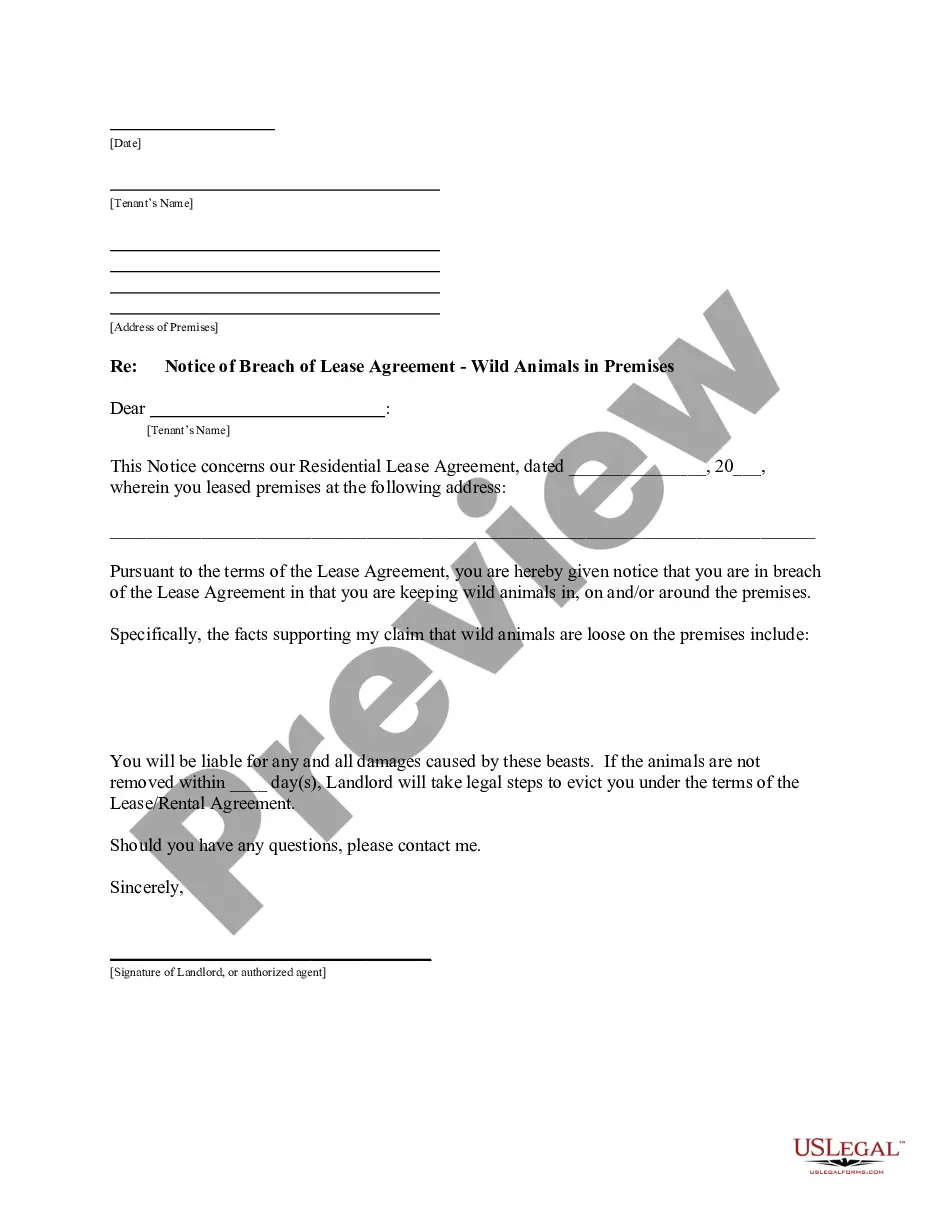
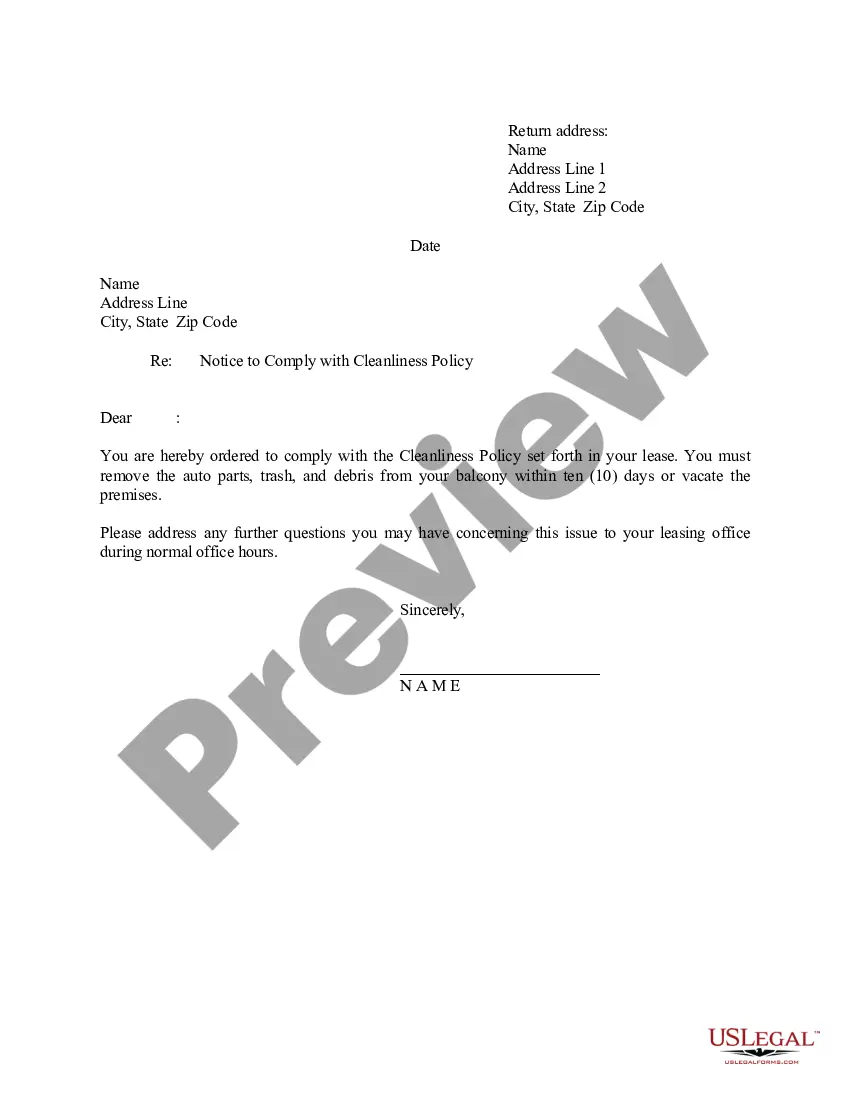
This Letter from Landlord to Tenant as Notice to Remove Wild Animals in Premises is a formal document used by landlords to notify tenants of a lease violation concerning the presence of wild animals on the property. This form specifically addresses the breach of leasing terms and provides evidence of the landlord's intent to rectify the situation, making it distinct from general eviction notices or other lease-related documents.
What’s included in this form
- Notification of breach: Clearly states that the tenant is violating lease terms by keeping wild animals on the premises.
- Lease agreement reference: Identifies the specific lease agreement involved.
- Details of the breach: Provides context regarding the situation as known to the landlord.
- Signature of landlord or authorized agent: Validates the notice by ensuring that it is signed by the authority responsible.
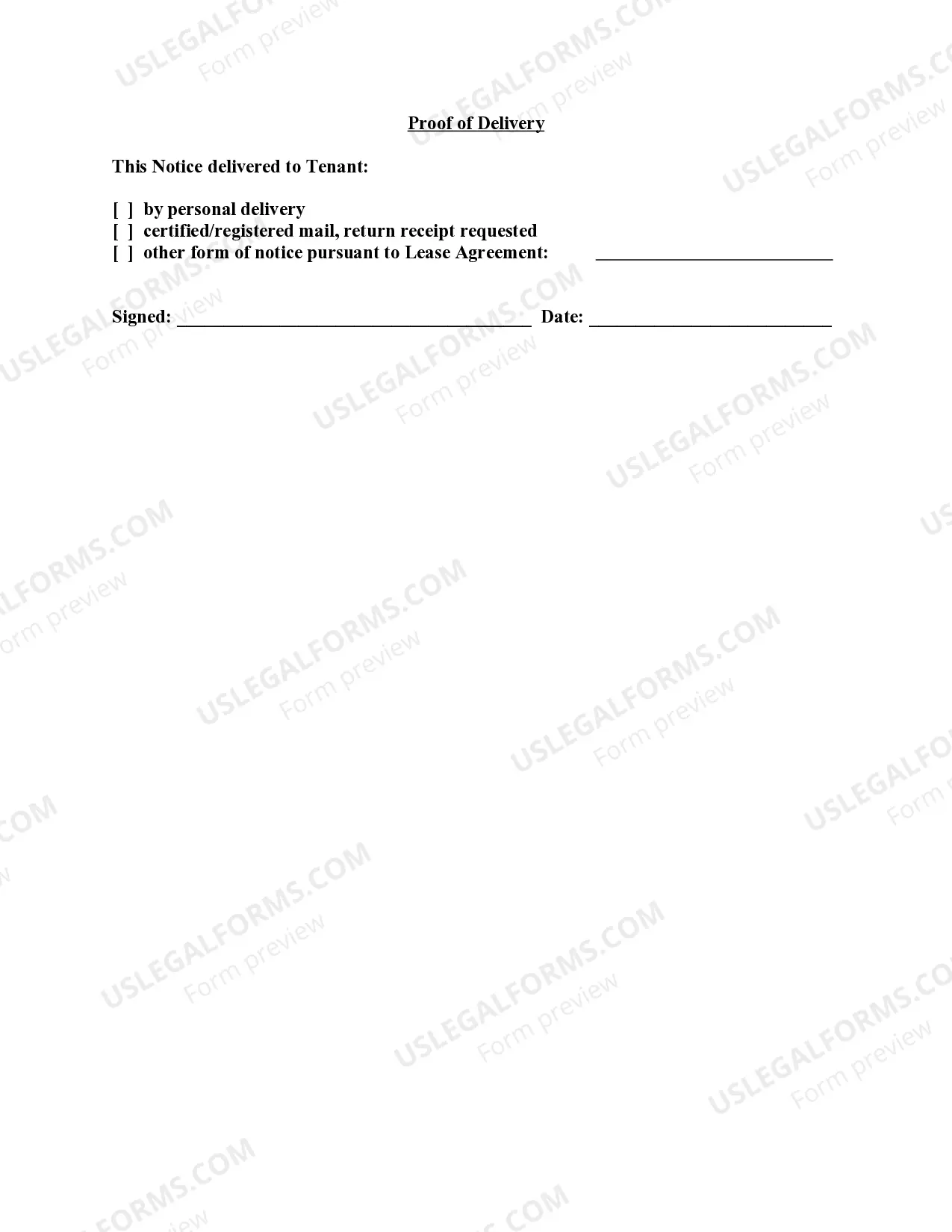
- Proof of delivery method: Specifies how the notice is delivered to the tenant, ensuring proper communication.

Situations where this form applies
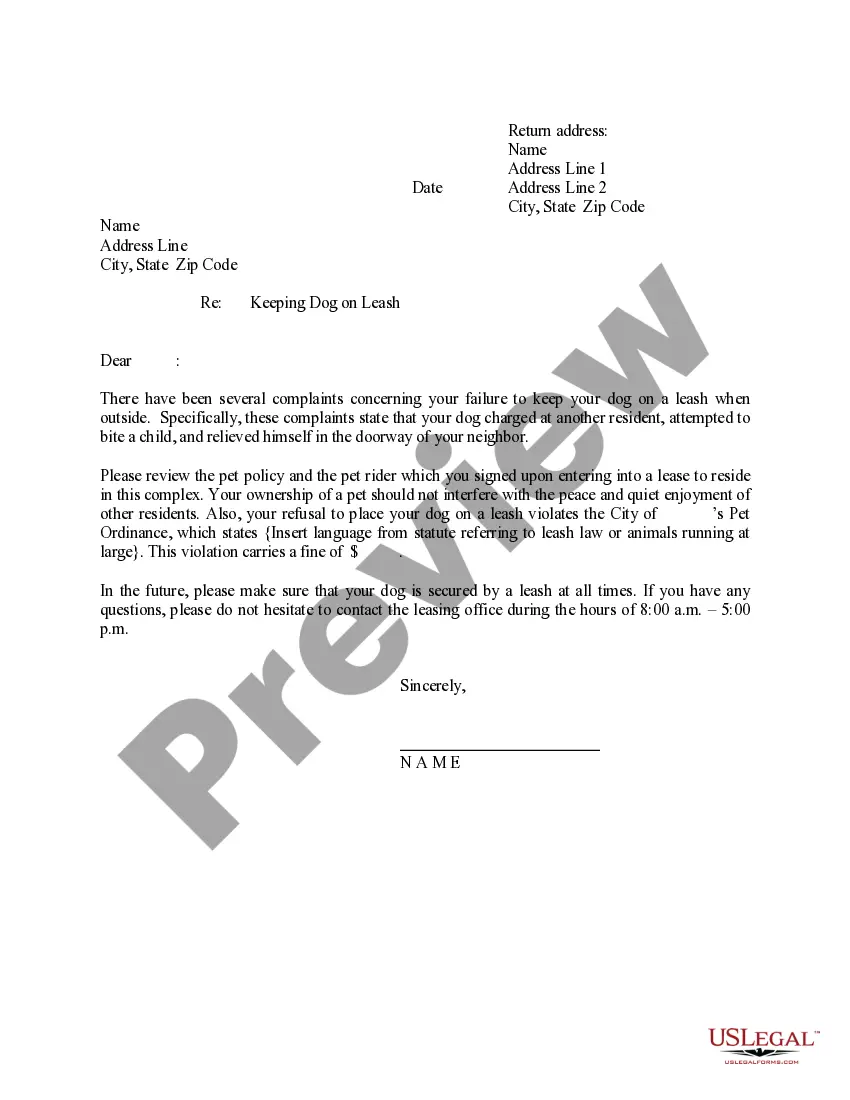
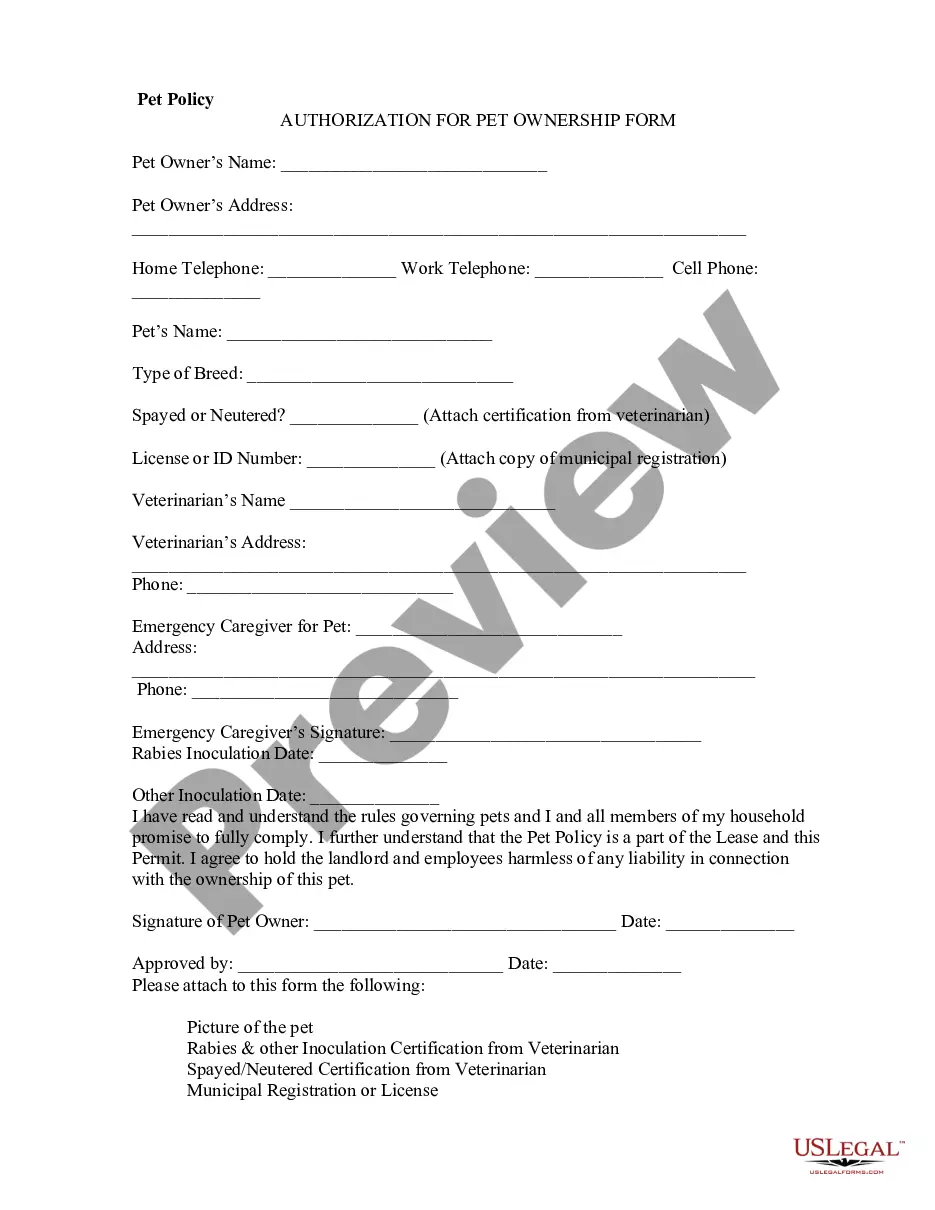
This form should be used when a landlord discovers that a tenant is keeping wild animals on rental property, which violates the lease agreement. It can be utilized in various situations, such as complaints from neighbors about animal presence, threats posed to property or safety, and breaches of specific lease terms regarding pets or animals.
Who this form is for
This form is intended for:
- Landlords seeking to address violations of lease agreements.
- Property managers enforcing lease terms related to animal ownership.
- Authorized agents acting on behalf of the landlord in lease matters.
How to prepare this document
- Identify the tenant: Include the tenant's full name and address as per the lease agreement.
- Specify the breach: Clearly state that the tenant is keeping wild animals on the premises, citing relevant lease terms.
- Provide details of the delivery method: Indicate if the notice was delivered in person or by certified mail.
- Sign the document: The landlord or authorized agent must sign the notice to authenticate it.
- Ensure documentation: Keep a copy of the completed notice for your records.
Does this form need to be notarized?
This form does not typically require notarization to be legally valid. However, some jurisdictions or document types may still require it. US Legal Forms provides secure online notarization powered by Notarize, available 24/7 for added convenience.
Get your form ready online
Our built-in tools help you complete, sign, share, and store your documents in one place.
Make edits, fill in missing information, and update formatting in US Legal Forms—just like you would in MS Word.
Download a copy, print it, send it by email, or mail it via USPS—whatever works best for your next step.
Sign and collect signatures with our SignNow integration. Send to multiple recipients, set reminders, and more. Go Premium to unlock E-Sign.
If this form requires notarization, complete it online through a secure video call—no need to meet a notary in person or wait for an appointment.
We protect your documents and personal data by following strict security and privacy standards.

Make edits, fill in missing information, and update formatting in US Legal Forms—just like you would in MS Word.

Download a copy, print it, send it by email, or mail it via USPS—whatever works best for your next step.

Sign and collect signatures with our SignNow integration. Send to multiple recipients, set reminders, and more. Go Premium to unlock E-Sign.

If this form requires notarization, complete it online through a secure video call—no need to meet a notary in person or wait for an appointment.

We protect your documents and personal data by following strict security and privacy standards.
Typical mistakes to avoid
- Failing to reference specific terms of the lease agreement.
- Neglecting to sign the notice, which may render it invalid.
- Delivering the notice improperly, which can lead to disputes over receipt of the notice.
- Not keeping a copy of the notice for record-keeping purposes.
Advantages of online completion
- Convenience: Download and complete the form at your own pace from anywhere.
- Editability: Personalize the form easily to fit your specific circumstances.
- Reliability: Access forms created by licensed attorneys, ensuring legal compliance.
Legal use & context
- This form serves as a formal notice, which is often required before further legal action can be taken regarding lease breaches.
- Using this notice helps establish a paper trail that may be necessary for eviction proceedings or other legal matters.
Looking for another form?


Form popularity
FAQ
pets clause typically states that tenant agrees not to keep any pets on the premises during the lease term without prior written consent. For example, it might read: 'Tenants may not have pets of any kind unless approved by the landlord.' This can be critical if you receive a Delaware Letter from Landlord to Tenant as Notice to remove Wild Animals in Premises.
'No pets' means that pets are not allowed on the rental property. This restriction applies to dogs, cats, and other animals. When you receive a Delaware Letter from Landlord to Tenant as Notice to remove Wild Animals in Premises, it serves as a reminder of this clause in your lease.
If you have a pet in a no-pets apartment, you could face penalties outlined in the lease agreement. Landlords may choose to issue a notice for removal of the pet or even terminate the lease. A Delaware Letter from Landlord to Tenant as Notice to remove Wild Animals in Premises is a formal way to address this situation.
In Delaware, a landlord must provide written notice for a tenant to vacate the premises. Typically, this notice is at least 60 days for a month-to-month lease. It is essential for landlords to follow this requirement, especially when issuing a Delaware Letter from Landlord to Tenant as Notice to remove Wild Animals in Premises.
A no pets allowed apartment letter is a formal notification from a landlord to a tenant, clarifying that pets are prohibited within the premises. In the context of a Delaware Letter from Landlord to Tenant as Notice to remove Wild Animals in Premises, this letter can be crucial for addressing unauthorized animals. It serves to protect the property and ensure a safe and comfortable living environment for all residents. If you need assistance drafting such an important letter, consider using the US Legal Forms platform, which provides templates and guidance tailored to your needs.
When informing a tenant that pets are not allowed, communicate your policy clearly and professionally. You can use a concise format, like the Delaware Letter from Landlord to Tenant as Notice to remove Wild Animals in Premises, to outline the rules. Be sure to explain the reasons behind the no-pet policy, such as property maintenance or tenant safety. It’s important to maintain an open line of communication, ensuring your tenant understands the decision and feels respected.
To write a letter to your landlord regarding pets, begin by clearly stating your request or concern. Include specific details about the pet, such as its type and reasons why it should be allowed. If your landlord has rules against pets, reference the Delaware Letter from Landlord to Tenant as Notice to remove Wild Animals in Premises to demonstrate your understanding of the legalities involved. Make sure to express your willingness to comply with any conditions set forth regarding pet ownership.
Yes, a landlord can evict a tenant for animal cruelty if it is a violation of the lease terms or if it causes damage to the property. Documenting the issue and issuing a Delaware Letter from Landlord to Tenant as Notice to remove Wild Animals in Premises might be necessary as part of the eviction process. Animal cruelty not only raises legal issues but could also lead to severe consequences for the tenant. Report such matters to local authorities for immediate attention.
Yes, you may face eviction for dog sitting if your lease prohibits pet ownership or temporary pets. If you receive a Delaware Letter from Landlord to Tenant as Notice to remove Wild Animals in Premises, it's essential to take it seriously. Engaging in dog sitting without permission could be seen as violating your rental agreement. Always check your lease and discuss any planned activities with your landlord in advance.
Yes, your landlord can require you to remove your dog if it violates the terms of your lease. If you receive a Delaware Letter from Landlord to Tenant as Notice to remove Wild Animals in Premises regarding your dog, it's crucial to address the request immediately. Tenants should always be proactive about understanding pet policies to avoid such situations. Open communication with your landlord may also lead to negotiations regarding your pet.