Connecticut Last Will and Testament for Divorced and Remarried Person with Mine, Yours and Ours Children
Understanding this form
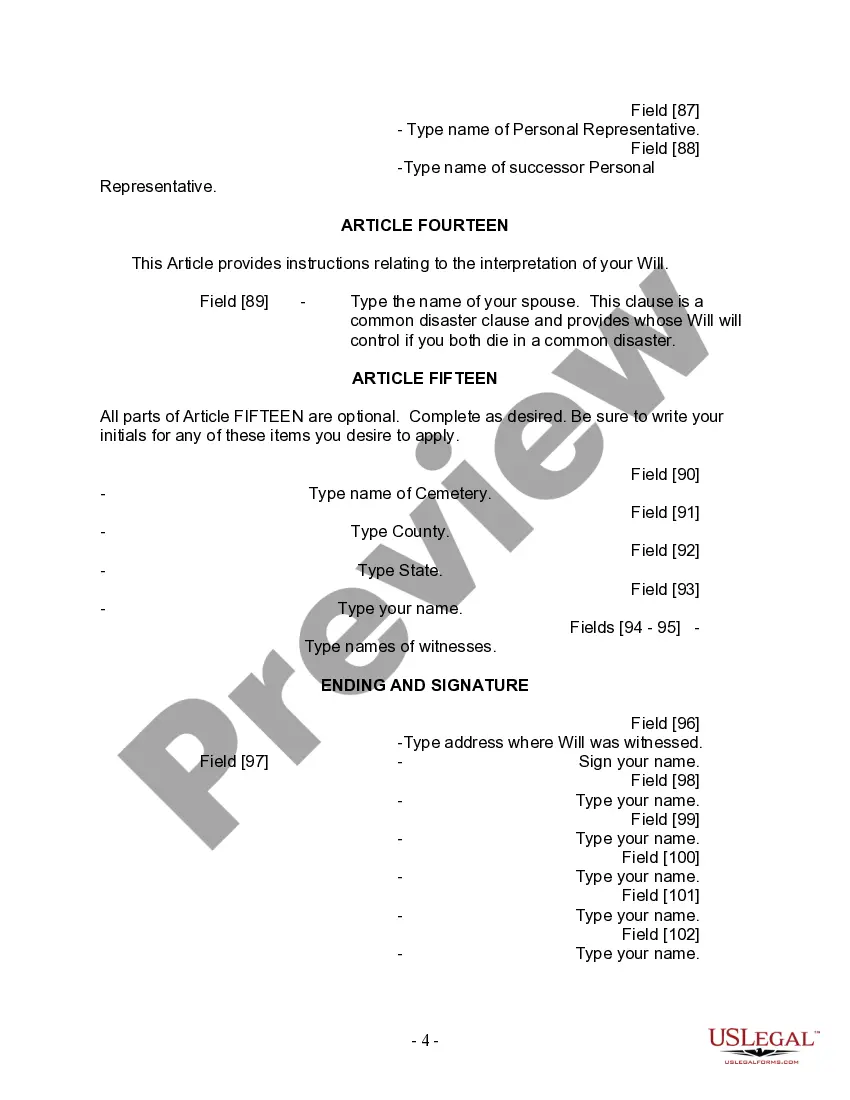
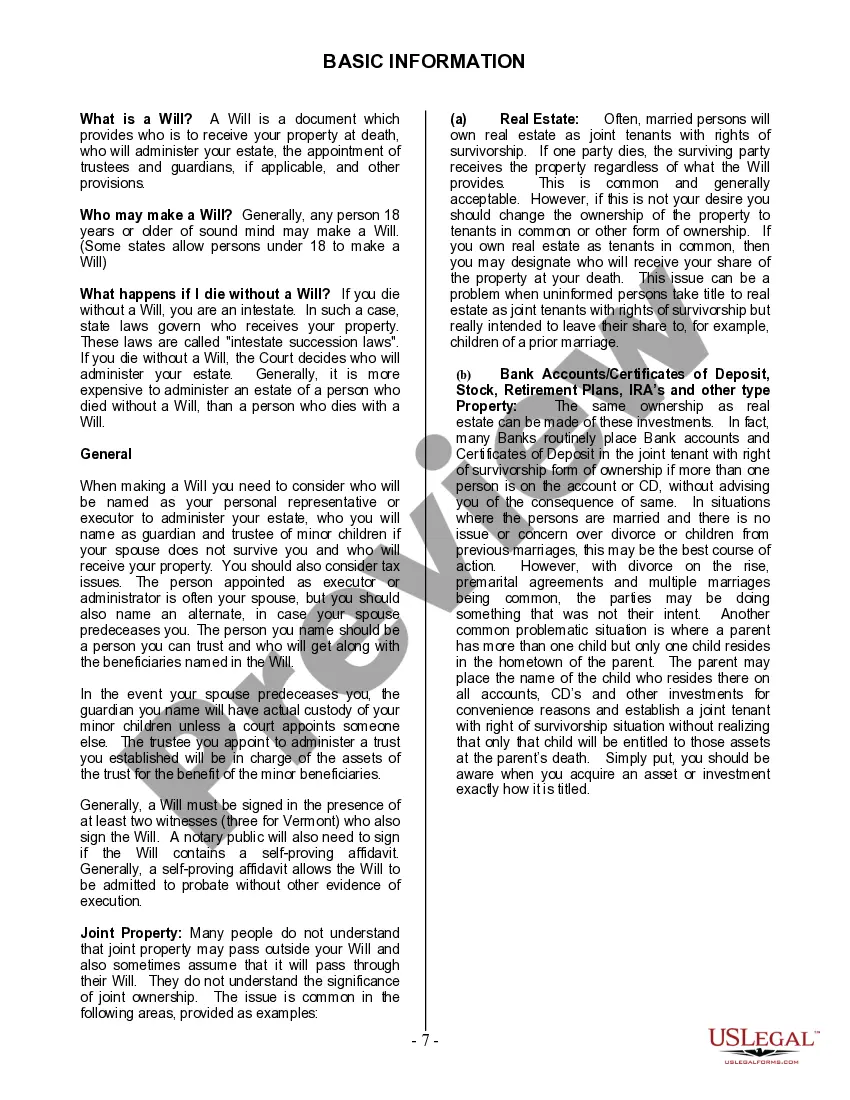
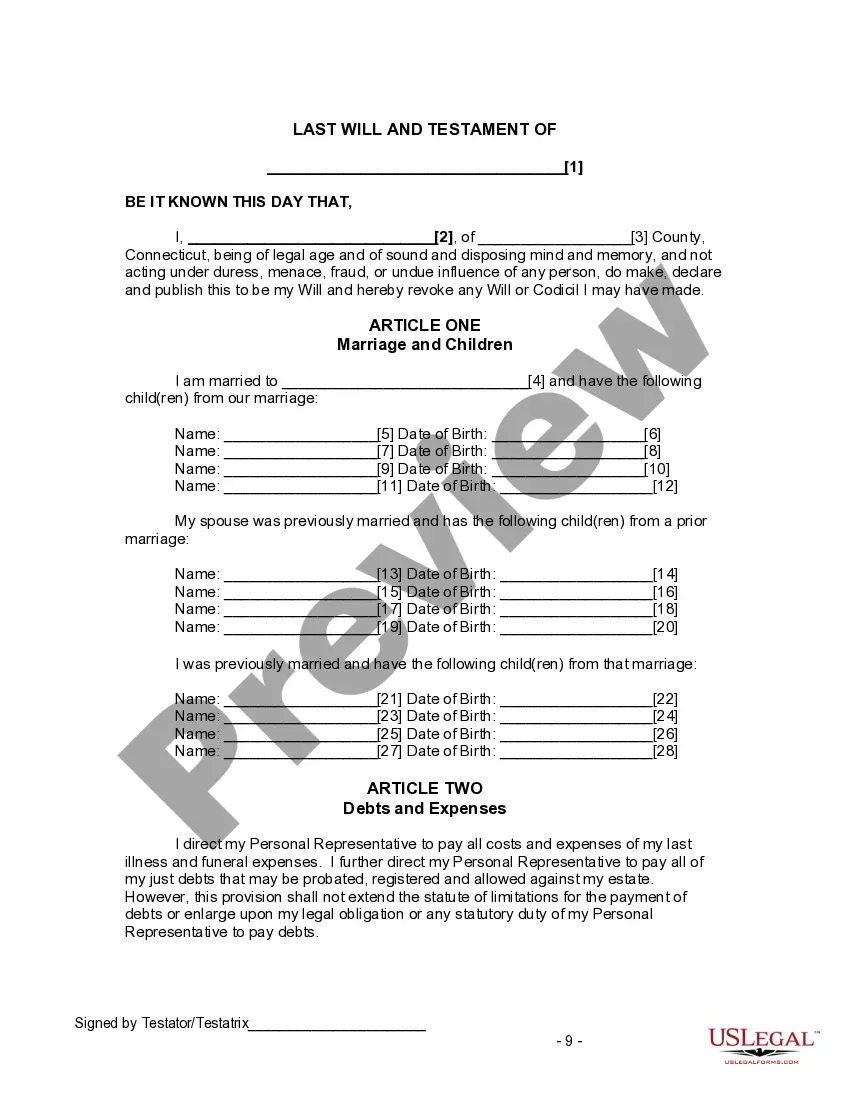
This Last Will and Testament is a legal document designed for a divorced and remarried individual who has children from multiple relationships. The purpose of this form is to clearly outline how your assets will be distributed after your death, ensuring that your wishes are honored amidst the complexities of blended families. This will includes provisions for appointing a personal representative, designating beneficiaries, and establishing trusts for minor children, all tailored to consider both current and previous marriages.
Key parts of this document
- Personal information of the testator, including name and county of residence.
- Designations for spouse and children, including those from previous marriages.
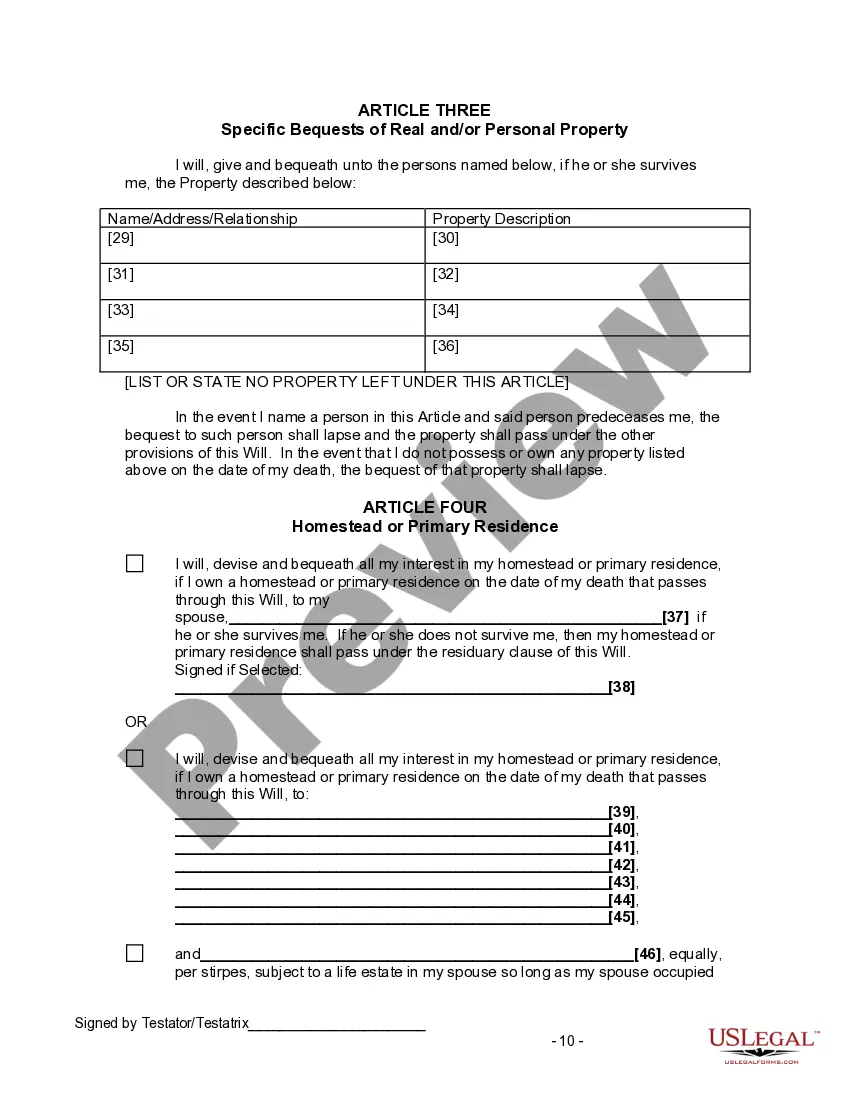
- Specific bequests of property to outlined beneficiaries.
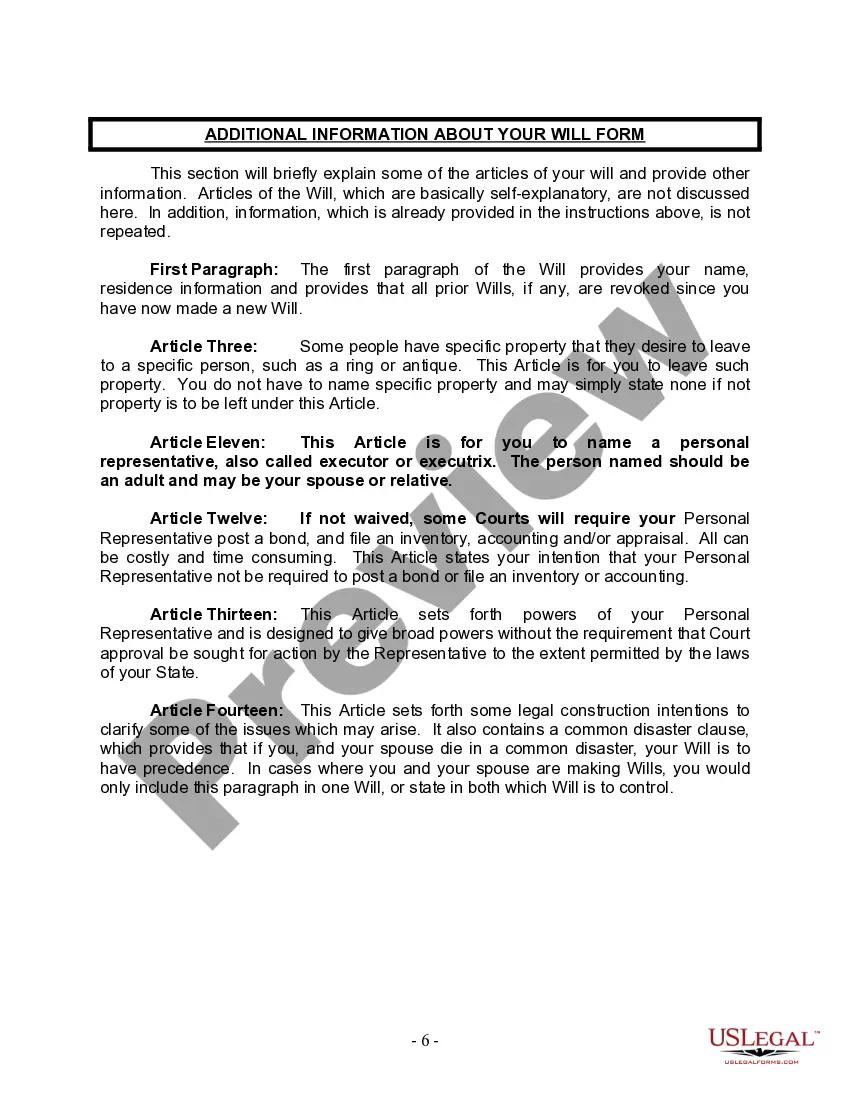
- Instructions for appointing a personal representative to manage the estate.
- Provisions for trusts for minor beneficiaries.
- Declarations regarding guardianship for minor children.





Situations where this form applies
This form is particularly useful in scenarios where an individual has been previously married, has children from those marriages, and has since remarried. It helps in specifying how each child, including those from both current and previous relationships, will be provided for in the event of the testator's death. It is essential for ensuring that asset distribution aligns with the unique familial structure of a blended family.
Who should use this form
- Individuals who are divorced and have remarried.
- Parents with children from past relationships as well as from current marriages.
- Those who wish to ensure their property is distributed according to their specific wishes.
- Anyone wanting to establish guardianship provisions for minor children.
Instructions for completing this form
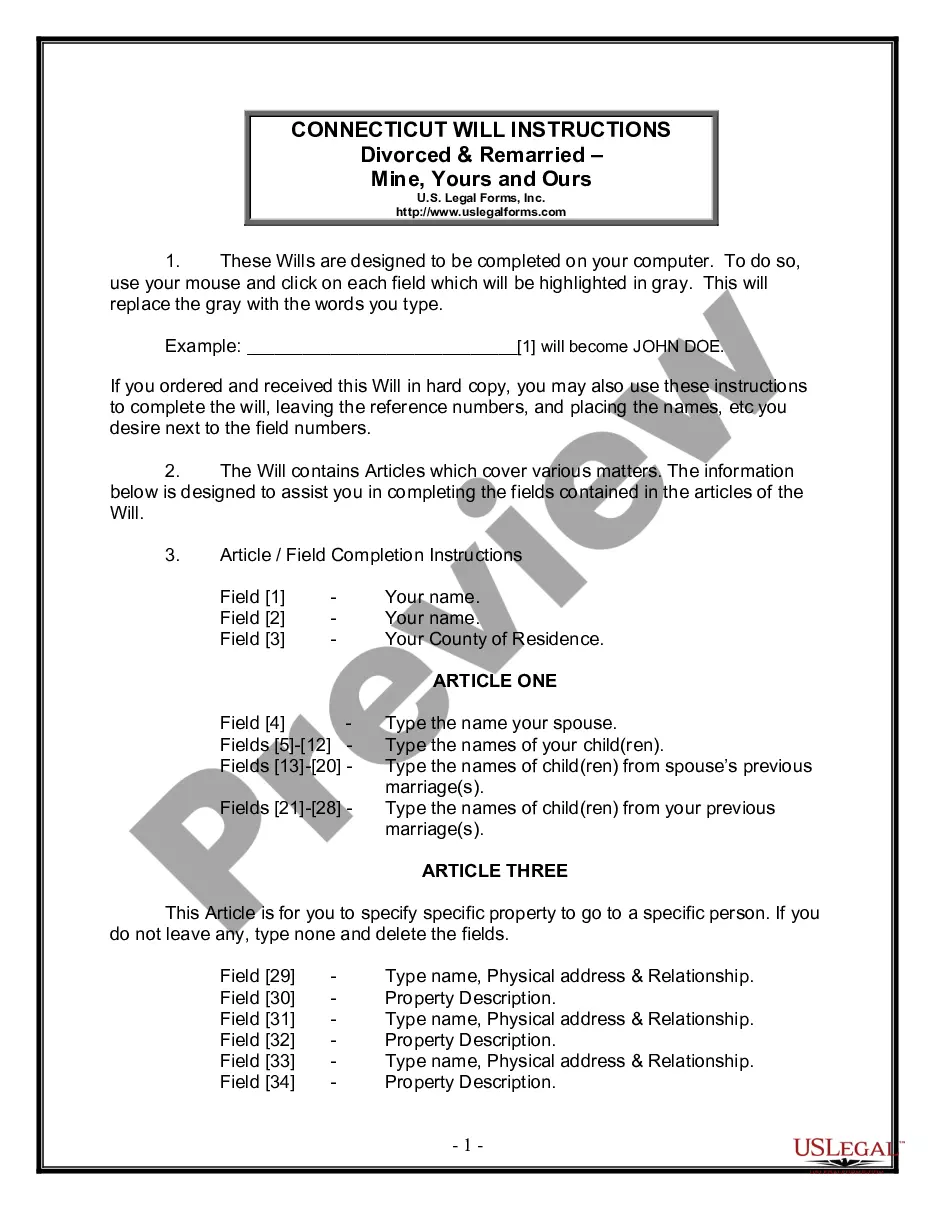
- Begin by entering your name and county of residence in the designated fields.
- Specify the names of your current spouse and children, including those from previous marriages.
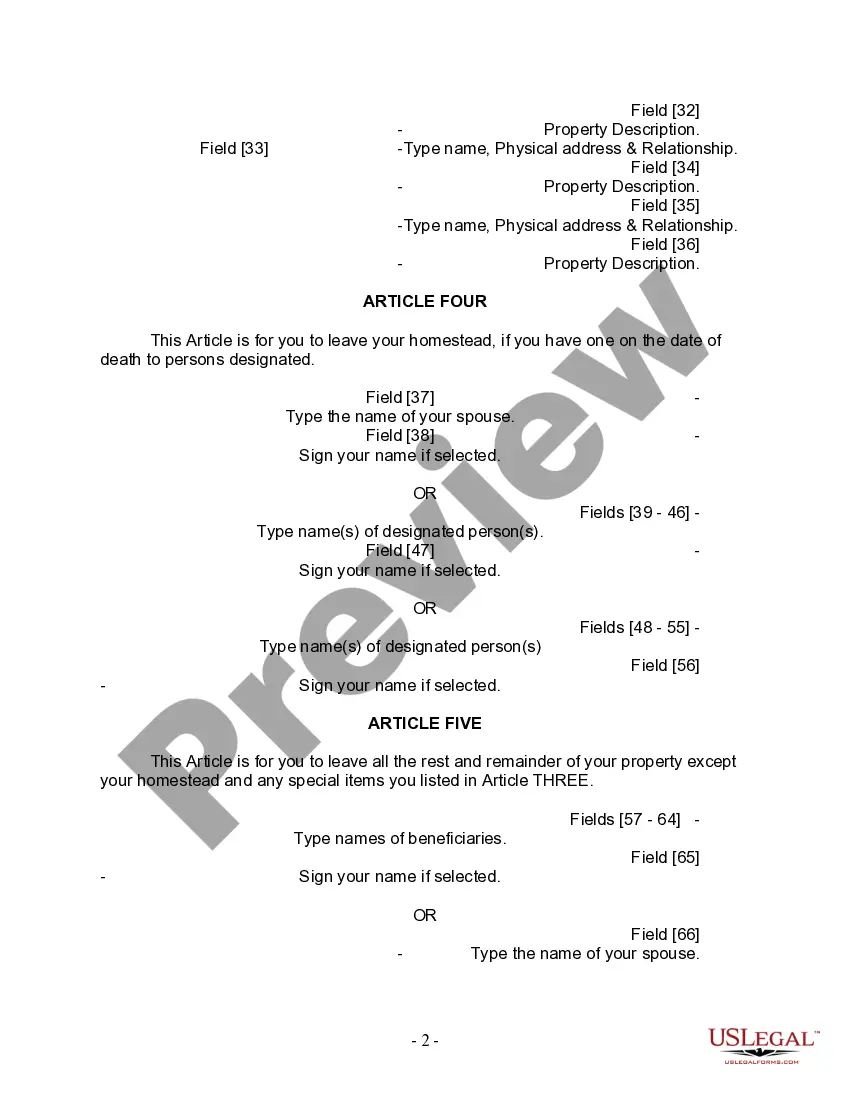
- Detail any specific property you wish to bequeath to certain beneficiaries in the appropriate sections.
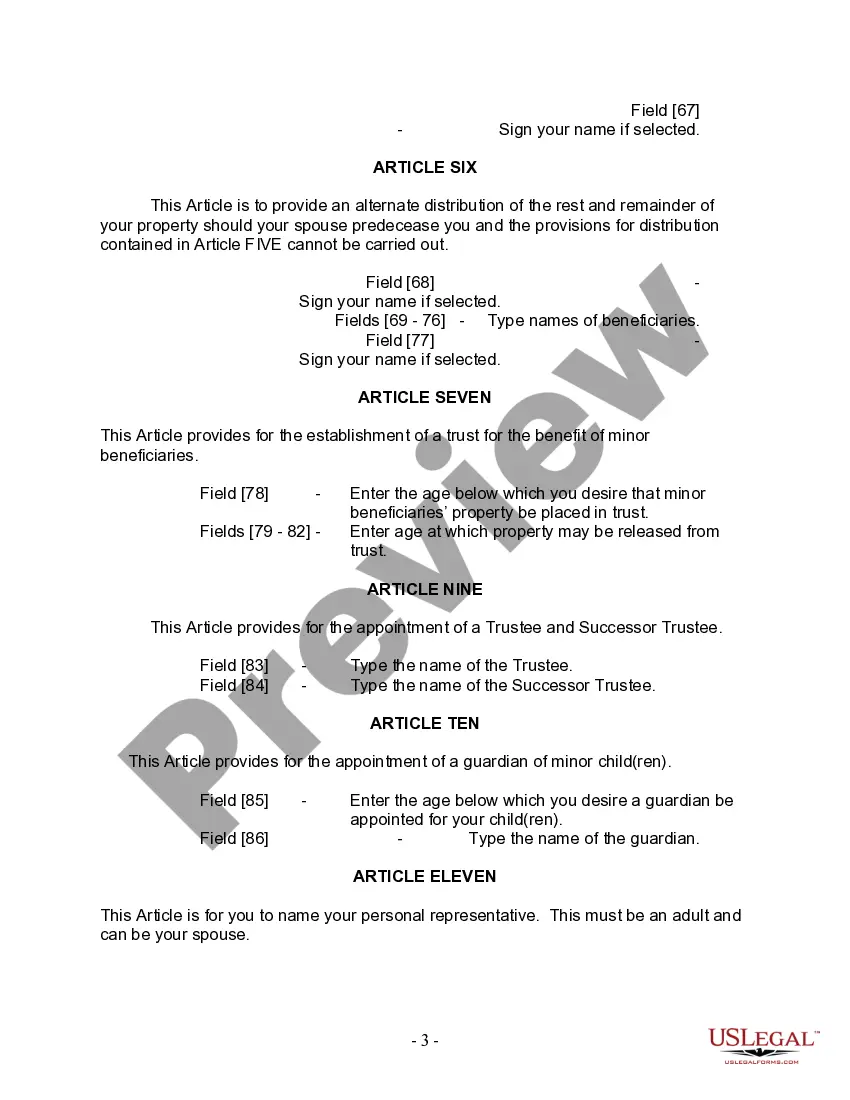
- Designate your personal representative and any successors for managing your estate.
- Include provisions for trusts for minor beneficiaries and any guardianship arrangements needed.
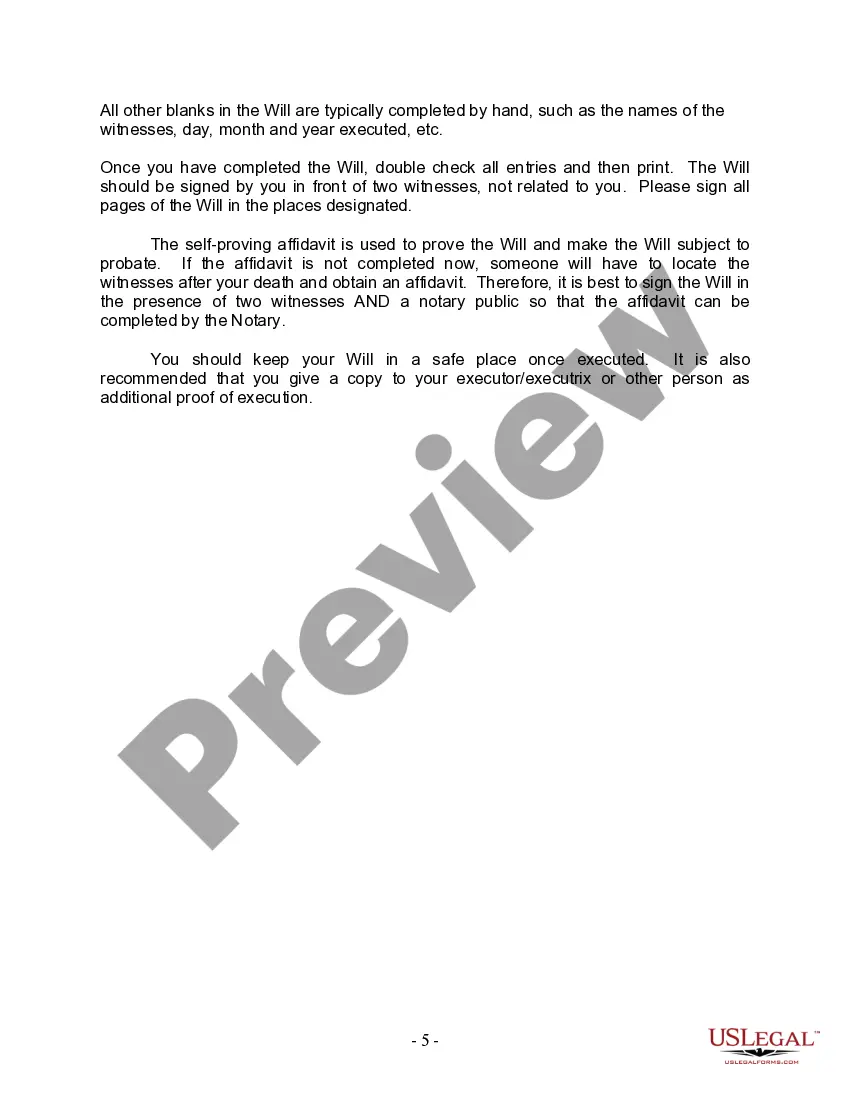
- Ensure the will is signed in the presence of two witnesses and a notary, if required.
Notarization guidance
This form must be notarized to be legally valid. US Legal Forms provides secure online notarization powered by Notarize, allowing you to complete the process through a verified video call.
Get your form ready online
Our built-in tools help you complete, sign, share, and store your documents in one place.
Make edits, fill in missing information, and update formatting in US Legal Forms—just like you would in MS Word.
Download a copy, print it, send it by email, or mail it via USPS—whatever works best for your next step.
Sign and collect signatures with our SignNow integration. Send to multiple recipients, set reminders, and more. Go Premium to unlock E-Sign.
If this form requires notarization, complete it online through a secure video call—no need to meet a notary in person or wait for an appointment.
We protect your documents and personal data by following strict security and privacy standards.

Make edits, fill in missing information, and update formatting in US Legal Forms—just like you would in MS Word.

Download a copy, print it, send it by email, or mail it via USPS—whatever works best for your next step.

Sign and collect signatures with our SignNow integration. Send to multiple recipients, set reminders, and more. Go Premium to unlock E-Sign.

If this form requires notarization, complete it online through a secure video call—no need to meet a notary in person or wait for an appointment.

We protect your documents and personal data by following strict security and privacy standards.
Typical mistakes to avoid
- Failing to specify all children, including those from previous marriages.
- Neglecting to sign the will in front of the required witnesses.
- Omitting the necessary provisions for minor children or trusts.
- Assuming previous wills automatically become invalid without proper revocation wording.
Why complete this form online
- Convenient access to legal forms anytime, from anywhere.
- Editable fields that allow for easy customization on your computer.
- Reliable templates designed by licensed attorneys to ensure compliance with legal standards.
What to keep in mind
- This Last Will and Testament is specifically designed for divorced individuals with children from different relationships.
- Clearly outlining your wishes helps ensure a fair and organized distribution of your estate.
- Completing the form correctly, including notarization, is crucial for its legality.
Looking for another form?

Form popularity
FAQ
Yes, a wife can create a will without her husband's input in Connecticut. This means she has the freedom to define her estate plans, including any provisions for children from previous relationships. Crafting a Connecticut Last Will and Testament for Divorced and Remarried Persons with Mine, Yours, and Ours Children is an excellent opportunity to ensure all parties are considered. To simplify the process, using platforms like uslegalforms can provide essential guidance and templates.
Yes, a husband has the authority to exclude his wife from his will in Connecticut. However, the state’s laws regarding marital rights may allow her to claim a portion of the estate regardless. When creating a Connecticut Last Will and Testament for Divorced and Remarried Persons with Mine, Yours, and Ours Children, it is crucial to consider these implications. Utilizing resources like uslegalforms can guide you through this sensitive topic.
Yes, you can write your own will in Connecticut, and it is essential to ensure it meets the state’s legal requirements. A Connecticut Last Will and Testament for Divorced and Remarried Persons with Mine, Yours, and Ours Children can be personalized to reflect your unique situation. However, consulting a legal expert or using an online platform like uslegalforms can help ensure your will accurately represents your wishes. This practice can increase the likelihood that your will is upheld in court.
Yes, a married man can create a Connecticut Last Will and Testament for Divorced and Remarried Persons with Mine, Yours, and Ours Children without his wife’s consent. He has the legal right to make decisions about his estate. However, it is wise to communicate openly with his spouse to ensure mutual understanding of their wishes. This approach can help prevent future disputes and complexities.
In Connecticut, a divorce typically impacts your existing will. When a divorce occurs, any provisions in your Last Will and Testament that favor your ex-spouse usually become invalid. This means that if you had designated your former spouse as a beneficiary, they would no longer receive anything from your estate. To ensure your wishes are met, it is important to update your Connecticut Last Will and Testament for Divorced and Remarried Person with Mine, Yours and Ours Children, reflecting your current family dynamics.
Yes, one spouse can create a will without needing the other’s consent in Connecticut. Each individual has the right to make decisions about their own assets, which is crucial for families with children from different relationships. Crafting a Connecticut Last Will and Testament for Divorced and Remarried Person with Mine, Yours and Ours Children can help ensure that your wishes for your unique family situation are protected, catering to everyone's needs.
In Connecticut, a spouse does have certain rights to an inheritance, even if there are existing wills. However, after a divorce, the ex-spouse generally loses these rights. To protect the wishes regarding your assets and ensure they align with your family structure, including children from previous relationships, consider revising your Connecticut Last Will and Testament for Divorced and Remarried Person with Mine, Yours and Ours Children.
A divorce agreement does not automatically override a will. However, the terms of the divorce, particularly regarding asset distribution and inheritance, may influence what is included in your Connecticut Last Will and Testament for Divorced and Remarried Person with Mine, Yours and Ours Children. To avoid conflicts and ensure your wishes are followed, consult with legal experts to update your estate plan after a divorce.
Many states revoke beneficiary rights after divorce, but the laws can vary significantly. Connecticut does not automatically revoke a will upon divorce, but it is a good practice to re-evaluate your Connecticut Last Will and Testament for Divorced and Remarried Person with Mine, Yours and Ours Children. Understanding specific state laws regarding beneficiary rights can help you secure your children's inheritance as intended.
In Connecticut, divorce does not automatically revoke a will. However, when a person gets divorced, their ex-spouse is typically removed from any benefits or responsibilities outlined in the will. It's important for a divorced individual to update their Connecticut Last Will and Testament for Divorced and Remarried Person with Mine, Yours and Ours Children to reflect their current wishes. This ensures clarity regarding assets intended for children and new partners.