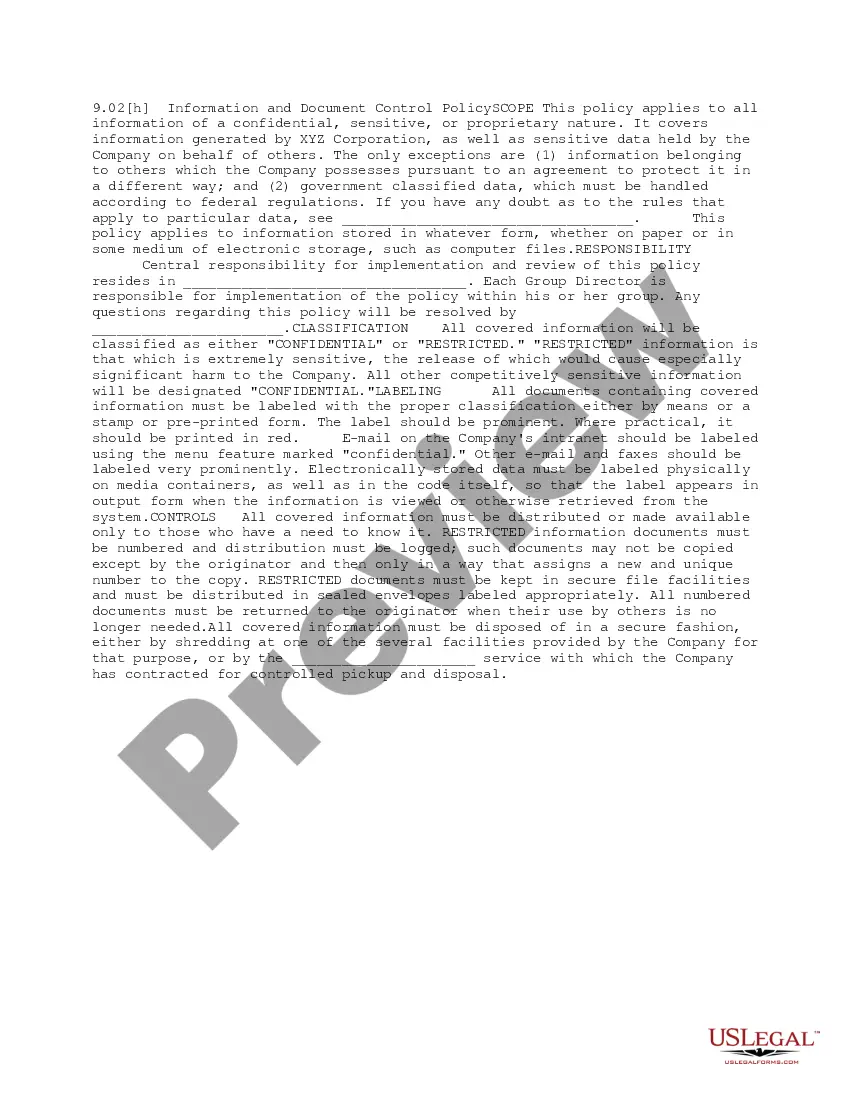
Information and Document Control Policy
About this form
The Information and Document Control Policy is designed for companies to establish procedures for handling confidential, sensitive, or proprietary information. This form provides a structured approach to ensure that sensitive data is managed properly, which is crucial for protecting a businessâs valuable information assets.
What’s included in this form
- Scope: Defines the types of information covered, including exceptions for third-party data and government classified data.
- Responsibility: Outlines who is responsible for implementing and reviewing the policy.
- Classification: Details the classification system for information, distinguishing between CONFIDENTIAL and RESTRICTED information.
- Labeling: Addresses the requirements for labeling documents containing covered information.
- Controls: Establishes guidelines for distribution, storage, and disposal of covered information.
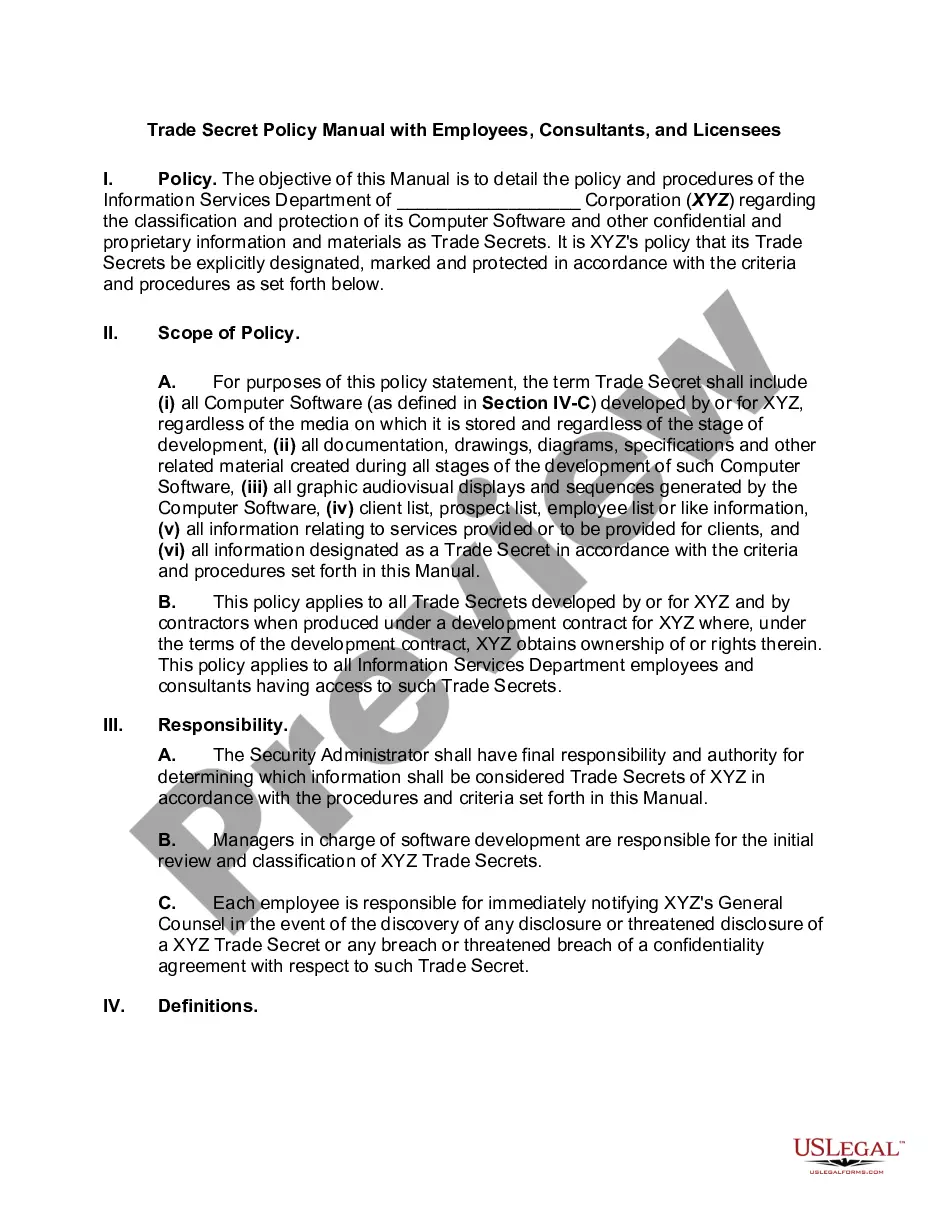
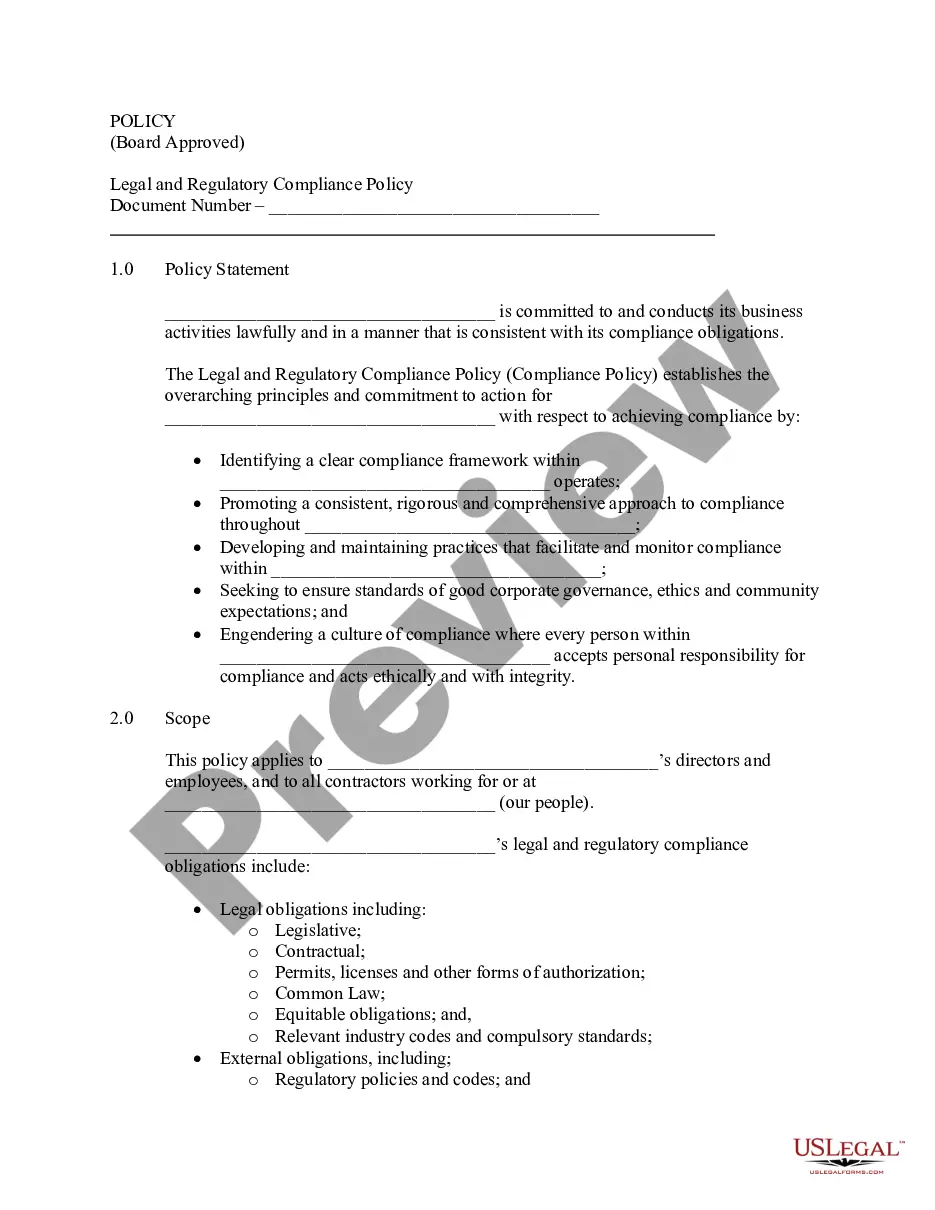
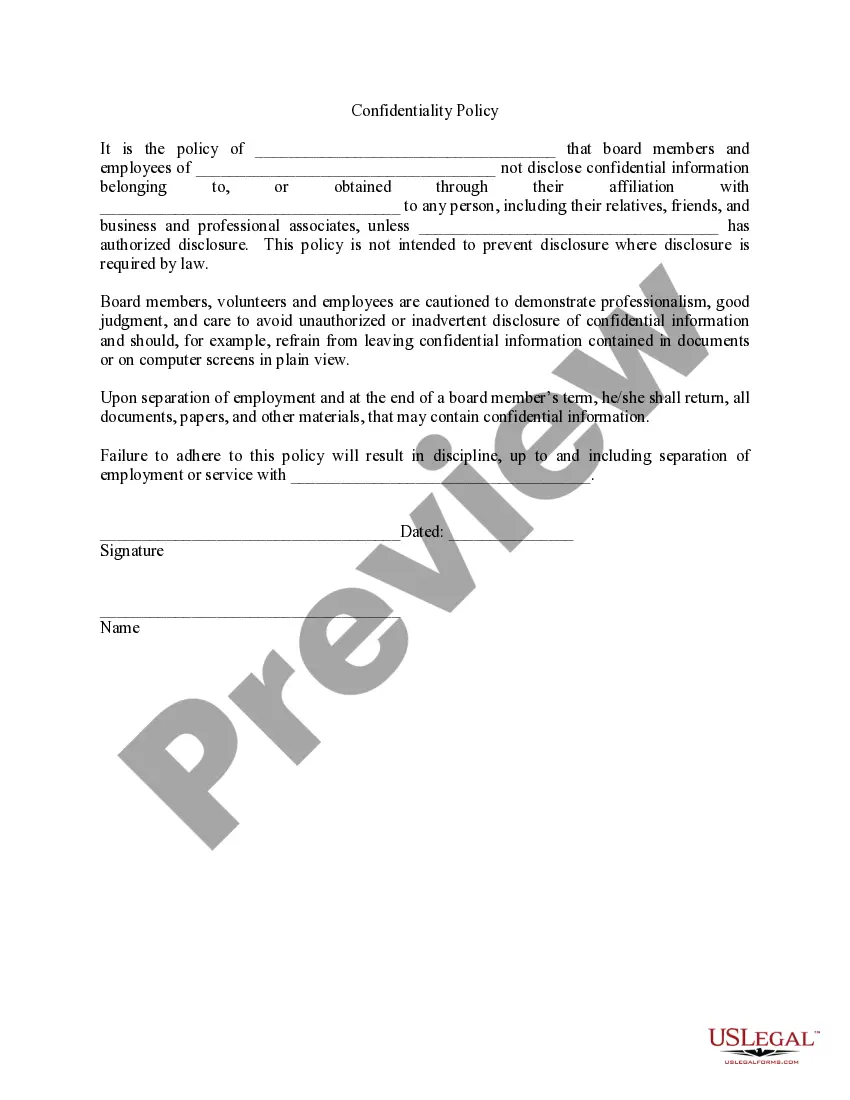
Common use cases
This form should be used by companies when they need to regulate how confidential and sensitive information is processed and protected. It is essential in circumstances where proprietary data is shared internally or externally, allowing the organization to clarify security protocols and responsibilities.
Who needs this form
This form is intended for:
- Business owners seeking to establish clear information handling procedures.
- Managers responsible for implementing security policies within their teams.
- Compliance officers and legal advisors ensuring adherence to data protection laws.
- Employees handling sensitive documents who need to understand their responsibilities.
Instructions for completing this form
To complete the Information and Document Control Policy, follow these steps:
- Identify the types of information that fall under the policyâs scope.
- Designate individuals responsible for the implementation and review of the policy.
- Classify the information as either CONFIDENTIAL or RESTRICTED based on sensitivity.
- Clearly label all relevant documents according to their classification.
- Establish procedures for securely distributing, storing, and disposing of covered information.
Does this form need to be notarized?
This form does not typically require notarization unless specified by local law.
Get your form ready online
Our built-in tools help you complete, sign, share, and store your documents in one place.
Make edits, fill in missing information, and update formatting in US Legal Forms—just like you would in MS Word.
Download a copy, print it, send it by email, or mail it via USPS—whatever works best for your next step.
Sign and collect signatures with our SignNow integration. Send to multiple recipients, set reminders, and more. Go Premium to unlock E-Sign.
If this form requires notarization, complete it online through a secure video call—no need to meet a notary in person or wait for an appointment.
We protect your documents and personal data by following strict security and privacy standards.

Make edits, fill in missing information, and update formatting in US Legal Forms—just like you would in MS Word.

Download a copy, print it, send it by email, or mail it via USPS—whatever works best for your next step.

Sign and collect signatures with our SignNow integration. Send to multiple recipients, set reminders, and more. Go Premium to unlock E-Sign.

If this form requires notarization, complete it online through a secure video call—no need to meet a notary in person or wait for an appointment.

We protect your documents and personal data by following strict security and privacy standards.
Typical mistakes to avoid
- Failing to classify information correctly, leading to potential security breaches.
- Inadequate labeling of documents, which can cause mishandling of sensitive materials.
- Not updating the policy to reflect changes in regulations or company operations.
Why complete this form online
- Convenience: Easily downloadable and customizable to suit your companyâs needs.
- Editability: The form can be modified to address specific organizational requirements.
- Reliability: Drafted by licensed attorneys, ensuring compliance and accuracy.
- The policy helps safeguard confidential information by providing clear guidelines and accountability.
- Failure to follow this policy could lead to legal repercussions or data breaches.
What to keep in mind
- The Information and Document Control Policy is vital for managing sensitive information securely.
- Clearly identify responsibilities and classification systems to protect your organization's data.
- Ensure proper labeling and distribution controls are in place to prevent unauthorized access.
Looking for another form?
Form popularity
FAQ
Add a version control table to the front of the document that says the version, the author, a brief summary of changes in that iteration of the document and the date. Versions are 0.1, 0.2 etc until such point as the document is approved. Then it becomes version 1.0.
In its simplest acceptance, document control refers to a series of practices to ensure that documents are created, reviewed, distributed, and disposed of in a systematic, verifiable manner. The term is most widely known in the context of ISO standards, and particularly within ISO 9008 and ISO 9015 standards.
Document Controllers manage and oversee documents for a particular project or for an entire organization. They ensure the proper documents are created and signed, that all data is accurate and that documents are stored and backed up and any retention policies are followed.
Document Control Helps Reduce Errors in Documentation When teams have quick access to all the data within their company's system, they can reduce the number of errors they make within their documentation. That's because document control systems provide a streamlined pathway for document review.
Approve documents for adequacy prior to issue. Review, update as necessary, and re-approve documents. Identify the changes and current document revision status. Make relevant documents available at points of use. Ensure the documents remain legible and readily identifiable.
The document control procedure describes the structure of all document types within the QMS and so is the first building block in the design of QMS documentation. The document control procedure addresses the following: Review and approval of documents for adequacy prior to issue.
Document Control: Refers to the regulation of documents by number, name, version, effective date, review date and history of amendments.Controlled Document: A policy, procedure or form that is contained within the QMS and is approved, reviewed and distributed.