Connecticut Last Will and Testament for Divorced person not Remarried with Minor Children
Understanding this form
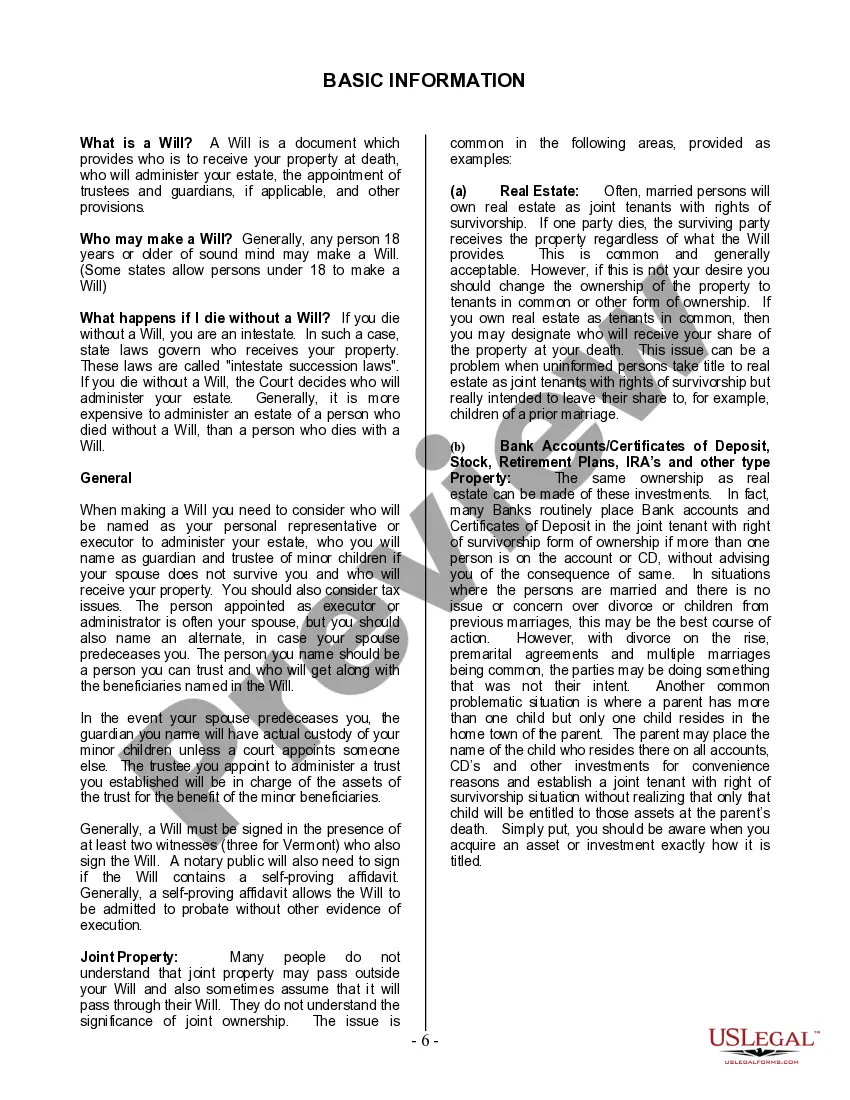
This Last Will and Testament is designed specifically for a divorced person who is not remarried and has minor children. It serves as a legal document that outlines how your assets will be distributed upon your death, who will manage your estate, and who will care for your children if you pass away. This form provides tailored provisions to address the unique circumstances of your family situation, ensuring your wishes are respected and your children's needs are prioritized. Unlike generic wills, this document considers the nuances of your past marital status and current family dynamics.
Main sections of this form
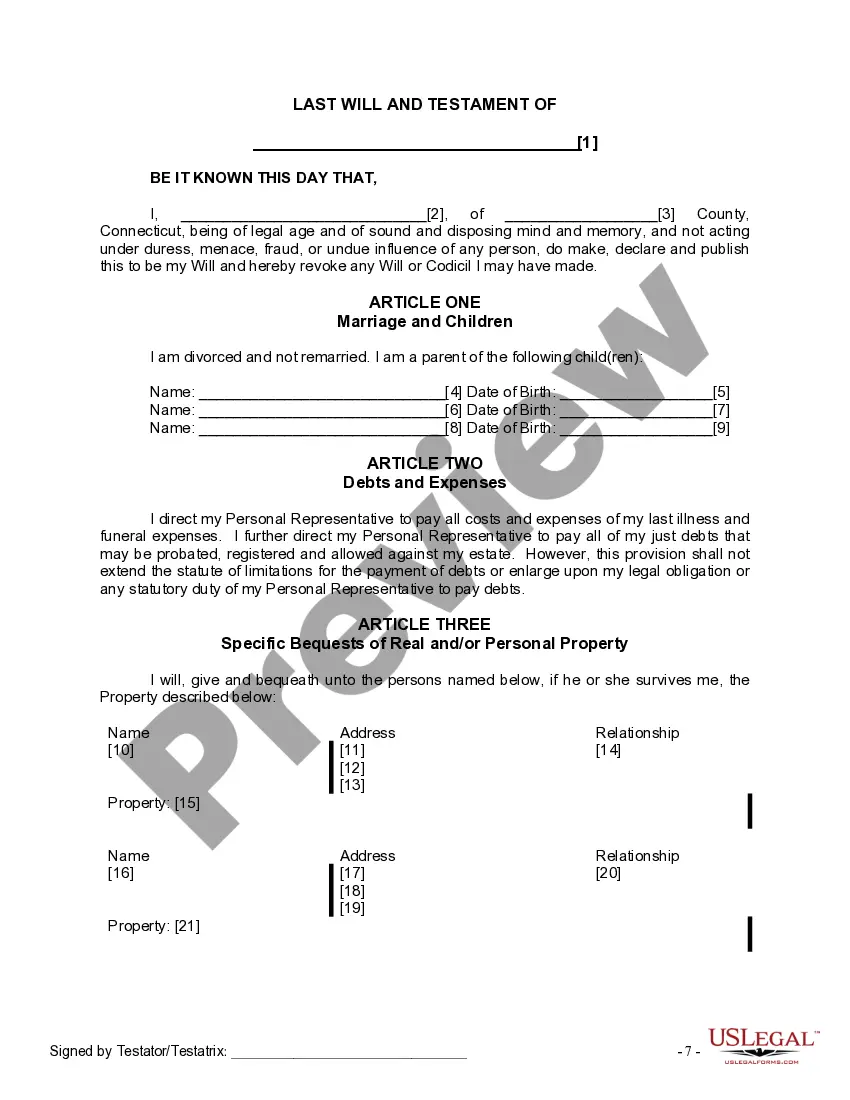
- Appointment of a personal representative (executor) to manage your estate.
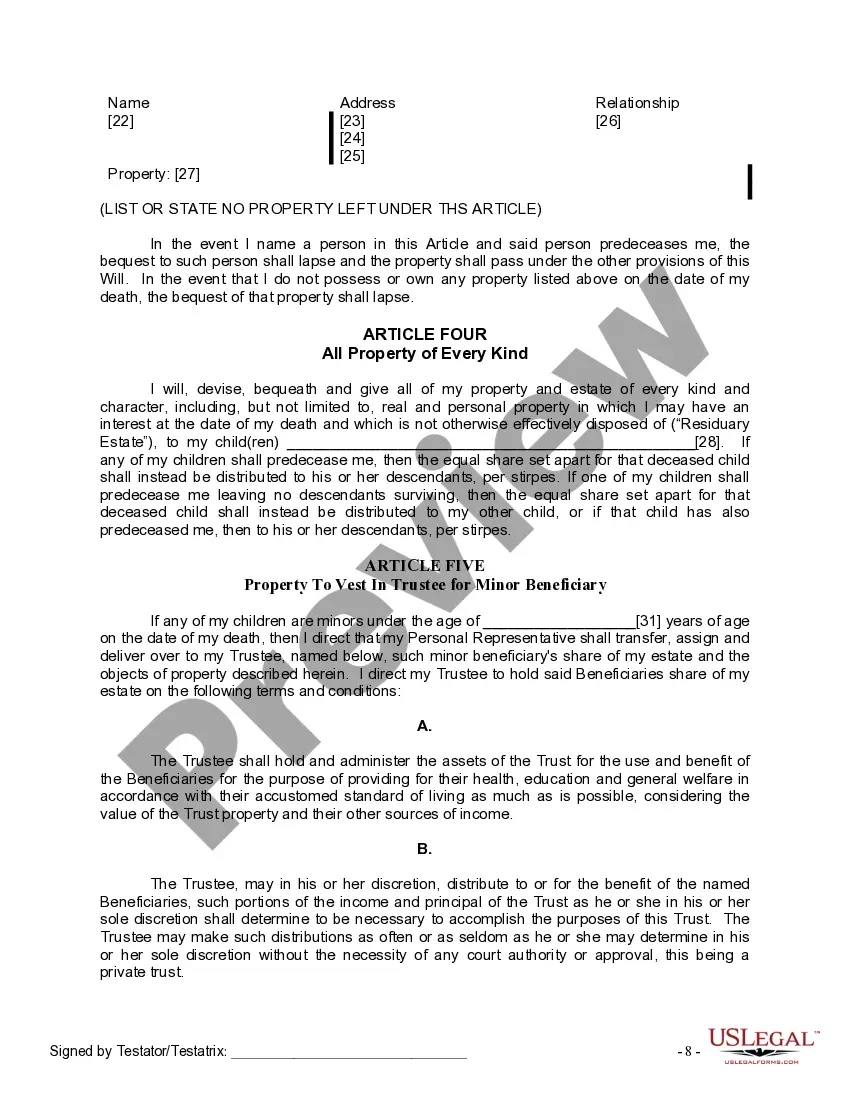
- Designation of beneficiaries, including your minor children.
- Specific bequests of personal or real property to named individuals.
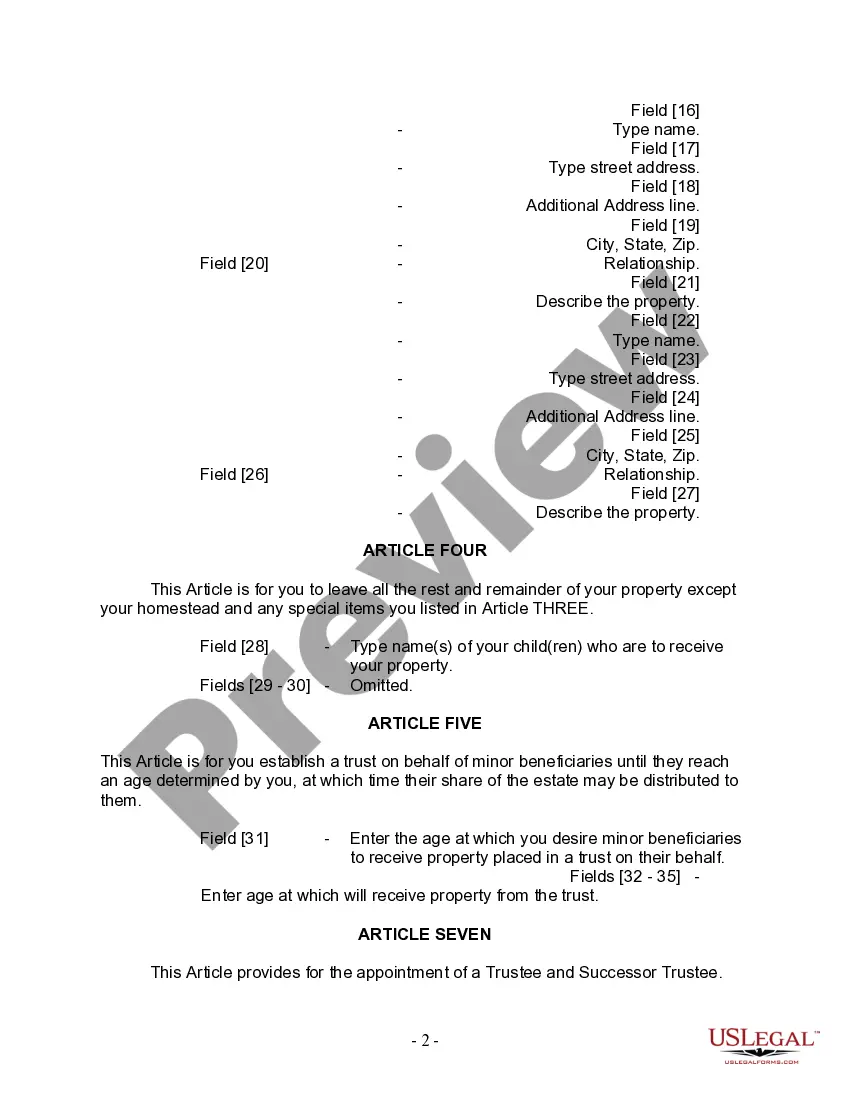
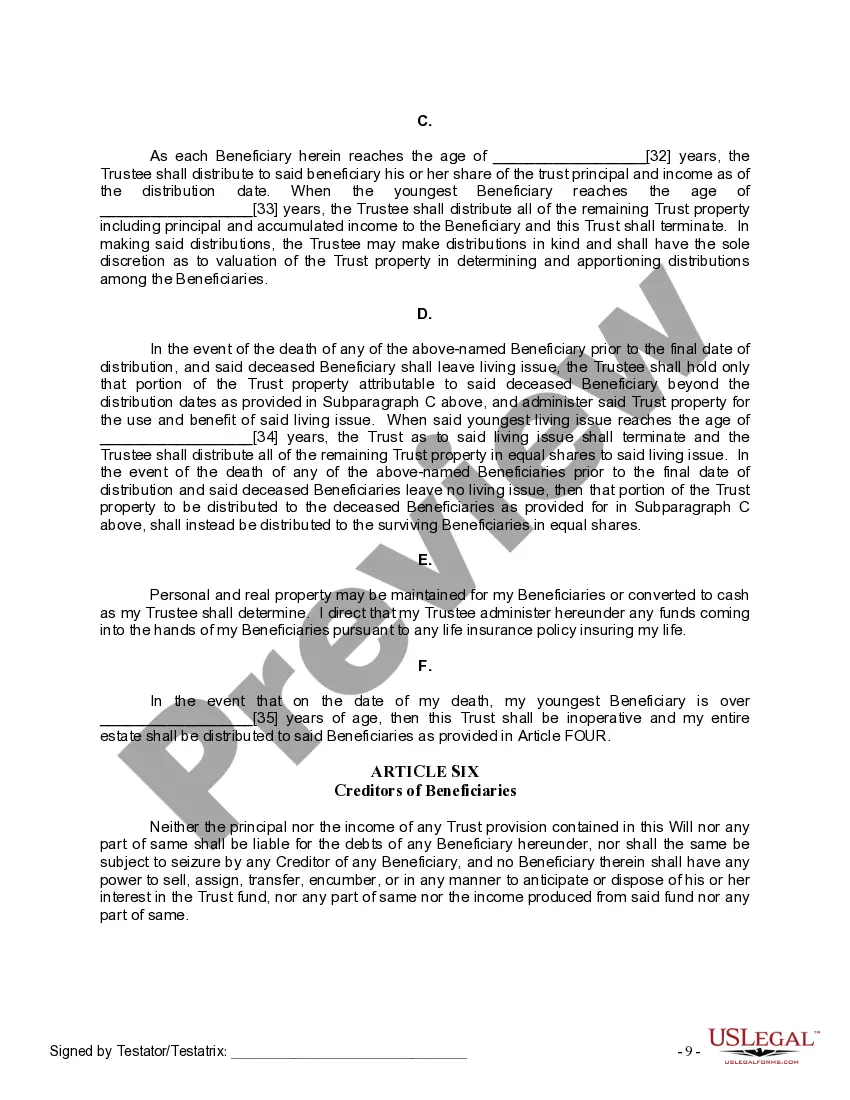
- Establishment of a trust for minor beneficiaries until they reach a specified age.
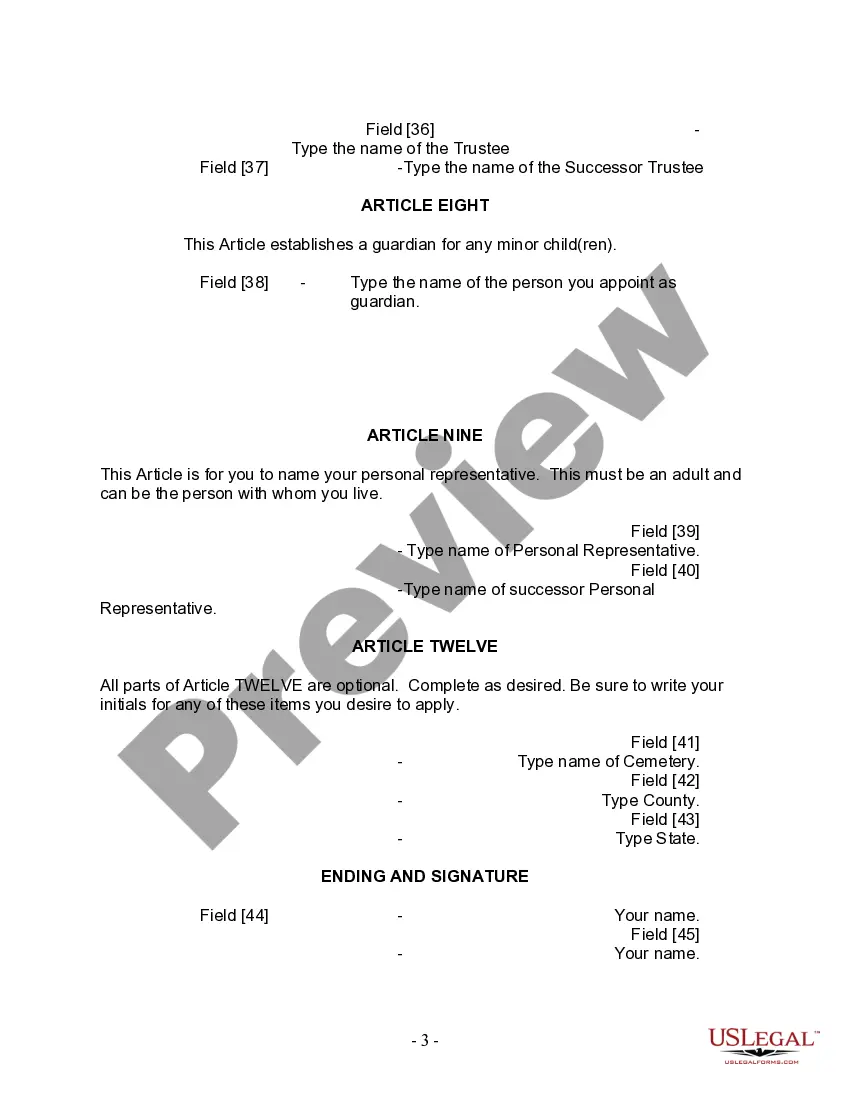
- Provisions for naming a guardian for your minor children.
- Instructions for debts, expenses, and other important legal matters.




When to use this form
This Last Will and Testament should be utilized in situations where you are a divorced individual, have minor children, and want to ensure that your wishes regarding property distribution and guardianship are formally documented. Use this form if you want to clearly designate who will take care of your children and how your assets will be managed and allocated to provide for their future.
Who can use this document
- Divorced individuals without a new spouse.
- Parents of minors who wish to specify guardianship arrangements.
- Anyone wanting to distribute property or assets specifically to beneficiaries.
- Individuals looking to create a trust for the financial protection of their minor children.
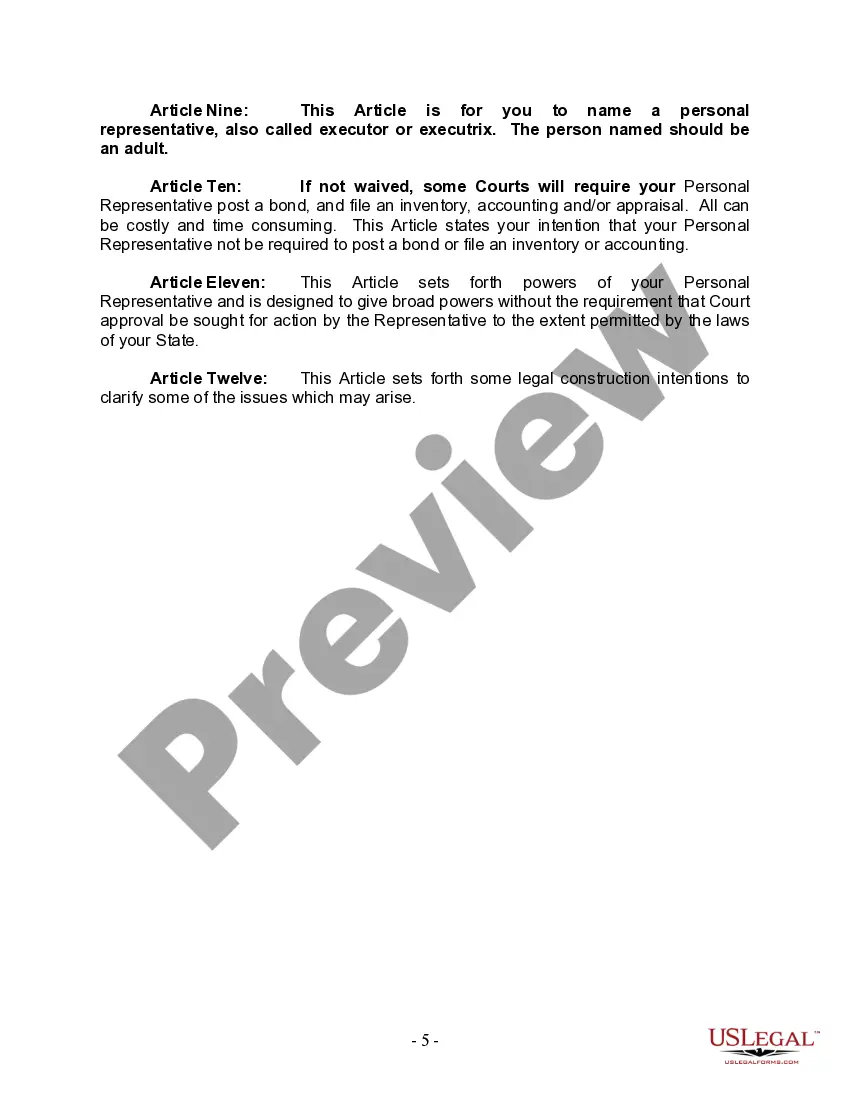
Instructions for completing this form
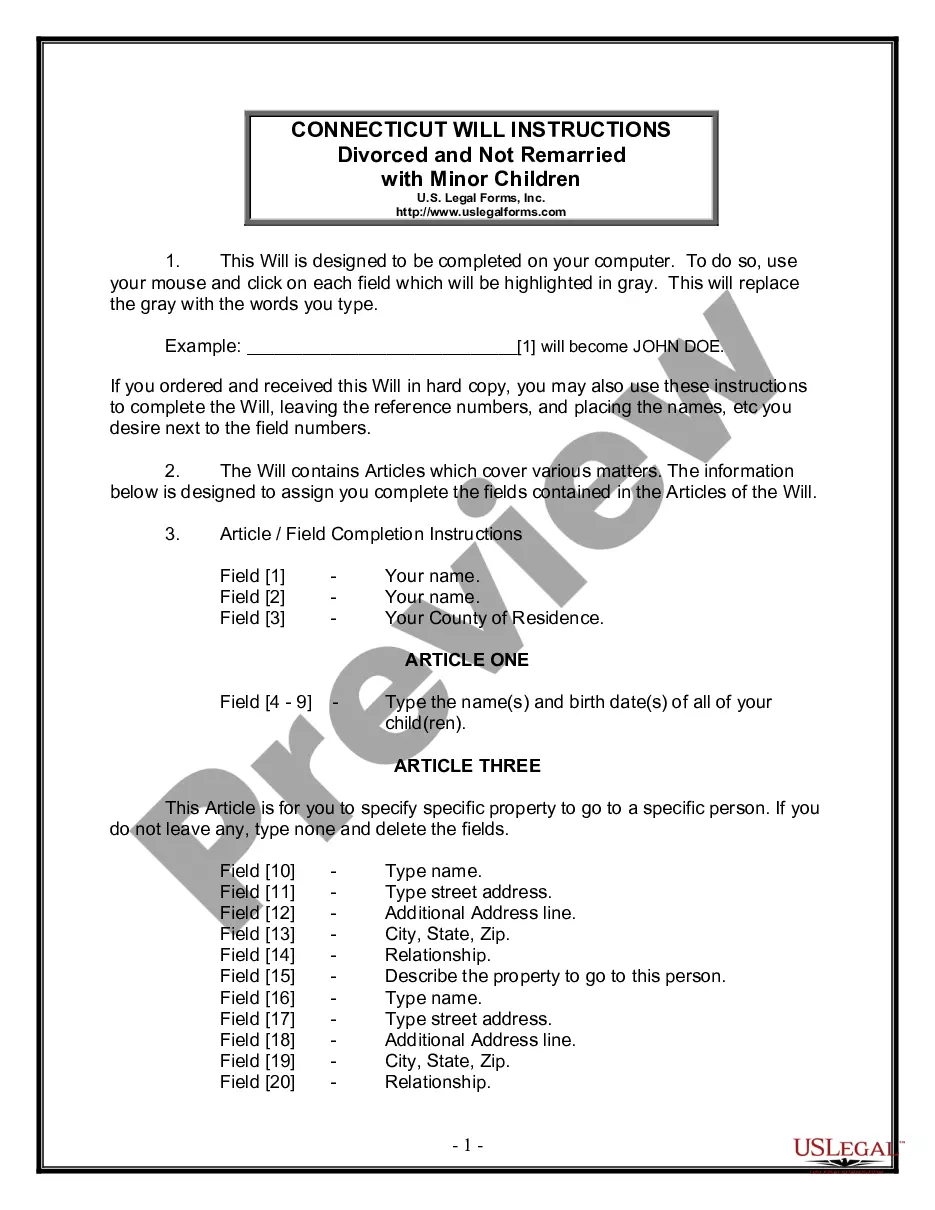
- Enter your full name and address at the beginning of the document.
- List the names and birthdates of all your minor children in the designated sections.
- Specify any particular items or property you wish to bequeath to specific individuals.
- Choose a personal representative and a successor to handle your estate.
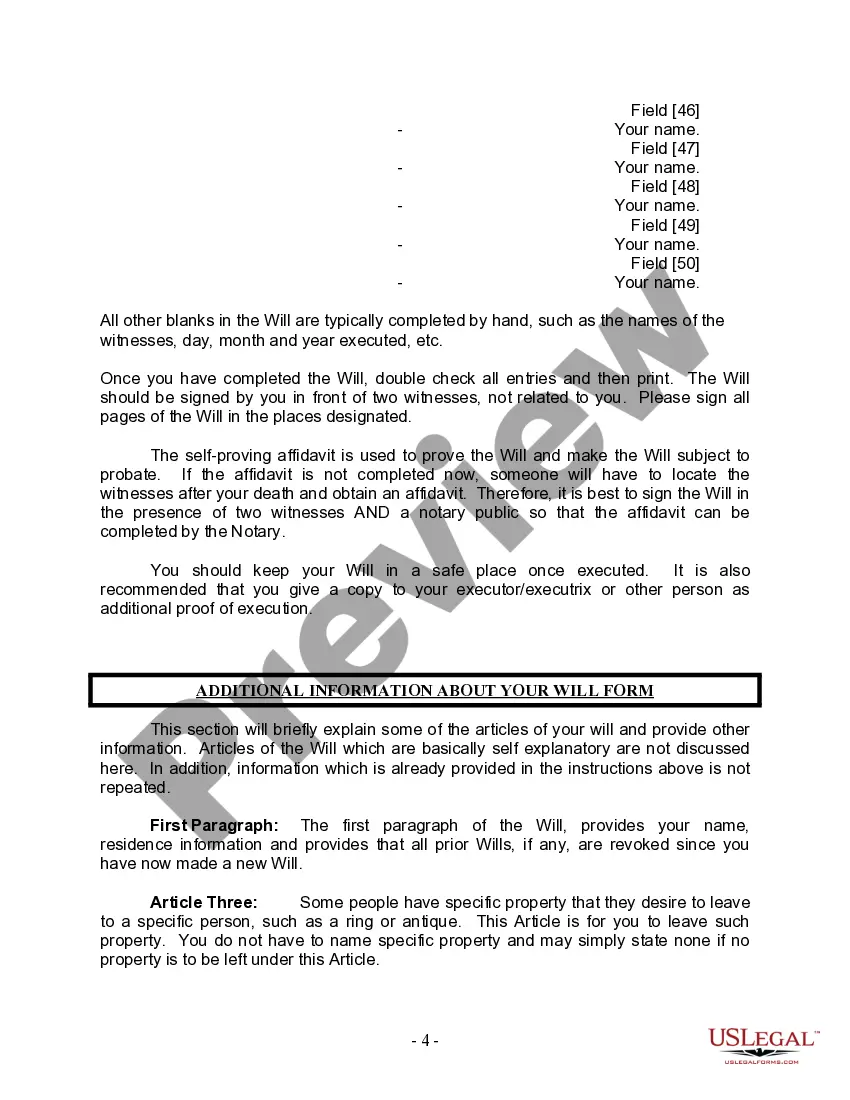
- Sign the document in front of two witnesses who are not related to you.
- If applicable, complete the self-proving affidavit with a notary public to facilitate probate.
Notarization guidance
This form needs to be notarized to ensure legal validity. US Legal Forms provides secure online notarization powered by Notarize, allowing you to complete the process through a verified video call, available anytime.
Get your form ready online
Our built-in tools help you complete, sign, share, and store your documents in one place.
Make edits, fill in missing information, and update formatting in US Legal Forms—just like you would in MS Word.
Download a copy, print it, send it by email, or mail it via USPS—whatever works best for your next step.
Sign and collect signatures with our SignNow integration. Send to multiple recipients, set reminders, and more. Go Premium to unlock E-Sign.
If this form requires notarization, complete it online through a secure video call—no need to meet a notary in person or wait for an appointment.
We protect your documents and personal data by following strict security and privacy standards.

Make edits, fill in missing information, and update formatting in US Legal Forms—just like you would in MS Word.

Download a copy, print it, send it by email, or mail it via USPS—whatever works best for your next step.

Sign and collect signatures with our SignNow integration. Send to multiple recipients, set reminders, and more. Go Premium to unlock E-Sign.

If this form requires notarization, complete it online through a secure video call—no need to meet a notary in person or wait for an appointment.

We protect your documents and personal data by following strict security and privacy standards.
Mistakes to watch out for
- Not having the will signed by the required number of witnesses.
- Failing to include a guardian for minor children.
- Forgetting to notarize the document, if required by state law.
- Omitting specific assets or beneficiaries, leading to uncertainty.
- Not regularly updating the will after major life changes.
Benefits of using this form online
- Convenient access to customizable templates that can be completed quickly.
- Edit and update your will as your circumstances change without needing to start over.
- Reliable legal formatting, compliant with state standards, ensuring validity.
- Secure storage of your documents for easy retrieval in the future.
What to keep in mind
- This will is tailored for divorced individuals with minor children.
- Clear asset distribution and guardianship decisions can secure your children's future.
- Understanding state-specific requirements ensures your will is enforceable.
Looking for another form?
Form popularity
FAQ
Yes, generally, a will can override divorce papers in Connecticut if the divorce is finalized after the will was created. If you did not update your will following a divorce, it may still be considered in your estate plan. This can impact how your Connecticut Last Will and Testament for Divorced person not Remarried with Minor Children addresses your wishes regarding guardianship and asset distribution.
In Connecticut, probate typically applies to assets that are solely owned by the deceased and do not have designated beneficiaries. This includes real estate, bank accounts, and personal possessions. As you draft your Connecticut Last Will and Testament for Divorced person not Remarried with Minor Children, identify which assets may go through probate to structure your estate wisely.
Not all wills in Connecticut must go through probate. If an estate’s value falls below a specific threshold or if assets are held in a trust, probate could be avoided. It's essential to have a comprehensive understanding of your situation when creating your Connecticut Last Will and Testament for Divorced person not Remarried with Minor Children to ensure your wishes are fulfilled effectively.
Certain assets in Connecticut do not go through probate, including life insurance policies, retirement accounts, and jointly owned property with survivorship rights. These assets transfer directly to beneficiaries and can bypass the lengthy probate process. Understanding this can help you plan effectively when drafting a Connecticut Last Will and Testament for Divorced person not Remarried with Minor Children.
Yes, you can write your own will in Connecticut as long as it meets the legal requirements. However, it’s crucial to ensure it reflects your intentions clearly, especially when considering the needs of minor children. Using a platform like uslegalforms can provide templates that help you create a valid Connecticut Last Will and Testament for Divorced person not Remarried with Minor Children.
In Connecticut, having a will does not automatically mean you will avoid probate. Generally, if the estate exceeds a certain value, it will go through probate to ensure the will's terms are honored. This process is essential for distributing assets according to your wishes outlined in your Connecticut Last Will and Testament for Divorced person not Remarried with Minor Children.
In Connecticut, a divorce decree usually revokes any previous designations made in favor of a former spouse unless the will or beneficiary designation states otherwise. This means that if you named your ex-spouse as a beneficiary, the decree may remove that right. To solidify your intentions, consider drafting a Connecticut Last Will and Testament for Divorced person not Remarried with Minor Children to ensure your assets are distributed according to your wishes.
In Connecticut, a divorced spouse's claim on their ex-husband’s property typically ends after divorce, unless specified in a legal agreement. The absence of a will can complicate matters, so it's advantageous to plan ahead. Creating a Connecticut Last Will and Testament for Divorced person not Remarried with Minor Children can clarify your intentions and prevent disputes.
A valid will in Connecticut requires the testator to be at least 18 years old, be of sound mind, and signify their intent to create a will. Additionally, the will must be written and signed by the testator, with at least two witnesses present. For those needing a Connecticut Last Will and Testament for Divorced person not Remarried with Minor Children, it's important to consult the right resources to ensure compliance with state laws.
Divorce often leads to a financial strain for both parties due to changes in income and increased expenses. Adjusting to a new financial reality can take time. When considering your estate planning, a Connecticut Last Will and Testament for Divorced person not Remarried with Minor Children can help secure your children’s financial wellbeing amid such hardships.