Connecticut Last Will and Testament for Single Person with No Children

What this document covers
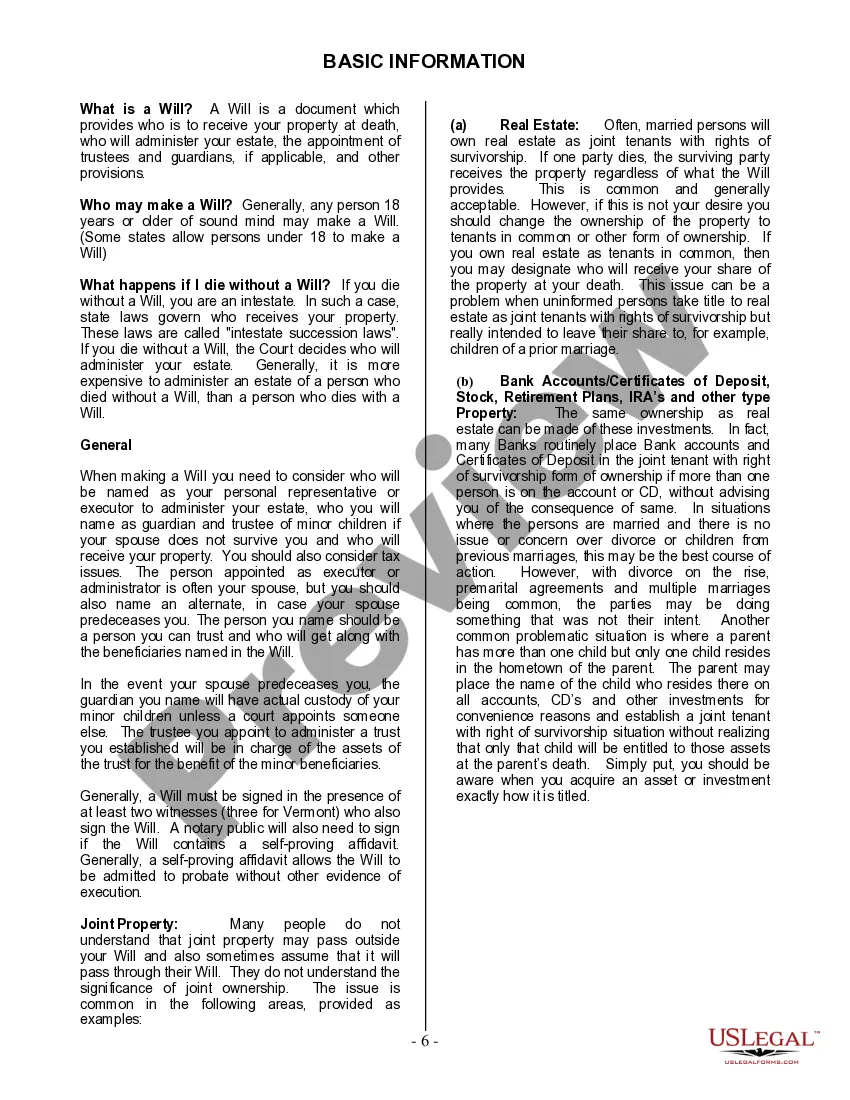
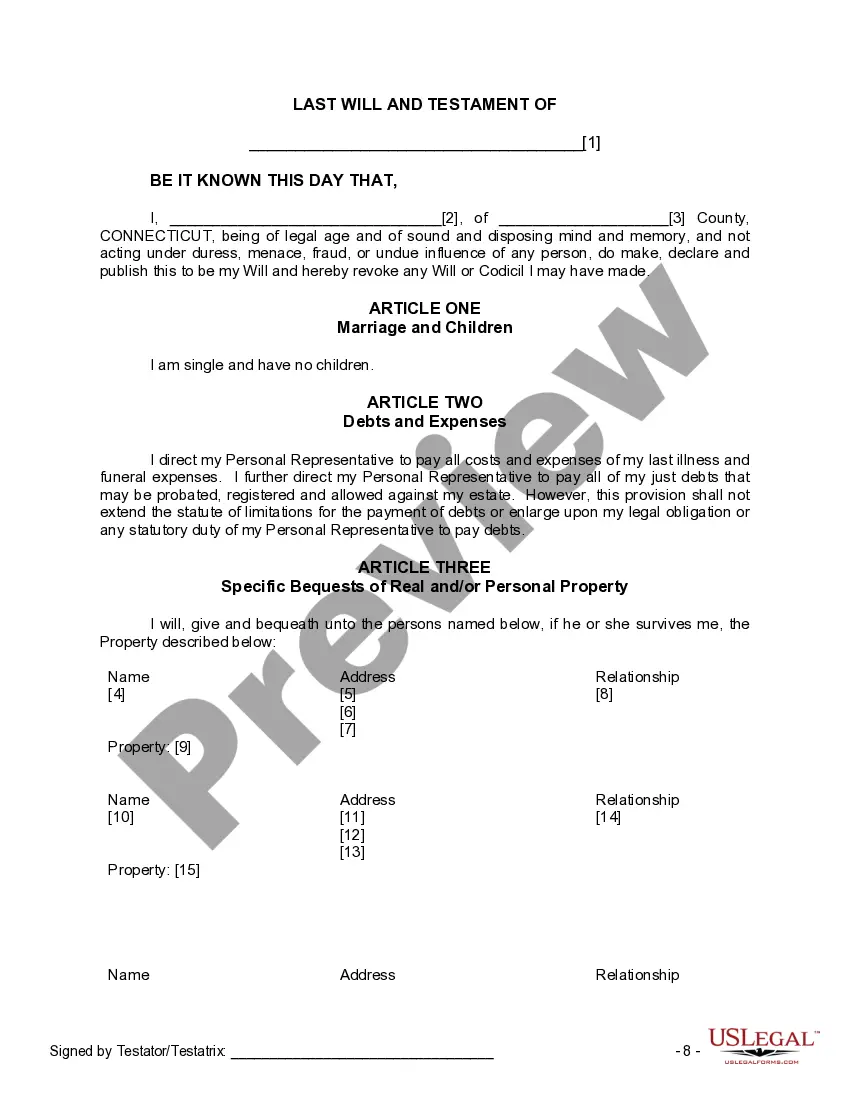
The Last Will and Testament for Single Person with No Children is a legal document that specifies how a single individual, without children, wishes to distribute their property upon their death. This form allows the user to appoint a personal representative, designate beneficiaries, and outline provisions for their estate. Unlike more complex wills, this form simplifies the process for those without dependents or a spouse, making it particularly suitable for single individuals.
Form components explained
- Personal information of the testator including name and residence.
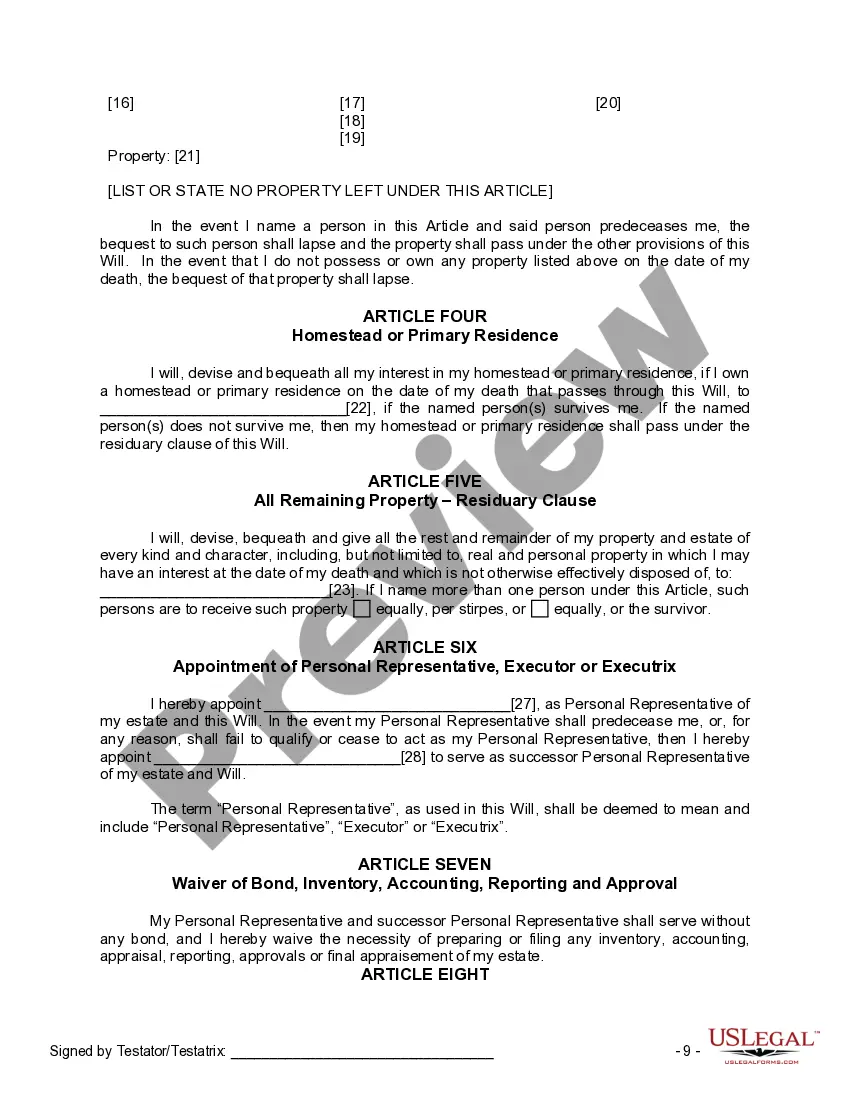
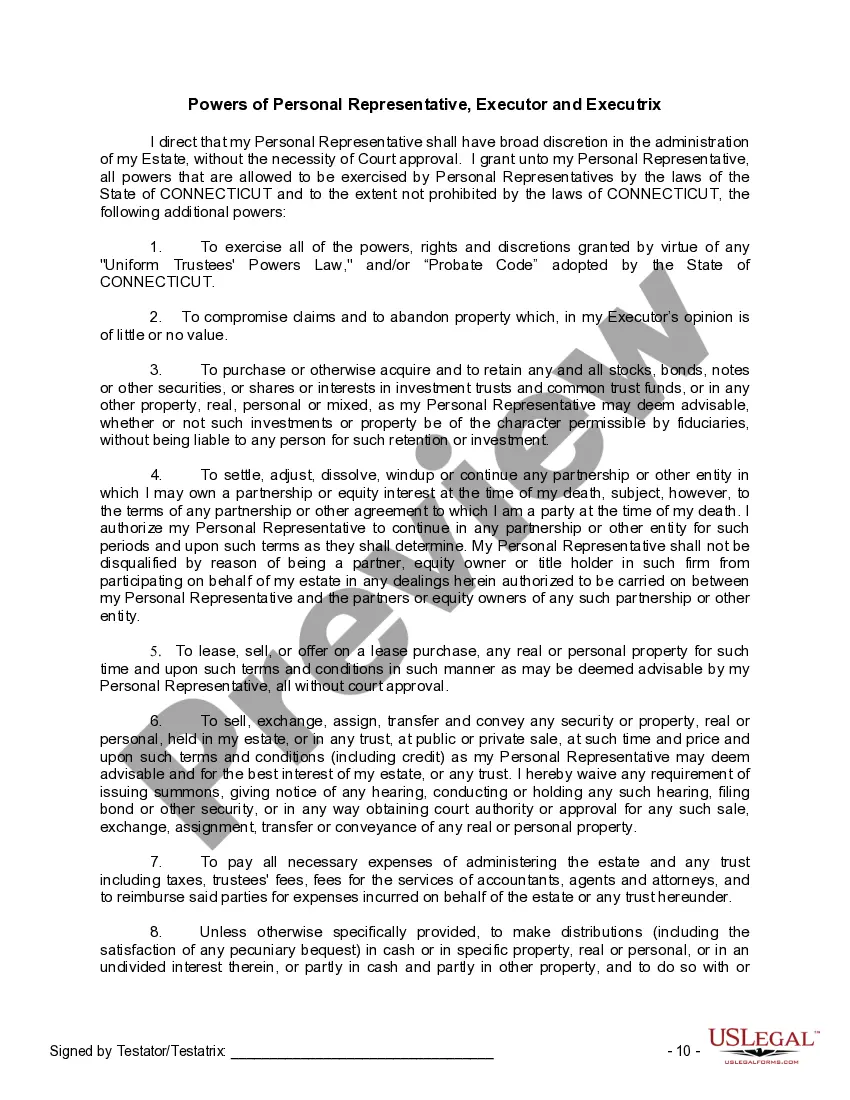
- Appointment of a personal representative to manage the estate.
- Designations for specific property bequests to individuals.
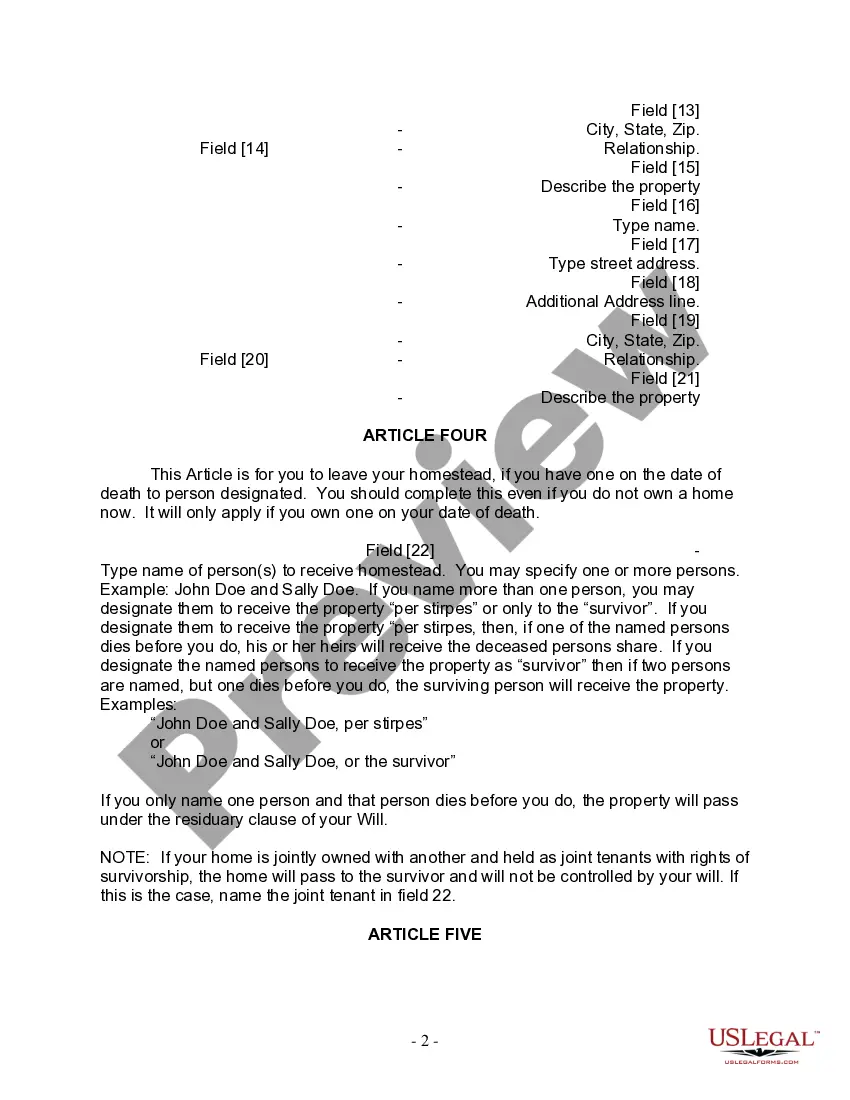
- Instructions for the distribution of the homestead or primary residence.
- Provisions for the residual estate, addressing any remaining assets.
- Requirements for signatures and witness attestations.




Common use cases
This form is necessary when a single person without children wishes to outline how their assets will be distributed after passing away. It is particularly useful for those who want to ensure their wishes are honored, avoid the complications of intestate succession, and clearly appoint someone to handle their estate affairs. This will is also ideal for individuals who have specific items or properties in mind for particular beneficiaries.
Intended users of this form
- Single individuals with no children.
- Persons looking for a straightforward way to manage their estate planning.
- Individuals wanting to designate specific beneficiaries for their assets.
- Anyone seeking to avoid complications in the succession of their estate.
How to prepare this document
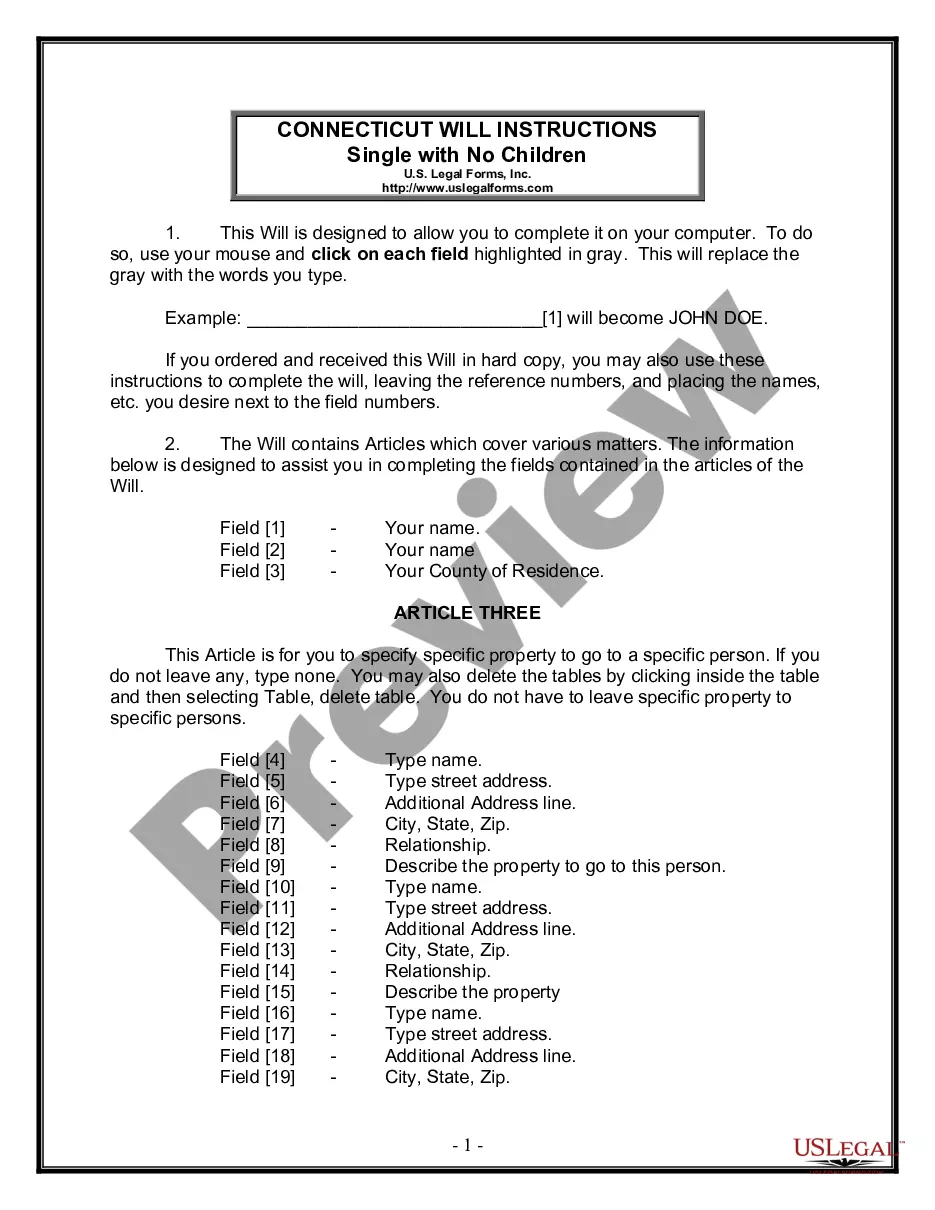
- Identify yourself by entering your full name and county of residence.
- Designate specific beneficiaries for any property you wish to leave behind.
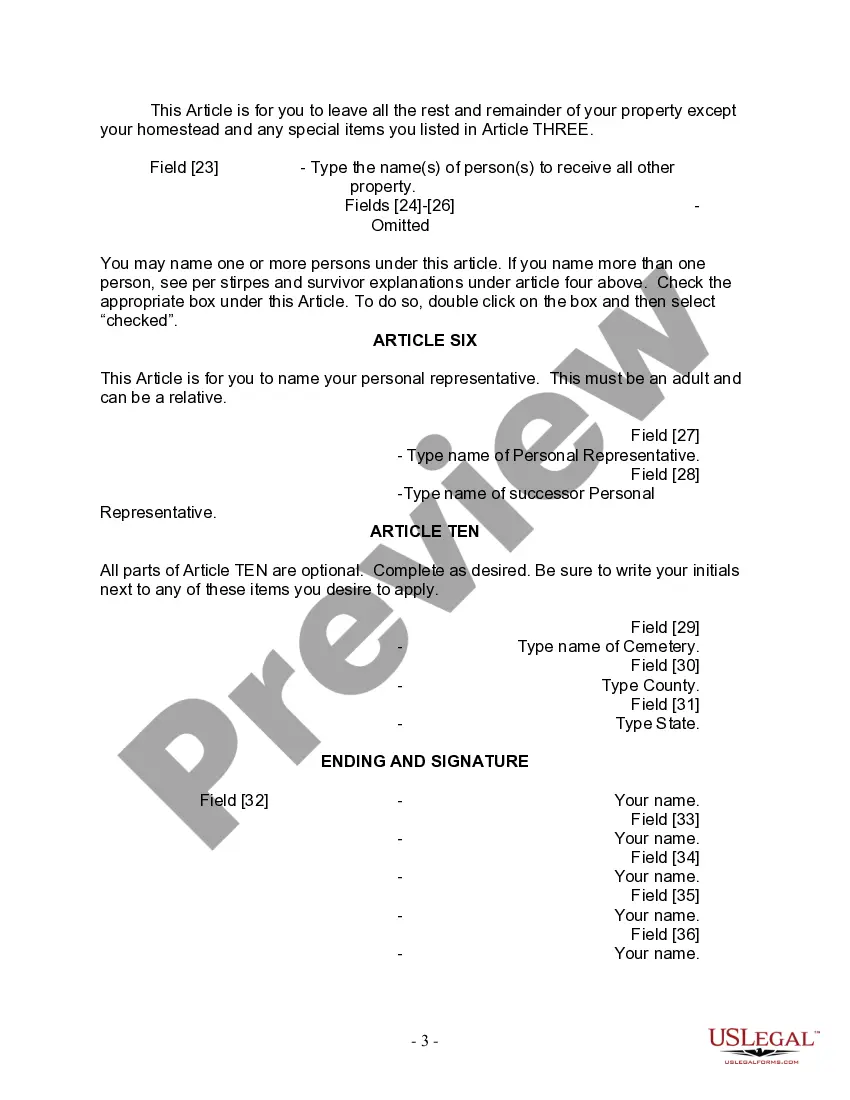
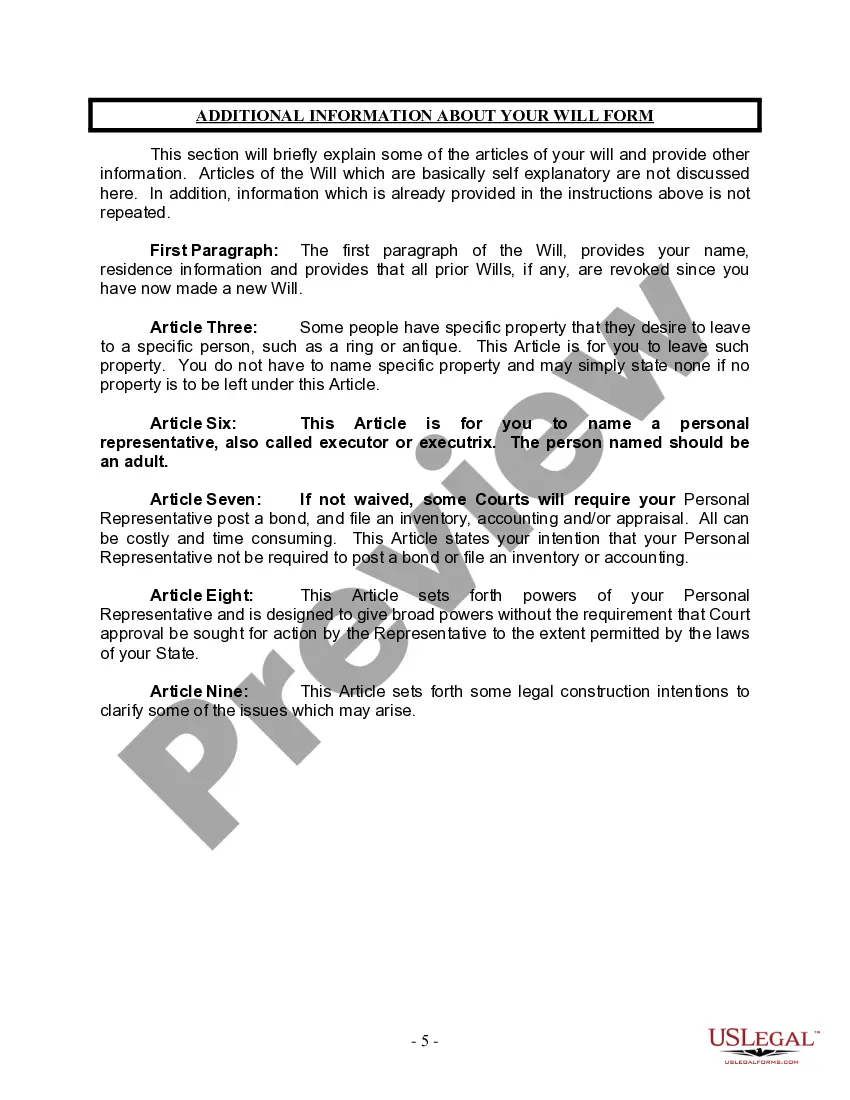
- Appoint a personal representative to execute your wishes after your death.
- Complete any optional sections, such as preferences for your burial or cremation.
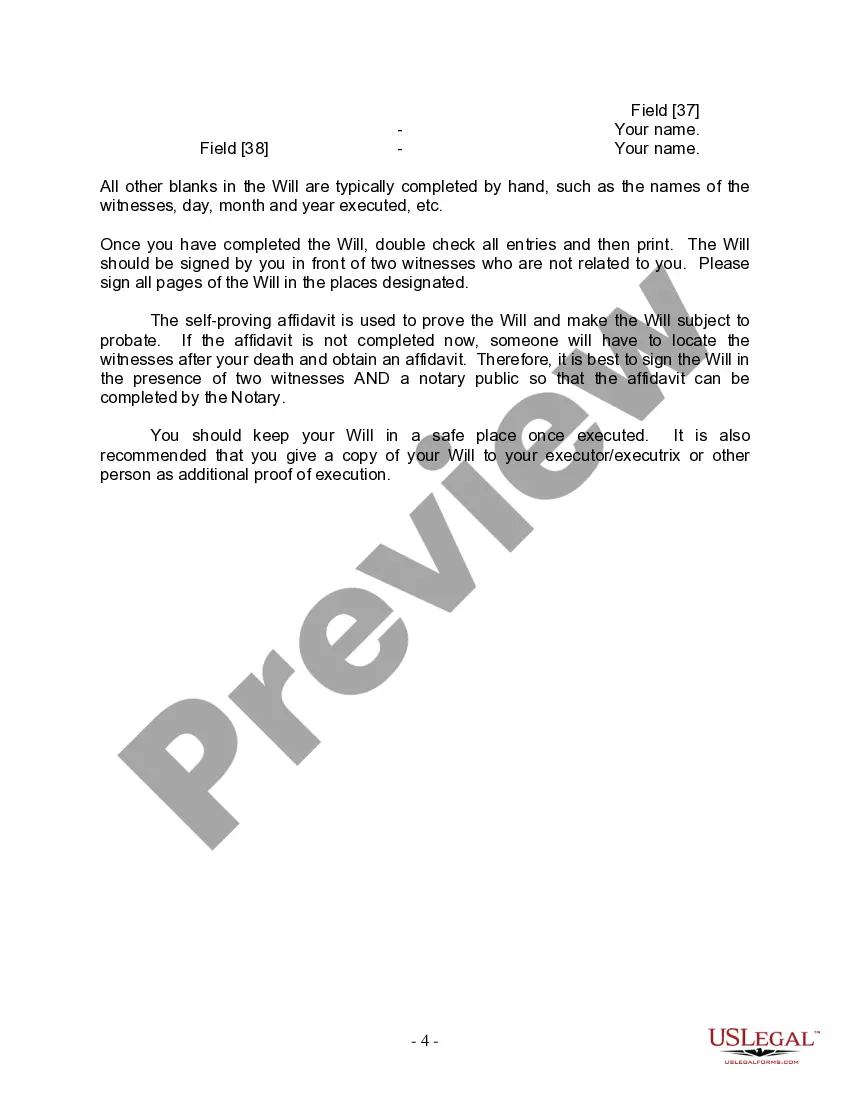
- Sign the will in the presence of two witnesses, and have them sign as well.
- If using the self-proving affidavit, sign before a notary public for added validity.
Is notarization required?
Yes, this form must be notarized to be legally valid if it includes a self-proving affidavit. The notary public will confirm your identity and ensure that the will was signed willingly and in accordance with the law. Online notarization services may be available for added convenience.
Get your form ready online
Our built-in tools help you complete, sign, share, and store your documents in one place.
Make edits, fill in missing information, and update formatting in US Legal Forms—just like you would in MS Word.
Download a copy, print it, send it by email, or mail it via USPS—whatever works best for your next step.
Sign and collect signatures with our SignNow integration. Send to multiple recipients, set reminders, and more. Go Premium to unlock E-Sign.
If this form requires notarization, complete it online through a secure video call—no need to meet a notary in person or wait for an appointment.
We protect your documents and personal data by following strict security and privacy standards.

Make edits, fill in missing information, and update formatting in US Legal Forms—just like you would in MS Word.

Download a copy, print it, send it by email, or mail it via USPS—whatever works best for your next step.

Sign and collect signatures with our SignNow integration. Send to multiple recipients, set reminders, and more. Go Premium to unlock E-Sign.

If this form requires notarization, complete it online through a secure video call—no need to meet a notary in person or wait for an appointment.

We protect your documents and personal data by following strict security and privacy standards.
Mistakes to watch out for
- Failing to have the will signed by two witnesses as required.
- Not specifying beneficiaries clearly, which could lead to confusion.
- Omitting the personal representative, which may complicate estate management.
- Not reviewing the form for completion before signing.
Benefits of completing this form online
- Easy customization directly on your computer, ensuring accurate completion.
- Ability to save and revise your document as needed, promoting thorough planning.
- Access to legal forms that are drafted by licensed attorneys for confidence in their legality.
- Convenient and secure storage of your document, reducing the risk of loss or damage.
Summary of main points
- Your Last Will and Testament is vital for directing how your property is distributed after your death.
- This form is specifically crafted for single individuals with no children.
- Appointing a personal representative is crucial for estate management.
- Signatures from witnesses and potentially notarization are required for legal validity.
Looking for another form?
Form popularity
FAQ
Writing a Connecticut Last Will and Testament for Single Person with No Children involves several key steps. First, you should identify your assets and decide how you want them distributed after your passing. Next, you need to appoint an executor who will ensure your wishes are followed. Utilizing a reliable resource like USLegalForms can simplify the process, offering templates and guidance tailored specifically for creating a will to meet your personal needs.
One of the biggest mistakes people make with wills is failing to update them after major life changes. Life events such as moving or changes in relationships can significantly impact your wishes. Without regular updates, your Connecticut Last Will and Testament for Single Person with No Children may not reflect your current intentions. Always review and revise your will to avoid complications down the road.
If you are single with no children, your next of kin is usually your parents or siblings. In the absence of parents or siblings, other relatives such as grandparents or aunts and uncles may be considered. It is crucial to include this information in your Connecticut Last Will and Testament for Single Person with No Children to ensure your assets are directed to the right people, preventing any potential disputes.
Even if you are single and have no children, having a Connecticut Last Will and Testament for a Single Person with No Children is beneficial. A will ensures that your assets are distributed according to your wishes, rather than defaulting to state laws. It also allows you to appoint someone you trust to manage your affairs, providing peace of mind for you and your loved ones.
When you're creating a Connecticut Last Will and Testament for Single Person with No Children, choosing a beneficiary can be straightforward. You can name a close friend, a family member, or even a charitable organization as your beneficiary. This choice allows you to leave your assets to someone you trust. Just ensure that your intentions are clear in your will to avoid any confusion.
In Connecticut, assets that generally go through probate include real estate, bank accounts solely in the deceased person's name, and personal belongings. When you prepare your Connecticut Last Will and Testament for Single Person with No Children, you should be aware of these assets, as they determine how your estate will be handled. Consulting a professional, like those at uslegalforms, can facilitate a smoother probate process.
Having a will in Connecticut does generally mean you will need to go through probate. The probate process is necessary to ensure that the terms of your Connecticut Last Will and Testament for Single Person with No Children are honored and your assets are distributed accordingly. However, some exceptions exist, depending on the size and type of estate, which may allow for quicker administration.
Not all wills must go through probate in Connecticut. While most wills do require probate to validate them, certain small estates may qualify for simplified procedures, avoiding extensive probate processes. Understanding the nuances of your Connecticut Last Will and Testament for Single Person with No Children can help you navigate these rules effectively.
written will, or holographic will, is valid in Connecticut if it is signed by the testator and reflects their intentions. While it may not be the best option for everyone, a Connecticut Last Will and Testament for Single Person with No Children can certainly be handwritten, as long as it meets the legal criteria. However, consulting legal advice can help ensure everything is in order.
When there is no will in Connecticut, the state laws of intestacy determine who inherits your assets. Typically, relatives such as parents, siblings, or other close family members will inherit your estate. Having a Connecticut Last Will and Testament for Single Person with No Children can help clarify your intentions and prevent any disputes among potential heirs.