California Commercial Rental Lease Application
About this form
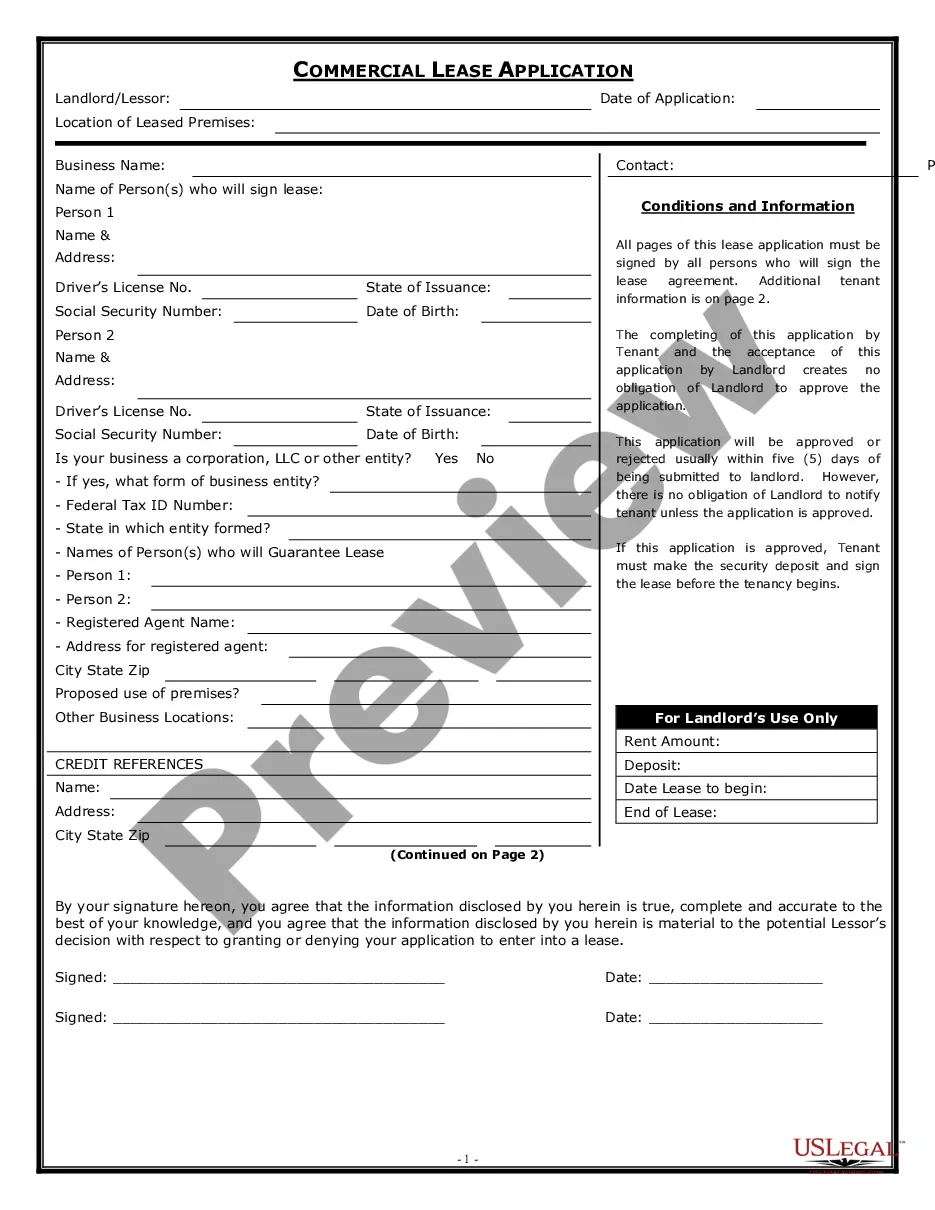
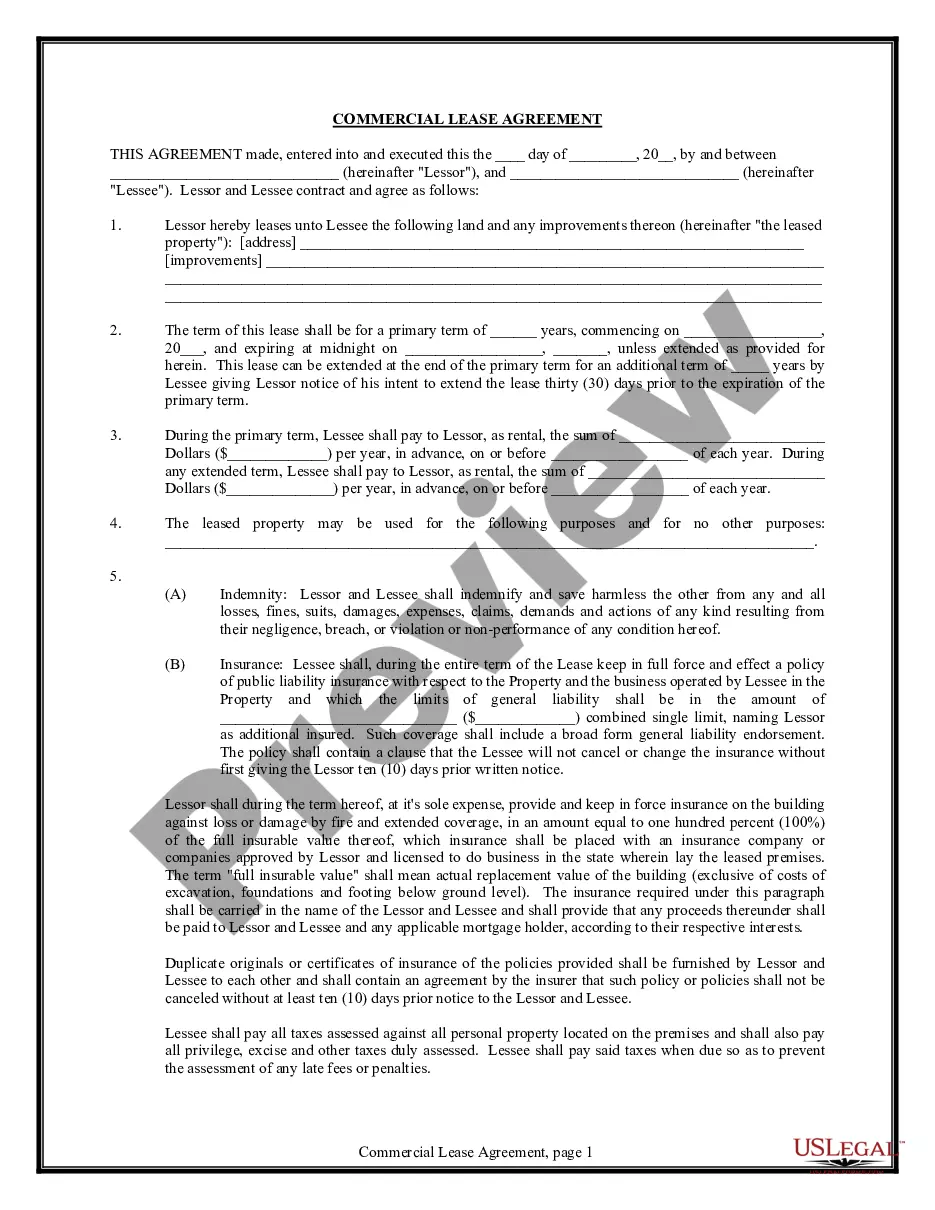
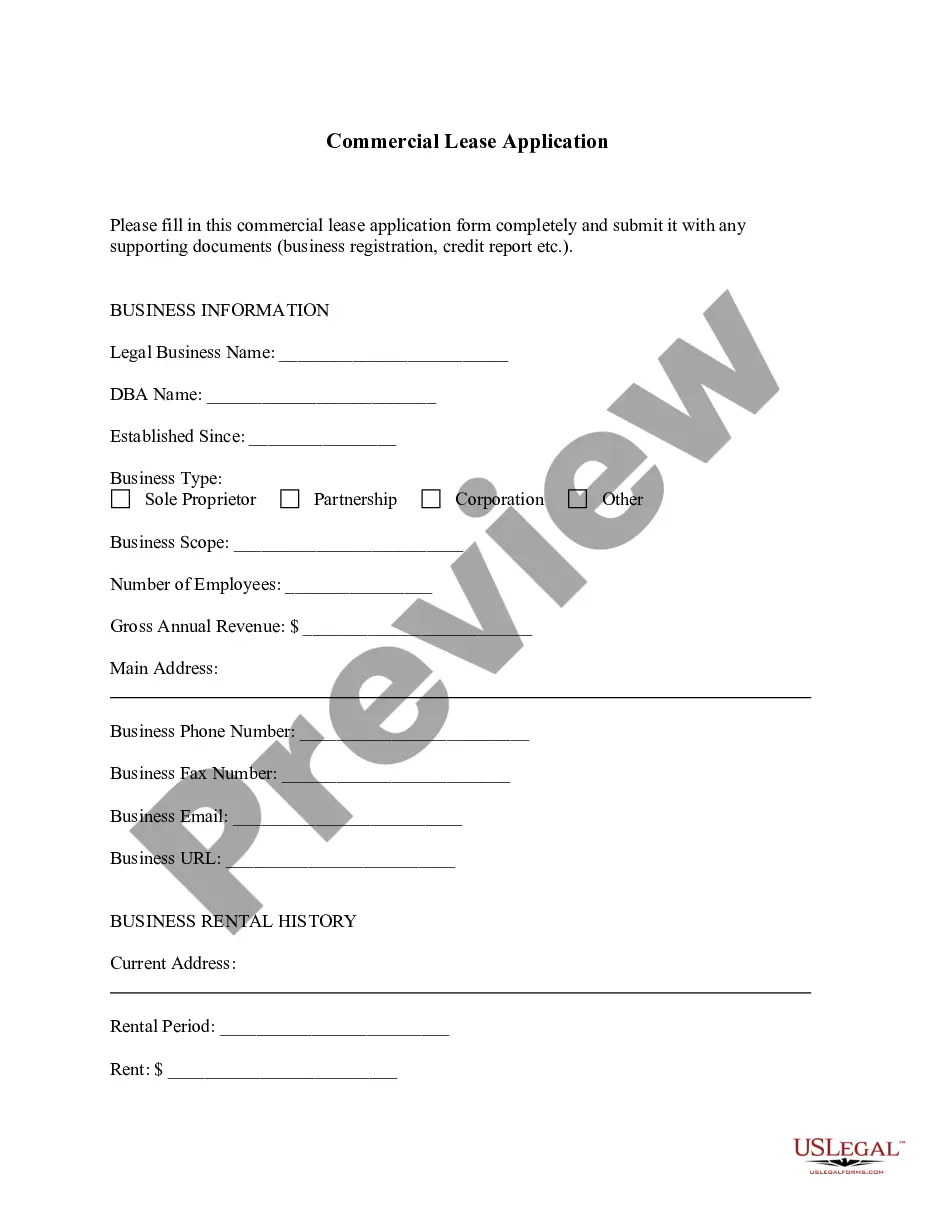
The Commercial Rental Lease Application is a legal document used by a lessor (landlord) to gather crucial information from a proposed lessee (tenant) before entering into a commercial lease agreement. This form includes necessary disclosures and authorizations for the release of information. Unlike residential leases, commercial leases often involve more complex terms, varying payment structures, and longer durations. This application aids in assessing the suitability of the tenant for leasing commercial property.
Key parts of this document
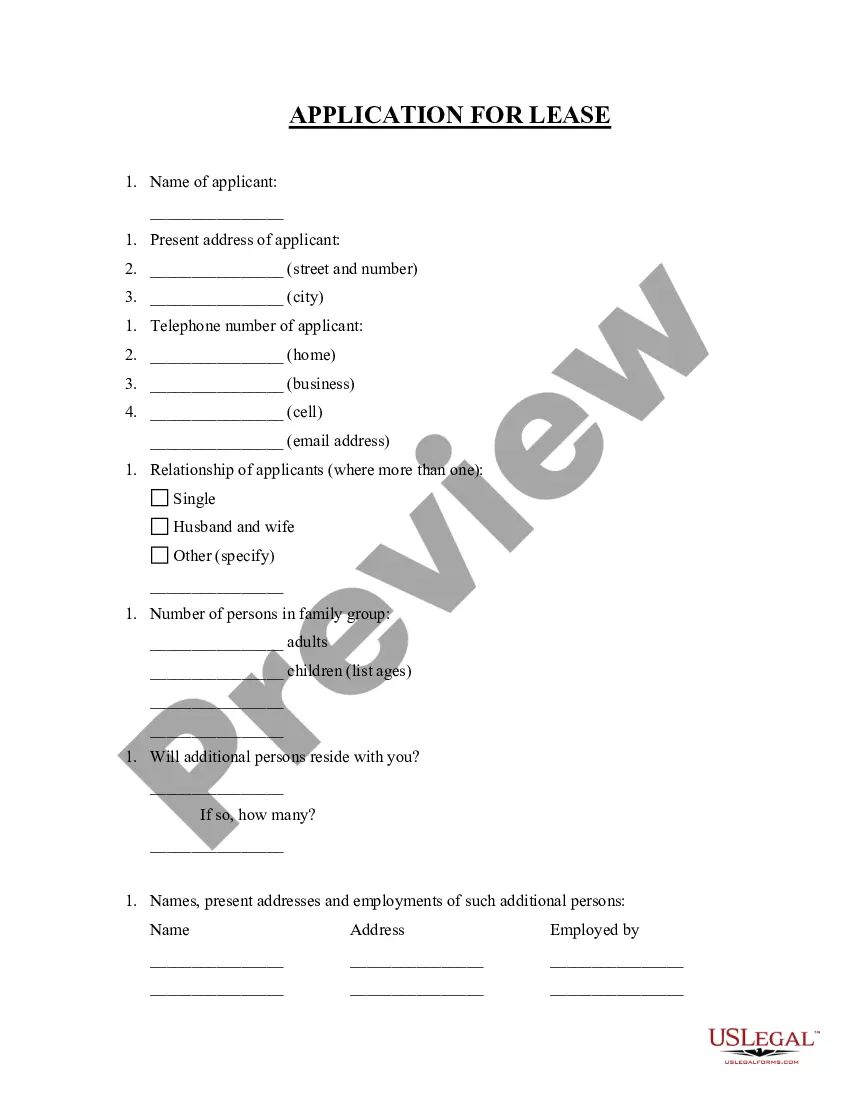
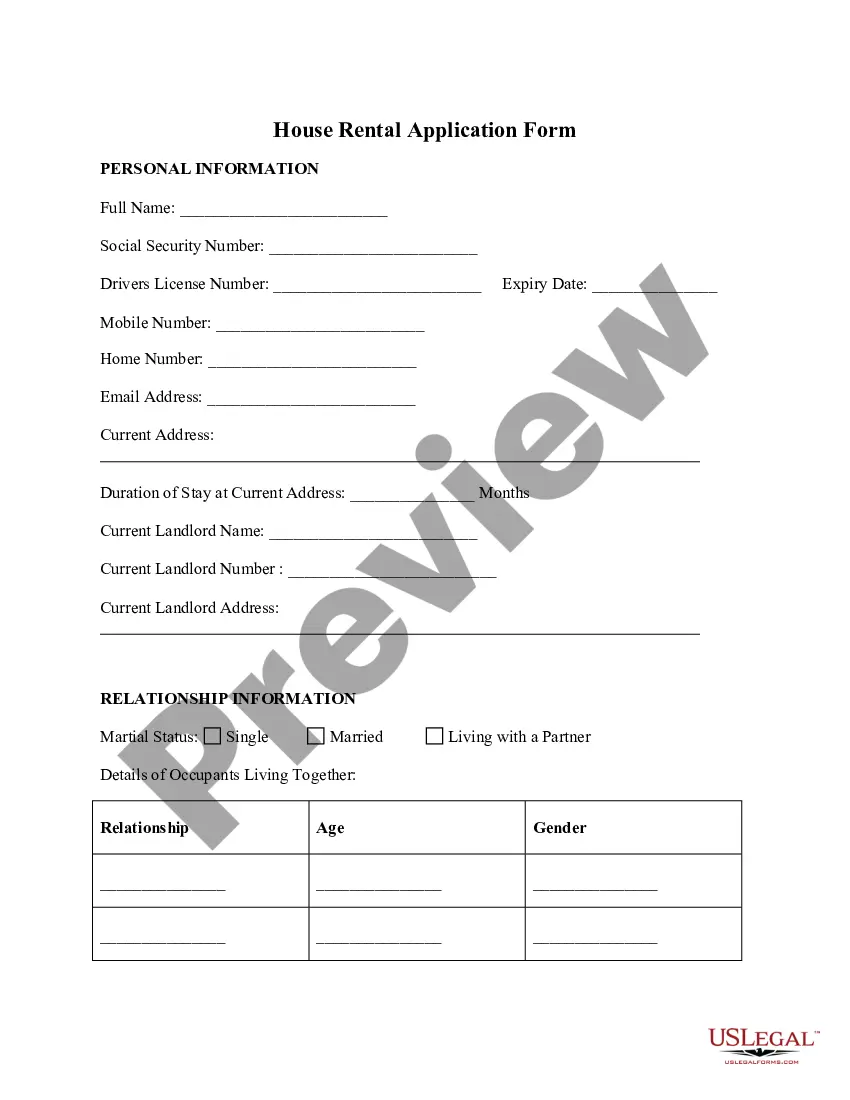
- Basic applicant information including name, address, and identification numbers.
- Business details, such as the type of business entity, tax ID number, and registered agent information.
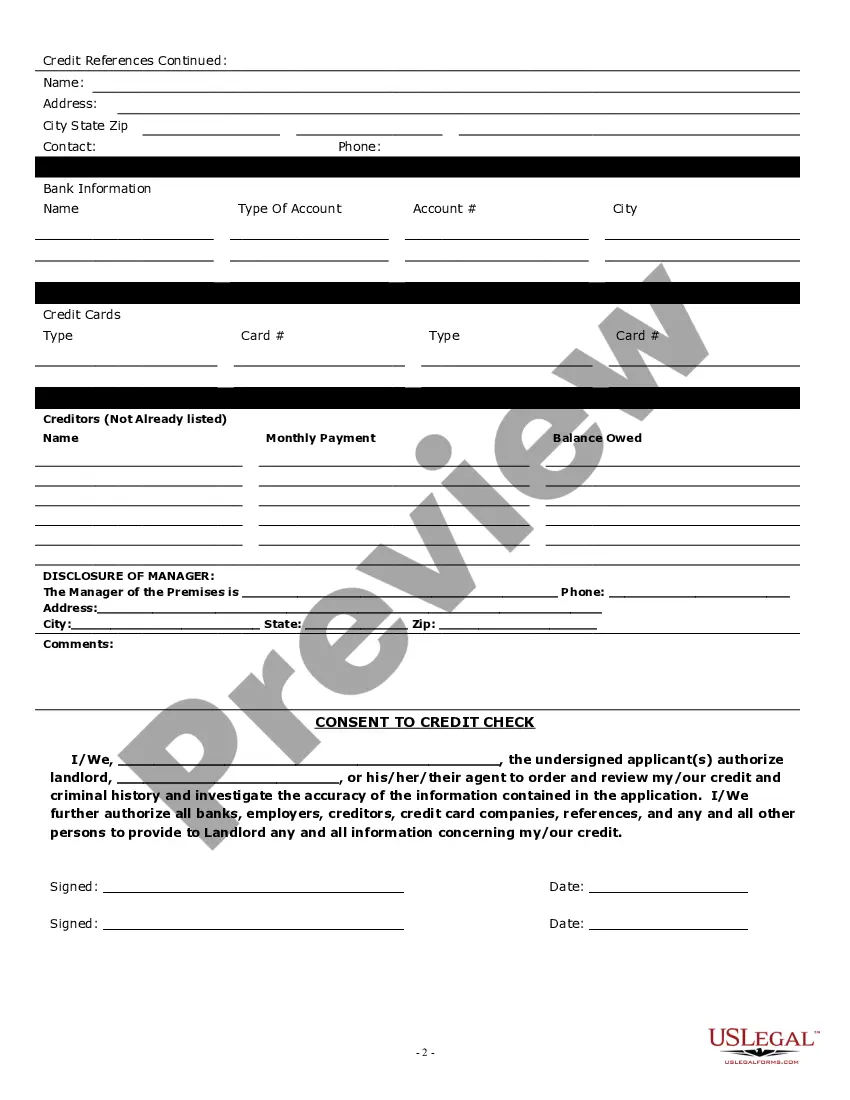
- Credit references and banking information for evaluating the applicant's financial stability.
- Authorization for the landlord to conduct credit and criminal history checks.
- Signature section binding the applicant to the information provided.

Situations where this form applies
This form should be used when a landlord seeks to rent a commercial property and requires potential tenants to formally apply for the lease. It is particularly useful for assessing a tenant's background, financial stability, and business intentions prior to the negotiation of lease terms.
Who needs this form
- Landlords seeking to rent out commercial properties.
- Prospective tenants interested in leasing commercial space.
- Any agent representing the lessor or lessee in the leasing process.
Completing this form step by step
- Identify the parties involved, including both the landlord and the prospective tenant.
- Fill in the applicant's business details and personal information accurately.
- Provide credit and banking information as requested in the form.
- Sign and date the application to confirm the truthfulness of the provided information.
- Submit the completed application to the landlord for review.
Notarization requirements for this form
This form does not typically require notarization unless specified by local law. Always check your local regulations to ensure compliance when submitting the application.
Get your form ready online
Our built-in tools help you complete, sign, share, and store your documents in one place.
Make edits, fill in missing information, and update formatting in US Legal Forms—just like you would in MS Word.
Download a copy, print it, send it by email, or mail it via USPS—whatever works best for your next step.
Sign and collect signatures with our SignNow integration. Send to multiple recipients, set reminders, and more. Go Premium to unlock E-Sign.
If this form requires notarization, complete it online through a secure video call—no need to meet a notary in person or wait for an appointment.
We protect your documents and personal data by following strict security and privacy standards.

Make edits, fill in missing information, and update formatting in US Legal Forms—just like you would in MS Word.

Download a copy, print it, send it by email, or mail it via USPS—whatever works best for your next step.

Sign and collect signatures with our SignNow integration. Send to multiple recipients, set reminders, and more. Go Premium to unlock E-Sign.

If this form requires notarization, complete it online through a secure video call—no need to meet a notary in person or wait for an appointment.

We protect your documents and personal data by following strict security and privacy standards.
Common mistakes to avoid
- Leaving required fields blank, which can delay the application process.
- Providing inaccurate or outdated information.
- Failing to sign the application, rendering it invalid.
Why use this form online
- Convenience of accessing and completing the form from any location.
- Editable format allowing for easy corrections and updates.
- Secure storage of data and easy retrieval for future reference.
Legal use & context
- This application is used to establish a legal framework for rental agreements in commercial real estate.
- Completion of this form helps protect landlords by verifying potential tenantsâ financial stability and credibility.
- Obtaining consent for credit checks is crucial for informed decision-making by the lessor.
Main things to remember
- Use the Commercial Rental Lease Application to collect essential tenant information before a lease is signed.
- Ensure that all details provided in the application are accurate to avoid delays in the approval process.
- Remember that approval of the application does not guarantee automatic tenancy.
Looking for another form?
Form popularity
FAQ
The California Commercial Rental Lease Application is a standard landlord form used to collect essential information from a proposed lessee before signing a commercial lease. It asks for basic applicant information, business details (entity type, tax ID, registered agent), credit references and banking information, and an authorization for information release to enable credit and criminal history checks. This helps landlords assess suitability and financial reliability before negotiating terms.
To fill out this lease application, provide accurate information in each required section: basic applicant information (name, address, identification numbers); business details (entity type, tax ID, registered agent); credit references and banking information; authorization for the landlord to conduct credit and criminal history checks; and a signed commitment confirming the information is true. Include all disclosures as directed.
Red flags on a rental application include missing or inconsistent business details (such as entity type or tax ID), absent or unverifiable credit references, incomplete or conflicting answers, inconsistent contact information, and a lack of authorization for background checks. The form’s sections are designed to help landlords identify these issues before proceeding.
This form is not the lease itself but an application used before lease negotiations. It should be completed with the same basic information, business details, and authorization sections so the landlord can assess suitability. After approval, terms will be negotiated separately and documented in the commercial lease.
To properly fill out a lease agreement, wait until lease terms are negotiated based on the information collected in this application. The California Commercial Rental Lease Application gathers data for evaluation, but the actual lease is a separate document. When drafting the lease, consider consulting a qualified attorney and ensure terms match the property and business needs.
This form differs from residential applications by requiring business-specific details (entity type, tax ID, registered agent) and by including an explicit authorization for the landlord to perform credit and criminal history checks, plus disclosures for information release. It is tailored to commercial tenants and California commercial property leasing.