Mississippi Construction Contract Cost Plus or Fixed Fee
What this document covers
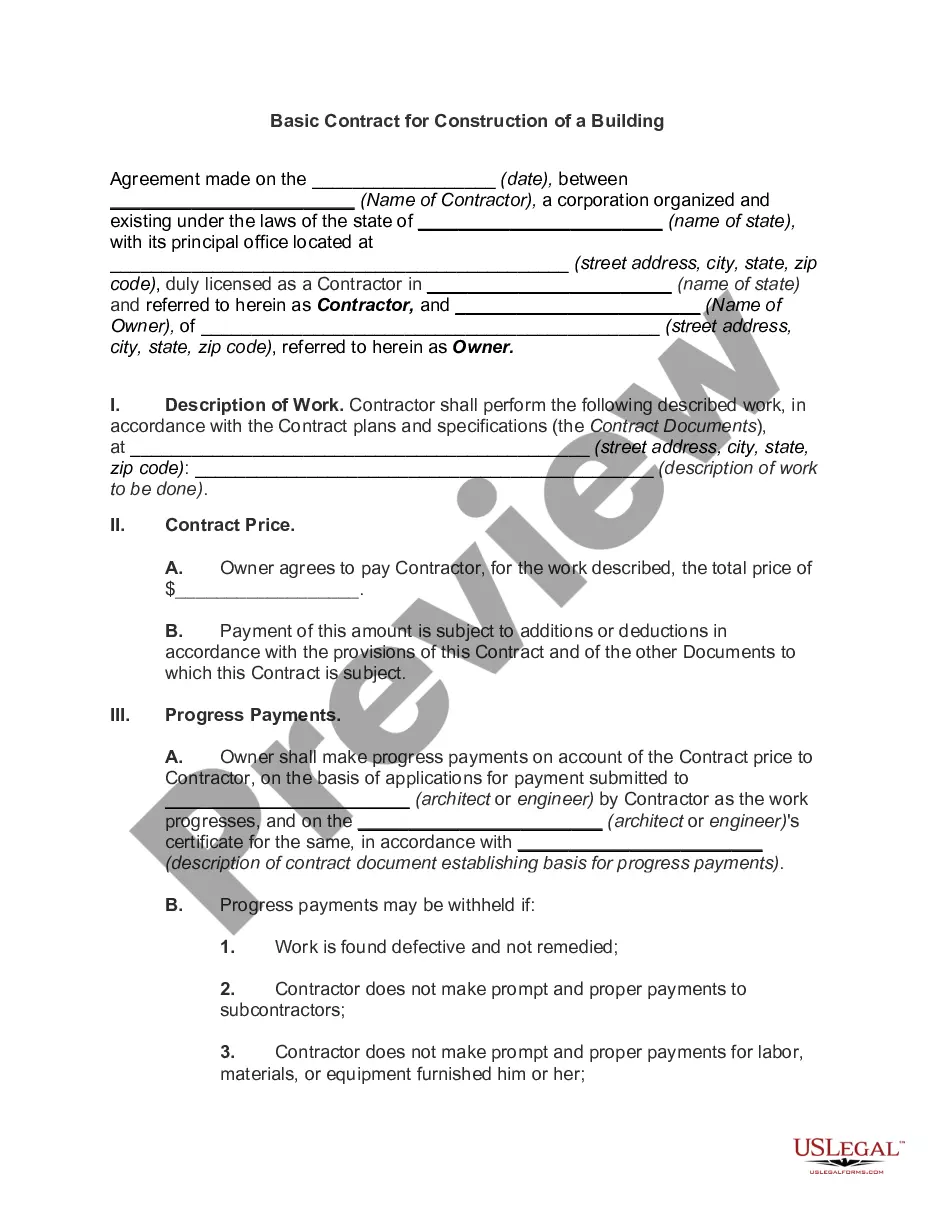
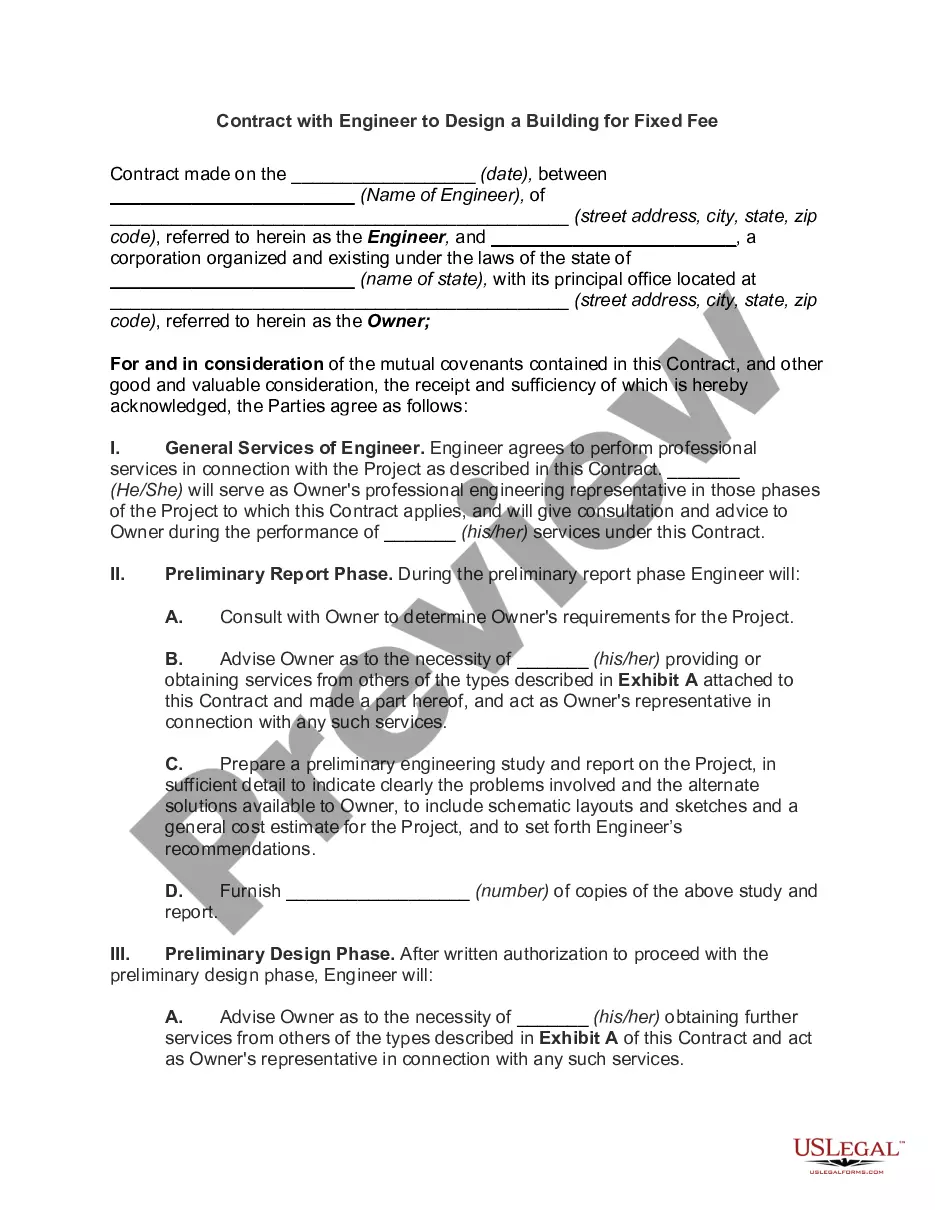
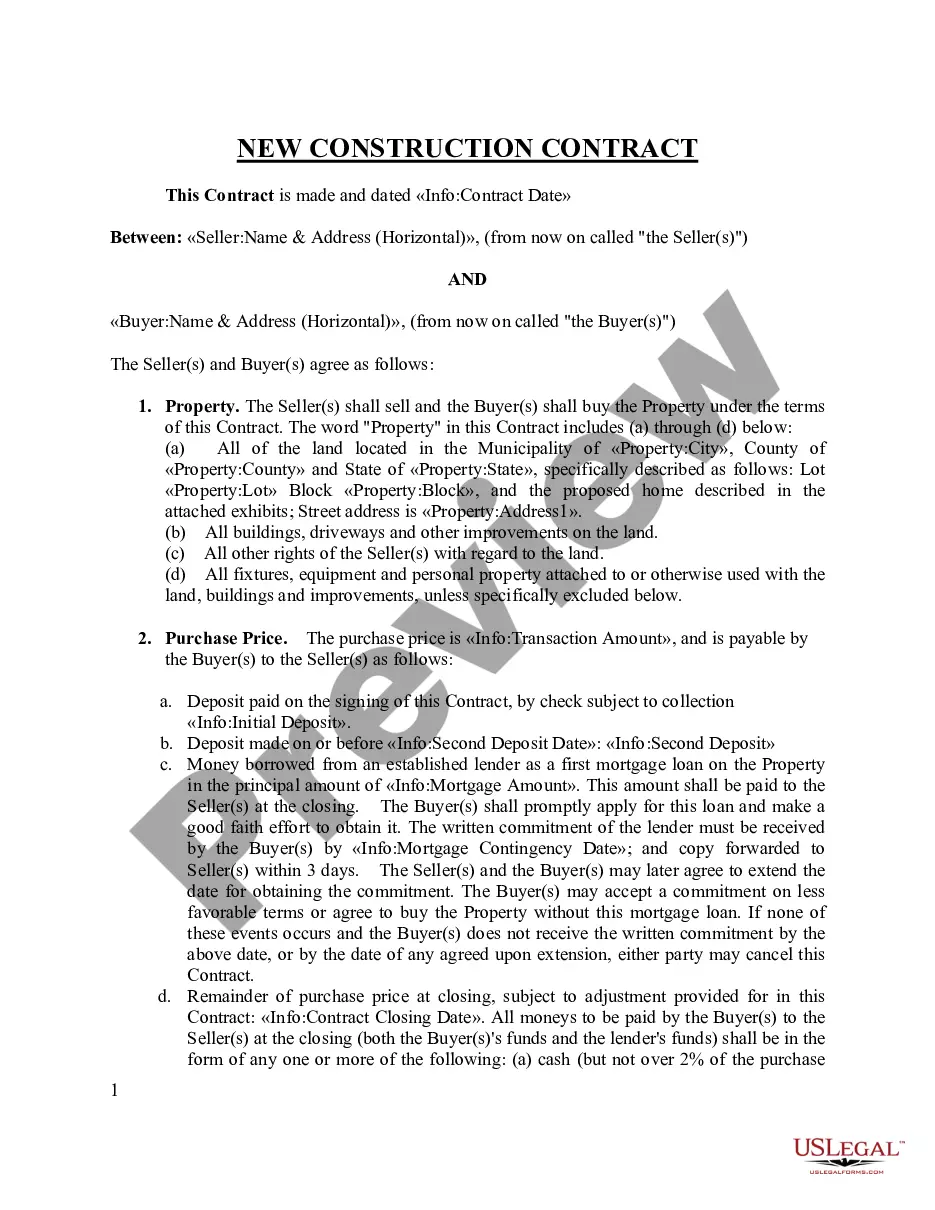
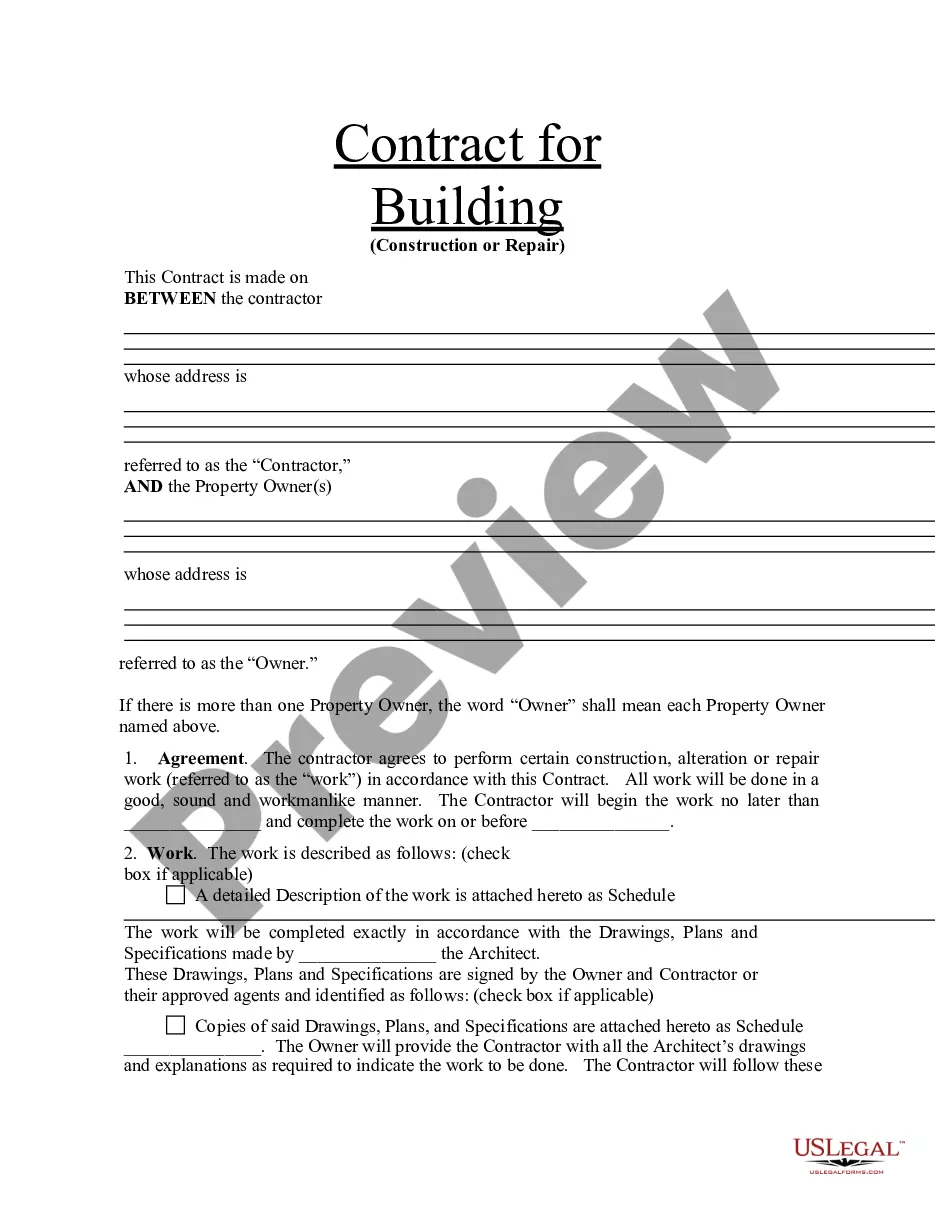
The Construction Contract Cost Plus or Fixed Fee form is a legal document that outlines the agreement between a contractor and an owner regarding construction work. This form is designed for payment arrangements based on either a cost-plus model, where expenses are billed plus a fee, or a fixed fee arrangement, with a set price for the entire project. It is essential for projects involving renovations or modifications, but it is not suitable for new home construction, setting it apart from other standard construction contracts.
Key parts of this document
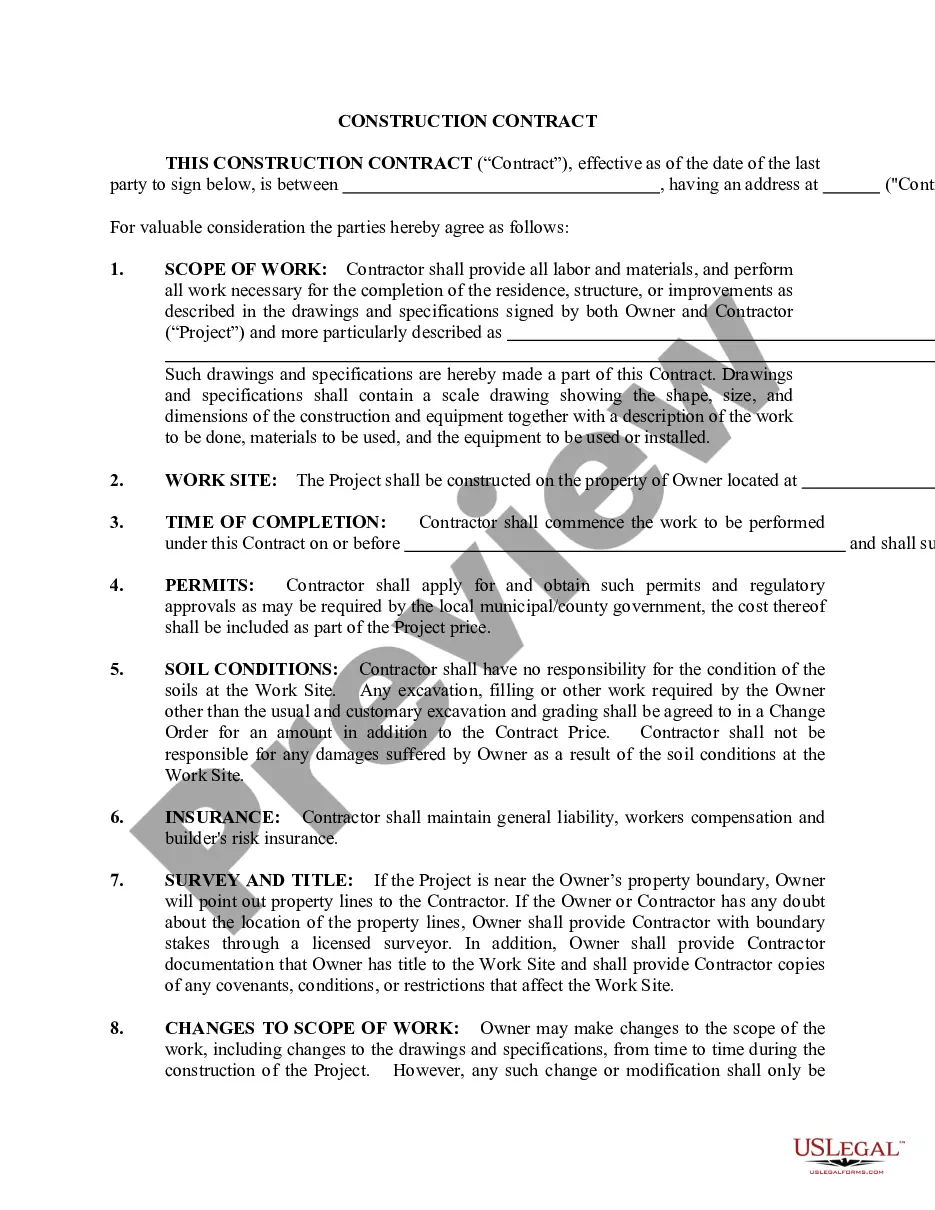
- Work site details, including the specific location of the project.
- Permits required for the project, with obligations on the contractor to obtain them.
- Soil conditions and the contractor's limitations regarding soil-related issues.
- Insurance requirements, including liability and workers compensation.
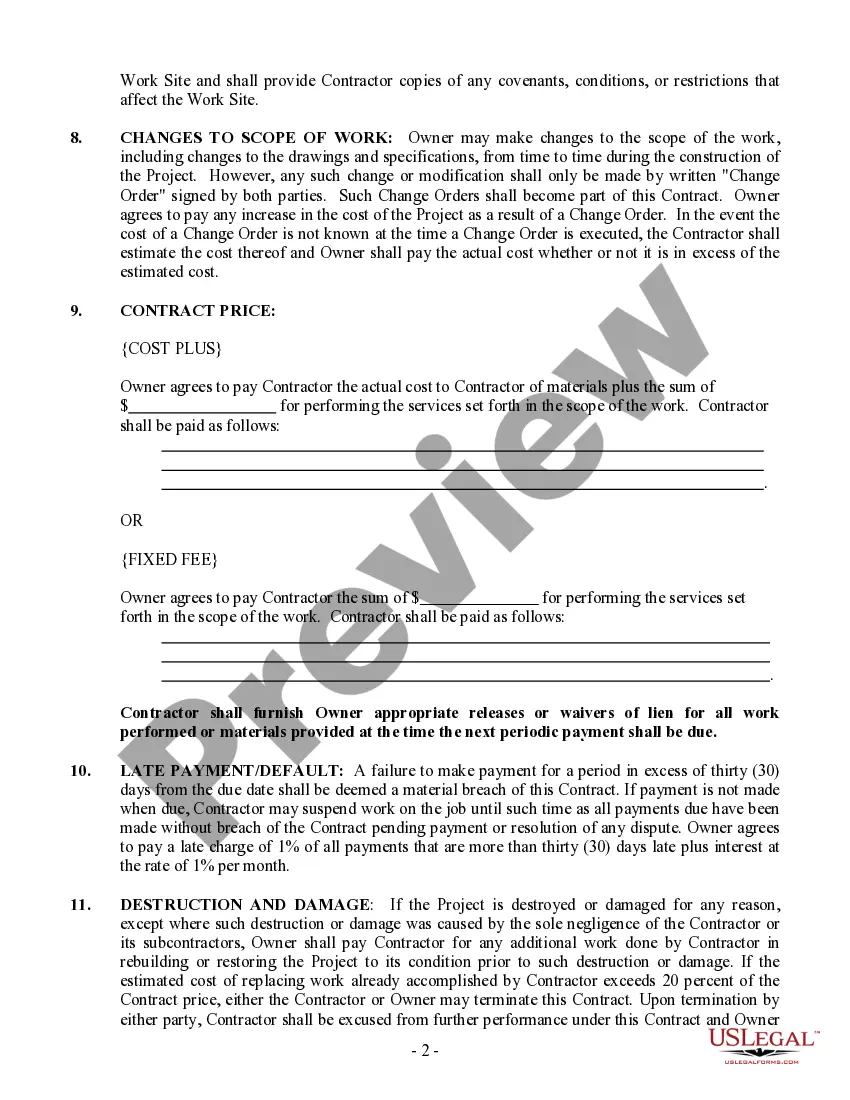
- Change order procedures for modifying the project scope and costs.
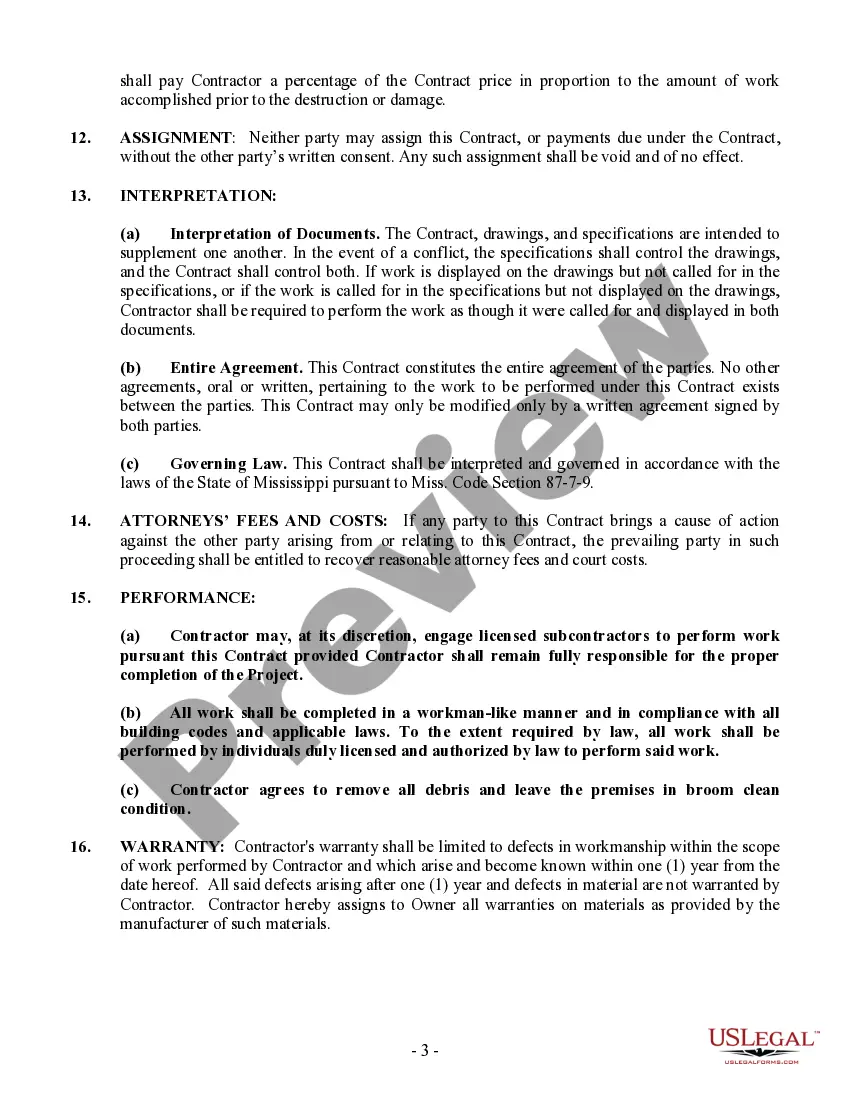
- Warranty provisions detailing contractor responsibilities for workmanship.
When this form is needed
This form should be used when engaging a contractor for a construction project that does not involve new home construction. It is particularly useful for property owners looking to undertake renovations, additions, or other improvements where flexible payment terms may be beneficial. Utilizing this contract ensures that both parties understand the scope of work, financial responsibilities, and contingencies for changes throughout the project.
Who needs this form
- Property owners seeking to hire a contractor for renovation or modification projects.
- Contractors looking to establish clear, legal agreements with clients.
- Individuals or businesses involved in real estate who need structured payment and work conditions.
Instructions for completing this form
- Identify and enter the full names of the contractor and the owner.
- Specify the exact location of the work site where the project will take place.
- Detail the scope of work to be performed by the contractor.
- Include the agreed payment arrangementâeither cost plus or fixed fee.
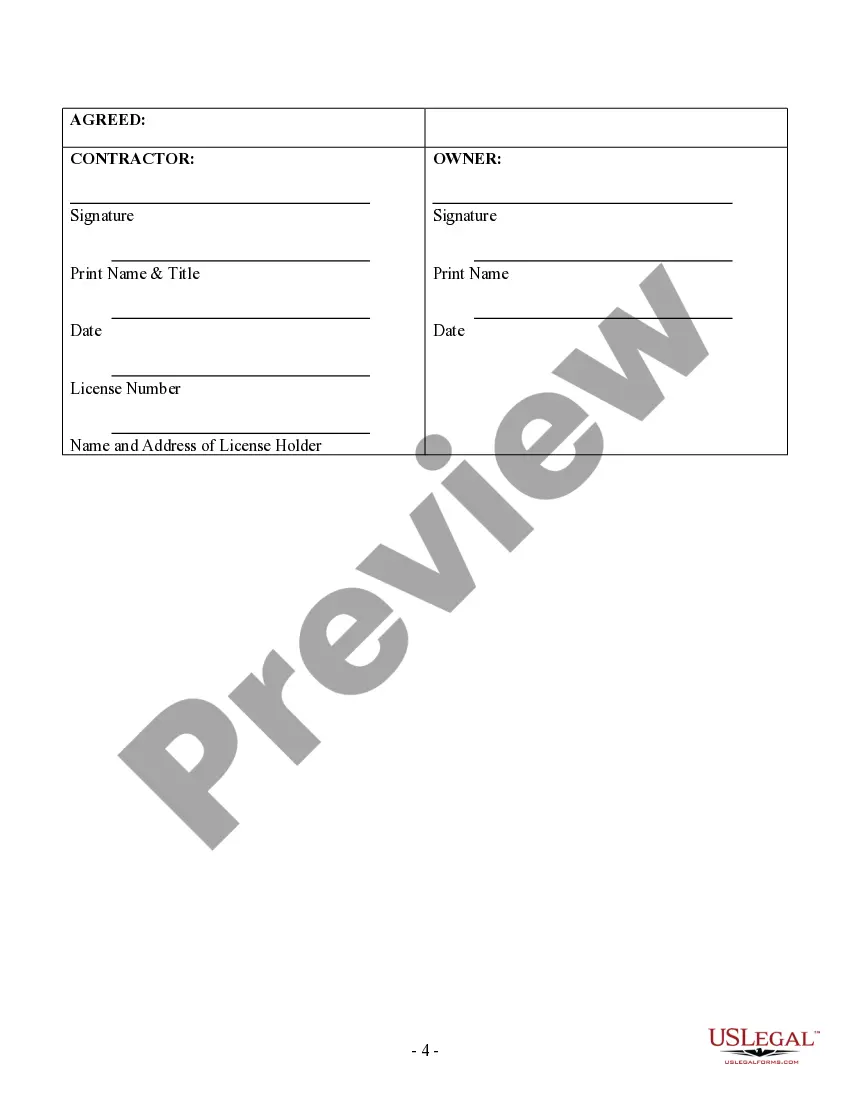
- Both parties should review and sign the document to finalize the agreement.
Does this form need to be notarized?
This form usually doesn’t need to be notarized. However, local laws or specific transactions may require it. Our online notarization service, powered by Notarize, lets you complete it remotely through a secure video session, available 24/7.
Get your form ready online
Our built-in tools help you complete, sign, share, and store your documents in one place.
Make edits, fill in missing information, and update formatting in US Legal Forms—just like you would in MS Word.
Download a copy, print it, send it by email, or mail it via USPS—whatever works best for your next step.
Sign and collect signatures with our SignNow integration. Send to multiple recipients, set reminders, and more. Go Premium to unlock E-Sign.
If this form requires notarization, complete it online through a secure video call—no need to meet a notary in person or wait for an appointment.
We protect your documents and personal data by following strict security and privacy standards.

Make edits, fill in missing information, and update formatting in US Legal Forms—just like you would in MS Word.

Download a copy, print it, send it by email, or mail it via USPS—whatever works best for your next step.

Sign and collect signatures with our SignNow integration. Send to multiple recipients, set reminders, and more. Go Premium to unlock E-Sign.

If this form requires notarization, complete it online through a secure video call—no need to meet a notary in person or wait for an appointment.

We protect your documents and personal data by following strict security and privacy standards.
Common mistakes
- Not specifying the complete scope of work, leading to misunderstandings later.
- Failing to include all necessary permits, which can delay the project.
- Overlooking the importance of clearly defining change order procedures.
Why use this form online
- Convenient downloadable format allows for easy accessibility and editing.
- Templates have been drafted by licensed attorneys to ensure legal reliability.
- Streamlines the preparation process, saving time and reducing errors.
Legal use & context
- This contract is legally binding and enforceable under Mississippi law.
- Both parties must adhere to the agreed terms, including payment structures and project responsibilities.
- Changes to the project scope must be documented through Change Orders to ensure clarity and agreement.
What to keep in mind
- This form is essential for formalizing agreements between contractors and property owners for construction projects.
- It provides clear guidelines on payment structures and responsibilities.
- Utilizing this contract protects both parties and clarifies legal obligations throughout the project.
Looking for another form?



Form popularity
FAQ
A Cost-Based Pricing Example Suppose that a company sells a product for $1, and that $1 includes all the costs that go into making and marketing the product. The company may then add a percentage on top of that $1 as the "plus" part of cost-plus pricing. That portion of the price is the company's profit.
Disadvantages of cost-plus fixed-fee contracts may include: The final, overall cost may not be very clear at the beginning of negotiations. May require additional administration or oversight of the project to ensure that the contractor is factoring in the various cost factors.
Cost Plus Contract Disadvantages For the buyer, the major disadvantage of this type of contract is the risk for paying much more than expected on materials. The contractor also has less incentive to be efficient since they will profit either way.
A cost-plus contract is an agreement to reimburse a company for expenses incurred plus a specific amount of profit, usually stated as a percentage of the contract's full price.
A fixed price contract sets a total price for all construction-related activities during a project. Many fixed price contracts include benefits for early termination and penalties for a late termination to give the contractors incentives to ensure the project is completed on time and within scope.
In the cost plus a percentage arrangement, the contractor bills the client for his direct costs for labor, materials, and subs, plus a percentage to cover his overhead and profit. Markups might range anywhere from 10% to 25%.
A cost-plus contract, also known as a cost-reimbursement contract, is a form of contract wherein the contractor is paid for all of their construction-related expenses. Plus, the contractor is paid a specific agreed-upon amount for profit.