Alaska Letter from Tenant to Landlord containing Notice to landlord to cease retaliatory threats to evict or retaliatory eviction
What this document covers
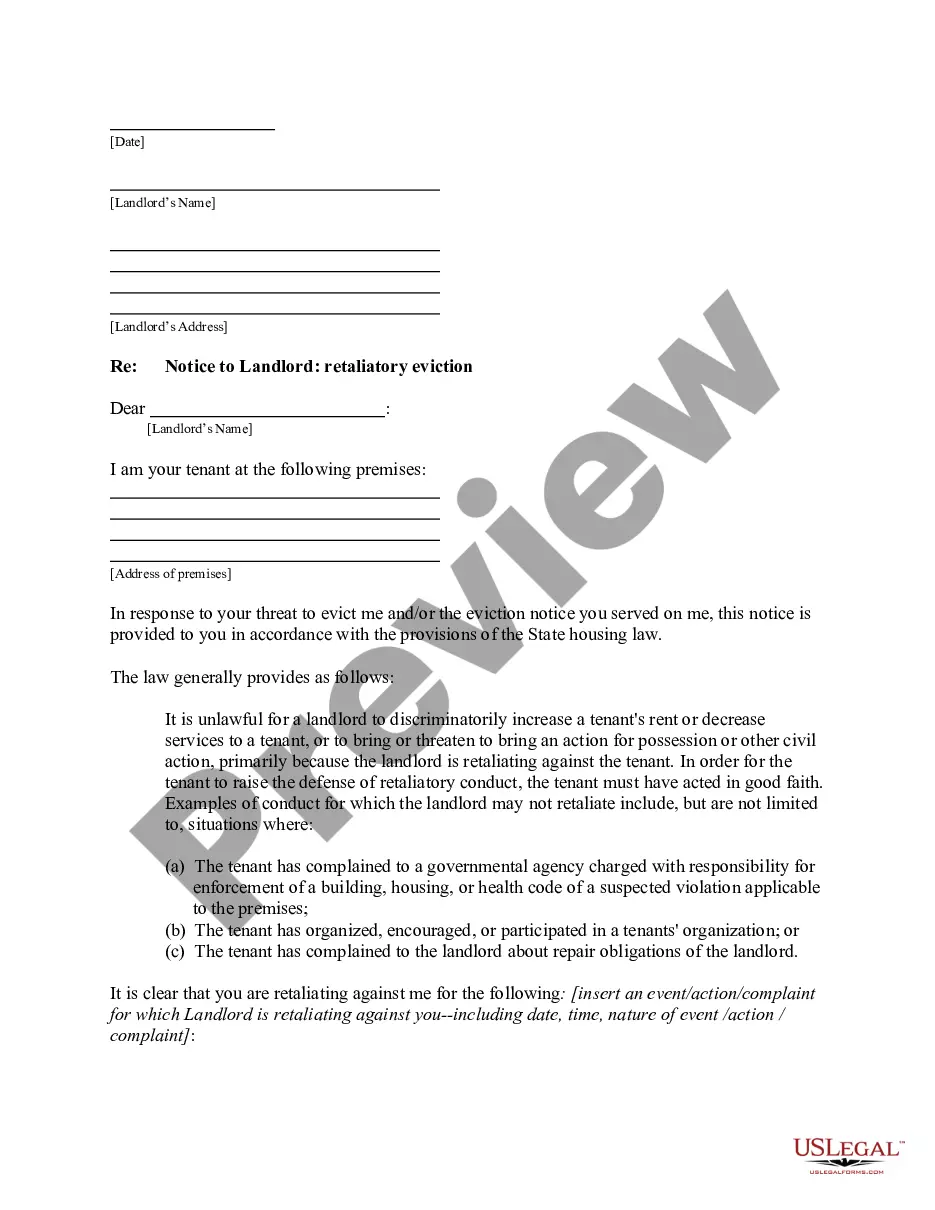
This Letter from Tenant to Landlord serves as a formal notice to a landlord to cease any retaliatory threats of eviction. This form protects the tenant's rights by asserting that the eviction threat is discriminatory and in response to the tenant's legal actions, such as reporting health code violations or requesting necessary repairs. Using this form helps to differentiate valid eviction notices from those that are retaliatory, in accordance with state housing laws.
Form components explained
- Introduction of the tenant's name and address.
- Statement outlining the landlord's threats to evict the tenant.
- Explanation of actions taken by the tenant that are protected from retaliation.
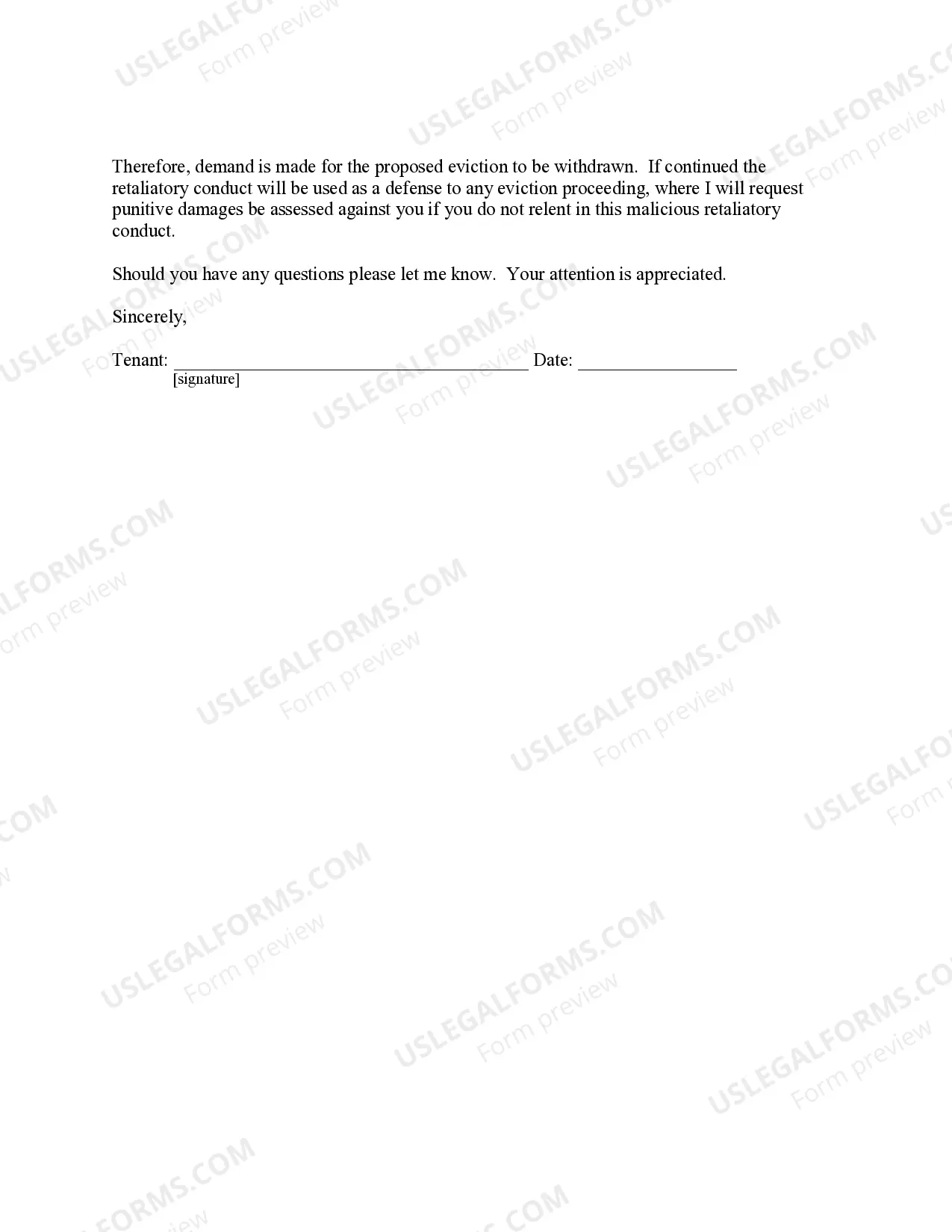
- Request for the landlord to cease all retaliatory threats.
- Space for the tenant's signature and date.
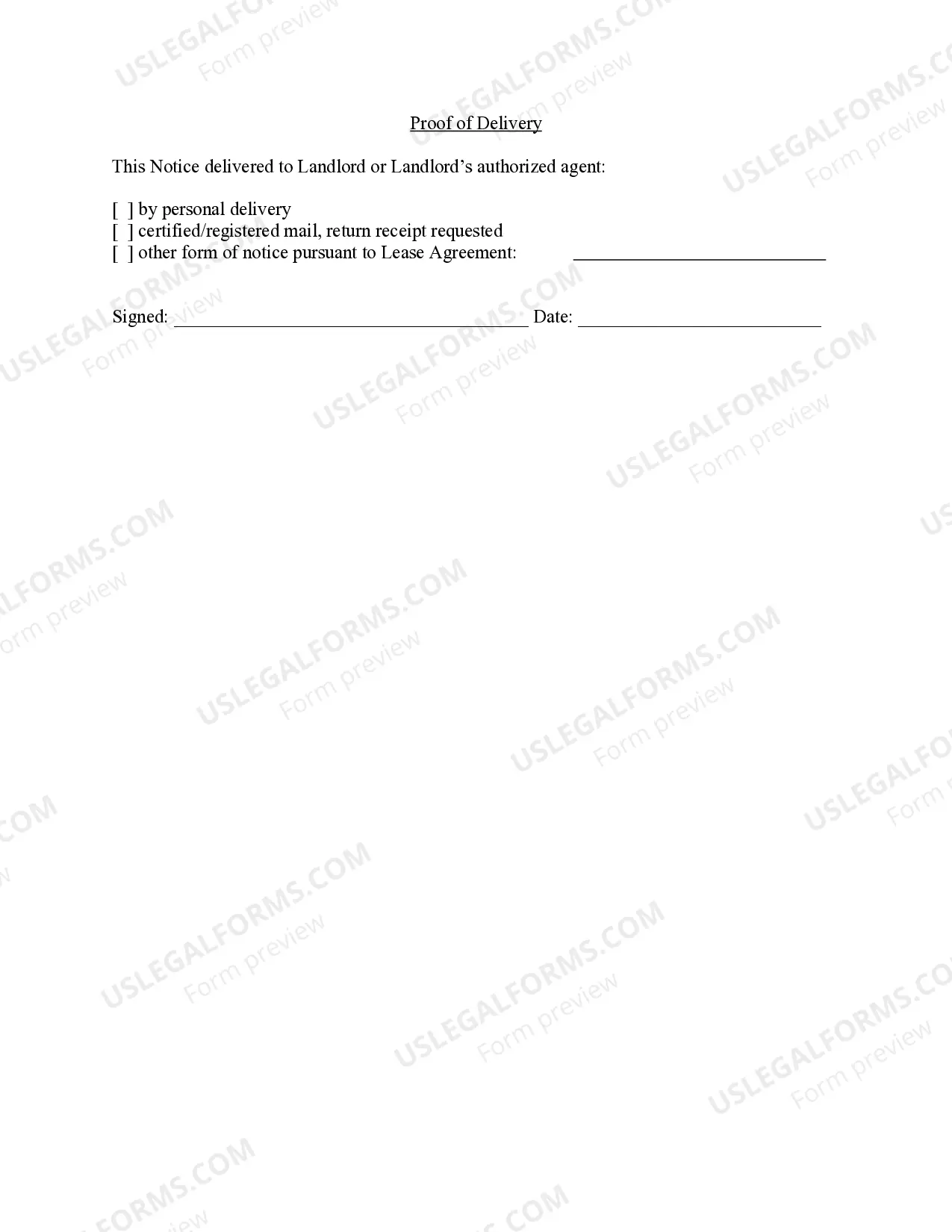
- Proof of delivery section to confirm receipt by the landlord.

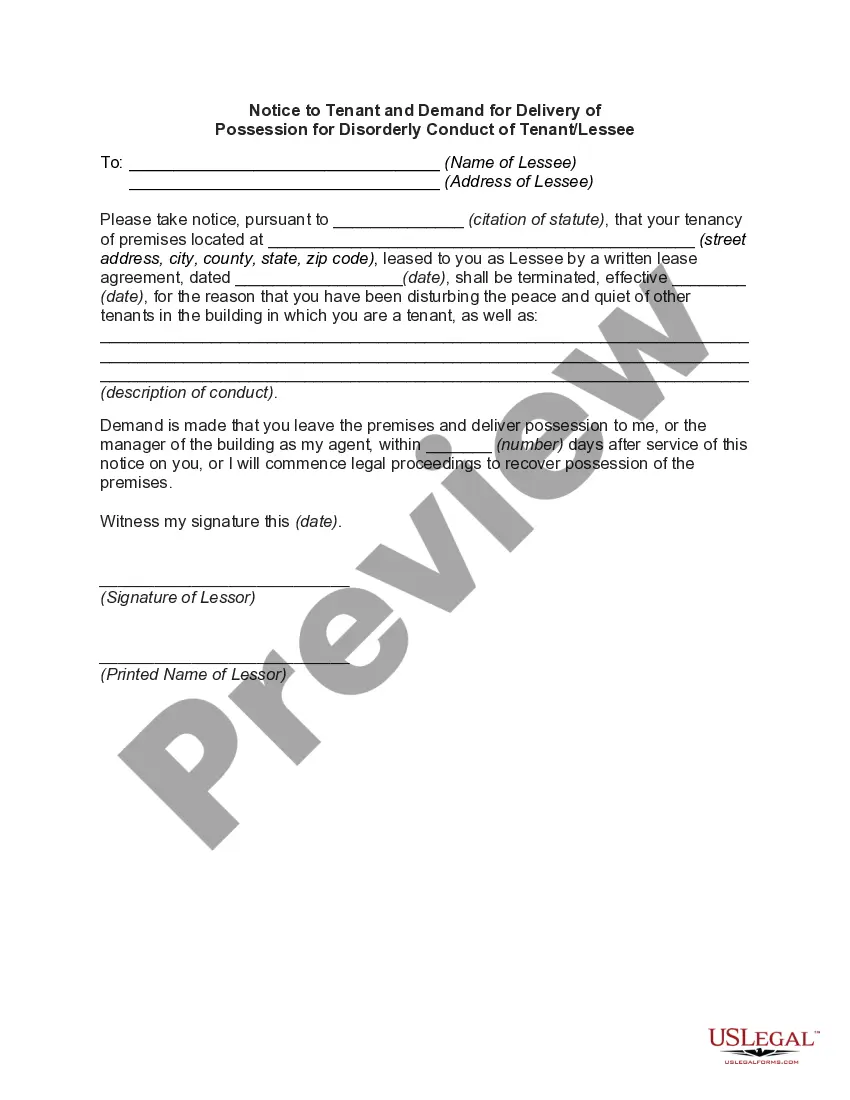
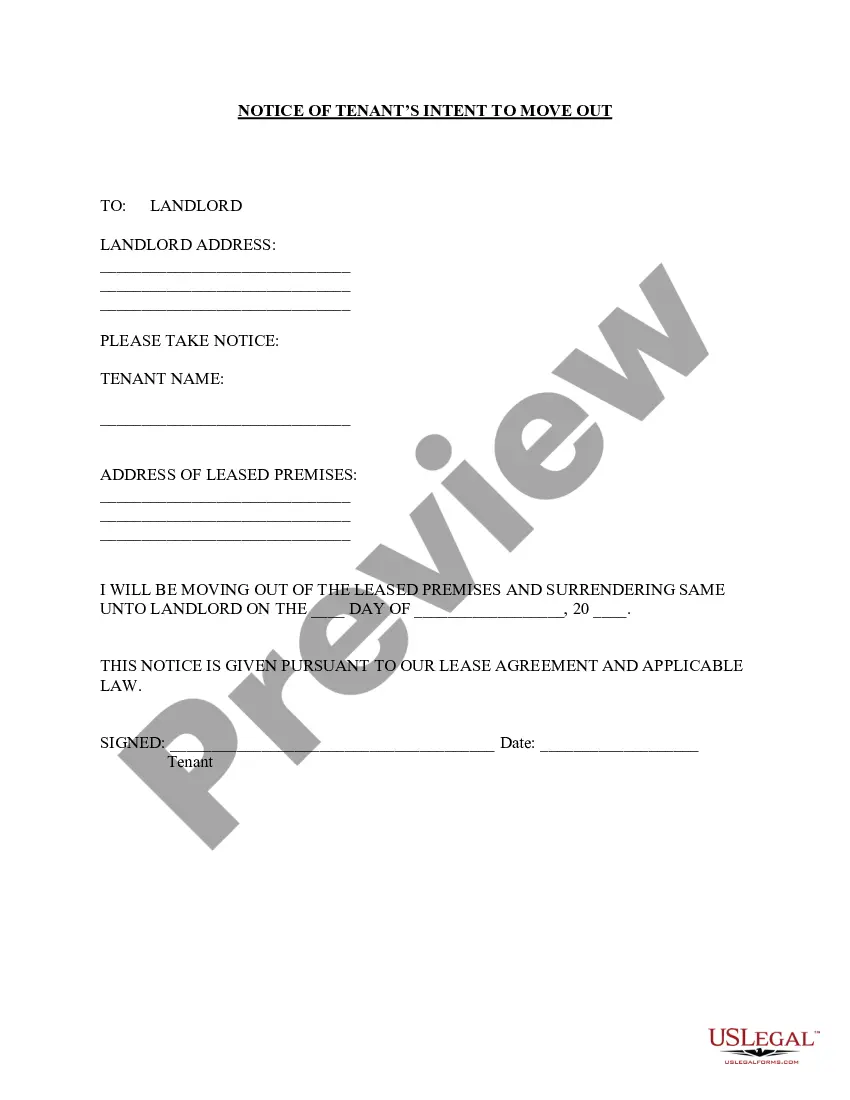


When to use this document
This form should be used when a tenant receives threats of eviction that they believe are retaliatory. For example, if a tenant has recently reported a maintenance issue to local authorities or organized a tenant's group and then receives an eviction notice, this form can be used to formally contest the landlord's actions.
Intended users of this form
- Tenants who feel they are facing eviction as retaliation for exercising their legal rights.
- Individuals who have made complaints about housing conditions or participated in tenant organizations.
- Anyone needing to document their response to a landlordâs eviction threats.
How to complete this form
- Enter your name and address at the top of the form.
- Clearly state the landlord's threats to evict you.
- List the specific actions you have taken which are protected from retaliatory eviction.
- Request that the landlord cease all retaliatory actions.
- Sign and date the form and keep a copy for your records.
- Deliver the notice to your landlord or their authorized agent, keeping proof of delivery.
Does this form need to be notarized?
Notarization is generally not required for this form. However, certain states or situations might demand it. You can complete notarization online through US Legal Forms, powered by Notarize, using a verified video call available anytime.
Get your form ready online
Our built-in tools help you complete, sign, share, and store your documents in one place.
Make edits, fill in missing information, and update formatting in US Legal Forms—just like you would in MS Word.
Download a copy, print it, send it by email, or mail it via USPS—whatever works best for your next step.
Sign and collect signatures with our SignNow integration. Send to multiple recipients, set reminders, and more. Go Premium to unlock E-Sign.
If this form requires notarization, complete it online through a secure video call—no need to meet a notary in person or wait for an appointment.
We protect your documents and personal data by following strict security and privacy standards.

Make edits, fill in missing information, and update formatting in US Legal Forms—just like you would in MS Word.

Download a copy, print it, send it by email, or mail it via USPS—whatever works best for your next step.

Sign and collect signatures with our SignNow integration. Send to multiple recipients, set reminders, and more. Go Premium to unlock E-Sign.

If this form requires notarization, complete it online through a secure video call—no need to meet a notary in person or wait for an appointment.

We protect your documents and personal data by following strict security and privacy standards.
Typical mistakes to avoid
- Failing to provide specific details about the retaliation.
- Not signing the form or omitting the date.
- Not delivering the form properly and failing to keep proof of delivery.
Benefits of completing this form online
- Convenience of downloading and printing the form at your convenience.
- Editability to tailor the form to your specific situation.
- Access to professionally drafted content ensuring legal compliance.
Legal use & context
- This form serves as a critical document for asserting tenant rights against retaliation.
- Utilizing this form can provide legal protection against unlawful eviction practices.
- Consulting with a legal professional can provide further context regarding your specific situation and local laws.
Main things to remember
- This form is essential for tenants facing retaliatory eviction threats.
- Properly documenting your concerns can protect your rights.
- Understanding your state's laws on retaliation is crucial.
Looking for another form?
Form popularity
FAQ
Once rent is past due, the landlord must provide tenants with a 7-Day Notice to Pay if the landlord wants to file an eviction action with the court. Alaska landlords must provide tenants with a 10-Day Notice to Comply, giving tenants 10 days to correct the issue in order to avoid eviction.
Month-to-month tenants must be given written notice that their landlord is terminating their tenancy before the end of the rental period. In most cities in Washington State, the landlord must give the tenant at least 20 days' notice before termination.
State law regulates several rent-related issues, including late and bounced-check fees, the amount of notice (at least 30 days in Washington) landlords must give tenants to raise the rent and how much time (three days in Washington) a tenant has to pay rent or move before a landlord can file for eviction.
State law requires both landlords and renters to be reasonable about seeking and granting access to a rental unit (RCW 59.18.A landlord cannot enter a renter's home without the occupant's consent. A landlord has a right to enter the renter's home for necessary or agreed repairs and inspections.
If you're seeking damages for emotional distress caused by a landlord's discrimination, or punitive damages for especially blatant and intentional discrimination, a lawsuit may well be your best bet. Understand what's involved in suing your landlord. You may file a lawsuit in either federal or state court.
Rent Increases: RCW 59.18. 140 requires landlords to give tenants 60 Days' notice before increasing the rent. In a month-to-month rental, the landlord must give you 60 Days' written notice before each rent increase (except in certain subsidized rental units, the landlord must give you at least 30 days written notice).
A revenge or retaliatory eviction is when a landlord tries to evict a tenant because they ask for repairs or complain about poor conditions. You're at risk if you are an assured shorthold tenant.If you have these types of tenancy, your landlord must prove to the court that there's a legal reason to evict you.
Self-Eviction Is Illegal in Alaska The good news is that if there are damages to the property in excess of $400 from squatting, a 24 hour notice can be served and the civil eviction process can begin immediately. A process server is best for this notice as anything sent by mail extends all deadlines by 72 hours.
A landlord cannot evict a tenant without an adequately obtained eviction notice and sufficient time. A landlord cannot retaliate against a tenant for a complaint. A landlord cannot forego completing necessary repairs or force a tenant to do their own repairs.A landlord cannot remove a tenant's personal belongings.