Alaska Executrix's Deed
About this form
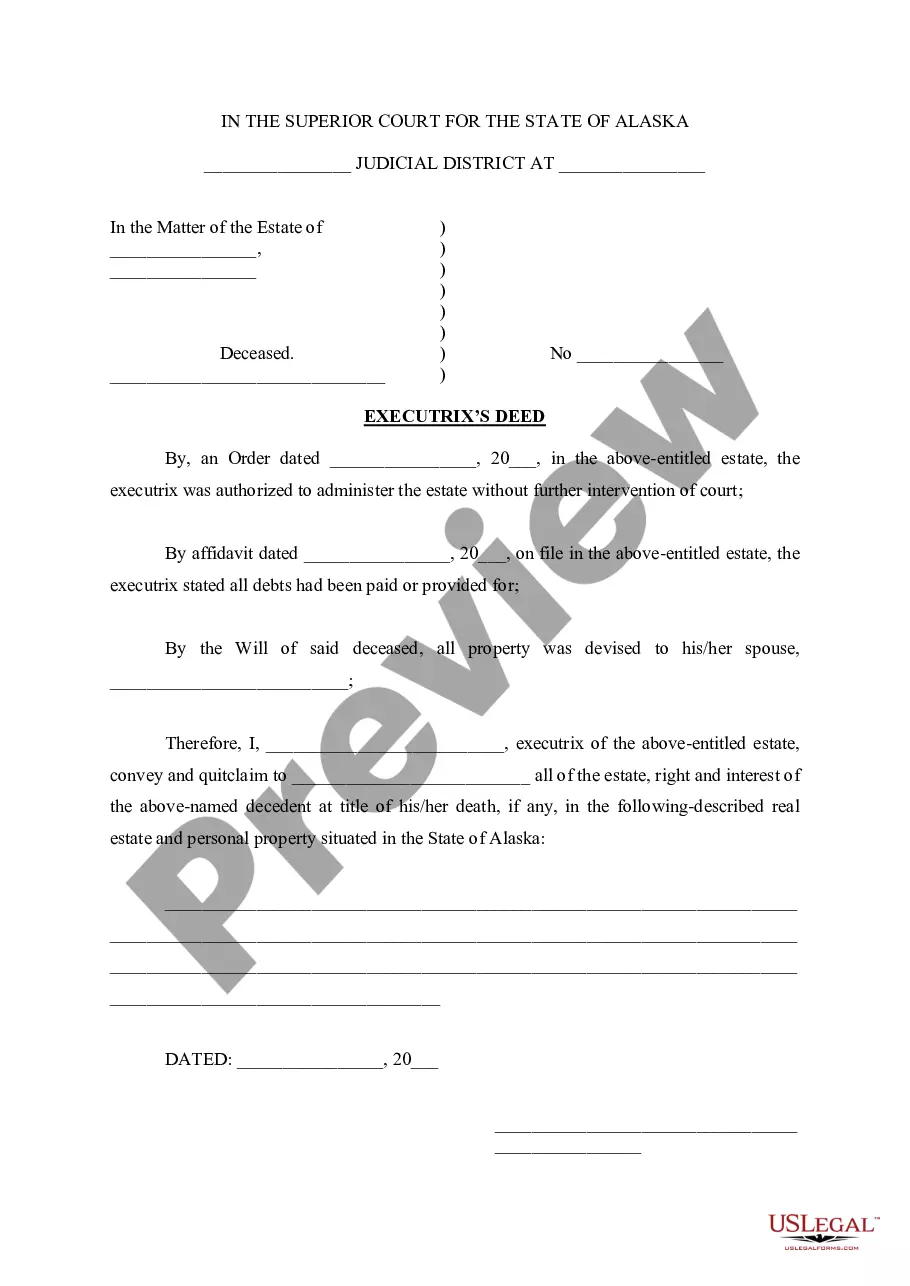
An executrix's deed is a legal document used by an executrix to transfer property from the estate of a deceased individual who left a will. This form serves to convey, or quitclaim, any interest in real estate and personal property that belonged to the decedent, unlike other deeds that may involve different types of conveyances or parties.
Main sections of this form
- Title and court information, including the name of the deceased and the judicial district.
- Affirmation that the executrix is authorized to act without further court intervention.
- Statement confirming that all debts of the estate have been settled.
- Devise clause detailing to whom the property is transferred, as per the deceased's will.
- Description of the specific real estate and personal property being conveyed.
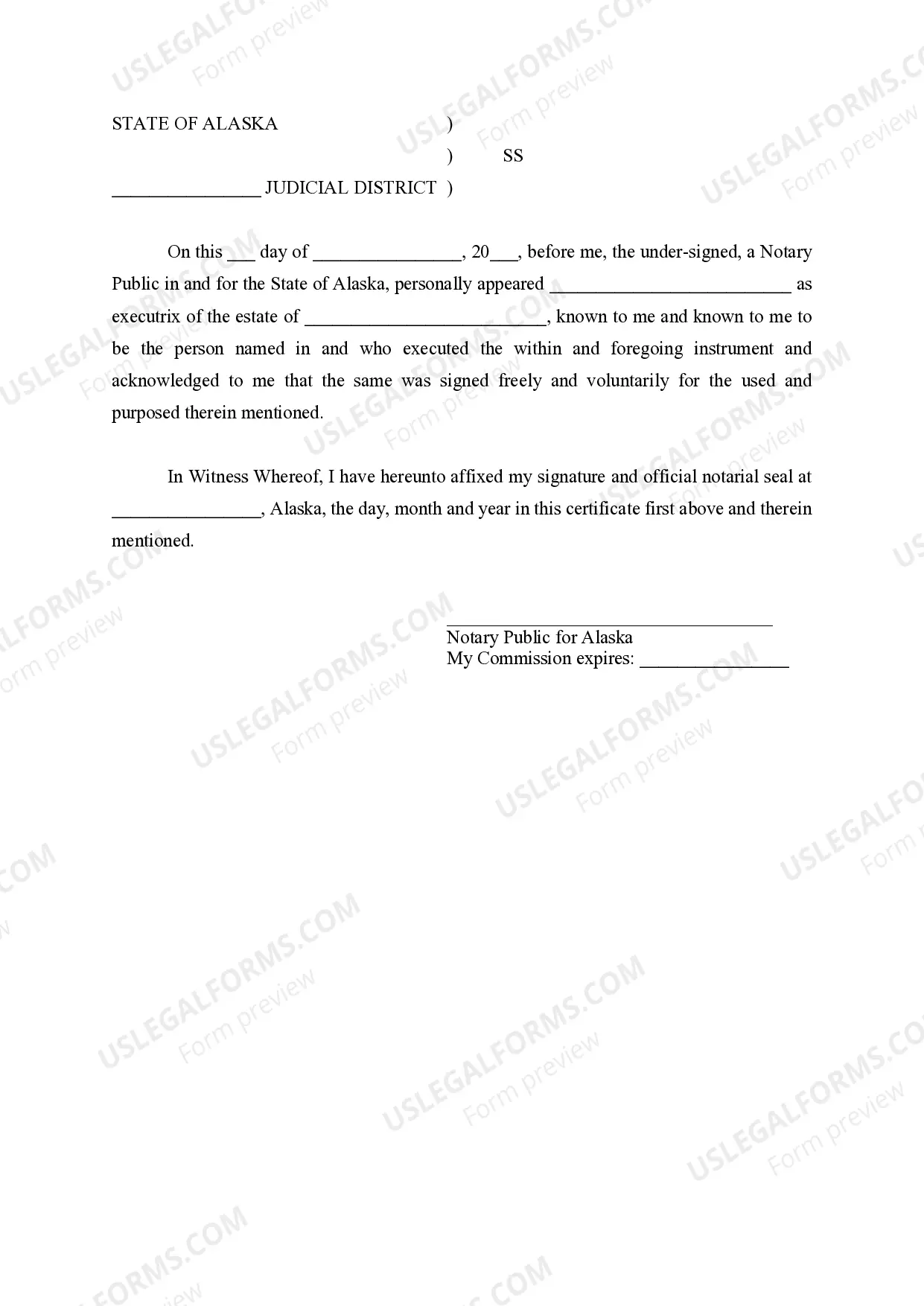
- Notary acknowledgment to validate the executrix's signature.
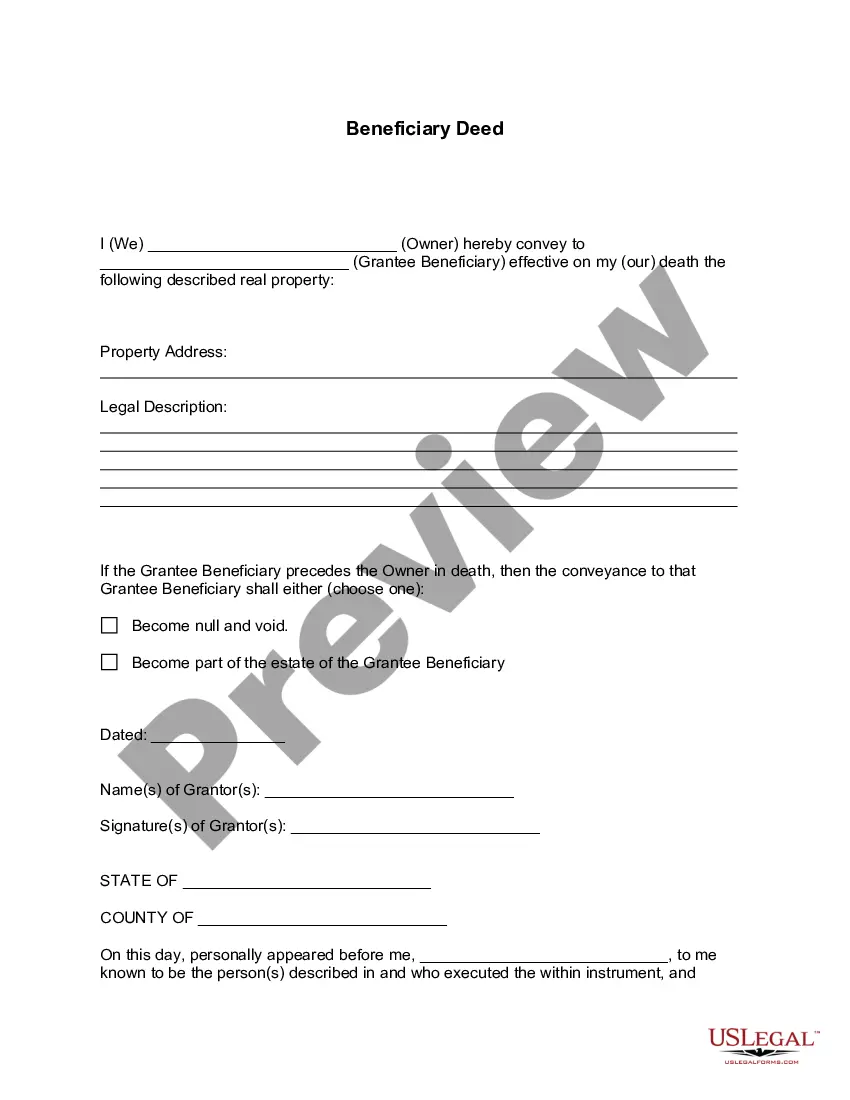
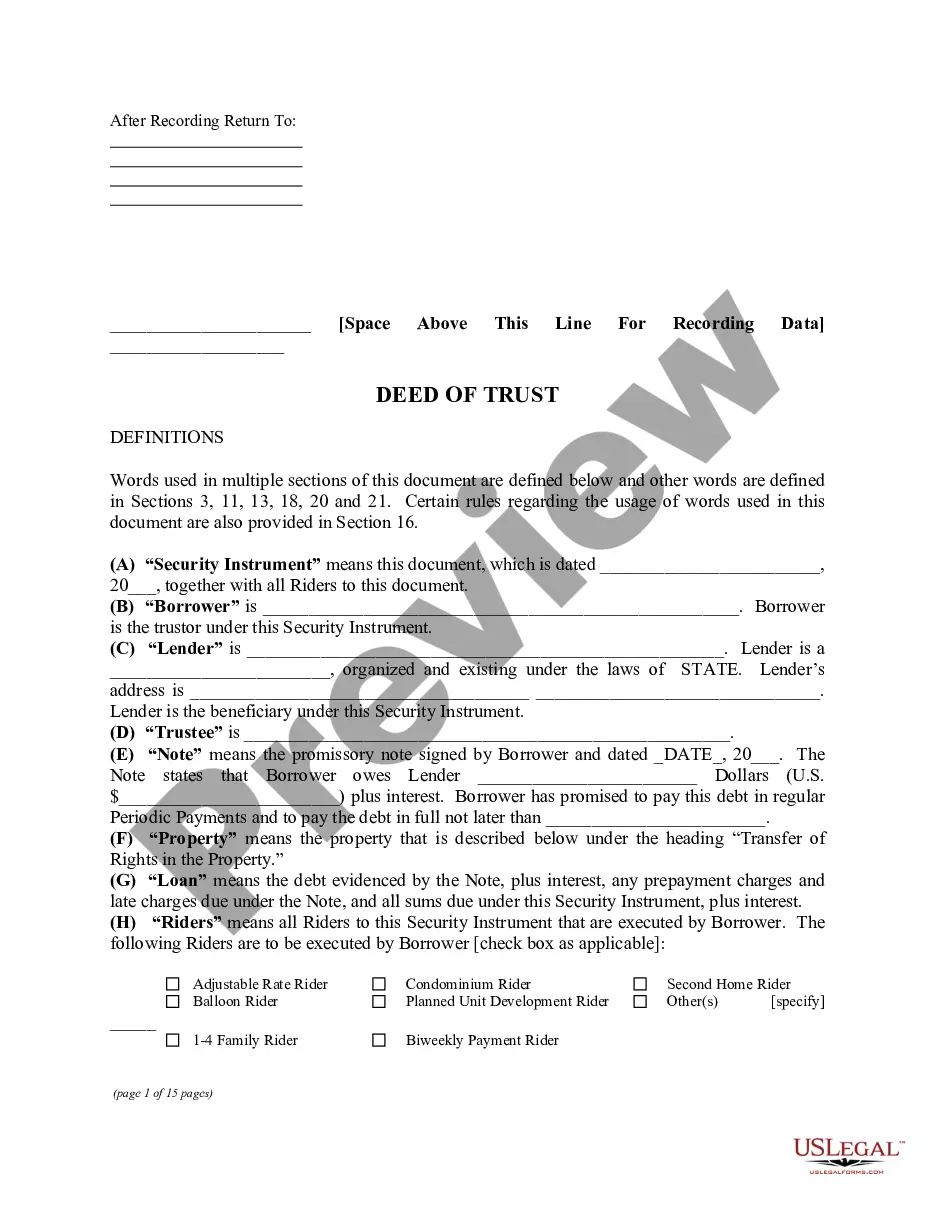
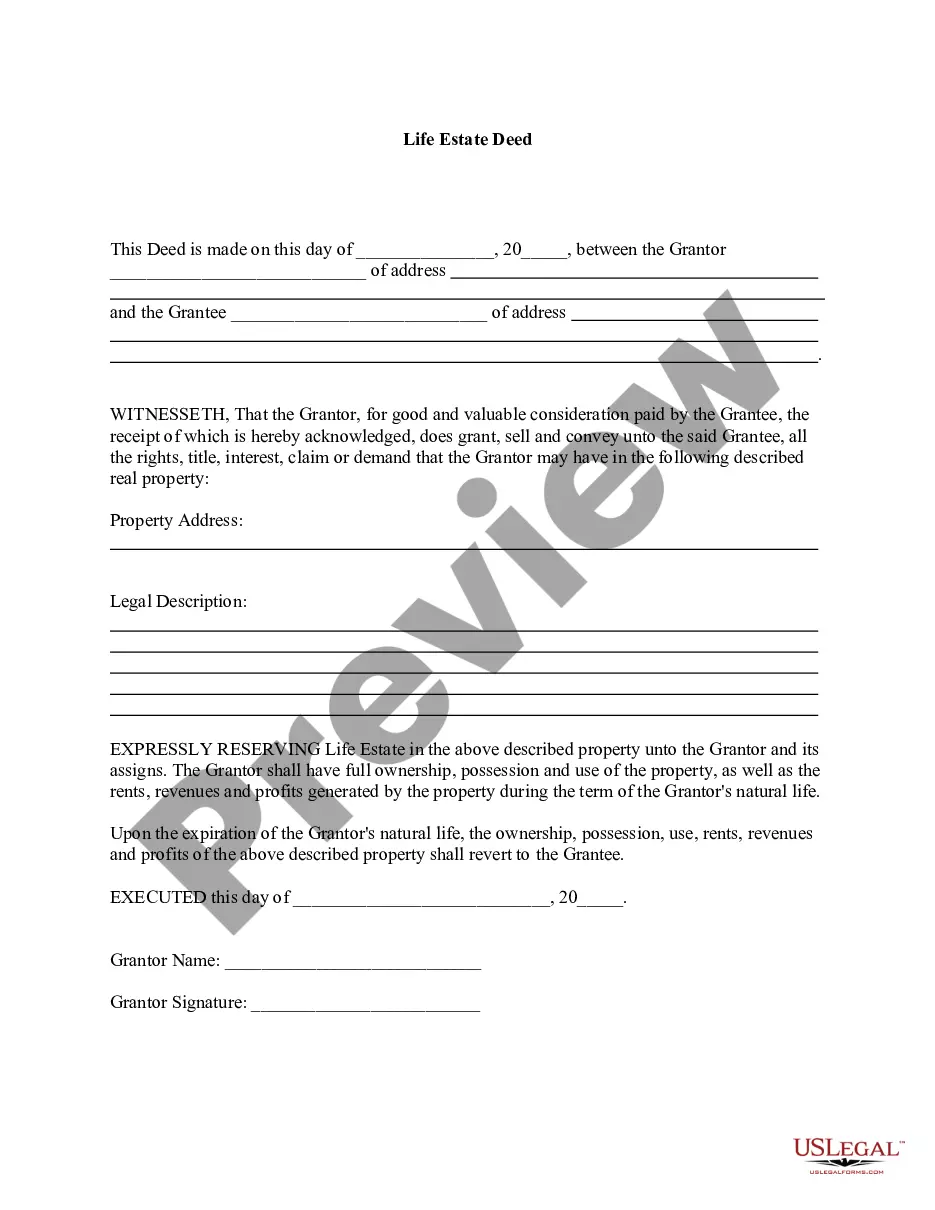
Situations where this form applies
This form is typically used when an individual has passed away leaving a will, and the executrix is granted the authority to transfer the estate's property to the designated beneficiaries. Use this deed when you need to formally transfer ownership of real estate or personal property from the estate to its heirs, ensuring a clear record of property transfer.
Who should use this form
- Executrices or executors appointed in a will to manage the deceased's estate.
- Beneficiaries of an estate who are receiving property as outlined in the deceasedâs will.
- Individuals involved in the administration of a deceased personâs estate in Alaska.
How to prepare this document
- Fill in the title and the details of the court where the estate is being probated.
- Complete the affidavits confirming that debts have been settled.
- Identify the beneficiary to whom the property is being transferred, as per the deceasedâs will.
- Clearly describe the property being conveyed in the deed.
- Have the executrix sign the deed in front of a notary public.
Does this document require notarization?
Yes, this form must be notarized to be legally valid. Online notarization services are offered for you to securely sign and verify your document through a video call, ensuring compliance with state laws without the need for travel.
Get your form ready online
Our built-in tools help you complete, sign, share, and store your documents in one place.
Make edits, fill in missing information, and update formatting in US Legal Forms—just like you would in MS Word.
Download a copy, print it, send it by email, or mail it via USPS—whatever works best for your next step.
Sign and collect signatures with our SignNow integration. Send to multiple recipients, set reminders, and more. Go Premium to unlock E-Sign.
If this form requires notarization, complete it online through a secure video call—no need to meet a notary in person or wait for an appointment.
We protect your documents and personal data by following strict security and privacy standards.

Make edits, fill in missing information, and update formatting in US Legal Forms—just like you would in MS Word.

Download a copy, print it, send it by email, or mail it via USPS—whatever works best for your next step.

Sign and collect signatures with our SignNow integration. Send to multiple recipients, set reminders, and more. Go Premium to unlock E-Sign.

If this form requires notarization, complete it online through a secure video call—no need to meet a notary in person or wait for an appointment.

We protect your documents and personal data by following strict security and privacy standards.
Typical mistakes to avoid
- Failing to accurately describe the property being transferred.
- Not having the form notarized, if required.
- Leaving out names or signatures of the relevant parties.
- Neglecting to confirm that all estate debts are paid before transferring property.
Why complete this form online
- Convenient access to legally vetted templates available for immediate download.
- Easily editable to suit specific circumstances and accurate property details.
- Secure handling of personal information, ensuring confidential transaction processes.
Looking for another form?
Form popularity
FAQ
Yes, an executor can override a beneficiary's wishes as long as they are following the will or, alternative, any court orders. Executors have a fiduciary duty to the estate beneficiaries requiring them to distribute estate assets as stated in the will.
Throughout the process, the estate administrator or executor must perform their duties impartially and honestly.Pay the estate's taxes and debts. Distribute any assets to beneficiaries and dispose of any leftover property. Maintain the estate, including homes and property, until it can be distributed or sold.
Process of Probate includes applying to the Supreme Court of New South Wales for the Will of the deceased to be declared a valid legal document, allowing the assets in the deceased Estate to be gathered in by the Executor, liabilities paid and the deceased Estate distributed to the beneficiaries named in the Will of
In general, the responsibilities of an estate administrator are to collect all the decedent's assets, pay creditors and distribute the remaining assets to heirs or other beneficiaries.
This involves filing a petition with the court overseeing probate, asking a judge to remove the executor you named and to transfer the job to another individual.
Joint tenancy with right of survivorship. Property owned in joint tenancy automatically passes, without probate, to the surviving owner(s) when one owner dies. Tenancy by the entirety. Community property with right of survivorship.
A home is sold in probate court when someone dies intestate or without bequeathing their property. When that happens, the state takes over and administers the property's sale. The court wants to be certain the property is marketed and sold at the best possible price.
Probate is the procedure by which a court determines who is entitled to the assets of a person who has died.In essence, much as in a standard sale, the order authorizing the probate sale can be recorded just as a deed would be, and title will then be clear when probate closes.
Probate is the court process to distribute someone's estate after their death, even if there is a will, and is notoriously slow in California.Probate tends to be less onerous in most other states, but the process still costs money and delays when beneficiaries can receive their inheritance.