Alaska Grantor's Estoppel and Solvency Affidavit Under Deed In Lieu of Foreclosure
What is this form?
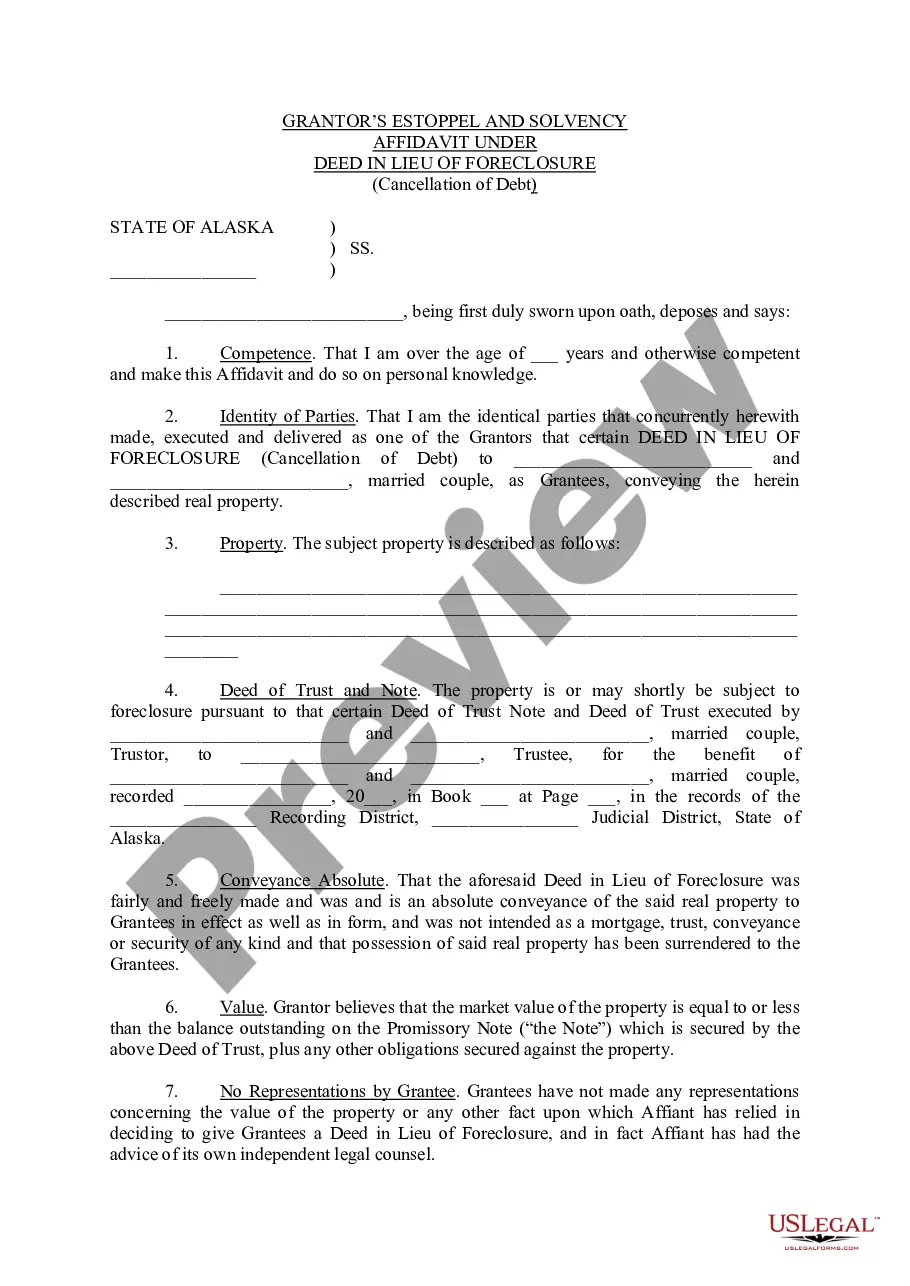
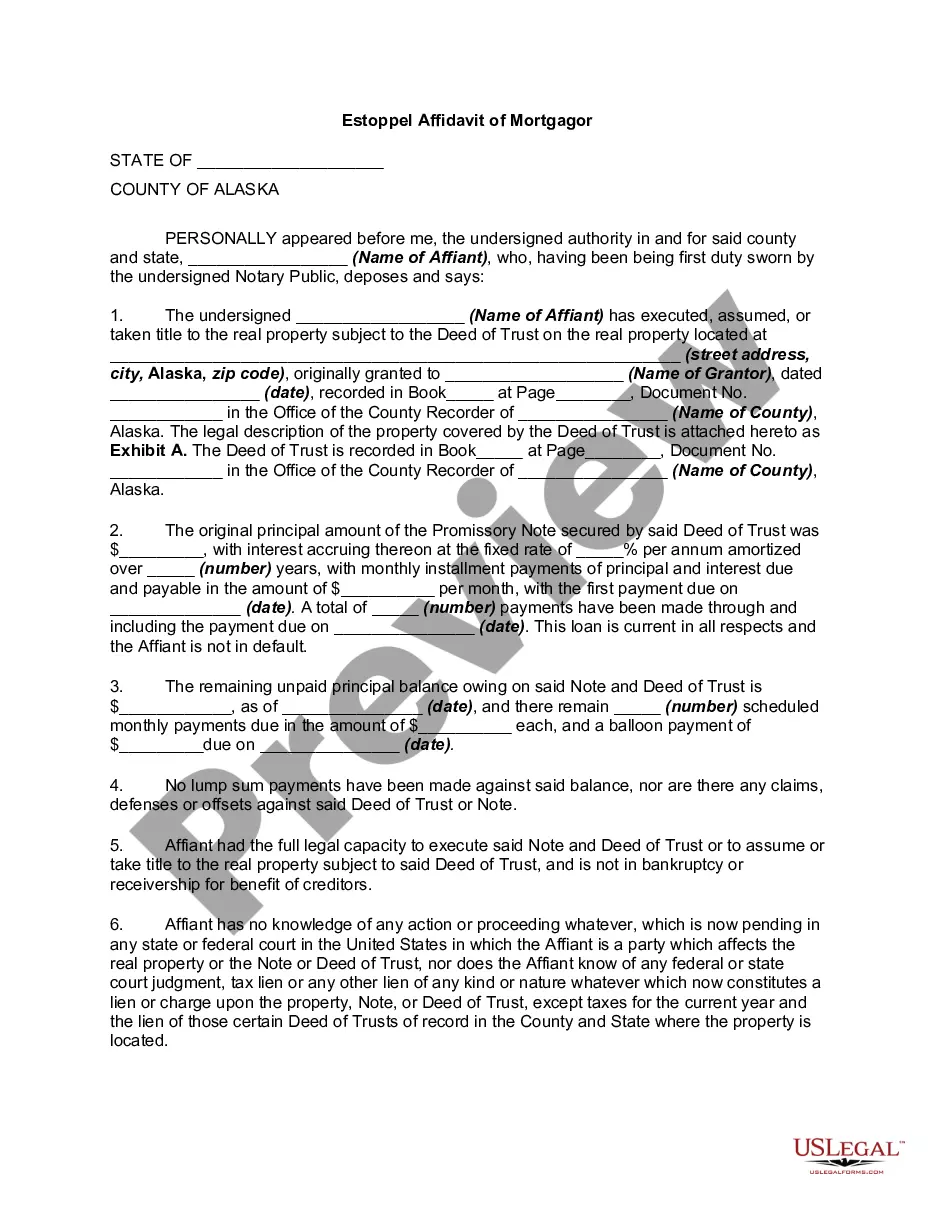
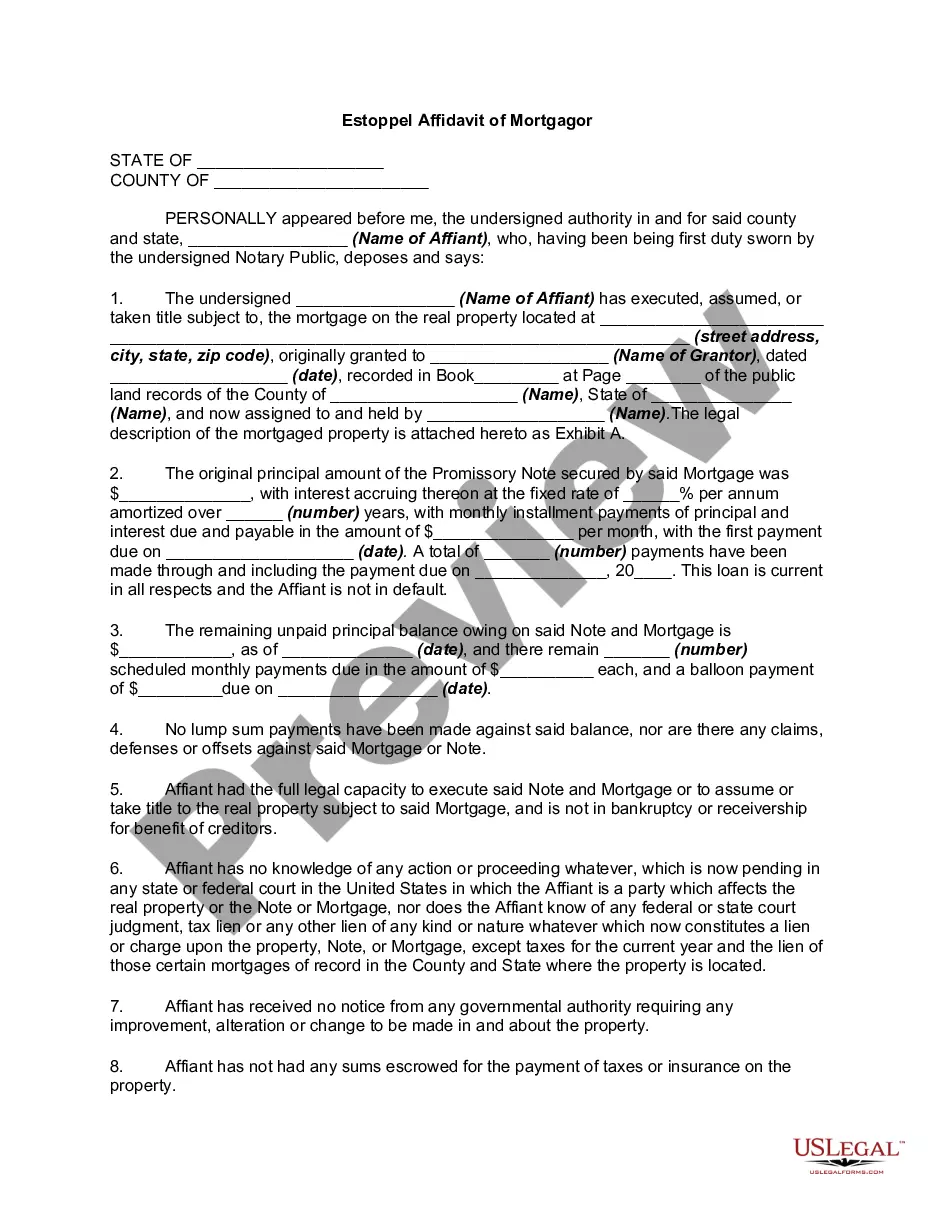
The Grantor's Estoppel and Solvency Affidavit Under Deed In Lieu of Foreclosure is a legal document used to affirm the financial status and the willingness of the grantor to convey a property to the grantees. This form provides assurances regarding the property's worth and the absence of claims against it, intended to protect the interests of the grantees and any future parties involved with the property. Unlike typical property transfer documents, this affidavit focuses specifically on solvency and the grantee's rights in the event of foreclosure proceedings.
Key parts of this document
- Affirmation of the grantor's competence and personal knowledge.
- Identification of the parties involved in the deed transaction.
- Description of the real property being conveyed.
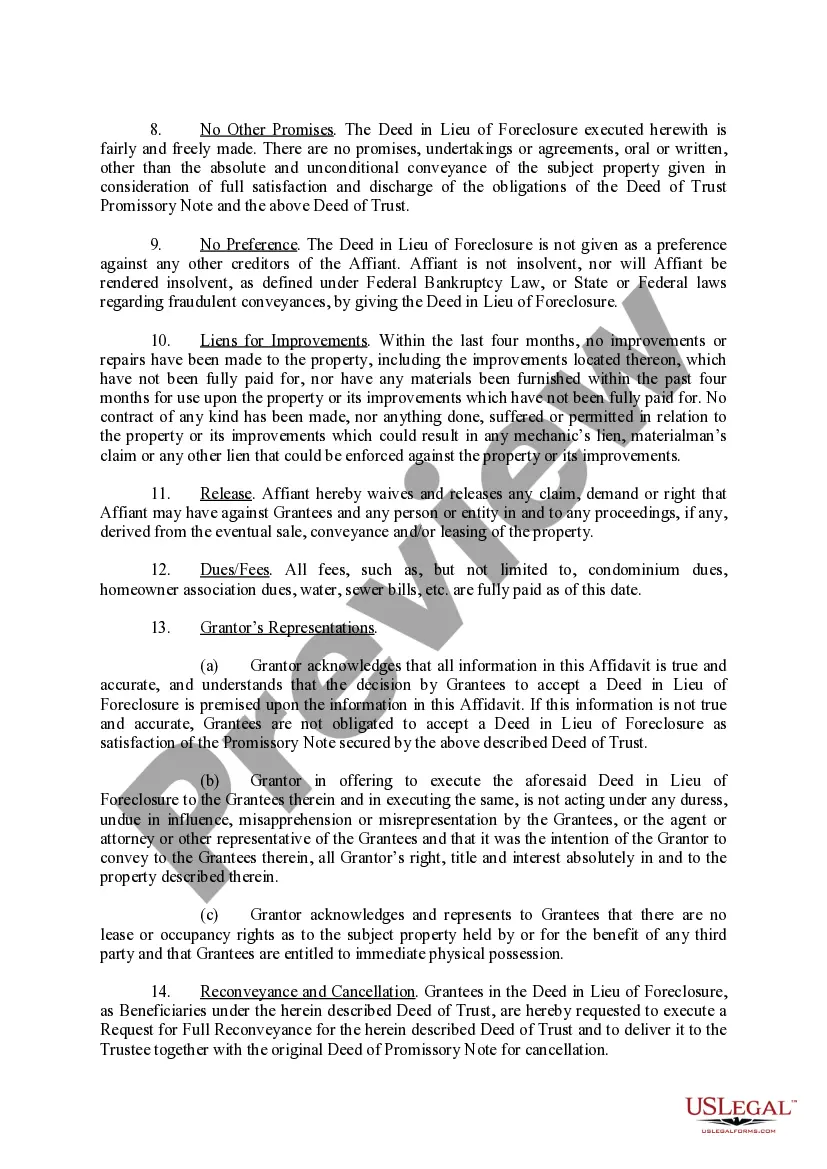
- Statements regarding existing debts and liens associated with the property.
- Acknowledgment of the market value of the property in relation to the debt.
- Release of claims by the grantor against the grantees.

When to use this document
This affidavit is typically used in situations where a property owner is facing foreclosure and decides to execute a deed in lieu of foreclosure. It serves to document the financial condition of the owner and clarify that the transfer of property to the lender is acceptable for settling outstanding debts. This form is crucial when the grantor wants to ensure that the grantees, as new property owners, are protected from any claims made by the previous owner or creditors.
Intended users of this form
- Property owners looking to transfer their property in lieu of foreclosure.
- Lenders or grantees seeking assurances about the condition and solvency of the grantor.
- Legal representatives assisting clients with property transfers related to debt settlements.
Completing this form step by step
- Identify the parties involved, including the grantor and the grantees.
- Describe the property that is being conveyed in detail.
- Include the date of the original deed and relevant loan details.
- Provide affirmations regarding the grantor's financial status and any disclosures about the property.
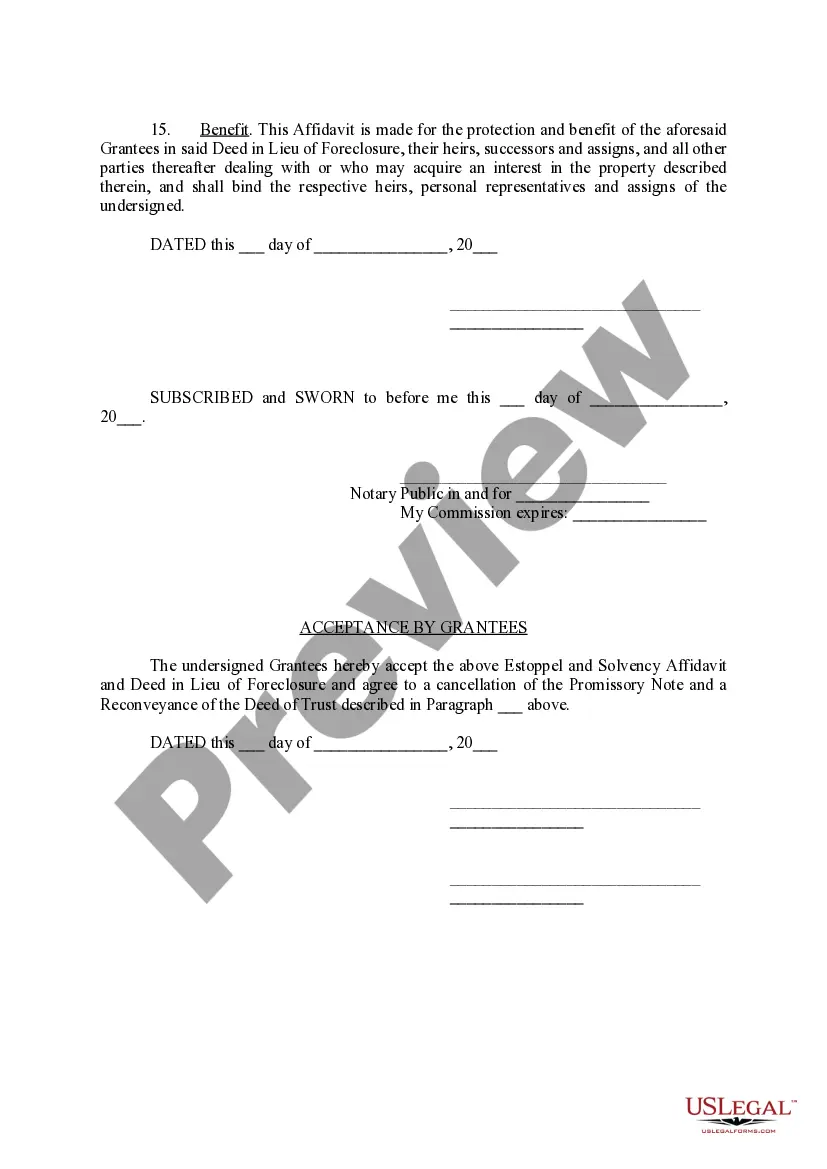
- Sign and date the affidavit in the presence of a notary public.
Is notarization required?
Yes, this form must be notarized to be legally valid. US Legal Forms provides integrated online notarization, allowing you to complete the notarization process via a secure video call without needing to travel.
Get your form ready online
Our built-in tools help you complete, sign, share, and store your documents in one place.
Make edits, fill in missing information, and update formatting in US Legal Forms—just like you would in MS Word.
Download a copy, print it, send it by email, or mail it via USPS—whatever works best for your next step.
Sign and collect signatures with our SignNow integration. Send to multiple recipients, set reminders, and more. Go Premium to unlock E-Sign.
If this form requires notarization, complete it online through a secure video call—no need to meet a notary in person or wait for an appointment.
We protect your documents and personal data by following strict security and privacy standards.

Make edits, fill in missing information, and update formatting in US Legal Forms—just like you would in MS Word.

Download a copy, print it, send it by email, or mail it via USPS—whatever works best for your next step.

Sign and collect signatures with our SignNow integration. Send to multiple recipients, set reminders, and more. Go Premium to unlock E-Sign.

If this form requires notarization, complete it online through a secure video call—no need to meet a notary in person or wait for an appointment.

We protect your documents and personal data by following strict security and privacy standards.
Common mistakes to avoid
- Failing to provide accurate property details can lead to disputes.
- Neglecting to disclose existing liens may result in legal complications.
- Not signing in front of a notary, which could render the affidavit invalid.
Benefits of using this form online
- Convenient access to the form anytime, anywhere.
- Editable templates that allow users to customize information easily.
- Reliable and secure digital storage of completed forms.
Looking for another form?
Form popularity
FAQ
Your credit will still take a hit: While a deed in lieu arrangement won't harm your credit as drastically as a foreclosure, you can still expect your score to drop. You also won't be able to easily get another mortgage if you have a deed in lieu on your credit report.
C. The purchaser must pay off both the mortgage and junior lienholders after the sale. What is a major disadvantage to lenders of accepting a deed in lieu of foreclosure?The lender gains rights to private mortgage insurance.
Disadvantages of a Deed in Lieu of Foreclosure. Perhaps the biggest disadvantage of a deed in lieu is that the Lender takes subject to all other encumbrances and interests in the Property. Therefore if there is a second mortgage, for example, a deed in lieu would likely not be a viable strategy.
The deed in lieu of foreclosure offers several advantages to both the borrower and the lender. The principal advantage to the borrower is that it immediately releases him/her from most or all of the personal indebtedness associated with the defaulted loan.
If your lender agrees to a short sale or to accept a deed in lieu of foreclosure, you might owe federal income tax on any forgiven deficiency. The IRS learns of the deficiency when the lender sends it a Form 1099-C, which reports the forgiven debt as income to you.
A deed in lieu of foreclosure (lieu deed) is a conveyance, by the owner of property encumbered by a mortgage, to the mortgagee, in full satisfaction of the obligation secured by the mortgage.
Estoppel Certificate Form Of Individual Giving Deed In Lieu of Foreclosure.This affidavit is made for the protection and benefit of the grantee in said deed, his successors and assigns, and all other parties hereafter dealing with or who may acquire an interest in the property herein described.
A deed in lieu of foreclosure is different from a short sale because it transfers the property to the lender instead of selling it to a new buyer.Similar to a short sale, a deed in lieu of foreclosure likely will not damage your credit as severely as a foreclosure or a bankruptcy.