Utah Deed of Reconveyance by Corporate Trustee - Individual Lender or Holder
About this form
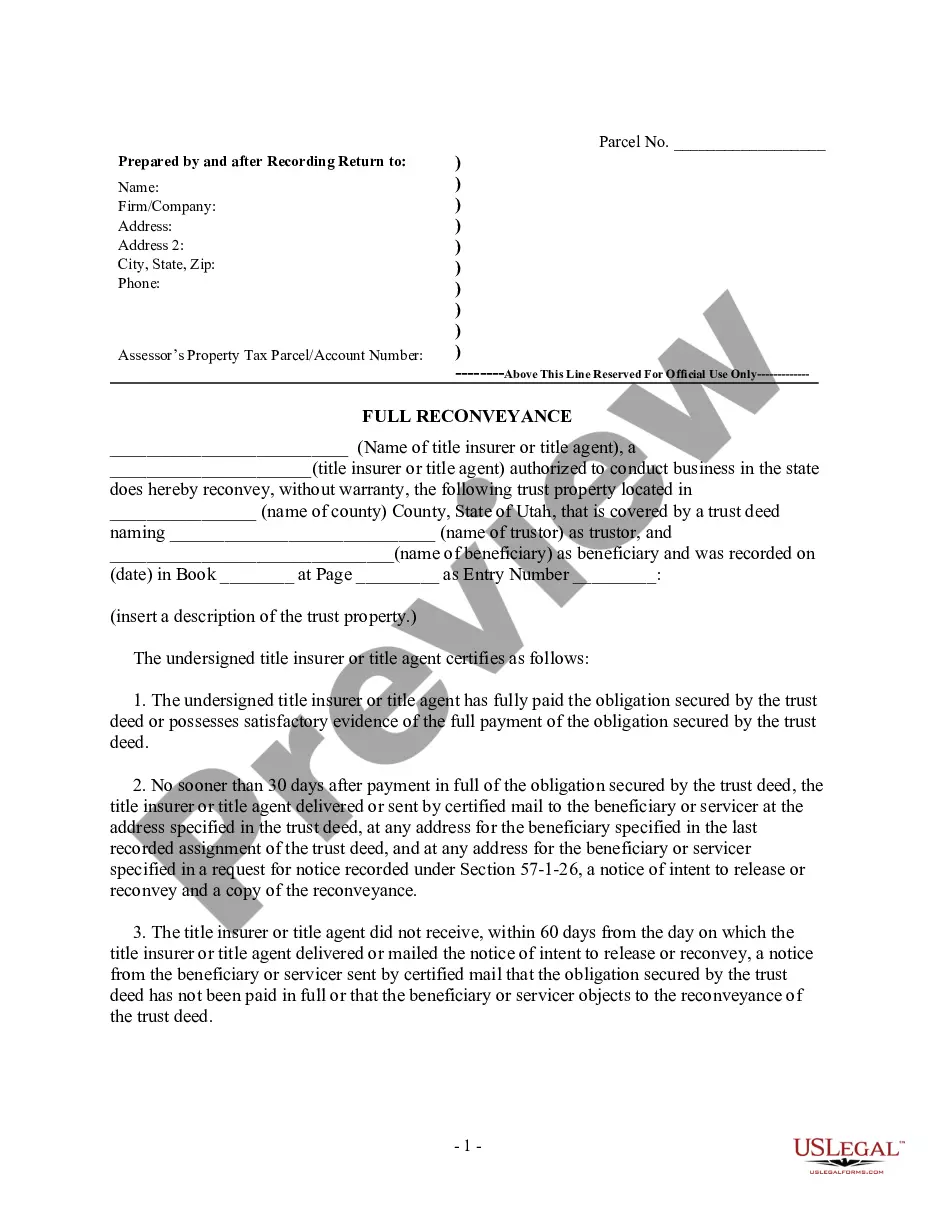
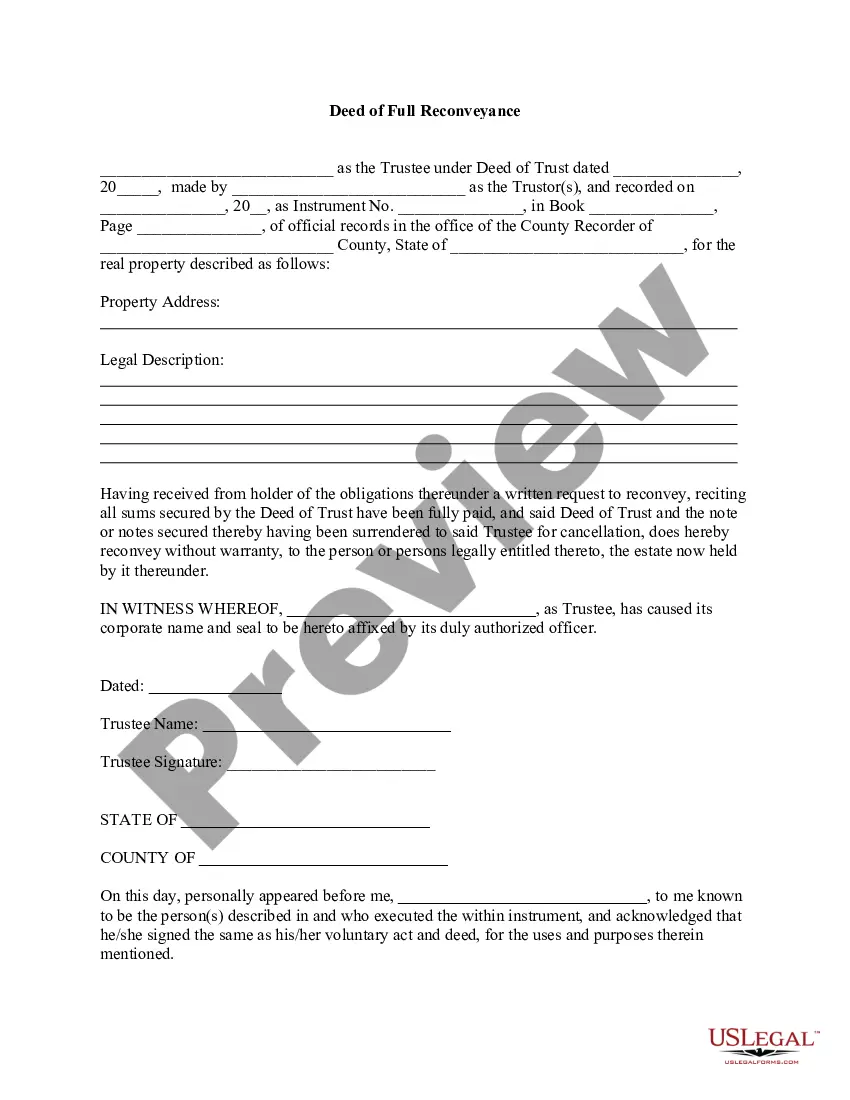
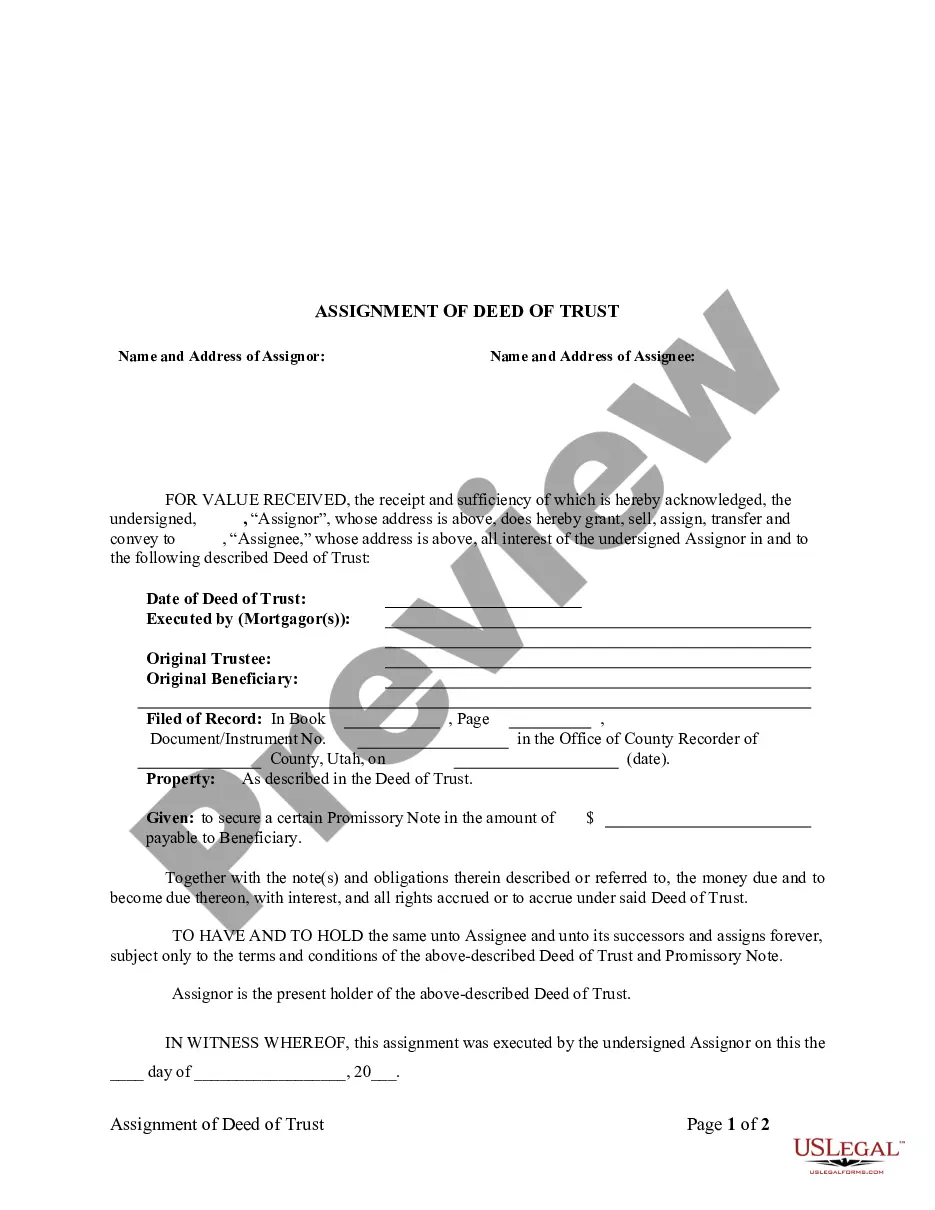
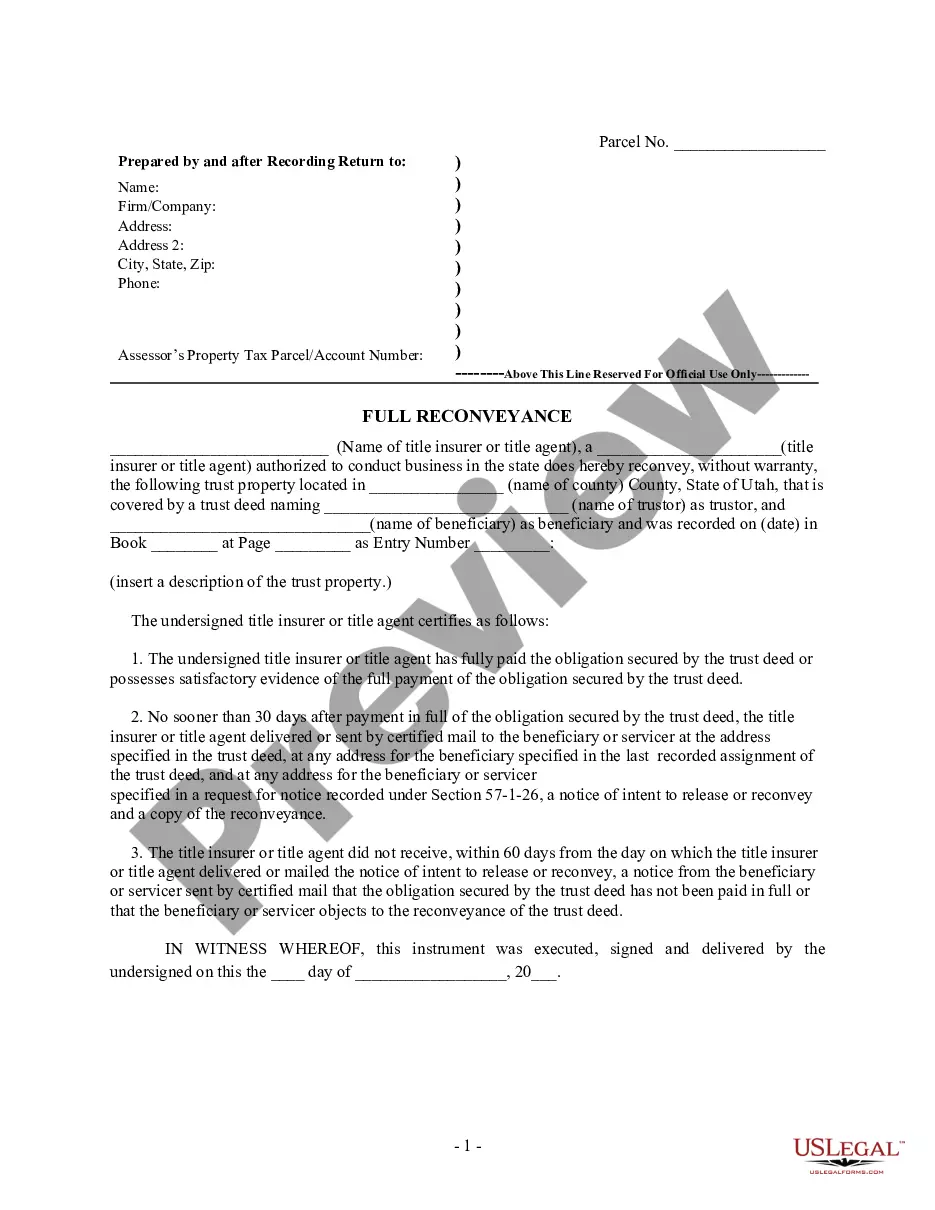
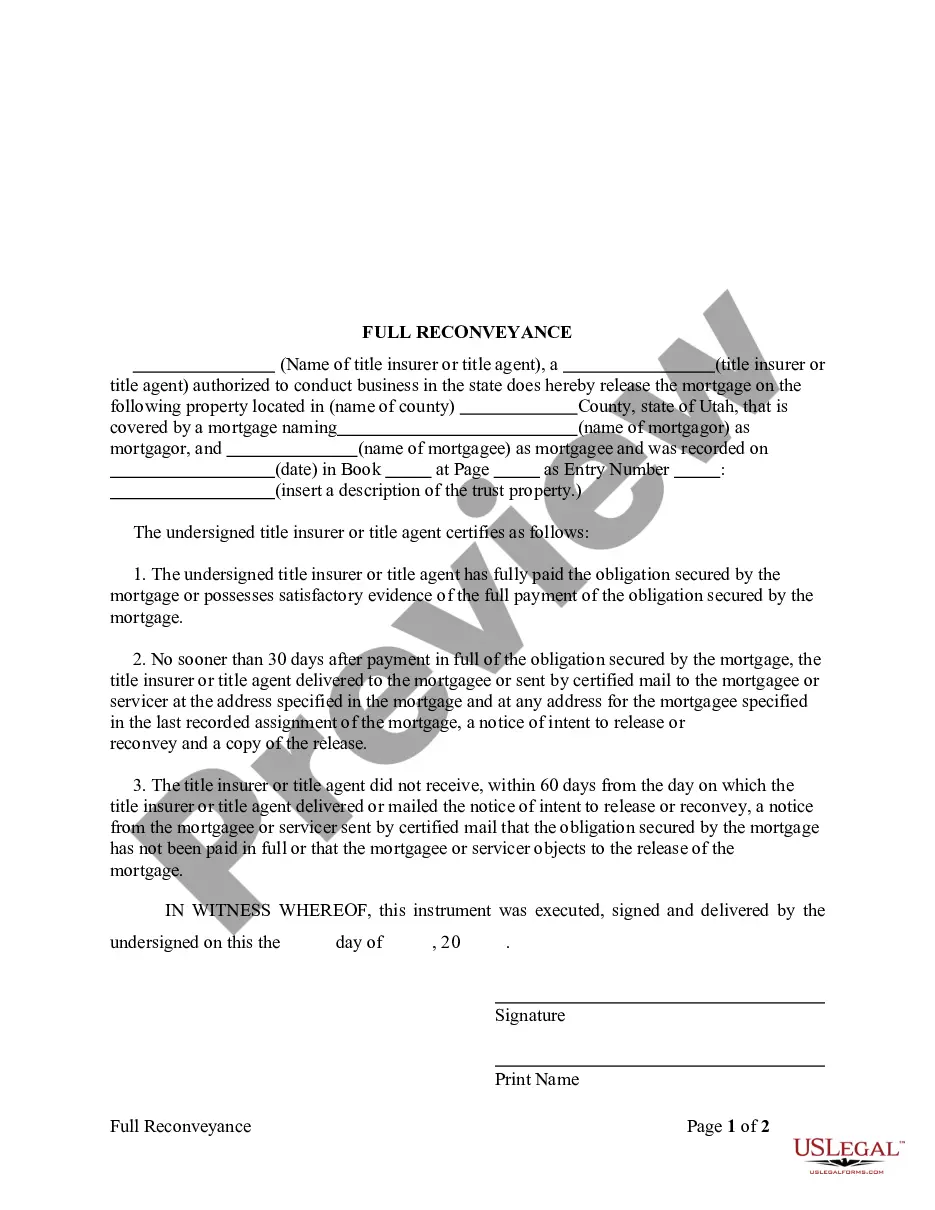
The Deed of Reconveyance by Corporate Trustee - Individual Lender or Holder is a legal document that formally releases a property from a deed of trust in Utah when an obligation is satisfied. This form is essential for indicating that a mortgage has been paid off, differentiating it from similar forms that may not involve a corporate trustee or individual lender. By completing this form, property owners can ensure their real estate is released from any mortgage obligations, restoring clear title.
What’s included in this form
- Property description: Identifies the real estate involved in the trust deed.
- Certification by title insurer or agent: Confirms that the obligation secured by the trust deed has been fully paid.
- Notice of intent: Details the notification process for the beneficiary or servicer about the intent to release the trust deed.
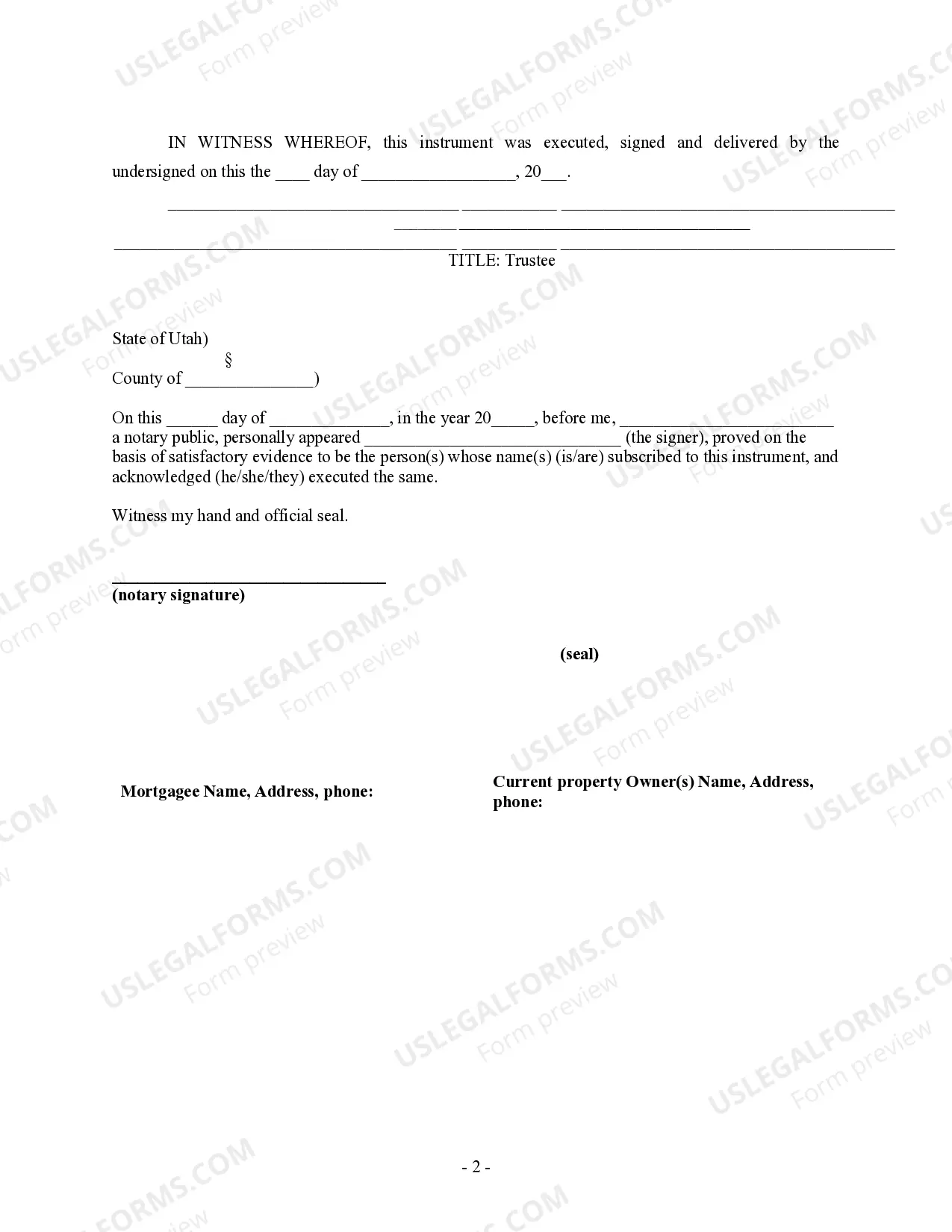
- Execution details: Includes spaces for signatures and dates to validate the document.
Common use cases
This form should be used when a property secured by a deed of trust in Utah has had its mortgage obligation fully paid. It is commonly used by individual lenders or corporate trustees when the secured loan has been settled, and the property must be formally released from the trust deed to allow for clear ownership transfer or to enable the homeowner to sell or refinance the property without encumbrances.
Who needs this form
- Individual lenders or holders who have issued a deed of trust in Utah.
- Corporate trustees representing individuals or entities who are the original lenders.
- Homeowners looking to clear their property title following the full payment of a secured mortgage.
How to prepare this document
- Identify the parties involved: Clearly state the names of the borrower and the lender.
- Specify the property: Include the legal description of the property secured by the deed of trust.
- Document the payment: Ensure that the title insurer or agent certifies that the obligation has been fully paid.
- Complete the notice of intent: Confirm that the notice has been duly sent to the beneficiary.
- Sign and date the form: Ensure all required parties sign the document in front of a notary public.
Does this form need to be notarized?
Yes, this form must be notarized to be legally valid. US Legal Forms offers integrated online notarization, enabling you to complete this process via a secure video call, ensuring convenience and legal acceptance without needing to travel.
Get your form ready online
Our built-in tools help you complete, sign, share, and store your documents in one place.
Make edits, fill in missing information, and update formatting in US Legal Forms—just like you would in MS Word.
Download a copy, print it, send it by email, or mail it via USPS—whatever works best for your next step.
Sign and collect signatures with our SignNow integration. Send to multiple recipients, set reminders, and more. Go Premium to unlock E-Sign.
If this form requires notarization, complete it online through a secure video call—no need to meet a notary in person or wait for an appointment.
We protect your documents and personal data by following strict security and privacy standards.

Make edits, fill in missing information, and update formatting in US Legal Forms—just like you would in MS Word.

Download a copy, print it, send it by email, or mail it via USPS—whatever works best for your next step.

Sign and collect signatures with our SignNow integration. Send to multiple recipients, set reminders, and more. Go Premium to unlock E-Sign.

If this form requires notarization, complete it online through a secure video call—no need to meet a notary in person or wait for an appointment.

We protect your documents and personal data by following strict security and privacy standards.
Mistakes to watch out for
- Failing to accurately describe the property, which can lead to complications in the release process.
- Not obtaining the necessary notarization, rendering the form invalid.
- Skipping the notice requirement, leading to potential disputes with beneficiaries.
Why use this form online
- Convenient access: Download and complete the form from anywhere and at any time.
- Editability: Easily modify the document to fit your specific requirements before finalizing.
- Reliability: The form is drafted by licensed attorneys, ensuring compliance with state laws.
Looking for another form?
Form popularity
FAQ
In order to clear the Deed of Trust from the title to the property, a Deed of Reconveyance must be recorded with the Country Recorder or Recorder of Deeds. If the Trustee/Beneficiary fails to record a satisfaction within the set time limits, the Trustee/Beneficiary may be responsible for damages as set out by statute.
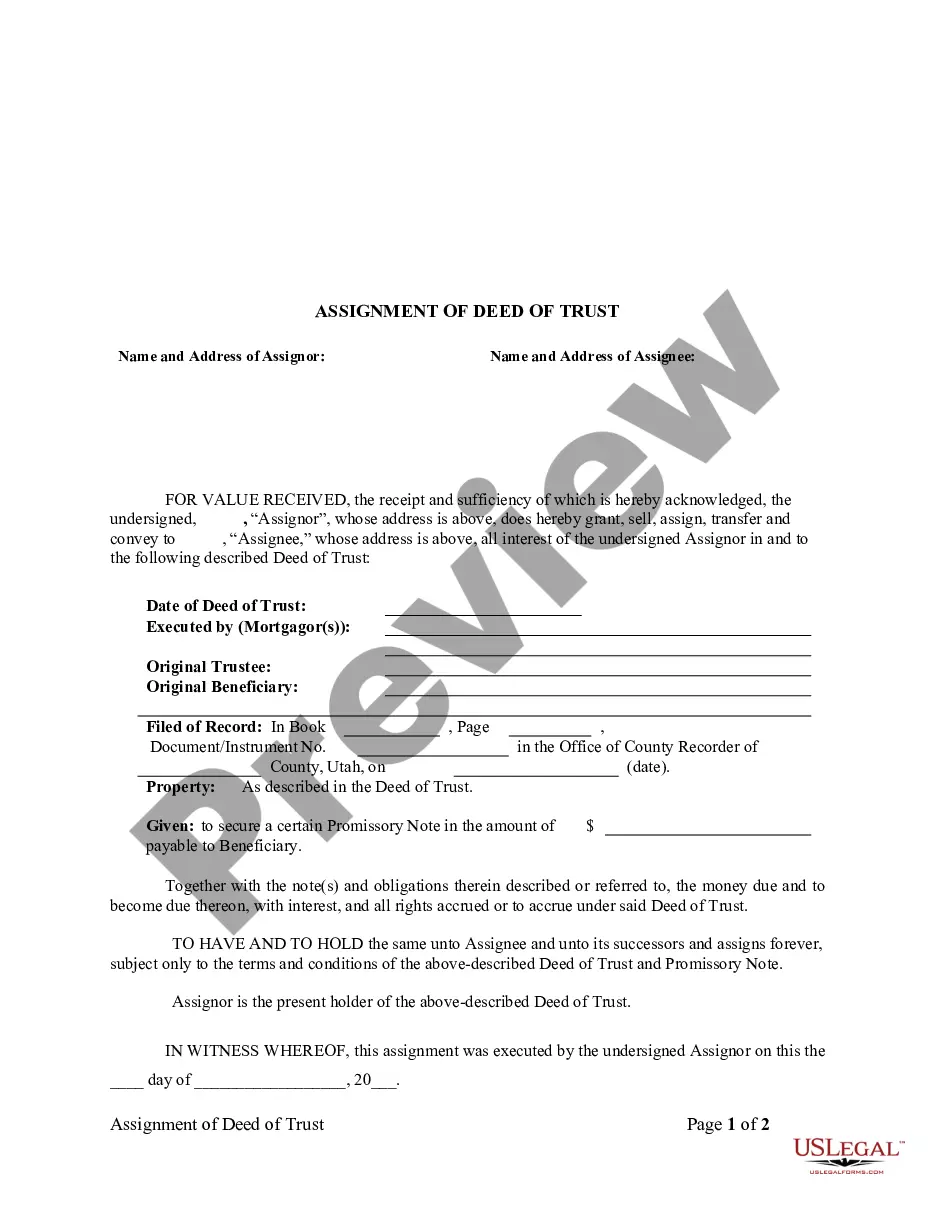
A mortgage holder issues a deed of reconveyance to indicate that the borrower has been released from the mortgage debt. The deed transfers the property title from the lender, also called the beneficiary, to the borrower. This document is most commonly used when a mortgage has been paid in full.
Is completed and signed by the trustee, whose signature must be notarized. Full Reconveyance form can be purchased at most office supply or stationery stores. Usually the trustee named on your Deed of Trust will also have forms available and will issue the Full Reconveyance.
Party information: names and addresses of the trustor(s), trustee(s), beneficiary(ies), and guarantor(s) (if applicable) Property details: full address of the property and its legal description (which can be obtained from the County Recorder's Office)
The trustee's primary function is to hold and maintain a property title for the borrower and the lender for the duration of the loan. Therefore, it is the trustee who retains factual ownership and control of the property in question, not the lender.
How do you file a Deed of Reconveyance? A Deed of Reconveyance should be filed with your local county recorder or recorder of deeds once it has been signed by a notary public (such as an attorney). Once the document has been filed, the debt that was registered to the property will be considered paid off.
When you are ready to sign a deed of trust, the parties will need to sign in the presence of a notary public.The deed of trust must then be recorded with the county where the property is located, and each of the parties (the trustor, trustee, and lender) should keep a copy of the recorded document.
In order to clear the Deed of Trust from the title to the property, a Deed of Reconveyance must be recorded with the Country Recorder or Recorder of Deeds. If the Trustee/Beneficiary fails to record a satisfaction within the set time limits, the Trustee/Beneficiary may be responsible for damages as set out by statute.