Non-Disclosure Agreement for Musicians
What this document covers
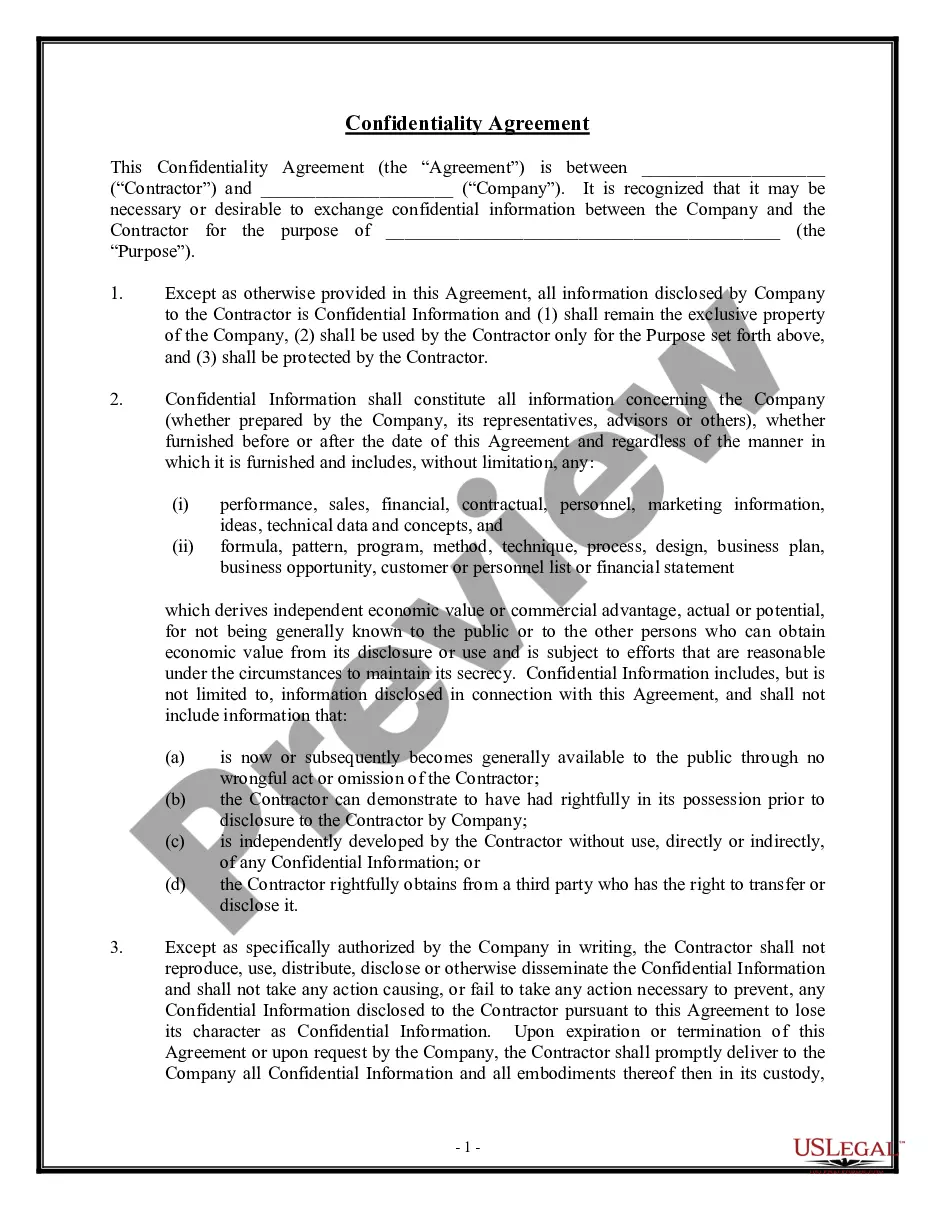
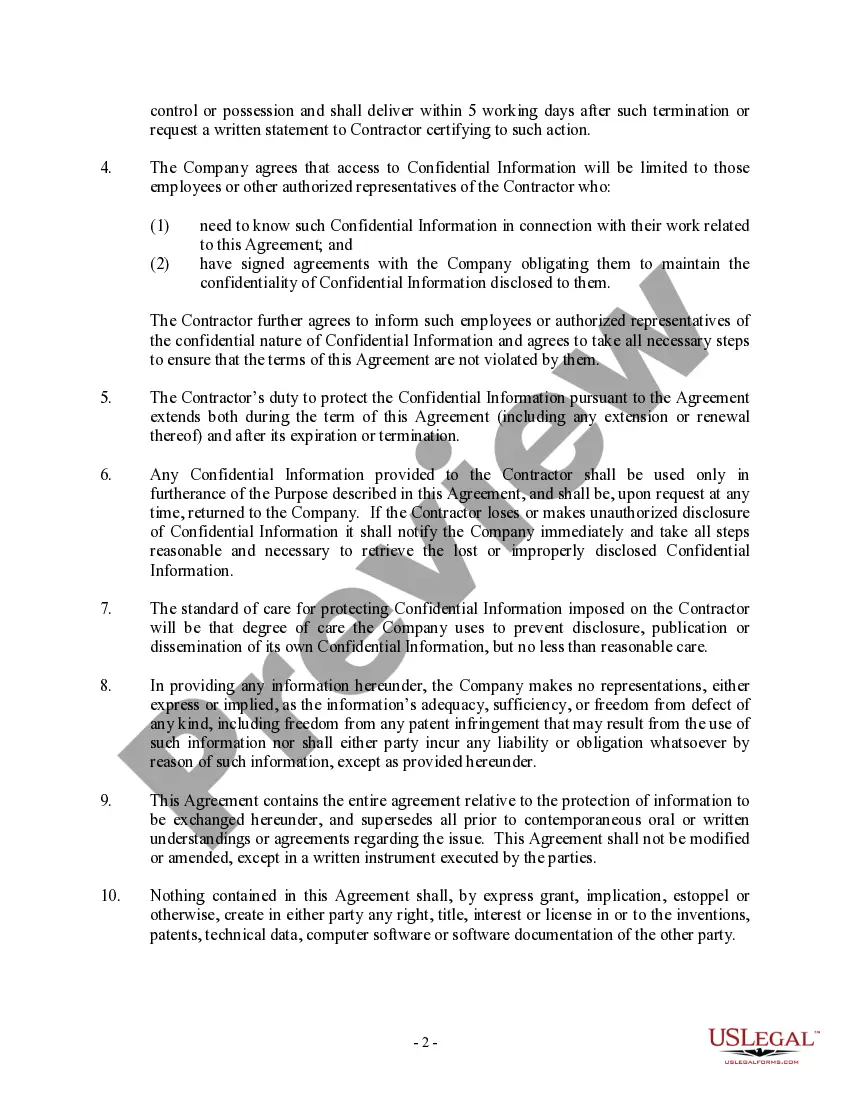
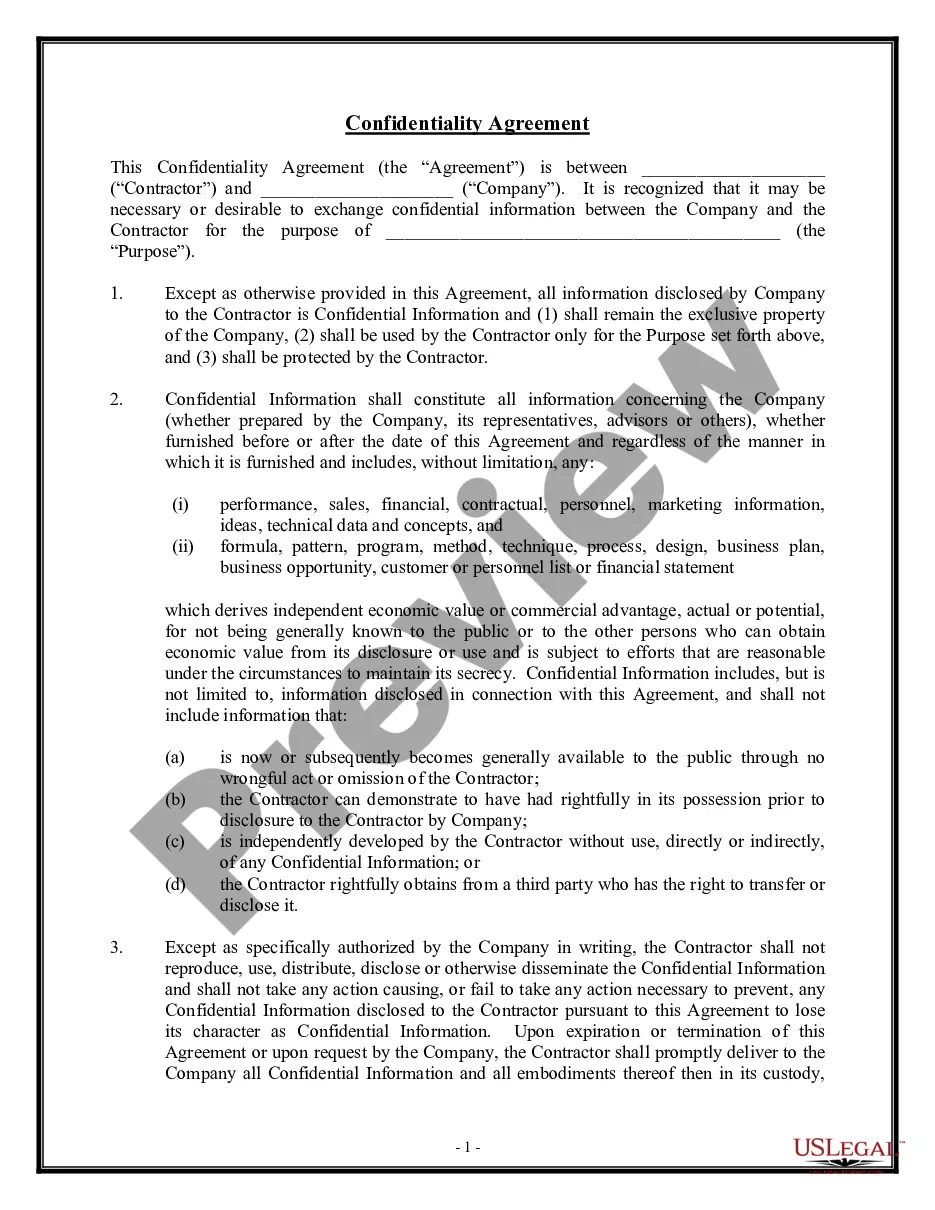
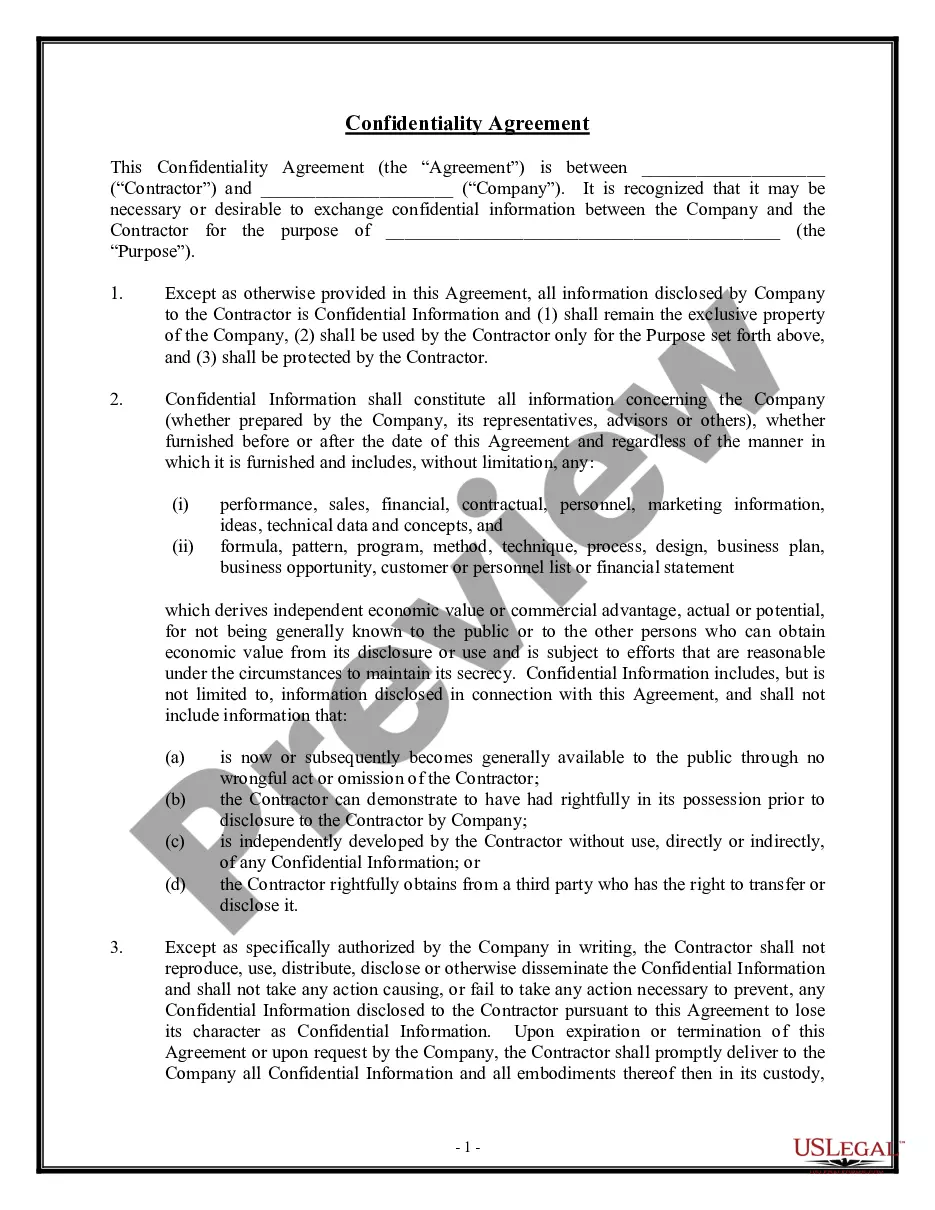
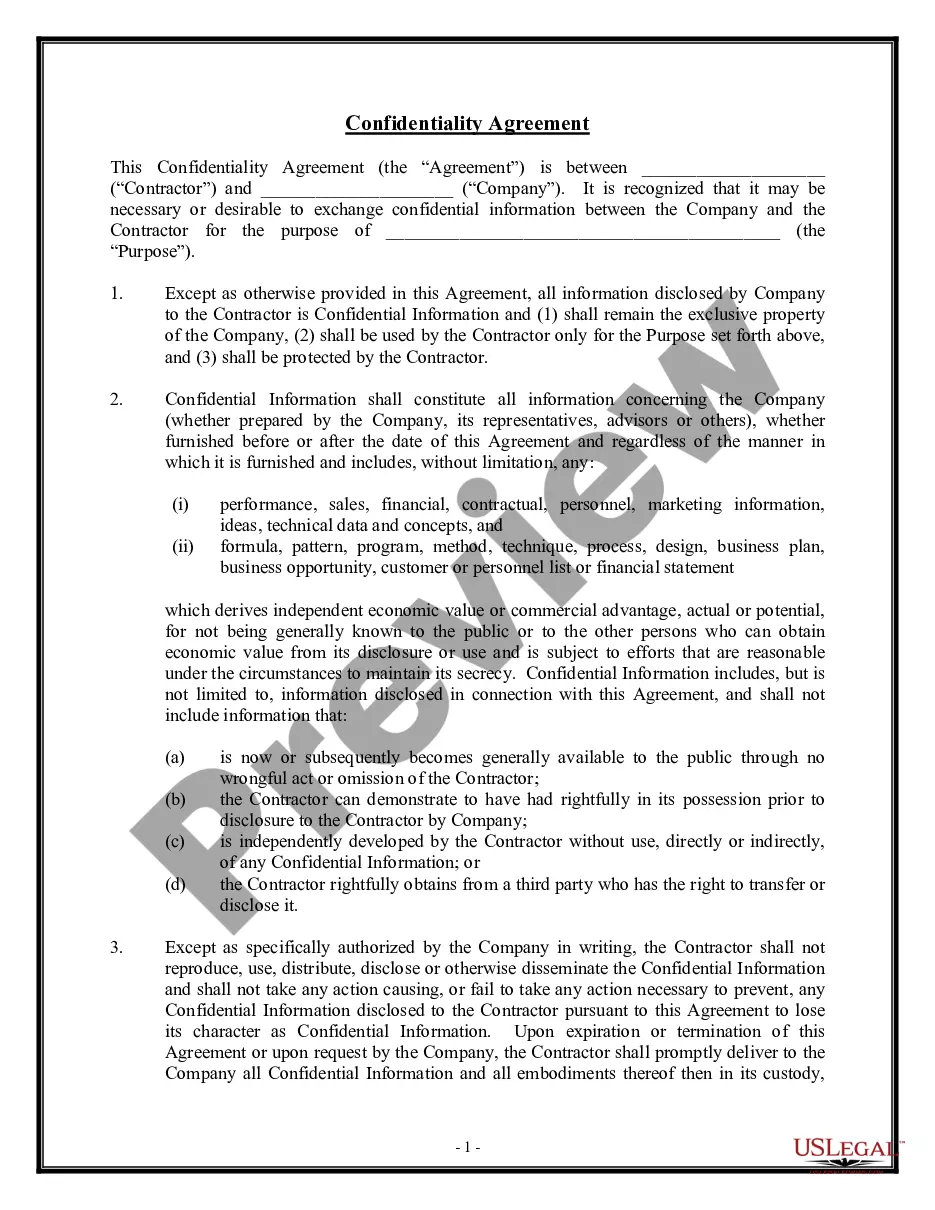
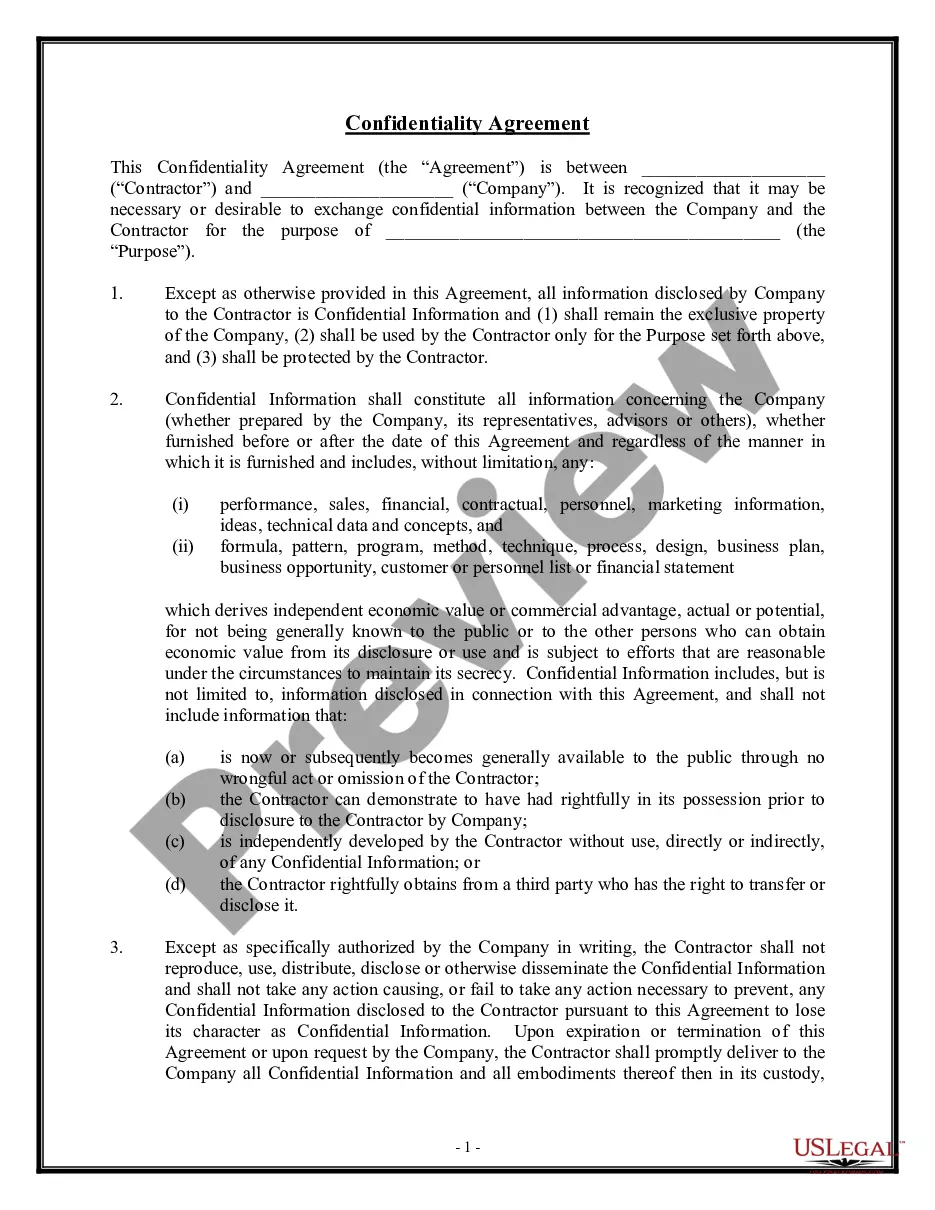
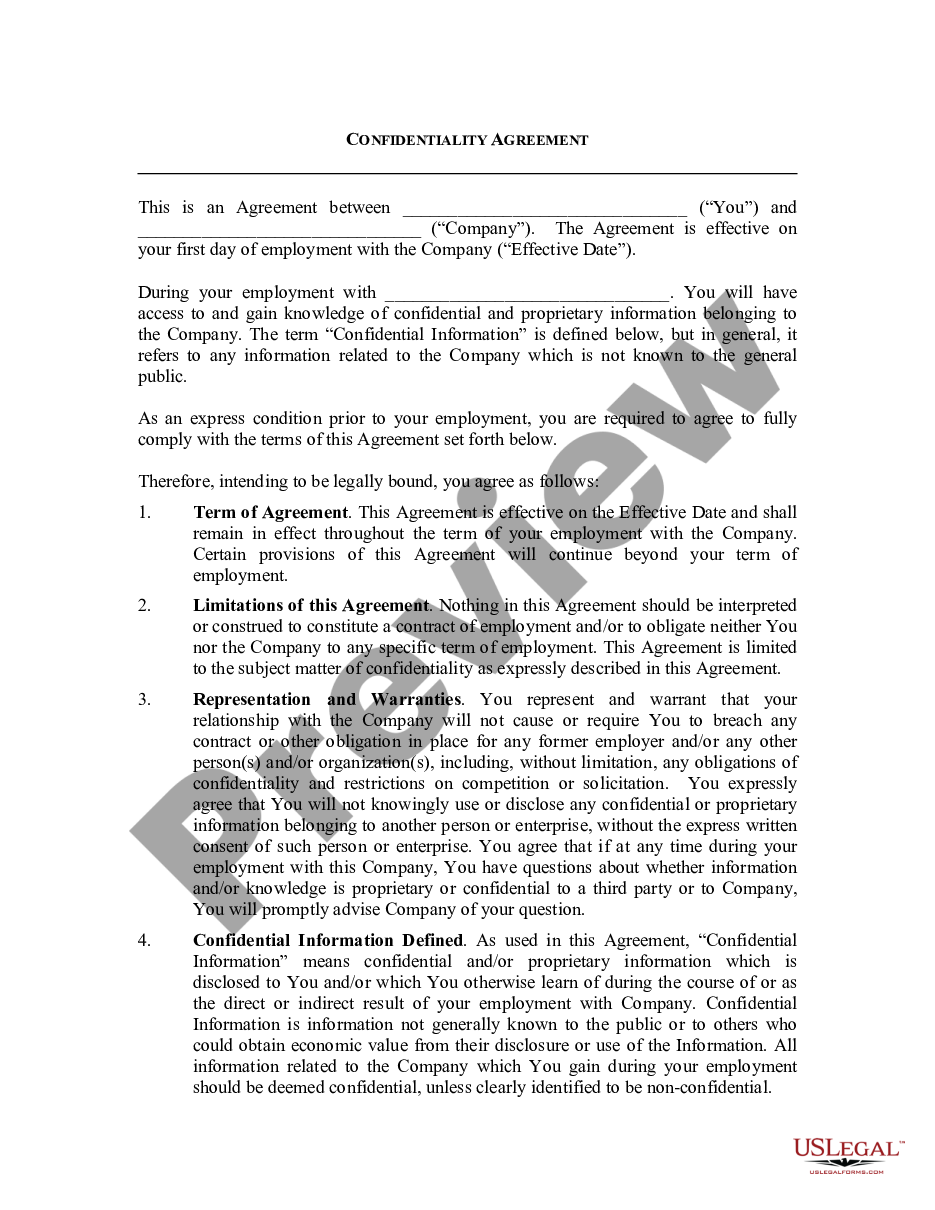
The Non-Disclosure Agreement for Musicians is a legal document designed to protect sensitive information shared between a contractor and a company. This agreement ensures that any confidential information exchanged remains private and is used exclusively for its intended purpose. Unlike general non-disclosure agreements, this form is tailored specifically for the music industry, addressing unique needs related to artistic works and business dealings among musicians and their collaborators.
Key components of this form
- Identification of the parties: Specifies the contractor and the company involved.
- Definition of confidential information: Clearly outlines what constitutes confidential information.
- Obligations of the contractor: Details the contractor's responsibilities to maintain confidentiality.
- Exclusions: Describes information that is not considered confidential.
- Return of information: Requires the contractor to return or destroy confidential information upon request.
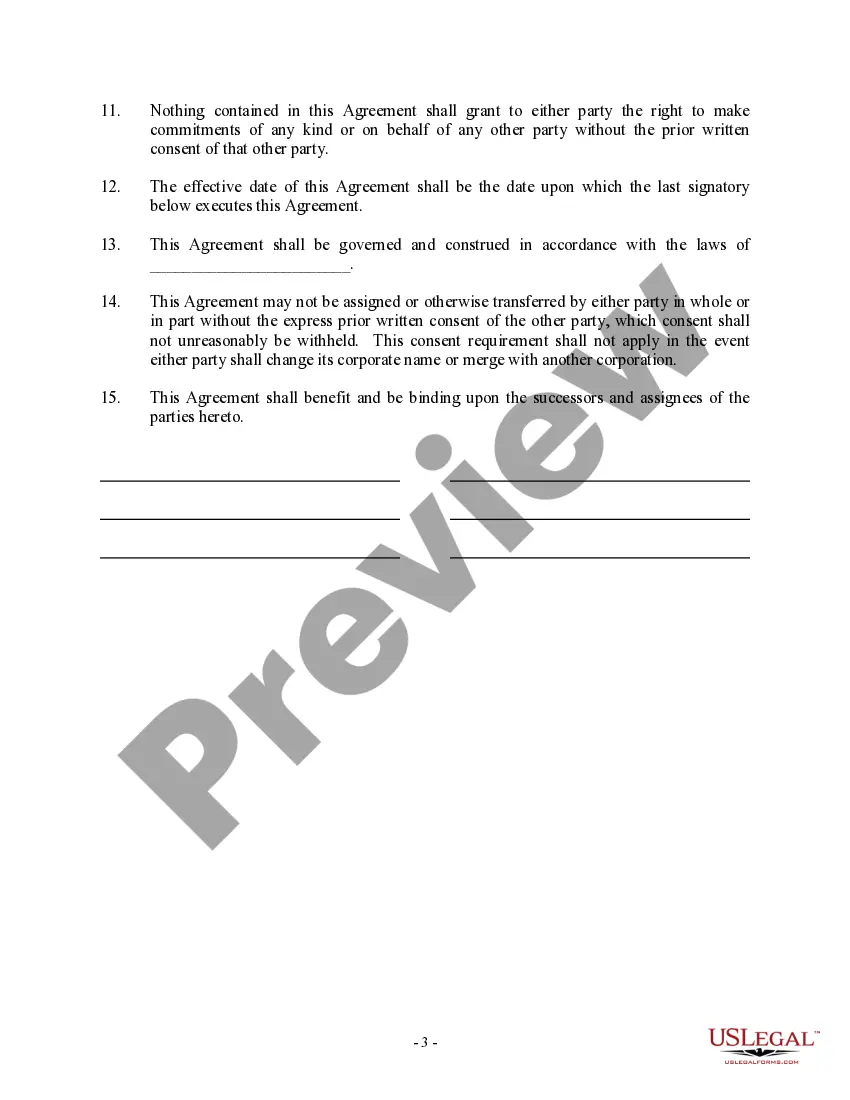
- Governing law: Indicates which state laws govern the agreement.
Situations where this form applies
This non-disclosure agreement is essential when musicians or contractors need to share proprietary information, such as original music, lyrics, trademarks, financial data, or business plans. Use this form during collaboration discussions, contract negotiations, or any scenario where sensitive information may be disclosed, ensuring both parties remain protected under legal stipulations.
Who can use this document
- Musicians and songwriters collaborating with others.
- Producers and music companies sharing sensitive information with contractors.
- Individuals or companies involved in music production, distribution, or promotion.
- Freelancers who may receive confidential information while working on projects for a music company.
How to prepare this document
- Identify the parties: Fill in the names of the contractor and the company.
- Specify the purpose: Clearly state the reason for sharing the confidential information.
- Complete the confidentiality clauses: Review and modify the sections concerning obligations and exclusions as necessary.
- Sign the agreement: Ensure both parties sign and date the document to make it legally binding.
- Keep copies: Retain signed copies for your records and future reference.
Does this form need to be notarized?
This form does not typically require notarization unless specified by local law. Always check your local requirements to ensure compliance.
Get your form ready online
Our built-in tools help you complete, sign, share, and store your documents in one place.
Make edits, fill in missing information, and update formatting in US Legal Forms—just like you would in MS Word.
Download a copy, print it, send it by email, or mail it via USPS—whatever works best for your next step.
Sign and collect signatures with our SignNow integration. Send to multiple recipients, set reminders, and more. Go Premium to unlock E-Sign.
If this form requires notarization, complete it online through a secure video call—no need to meet a notary in person or wait for an appointment.
We protect your documents and personal data by following strict security and privacy standards.

Make edits, fill in missing information, and update formatting in US Legal Forms—just like you would in MS Word.

Download a copy, print it, send it by email, or mail it via USPS—whatever works best for your next step.

Sign and collect signatures with our SignNow integration. Send to multiple recipients, set reminders, and more. Go Premium to unlock E-Sign.

If this form requires notarization, complete it online through a secure video call—no need to meet a notary in person or wait for an appointment.

We protect your documents and personal data by following strict security and privacy standards.
Common mistakes to avoid
- Not clearly defining what constitutes confidential information.
- Failing to return or destroy confidential information after the agreement ends.
- Neglecting to have all necessary parties sign the agreement.
- Overlooking state-specific laws that may affect the agreement's validity.
- Not informing employees or representatives about the terms of confidentiality.
Benefits of completing this form online
- Convenient access: Easily download and complete the form from anywhere.
- Editability: Customize the agreement to fit your specific situation and needs.
- Reliability: Rely on professionally drafted templates created by licensed attorneys.
- Time-efficient: Save time with simple, quick completion and print options.
Legal use & context
- Non-disclosure agreements are enforceable in most states if properly executed.
- They are crucial for protecting intellectual property and sensitive business information.
- Understanding the limits and obligations outlined in the agreement is essential for both parties.
- Disputes over confidentiality can arise, so clear communication and documentation are vital.
Key takeaways
- This agreement is essential for protecting confidential information between musicians and companies.
- It includes specific obligations and definitions tailored for the music industry.
- Both parties must sign the agreement to ensure its validity.
- Always consider state-specific laws regarding non-disclosure agreements.
Looking for another form?

Form popularity
FAQ
Employers must be prepared to terminate any employee who refuses to sign the agreement. If an employer allows even one employee to refuse and remain employed, the agreements signed by the other employees will not be legally binding.
NDAs are legally enforceable contracts, but they're now coming under increased scrutiny from lawmakers, attorneys and legal experts.Companies often use them as part of an employment contract or settlement agreement to protect sensitive information like trade secrets.
In summary, there's no reason why an NDA cannot be terminated if things are no longer working out between the parties. However, this doesn't mean that confidentiality obligations are automatically cancelled upon termination.
Don't Release Information Before the Agreement Is Signed. Work With a Professional. Use a Unilateral NDA, if Possible. Choose an End Date. Define the Confidential Information. Provide Extra Protection for Trade Secrets. Define How the Information Will Be Used. Require Return of the Information.
An NDA is a legally binding contract that requires parties to keep confidentiality for a defined period of time. It's up to the parties to decide what would be considered confidential and what is not.
The cold hard truth is that most NDAs do not hold up in court. Non-Disclosure Agreements are most effective in establishing a paper trail of confidential information as it relates to partnerships, and discouraging partners from misappropriating proprietary information.
Read the Duration clauses. Good NDAs will have two different terms of duration. Read the termination clause. Like any other relationship, business partnerships can come to an early end unexpectedly. Read the Return of Information clause.
For an NDA to be enforceable in California, it must not be too generic or too open-ended (no time limit established), or the courts will likely throw it out.An enforceable NDA in California must include: A statement of the purpose of the NDA and the parties involved.