Pennsylvania Marital Domestic Separation and Property Settlement Agreement Minor Children Parties May have Joint Property or Debts effective Immediately
Understanding this form
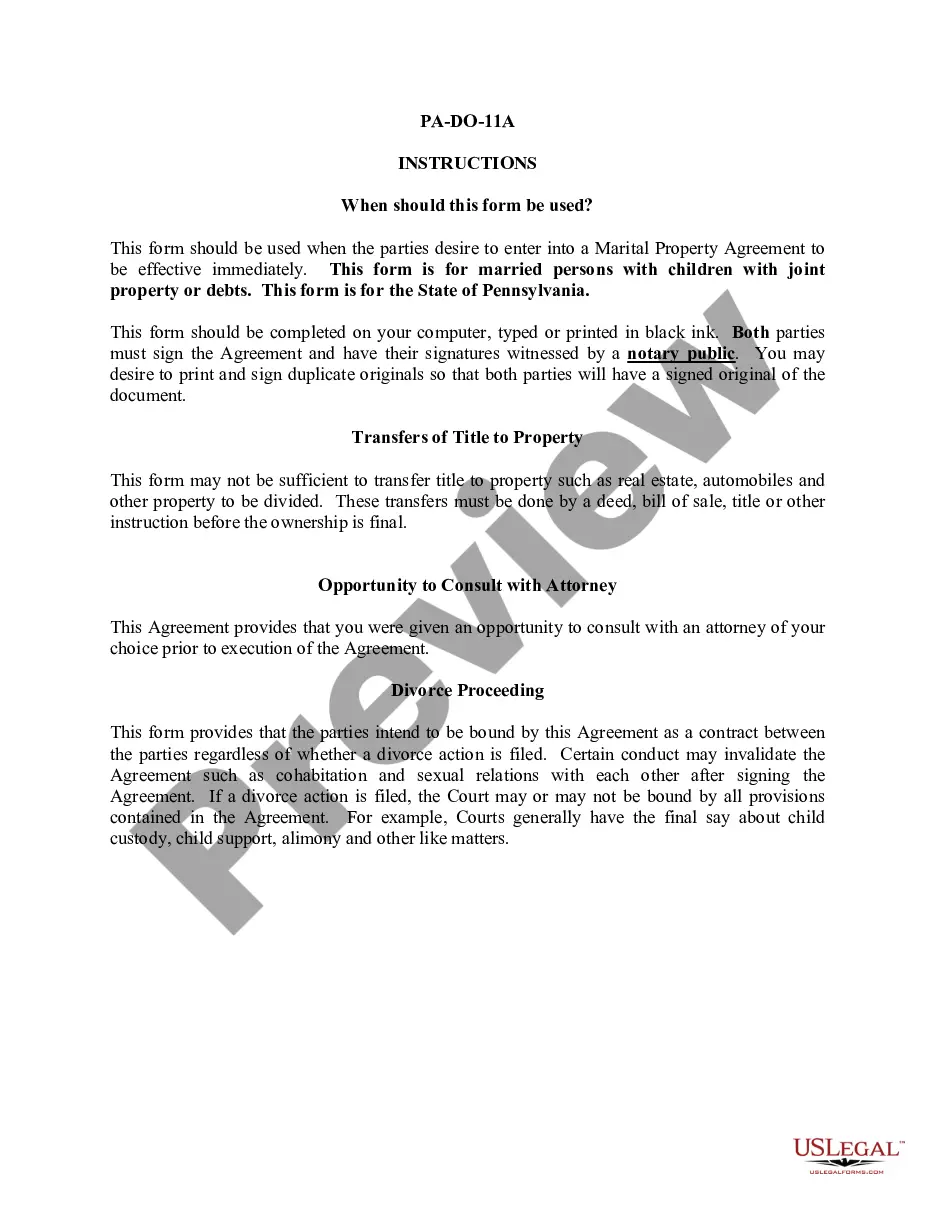
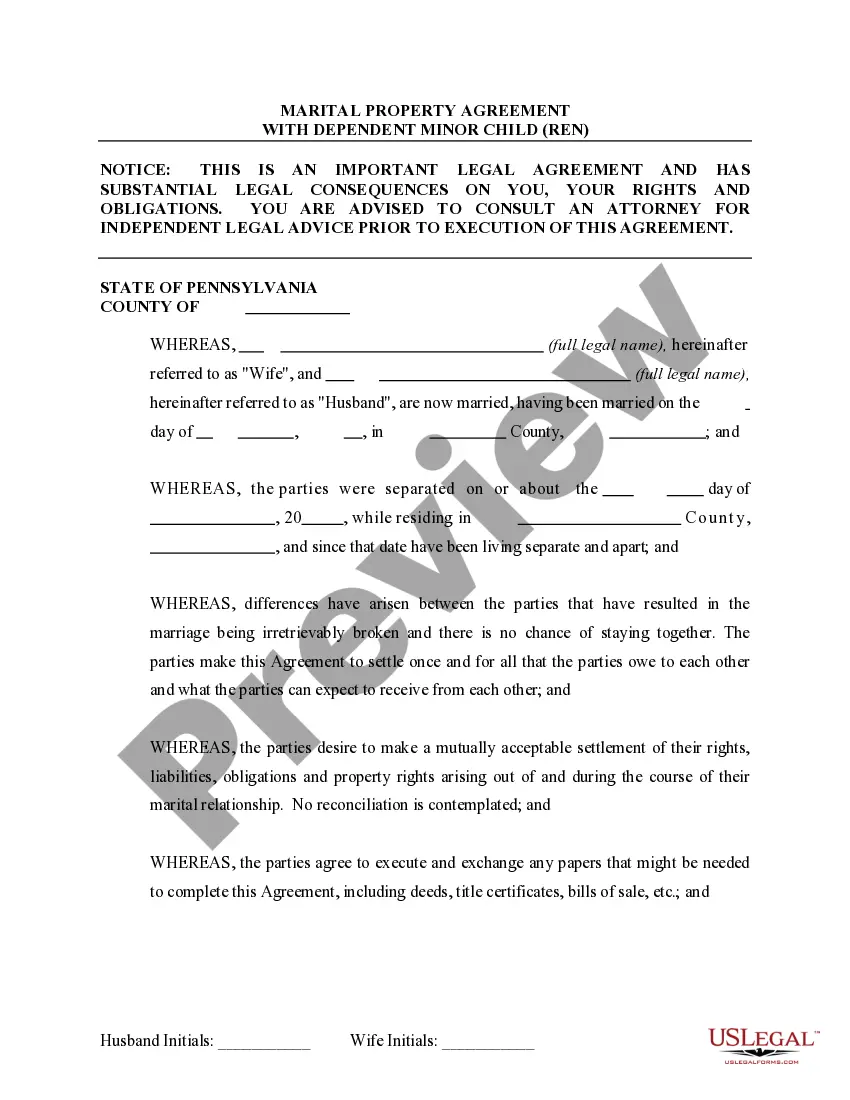
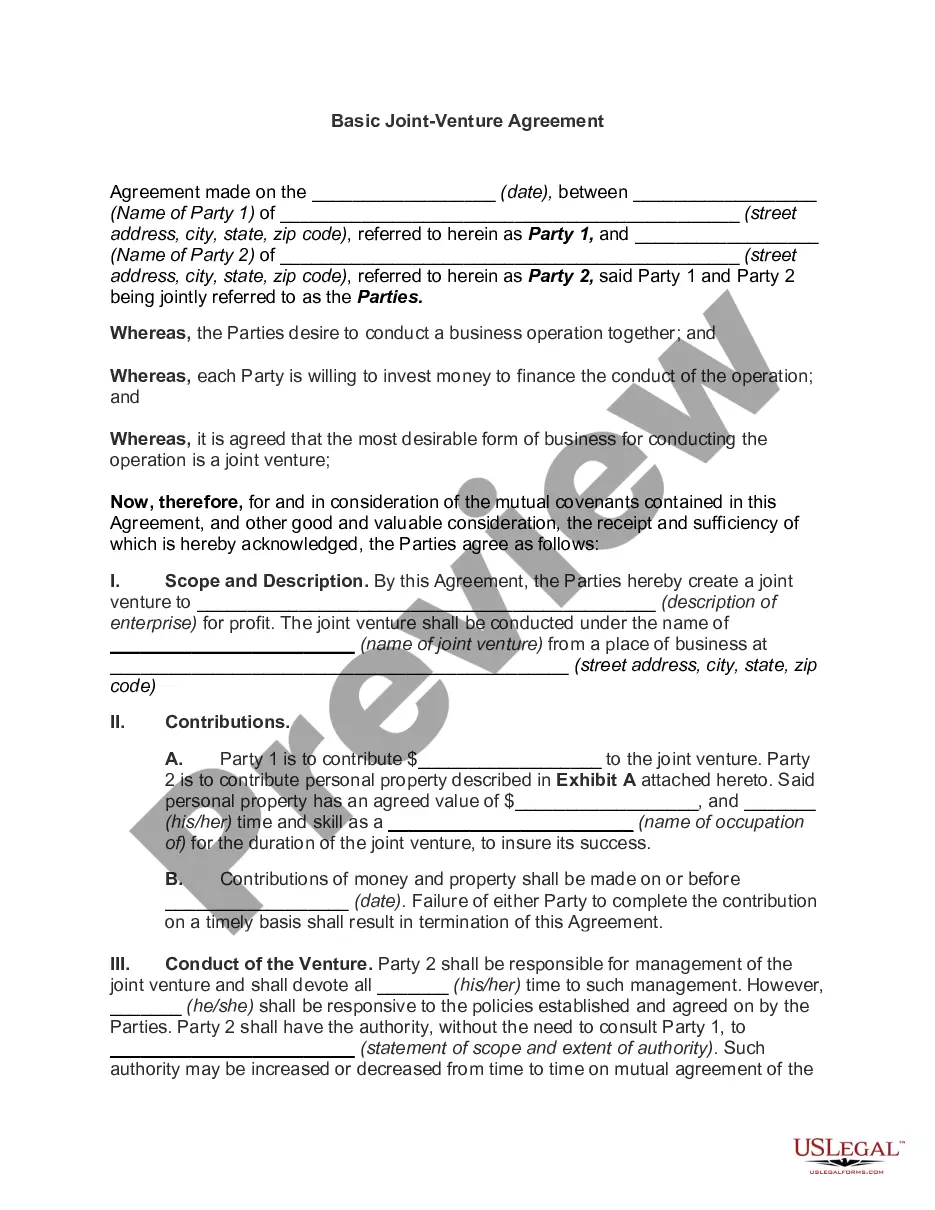
The Marital Domestic Separation and Property Settlement Agreement is a legal document designed for couples with minor children who wish to separate and settle their property and financial obligations immediately. This form clarifies the division of assets and debts, arrangements for child custody and support, and provisions for alimony. Unlike standard separation agreements, this form is tailored specifically for couples with children and outlines how their joint property and debts will be managed during and after the separation process, making it an essential tool for ensuring clarity and compliance with Pennsylvania law.
Form components explained
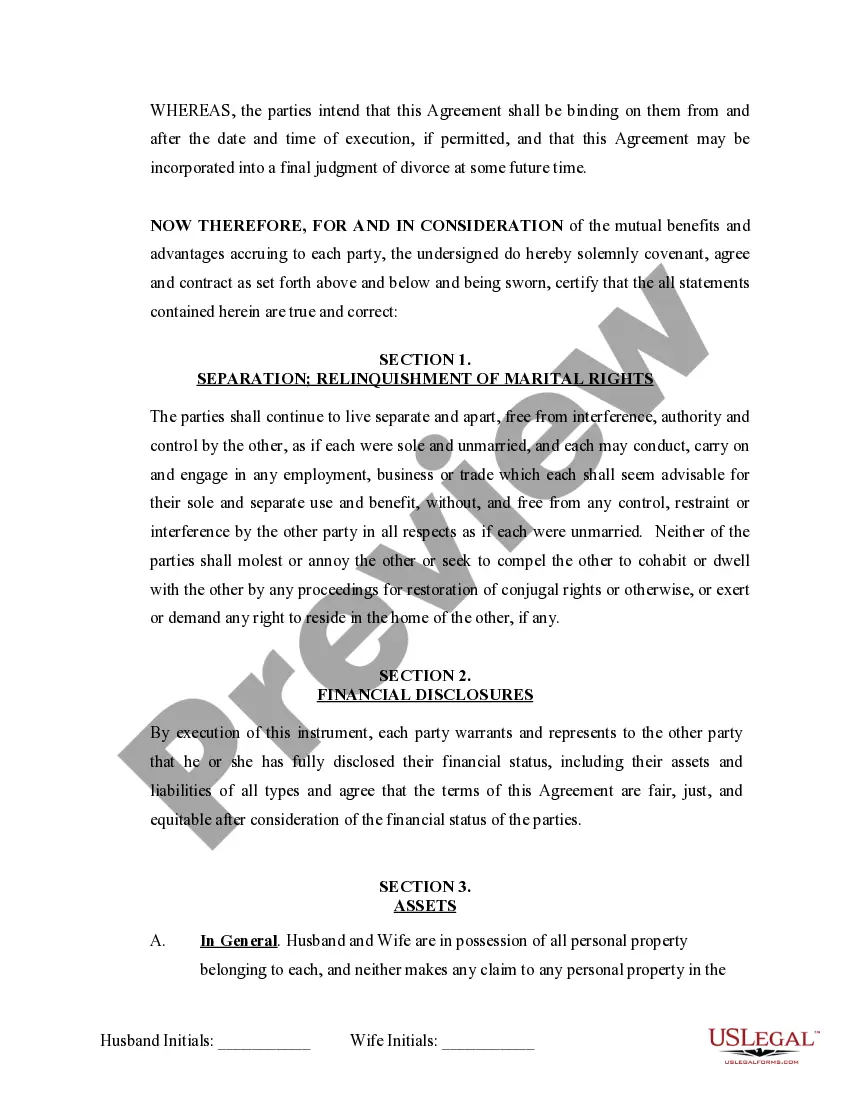
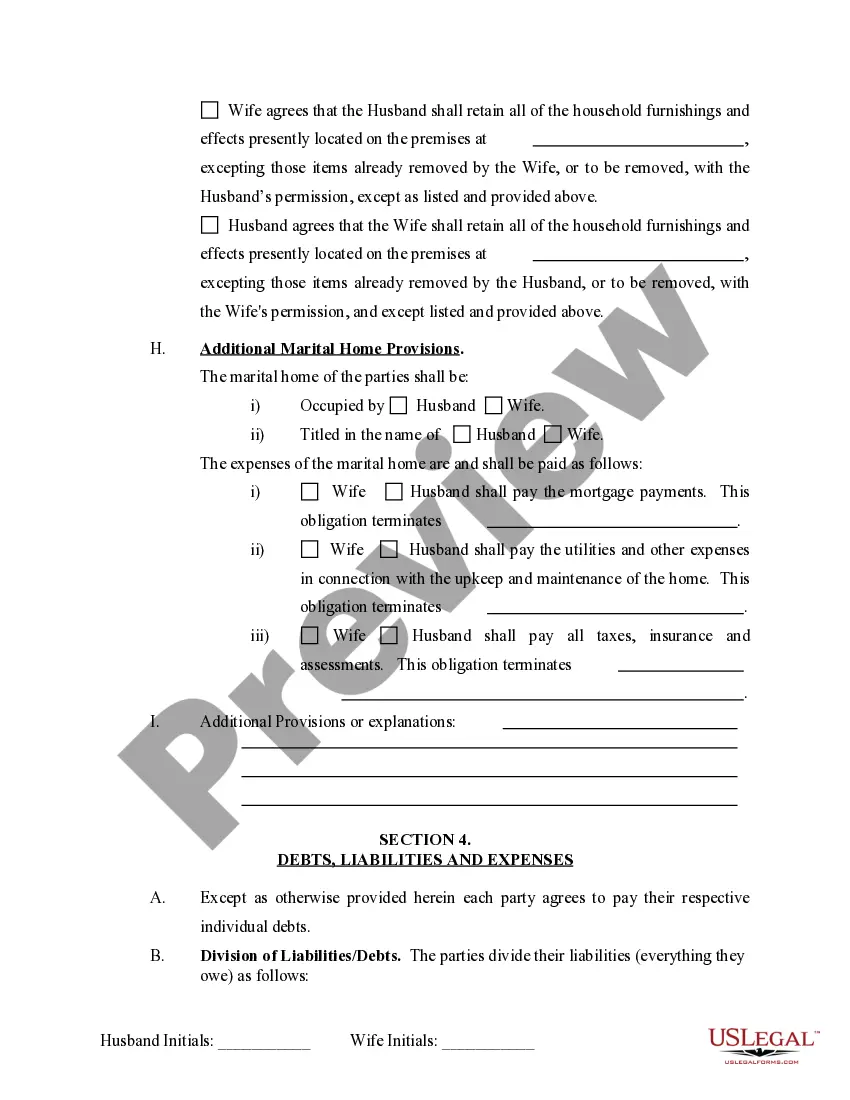
- Separation: Establishes the parties' intent to live separately and manage their affairs independently.
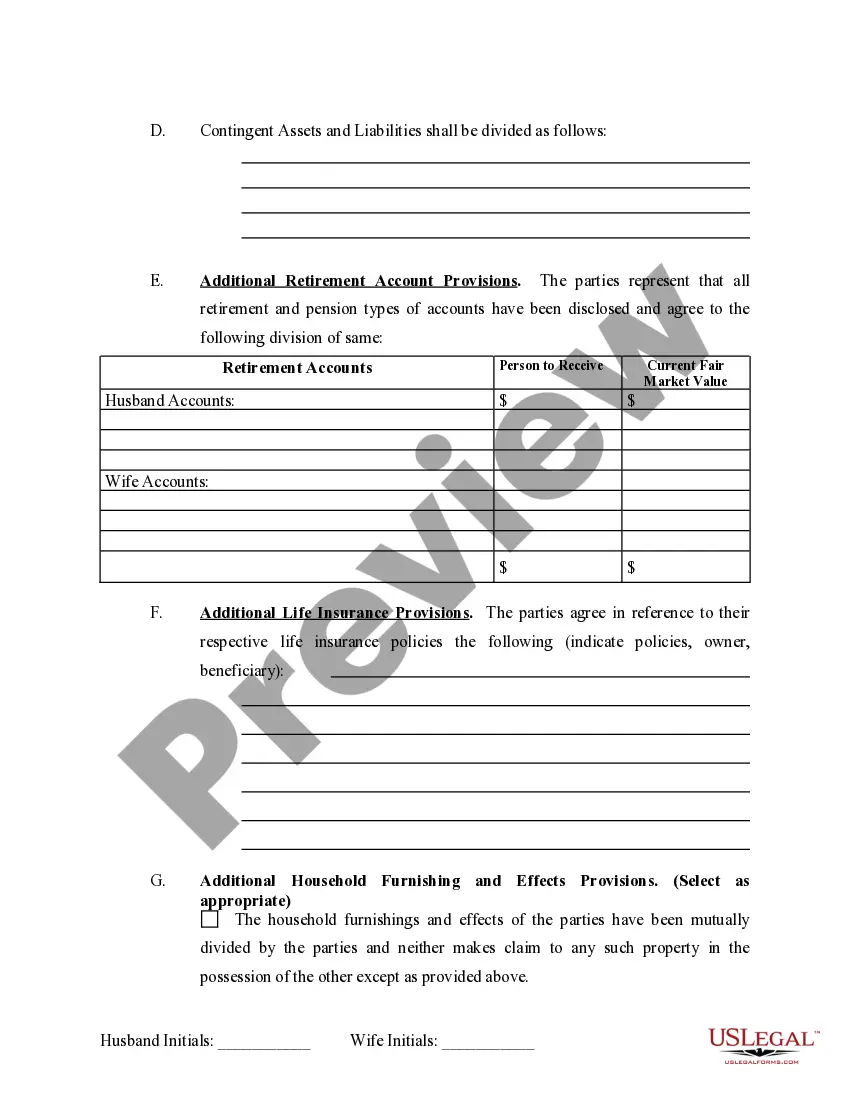
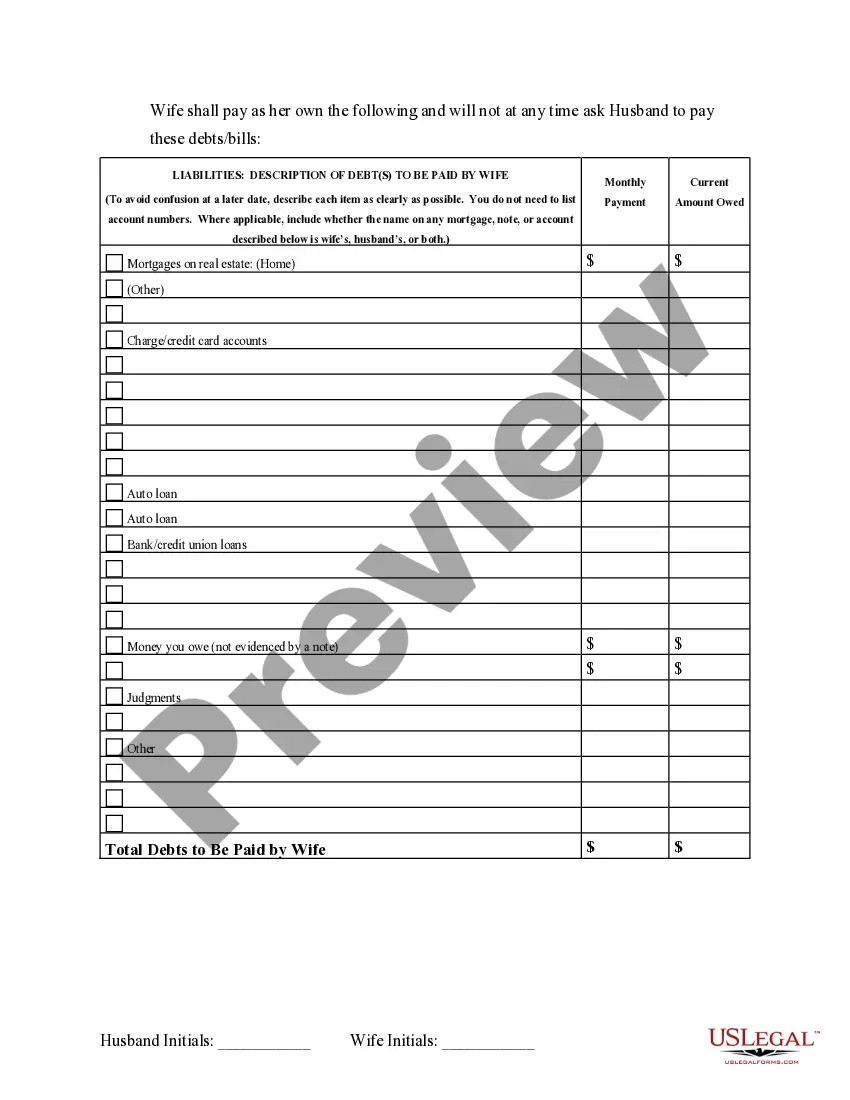
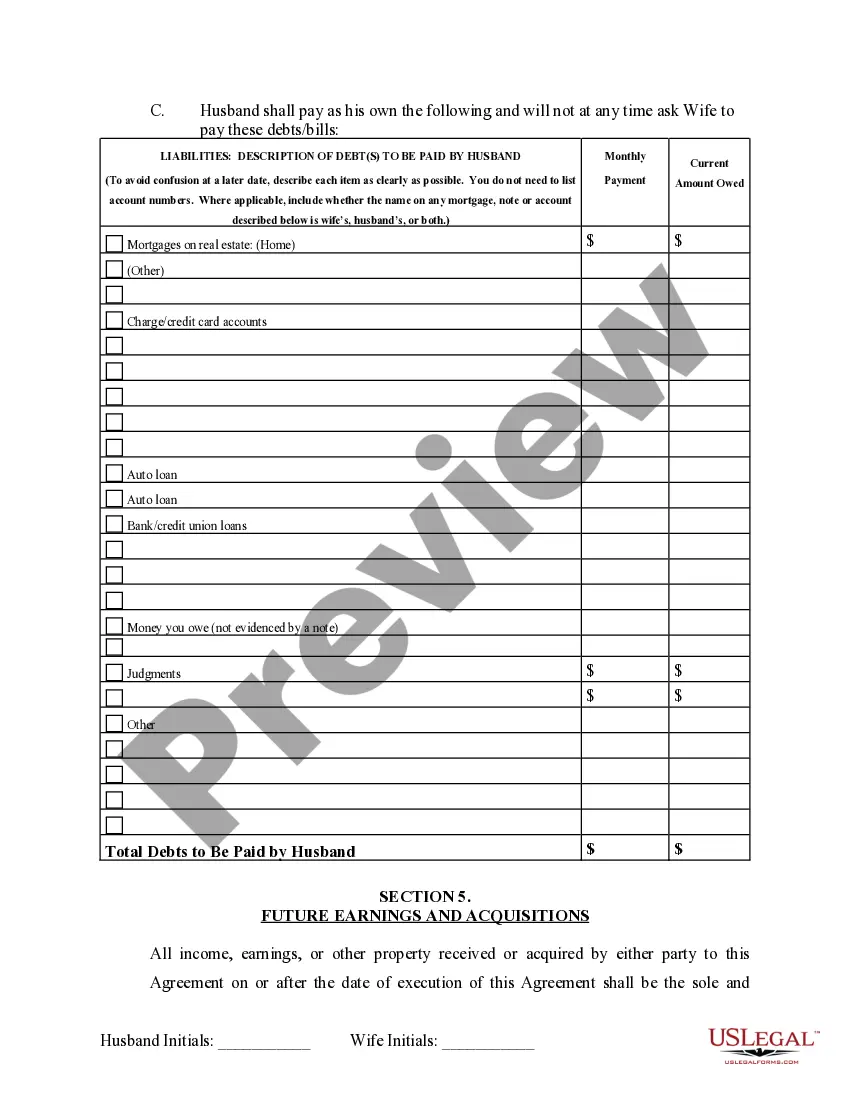
- Financial disclosures: Both parties disclose their assets and debts to ensure fairness in the agreement.
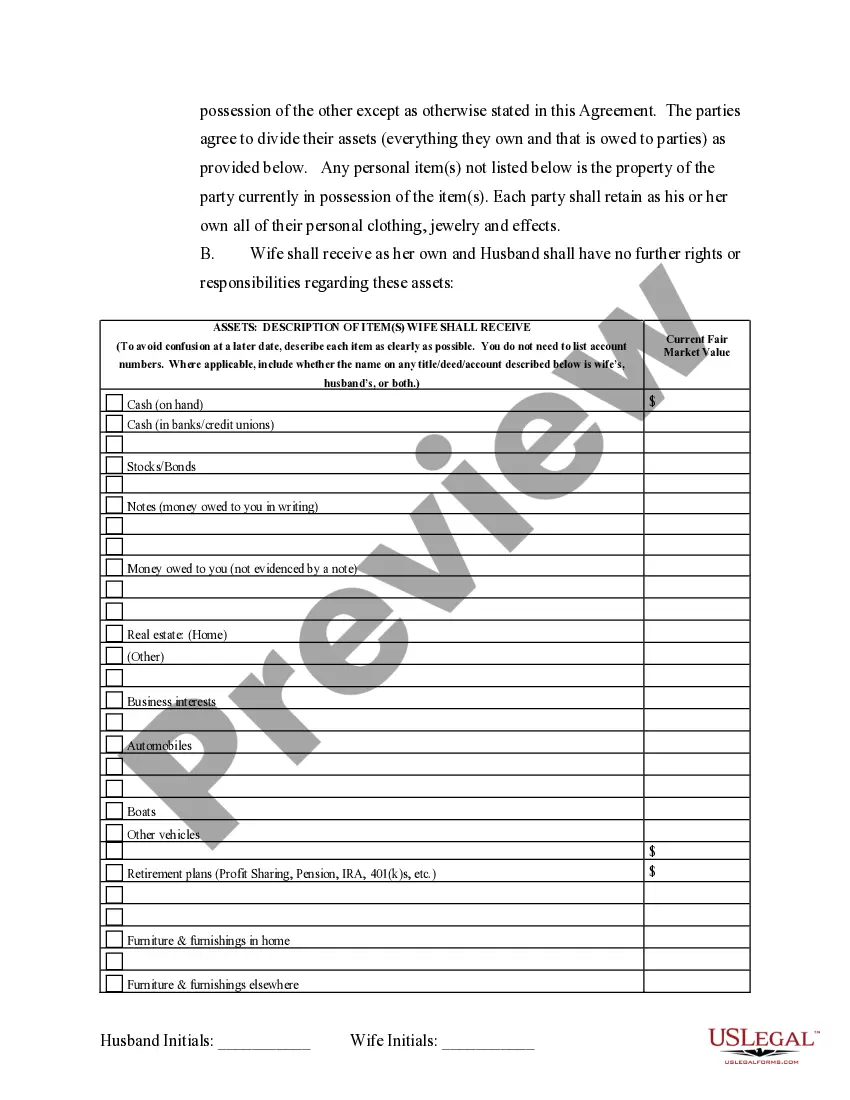
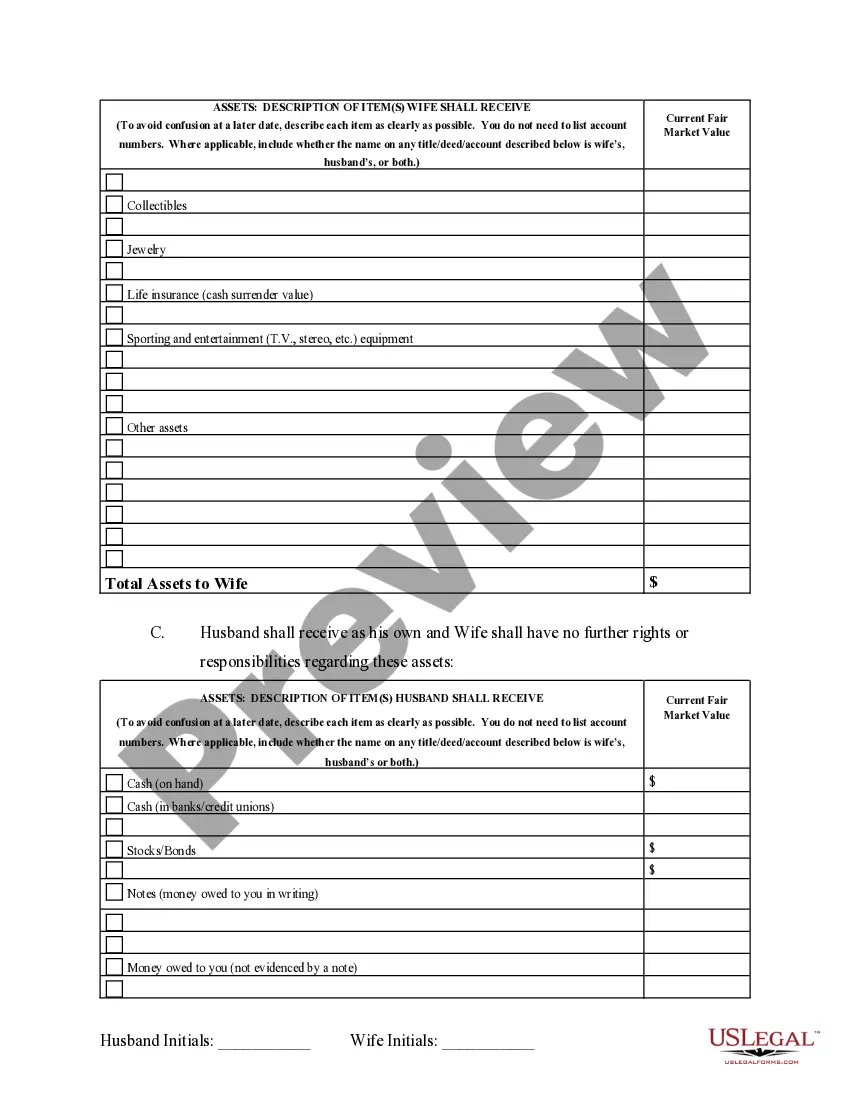
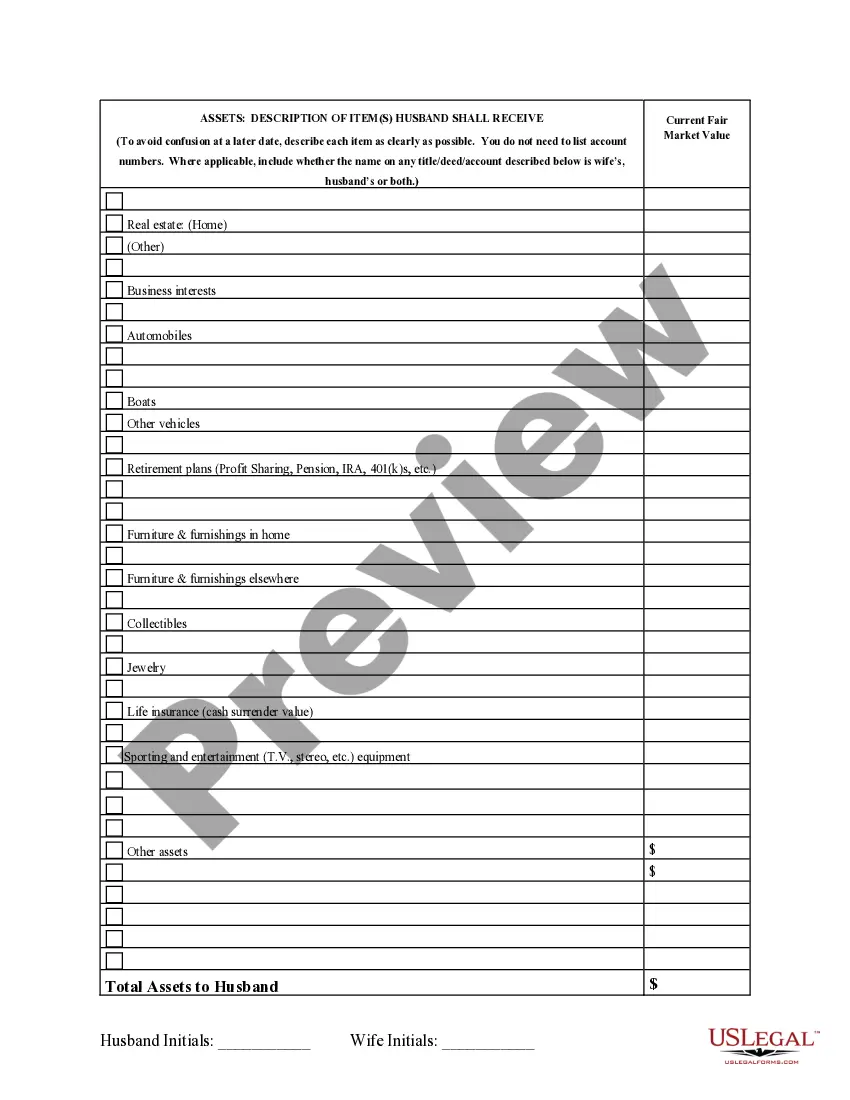
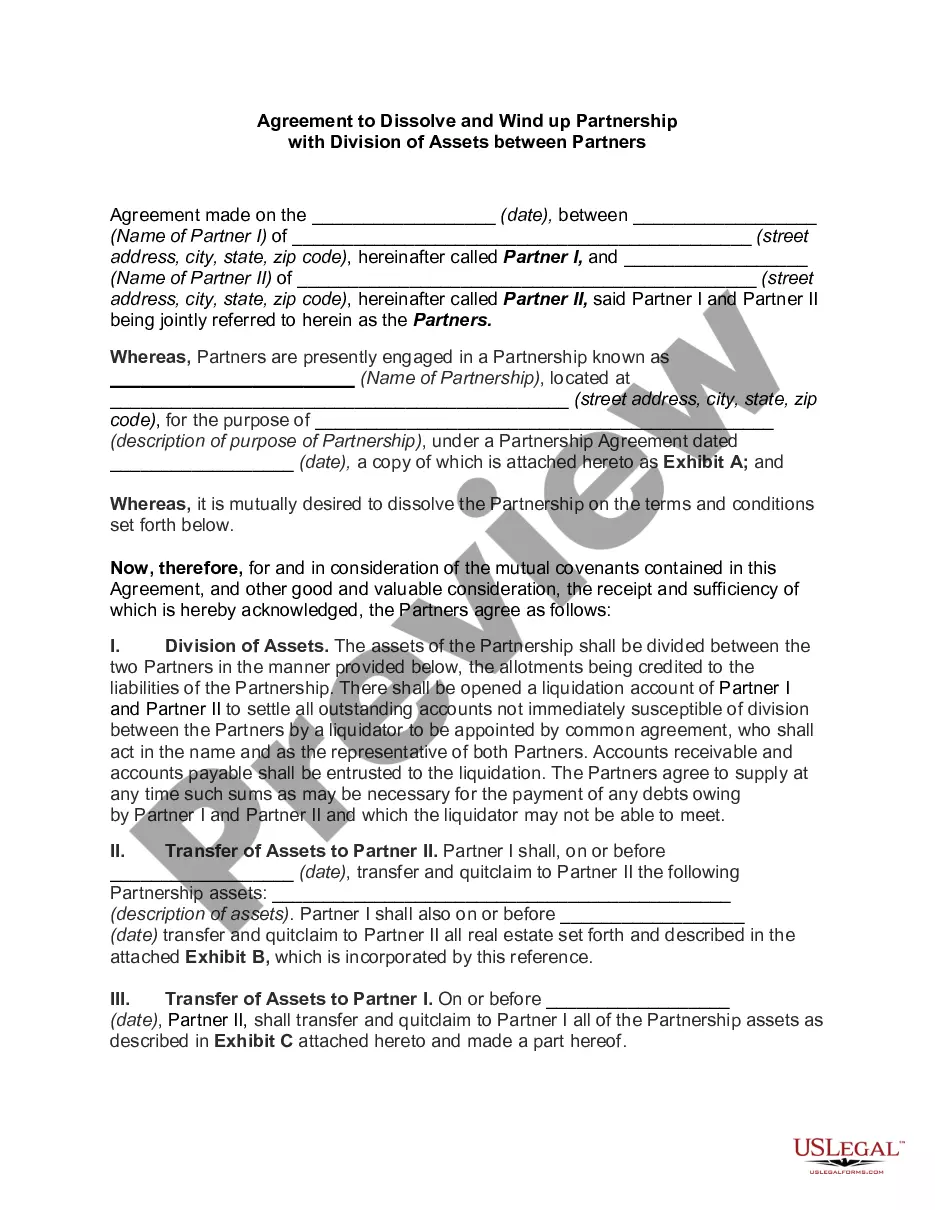
- Asset division: Detailed provisions on how joint assets are divided between the parties.
- Debt responsibilities: Specifies how each party will handle individual and joint debts.
- Child custody arrangements: Outlines primary and secondary custody, visitation rights, and support obligations.
- Spousal support: Includes terms for alimony payment, if applicable.

When to use this document
This form should be used when married individuals with minor children wish to formalize a separation and address property and child-related matters immediately. It is particularly important when the couple has joint assets and debts, ensuring that responsibilities and rights are clearly defined to prevent future disputes.
Who this form is for
- Married couples with minor children seeking separation.
- Couples who share joint property or debts.
- Individuals looking for a clear, enforceable agreement to govern their separation arrangements.
- Parties who want to outline child custody and support obligations.
How to prepare this document
- Identify the parties: Clearly state the full names and addresses of both spouses.
- List the assets: Provide a detailed list of all joint and individual assets, including current market values.
- Detail the debts: Specify all joint and individual debts along with the responsibilities of each party.
- Define custody arrangements: Outline the custody, visitation schedules, and any child support obligations.
- Sign and notarize: Both parties must sign the agreement in the presence of a notary public.
Notarization requirements for this form
Yes, this form must be notarized to be legally valid. Both parties are required to sign the document in the presence of a notary public, ensuring that the agreement is enforceable and recognized by the court.
Get your form ready online
Our built-in tools help you complete, sign, share, and store your documents in one place.
Make edits, fill in missing information, and update formatting in US Legal Forms—just like you would in MS Word.
Download a copy, print it, send it by email, or mail it via USPS—whatever works best for your next step.
Sign and collect signatures with our SignNow integration. Send to multiple recipients, set reminders, and more. Go Premium to unlock E-Sign.
If this form requires notarization, complete it online through a secure video call—no need to meet a notary in person or wait for an appointment.
We protect your documents and personal data by following strict security and privacy standards.

Make edits, fill in missing information, and update formatting in US Legal Forms—just like you would in MS Word.

Download a copy, print it, send it by email, or mail it via USPS—whatever works best for your next step.

Sign and collect signatures with our SignNow integration. Send to multiple recipients, set reminders, and more. Go Premium to unlock E-Sign.

If this form requires notarization, complete it online through a secure video call—no need to meet a notary in person or wait for an appointment.

We protect your documents and personal data by following strict security and privacy standards.
Avoid these common issues
- Failing to fully disclose assets and debts, which can lead to disputes later.
- Not having the document notarized, which may hinder its enforceability.
- Overlooking the importance of clear custody and visitation provisions, which can affect child welfare.
- Not consulting with an attorney to understand the implications of the agreement.
Why complete this form online
- Convenience: Access and fill out the form from your home at any time.
- Editability: Make changes easily before finalizing the document.
- Guidance: Follow clear instructions that walk you through each section of the form.
- Reliability: Utilize forms drafted by licensed attorneys to ensure legal compliance.
Legal use & context
- This agreement serves as a binding contract governing the separation and should outline all rights and responsibilities.
- Any changes to the agreement after execution must be formally documented and may require court approval.
- The terms regarding child custody and support may be subject to court review to ensure they align with the best interests of the children.
Quick recap
- The form establishes clear terms for separation and property division.
- Custody and visitation are defined to protect the best interests of children.
- Both parties must sign the agreement in front of a notary.
- Compliance with Pennsylvania state law is essential.
Looking for another form?

Form popularity
FAQ
Marital property includes all property that was acquired during the marriage, regardless of how it is titled (in whose name it is). Gifts from one spouse to another are marital property if they were purchased with marital funds.
Pennsylvania's divorce law gives the court the right to allow one or both of the spouses to reside in the marital home, during the divorce or afterwards.
Yes, it is mandatory. Each party must obtain independent legal advice prior to signing a separation agreement. You also cannot use the same lawyer and should not use the same law firm. If you fail to obtain advice from a lawyer, the separation agreement will be unenforceable.
Buying a home while legally married but separated from your former spouse is certainly possible, but there's some extra documentation needed and things to be aware of. First, your lender is going to require your legal separation agreement. If you have a property settlement agreement, they'll need that as well.
Technically, 50/50 states are called community property states because each spouse is entitled to 50 percent of the marital assets acquired during the marriage in the event of a divorce.Pennsylvania is NOT a community property state. Instead, it is an equitable distribution state.
Is Pennsylvania a Community Property State? No. Pennsylvania divides marital property under the theory of equitable distribution.
In a Pennsylvania divorce, the court divides marital property on an equitable basis. However, this does not necessarily mean that the court will evenly split property between the two spouses. Rather, the judge presiding over the case will split up the property in a way that he or she deems fair.
Marital property refers generally to all of the property acquired by either or both spouses during the marriage. Separate property refers to any property the spouses acquired separately before the marriage or after separation (or in some states after divorce).
Marital property includes all property that was acquired during the marriage, regardless of how it is titled (in whose name it is). Gifts from one spouse to another are marital property if they were purchased with marital funds.