Mississippi Subordination Agreement of Deed of Trust
Understanding this form
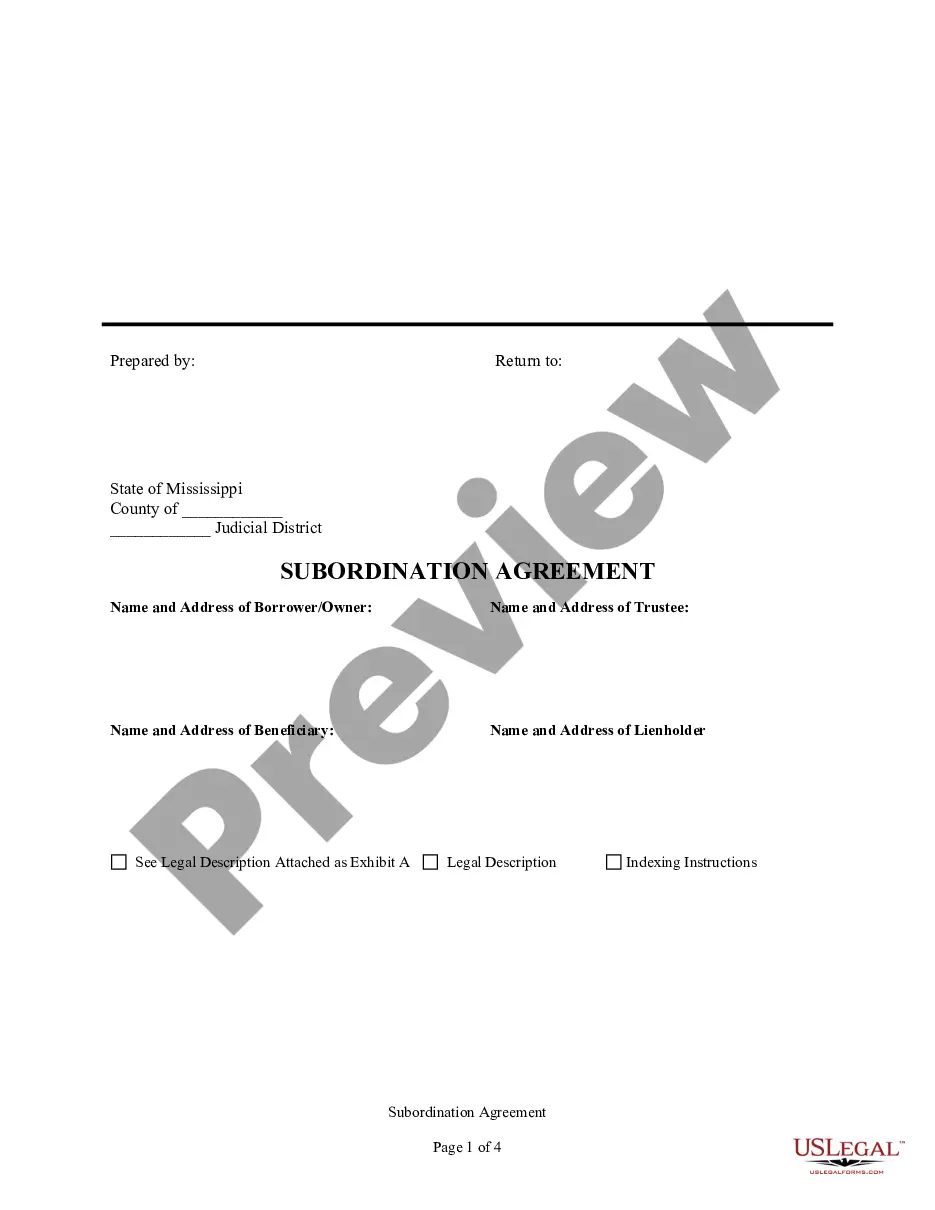
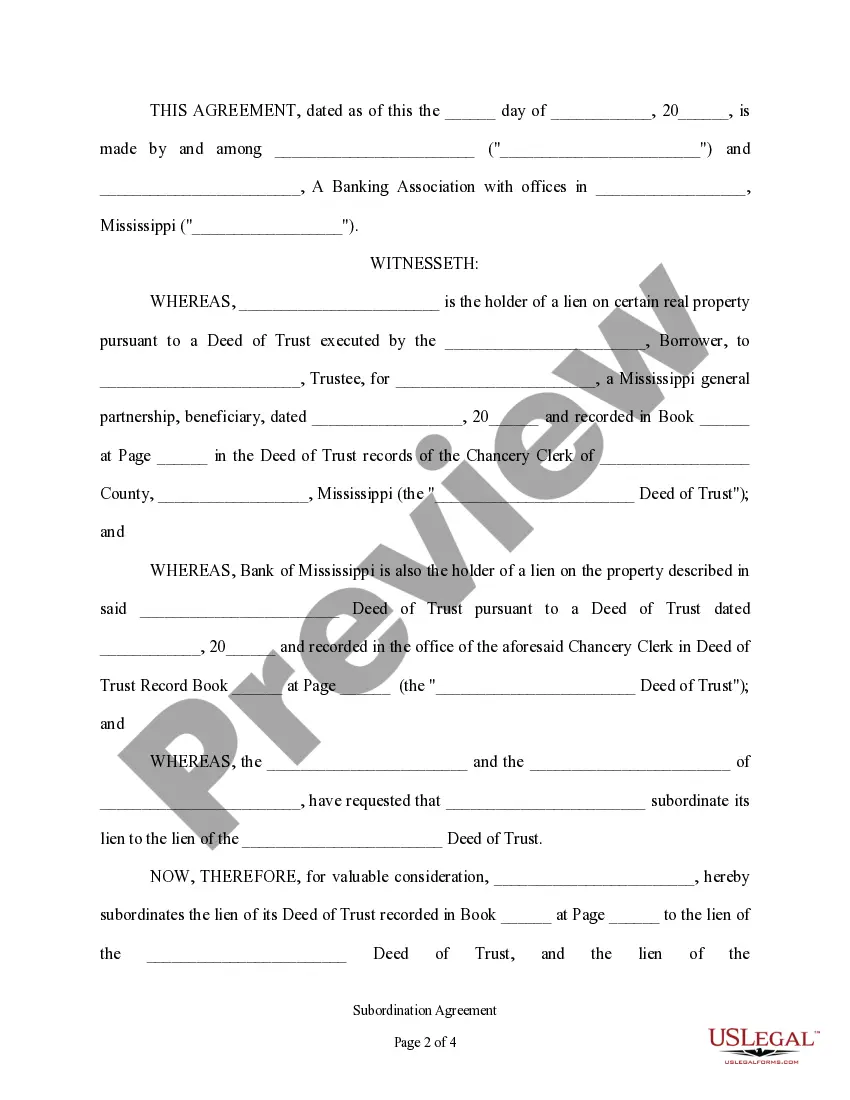
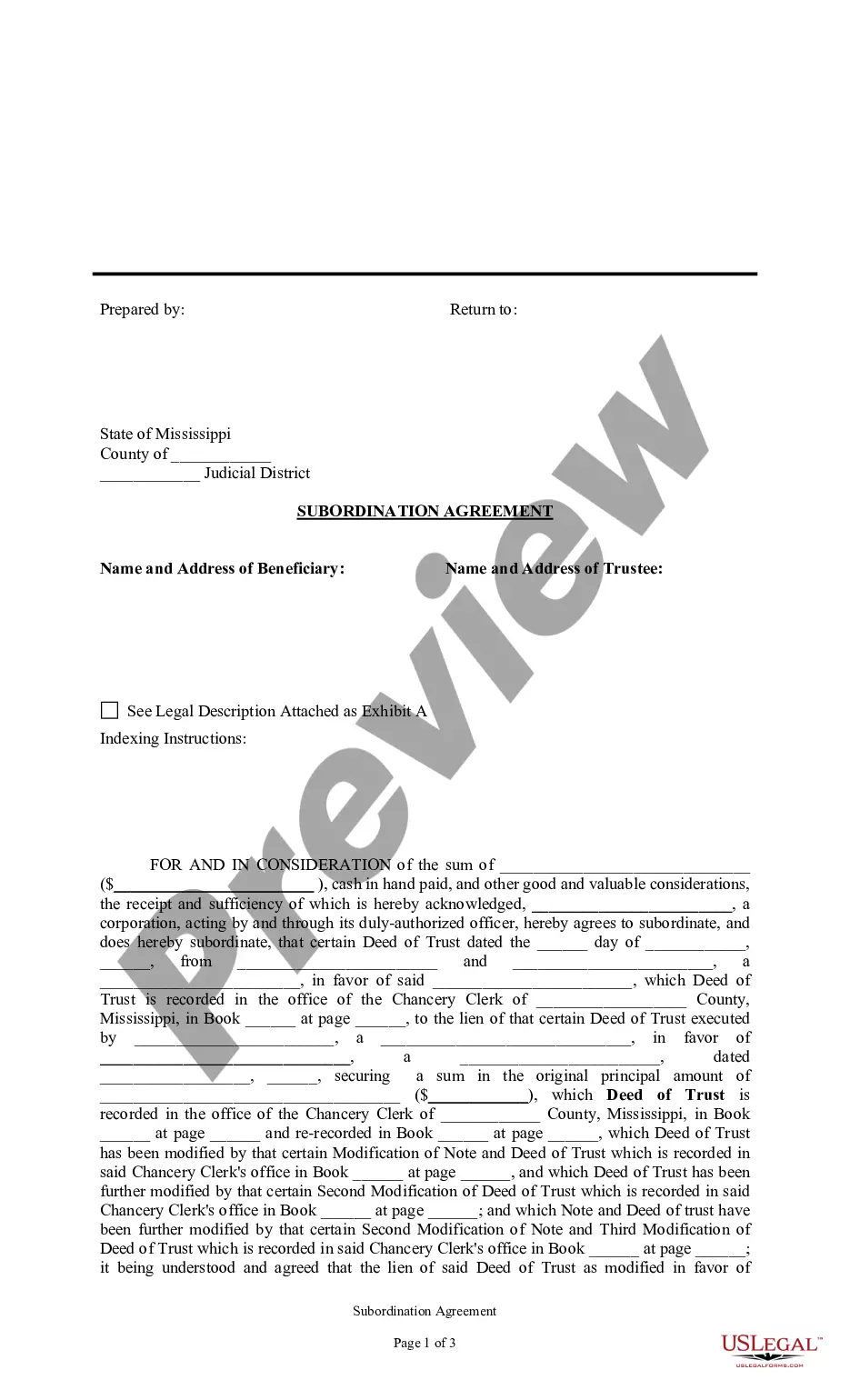
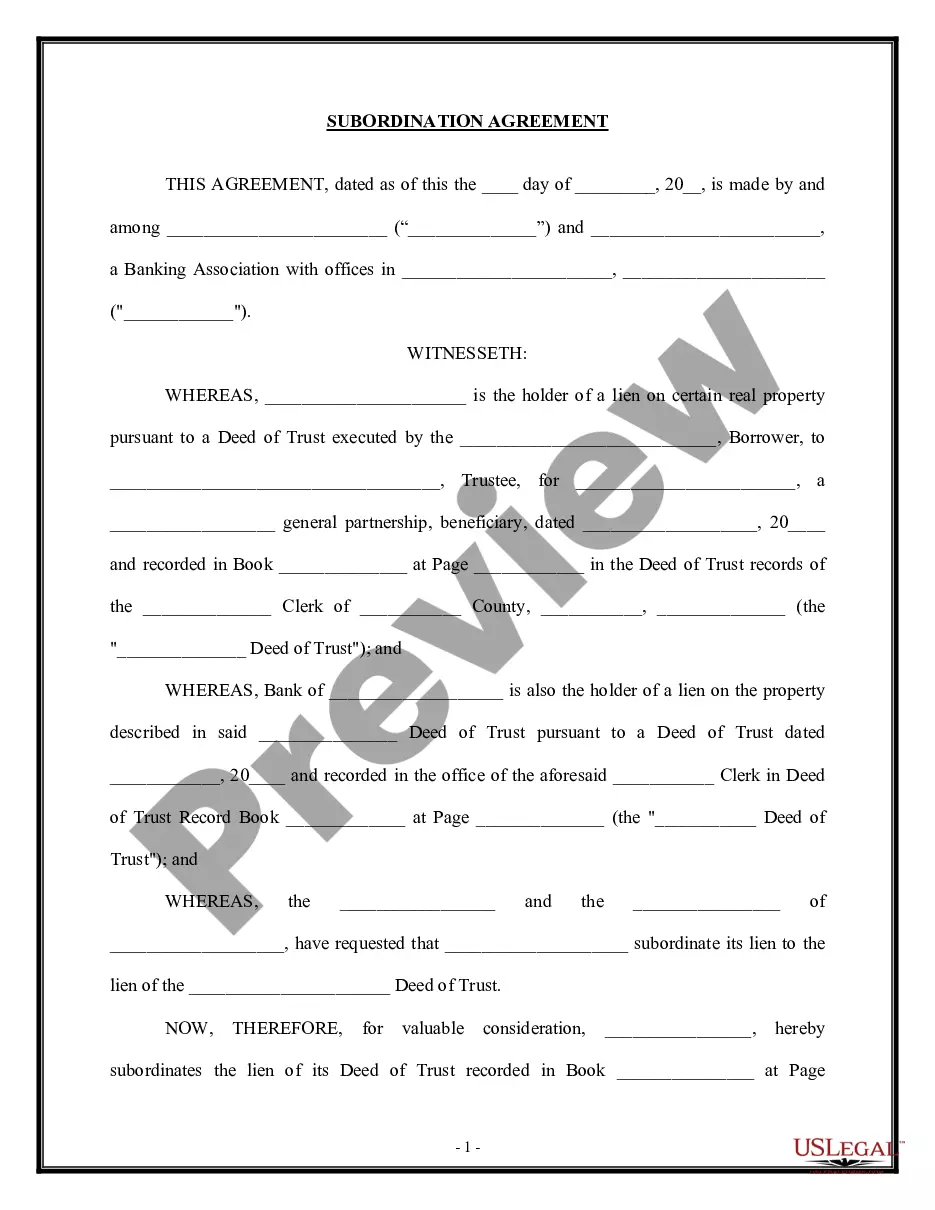
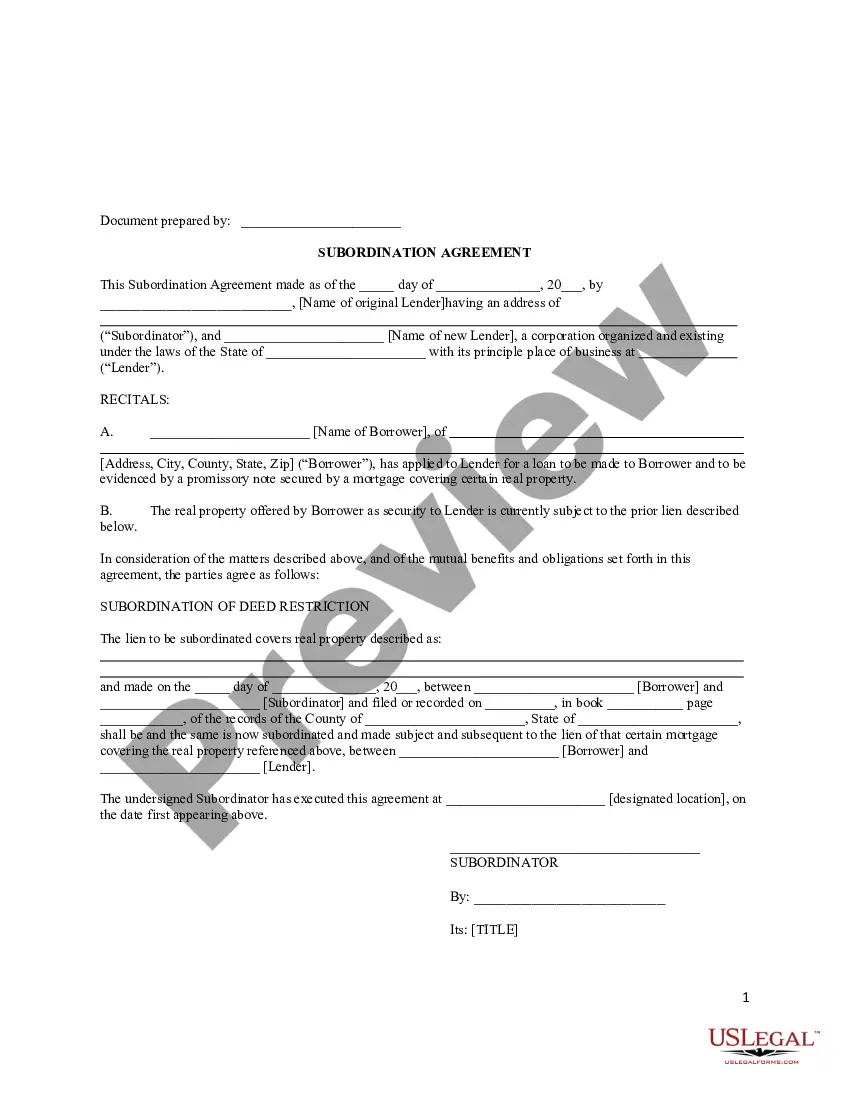
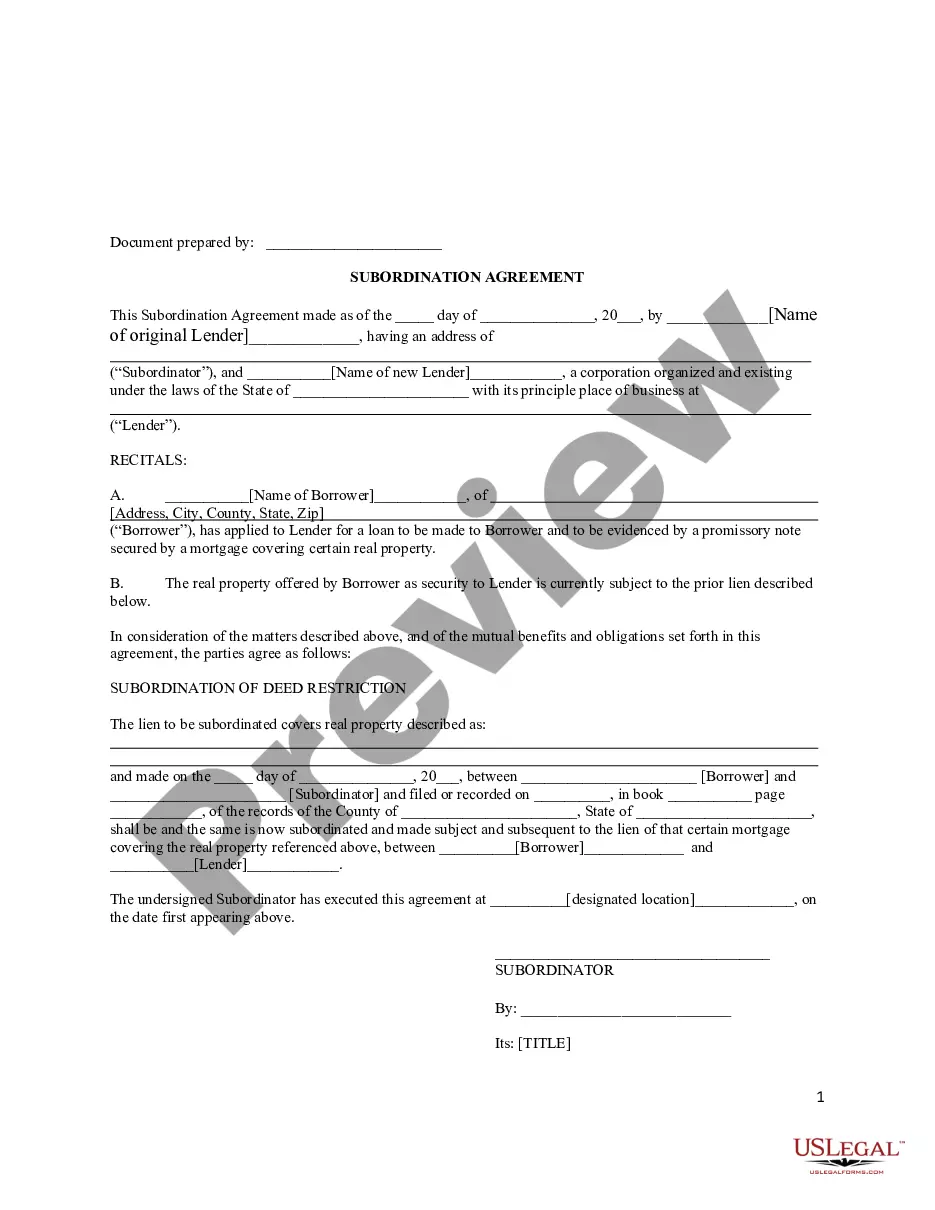
The Subordination Agreement of Deed of Trust is a legal document used in property transactions. It allows one lien on a property to be subordinate to another, ensuring that the latter has priority in claims against the property. This form is essential for situations where multiple lenders have an interest in the same property, providing clarity on the order of claims. Unlike other property-related forms, this agreement specifically addresses the prioritization of liens, making it crucial in refinancing or when adding a new loan on the property.
Key parts of this document
- Identification of the lienholders and their respective Deeds of Trust.
- Clauses detailing the subordination of one lien to another.
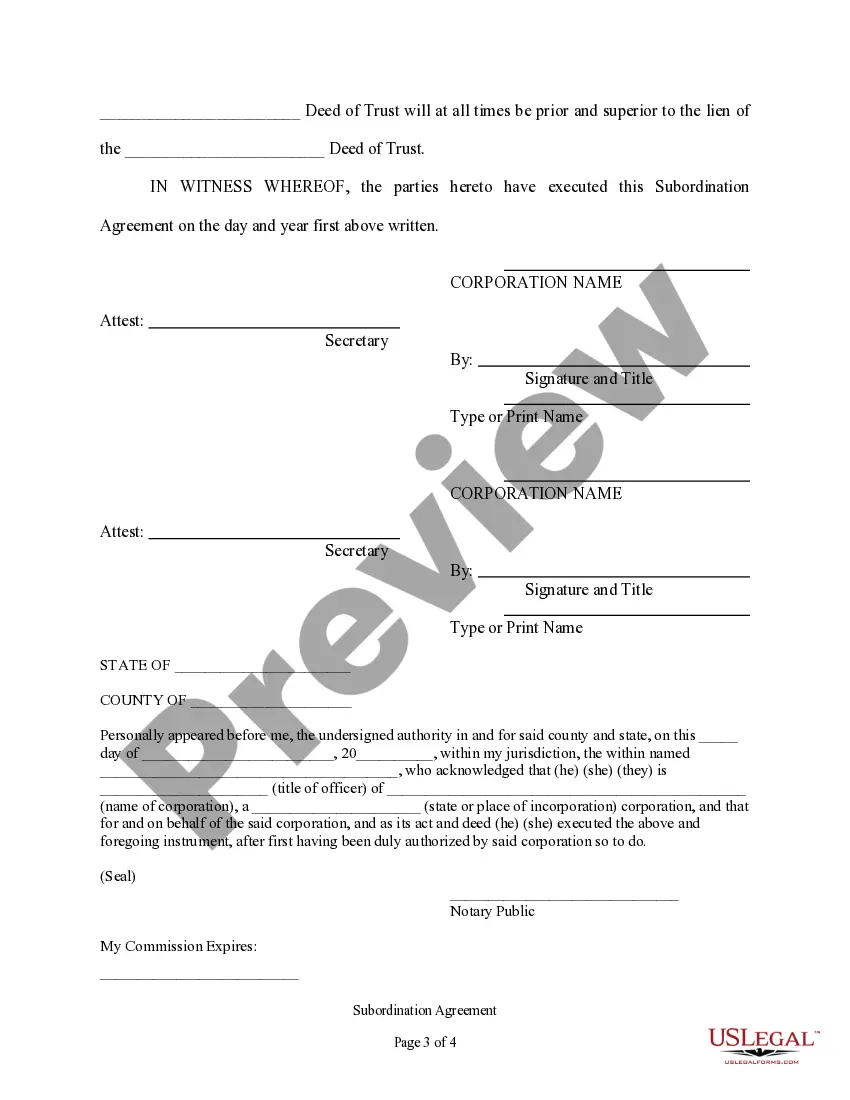
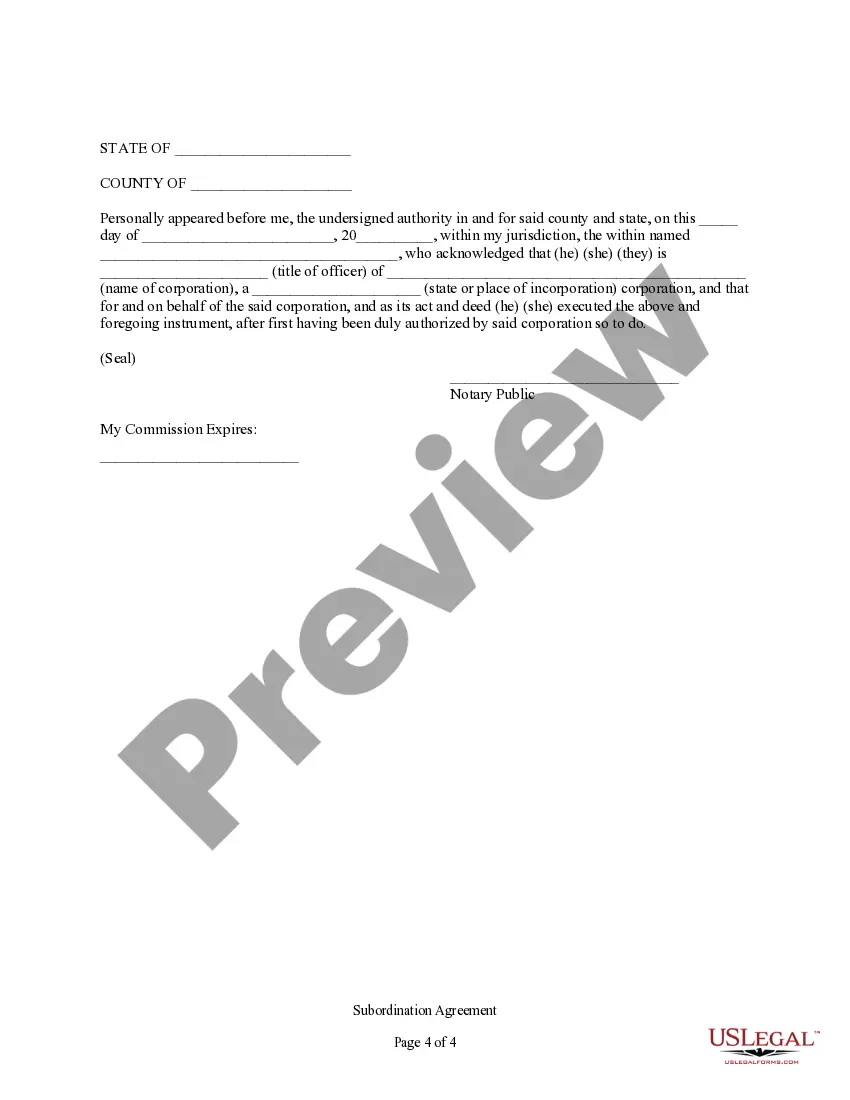
- Signatures of authorized parties and acknowledgment by a notary public.
- Details about the property involved in the transaction.
When to use this document
This form is used when a borrower is seeking to refinance or encumber a property that already has multiple liens or when a lender wants to subordinate their claim to allow for a new loan. Common scenarios include negotiating refinancing terms, selling a property with a second mortgage, or restructuring debts involving multiple lenders.
Who this form is for
- Homeowners refinancing an existing mortgage with additional loans.
- Lenders needing a clear record of lien priority for funding new loans.
- Real estate professionals managing property transactions with multiple mortgages.
- Borrowers seeking to clarify the status of their financial obligations on property.
Instructions for completing this form
- Identify the parties involved: list the lienholders, borrowers, and property trustees.
- Specify the property by entering its legal description as outlined in the Deeds of Trust.
- Enter the relevant dates and mortgage amounts for each Deed of Trust.
- Include signatures from all necessary parties and ensure acknowledgment by a notary public.
Does this form need to be notarized?
This form needs to be notarized to ensure legal validity. US Legal Forms provides secure online notarization powered by Notarize, allowing you to complete the process through a verified video call, available anytime.
Get your form ready online
Our built-in tools help you complete, sign, share, and store your documents in one place.
Make edits, fill in missing information, and update formatting in US Legal Forms—just like you would in MS Word.
Download a copy, print it, send it by email, or mail it via USPS—whatever works best for your next step.
Sign and collect signatures with our SignNow integration. Send to multiple recipients, set reminders, and more. Go Premium to unlock E-Sign.
If this form requires notarization, complete it online through a secure video call—no need to meet a notary in person or wait for an appointment.
We protect your documents and personal data by following strict security and privacy standards.
Make edits, fill in missing information, and update formatting in US Legal Forms—just like you would in MS Word.
Download a copy, print it, send it by email, or mail it via USPS—whatever works best for your next step.
Sign and collect signatures with our SignNow integration. Send to multiple recipients, set reminders, and more. Go Premium to unlock E-Sign.

If this form requires notarization, complete it online through a secure video call—no need to meet a notary in person or wait for an appointment.
We protect your documents and personal data by following strict security and privacy standards.
Mistakes to watch out for
- Failing to include all relevant lienholders can render the agreement ineffective.
- Not accurately describing the property may lead to legal complications.
- Omitting notarization can invalidate the form in some jurisdictions.
- Incorrectly stating the date or amount of the original Deeds of Trust can cause confusion.
Benefits of using this form online
- Convenient access to downloadable formats for easy printing and signing.
- Editability allows you to customize the form to suit your specific situation.
- Reliable templates drafted by licensed attorneys ensure legal compliance.
- No need for multiple trips to legal offices for basic documentation.
Looking for another form?

Form popularity
FAQ
The borrower (trustor) benefits the most from a subordination clause since this makes it easier to obtain an additional loan on their property. For example, the buyer of vacant land can obtain a construction loan more easily if the loan against the land will be subordinated to the construction loan.
Subordinate Deed of Trust means the deeds of trust granted by Borrower to secure the obligation of Borrower to repay the Subordinate Loan.Subordinate Deed of Trust means the Subordinate Deed of Trust securing performance of the Subordinate Obligations.
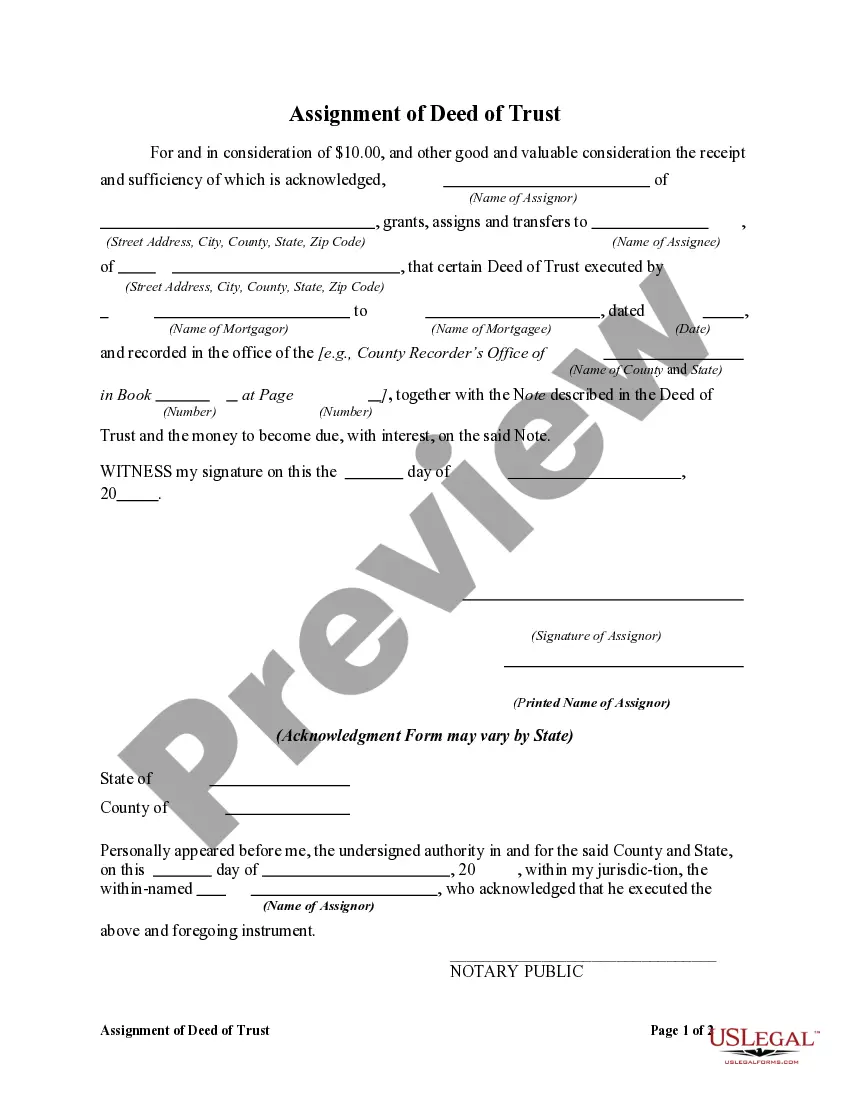
Yes, there are key differences between the two. With a deed, you transfer the ownership of the property to one party. In contrast, a deed of trust does not mean the holder owns the property. In an arrangement involving a deed of trust, the borrower signs a contract with the lender with details regarding the loan.
Giving the wrong legal address for the property or the wrong amount of the debt can render the deed unenforceable. In some cases, the error is easy to fix, and the court will rule the deed is enforceable.
Despite its technical-sounding name, the subordination agreement has one simple purpose. It assigns your new mortgage to first lien position, making it possible to refinance with a home equity loan or line of credit.
A subordination clause or subordination agreement is used to lower the priority of a first recorded deed of trust or mortgage in favor of a later or junior recorded deed of trust or mortgage.
Property cannot be conveyed to a grantee who does not exist. Thus, a deed to a grantee who is dead at the time of delivery is void. For example, a deed recorded by the grantor is presumed to have been delivered.For example, a deed is voidable if it was obtained by fraud in the inducement.
Subordination clauses in mortgages refer to the portion of your agreement with the mortgage company that says their lien takes precedence over any other liens you may have on your property.However, it's also possible to have other liens. You might have some placed by contractors until work is paid off.
The person who owns the property usually signs a promissory note and a deed of trust. The deed of trust does not have to be recorded to be valid.