Wyoming Letter from Tenant to Landlord about Inadequacy of heating resources insufficient heat
What is this form?
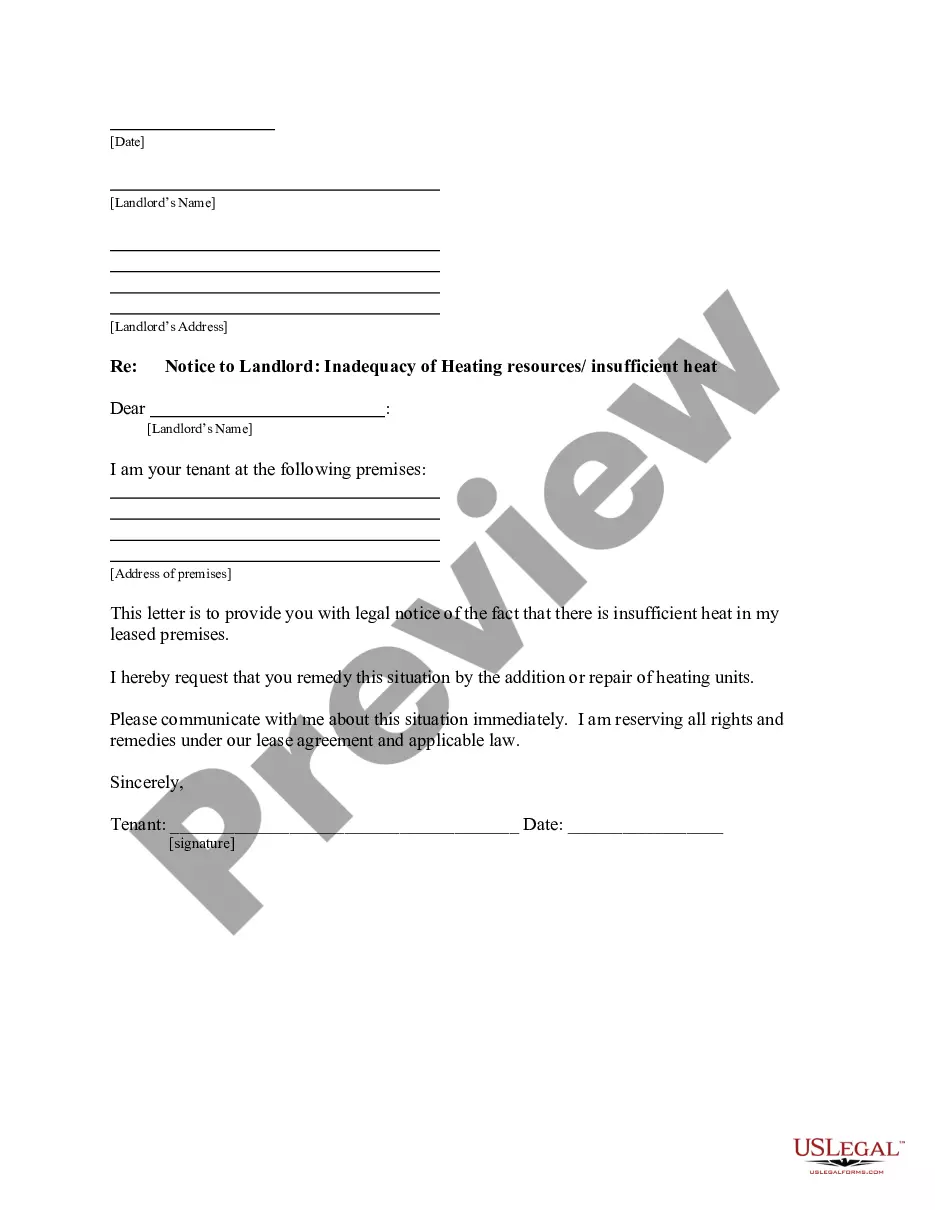
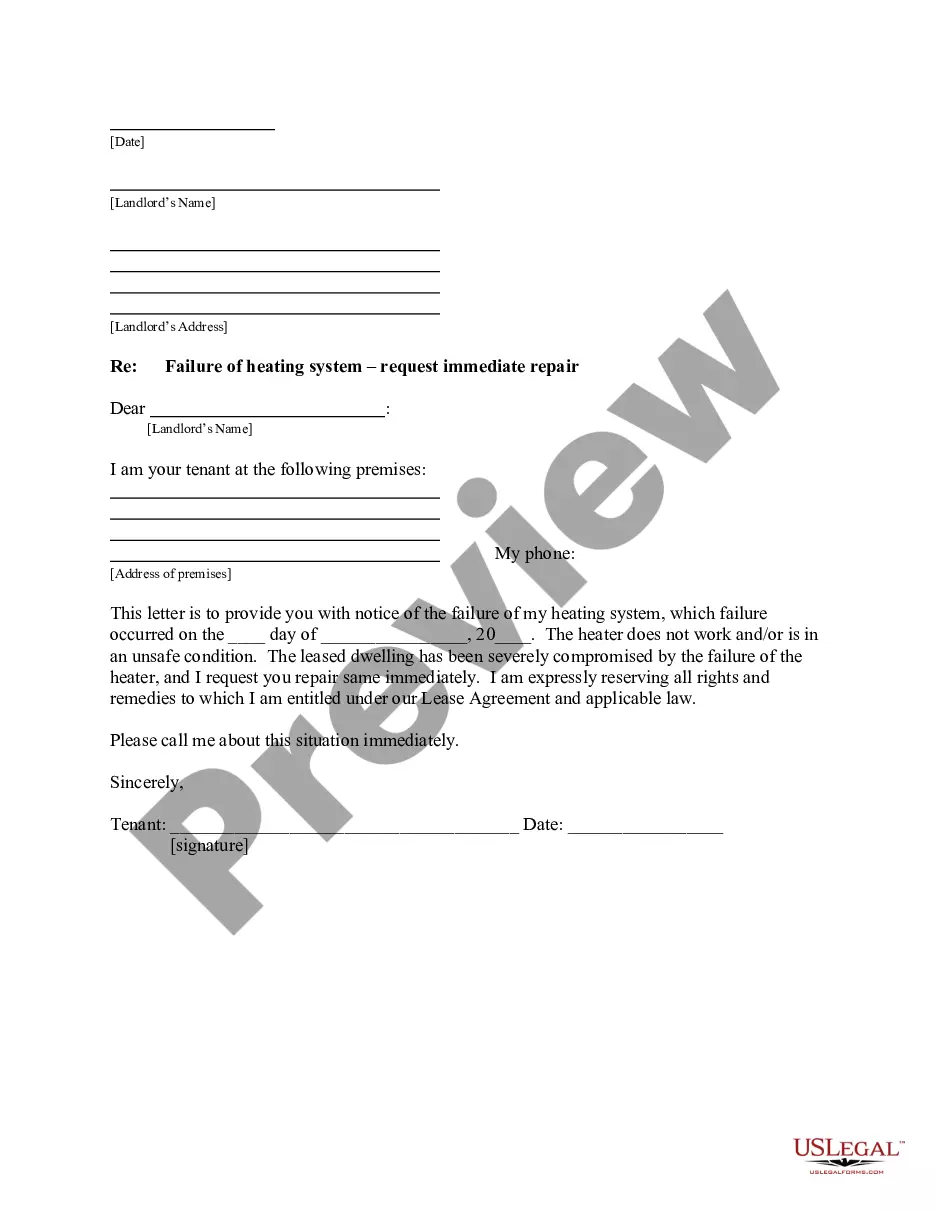
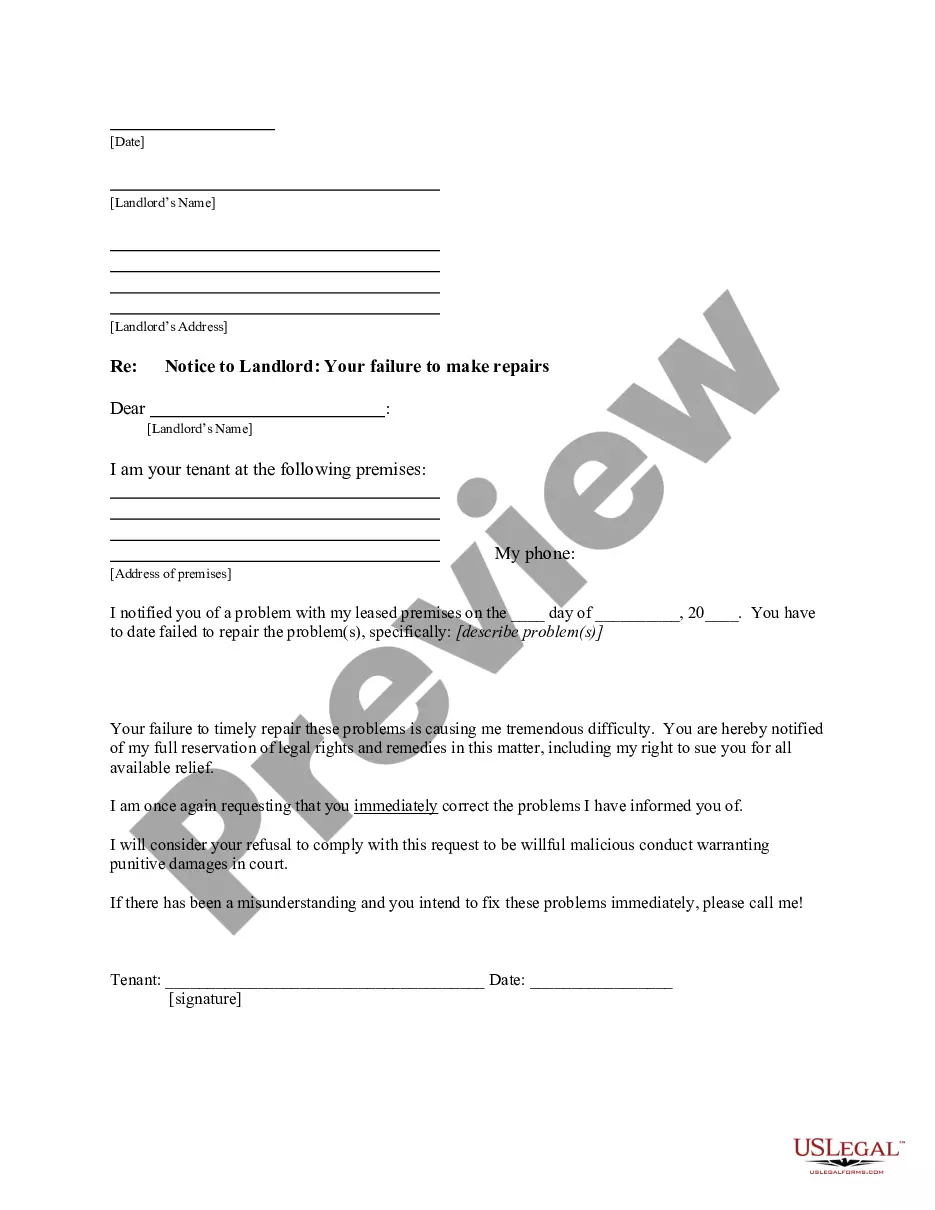
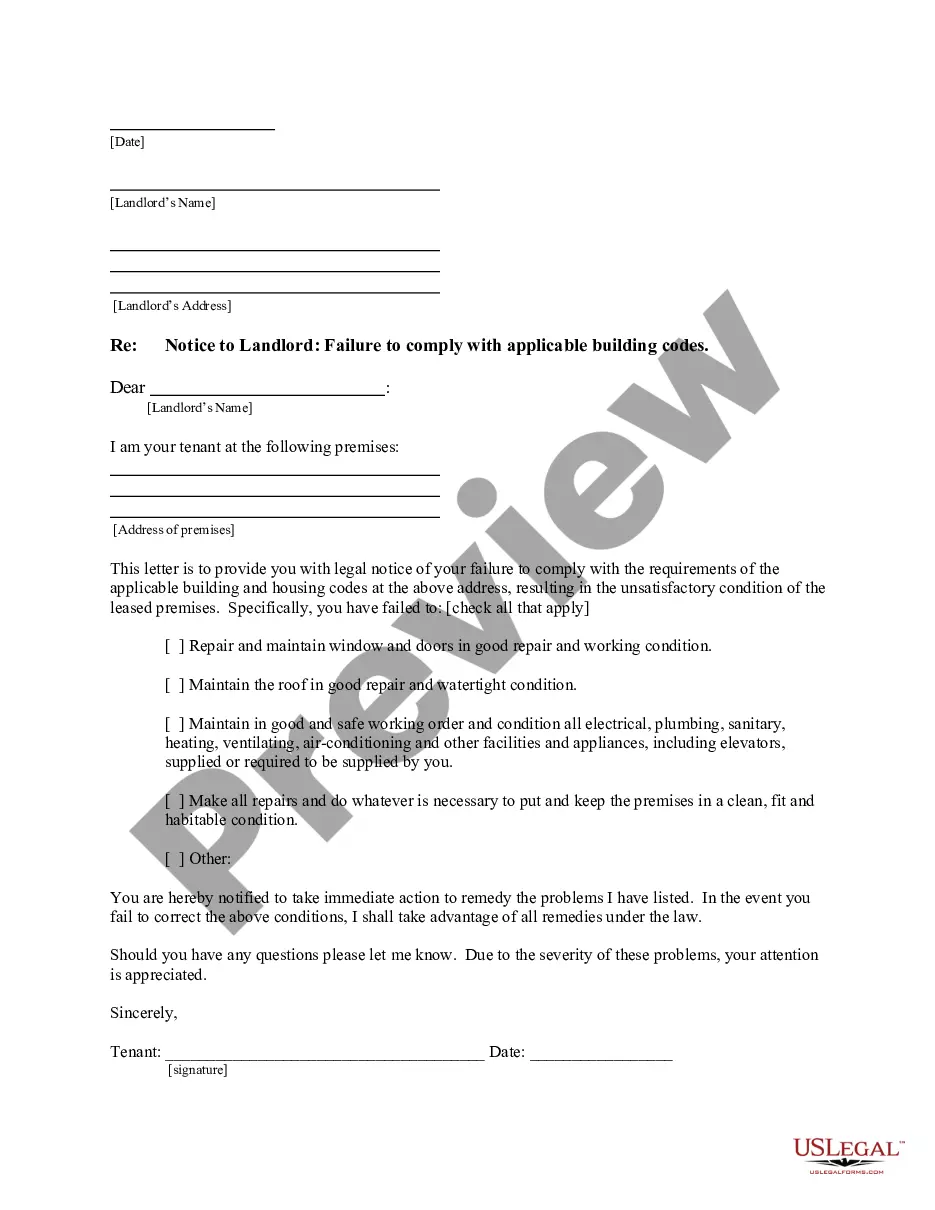
This form is a letter from a tenant to a landlord regarding inadequate heating resources in the leased premises. Specifically, it serves to legally notify the landlord about insufficient heat and requests that the landlord take action by repairing or adding heating units. This form is crucial for tenants who want to ensure their living conditions meet basic safety and comfort standards, distinguishing it from other general complaint forms.
Form components explained
- Identification of the Tenant and Landlord
- Detailed description of the heating issue
- Request for remedial action regarding the heating units
- Reservation of rights according to the lease agreement and applicable laws
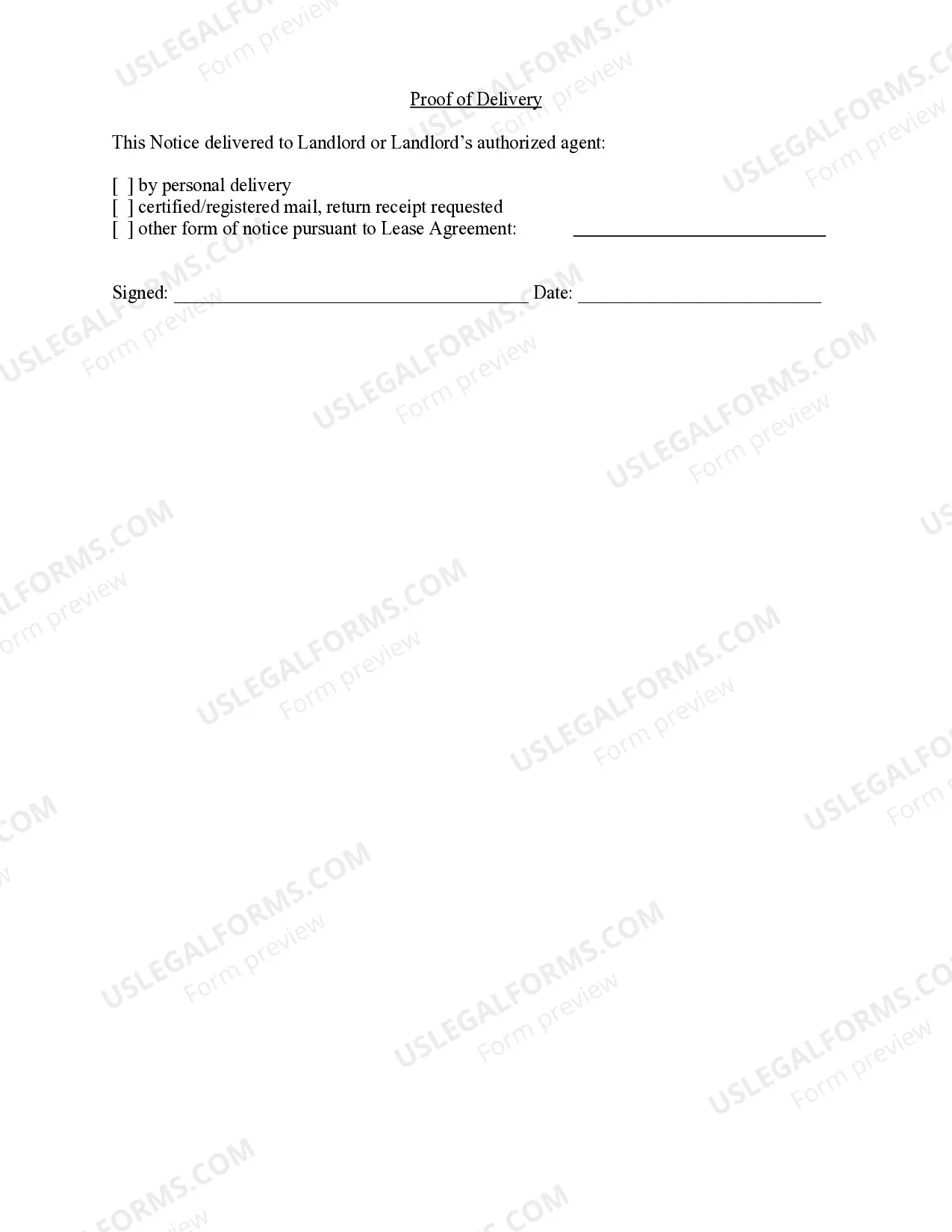
- Signature and date for proof of delivery
Common use cases
You should use this form when you, as a tenant, identify that the heating in your rental property is inadequate. This situation can arise during cold weather months when heating units are malfunctioning or when there is no heat at all. Filing this letter helps establish a record of your complaint and formally signifies your request for urgent maintenance by the landlord.
Who should use this form
- Tenants experiencing inadequate heating in their rented premises
- Individuals seeking to document their complaints regarding heating issues
- Renters wanting to ensure their landlords take necessary action as per the lease agreement
Completing this form step by step
- Identify the parties involved by entering the tenant's and landlord's names and addresses.
- Describe the heating issue clearly and provide details about the inadequate heating.
- Request that the landlord either add or repair heating units.
- State your reservation of rights under the lease agreement and applicable laws.
- Sign the form and include the date of the request for traceability.
Does this document require notarization?
This form does not typically require notarization unless specified by local law. It is important to verify specific state requirements regarding tenant correspondence.
Get your form ready online
Our built-in tools help you complete, sign, share, and store your documents in one place.
Make edits, fill in missing information, and update formatting in US Legal Forms—just like you would in MS Word.
Download a copy, print it, send it by email, or mail it via USPS—whatever works best for your next step.
Sign and collect signatures with our SignNow integration. Send to multiple recipients, set reminders, and more. Go Premium to unlock E-Sign.
If this form requires notarization, complete it online through a secure video call—no need to meet a notary in person or wait for an appointment.
We protect your documents and personal data by following strict security and privacy standards.

Make edits, fill in missing information, and update formatting in US Legal Forms—just like you would in MS Word.

Download a copy, print it, send it by email, or mail it via USPS—whatever works best for your next step.

Sign and collect signatures with our SignNow integration. Send to multiple recipients, set reminders, and more. Go Premium to unlock E-Sign.

If this form requires notarization, complete it online through a secure video call—no need to meet a notary in person or wait for an appointment.

We protect your documents and personal data by following strict security and privacy standards.
Typical mistakes to avoid
- Failing to provide a detailed description of the heating issue.
- Not specifying a request for action regarding the heating units.
- Omitting to sign and date the letter.
- Not keeping a copy of the letter for personal records.
Advantages of online completion
- Convenient access to legally vetted templates that can be customized to your needs.
- Editable format allows for quick adjustments before downloading.
- Reliable source as the forms are drafted by licensed attorneys to ensure compliance with laws.
- Serves as a formal notice, establishing a record of communication regarding heating issues.
- Informs the landlord of the tenant's rights regarding habitability under state law.
- Failure to address heating issues may lead to legal disputes if not resolved promptly.
Summary of main points
- This letter serves as a formal notification of inadequate heating.
- Using this form helps establish a record of your requests to the landlord.
- It is important to detail your heating issues and request specific remedial actions.
Definitions you should know
- Tenant: The individual renting a property.
- Landlord: The property owner or authorized agent leasing the property.
- Heating units: Devices used to provide warmth within the living space, such as radiators or furnaces.
Looking for another form?




Form popularity
FAQ
To prove there's a problem, get a thermometer. Proof that it's 55 degrees is better than complaining that it's "too cold." Close to but below 65 to 68 degrees would be not enough heat. That's what housing codes require.
Under Section 11 of the Landlord and Tenant Act 1985, you have the right to expect your landlord to carry out repairs in a 'reasonable time'. If it's an emergency repair as you've got no heating or hot water, your landlord should fix this in 24 hours.
24 hours. Under Section 11 of the Landlord and Tenant Act 1985, you have the right to expect your landlord to carry out repairs in a 'reasonable time'. If it's an emergency repair as you've got no heating or hot water, your landlord should fix this in 24 hours.
It's unacceptable to be left without utilities for more than a few days without any work done towards removing the problem. If left without heating or hot water, or you're experiencing malfunctions preventing your access, get in contact with your landlord.
In Alberta: According to the Public Health Act Housing Regulation, you must heat your rented property from September 1st to May 1st. The minimum temperature required is 22°C in all habitable rooms.
If the outside temperature is less than 55 degrees between a.m. and p.m., then the inside temperature must be at least 68 degrees. If the no heat issues are still unresolved, you may be able to withhold rent or terminate your lease.Under local laws, this can include heat.
A landlord can tell you what temperature to keep your house. For example, here where it freezes, I can tell my tenants that they must keep the heat above 50 degrees. However to tell you not to cool below 90 degrees is unreasonable.
Landlords must provide one or more fixed heaters that can directly heat the main living room. The heater(s) must be acceptable types, and must meet the minimum heating capacity required for your main living room. The World Health Organization (WHO) recommends a minimum indoor temperature of 1802daC.
A landlord is allowed to provide heat at less than 68 degrees Fahrenheit if they enters into an agreement with the tenant.