Wyoming Letter from Tenant to Landlord containing Notice to landlord to withdraw retaliatory rent increase
About this form
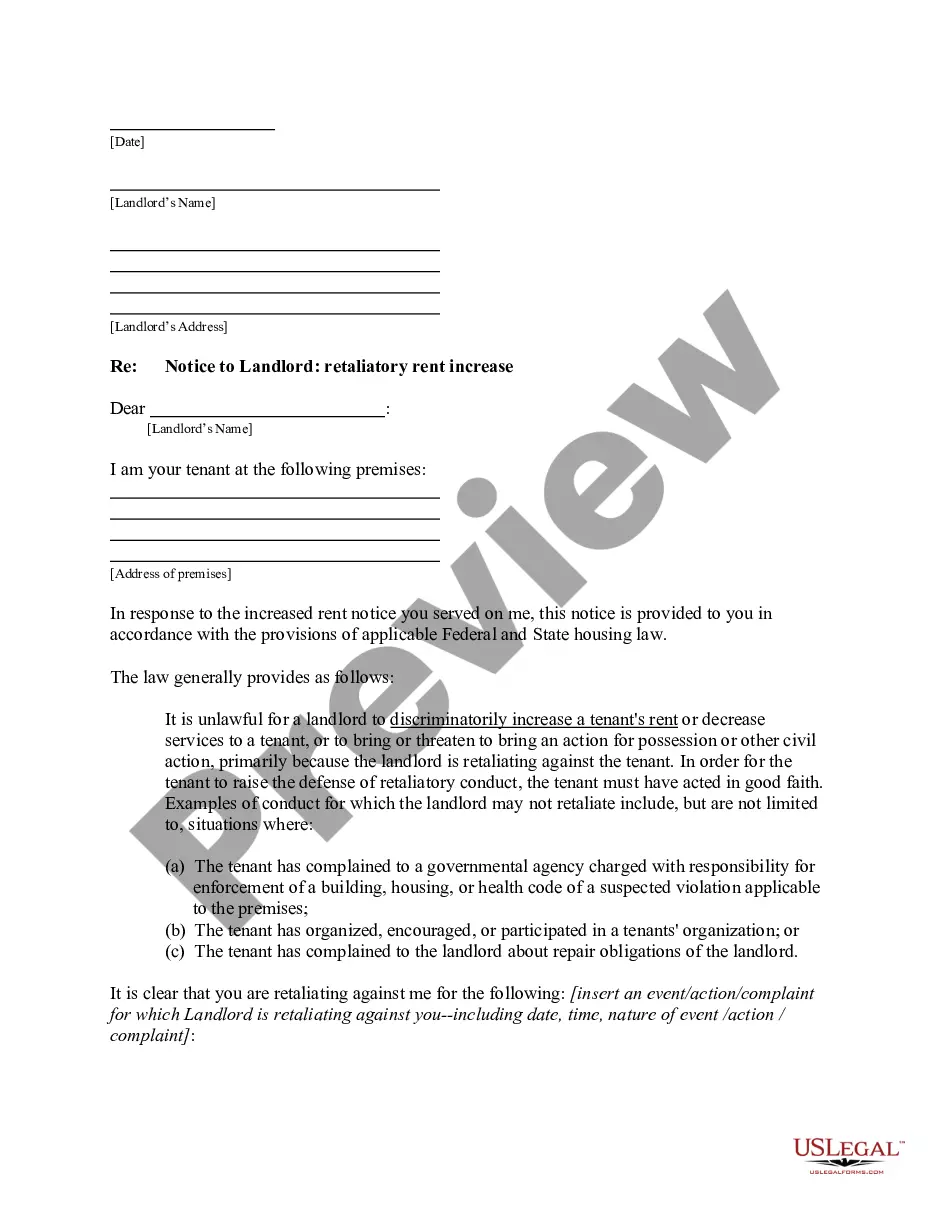
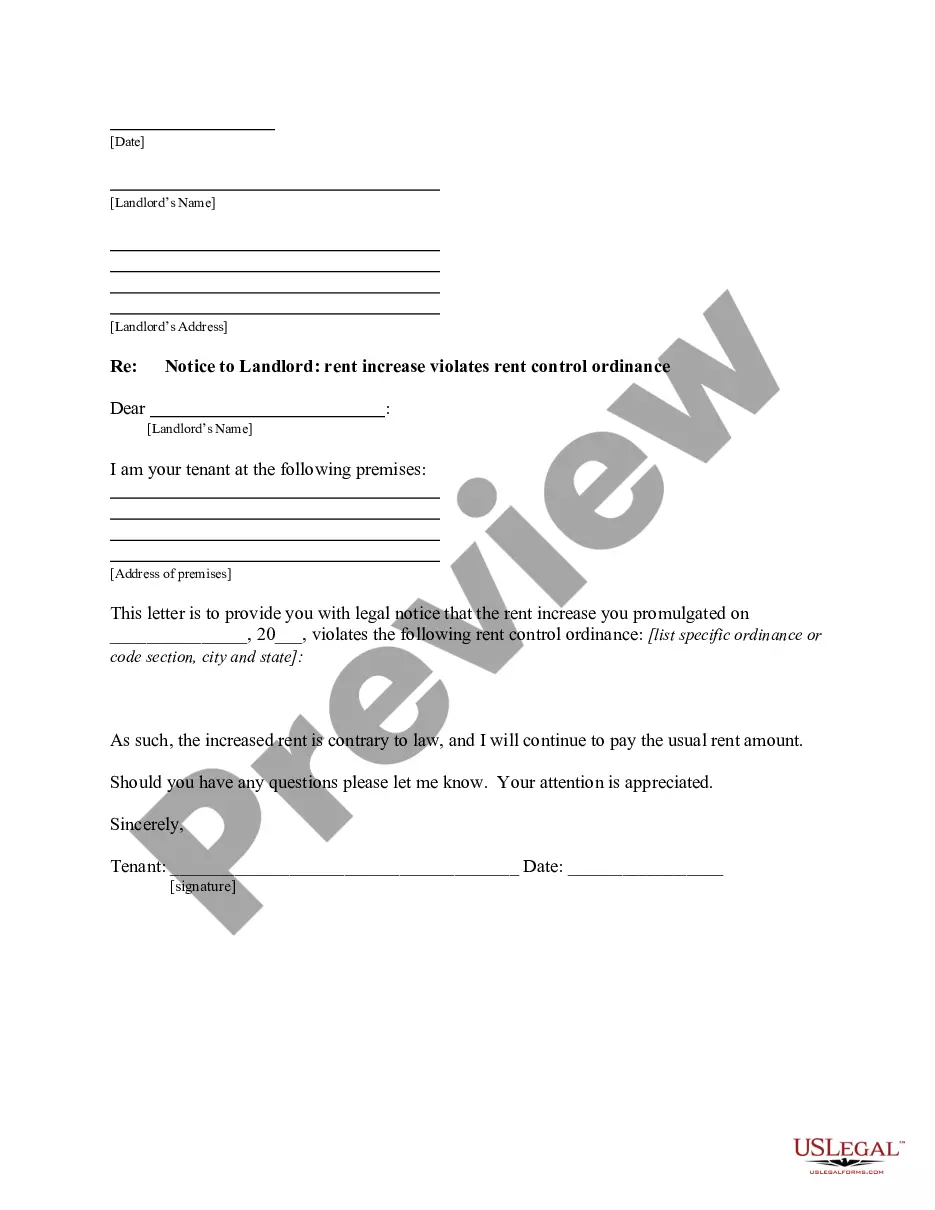
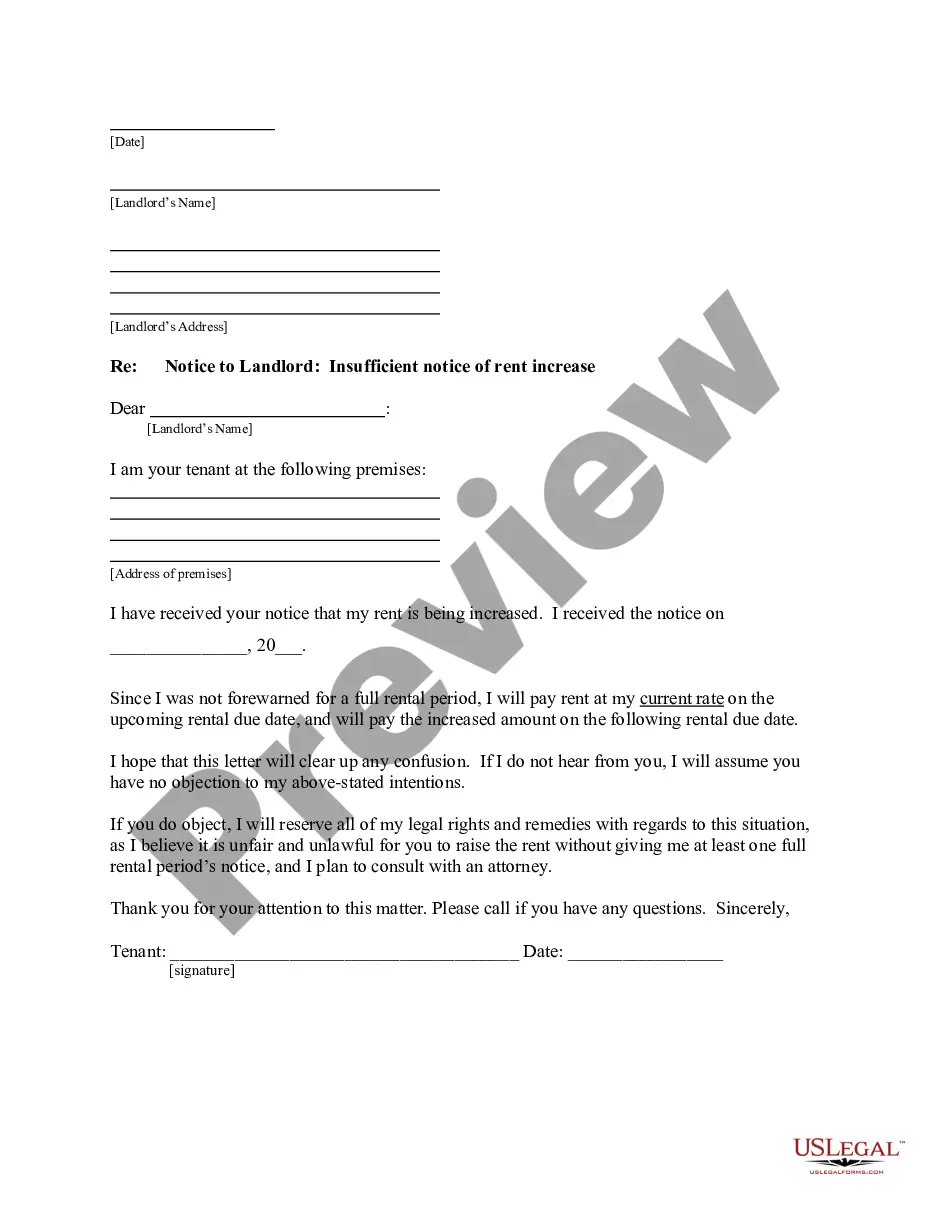
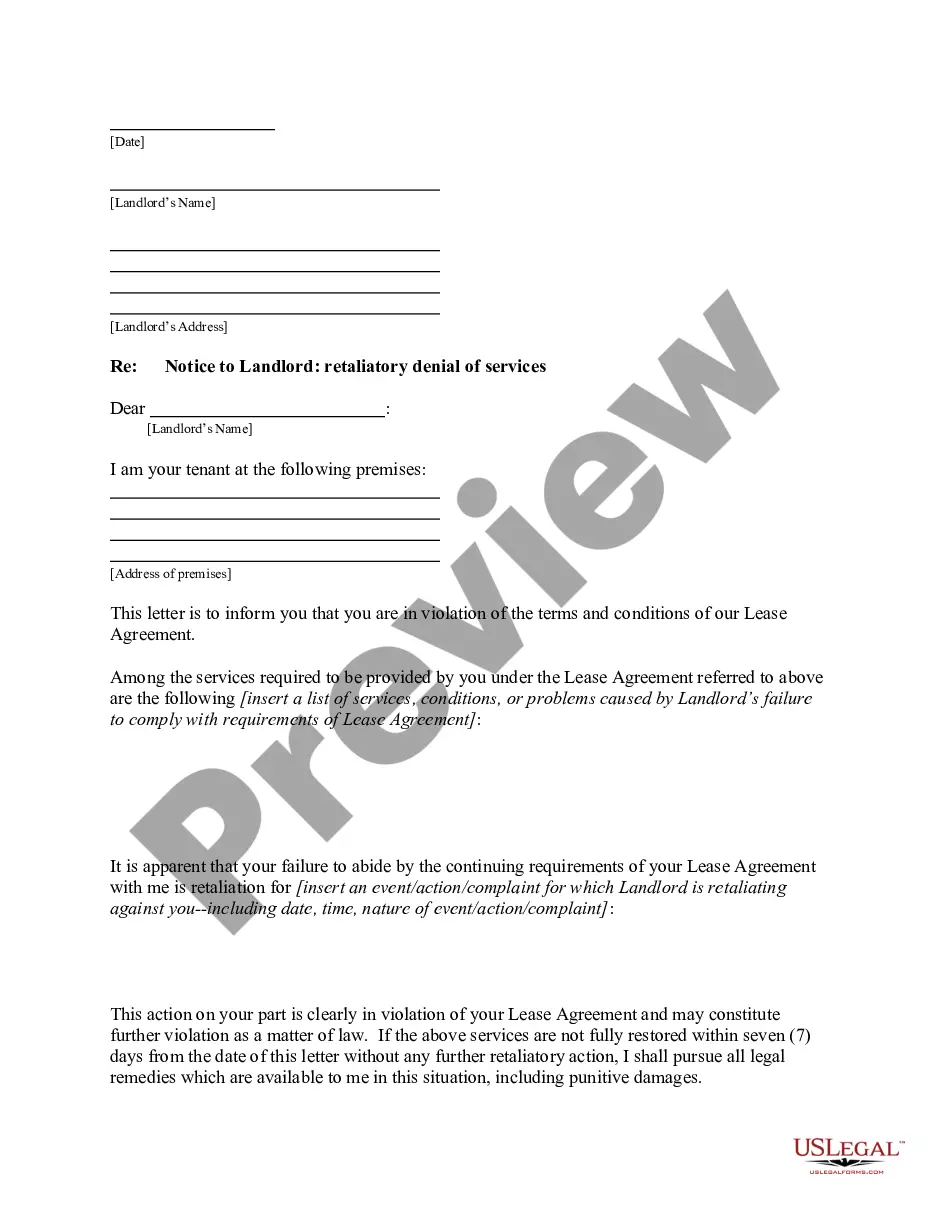
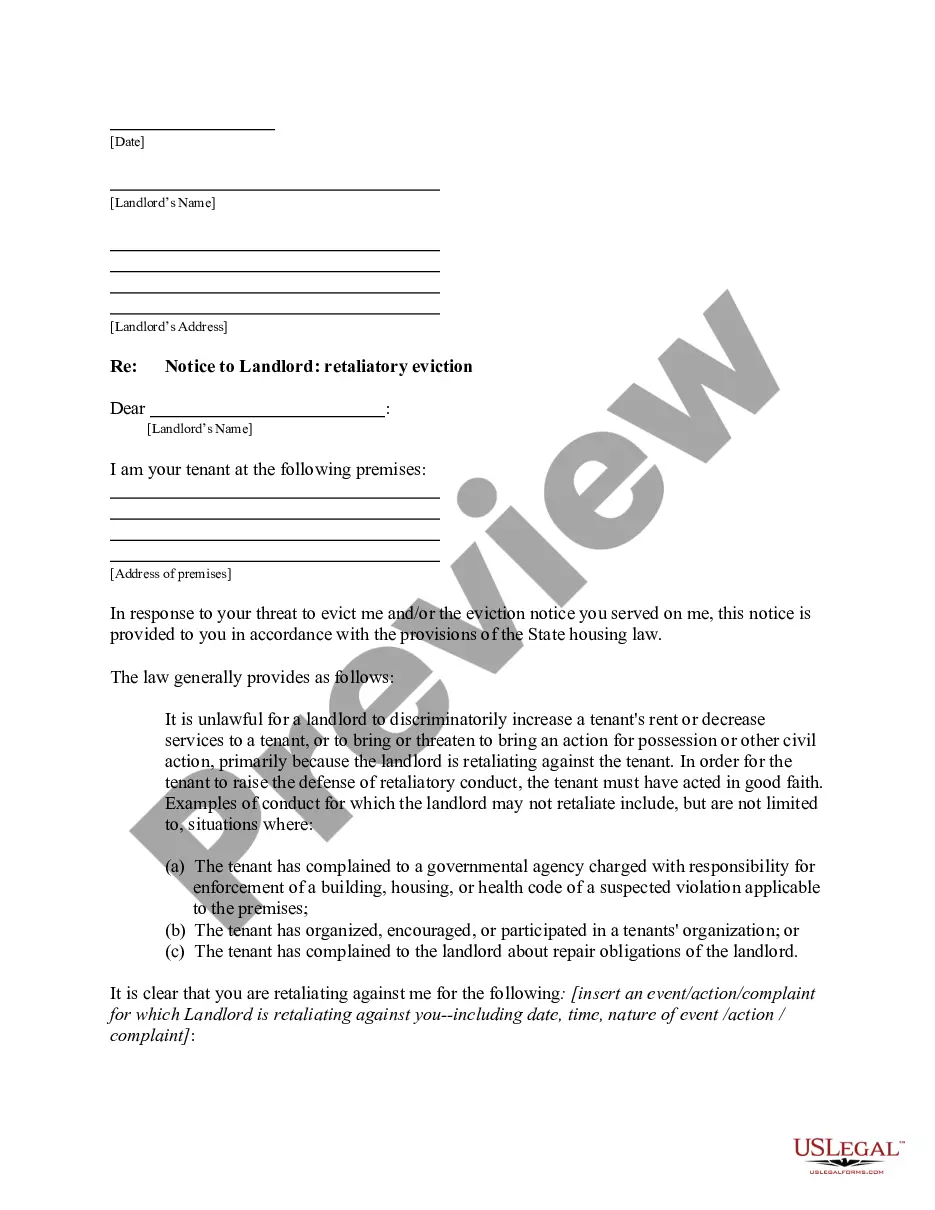
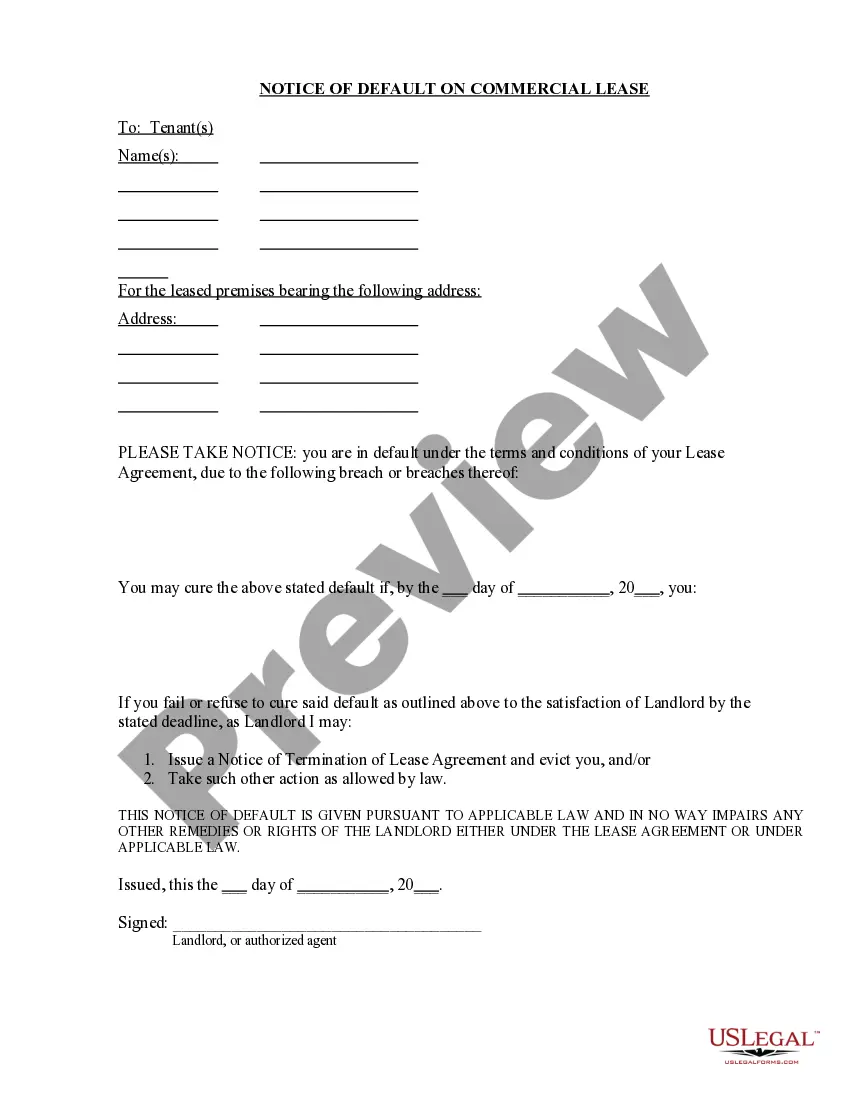
The Letter from Tenant to Landlord containing Notice to landlord to withdraw retaliatory rent increase serves as a formal notification to a landlord. This letter is important for tenants who believe their rent has been increased in retaliation for exercising their rights, such as reporting code violations or participating in tenant organizations. This form helps protect tenants from unlawful rent increases under state housing laws and emphasizes the tenant's intention to continue paying the agreed rent while respecting the lease agreement.
What’s included in this form
- Identification of the tenant and landlord
- Date of notice
- Statement addressing the retaliatory rent increase
- Examples of conduct that the landlord cannot retaliate against
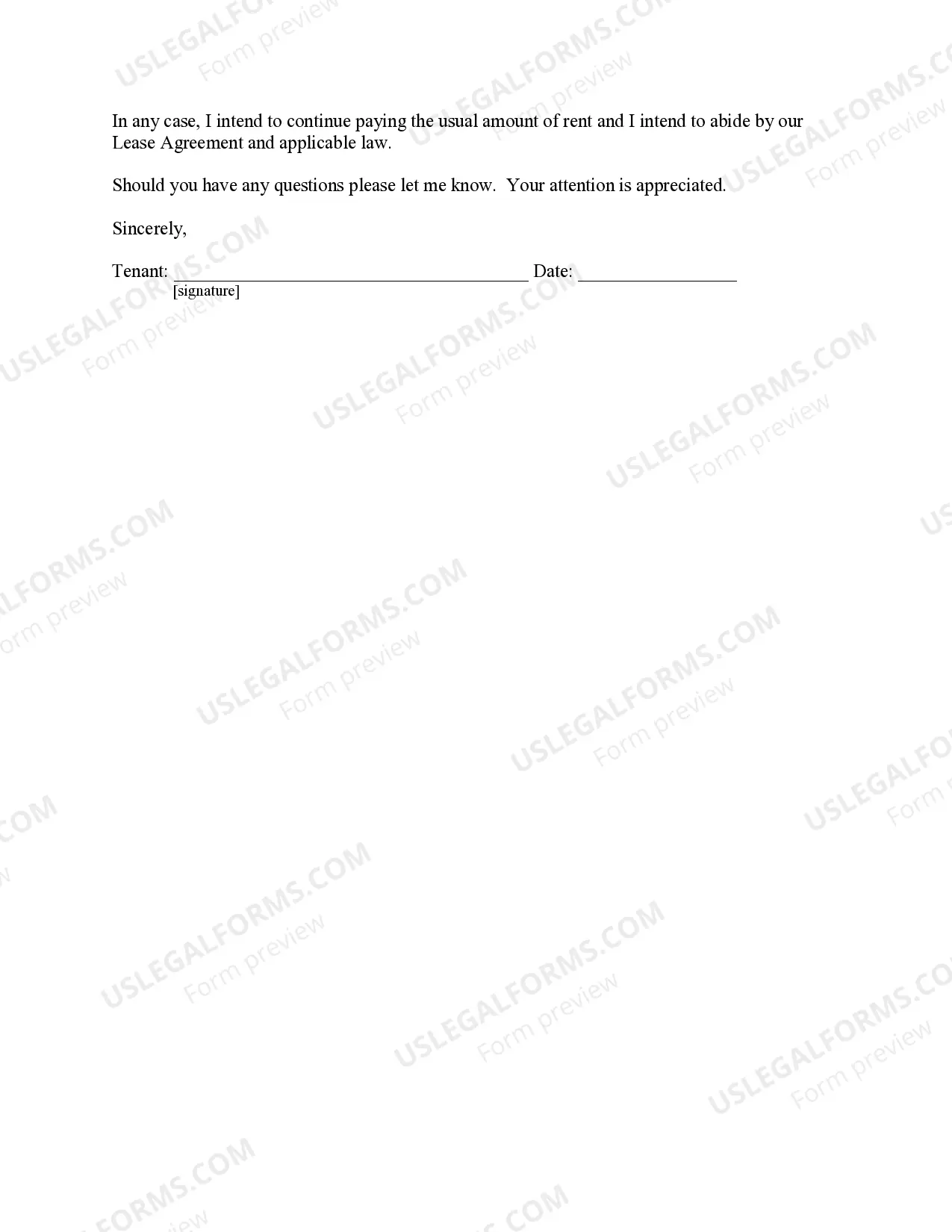
- Affirmation of the tenant's intention to continue paying rent
- Signature section for the tenant
When to use this form
This form should be used when a tenant suspects that their landlord has increased their rent in retaliation for legitimate complaints or actions, such as reporting safety issues or participating in tenants' rights activities. It is crucial to notify the landlord formally to indicate that the tenant is aware of their rights and plans to contest any unfair rent increases.
Who should use this form
- Tenants who have experienced a retaliatory rent increase
- Individuals who have reported housing code violations to local authorities
- Members of tenant organizations advocating for tenants' rights
- Any tenant who wishes to protect themselves from unlawful landlord actions
Completing this form step by step
- Identify yourself and your landlord by providing names and contact information.
- Enter the date when the notice is being sent.
- Clearly state the reason for the notice regarding the retaliatory rent increase.
- Include examples of actions you have taken that are protected under the law.
- Affirm your commitment to continue paying the normal rent amount.
- Sign and date the letter to finalize the notice.
Does this form need to be notarized?
This form does not typically require notarization unless specified by local law. However, always check your state regulations to ensure compliance, as some jurisdictions may have different requirements.
Get your form ready online
Our built-in tools help you complete, sign, share, and store your documents in one place.
Make edits, fill in missing information, and update formatting in US Legal Forms—just like you would in MS Word.
Download a copy, print it, send it by email, or mail it via USPS—whatever works best for your next step.
Sign and collect signatures with our SignNow integration. Send to multiple recipients, set reminders, and more. Go Premium to unlock E-Sign.
If this form requires notarization, complete it online through a secure video call—no need to meet a notary in person or wait for an appointment.
We protect your documents and personal data by following strict security and privacy standards.

Make edits, fill in missing information, and update formatting in US Legal Forms—just like you would in MS Word.

Download a copy, print it, send it by email, or mail it via USPS—whatever works best for your next step.

Sign and collect signatures with our SignNow integration. Send to multiple recipients, set reminders, and more. Go Premium to unlock E-Sign.

If this form requires notarization, complete it online through a secure video call—no need to meet a notary in person or wait for an appointment.

We protect your documents and personal data by following strict security and privacy standards.
Typical mistakes to avoid
- Not specifying the details of the retaliatory action clearly.
- Failing to keep a copy of the letter for personal records.
- Not providing adequate notice period as required by state law.
- Overlooking the importance of a professional tone in the letter.
Benefits of completing this form online
- Convenient access to professionally drafted legal templates.
- Immediate download allows for quick responses to issues.
- Editability enables customization to fit specific situations.
- Reliability as all forms are drafted by licensed attorneys.
Looking for another form?





Form popularity
FAQ
Tenant's name. Property address. Landlord name and contact information. Date the letter is written. Date the rent increase will take effect. Amount of rent increase. Current cost of rent.
Explain that you are making a complaint. Relate what the complaint is actually about and make sure to include the specific details about the complaint, especially an account of the event. Inform the management of what you wish to be done regarding the complaint that you are making. End on a positive tone.
Sample Noise Complaint Letter Dear Landlord/Manager's Name, I am writing to formally request your help in dealing with an ongoing issue with my neighbor. I have lived in your apartment number or address for the last three years and have greatly enjoyed my experience in this building.
Dear (Name of landlord or manager), This letter constitutes my written (number of days' notice that you need to give based on your lease agreement)-day notice that I will be moving out of my apartment on (date), the end of my current lease. I am leaving because (new job, rent increase, etc.)
In most states, a landlord must give tenants notice at least 30 days before they'll enforce a rent increase. However, in other states like California, the notice can increase to 60 days' notice if the increase is more than 10% of the current rent rate.
Remember you're a business. Do your research. Raise the rent all at once or incrementally. Don't negotiate or ask tenants what they think a fair rent increase would be. Be courteous and firm. Find a template you like. Send a formal letter by certified mail. Give the tenant notice.
Respectfully state that you are making a complaint. Explain the reason behind you making the complaint, making sure to put in the various reasons why you are making the complaint. Relate to the reader what you wish to be done about your complaint. End on a positive tone.
Report the anti social behaviour If you know your neighbour is renting and who from, talk to their landlord first - this might be a private landlord, housing association or the council. If that doesn't sort out the problem you can go to the council if you haven't already talked to them.
State that you will be making a complaint. Explain why you are making a complaint and make sure to add your account of the event and other supporting facts. Let the management know what steps you wish to be made to address your complaint. End on a positive tone.