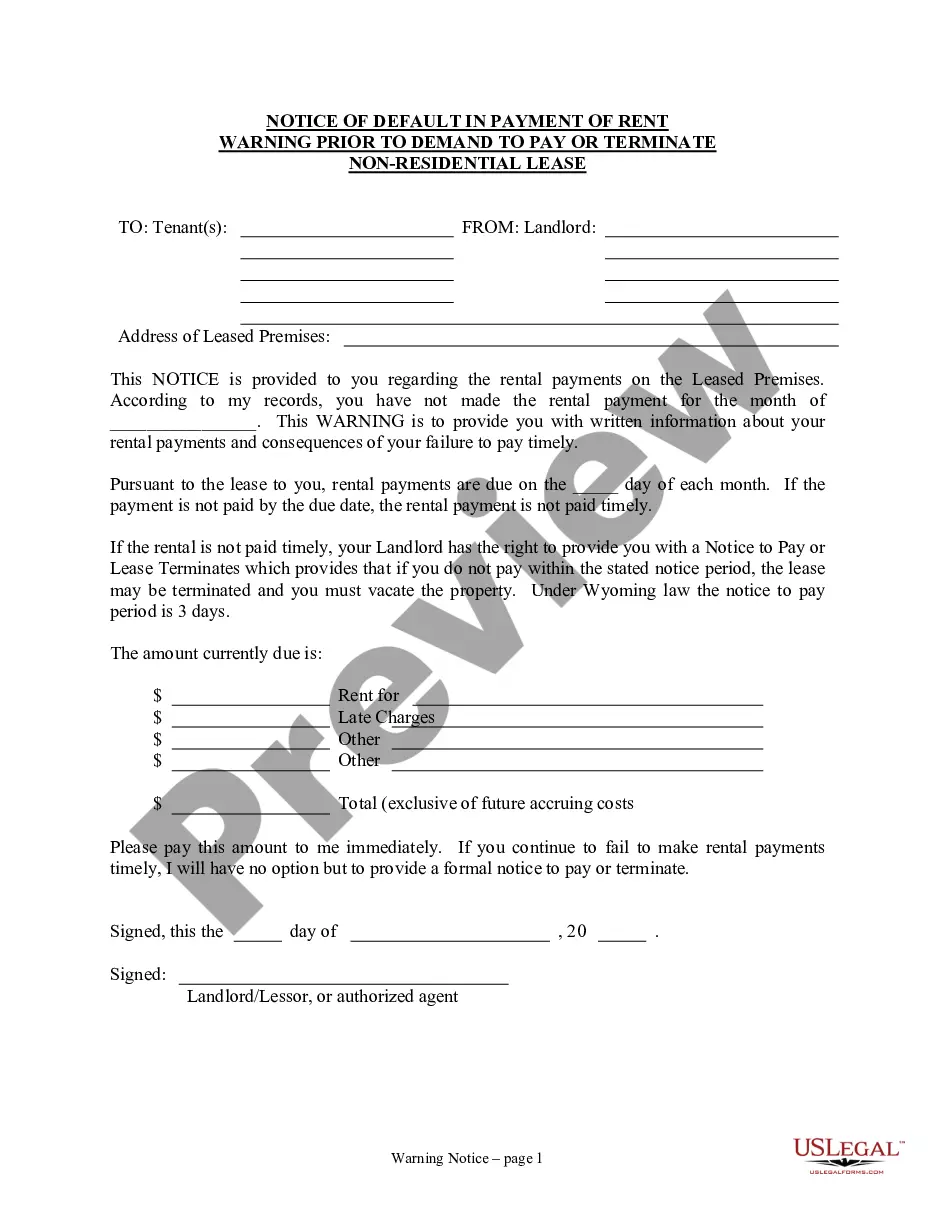
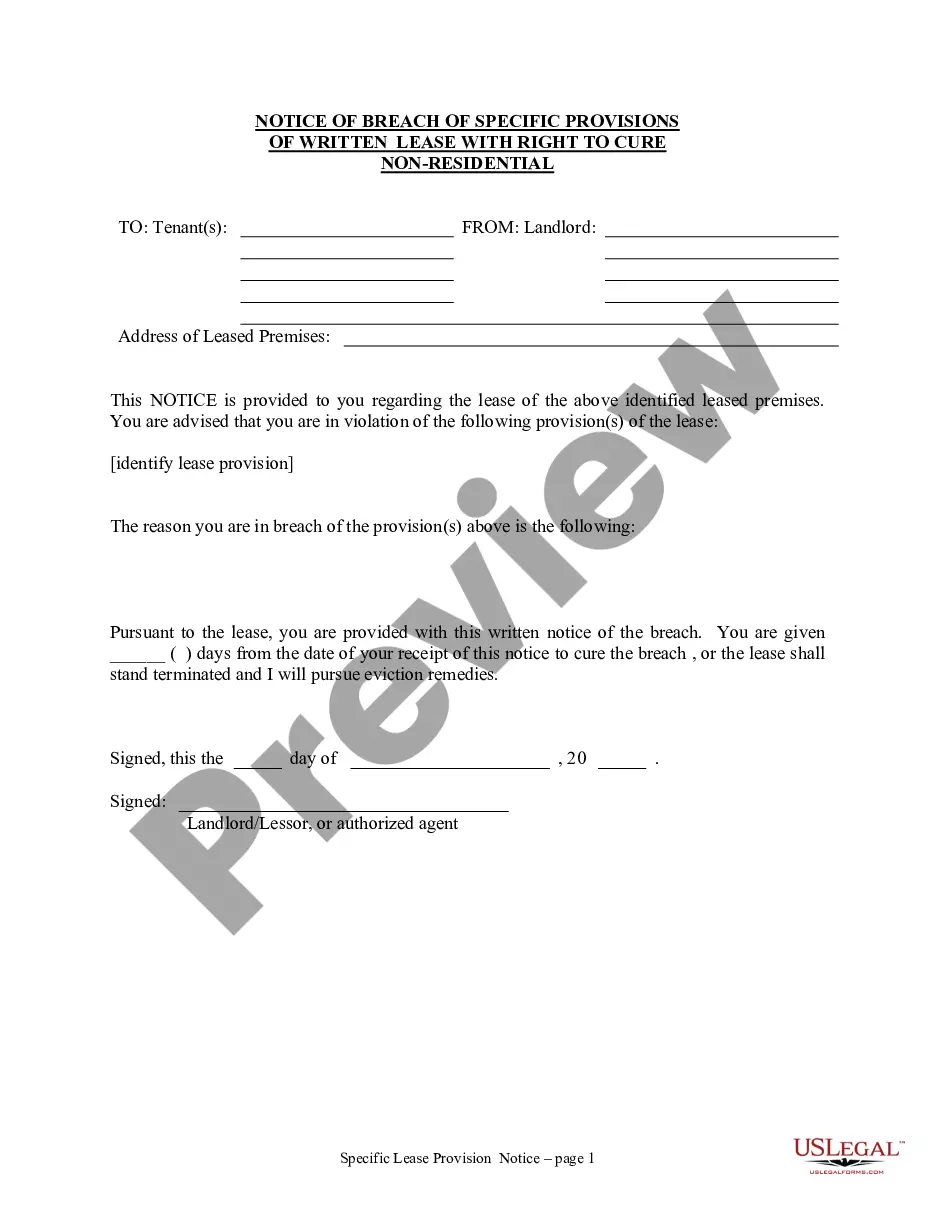
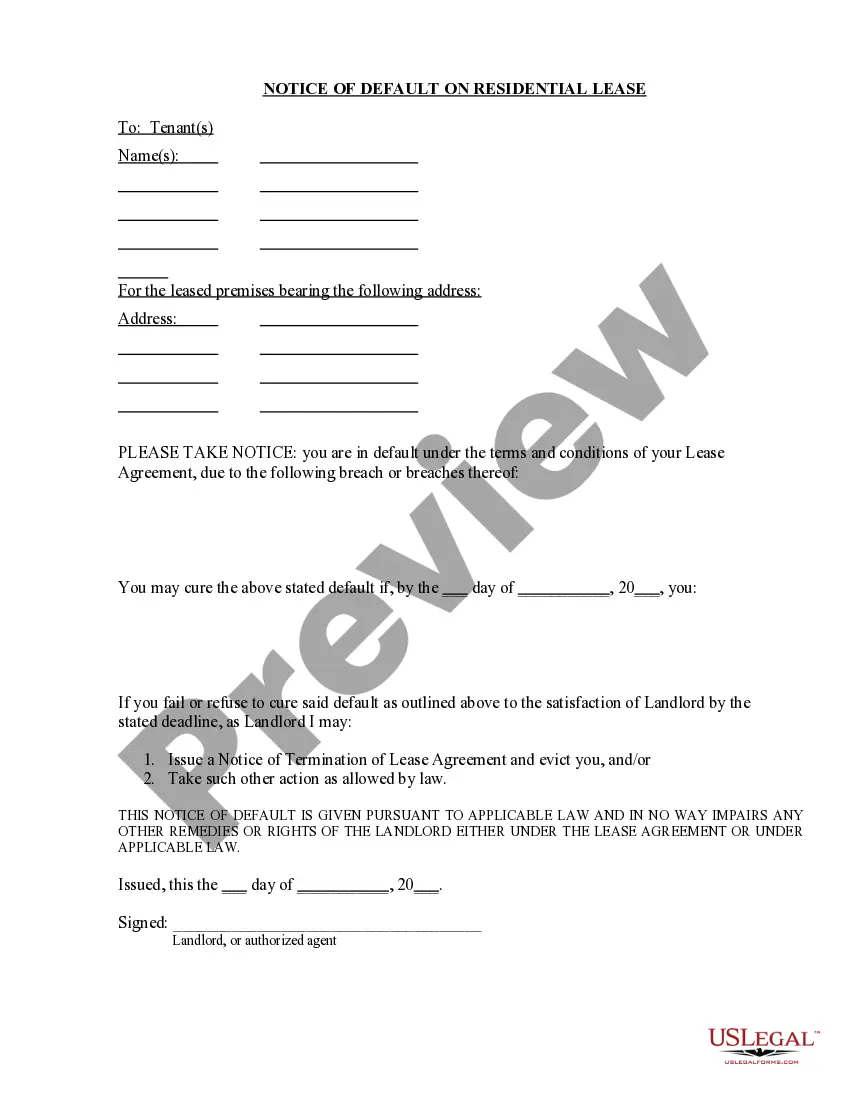
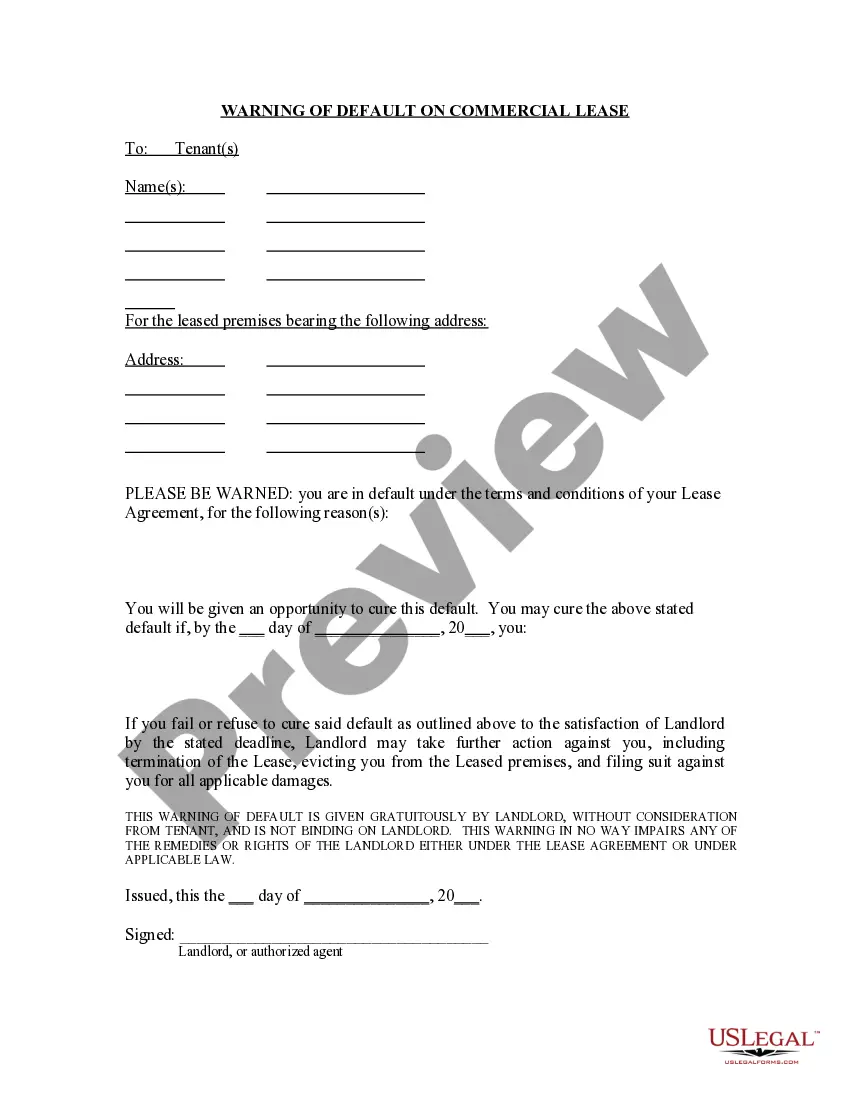
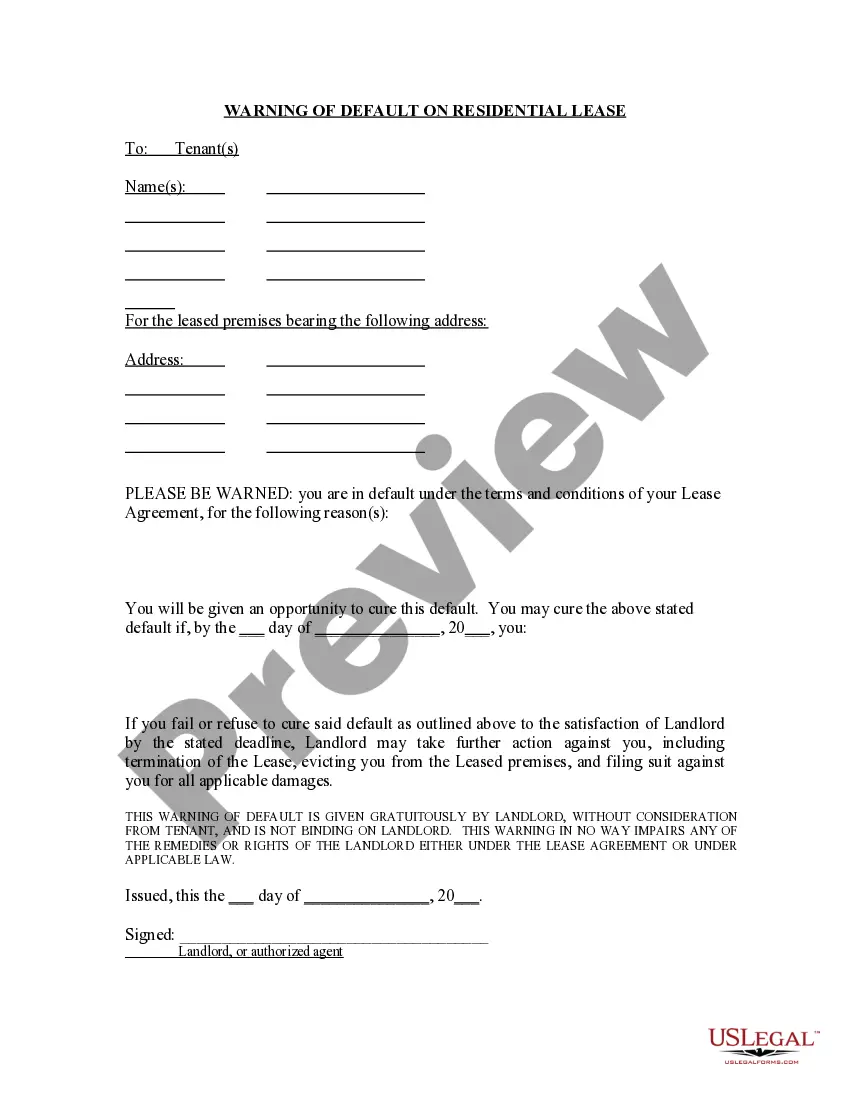
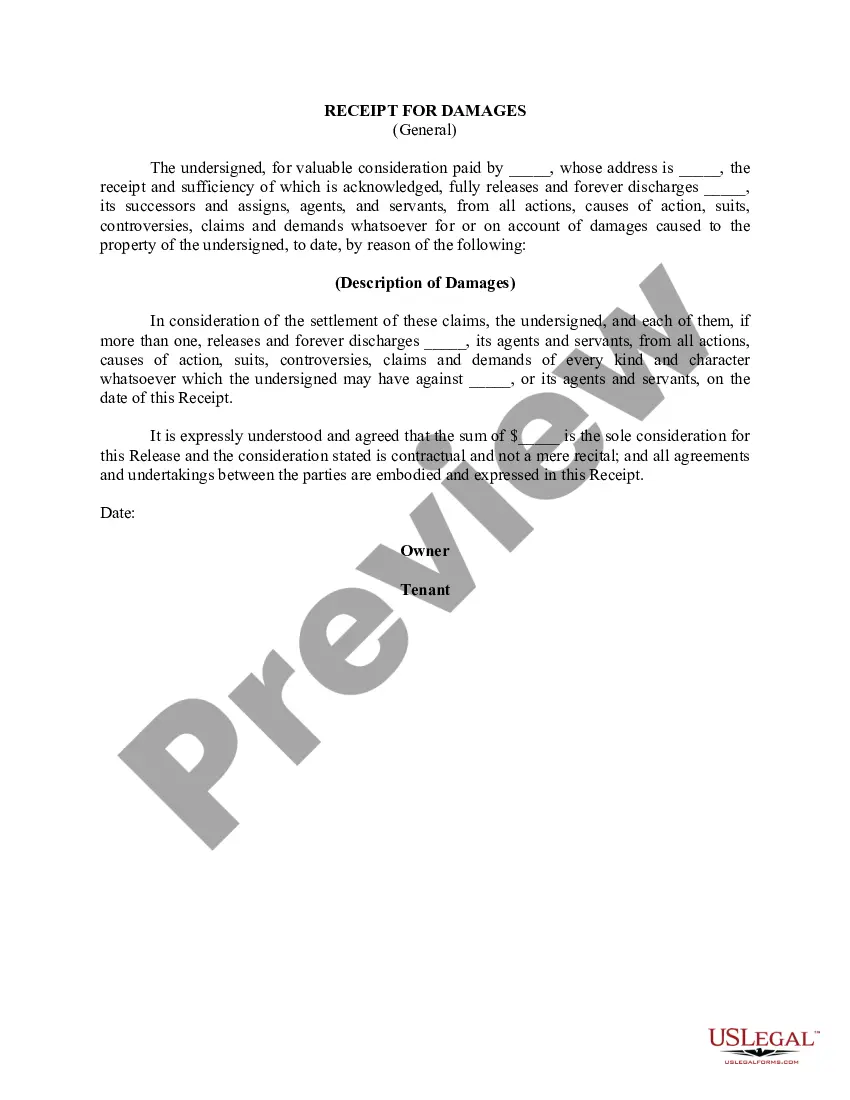
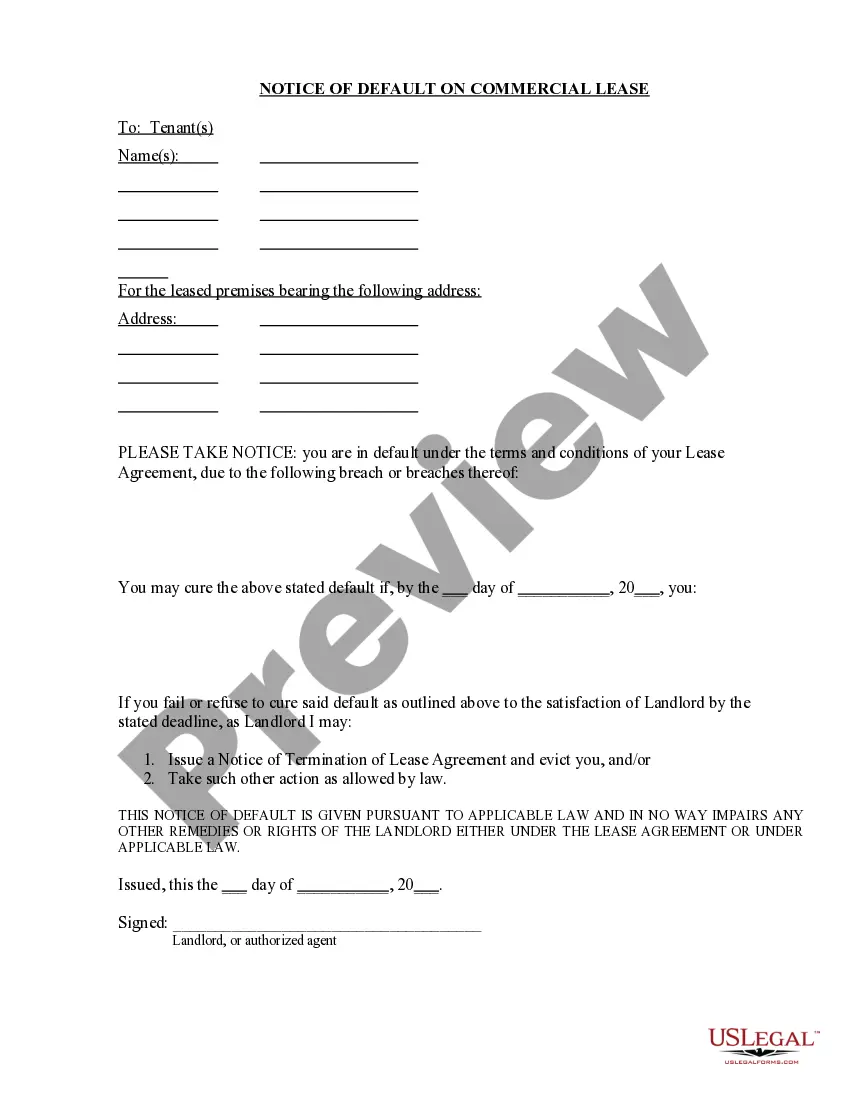
The Letter from Landlord to Tenant as Notice of Default on Commercial Lease is a formal document that informs a tenant of specific breaches in their lease agreement. It serves as a notice of default, outlining the issues that need to be addressed, as well as a deadline for the tenant to cure these breaches. This form is crucial for landlords to initiate potential eviction proceedings if the tenant fails to remedy the situation, distinguishing it from other lease documents that may not have the same legal ramifications.
This form is used when a tenant has failed to comply with the terms of a commercial lease, particularly regarding timely payment of rent or other obligations. Landlords should issue this notice when they want to formally document the default and provide the tenant with an opportunity to resolve the issue before considering eviction or other legal actions.
Notarization is generally not required for this form. However, certain states or situations might demand it. You can complete notarization online through US Legal Forms, powered by Notarize, using a verified video call available anytime.
Our built-in tools help you complete, sign, share, and store your documents in one place.
Make edits, fill in missing information, and update formatting in US Legal Forms—just like you would in MS Word.
Download a copy, print it, send it by email, or mail it via USPS—whatever works best for your next step.
Sign and collect signatures with our SignNow integration. Send to multiple recipients, set reminders, and more. Go Premium to unlock E-Sign.
If this form requires notarization, complete it online through a secure video call—no need to meet a notary in person or wait for an appointment.
We protect your documents and personal data by following strict security and privacy standards.

Make edits, fill in missing information, and update formatting in US Legal Forms—just like you would in MS Word.

Download a copy, print it, send it by email, or mail it via USPS—whatever works best for your next step.

Sign and collect signatures with our SignNow integration. Send to multiple recipients, set reminders, and more. Go Premium to unlock E-Sign.

If this form requires notarization, complete it online through a secure video call—no need to meet a notary in person or wait for an appointment.

We protect your documents and personal data by following strict security and privacy standards.
The address of the property (The landlord may have many properties to manage. The specific date you plan to vacate. The date you plan to surrender the keys. The date you plan to have the utilities turned off. A request for property inspection. A forwarding address.
For example, the lease may provide that in case of default, the landlord can recover late fees and interest. If the lease is a net lease, it may provide for the landlord to recover such things as property taxes, insurance, utilities, maintenance and repairs.
Components of the Letter Include your name and the rental address, and date the letter. Don't date it and hold onto it; date it for the day you are giving it to the landlord to start the 60 days. Address the letter to the landlord with a subject line of "60-Day Notice to Vacate."
Surrender of the lease This can be done formally, by deed, but this is not always necessary. If the landlord and tenant agree that the lease will be surrendered and they act in a way that is inconsistent with the lease continuing, the lease will be surrendered 'by operation of law'.
You and your landlord agree to terminate early. Enter into a deed of surrender to explicitly release you from all lease obligations. You have an early termination clause or break clause in the lease. You may be able to transfer or assign the lease with your landlord's agreement.
Addresses. Date. Tenant names. Status and date of the lease. Why the eviction notice is served (clear and concise explanation) Date tenant must vacate the property. Proof of service or delivery of notice.
Your name, and the landlord's name and address. The date you're writing the letter. Informing the landlord you're breaking your lease early. The reason why you're breaking your lease. The building and apartment you're vacating. The date by which you're vacating.
If you're an assured tenant or a protected tenant Your landlord will have to give you notice if they want you to leave. They have to give the reasons why they want to evict you - for example, if you have rent arrears or you've damaged the property. Your landlord will have to go to court and get a court order.
A break-early fee is a lump sum payment. The amount of the break-early fee will vary greatly depending upon the commercial tenant's specific circumstances. In exchange for the break-early fee, the landlord will agree to release the commercial tenant from all of its obligations under the commercial lease.