Wisconsin Last Will and Testament for Married person with Minor Children from Prior Marriage
Overview of this form
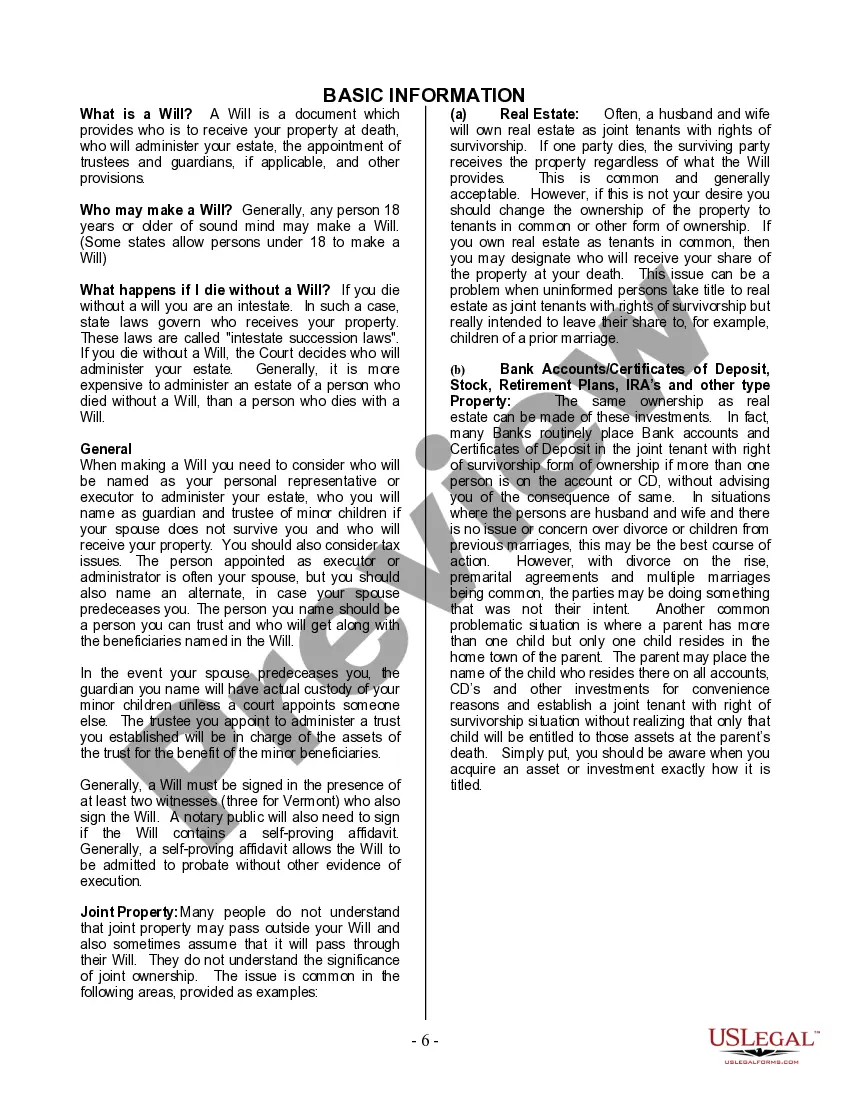
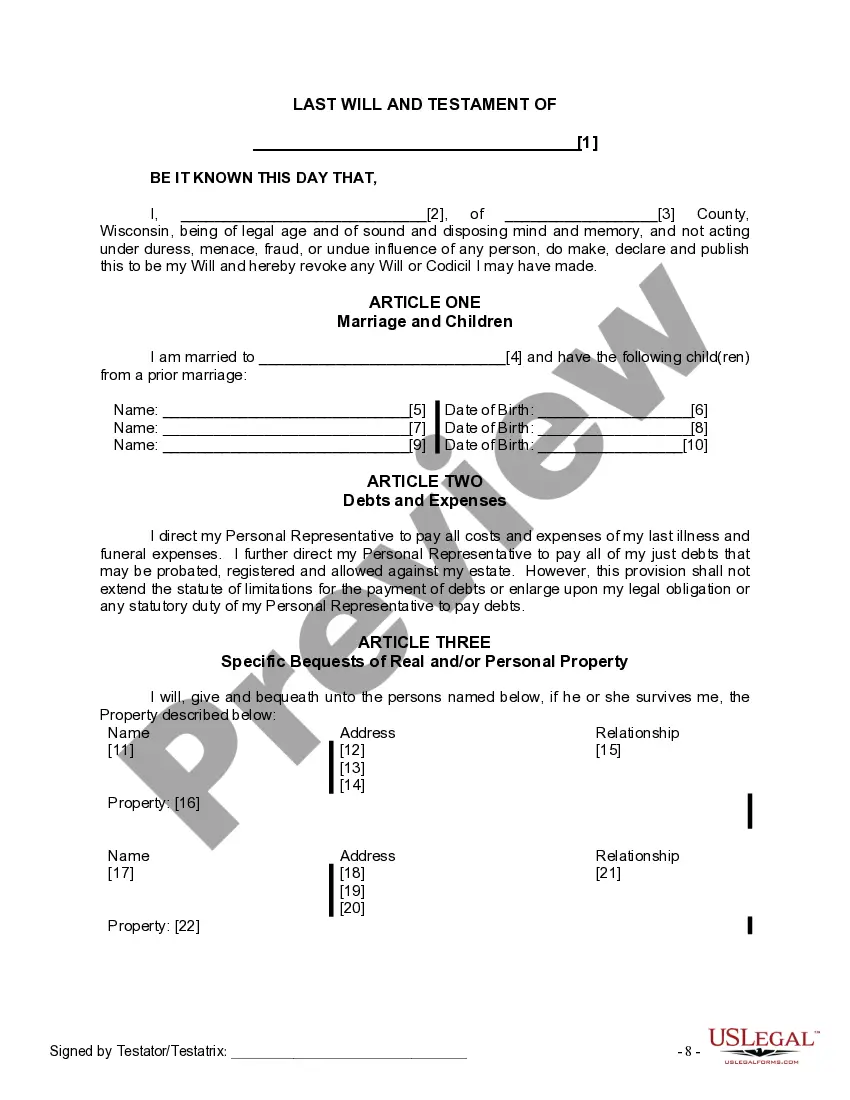
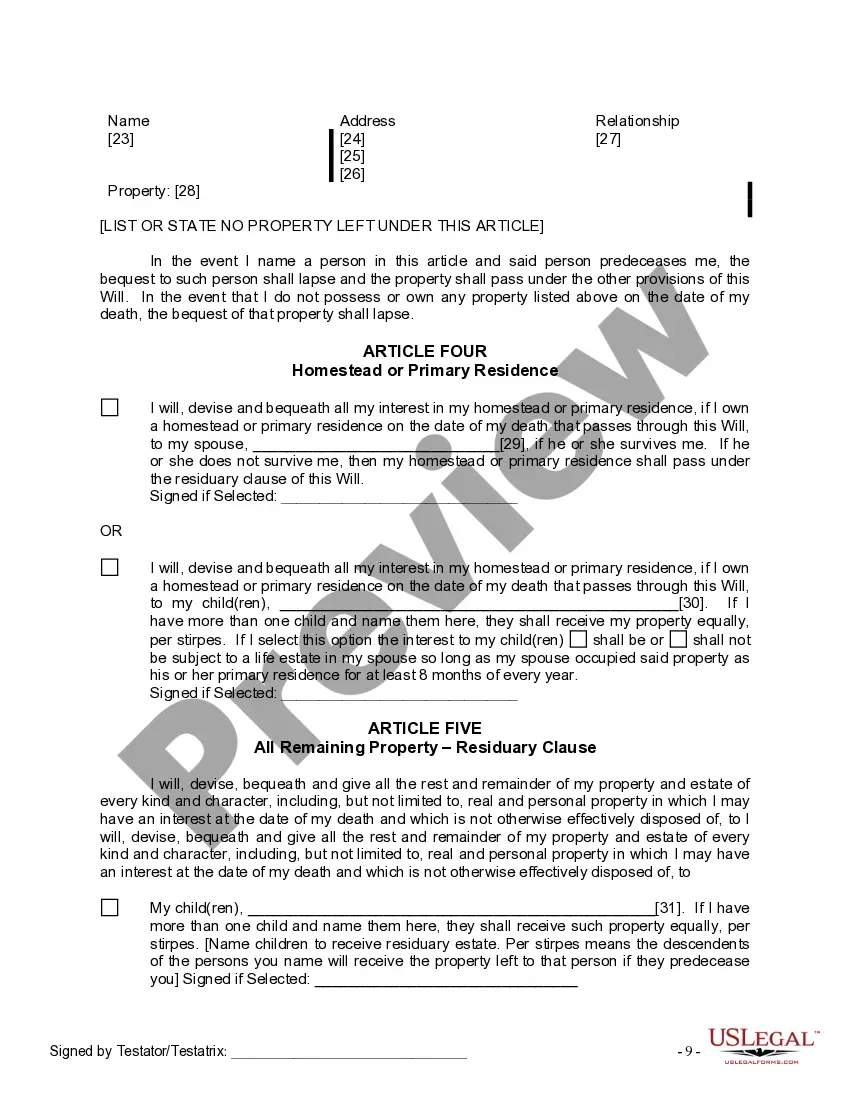
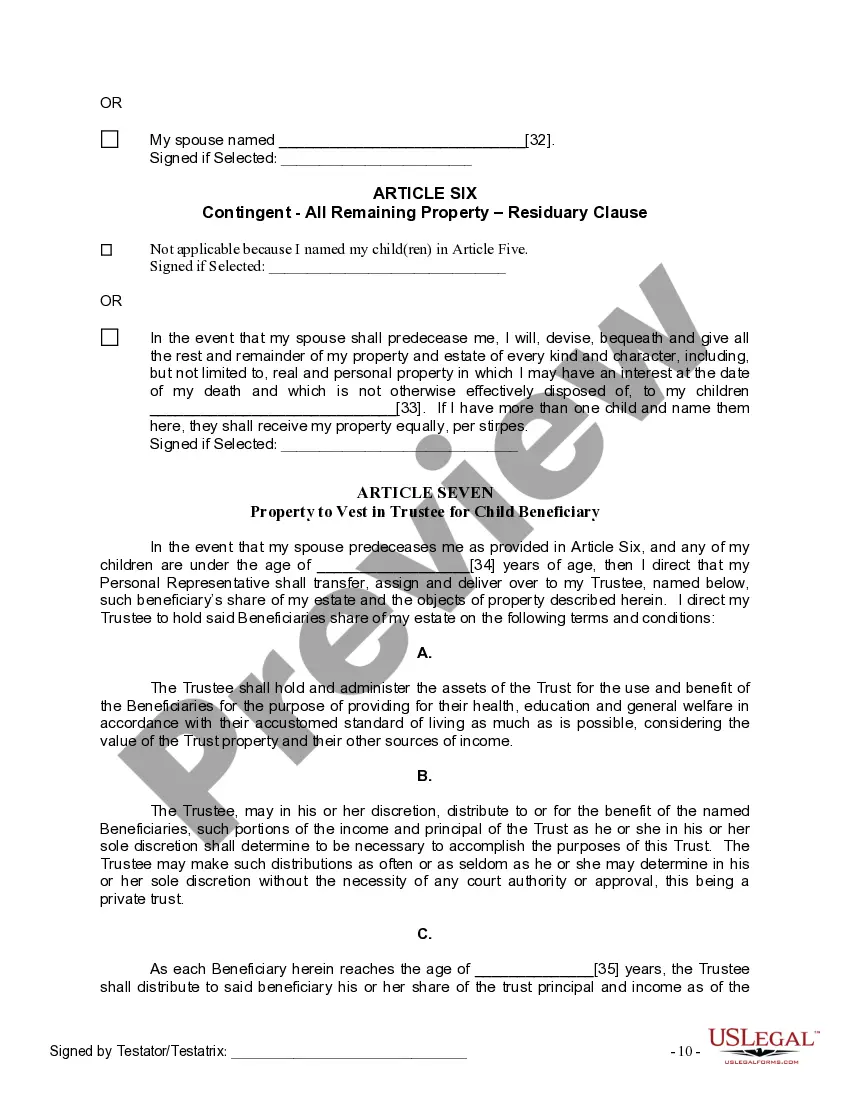
This Last Will and Testament is specifically designed for a married person with minor children from a prior marriage. It enables you to outline how your property will be distributed upon your passing, designate a personal representative or executor, and establish provisions for the care of your minor children and their inheritances. This legal document ensures that your wishes are honored and helps prevent disputes among family members after your death.
Key components of this form
- Appointment of a personal representative or executor to manage your estate.
- Designation of beneficiaries who will receive your property.
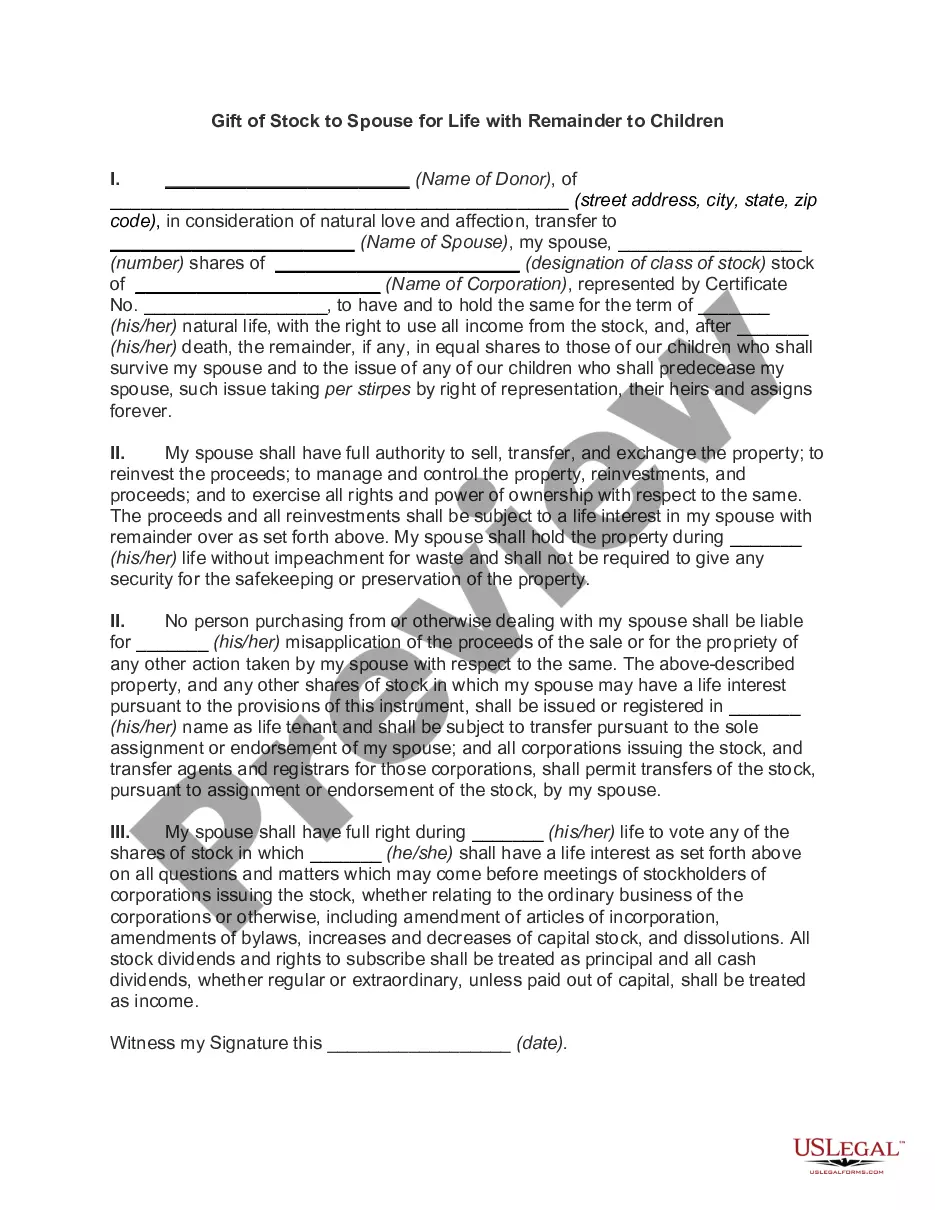
- Establishment of a trust for minor children to manage their assets until they reach a certain age.
- Appointment of guardians for minor children in the event both parents pass away.
- Specific bequests for any personal property you wish to leave to particular individuals.
- Provisions regarding debts and funeral expenses to be paid from the estate.




Common use cases
This form is needed when you are a married person with minor children from a previous marriage and want to ensure that your estate is distributed according to your wishes. It is especially important to have a will in place if you have specific requests regarding guardianship of your children, property distribution, or debts that need to be settled after your passing.
Who this form is for
- Married individuals with minor children from a prior marriage.
- People looking to ensure legal protection for their dependents.
- Those who wish to specify particular distributions of their assets after death.
- Individuals wanting to appoint guardians for their children in case of their untimely demise.
- Anyone seeking to minimize the possibility of disputes among heirs.
Completing this form step by step
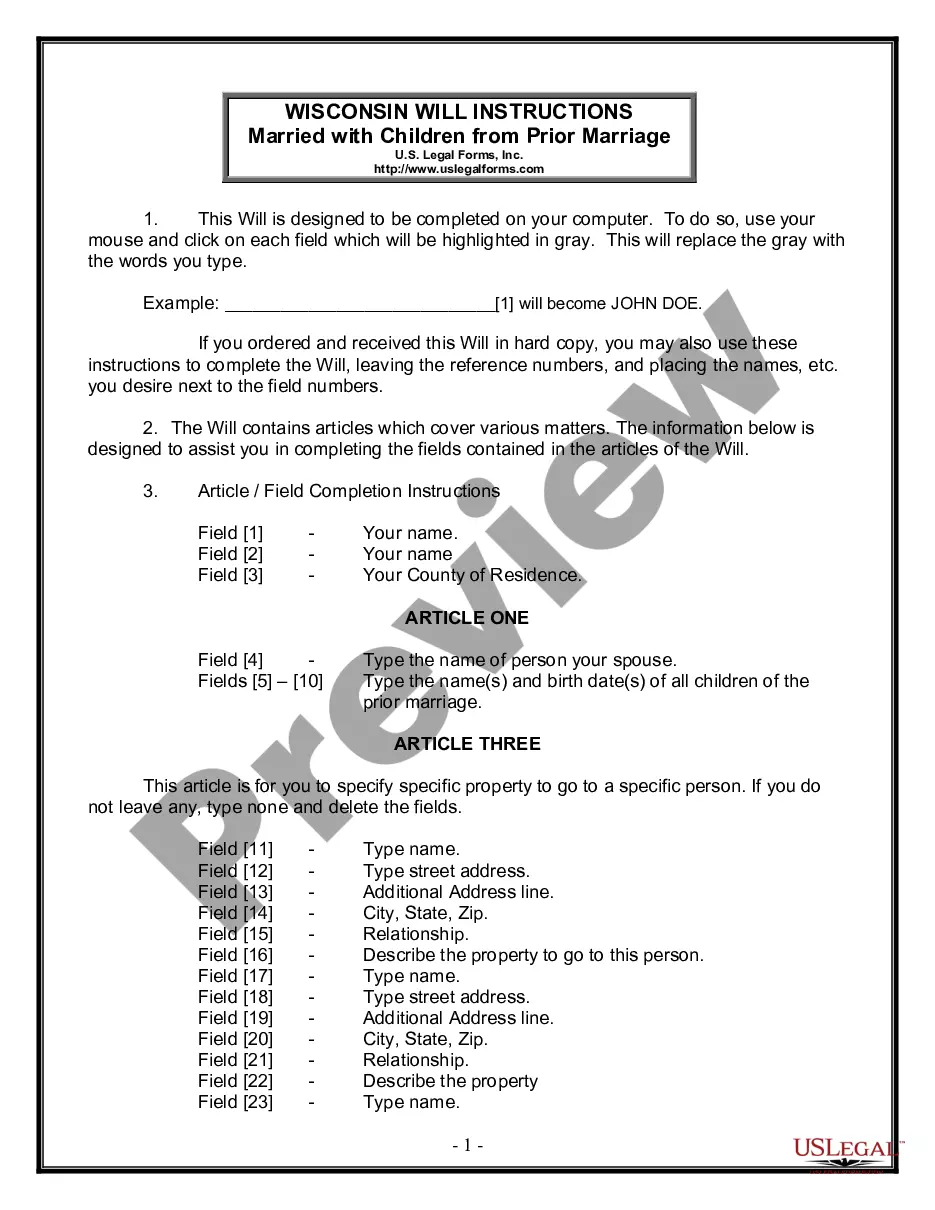
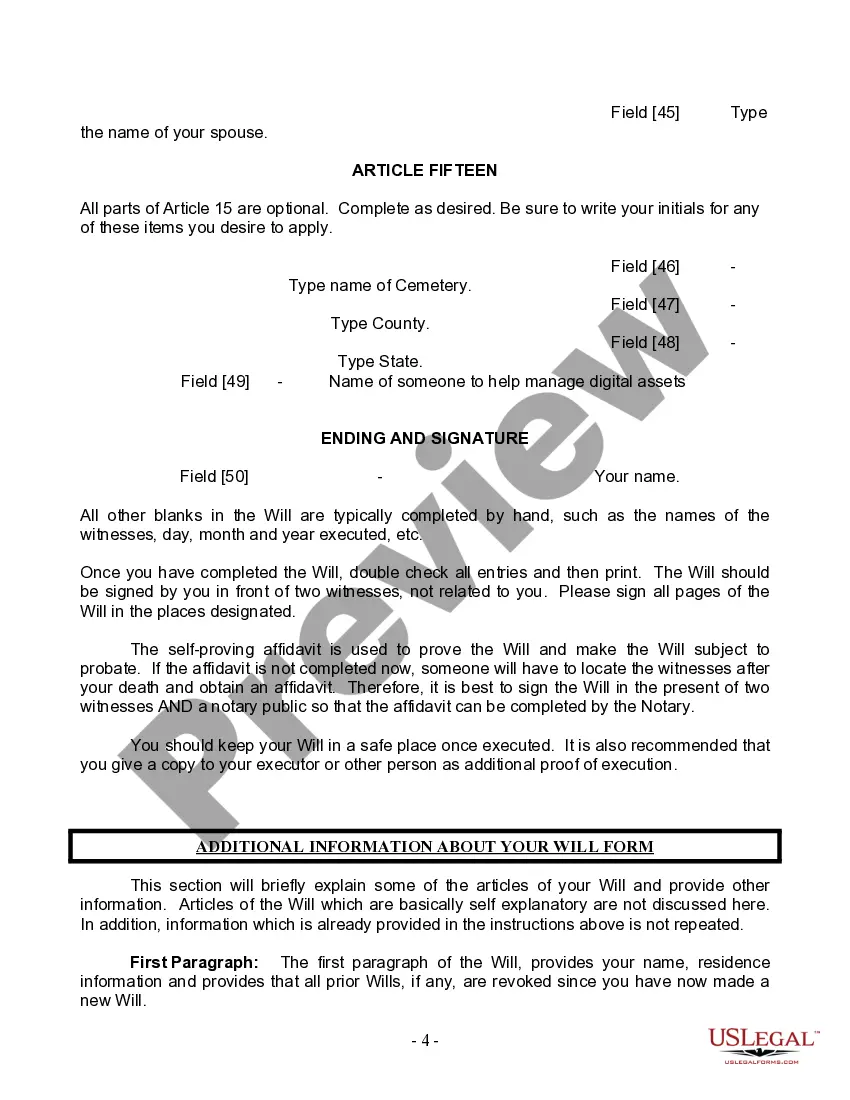
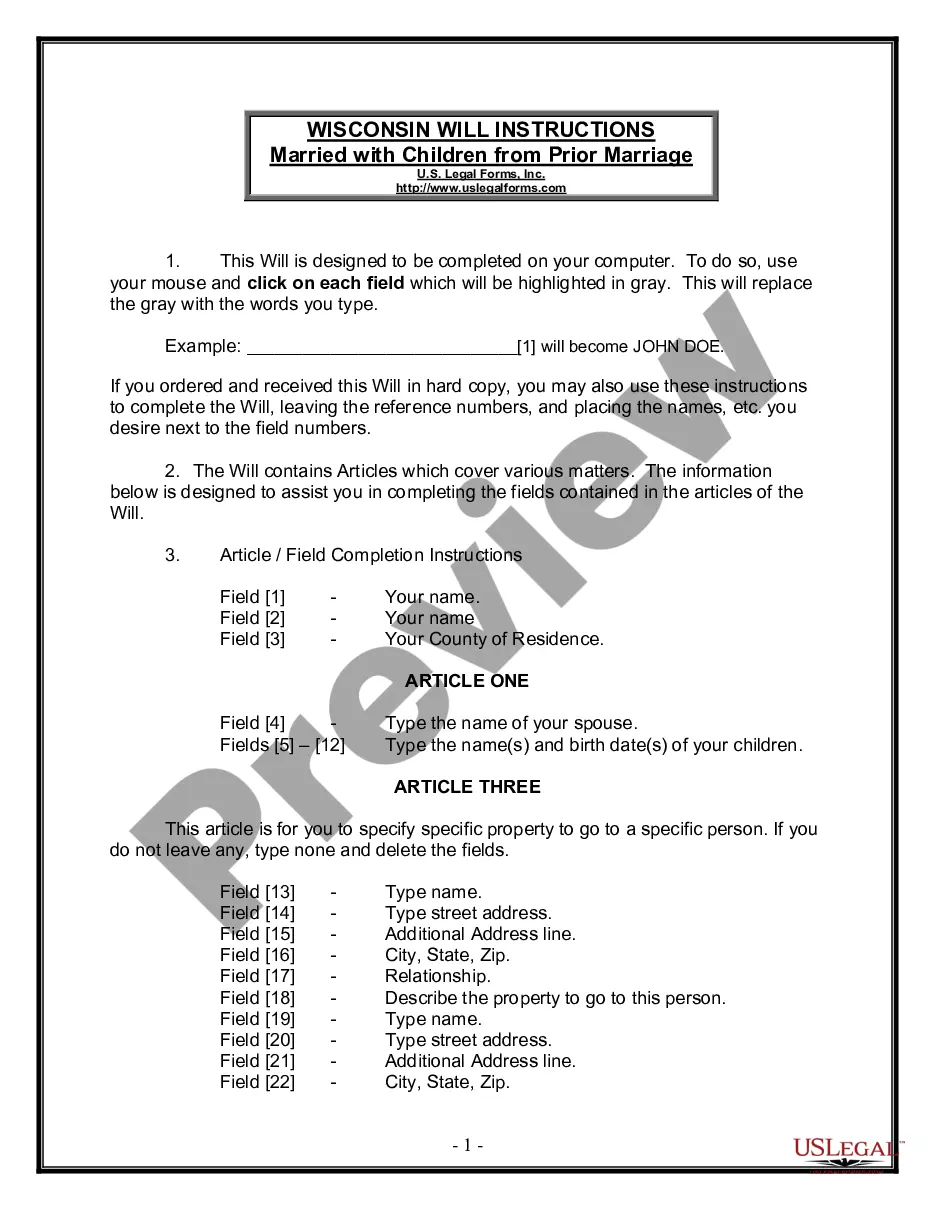
- Start by entering your name and county of residence.
- List your spouseâs name and the names and birth dates of your children from the prior marriage.
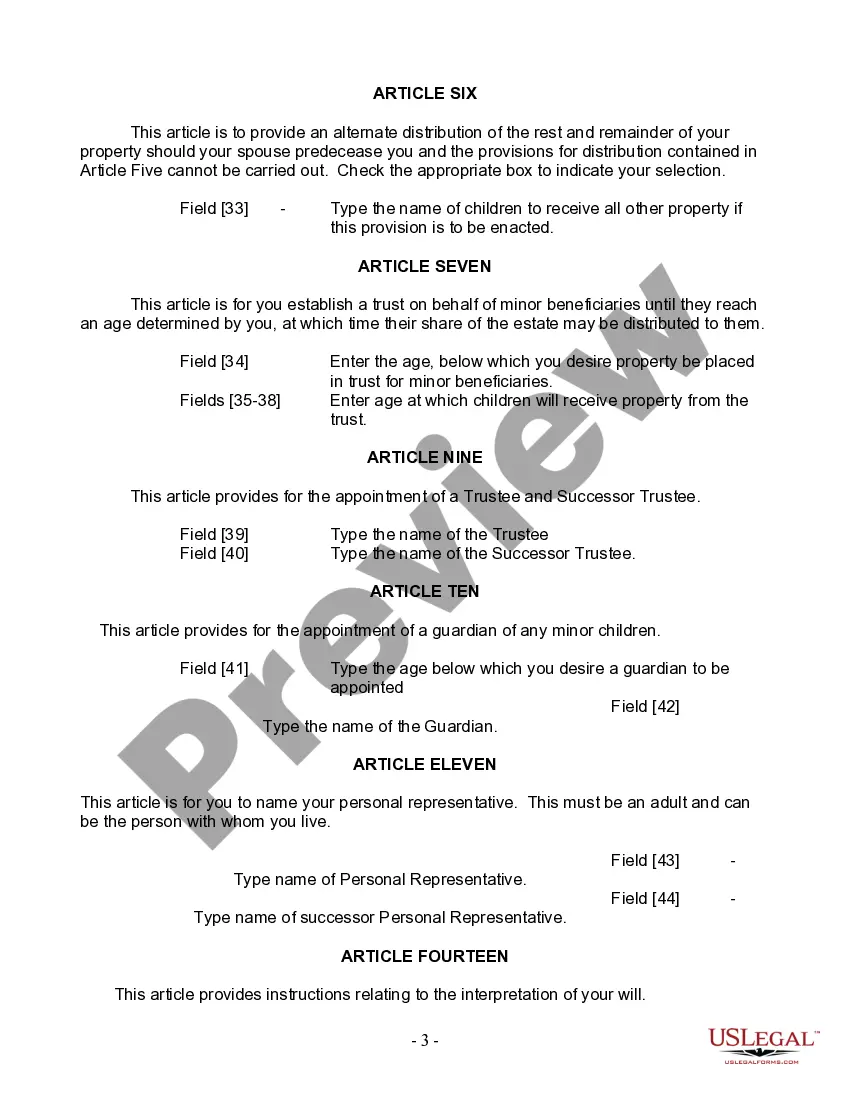
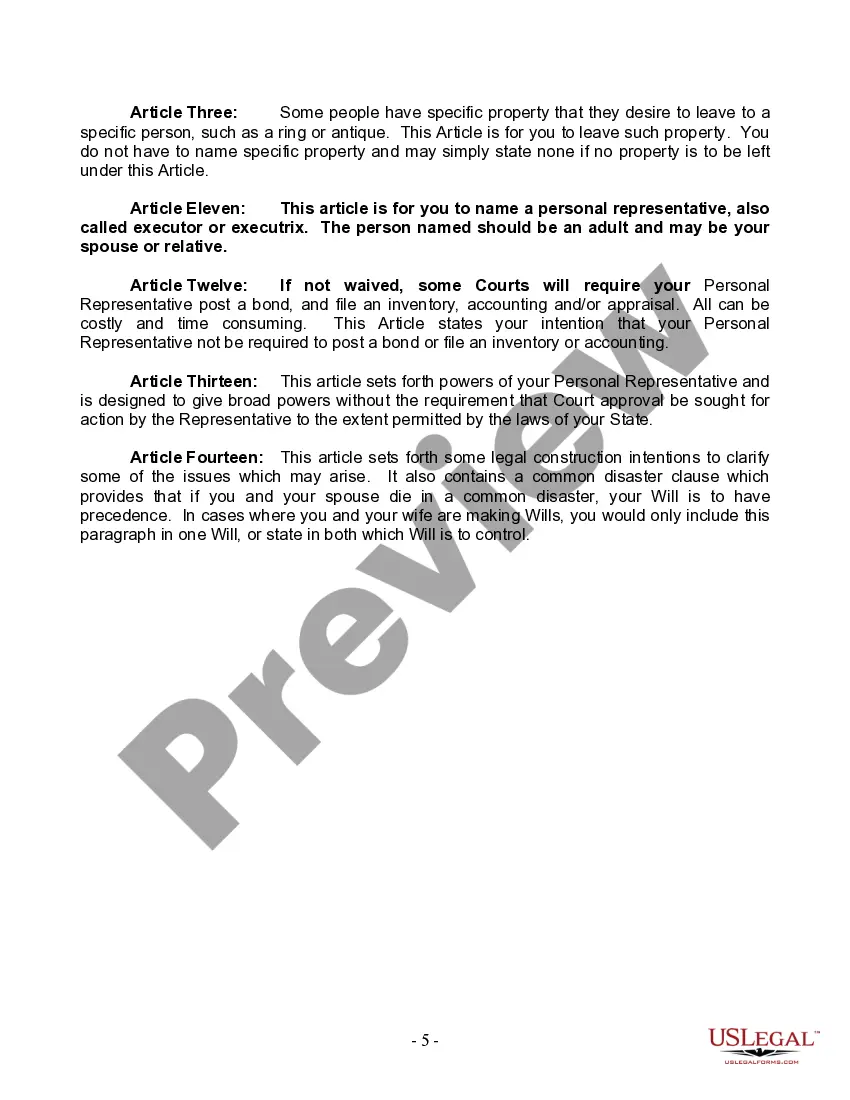
- Designate your personal representative and any successor representatives.
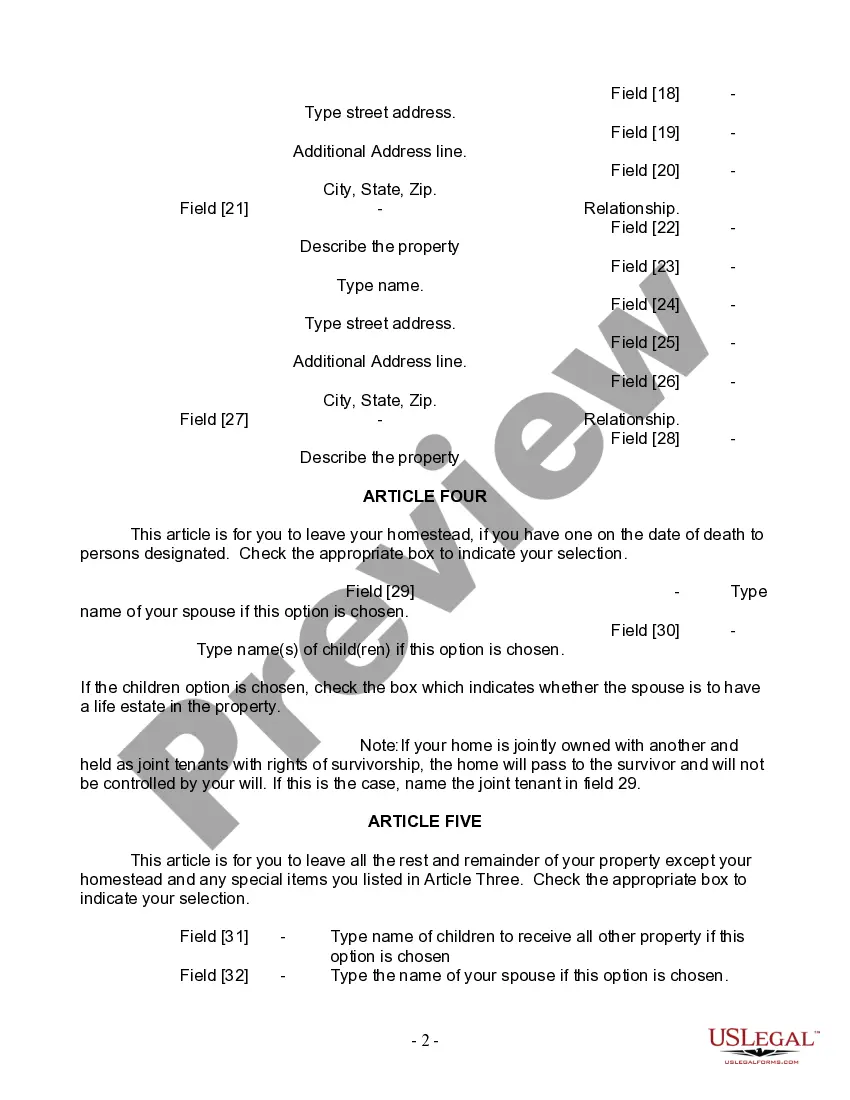
- Specify any property or assets you wish to bequeath to particular individuals.
- Review and confirm all entries for accuracy before signature.
- Have the document signed in the presence of two witnesses and, if needed, notarized.
Is notarization required?
Yes, this form must be notarized to be legally valid in many jurisdictions. This ensures that the will can be validated in probate without needing additional witness affidavits. U.S. Legal Forms offers integrated online notarization services that are secure and available 24/7.
Get your form ready online
Our built-in tools help you complete, sign, share, and store your documents in one place.
Make edits, fill in missing information, and update formatting in US Legal Forms—just like you would in MS Word.
Download a copy, print it, send it by email, or mail it via USPS—whatever works best for your next step.
Sign and collect signatures with our SignNow integration. Send to multiple recipients, set reminders, and more. Go Premium to unlock E-Sign.
If this form requires notarization, complete it online through a secure video call—no need to meet a notary in person or wait for an appointment.
We protect your documents and personal data by following strict security and privacy standards.

Make edits, fill in missing information, and update formatting in US Legal Forms—just like you would in MS Word.

Download a copy, print it, send it by email, or mail it via USPS—whatever works best for your next step.

Sign and collect signatures with our SignNow integration. Send to multiple recipients, set reminders, and more. Go Premium to unlock E-Sign.

If this form requires notarization, complete it online through a secure video call—no need to meet a notary in person or wait for an appointment.

We protect your documents and personal data by following strict security and privacy standards.
Common mistakes to avoid
- Failing to sign the will in front of the required witnesses.
- Not updating the will after significant life changes, such as marriage or the birth of children.
- Leaving out important information about property or beneficiaries.
- Assuming a handwritten will is sufficient without legal guidance.
- Neglecting to consider state-specific laws that may affect the will's validity.
Benefits of completing this form online
- Convenience of accessing and completing your will from anywhere.
- Editability ensures you can adjust as your circumstances change.
- Reliable templates drafted by licensed attorneys.
- Time-saving process compared to hiring a lawyer for basic wills.
- Step-by-step guidance to help you navigate complex legal language.
Looking for another form?


Form popularity
FAQ
A will can also be declared invalid if someone proves in court that it was procured by undue influence. This usually involves some evil-doer who occupies a position of trust -- for example, a caregiver or adult child -- manipulating a vulnerable person to leave all, or most, of his property to the manipulator instead
How to Avoid Probate in Wisconsin: A Will is not the Answer. There is a common misconception that having a will allows you to avoid probate. This is not correct. Having a will has no effect on whether or not your estate will go through probate.
If the decedent left a Will, it must be filed with the Probate office within 30 days of death even if no probate proceeding is required.
Your will is valid in Wisconsin if you had capacity and signed a written will in the presence of two witnesses, and the witnesses signed your will.In general, Wisconsin law requires at least one of the witnesses to make a sworn statement that the will is valid in a court hearing.
Make your will self-proving means the court will accept it without further verification from the witnesses who signed it. A notarized affidavit proving who you are and all parties knew they were signing makes your last will and testament self-proving. This can speed up the probate process significantly.
A will that is created in a way that allows a probate court to easily accept it as the true will of the person who has died. In some states, a will is self-proving when two witnesses sign under penalty of perjury that they observed the willmaker sign it and that he told them it was his will.
No. You can make your own will in Wisconsin, using Nolo's do-it-yourself will software or online will programs. However, you may want to consult a lawyer in some situations. For example, if you think that your will might be contested or if you want to disinherit your spouse, you should talk with an attorney.
Fraud or Undue Influence A nonfamily caregiver forcing the testator to leave them an inheritance. A family member getting the testator to sign a will by pretending it is just a general legal document that needs a signature.
Probate matters in Wisconsin are handled at the local circuit court level. If there is a will, it must be filed with the court, even if probate isn't needed to distribute the decedent's property.