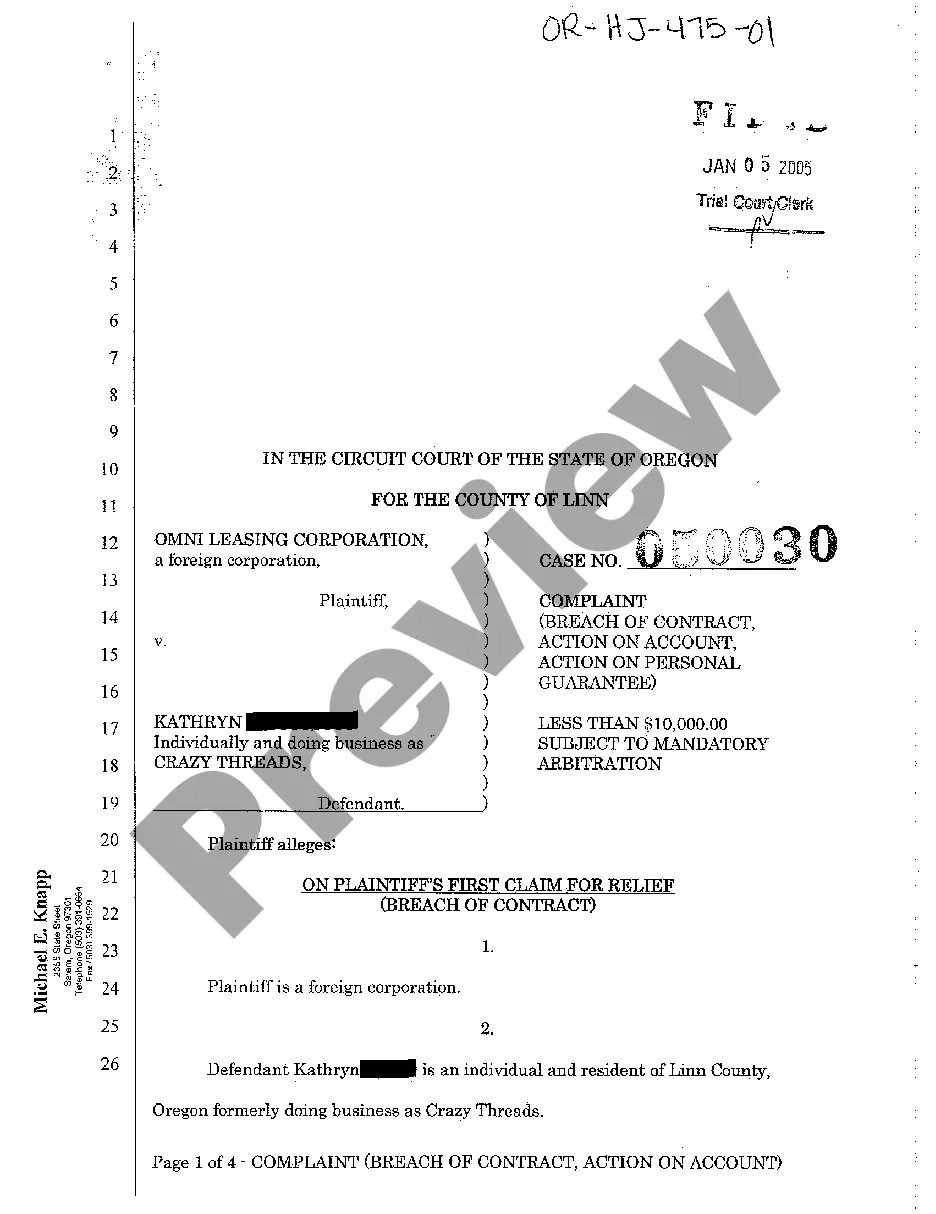
Wisconsin Revocation of Statutory Living Will
What is this form?
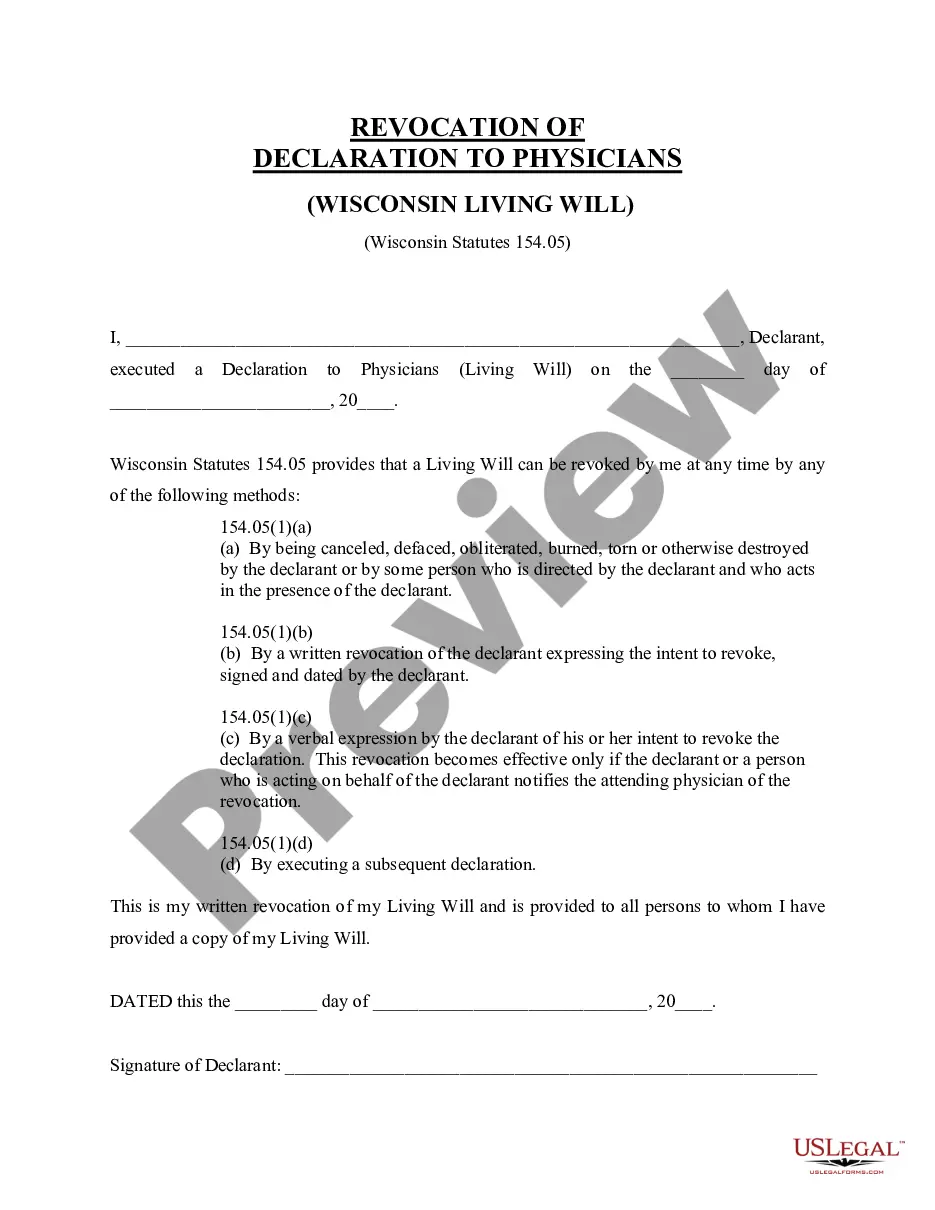
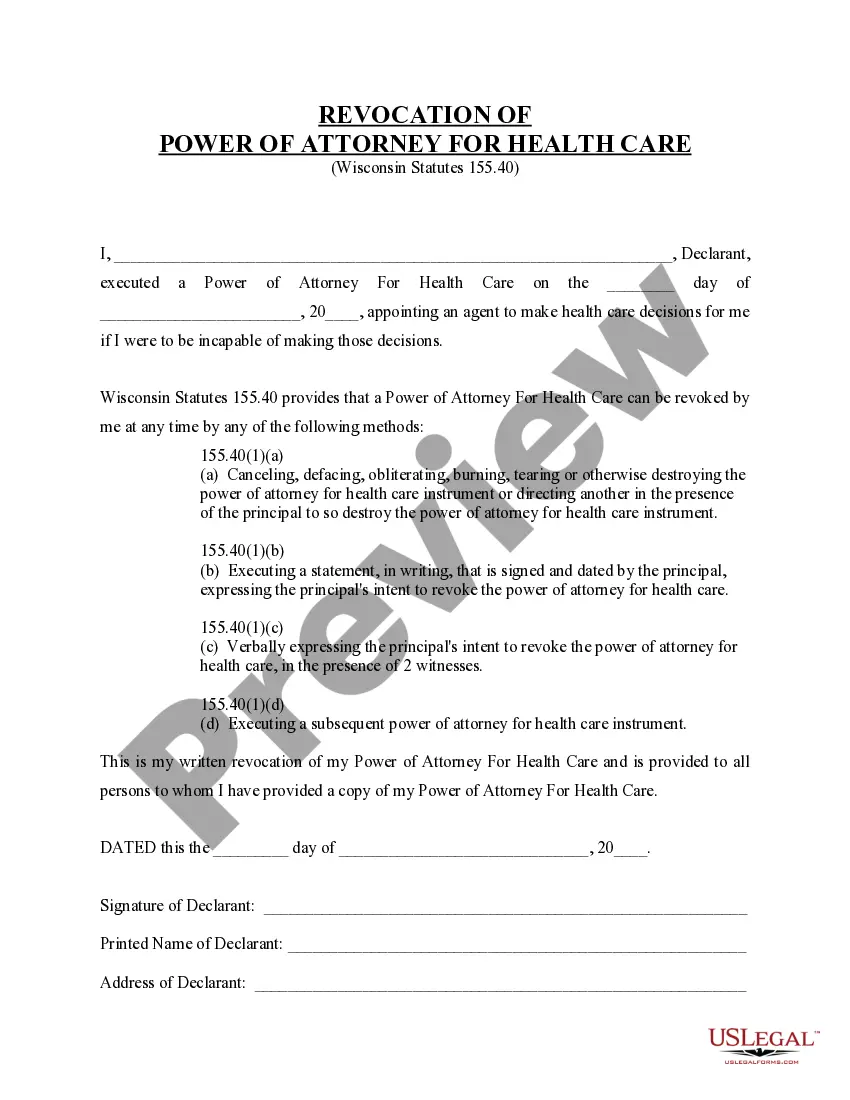
The Revocation of Statutory Living Will is a legal document that formally cancels a previously executed living will. This form allows an individual, known as the declarant, to revoke their prior wishes regarding life-sustaining procedures if faced with a terminal condition. Unlike a living will, which outlines a person's desires, this form serves solely to revoke those previously stated preferences, ensuring that the current wishes are honored. It complies with Wisconsin state laws, specifically Wisconsin Statutes Section 154.05.
Main sections of this form
- Declarant information: Name and details of the individual revoking the living will.
- Original living will date: The date when the initial living will was executed.
- Methods of revocation: Clear instructions on how a living will can be revoked legally.
- Effective notification: Information on notifying the attending physician for the revocation to take effect.
- Signature and date: The declarant must sign and date the revocation form to ensure its validity.

Common use cases
This form should be used when an individual wishes to revoke their previously stated medical treatment preferences outlined in a living will. Scenarios may include changes in health, decisions to pursue different treatment options, or a reevaluation of personal values regarding end-of-life care. It is essential to use this form to communicate current wishes effectively to medical professionals and ensure that previously stated desires are no longer honored.
Who can use this document
This form is suitable for:
- Individuals who have previously created a living will and wish to revoke it.
- Residents of Wisconsin seeking to ensure their latest healthcare preferences are recognized.
- Any person wishing to clarify their end-of-life care wishes due to changes in personal beliefs or circumstances.
How to complete this form
- Enter your full name as the declarant at the beginning of the form.
- Provide the date when the original living will was executed.
- Clearly state your intent to revoke the living will.
- Sign and date the form to validate it.
- Notify your attending physician of the revocation to ensure it takes effect.
Does this document require notarization?
This form does not typically require notarization unless specified by local law. It is important to ensure that the form is signed and that the attending physician is notified of the revocation for it to be legally recognized.
Get your form ready online
Our built-in tools help you complete, sign, share, and store your documents in one place.
Make edits, fill in missing information, and update formatting in US Legal Forms—just like you would in MS Word.
Download a copy, print it, send it by email, or mail it via USPS—whatever works best for your next step.
Sign and collect signatures with our SignNow integration. Send to multiple recipients, set reminders, and more. Go Premium to unlock E-Sign.
If this form requires notarization, complete it online through a secure video call—no need to meet a notary in person or wait for an appointment.
We protect your documents and personal data by following strict security and privacy standards.

Make edits, fill in missing information, and update formatting in US Legal Forms—just like you would in MS Word.

Download a copy, print it, send it by email, or mail it via USPS—whatever works best for your next step.

Sign and collect signatures with our SignNow integration. Send to multiple recipients, set reminders, and more. Go Premium to unlock E-Sign.

If this form requires notarization, complete it online through a secure video call—no need to meet a notary in person or wait for an appointment.

We protect your documents and personal data by following strict security and privacy standards.
Typical mistakes to avoid
- Failing to notify the attending physician of the revocation.
- Not signing and dating the form, which may render it invalid.
- Using this form without first verifying the original living will was properly executed.
Why complete this form online
- Convenience of downloading and completing the form from home.
- Editable fields allow for personalization according to specific needs.
- Access to professionally drafted templates ensures legal compliance.
Legal use & context
- This form is legally binding under Wisconsin law when completed according to the specified requirements.
- Revocation of a living will is recognized as valid only if made by the declarant and communicated properly.
- It is important to retain a copy for personal records and inform your healthcare providers of the change.
Key takeaways
- The Revocation of Statutory Living Will is essential for updating healthcare preferences.
- Completing this form ensures that your most current wishes are honored.
- It is important to notify relevant medical personnel after completing the form.
Looking for another form?


Form popularity
FAQ
With what is known as a durable power of attorney for health care, you can designate an agent that will make decisions that weren't covered by your living will. It is important to note that your health care agent can't overrule any of the provisions of your living will.
No. You can make your own will in Wisconsin, using Nolo's do-it-yourself will software or online will programs. However, you may want to consult a lawyer in some situations. For example, if you think that your will might be contested or if you want to disinherit your spouse, you should talk with an attorney.
Step 1 Download The Wisconsin Declaration To Health Care Professionals. Step 2 The Wisconsin Declarant Must Review The Introduction. Step 3 Name The Wisconsin Declarant Behind The Living Will. Step 4 Discuss The Wisconsin Patient's Preferred Level Of Care During A Terminal Condition.
A living will is only valid if you are unable to communicate your wishes. A health care power of attorney gives someone else (the proxy) the ability to make decisions for you regarding your health care. Unlike a living will, it applies to both end-of-life treatment as well as other areas of medical care.
Advance directives are legally binding, so doctors have to follow them. False. Advance directives are legally recognized documents and doctors must respect your known wishes, but doctors can always refuse to comply with your wishes if they have an objection of conscience or consider your wishes medically inappropriate.
A living will is a vital part of the estate plan. You can alter it as your preferences and needs change over time.But your family cannot override your living will. They cannot take away your authority to make your own treatment and care plans.
A living will is a vital part of the estate plan. You can alter it as your preferences and needs change over time.But your family cannot override your living will. They cannot take away your authority to make your own treatment and care plans.
Living Wills are Binding Legal Documents You need to legally outline your wishes in compliance with state law. Your living will needs to cover what you wish to happen if you become terminally ill, permanently unconscious, or unable to convey your own wishes.
Even though they are not required to follow your wishes, most will do so.In an emergency, a physician's choices could override your living will for another reason; if proper care dictates you to be treated in a certain way or there is an ethical obligation, that could override your wishes.