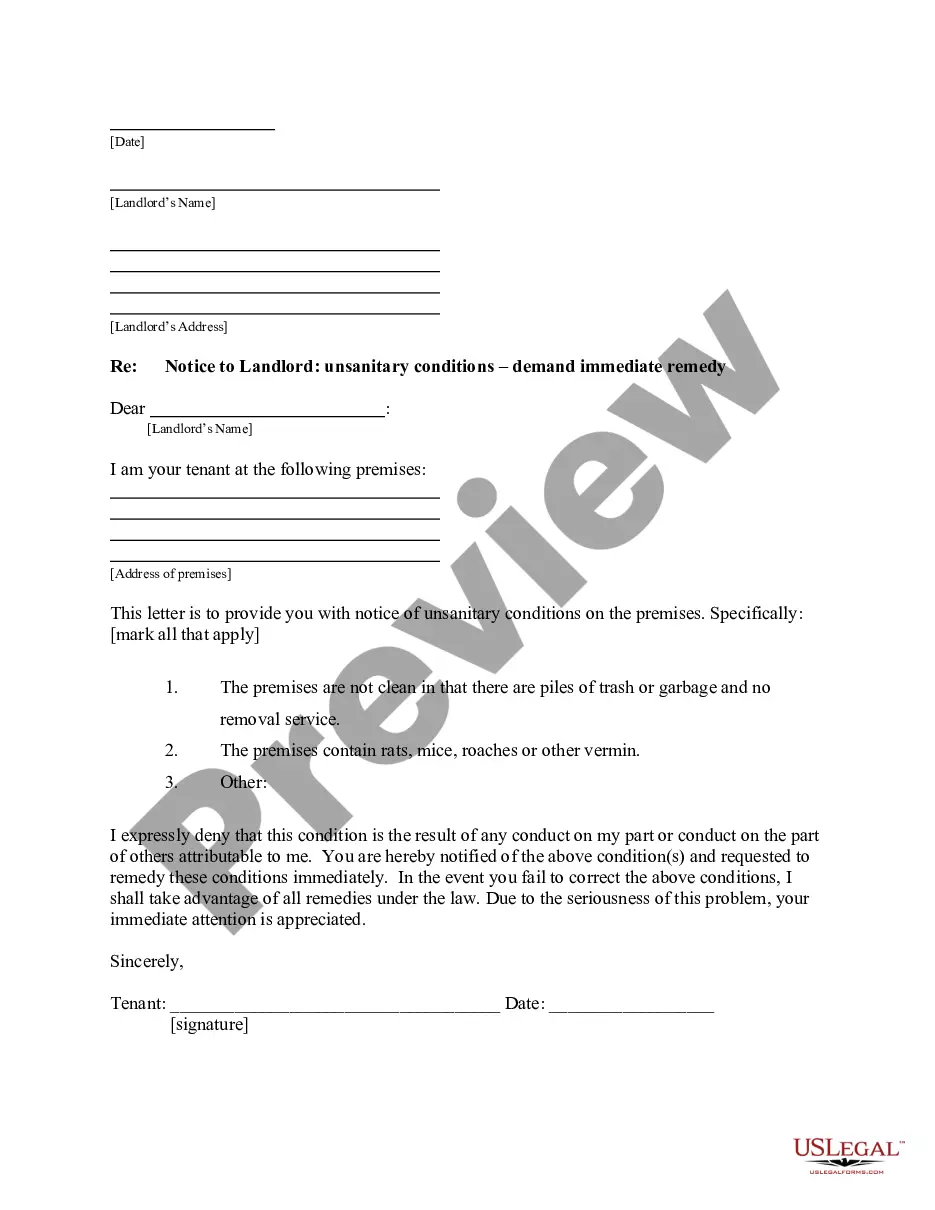
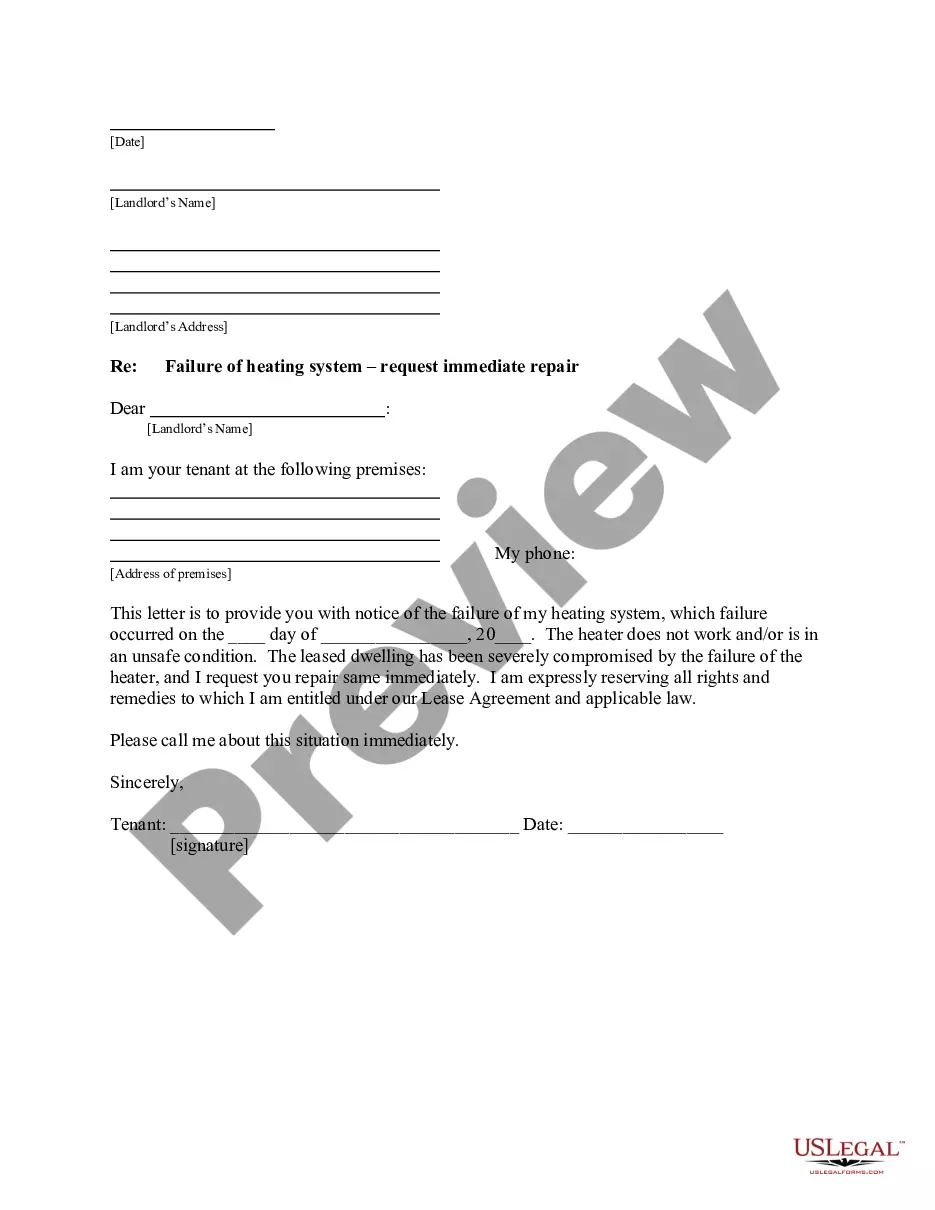
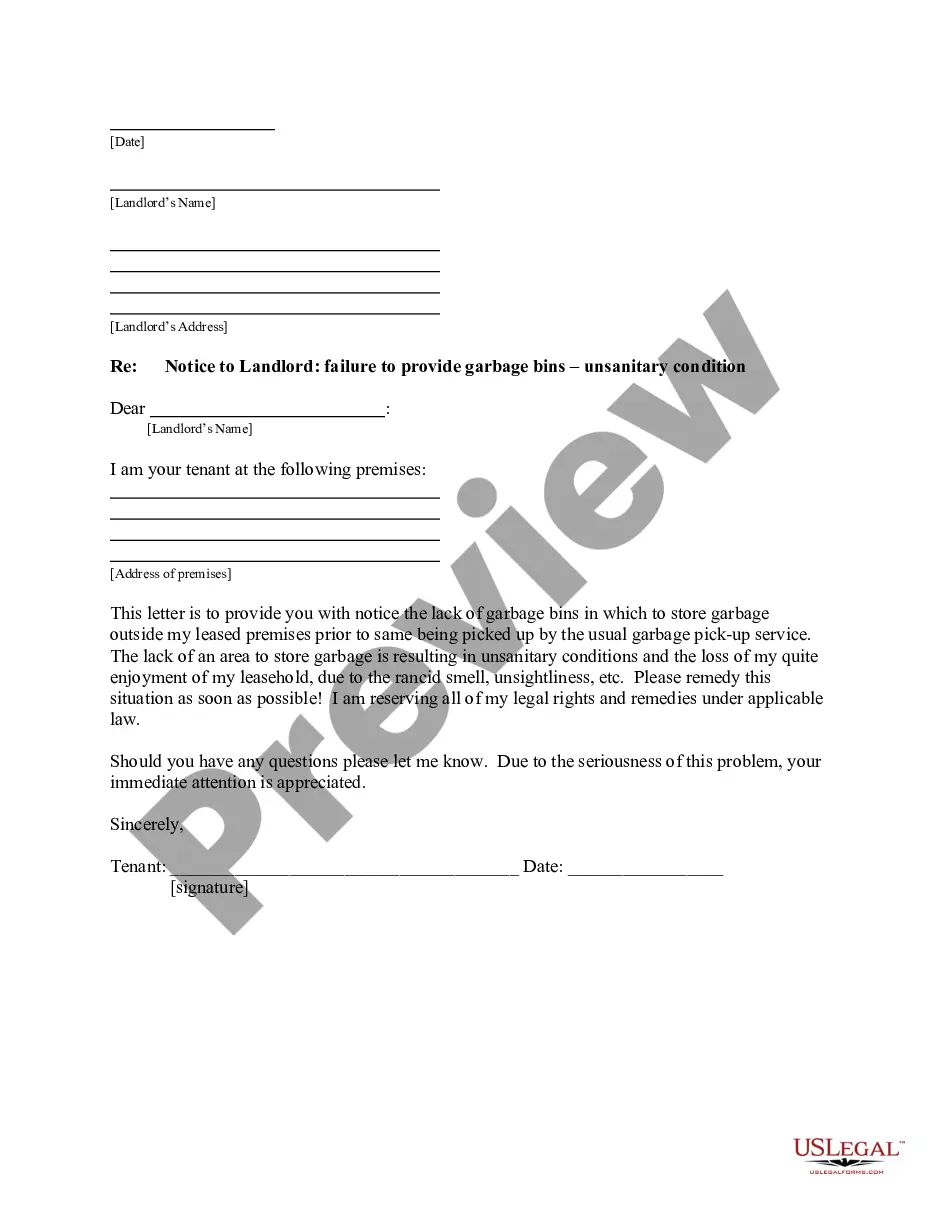
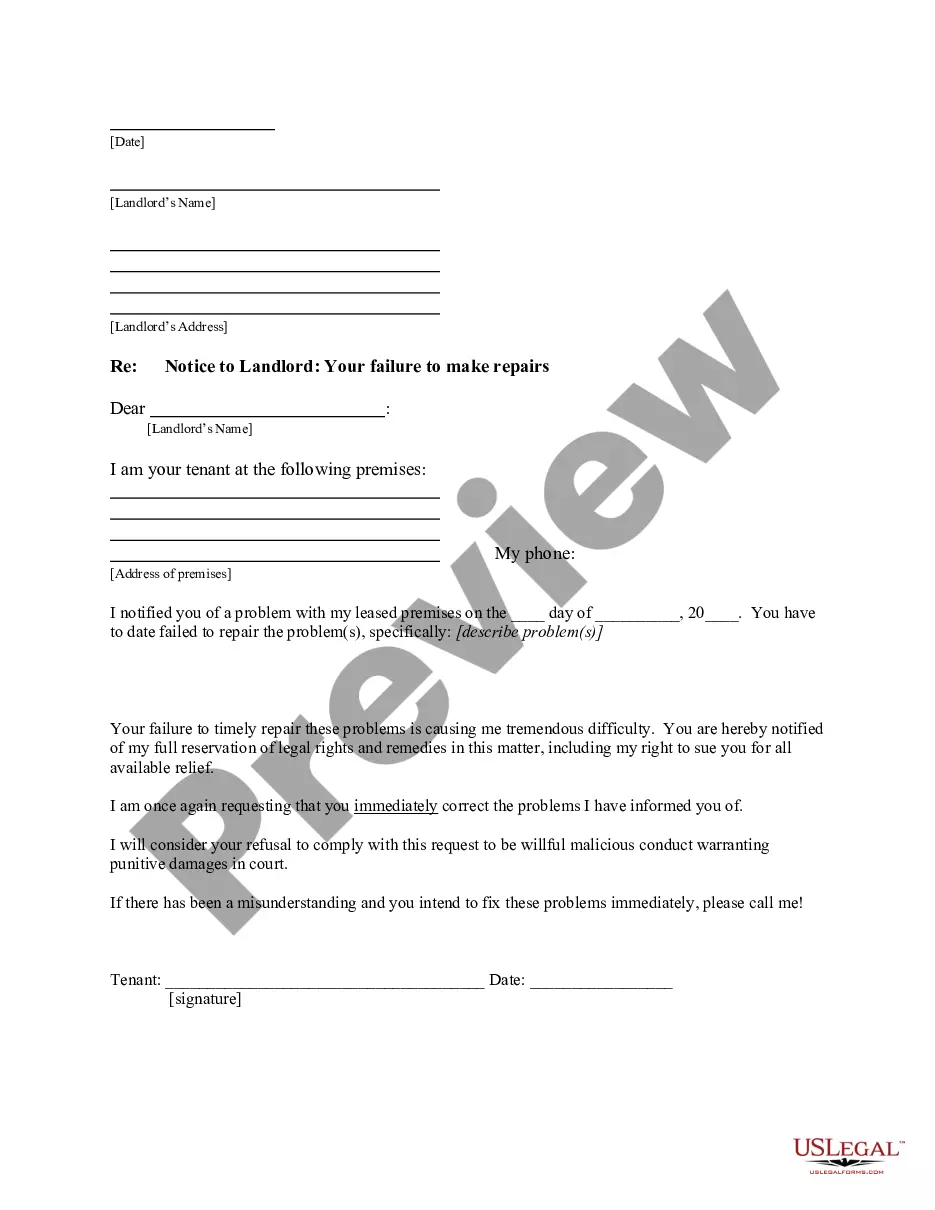
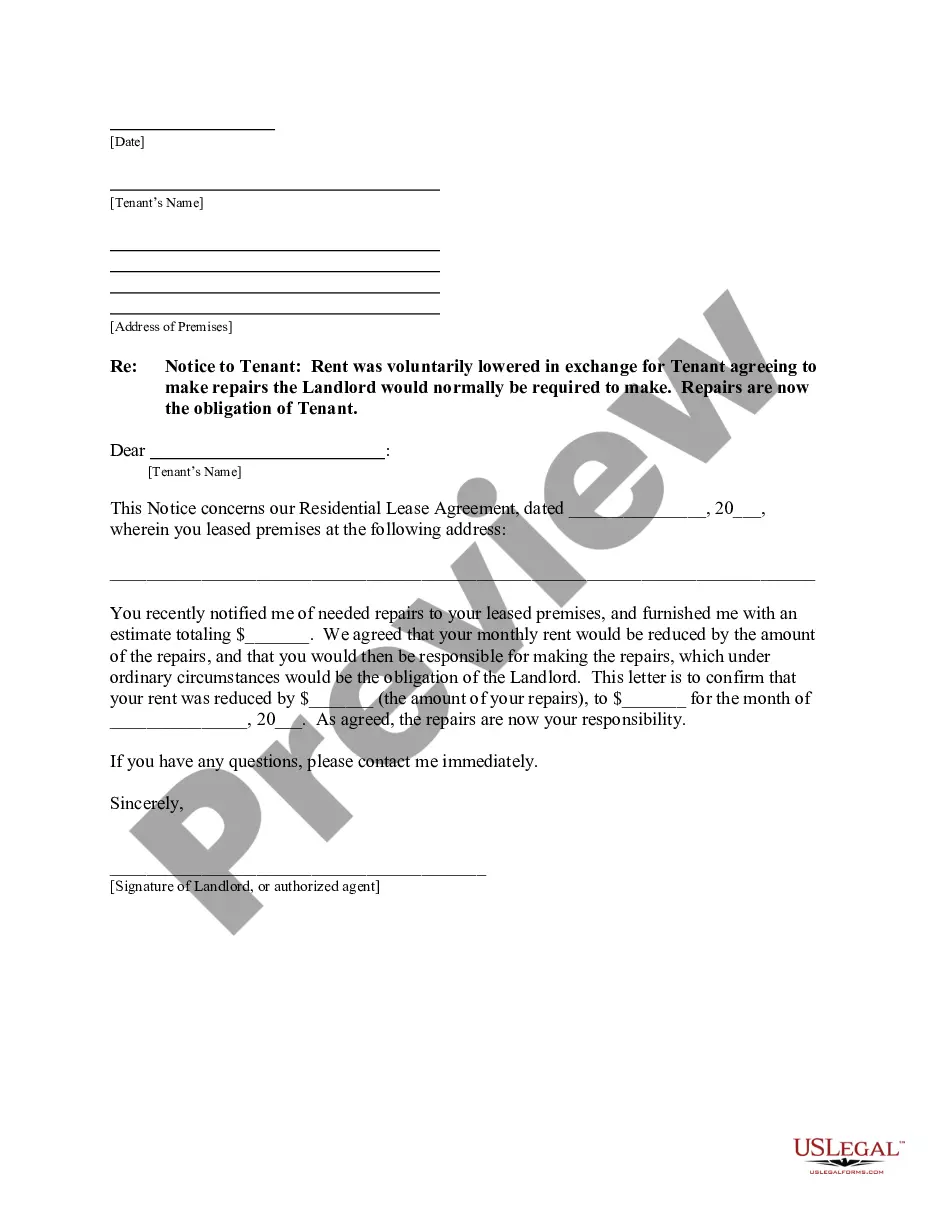
Wisconsin Letter from Tenant to Landlord containing Notice of wrongful deductions from security deposit and demand for return
Overview of this form
This letter from tenant to landlord contains a notice of wrongful deductions from the security deposit and a demand for return. This form serves as a formal way for tenants to address issues regarding improper deductions taken from their security deposit, ensuring compliance with state statutory law. It is different from general complaint letters by specifically addressing security deposit concerns, making it a vital tool for tenants seeking to reclaim their funds.
Main sections of this form
- Tenant's name and contact information
- Landlord's name and address
- Details of the security deposit deductions
- Demand for the return of the remaining security deposit
- Signature of the tenant confirming the notice
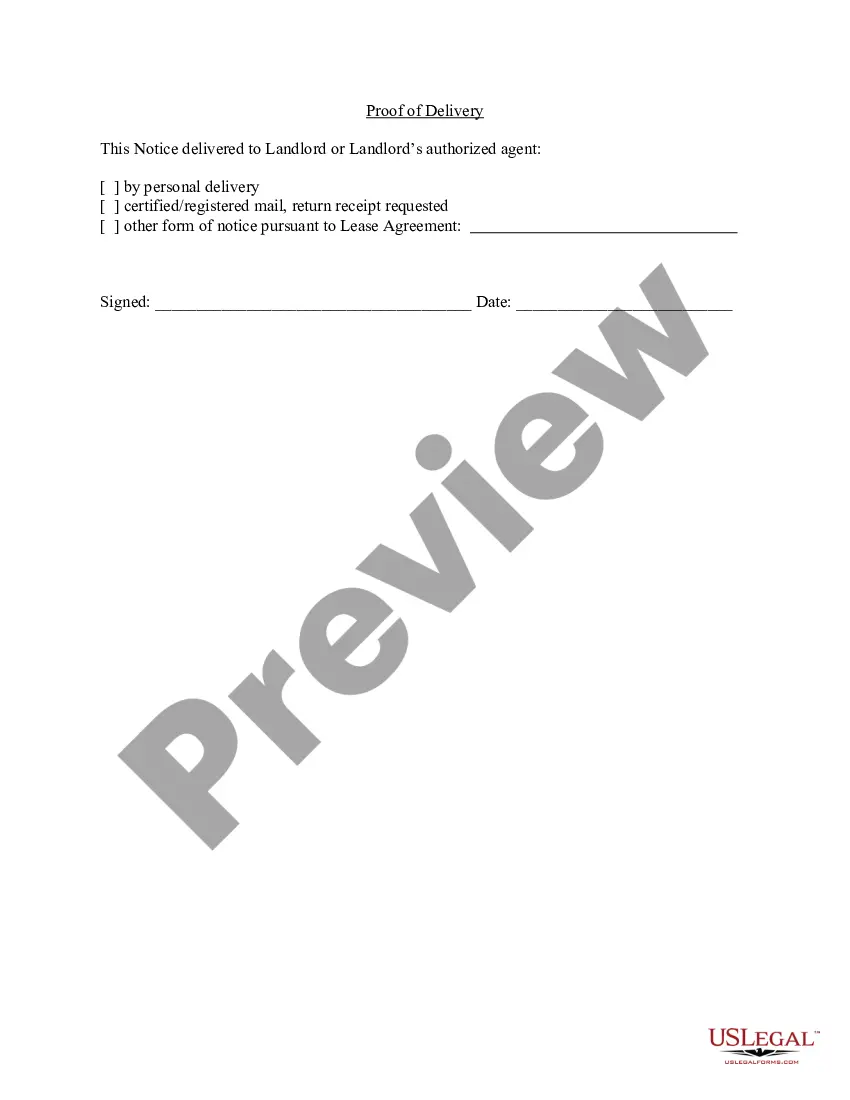
- Method of delivery confirmation
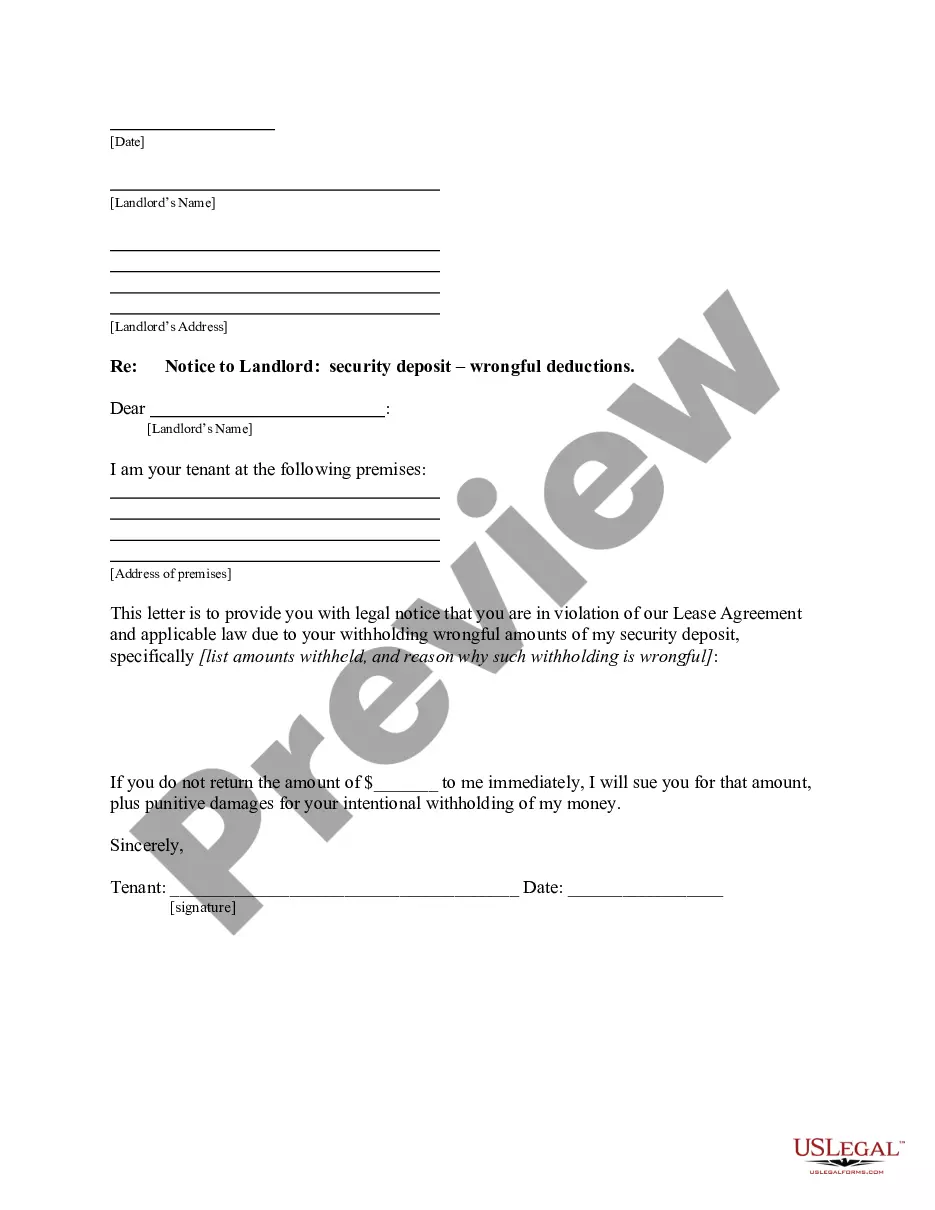

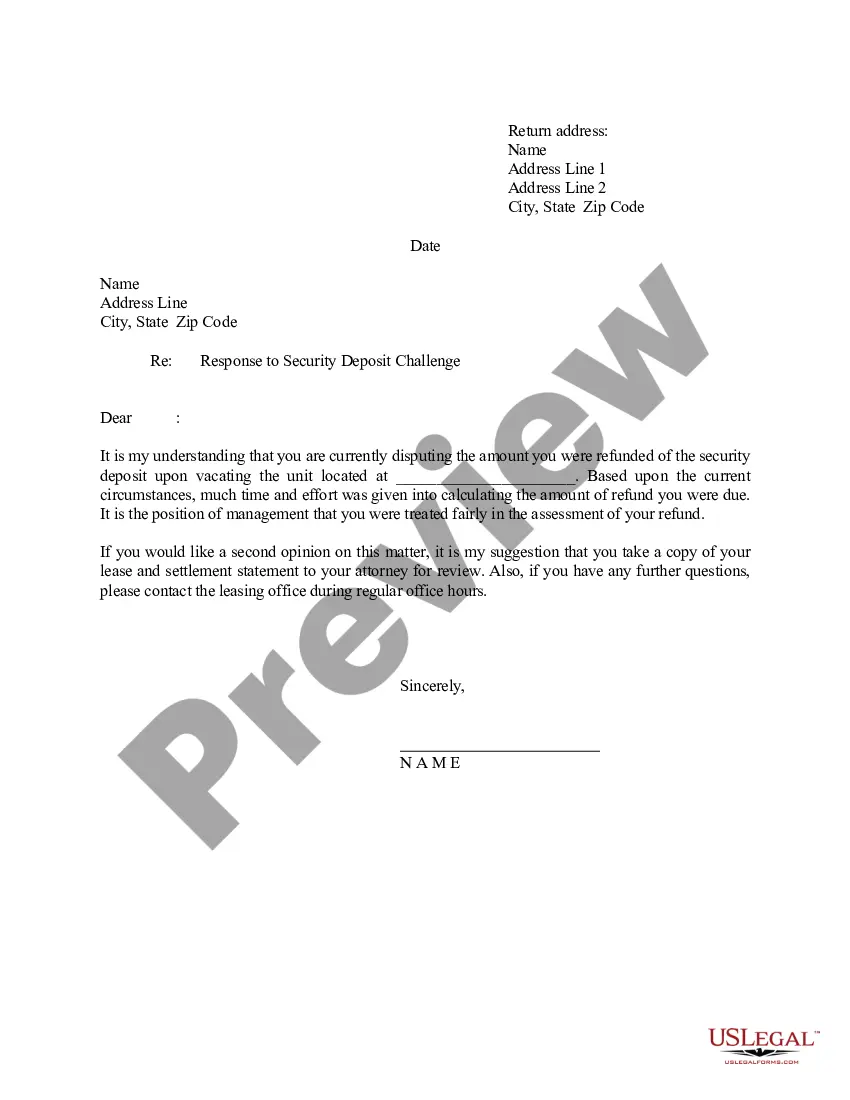
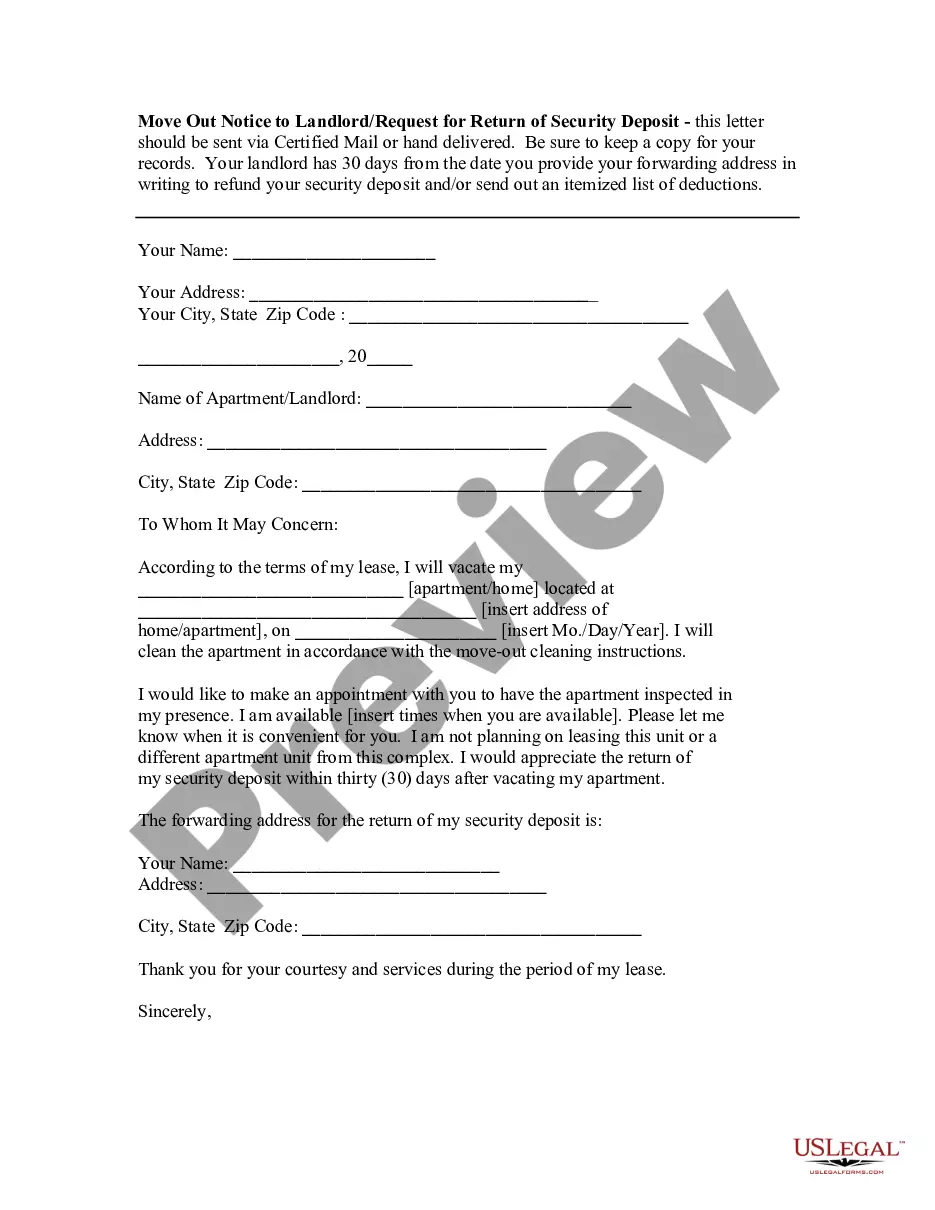

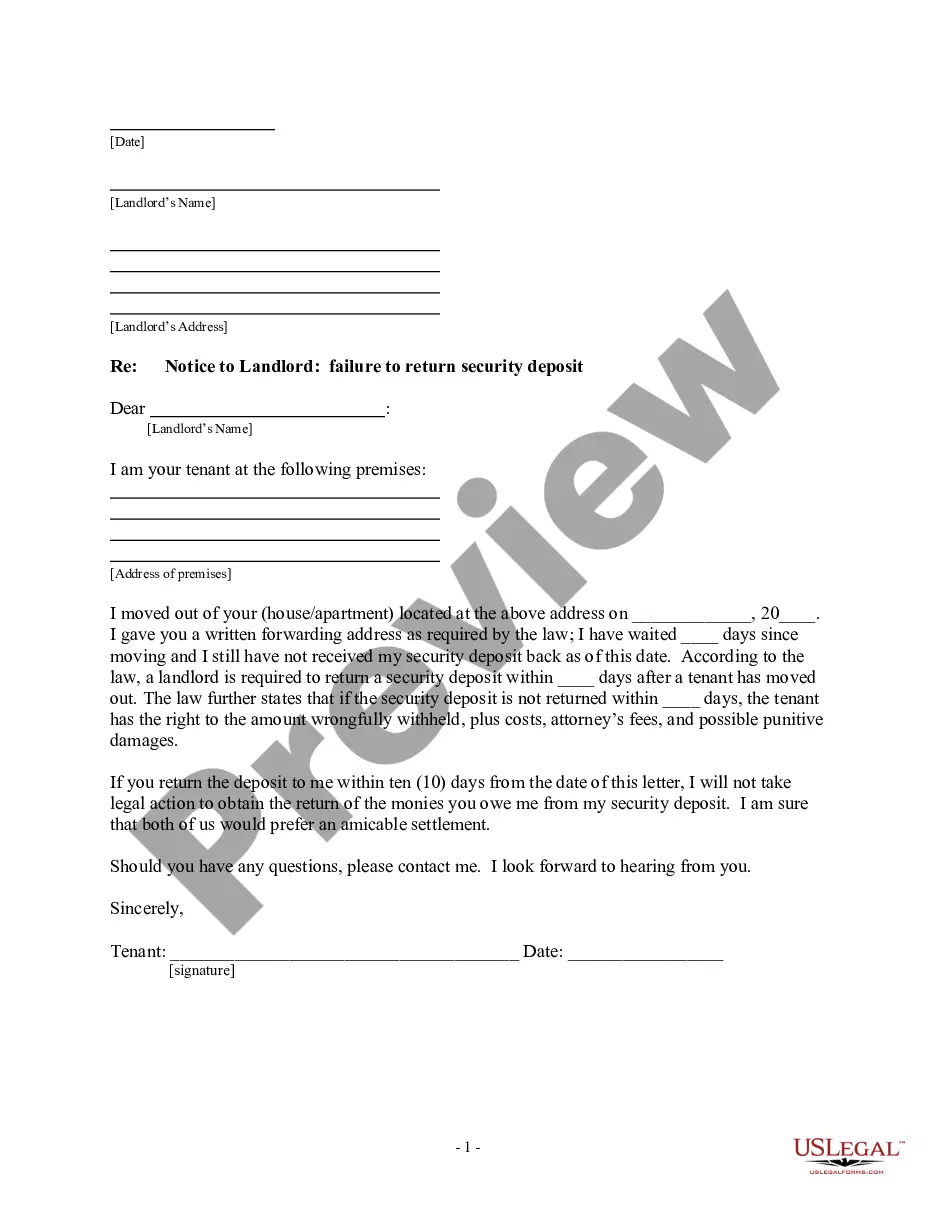
When this form is needed
This form should be used when a tenant believes that their landlord has wrongfully withheld part or all of their security deposit after they have vacated the rental property. It is commonly used when a tenant has received an itemized list of deductions that they believe are unjustified or excessive, and they wish to formally notify the landlord and demand the return of their funds.
Who can use this document
- Tenants who have recently moved out of a rental property
- Individuals who have received a security deposit settlement statement
- Anyone who disputes deductions made by their landlord from the security deposit
How to complete this form
- Identify and enter your name and contact information at the top of the letter.
- Clearly state the landlord's name and address.
- Detail the deductions you are contesting from your security deposit.
- Prepare a demand for the specific amount you are requesting to be returned.
- Sign the letter and include the date of signing.
- Choose your method of delivery and provide proof of delivery.
Notarization requirements for this form
Notarization is generally not required for this form. However, certain states or situations might demand it. You can complete notarization online through US Legal Forms, powered by Notarize, using a verified video call available anytime.
Get your form ready online
Our built-in tools help you complete, sign, share, and store your documents in one place.
Make edits, fill in missing information, and update formatting in US Legal Forms—just like you would in MS Word.
Download a copy, print it, send it by email, or mail it via USPS—whatever works best for your next step.
Sign and collect signatures with our SignNow integration. Send to multiple recipients, set reminders, and more. Go Premium to unlock E-Sign.
If this form requires notarization, complete it online through a secure video call—no need to meet a notary in person or wait for an appointment.
We protect your documents and personal data by following strict security and privacy standards.

Make edits, fill in missing information, and update formatting in US Legal Forms—just like you would in MS Word.

Download a copy, print it, send it by email, or mail it via USPS—whatever works best for your next step.

Sign and collect signatures with our SignNow integration. Send to multiple recipients, set reminders, and more. Go Premium to unlock E-Sign.

If this form requires notarization, complete it online through a secure video call—no need to meet a notary in person or wait for an appointment.

We protect your documents and personal data by following strict security and privacy standards.
Typical mistakes to avoid
- Failing to include the correct contact information for both parties.
- Neglecting to specify the exact amount being disputed.
- Not providing proof of delivery or failing to keep a copy of the notice.
Why complete this form online
- Easy to edit and customize to fit your specific situation.
- Quick access to legal resources drafted by licensed attorneys.
- Convenience of downloading and printing the form immediately.
Summary of main points
- This letter serves to formally address wrongful deductions and request their return.
- Timeliness is essential, as there may be legal deadlines involved.
- Clear communication can help resolve disputes before escalating to legal actions.
Looking for another form?

Form popularity
FAQ
The date of the letter and the landlord's full name and address. The address of the residence you rented and the date you moved in. A statement that you've been paying your rent timely and that you are current with your payments.
Tenant's name and new address, or address he gave for return of the security deposit. Commencement date of the lease and date it ended. Amount of the security deposit when the tenant moved in. Amount of interest accrued.
Type your letter. Concisely review the main facts. Be polite. Write with your goal in mind. Ask for exactly what you want. Set a deadline. End the letter by stating you will promptly pursue legal remedies if the other party does not meet your demand. Make and keep copies.
State who you are and why you need a rental. Mention where you found their ad and how you can afford the rental. Offer to provide references (work/volunteer/housing office) Include some highlighting feature from the original ad so that when you receive a response you can remember which rental you are talking about (ex.
Excessive holes in walls from picture hangers. Broken tiles or fixtures in bathrooms. Stopped toilet due to misuse. Broken walls. Removing paint put up by tenant. Tears, holes or burn marks in carpets or curtains.
Damage, waste, or neglect of the unit. Unpaid rent. Unpaid utilities for which the tenant is responsible.
Routine painting: Much like routine carpet cleaning, if a tenant did something that caused the landlord to be forced to paint (smoking is a common example), then it is likely legal that the landlord charge the tenant to paint.
Mail your landlord a letter requesting that she return your deposit. Be polite and simply inform the landlord that you have vacated the property and would appreciate the return of your deposit once she has had a chance to complete any checks and paperwork.
Unpaid rent (some exceptions in Wis. Stat. 704.29) Unpaid utilities owed under the rental agreement, or for which the landlord becomes responsible. Damages caused by the tenant or their guests that go beyond "normal wear and tear" Unpaid monthly municipal permit fees, Wis. Stat.