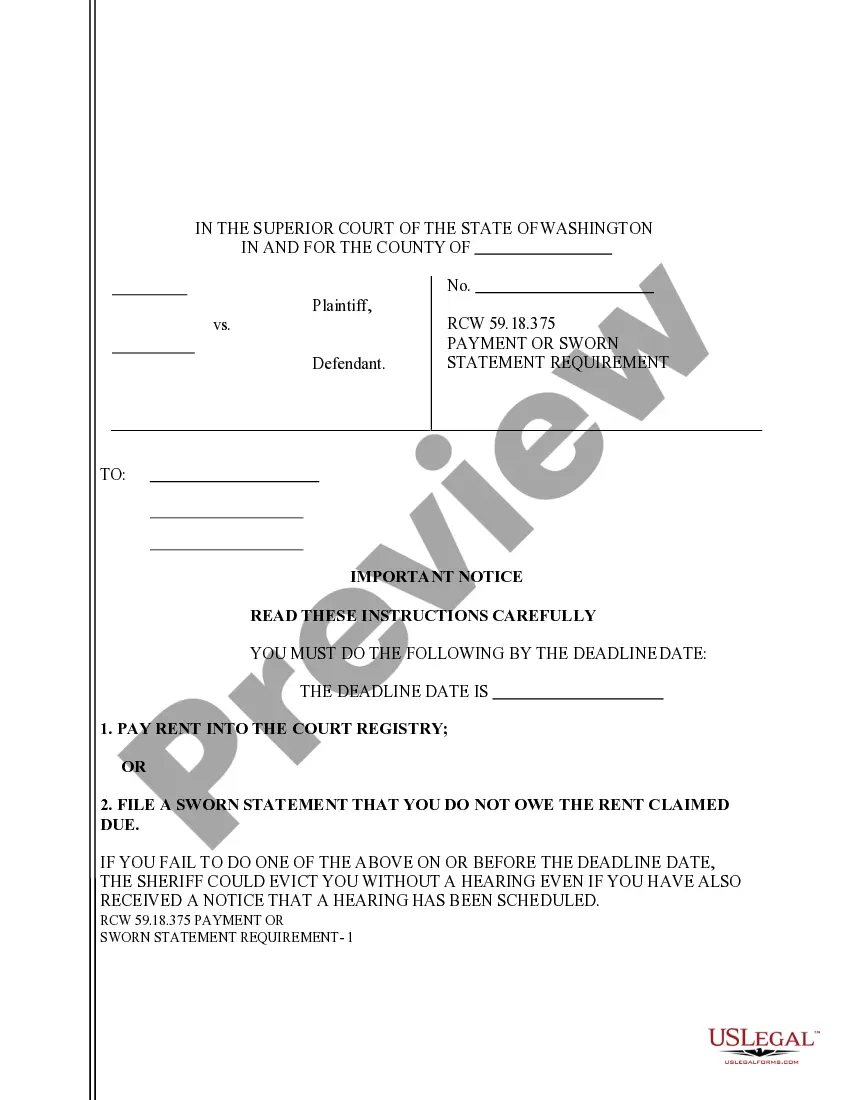
Washington Warranty Deed for Limited Partnership or LLC is the Grantor, or Grantee
What this document covers
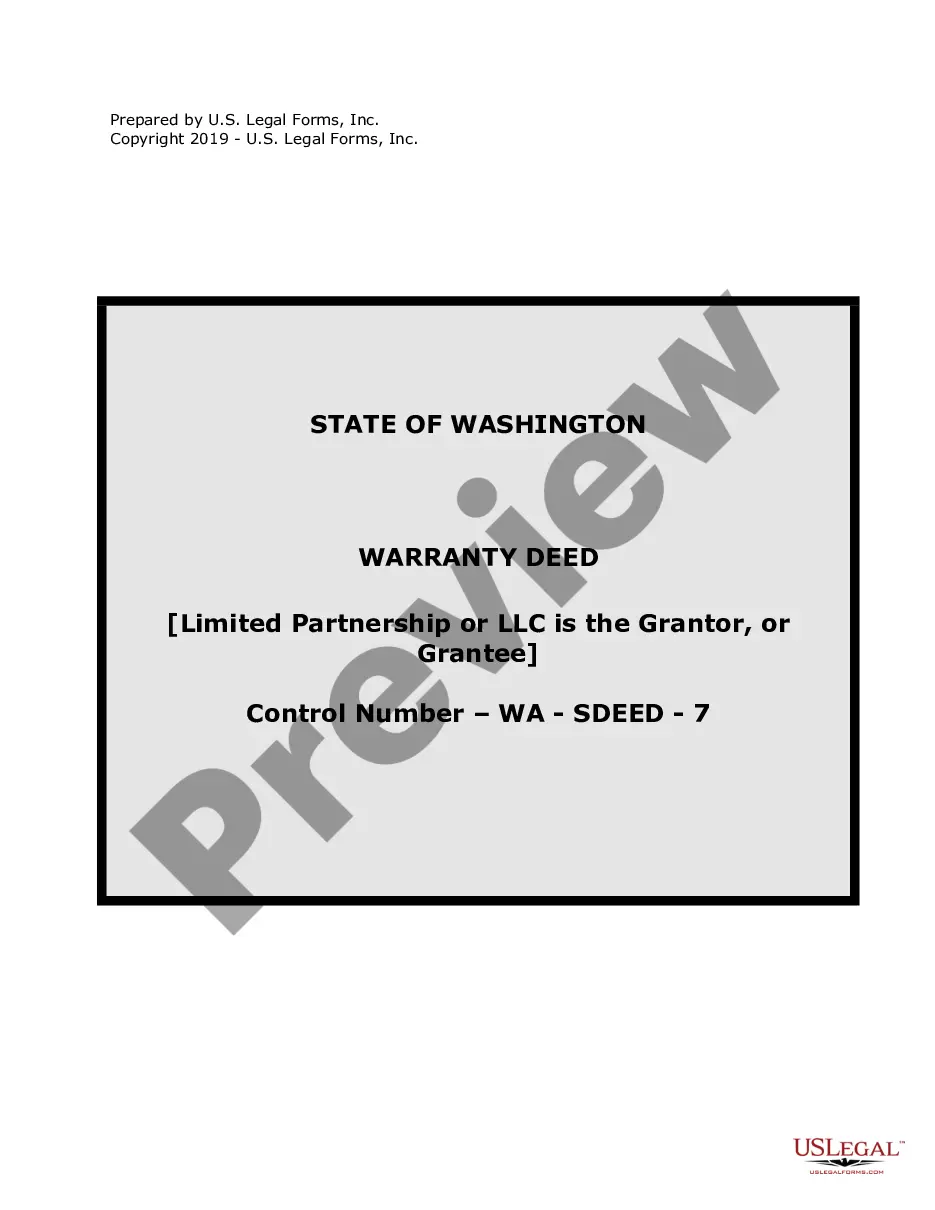
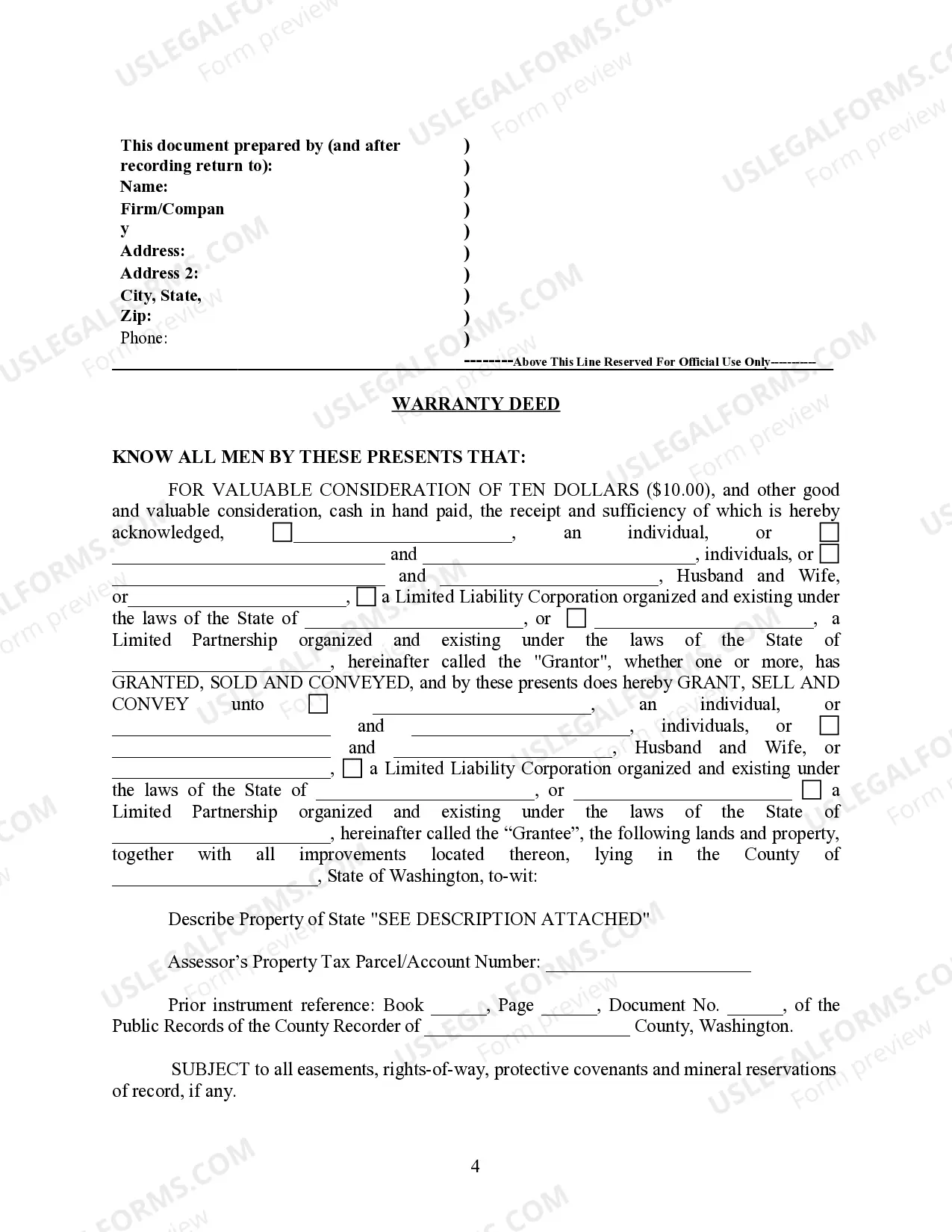
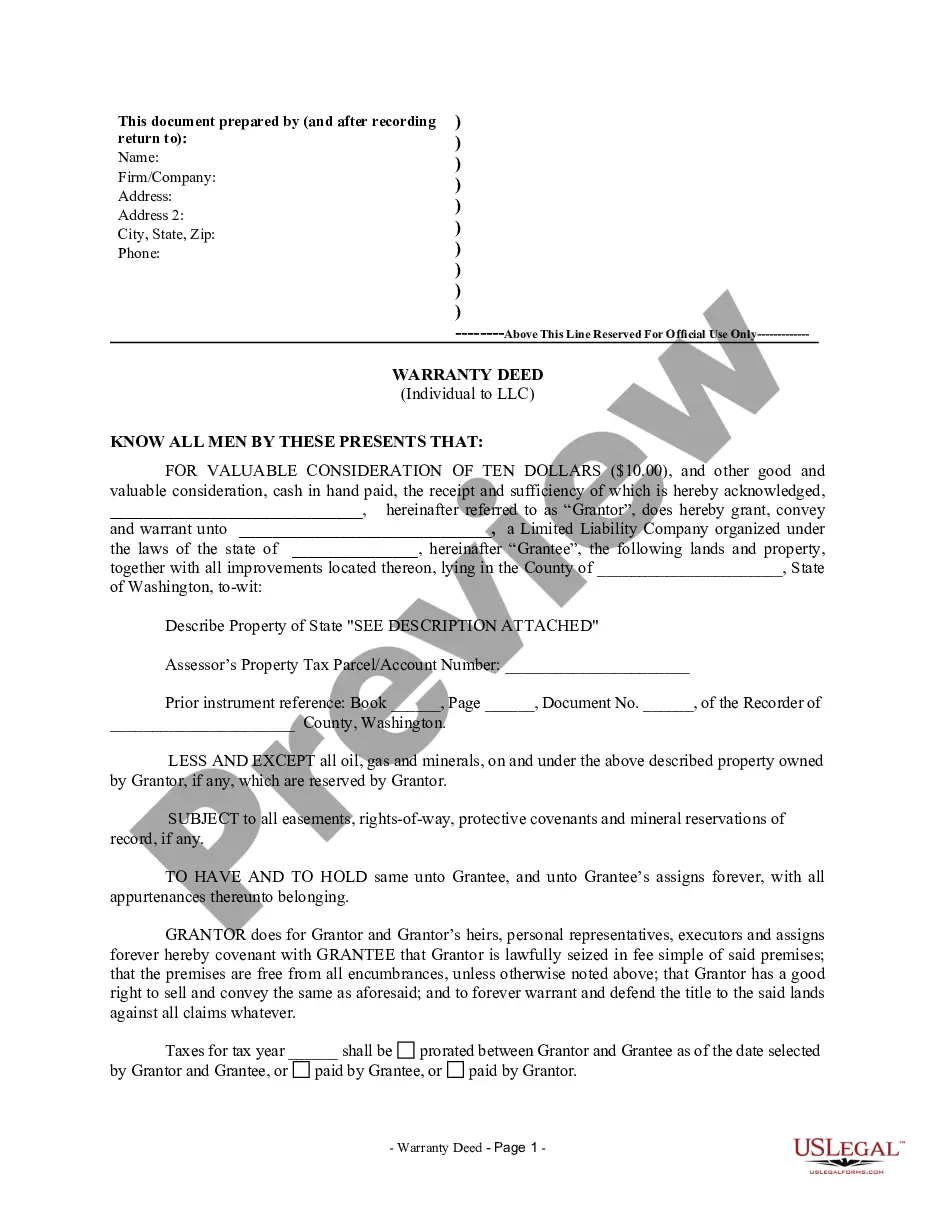
The Warranty Deed for Limited Partnership or LLC is a legal document that facilitates the transfer of real property ownership from a limited partnership or a limited liability company (LLC) to an individual or another entity. This form provides a guarantee that the grantor has clear title to the property and has the right to sell it, differing from other deeds, such as quitclaim deeds, which may not provide such warranties. Users can conveniently fill this form using a computer, ensuring necessary legal requirements are met in the state of Washington.
Main sections of this form
- Grantor and Grantee Information: Details of the limited partnership or LLC as the transferring party and the receiving party.
- Property Description: Specific identification of the property being transferred, including property tax parcel/account numbers.
- Warranties: Clauses that ensure the grantor is the rightful owner of the property and free of encumbrances.
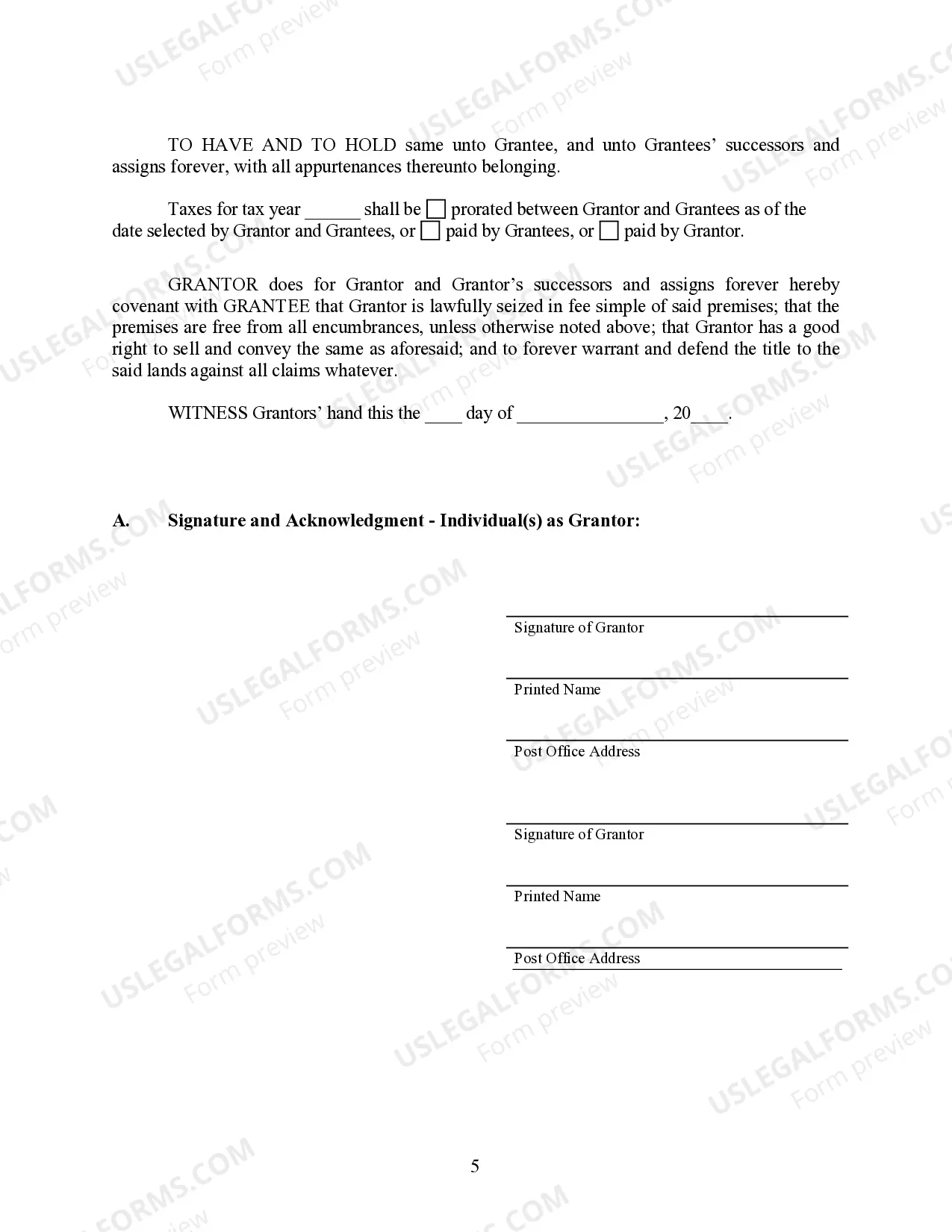
- Tax Proration: Instructions on how property taxes will be handled between parties for the tax year.
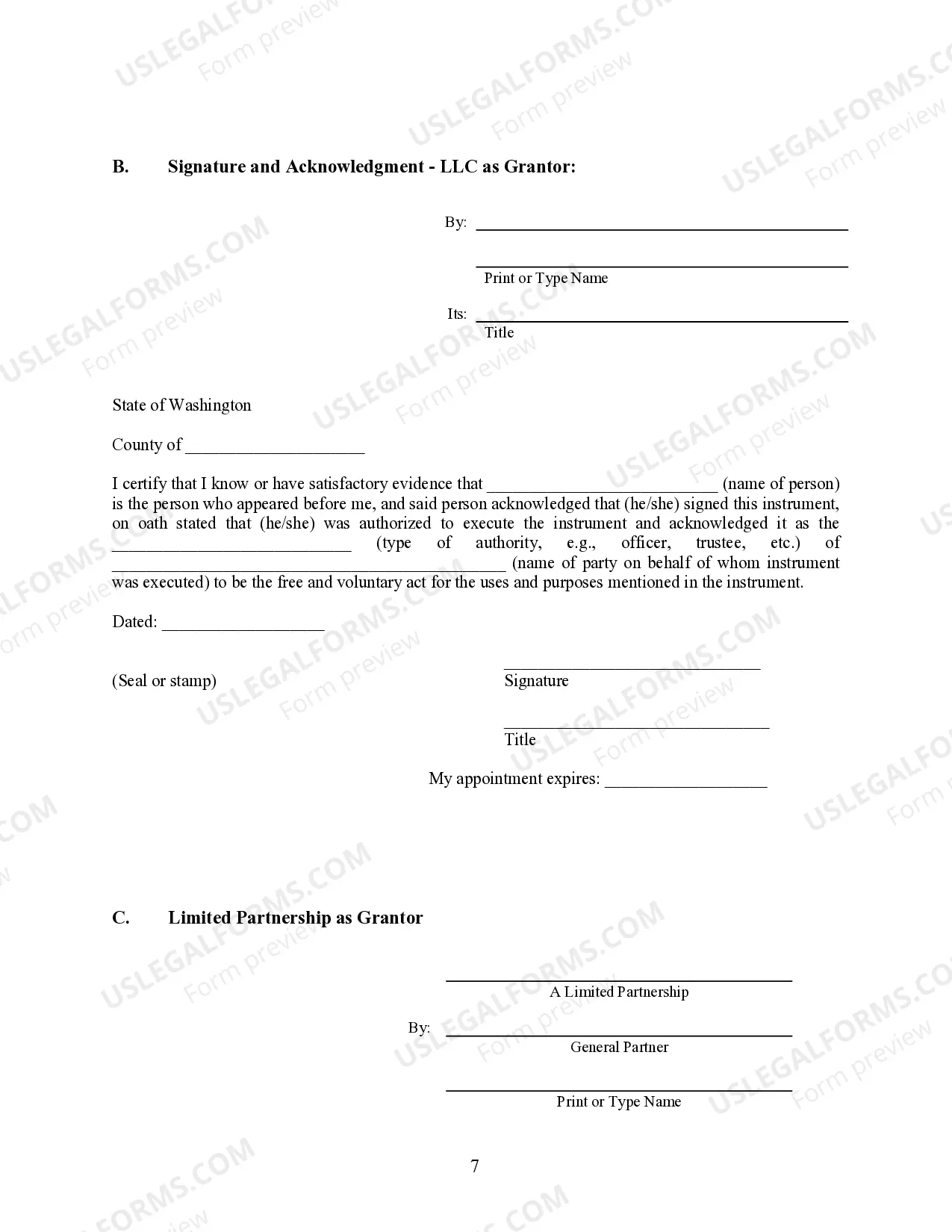
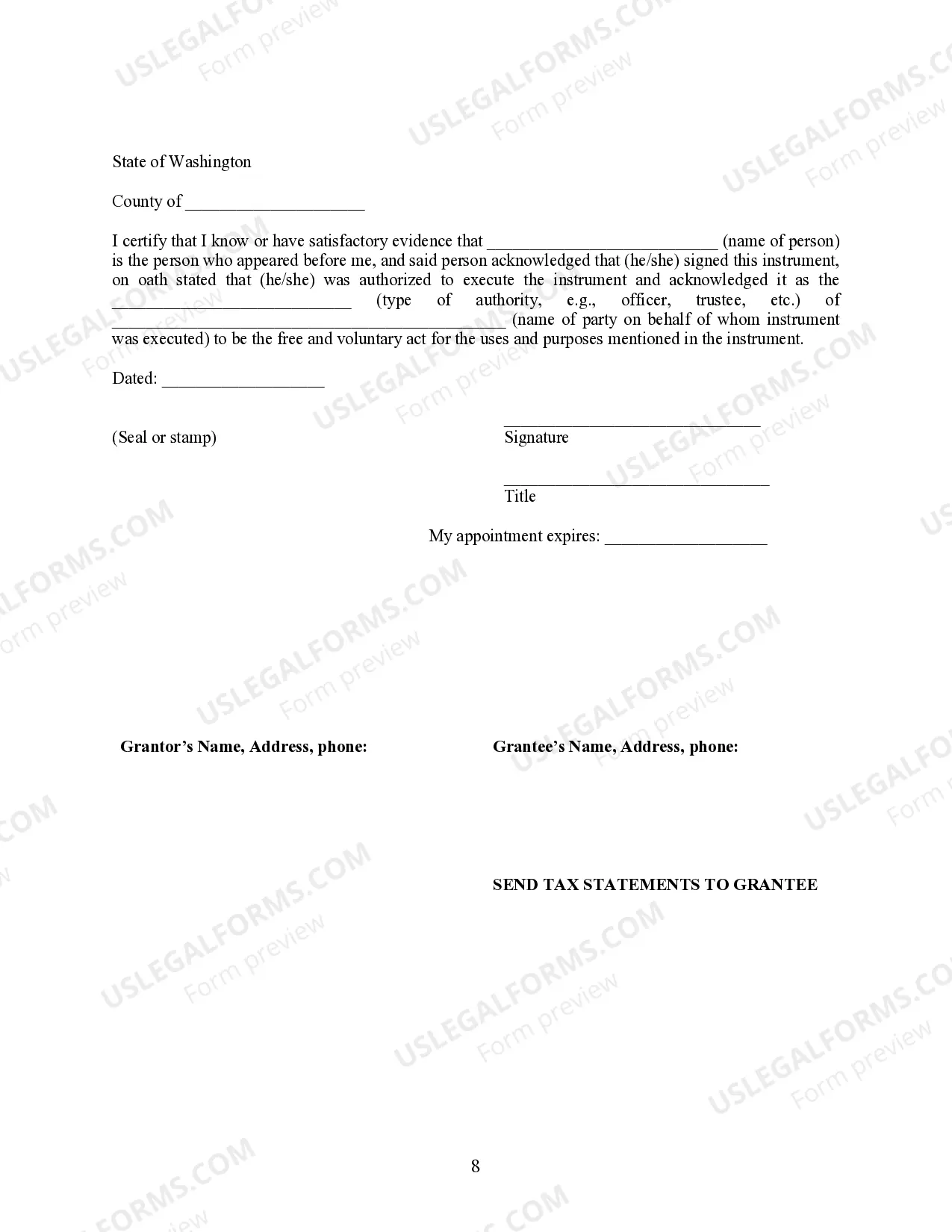
- Signatures and Dates: Areas for the grantor to sign, date, and provide their seal of authority.



Common use cases
This Warranty Deed should be used when a limited partnership or LLC is transferring property ownership to another entity or individual. Common scenarios include selling business property, transferring assets between partners, or transferring property as part of an estate plan. This form is essential whenever a formal deed is required to ensure the legal validity of the property transfer.
Who this form is for
Individuals or businesses that may need this form include:
- Owners of a limited partnership or LLC looking to sell or transfer real estate.
- Real estate professionals involved in property transactions.
- Partners within a limited partnership or members of an LLC needing to document property changes.
- Estate planners and attorneys managing asset transfers for clients.
How to complete this form
- Identify the parties involved by entering the names and details of the grantor (limited partnership or LLC) and the grantee.
- Provide a full description of the property being transferred, including the tax parcel/account number and prior instrument references.
- Fill in the tax proration options to clarify responsibility for property taxes between the grantor and grantee.
- Have the grantor sign and date the document, ensuring they provide any necessary seals where required.
- Review the completed form for accuracy before finalizing the transfer process.
Is notarization required?
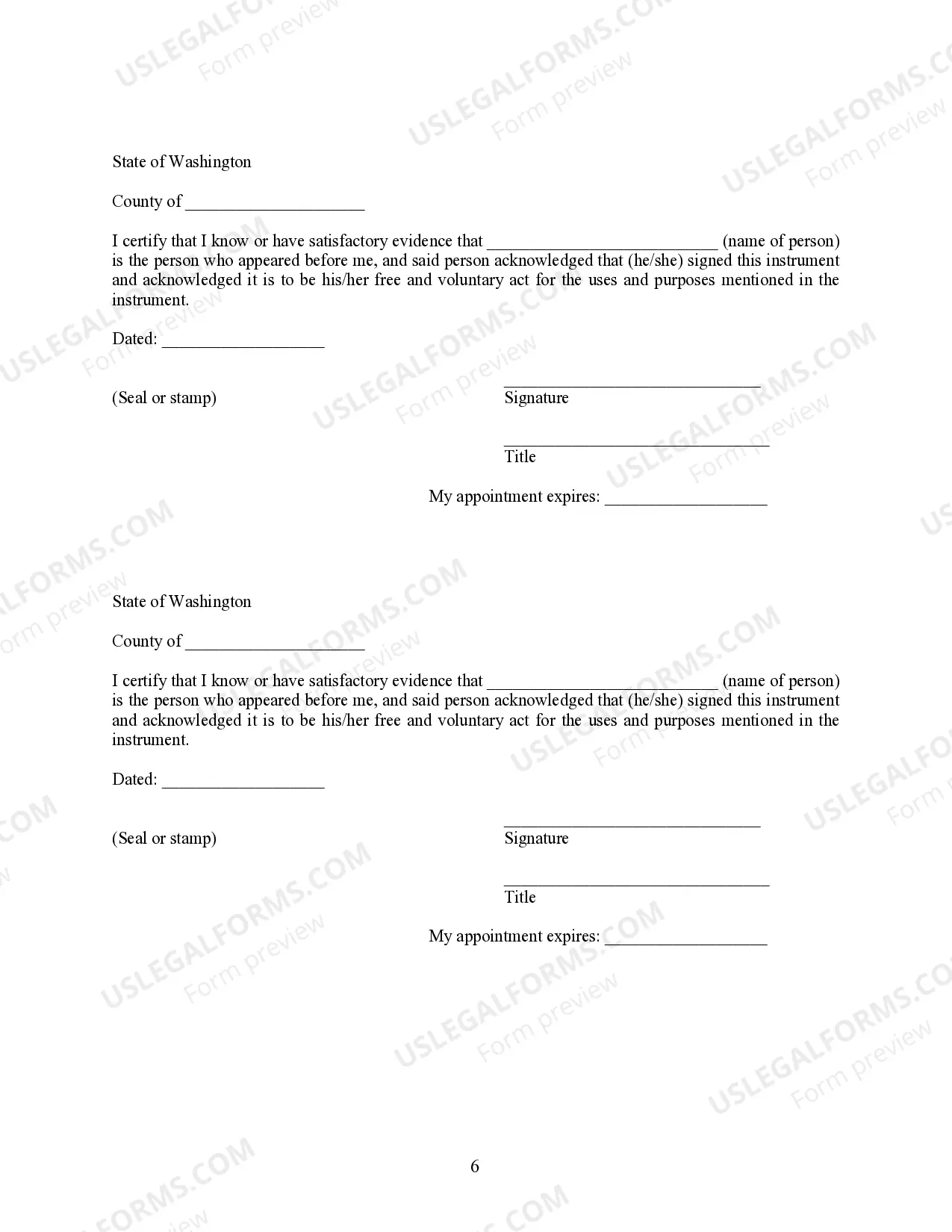
This document requires notarization to meet legal standards. US Legal Forms provides secure online notarization powered by Notarize, allowing you to complete the process through a verified video call, available 24/7.
Get your form ready online
Our built-in tools help you complete, sign, share, and store your documents in one place.
Make edits, fill in missing information, and update formatting in US Legal Forms—just like you would in MS Word.
Download a copy, print it, send it by email, or mail it via USPS—whatever works best for your next step.
Sign and collect signatures with our SignNow integration. Send to multiple recipients, set reminders, and more. Go Premium to unlock E-Sign.
If this form requires notarization, complete it online through a secure video call—no need to meet a notary in person or wait for an appointment.
We protect your documents and personal data by following strict security and privacy standards.

Make edits, fill in missing information, and update formatting in US Legal Forms—just like you would in MS Word.

Download a copy, print it, send it by email, or mail it via USPS—whatever works best for your next step.

Sign and collect signatures with our SignNow integration. Send to multiple recipients, set reminders, and more. Go Premium to unlock E-Sign.

If this form requires notarization, complete it online through a secure video call—no need to meet a notary in person or wait for an appointment.

We protect your documents and personal data by following strict security and privacy standards.
Avoid these common issues
- Failing to accurately describe the property being transferred.
- Not ensuring the grantor's information is correct and complete.
- Omitting the signature of the grantor or the necessary seals.
- Not understanding or incorrectly requesting tax proration options.
Benefits of using this form online
- Convenience of downloading and filling the form at your own pace from anywhere.
- Editability allows for easy corrections before final submission.
- Reliability through use of professionally drafted templates that meet legal standards.
Looking for another form?

Form popularity
FAQ
The Grantor is any person conveying or encumbering, whom any Lis Pendens, Judgments, Writ of Attachment, or Claims of Separate or Community Property shall be placed on record. The Grantor is the seller (on deeds), or borrower (on mortgages). The Grantor is usually the one who signed the document.
The Washington statutory warranty deed is a form of deed that provides an unlimited warranty of title. It makes an absolute guarantee that the current owner has good title to the property. The warranty is not limited to the time that the current owner owned the property.
A warranty deed, also known as a general warranty deed, is a legal real estate document between the seller (grantor) and the buyer (grantee). The deed protects the buyer by pledging that the seller holds clear title to the property and there are no encumbrances, outstanding liens, or mortgages against it.
Typically, the lender will provide you with a copy of the deed of trust after the closing. The original warranty deeds are often mailed to the grantee after they are recorded. These are your original copies and should be kept in a safe place, such as a fireproof lockbox or a safe deposit box at a financial institution.
No, California does not require that the Grantee sign a warranty deed. However, some states and counties require that the deed be signed by the Grantee in addition to the Grantor.
In general, a grantor is someone who transfers a property right to a grantee. In a real estate transaction, the grantor is the current holder of the property right, or in other words, the seller. The deed, which transfers ownership, is the grant.
The two parties involved in a warranty deed are the seller or owner, also known as the grantor, and the buyer or the grantee. Either party can be an individual or a business, and are often strangers to each other.
It's important to note that a warranty deed does not actually prove the grantor has ownership (a title search is the best way to prove that), but it is a promise by the grantor that they are transferring ownership and if it turns out they don't actually own the property, the grantor will be responsible for compensating
The Grantor is the seller (on deeds), or borrower (on mortgages). The Grantor is usually the one who signed the document.