Vermont Notice of Default on Residential Lease
Understanding this form
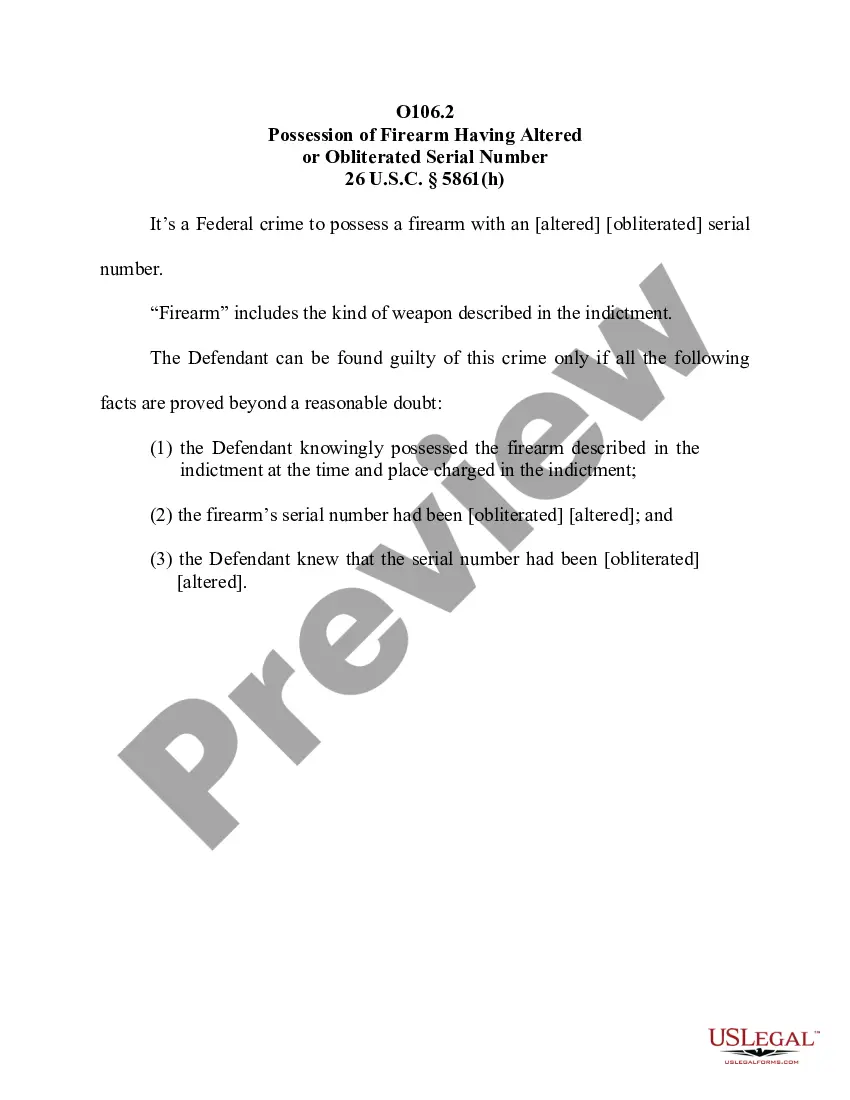
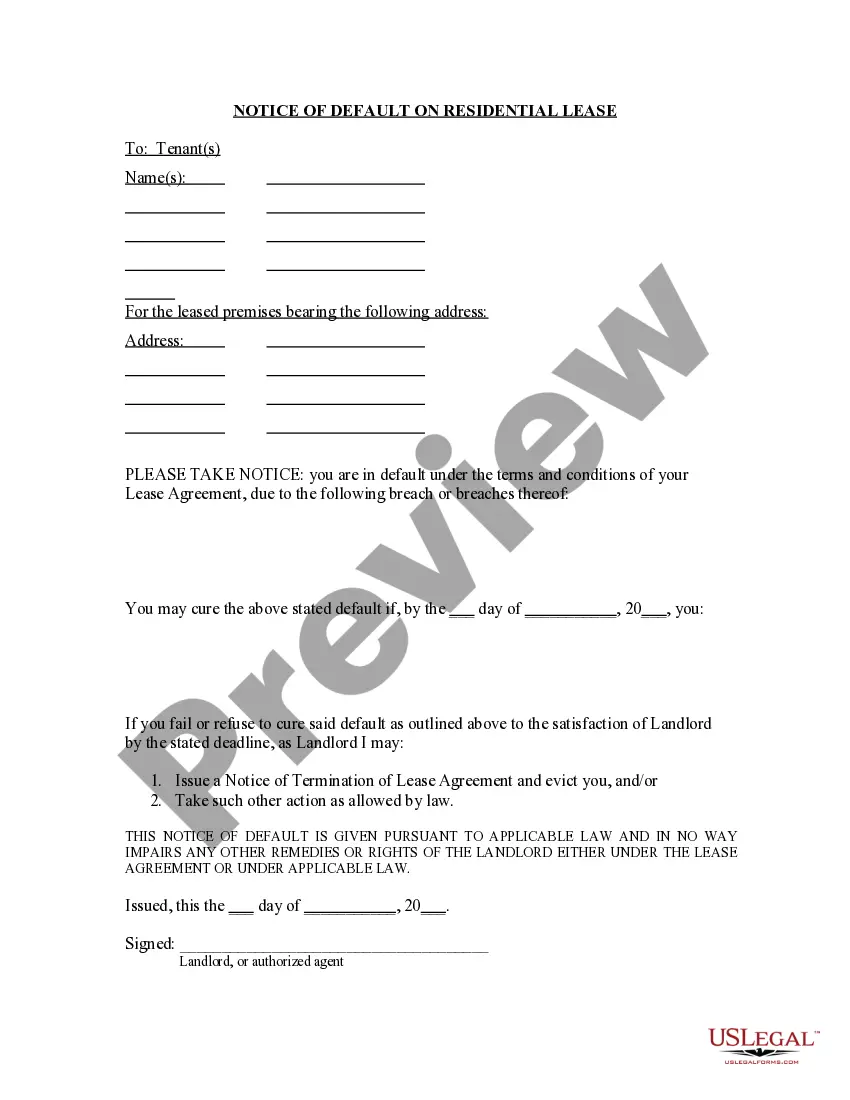
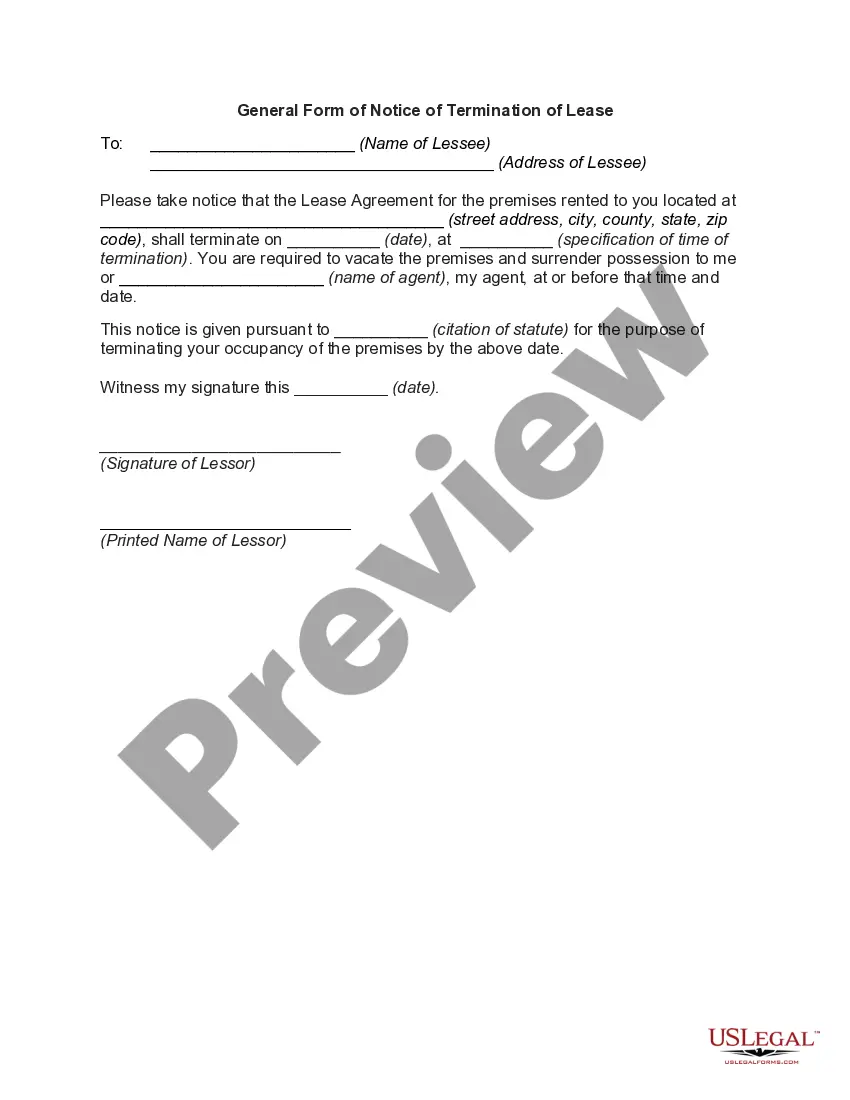
The Notice of Default on Residential Lease is a legal document used by landlords to formally inform a tenant about specific defaults in their lease agreement, primarily due to non-payment of rent. This form outlines the reasons for the default, establishes a deadline for the tenant to cure the default, and warns of potential eviction if the tenant does not comply. This document differs from general eviction notices as it specifically addresses the default situation, allowing the tenant a chance to rectify the issue before further legal actions are taken.
What’s included in this form
- Details of the default: Specific reasons for the tenant's default.
- Deadline for cure: A clear date by which the tenant must remedy the default.
- Consequences of inaction: Information on potential eviction and other legal actions.
- Landlord's information: Signatory details for the landlord or authorized agent.
- Notification requirements: Compliance with applicable landlord-tenant laws.



When to use this form
This form should be used when a tenant has failed to meet their rental obligations, such as not paying rent by the due date. It serves as an official record of the default, and is a necessary step before moving toward eviction proceedings. Landlords may use this notice as part of their efforts to resolve payment issues amicably with tenants or to establish legal grounds for eviction if the issues are not addressed within the specified timeframe.
Who should use this form
- Landlords managing residential rental properties.
- Property managers acting on behalf of landlords.
- Individuals seeking a legal means to address rental payment defaults.
How to prepare this document
- Identify the parties: Provide names and contact details for both landlord and tenant.
- Specify the property: Clearly indicate the rental property address in question.
- Detail the default: Write down specific reasons for the default occurring.
- Set a cure date: Include the deadline by which the tenant must correct the default.
- Sign the document: The landlord or authorized agent must sign and date the notice.
Does this document require notarization?
In most cases, this form does not require notarization. However, some jurisdictions or signing circumstances might. US Legal Forms offers online notarization powered by Notarize, accessible 24/7 for a quick, remote process.
Get your form ready online
Our built-in tools help you complete, sign, share, and store your documents in one place.
Make edits, fill in missing information, and update formatting in US Legal Forms—just like you would in MS Word.
Download a copy, print it, send it by email, or mail it via USPS—whatever works best for your next step.
Sign and collect signatures with our SignNow integration. Send to multiple recipients, set reminders, and more. Go Premium to unlock E-Sign.
If this form requires notarization, complete it online through a secure video call—no need to meet a notary in person or wait for an appointment.
We protect your documents and personal data by following strict security and privacy standards.

Make edits, fill in missing information, and update formatting in US Legal Forms—just like you would in MS Word.

Download a copy, print it, send it by email, or mail it via USPS—whatever works best for your next step.

Sign and collect signatures with our SignNow integration. Send to multiple recipients, set reminders, and more. Go Premium to unlock E-Sign.

If this form requires notarization, complete it online through a secure video call—no need to meet a notary in person or wait for an appointment.

We protect your documents and personal data by following strict security and privacy standards.
Common mistakes
- Failing to include the specific reasons for default, which can lead to disputes.
- Not providing an exact cure date, which can make the notice less effective.
- Omitting signatures or necessary information about the landlord or tenant.
Advantages of online completion
- Convenience: Easily accessible from any device and downloadable at your convenience.
- Editability: Customize the form to fit your specific circumstances before printing.
- Reliability: Forms are drafted by licensed attorneys, ensuring legal compliance and accuracy.
Looking for another form?
Form popularity
FAQ
Landlords are required to provide heat during the months of October 31 through May 31. If the outside temperature is 55 degrees or below between AM and PM it must be at least 68 degrees in the apartment building and between PM. and 6 AM the inside temperature must be 62 degrees," Goldberg explained.
Under Vermont state law if a landlord is terminating a tenancy for none of the reasons explained above or for no given reason (called a termination for no cause in legal language), and the tenant is renting by the month, the tenant is entitled to at least 60 days written notice, or 21 days written notice if renting
Tenant default occurs when a Tenant breaches one of the tenant's covenants in its lease. Tenant default can arise in a number of different ways but will typically be for one of the following: Non-payment of rent or other sums reserved under the lease.
At-will tenancy is subject to the will of both the tenant and the landlord (hence the name). In other words, the tenant can choose to leave and stop paying rent at any time, and the landlord can choose to stop accepting rent and ask the tenant to leave at any time.
In landlord-tenant law, default refers to the failure of a tenant to timely pay rent due.In general, the landlord is required to give the tenant notice of the default before bringing eviction proceedings or applying security deposit proceeds to the payment in default.
In an eviction process for nonpayment of rent the landlord must begin by providing the tenant with a written termination notice giving the tenant at least 14 days to pay in full or to leave. The notice must specifically state how much rent is due.
Vermont state law requires that before ending a tenancy a tenant must give the landlord notice in writing at least one full rental payment period prior to the move-out date, if there is no written rental agreement to the contrary.
Yes. A tenant can be evicted at any time of year as long as the landlord has grounds to evict under the Residential Tenancies Act.
TENANTS CAN BE EVICTED THROUGH A LEGAL COURT PROCCESS AT ANY TIME OF THE YEAR. THERE IS NO PROHIBITION ON WINTER EVICTIONS. BASIC RESPONSIBILITIES OF TENANTS UNDER VERMONT LAW 2022 Pay rent on time.