Virginia Western District Bankruptcy Guide and Forms Package for Chapters 7 or 13
About this form
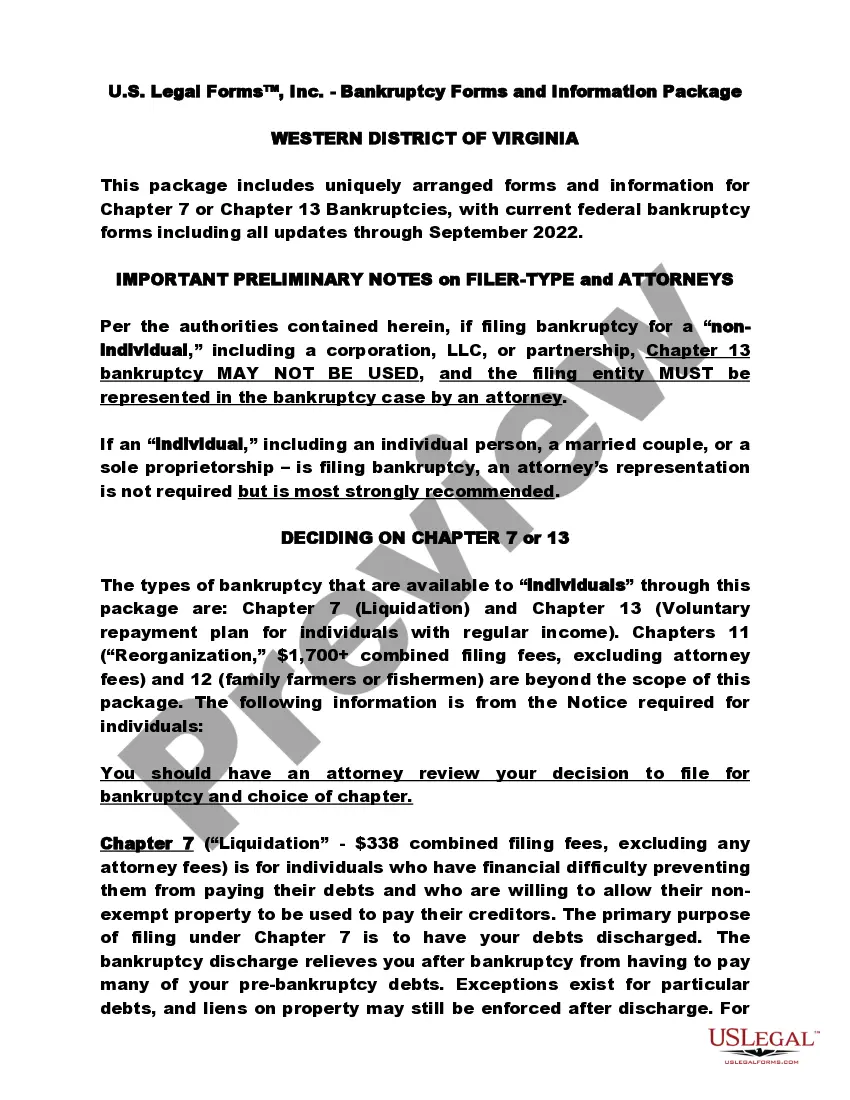
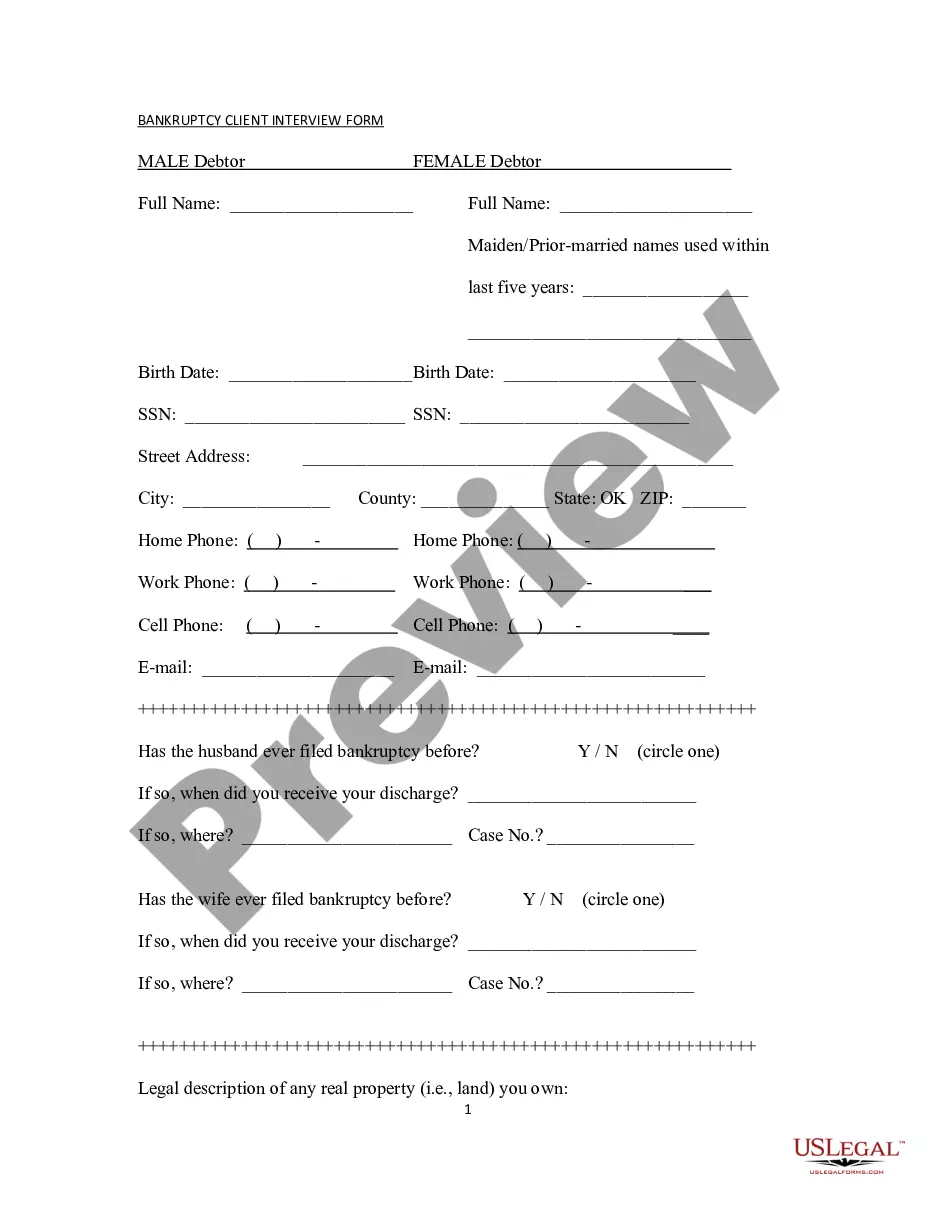
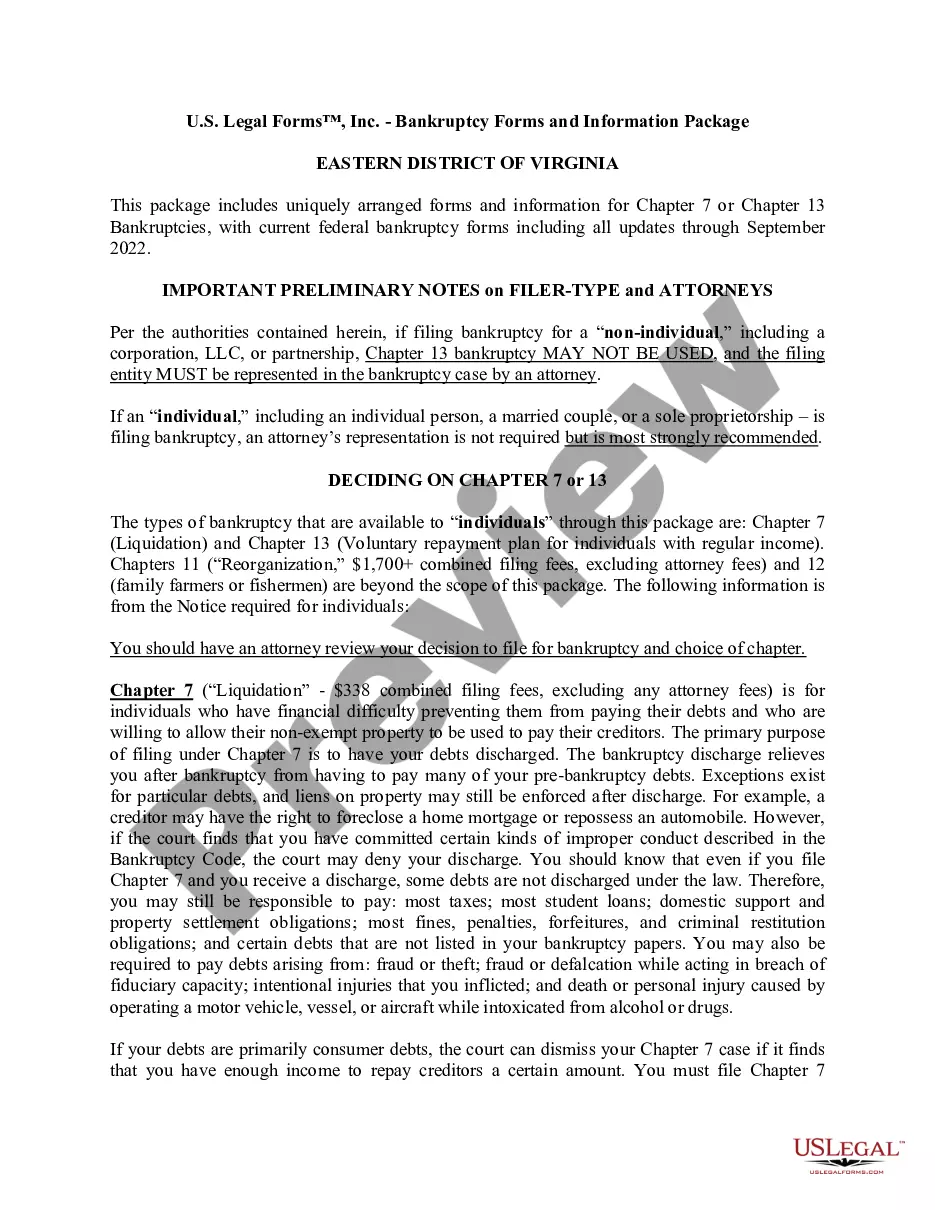
The Virginia Western District Bankruptcy Guide and Forms Package for Chapters 7 or 13 provides a comprehensive set of legal templates and instructions for individuals considering bankruptcy. This package includes everything needed to file for Chapter 7, which focuses on liquidation of debts, and Chapter 13, which allows for voluntary repayment plans. Unlike other bankruptcy forms, this package is specifically tailored to meet the requirements of the Virginia Western District, ensuring compliance with local laws and regulations.
What’s included in this form
- Detailed instructions for filing bankruptcy under Chapter 7 and Chapter 13.
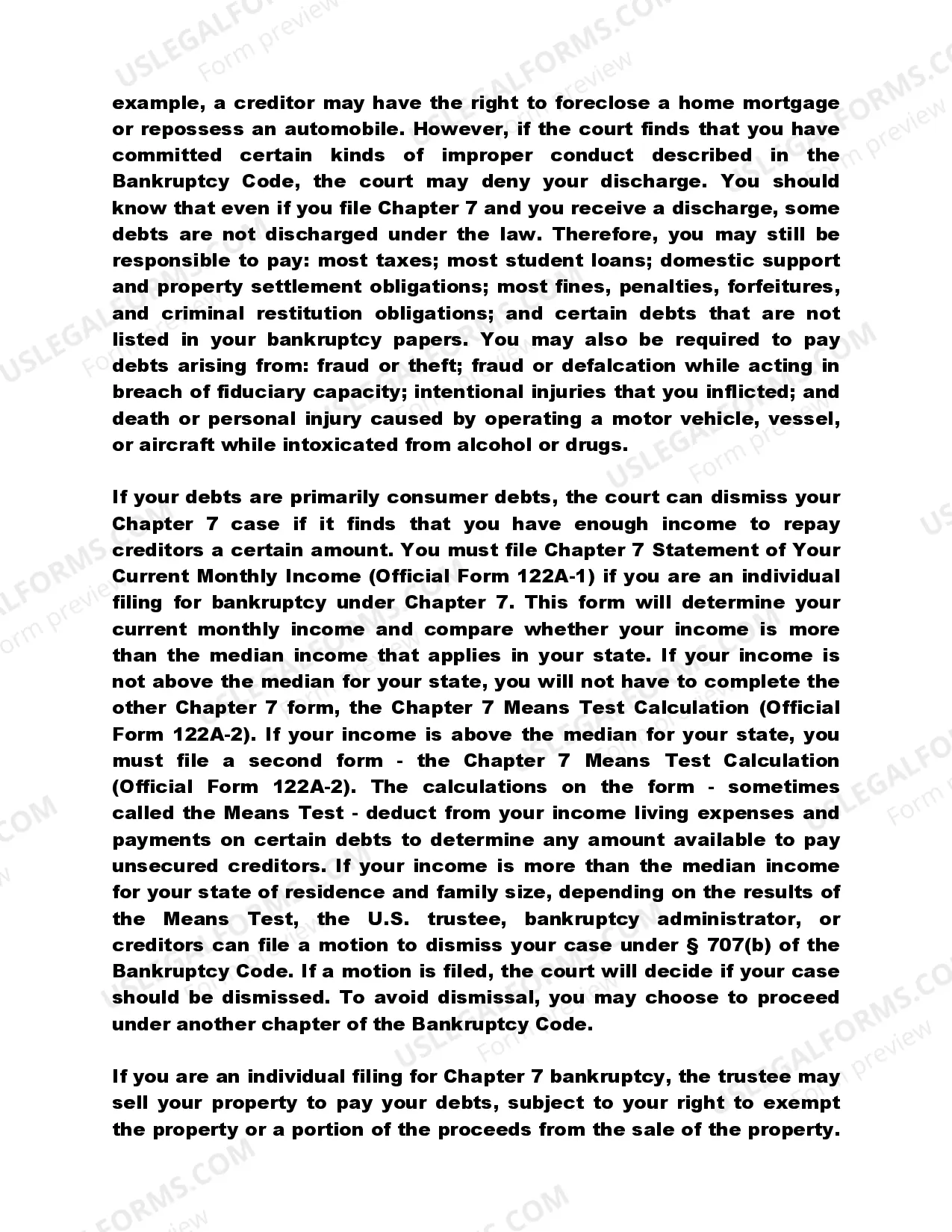
- Forms including the Chapter 7 Statement of Your Current Monthly Income (Official Form 122A-1).
- Chapter 7 Means Test Calculation form (Official Form 122A-2) for determining eligibility.
- Guidelines for exempting property under bankruptcy law.
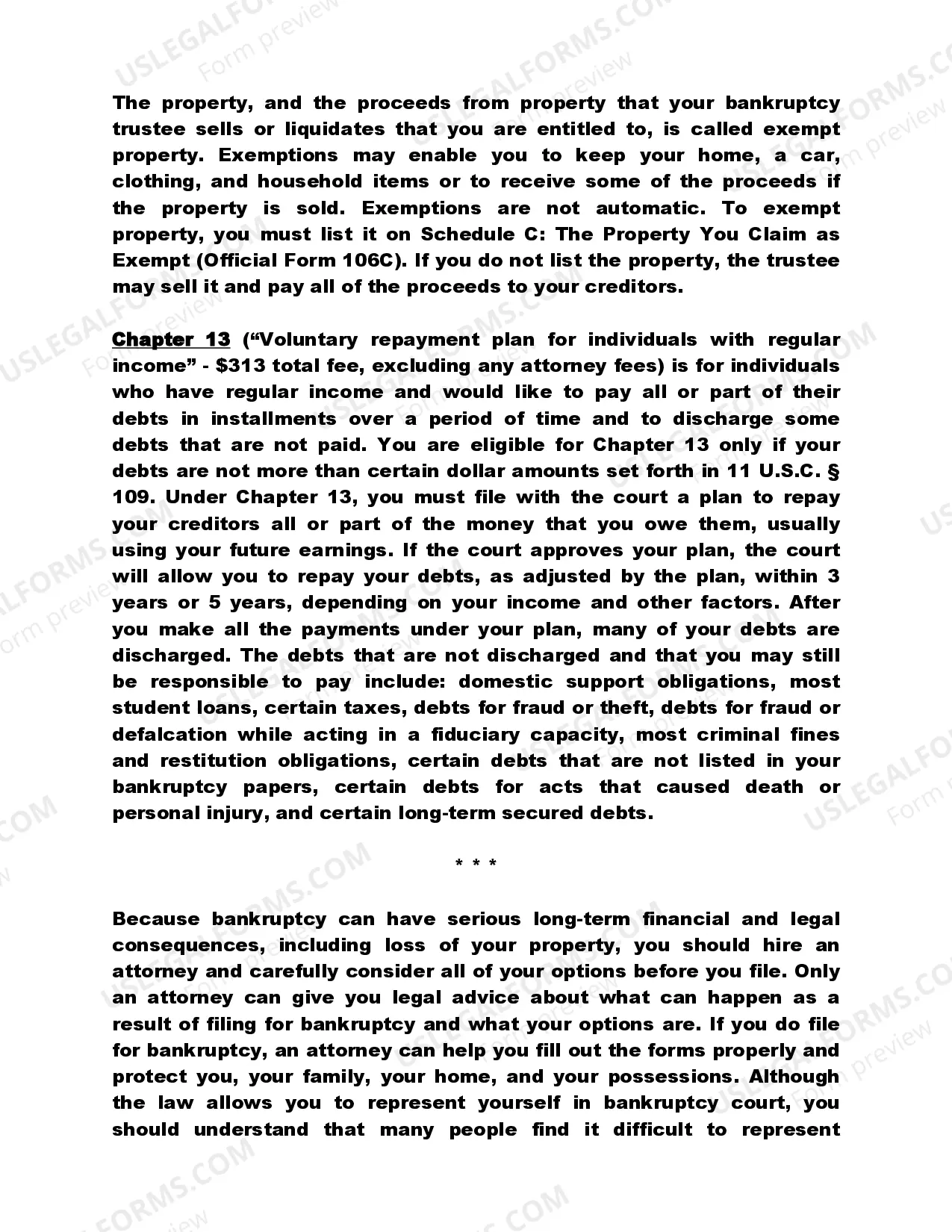
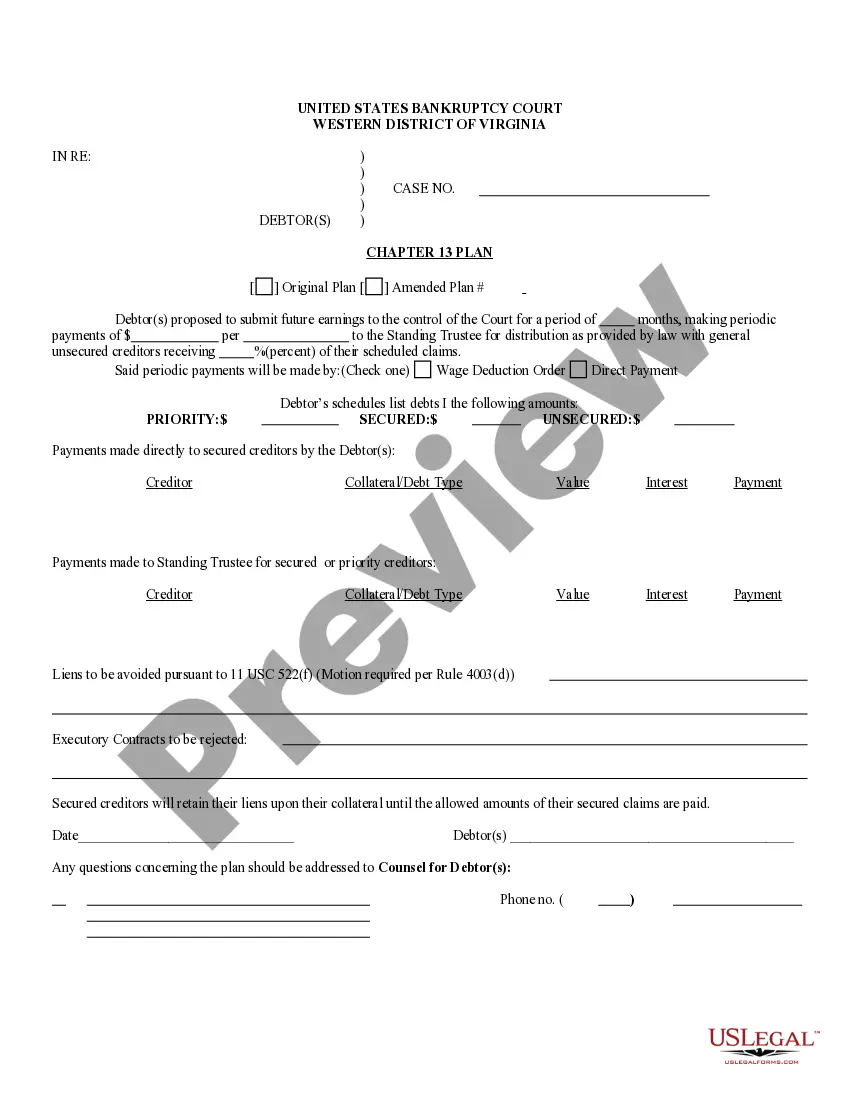
- Plan requirements for Chapter 13 repayment, including eligibility criteria and payment structure.
Situations where this form applies
This package is essential when individuals in Virginia are facing financial difficulties and are considering filing for bankruptcy. Use this form when you need to determine whether Chapter 7 or Chapter 13 is the appropriate option for your situation. It provides the necessary tools to navigate the bankruptcy process, allowing you to effectively manage your debts and financial obligations.
Who this form is for
This forms package is intended for:
- Individuals, including married couples and sole proprietors, seeking relief from financial obligations.
- Those considering Chapter 7 bankruptcy, which allows for debt discharge following liquidation.
- Individuals with a steady income interested in establishing a repayment plan via Chapter 13.
- People who want clear guidance on filing requirements in the Virginia Western District.
Completing this form step by step
- Determine your eligibility for Chapter 7 or Chapter 13 based on your financial situation.
- Gather necessary financial information, including income and expenses, to complete the forms.
- Fill out the Chapter 7 Statement of Your Current Monthly Income form to assess your income level.
- Complete the Means Test Calculation, if applicable, to verify your eligibility for Chapter 7.
- If filing for Chapter 13, develop a repayment plan for your creditors and prepare the required forms.
- Submit the completed forms to the appropriate court and be prepared for any hearings as required.
Does this document require notarization?
Notarization is not commonly needed for this form. However, certain documents or local rules may make it necessary. Our notarization service, powered by Notarize, allows you to finalize it securely online anytime, day or night.
Get your form ready online
Our built-in tools help you complete, sign, share, and store your documents in one place.
Make edits, fill in missing information, and update formatting in US Legal Forms—just like you would in MS Word.
Download a copy, print it, send it by email, or mail it via USPS—whatever works best for your next step.
Sign and collect signatures with our SignNow integration. Send to multiple recipients, set reminders, and more. Go Premium to unlock E-Sign.
If this form requires notarization, complete it online through a secure video call—no need to meet a notary in person or wait for an appointment.
We protect your documents and personal data by following strict security and privacy standards.

Make edits, fill in missing information, and update formatting in US Legal Forms—just like you would in MS Word.

Download a copy, print it, send it by email, or mail it via USPS—whatever works best for your next step.

Sign and collect signatures with our SignNow integration. Send to multiple recipients, set reminders, and more. Go Premium to unlock E-Sign.

If this form requires notarization, complete it online through a secure video call—no need to meet a notary in person or wait for an appointment.

We protect your documents and personal data by following strict security and privacy standards.
Common mistakes to avoid
- Failing to complete the Means Test Calculation form when required for Chapter 7.
- Omitting required income or asset information from the forms.
- Not listing all debts or creditors, which can hinder the bankruptcy process.
- Misunderstanding the exemptions available, leading to potential loss of property.
- Neglecting to follow local court rules and procedures specific to Virginia.
Why complete this form online
- Convenience of downloadable forms that can be completed at your own pace.
- Access to the latest legal templates, ensuring compliance with current laws and regulations.
- Editability, allowing you to customize forms to fit your unique circumstances.
- Quick retrieval of forms and instructions without the need to visit a legal office.
- Peace of mind knowing that forms are drafted by licensed attorneys familiar with Virginia laws.
Looking for another form?
Form popularity
FAQ
Motor vehicles, up to a certain value. Reasonably necessary clothing. Reasonably necessary household goods and furnishings. Household appliances. Jewelry, up to a certain value. Pensions. Tools of the debtor's trade or profession, up to a certain value.
If you filed a prior case and received a discharge of your debts, you can only file a second Chapter 7 bankruptcy case eight years after you filed the first case.
For Chapter 7 bankruptcy filings, you must wait eight years from the filing date of your previous petition. Filing prematurely before those eight years have expired, you will not be granted a discharge. The eight years start counting from the date the prior Chapter 7 bankruptcy was filed.
Redeem the car. Pay the market value of the car to the lender in one lump sum. Reaffirm the car loan. Sign a new loan that will remain in force after the bankruptcy is over and make up the payments in the new agreement.
When you reaffirm your debt to keep the car, you continue making payments on it, remaining liable on the debt. These loan payments will continue through and after the bankruptcy process until it is paid off. This allows you to keep your vehicle as you go through Chapter 7 bankruptcy in Virginia.
Virginia allows single people to file Chapter 7 and keep your house only if you have very little equity. Virginia does provide much better protection for married couples who own a house.
Collect Your Virginia Bankruptcy Documents. Take Credit Counseling. Complete the Bankruptcy Forms. Get Your Filing Fee. Print Your Bankruptcy Forms. Go to Court to File Your Forms. Mail Documents to Your Trustee. Take Bankruptcy Course 2.
If you file for Chapter 7 bankruptcy and local bankruptcy laws allow you to exempt all of the equity you have in your car, you can keep the vehicleas long as you're current on your loan payments.They may also give you the option to pay off the equity at a discount in order to keep the car.
Identifying Information. The Voluntary Petition for Individuals Filing for Bankruptcy form acts as the cover sheet for your paperwork. Your Property. Your Exempt Property. Your Collateralized Debt. Your Other Debt. Your Contracts and Leases. Your Codebtors. Your Income.