Virginia Lease Subordination Agreement
What this document covers
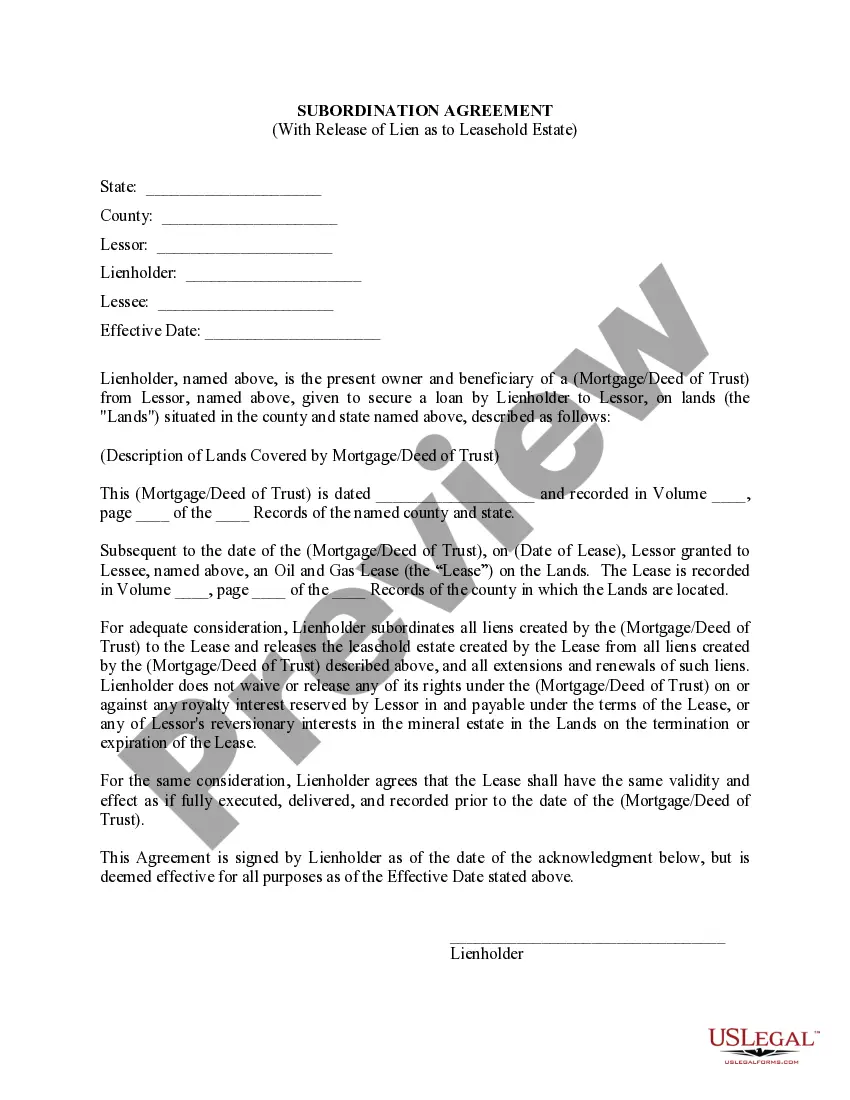
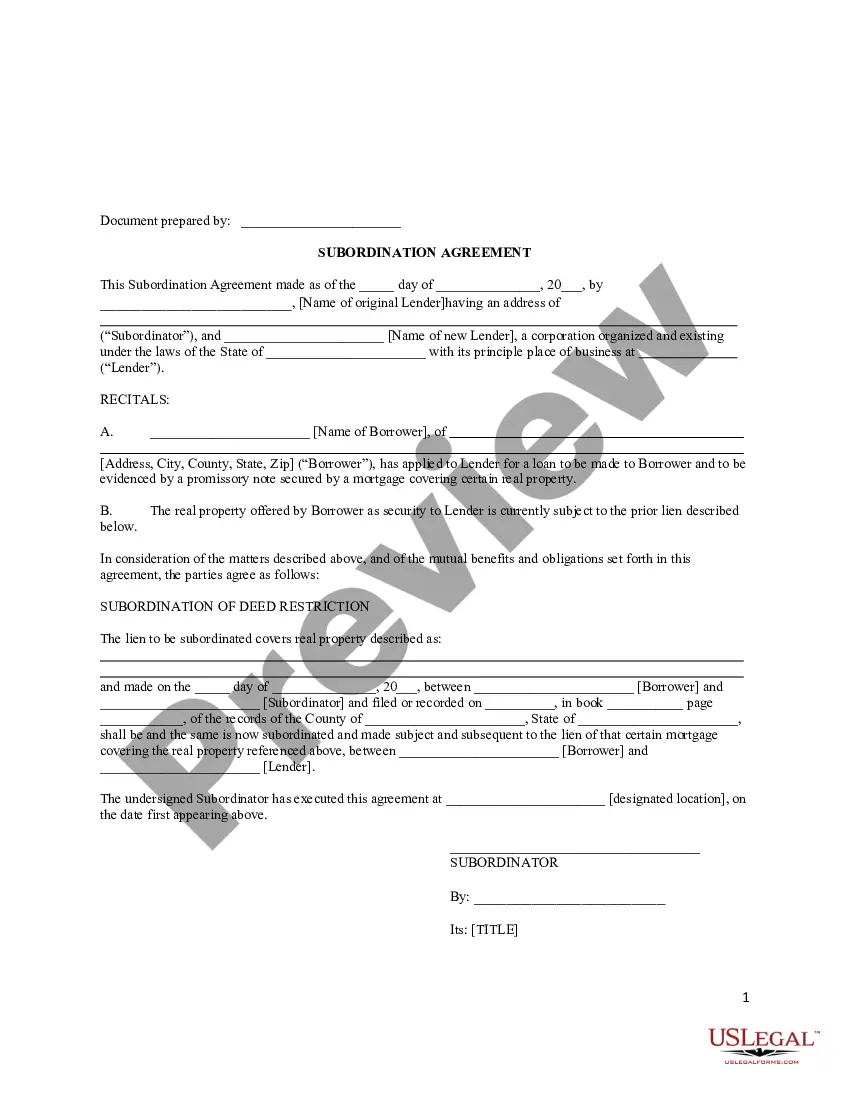
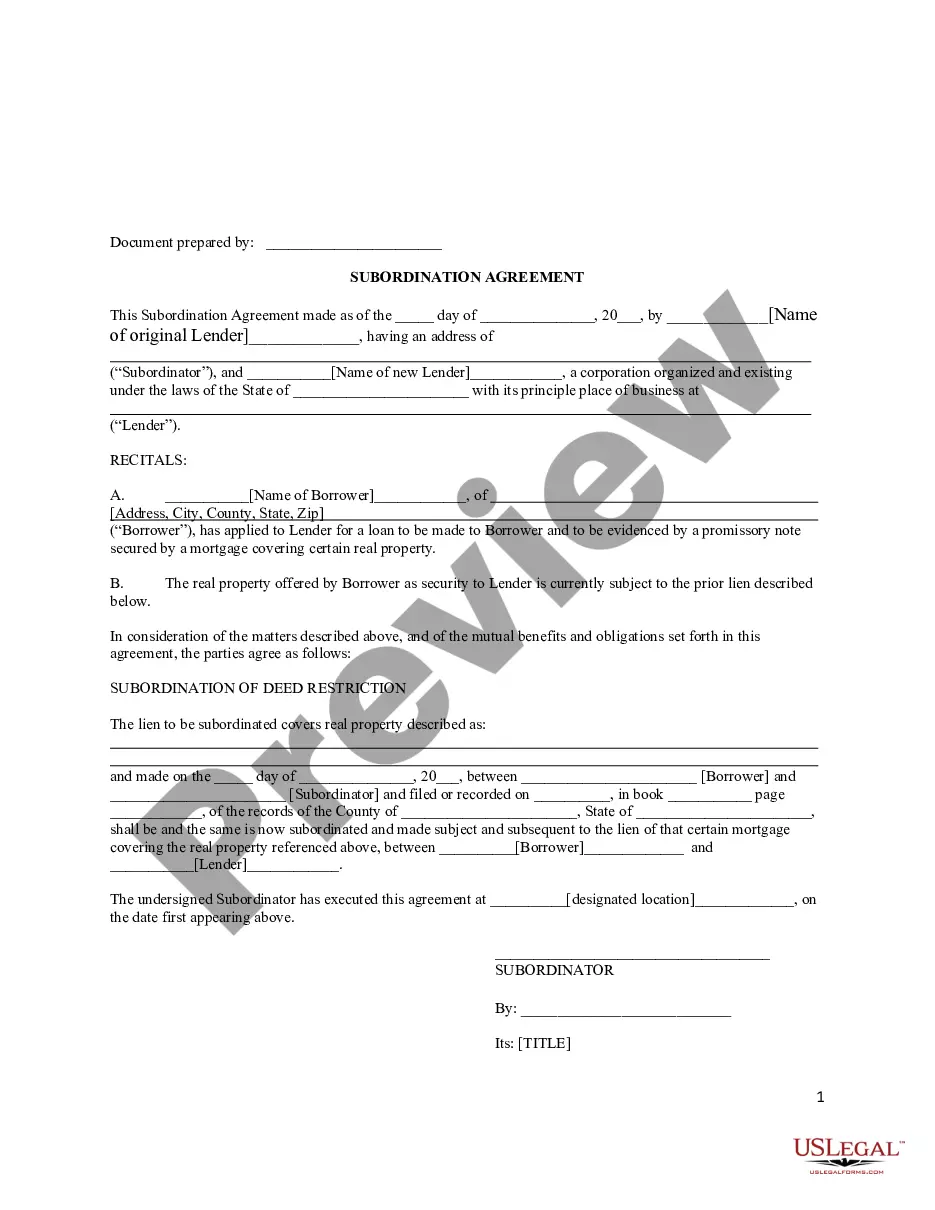
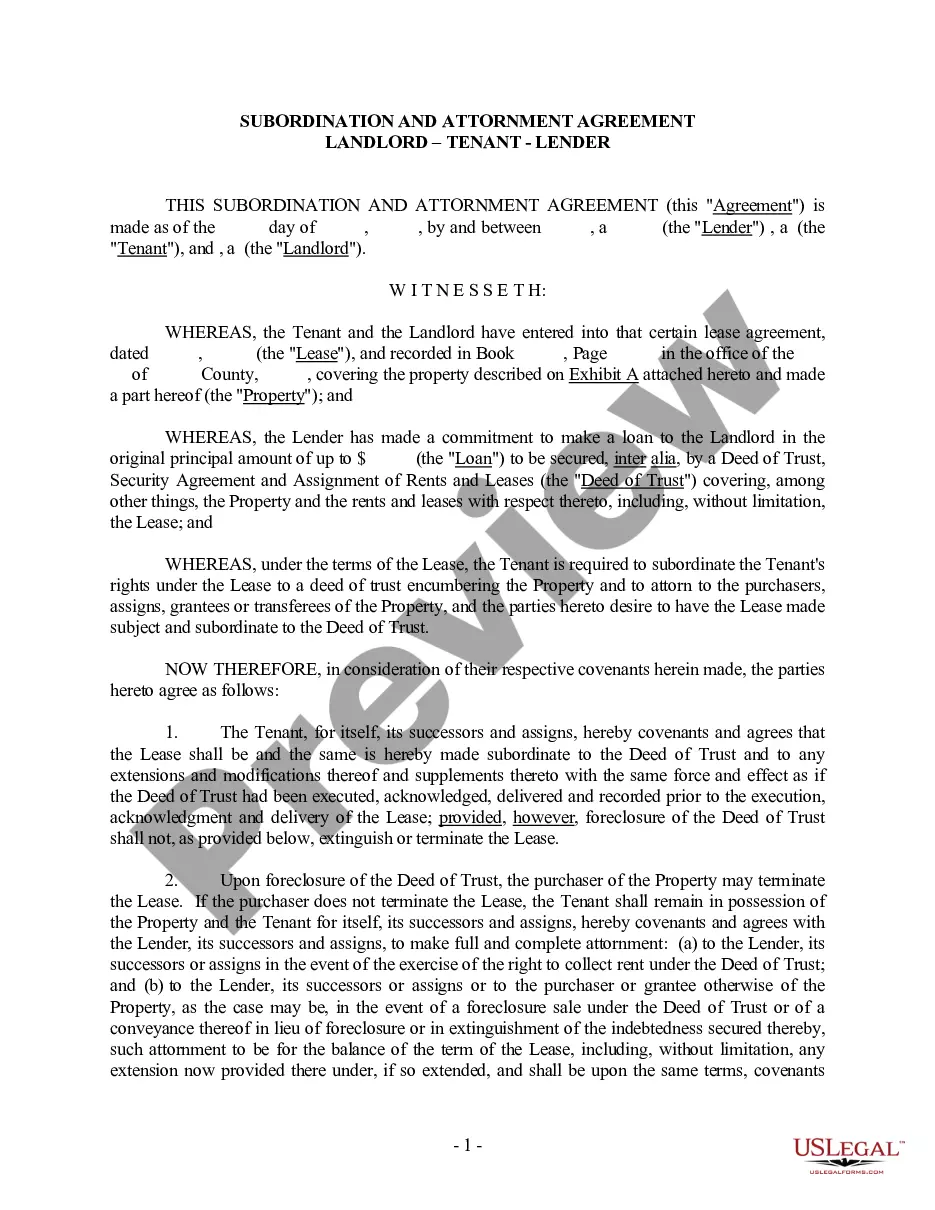
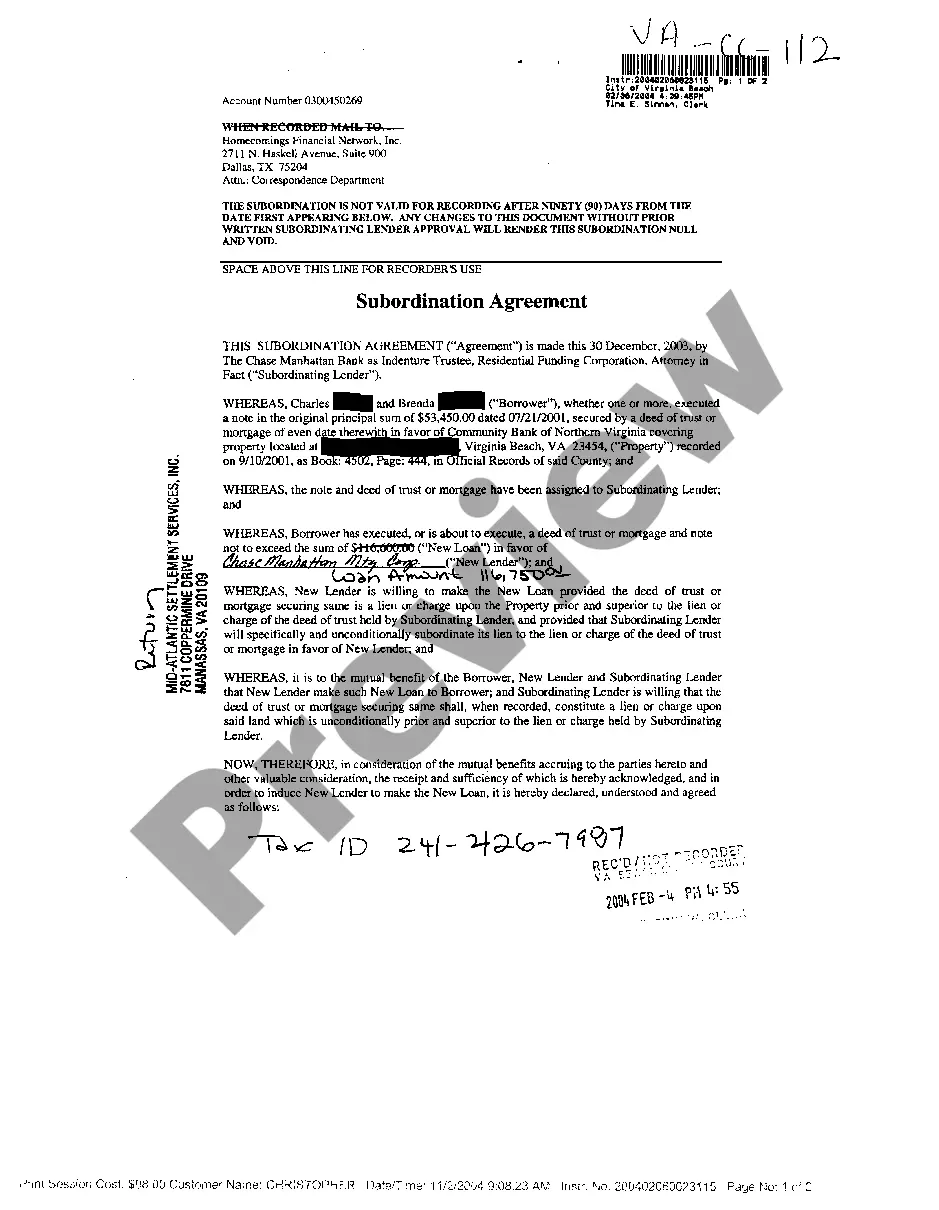
The Lease Subordination Agreement is a legal document that establishes a priority among debt claims, particularly regarding real estate leases. This agreement subordinates existing liens created by a mortgage or deed of trust to a mineral, oil, or gas lease, allowing the leaseholder to bypass those liens. It is essential for ensuring that new financing does not interfere with existing leases, making it distinct from other types of subordination agreements that may not involve real property leases.
Main sections of this form
- Parties involved: Identification of the lessor, lienholder, and lessee.
- Property description: Detailed description of the lands affected by the agreement.
- Effective date: Date from which the subordination agreement is active.
- Release of liens: A clause that releases the leasehold from previous liens while ensuring rights concerning royalty interests are maintained.
- Execution: Signature line for the lienholder to validate the agreement.
Common use cases
This form is used when a property owner who has a mortgage wishes to enter into a mineral, oil, or gas lease and needs to ensure that the financial interests tied to those leases take precedence over existing mortgage liens. It is particularly important when a second mortgage is being considered or when modifications are planned for the property that could affect those existing liens.
Who needs this form
- Property owners seeking to lease mineral or oil rights while maintaining existing mortgage obligations.
- Mortgage lenders looking to clarify the priority of their liens concerning lease agreements.
- Lessee entities or individuals involved in entering a mineral or oil lease who wish to protect their interests.
How to complete this form
- Identify the parties: Fill in the names of the lessor, lienholder, and lessee.
- Specify the property: Provide a detailed description of the land involved.
- Enter dates: Fill in the effective date and relevant dates for the mortgage and lease agreements.
- Release of lien: Ensure the clause releasing the leasehold from previous liens is clearly stated.
- Sign the agreement: The lienholder must sign the document to make it effective.
Notarization guidance
Notarization is required for this form to take effect. Our online notarization service, powered by Notarize, lets you verify and sign documents remotely through an encrypted video session, available 24/7.
Get your form ready online
Our built-in tools help you complete, sign, share, and store your documents in one place.
Make edits, fill in missing information, and update formatting in US Legal Forms—just like you would in MS Word.
Download a copy, print it, send it by email, or mail it via USPS—whatever works best for your next step.
Sign and collect signatures with our SignNow integration. Send to multiple recipients, set reminders, and more. Go Premium to unlock E-Sign.
If this form requires notarization, complete it online through a secure video call—no need to meet a notary in person or wait for an appointment.
We protect your documents and personal data by following strict security and privacy standards.

Make edits, fill in missing information, and update formatting in US Legal Forms—just like you would in MS Word.

Download a copy, print it, send it by email, or mail it via USPS—whatever works best for your next step.

Sign and collect signatures with our SignNow integration. Send to multiple recipients, set reminders, and more. Go Premium to unlock E-Sign.

If this form requires notarization, complete it online through a secure video call—no need to meet a notary in person or wait for an appointment.

We protect your documents and personal data by following strict security and privacy standards.
Common mistakes
- Failing to accurately describe the property involved in the lease.
- Not providing the effective date for the subordination agreement.
- Omitting necessary signatures, particularly from the lienholder.
- Misunderstanding the rights retained by the lienholder regarding royalties and reversionary interests.
Advantages of online completion
- Convenience of downloading and completing the form at your own pace.
- Editability allows customization to fit specific agreements.
- Reliability, as forms are prepared by licensed attorneys for accuracy.
- Access to clear instructions and guidance for completion.
Looking for another form?
Form popularity
FAQ
Subordination is the tenant's agreement that its interest under the lease will be subordinate to that of the lender.Attornment is the tenant's agreement to become the tenant of someone other than the original landlord and who has now taken title to the property.
A lender typically wants to have an SNDA because of its subordination clause if, in the absence of such an agreement, the lease would be prior to the mortgage.Therefore, if a mortgage is senior to a lease, the foreclosure of the mortgage will terminate the lease unless there is an agreement that provides otherwise.
A Subordination and Non-Disturbance Agreement (SNDA) commonly called a non-disturb is an agreement that your landlord asks its lender to provide. The agreement basically says that if the building goes bankrupt and the lender takes control of the building from the landlord, the lender will honor your lease.
Despite its technical-sounding name, the subordination agreement has one simple purpose. It assigns your new mortgage to first lien position, making it possible to refinance with a home equity loan or line of credit.
Estoppels and SNDAs are usually initiated by the lender; however, well written documents serve the interest of the tenant just as well. An estoppel certificate is a certification from a landlord and a tenant that outlines the terms and conditions of the lease.
SNDA stands for Subordination, Non-disturbance and Attornment Agreement. You need an SNDA if you are a commercial tenant, a commercial landlord, or a lender taking a mortgage against commercial property. If you're a tenant, the SNDA protects you from being evicted if your landlord stops paying its mortgage loan.
A Subordination and Non-Disturbance Agreement (SNDA) commonly called a non-disturb is an agreement that your landlord asks its lender to provide. The agreement basically says that if the building goes bankrupt and the lender takes control of the building from the landlord, the lender will honor your lease.
A nondisturbance clause is a provision in a mortgage contract that ensures that a rental agreement between the tenant and the landlord will continue under any circumstances.A nondisturbance clause ensures that a tenant will not be evicted in the event that the landlord goes bankrupt.