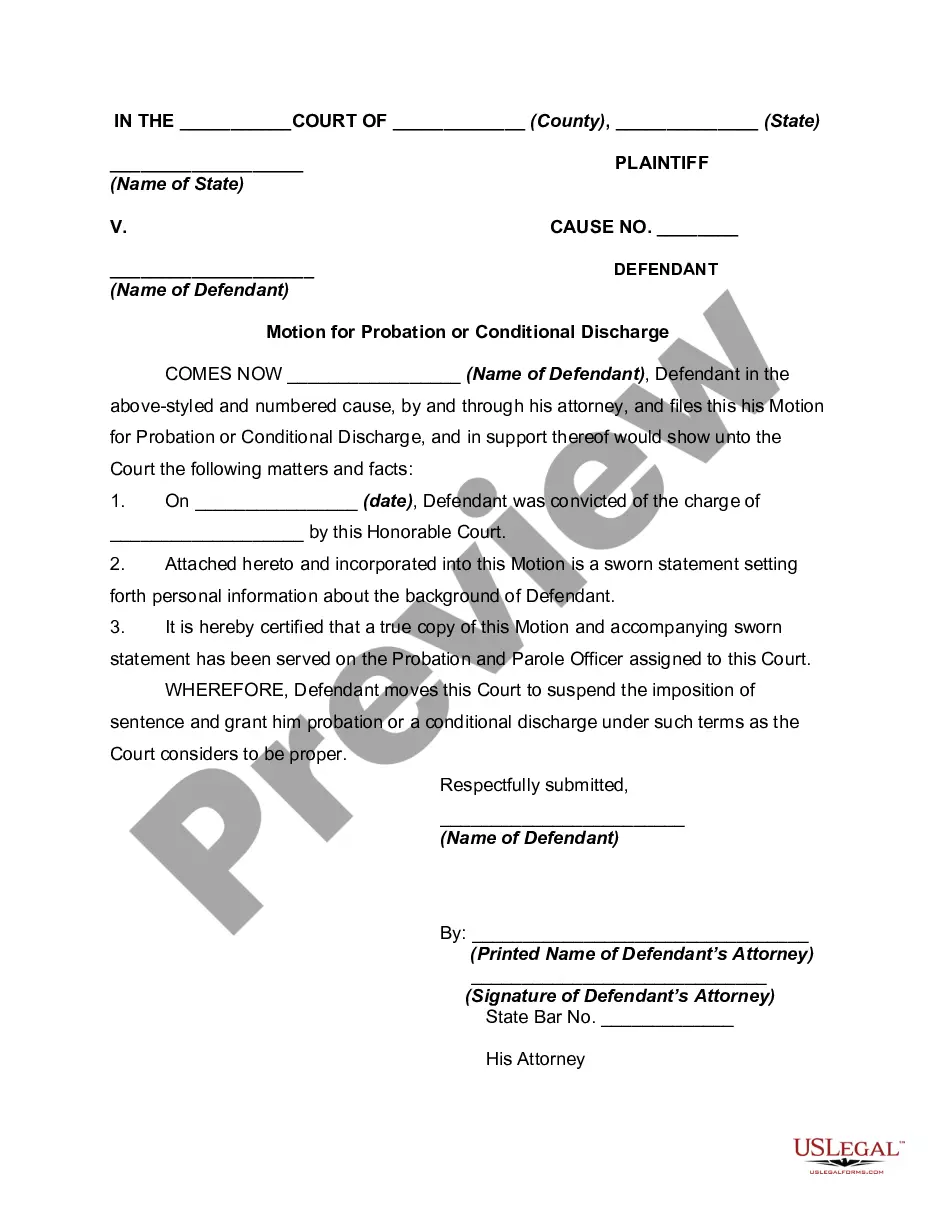
Utah Last Will and Testament for Married person with Adult Children from Prior Marriage
Understanding this form
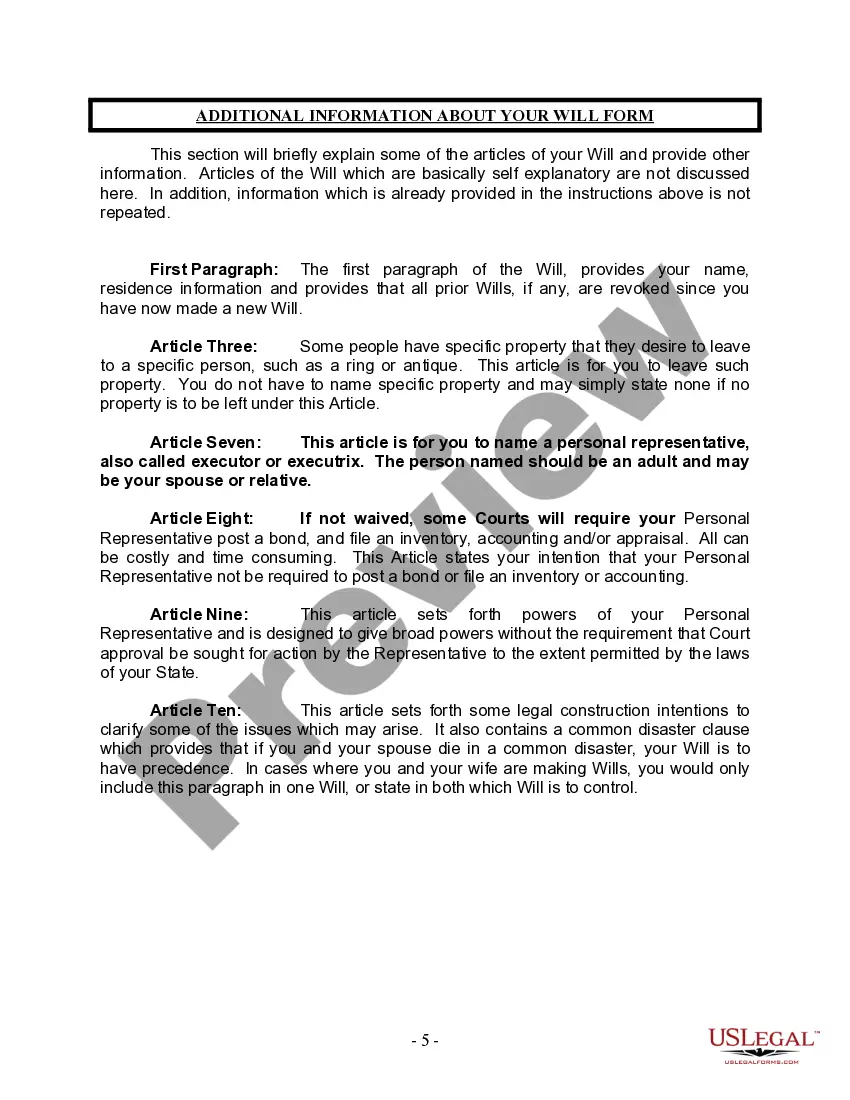
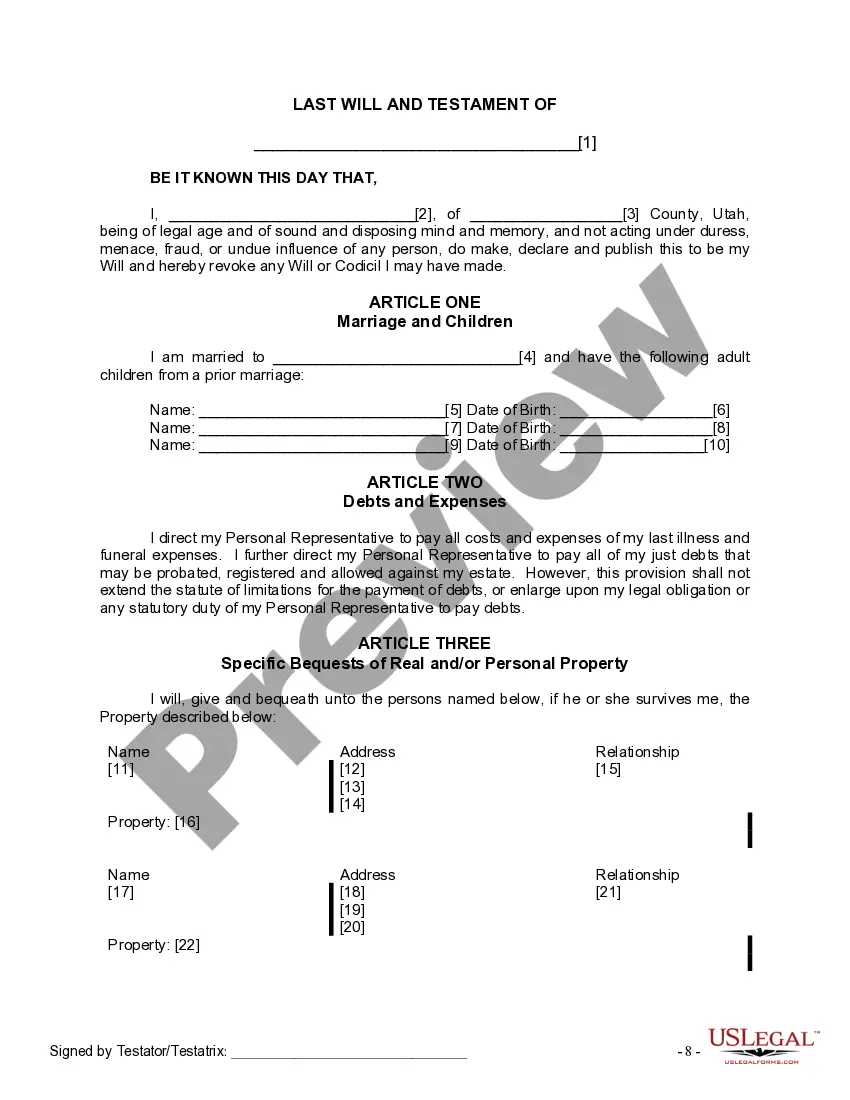
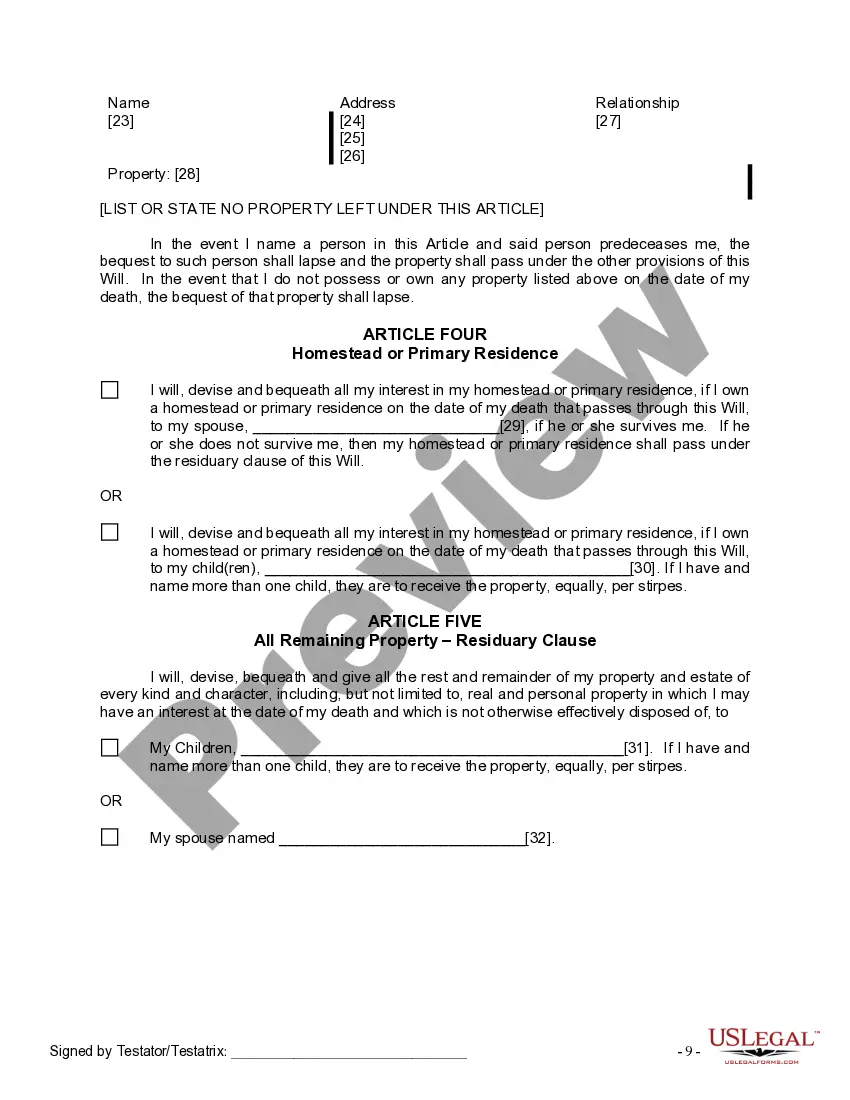
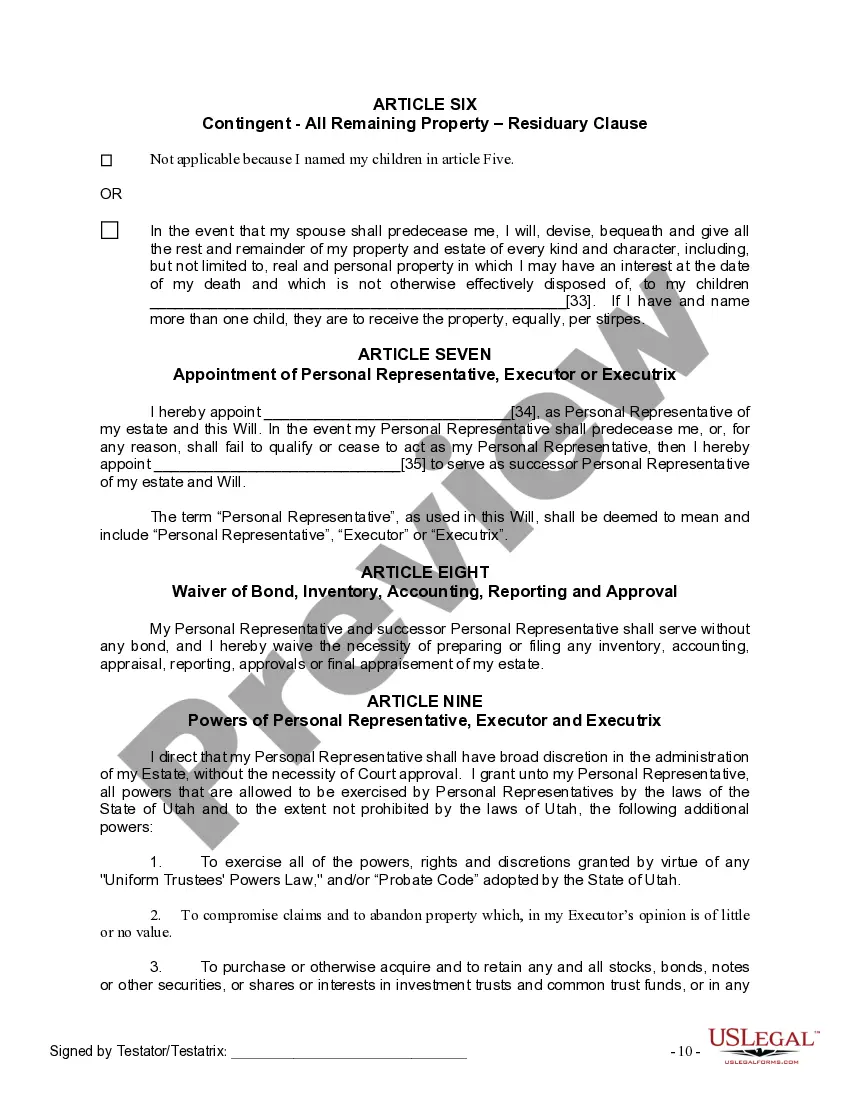
This Last Will and Testament form is specifically designed for a married person with adult children from a prior marriage. It outlines how to distribute your assets upon death, appoints a personal representative to administer your estate, and includes provisions for your adult children. This form is crucial in ensuring your wishes are legally documented and understood, distinguishing it from wills made for single individuals or those with minor children.
Key parts of this document
- Appointment of a personal representative to manage your estate
- Designations for who receives specific property
- Provisions for your spouse and adult children from a prior marriage
- Instructions for the payment of debts and expenses
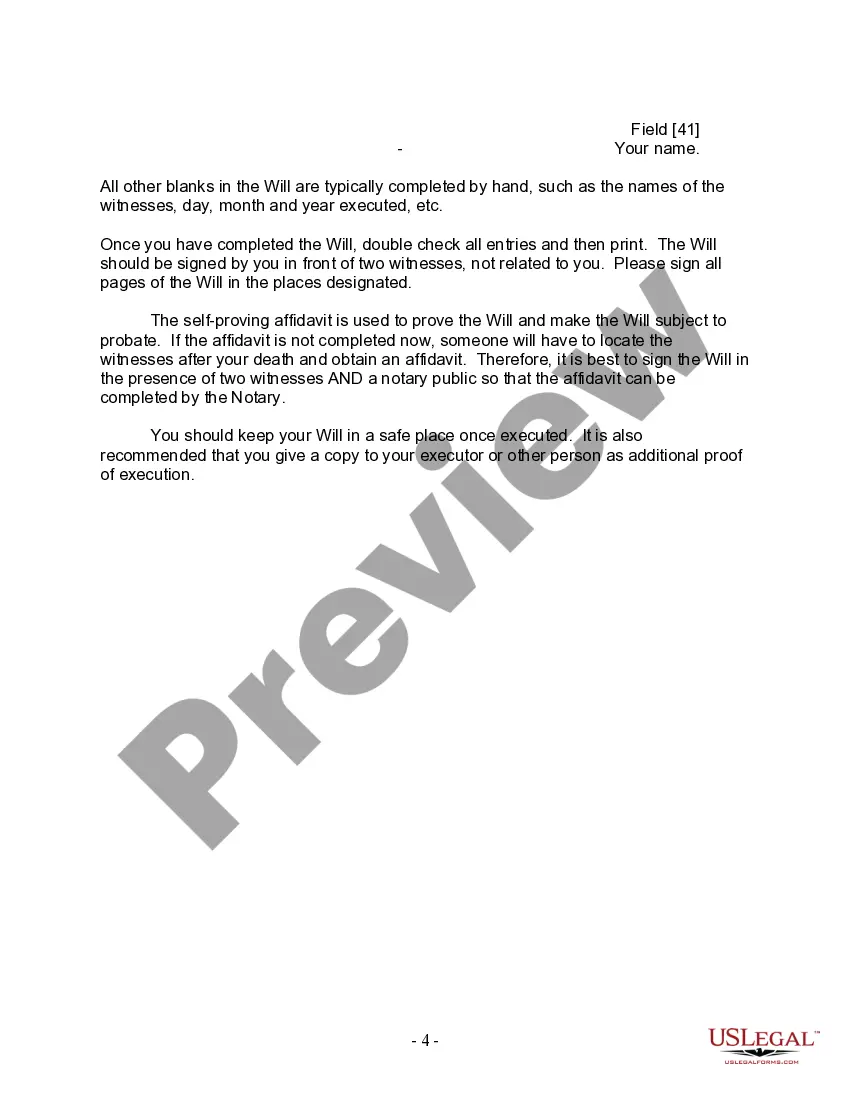
- Self-proving affidavit option, if applicable, to simplify probate


When to use this document
This form should be used when you wish to legally document your wishes regarding asset distribution after your death, especially if you are married and have adult children from a previous marriage. It can help avoid conflicts among heirs and simplify the probate process, ensuring that your estate is managed according to your desires.
Who needs this form
- Married individuals with adult children from a prior marriage
- Those looking to clearly specify how their assets should be distributed
- People wanting to appoint a trusted personal representative
- Anyone who wishes to avoid probate disputes among heirs
Steps to complete this form
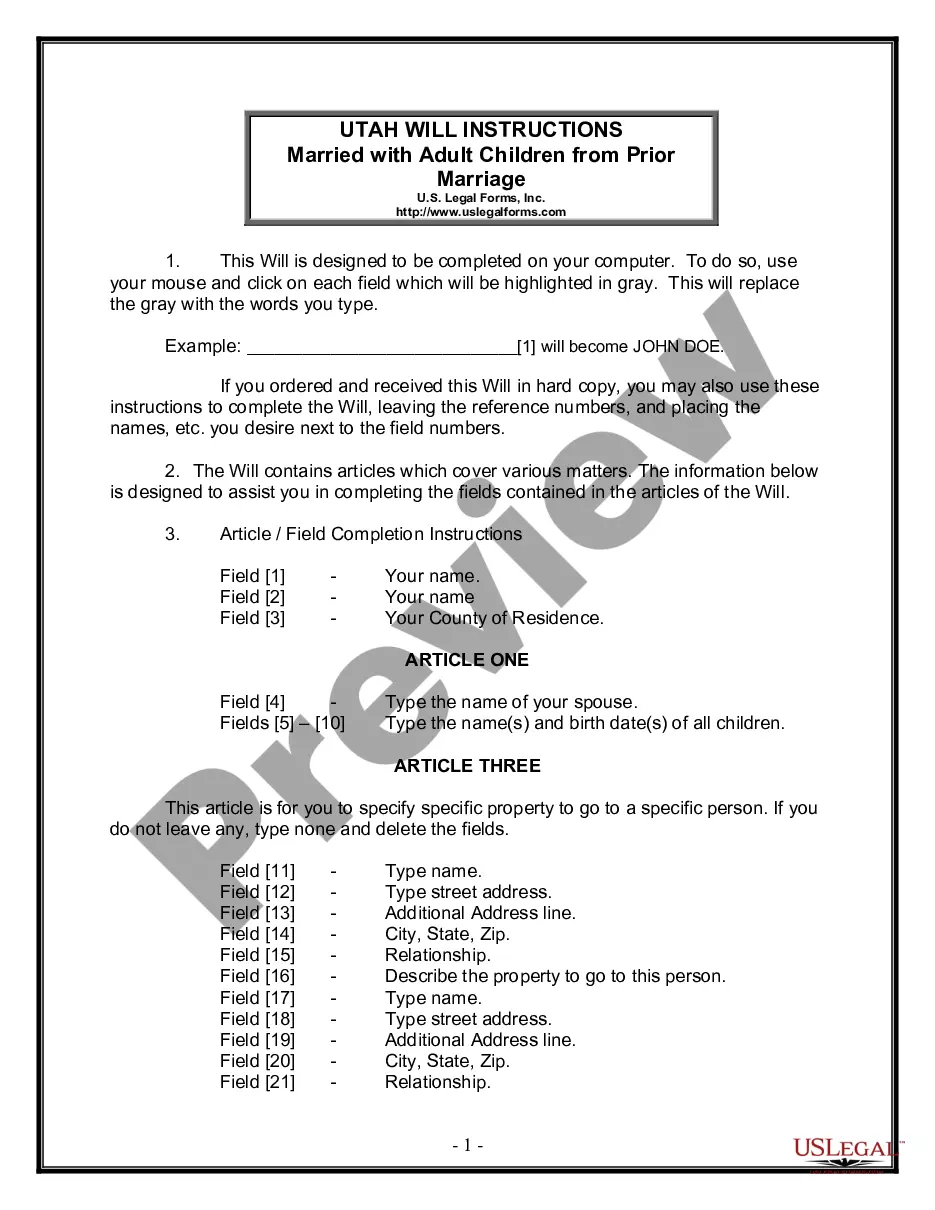
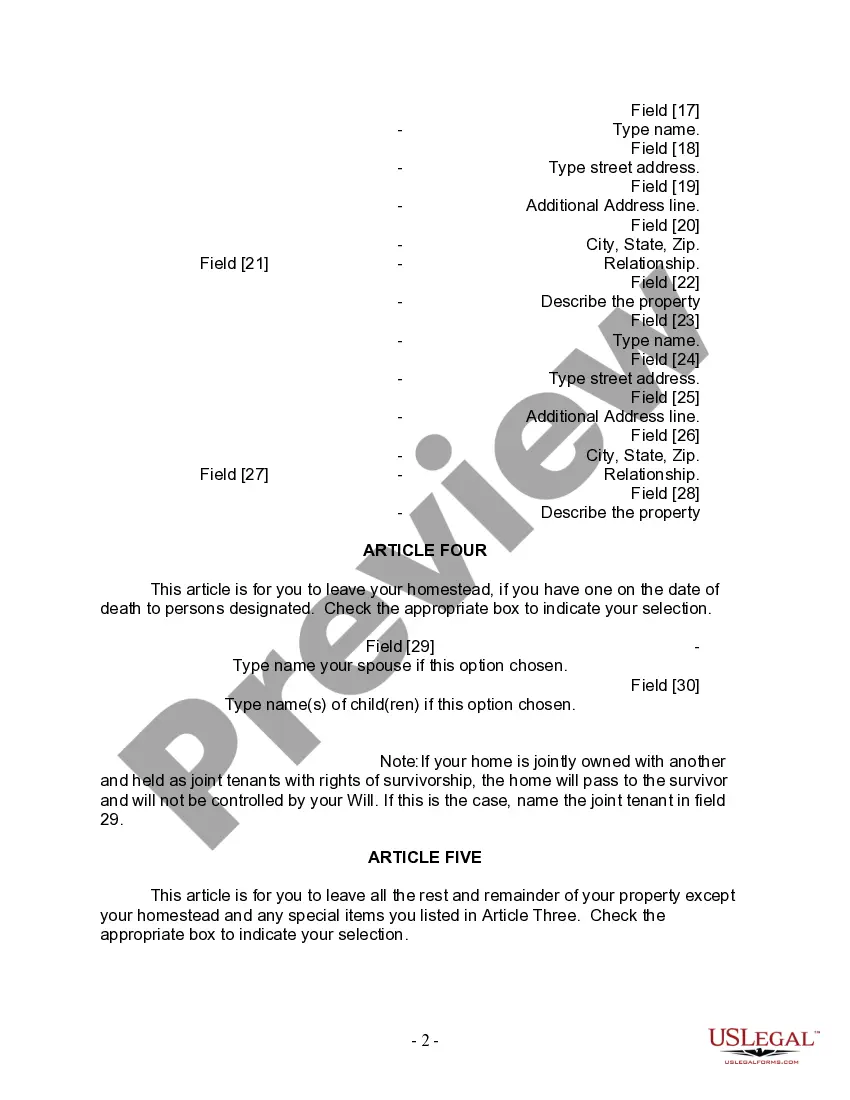
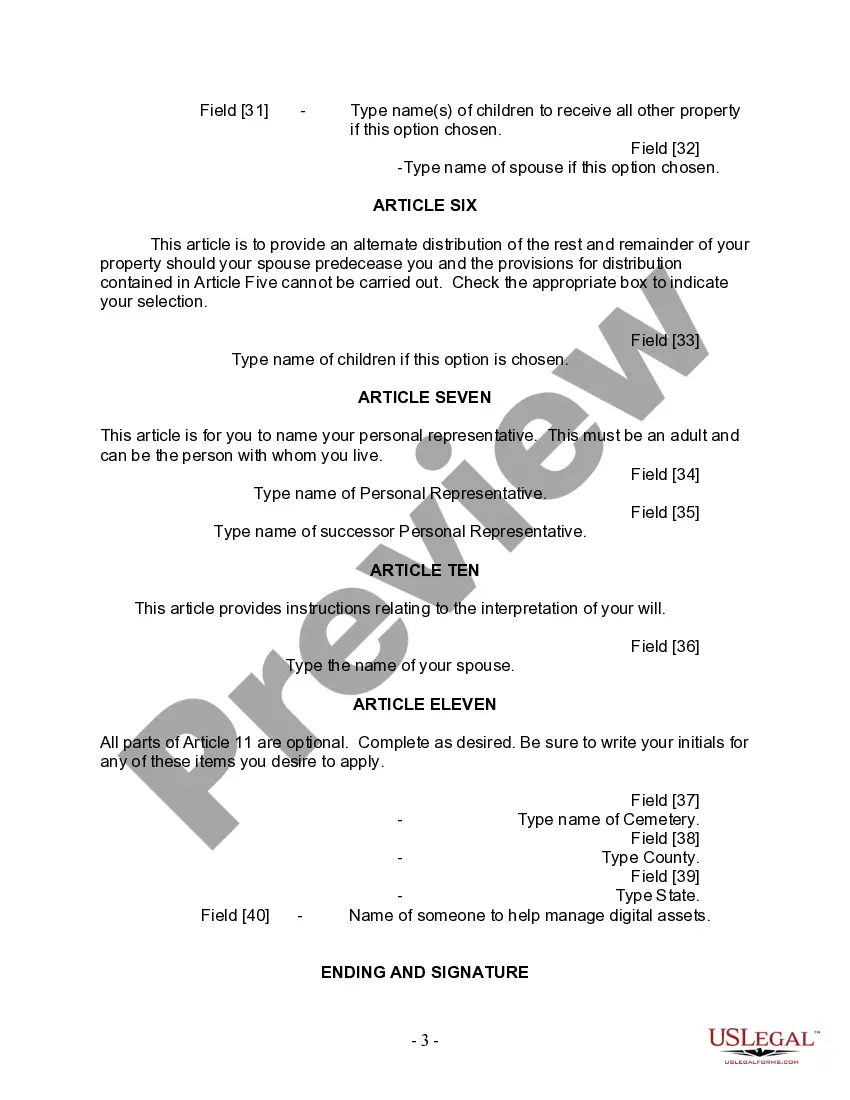
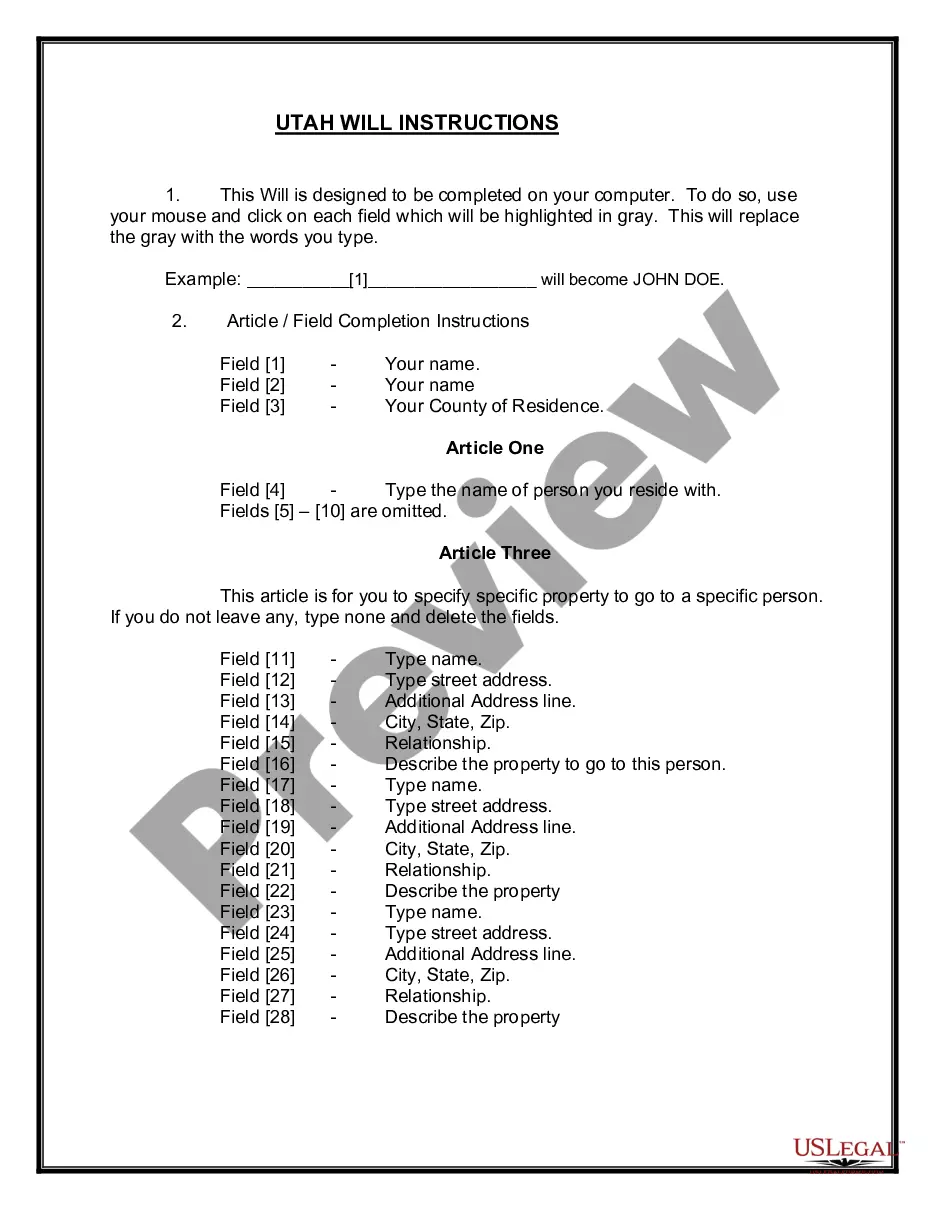
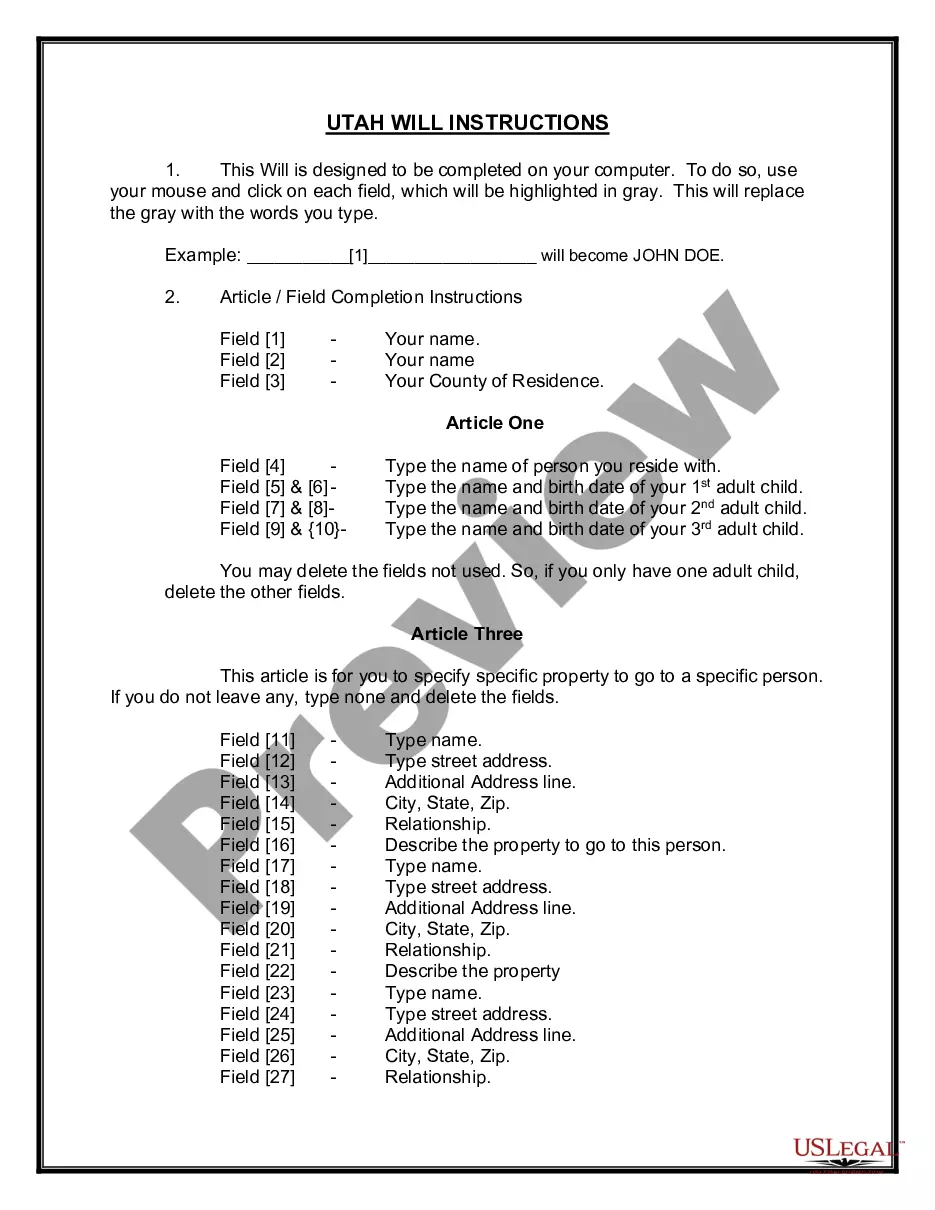
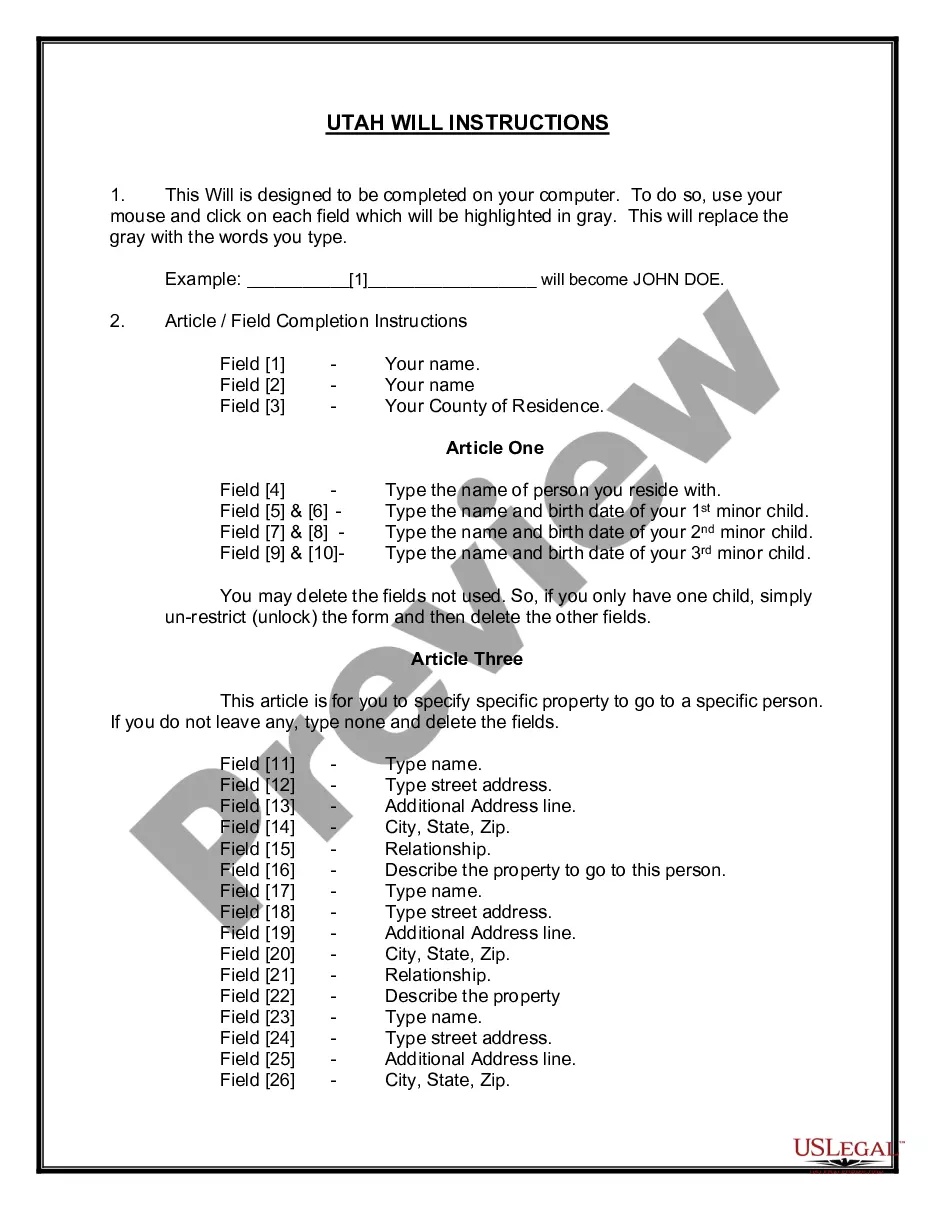
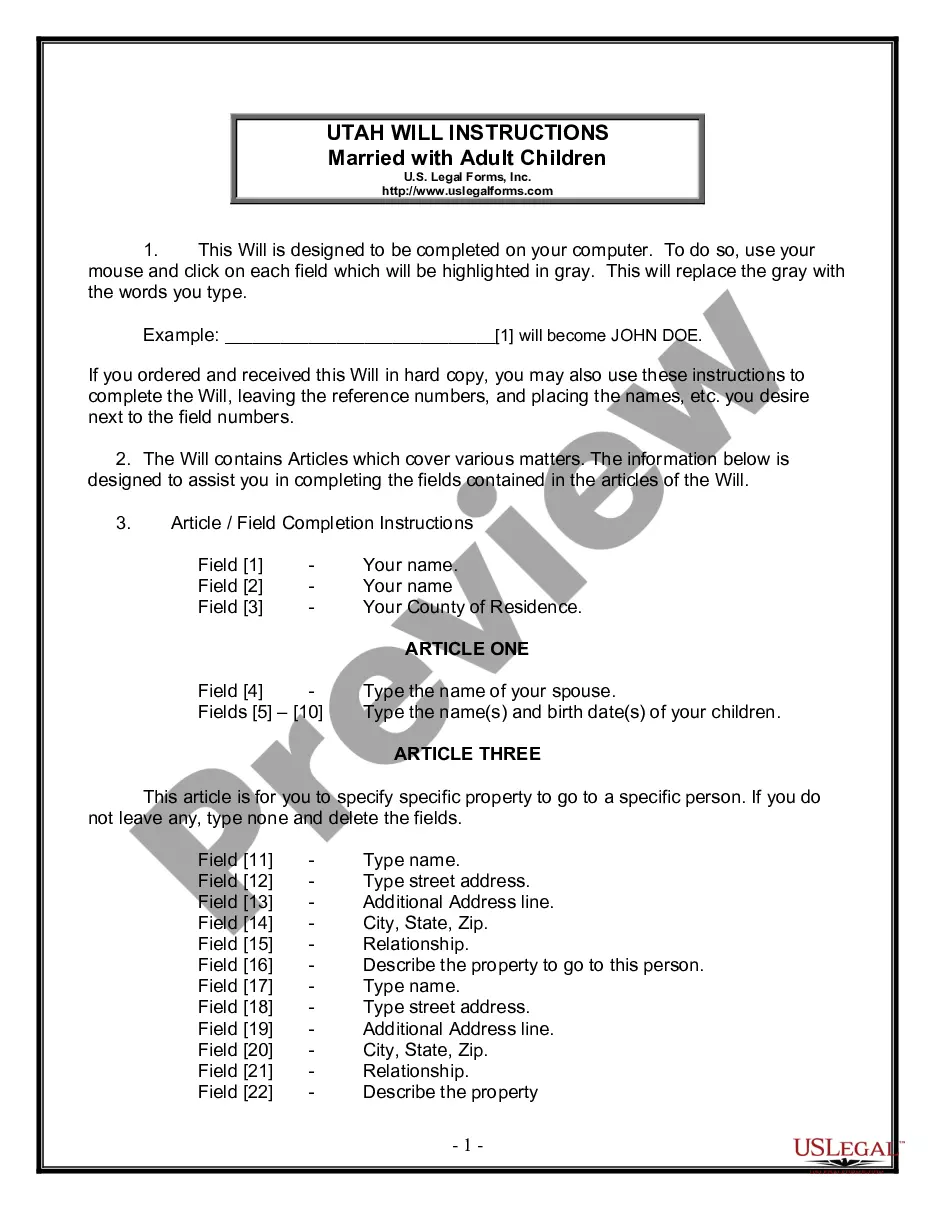
- Enter your name and county of residence.
- Specify your spouse's name and provide details about your adult children, including their names and birthdates.
- Designate specific properties and beneficiaries as needed in the designated sections.
- Complete any optional provisions and include your initials if applicable.
- Sign the will in front of two witnesses and ensure that all required sections are completed.
Notarization guidance
Notarization is required for this form to take effect. Our online notarization service, powered by Notarize, lets you verify and sign documents remotely through an encrypted video session, available 24/7.
Get your form ready online
Our built-in tools help you complete, sign, share, and store your documents in one place.
Make edits, fill in missing information, and update formatting in US Legal Forms—just like you would in MS Word.
Download a copy, print it, send it by email, or mail it via USPS—whatever works best for your next step.
Sign and collect signatures with our SignNow integration. Send to multiple recipients, set reminders, and more. Go Premium to unlock E-Sign.
If this form requires notarization, complete it online through a secure video call—no need to meet a notary in person or wait for an appointment.
We protect your documents and personal data by following strict security and privacy standards.

Make edits, fill in missing information, and update formatting in US Legal Forms—just like you would in MS Word.

Download a copy, print it, send it by email, or mail it via USPS—whatever works best for your next step.

Sign and collect signatures with our SignNow integration. Send to multiple recipients, set reminders, and more. Go Premium to unlock E-Sign.

If this form requires notarization, complete it online through a secure video call—no need to meet a notary in person or wait for an appointment.

We protect your documents and personal data by following strict security and privacy standards.
Mistakes to watch out for
- Failing to have the form witnessed by the required number of witnesses.
- Not including all relevant beneficiaries, which can lead to disputes.
- Inadequately specifying the property to avoid ambiguity.
- Neglecting to review and update the will after significant life events.
Why use this form online
- Convenience of filling out the form from home, reducing the need for in-person meetings.
- Editability allows for easy corrections and updates before finalizing.
- Access to attorney-drafted templates ensures legal compliance and reliability.
Legal use & context
- This form is legally enforceable in court once properly executed and witnesses are present.
- It protects against disputes among heirs by clearly stating your intentions.
- Failure to have a will may lead to intestate succession laws, which do not reflect your wishes.
Summary of main points
- Clearly outlines your wishes for asset distribution upon your death.
- Addresses unique family situations, particularly regarding children from previous marriages.
- Provides necessary provisions for the appointment of an executor and handling your estate.
Looking for another form?



Form popularity
FAQ
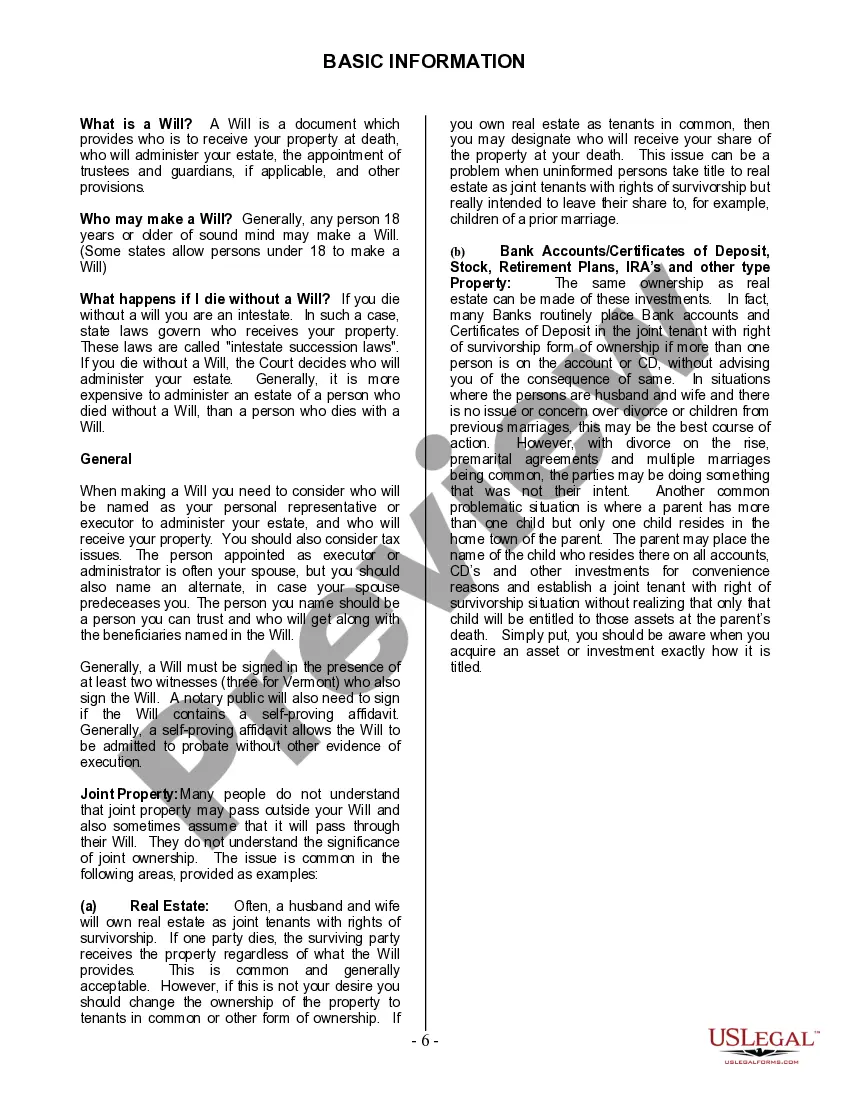
Under Utah law, a will must be filed with the court with reasonable promptness after the death of the testator. Utah Code § 75-2-902. So, after you pass away, your will should be filed in your local probate court by the person named to be your personal representative (also called an executor or administrator).
In most situations, a will template is an easy and inexpensive way to make sure your wishes are known and carried out. Most people can get everything they need by using a will template, with little cost or hassle.
The form may be downloaded in fillable Adobe PDF, Rich Text Format, and Microsoft Word templates and should be signed by the testator and at least two (2) witnesses or a notary public (See your State's Probate Code).
A notarized will does not need to be probated.When a person dies leaving behind a will that is not notarized, the law requires that its validity be ascertained by a notary or by a court. Similarly, any non-notarized modification made to a will must be probated, whether the will is notarized or not.
Yes. Handwritten (holographic) wills are valid in Utah if they meet certain requirements. What do I need in a holographic will? A holographic will should be entirely in your own handwriting.
The Free Last Will and Testament Template for Word is compatible with Word 2003 or later versions.
Capacity: The testator must be of sound mind. Signature: The will must be signed by the testator or by someone else in the testator's name in his conscious presence, by his direction.Writing: A Utah will must be in writing. Beneficiaries: A testator can leave property to anyone.
No, in Utah, you do not need to notarize your will to make it legal. However, Utah allows you to make your will "self-proving" and you'll need to go to a notary if you want to do that. A self-proving will speeds up probate because the court can accept the will without contacting the witnesses who signed it.