Utah Letter from Tenant to Landlord about Insufficient notice of rent increase
What is this form?
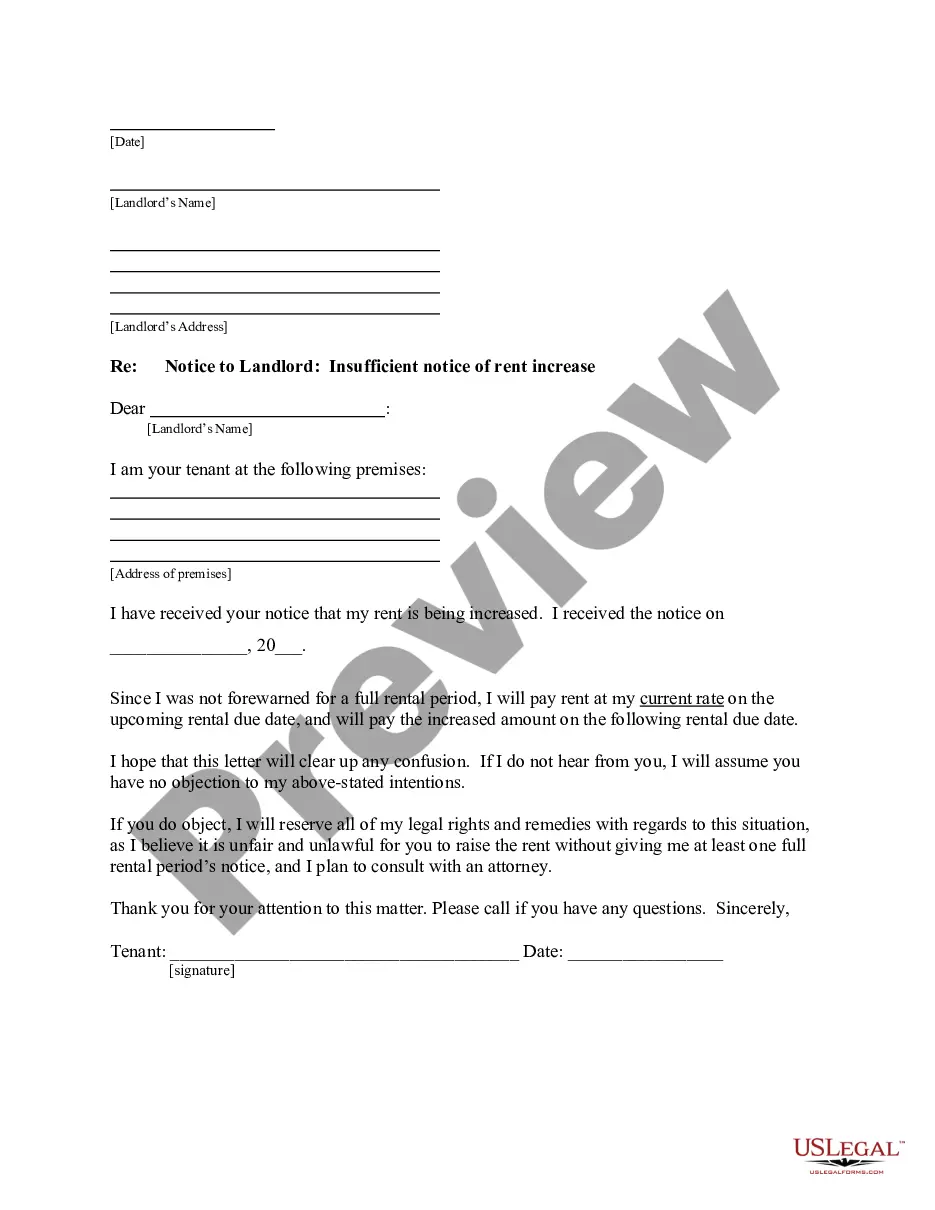
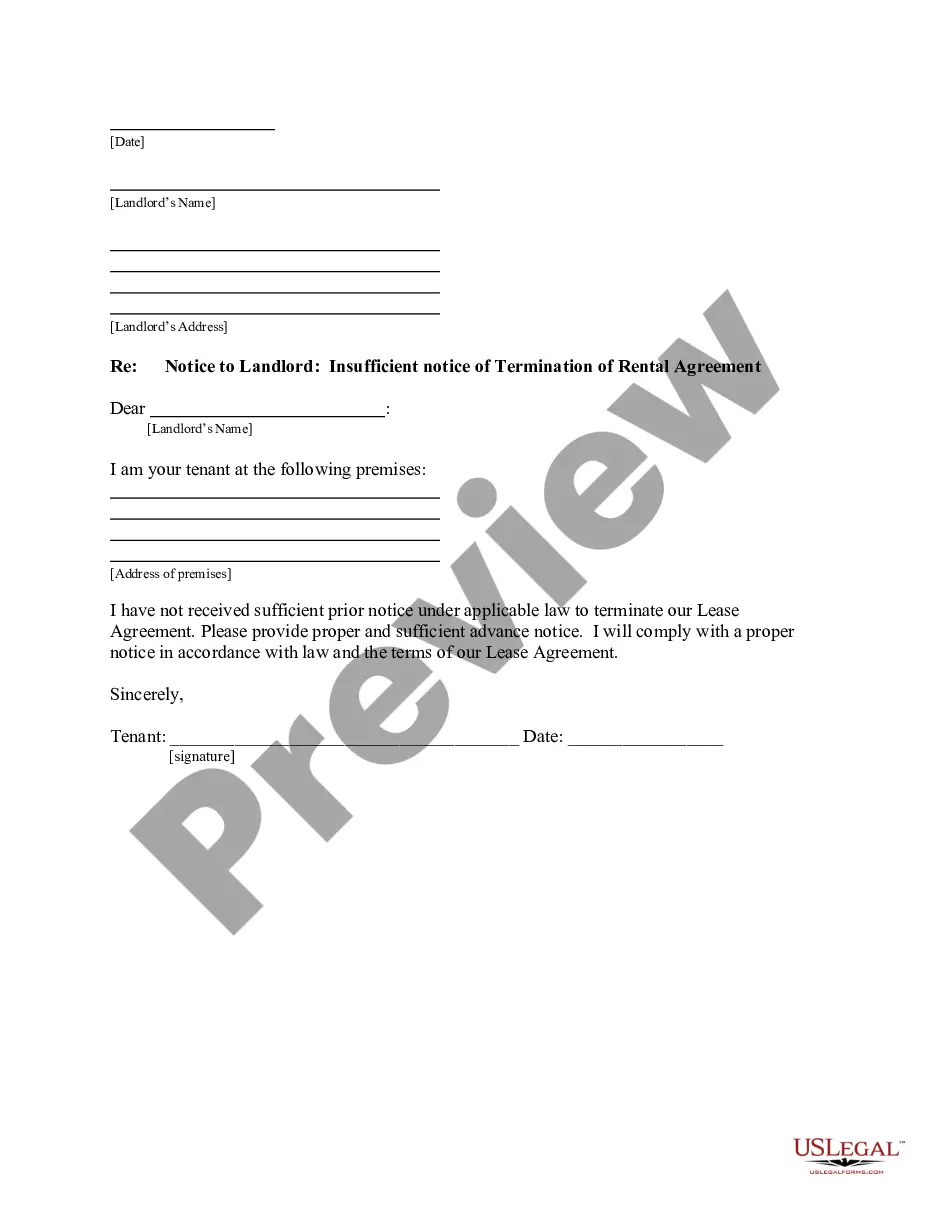
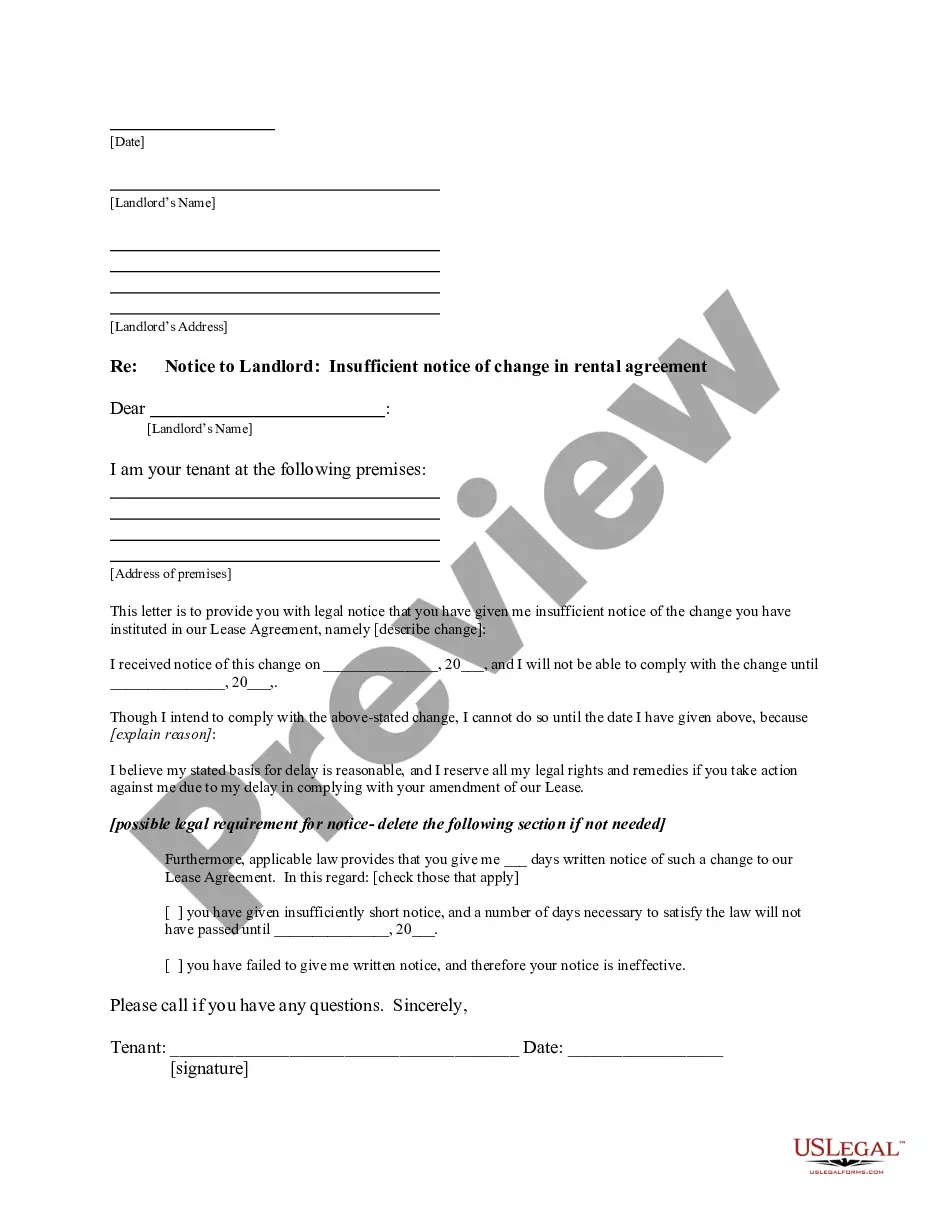
This Letter from Tenant to Landlord about Insufficient Notice of Rent Increase is a formal communication that a tenant can use to inform their landlord of an illegal rent increase. The form asserts that proper notice was not provided according to state laws, allowing the tenant to continue paying the old rent until proper notice is given. This letter helps differentiate between reasonable and unreasonable rent increase practices and serves as documentation in case of further disputes.
Form components explained
- Date of the letter
- Tenant's current rent payment amount
- Statement addressing the landlord's insufficient notice
- Tenant's proposed payment plan regarding the rent increase
- Reservation of legal rights and remedies
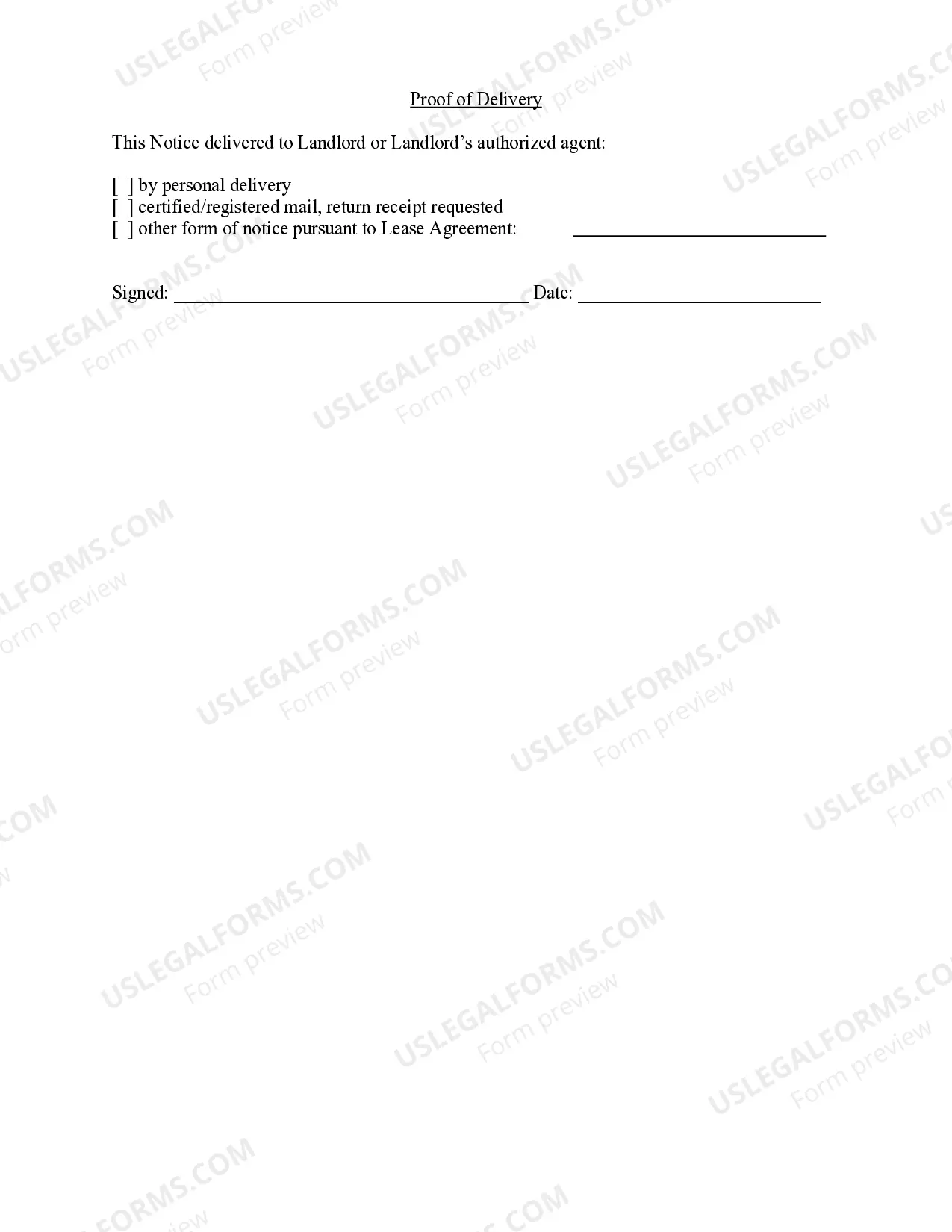
- Proof of delivery method
When to use this form
This form should be used when a tenant receives a notice of a rent increase with insufficient notice, typically less than one full rental period as required by law. It is an important step to formally communicate the tenant's position and to maintain records for any potential legal disputes.
Who should use this form
- Any tenant experiencing a rent increase with improper notice
- Renters in a month-to-month lease agreement
- Individuals seeking to protect their rights under housing laws
- Tenants planning to consult with an attorney regarding the rent increase
Instructions for completing this form
- Begin by entering the date at the top of the letter.
- Clearly state your rental payment amount and express your understanding of the rent increase.
- Include a respectful statement questioning the insufficient notice given by the landlord.
- Outline your intention to pay the current rent amount until the proper notice timeframe is respected.
- Sign the letter and provide proof of delivery, noting how you delivered the letter to the landlord.
Notarization guidance
Notarization is not commonly needed for this form. However, certain documents or local rules may make it necessary. Our notarization service, powered by Notarize, allows you to finalize it securely online anytime, day or night.
Get your form ready online
Our built-in tools help you complete, sign, share, and store your documents in one place.
Make edits, fill in missing information, and update formatting in US Legal Forms—just like you would in MS Word.
Download a copy, print it, send it by email, or mail it via USPS—whatever works best for your next step.
Sign and collect signatures with our SignNow integration. Send to multiple recipients, set reminders, and more. Go Premium to unlock E-Sign.
If this form requires notarization, complete it online through a secure video call—no need to meet a notary in person or wait for an appointment.
We protect your documents and personal data by following strict security and privacy standards.

Make edits, fill in missing information, and update formatting in US Legal Forms—just like you would in MS Word.

Download a copy, print it, send it by email, or mail it via USPS—whatever works best for your next step.

Sign and collect signatures with our SignNow integration. Send to multiple recipients, set reminders, and more. Go Premium to unlock E-Sign.

If this form requires notarization, complete it online through a secure video call—no need to meet a notary in person or wait for an appointment.

We protect your documents and personal data by following strict security and privacy standards.
Mistakes to watch out for
- Failing to specify the exact dates relevant to the rental agreement.
- Not providing sufficient evidence of the landlord's notice.
- Overlooking the importance of keeping a copy of the letter for personal records.
- Neglecting to check state-specific rules regarding notice periods.
Advantages of online completion
- Convenient access to customizable templates drafted by licensed attorneys.
- Ability to download and edit the document at your own pace.
- Legally compliant formats that ensure proper communication.
- No need to navigate complicated legal jargon; plain language is used.
Legal use & context
- This letter serves as a formal response to a landlord's rent increase notice, ensuring the tenant's rights are recognized.
- Using this form can help prevent potential disputes and misunderstandings regarding rental agreements.
- Maintaining written communication establishes a record that may be necessary if legal action arises.
Quick recap
- This form is essential for tenants who receive inadequate notice of a rent increase.
- Properly completing and delivering this letter protects your rights as a tenant.
- Understanding local laws regarding rental agreements can enhance your negotiation position.
Looking for another form?
Form popularity
FAQ
If you refuse access to your home If you refuse access for repairs and inspections entirely, you could be breaking your tenancy agreement and putting your health or safety at risk.You could be at risk of section 21 eviction if you rent privately and refuse access for repairs or gas or electrical safety checks.
Generally, no. The landlord cannot raise the rent during a 12-month lease term. Once a year, HUD calculates the median gross income in each part of the U.S. LIHTC rent amounts are based upon this calculation. If the local average income increases, the LIHTC rent may be increased during the next 12-month lease term.
By the law, Utah tenants are required to abide in a certain way. They must follow certain procedures as outlined by the law as well. Tenants also have certain rights that they are entitled to, as well as things they are responsible for. The tenant has the right to dwell in a safe and sanitary housing unit.
Although renters must abide by the Homeowners' Association rules, they still have rights under the law. The property owner must also follow their home state's Landlord-Tenant Laws that include the Fair Housing Act and Fair Credit Reporting Act.
The Fit Premises Act is the Utah law that governs housing conditions. Under this law, a landlord must provide safe and livable housing. This means the landlord must rent housing that is up to code.If you break something in your apartment or cause damage to the rental, you may have to pay for the repairs.
Before landlords can file an eviction suit, Utah law requires you to provide 3 days' notice to tenants to correct a deficiency or leave the premises. Generally, the eviction process in Utah takes just a matter of days or weeks from the time the landlord files the lawsuit to the time the tenant is out of the property.
The Tenant Doesn't Make Enough Income. The Tenant Smokes. The Tenant Has a Pet. The Tenant's Income Isn't Verified. The Tenant Has Been Convicted of a Crime. The Tenant Does Not Have Rental History. The Tenant Has a History of Damaging Property and Not Paying Rent. The Tenant Provides False Information.
If a tenant has a mental or physical disability or is sixty or older, and that tenant has a physical or mental disability that requires the tenant to relocate because of a need for care or treatment that cannot be provided in the rental unit, the tenant can terminate the lease.