Waiver and Release From Liability For Minor Child for Rock Climbing Gym
Understanding this form
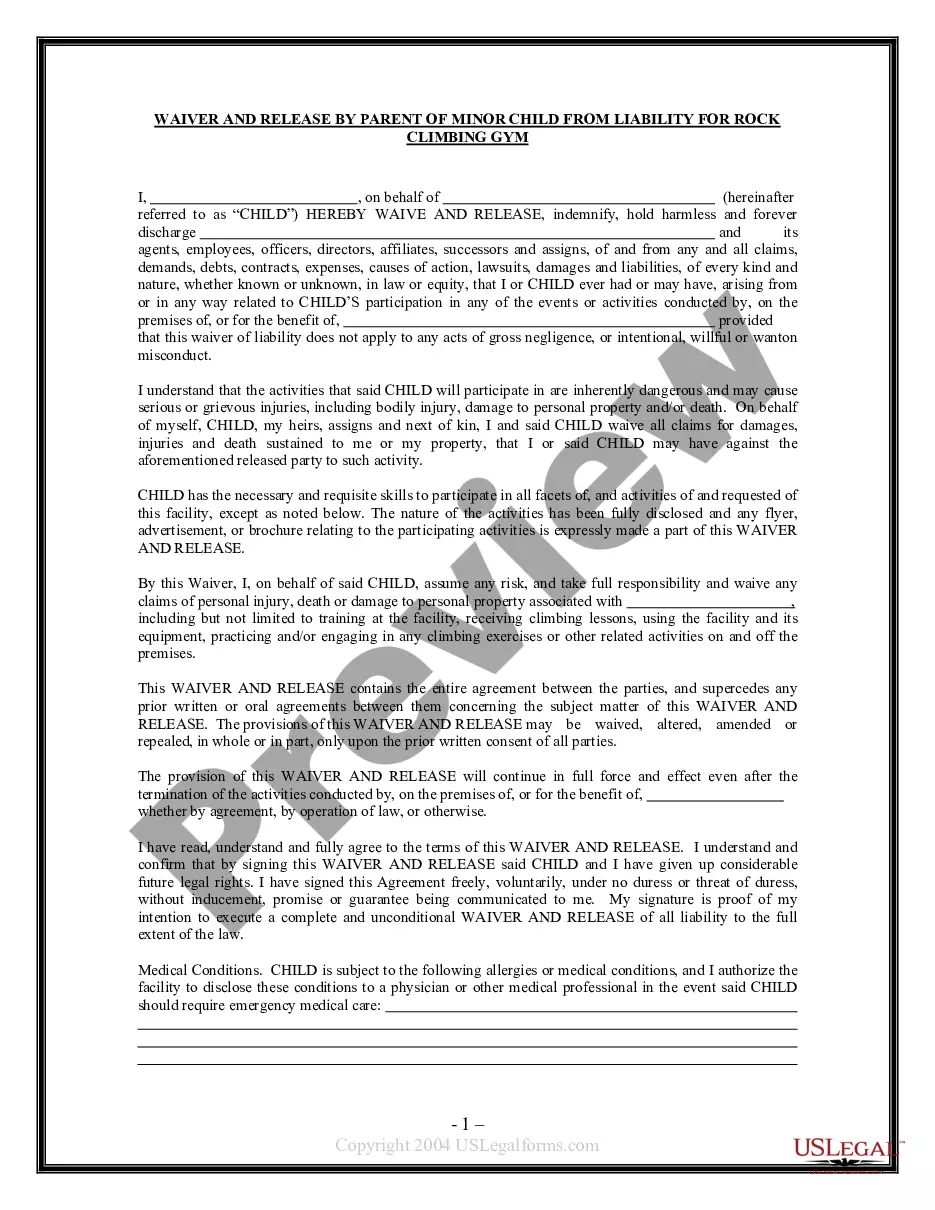
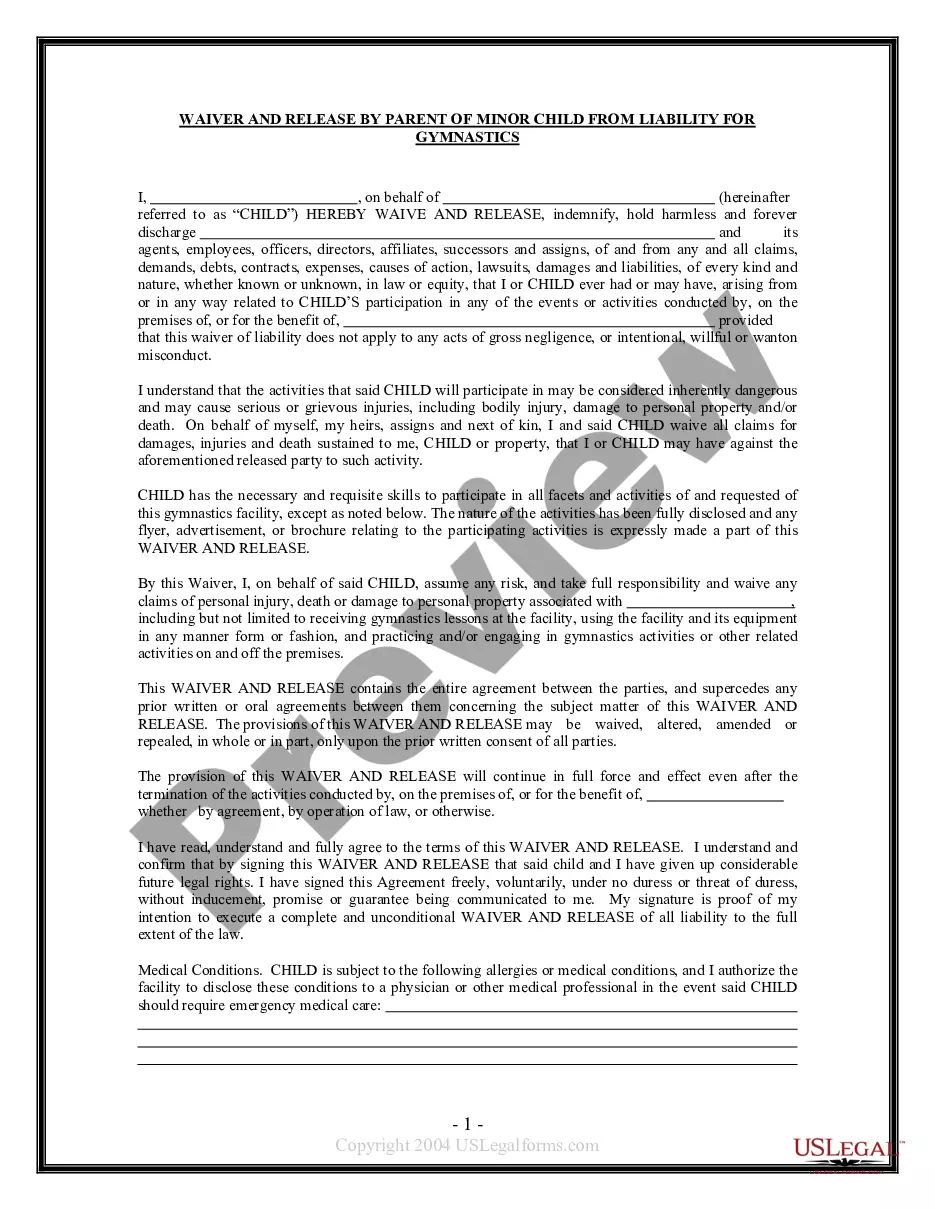
This Waiver and Release From Liability for Minor Child for Rock Climbing Gym is designed for parents or guardians to release a rock climbing facility from legal liability for injuries that a minor child may suffer while participating in activities at the gym. This form is essential for ensuring that the facility is not held responsible for accidents and injuries that may occur during the inherently dangerous activities involved in rock climbing, differentiating it from general liability waivers that may lack specific references to minors or particular activities.
Form components explained
- Identification of the minor child participating in the activities.
- A clear statement acknowledging the inherent risks of rock climbing.
- A waiver of claims against the rock climbing facility for any injuries sustained.
- Certification that the child has the necessary skills to participate, unless noted otherwise.
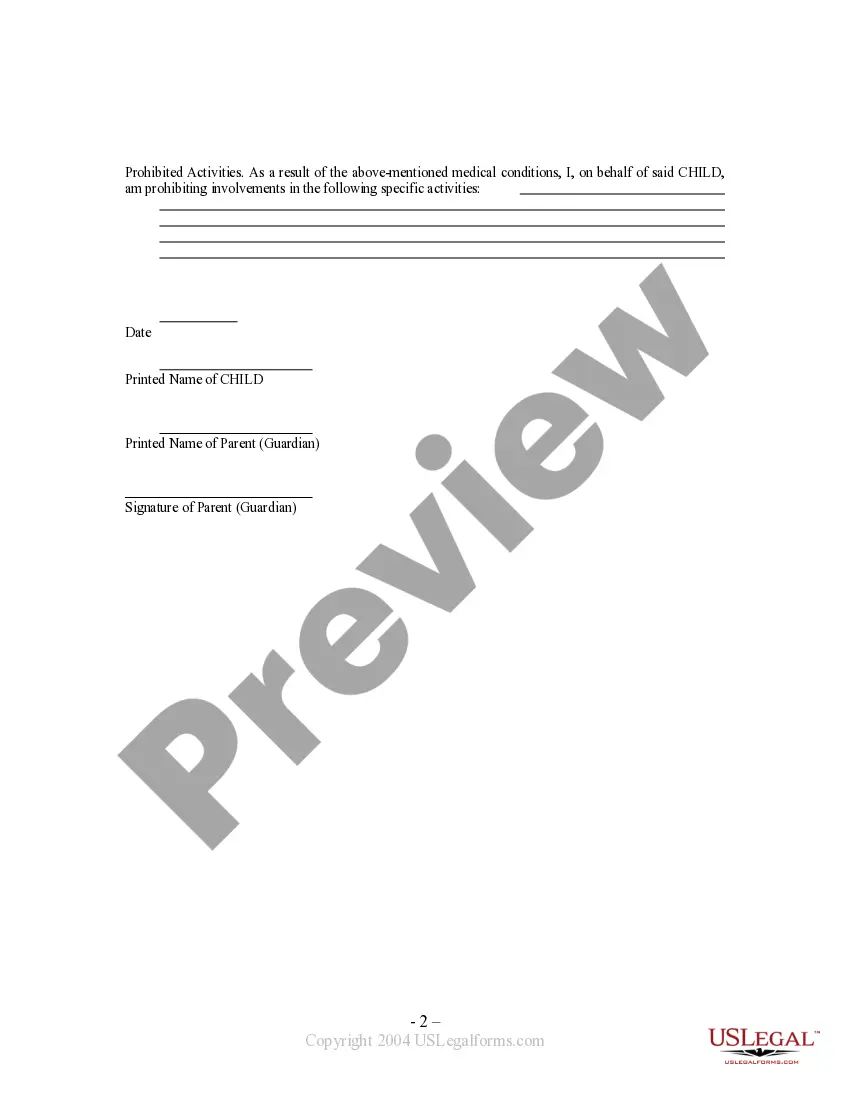
- Signature of the parent or guardian agreeing to the terms of the waiver.
When to use this document
This form should be used when a parent or guardian wishes to enroll a minor child in activities at a rock climbing gym. It is particularly relevant for situations where the child will be climbing or using gym facilities that come with risks of physical injury. The form is commonly required by the gym before participation in any activities and serves to protect both the facility and the participant.
Who should use this form
This form is intended for:
- Parents or guardians of minor children who plan to engage in rock climbing activities.
- Rock climbing gyms that need a legal release to protect against liability.
- Individuals involved in organizing rock climbing events for minors.
Completing this form step by step
- Enter the full name of the minor child participating in the activities.
- Review and acknowledge the risks associated with rock climbing activities listed in the waiver.
- Indicate whether the child possesses the necessary skills for the activities, providing any exceptions if applicable.
- Sign and date the waiver as the parent or guardian, confirming your agreement to the terms.
- Ensure that the signature of a second witness, if required, is obtained.
Does this document require notarization?
This form does not typically require notarization unless specified by local law. Always check with the specific rock climbing gym or jurisdiction for any additional requirements.
Get your form ready online
Our built-in tools help you complete, sign, share, and store your documents in one place.
Make edits, fill in missing information, and update formatting in US Legal Forms—just like you would in MS Word.
Download a copy, print it, send it by email, or mail it via USPS—whatever works best for your next step.
Sign and collect signatures with our SignNow integration. Send to multiple recipients, set reminders, and more. Go Premium to unlock E-Sign.
If this form requires notarization, complete it online through a secure video call—no need to meet a notary in person or wait for an appointment.
We protect your documents and personal data by following strict security and privacy standards.

Make edits, fill in missing information, and update formatting in US Legal Forms—just like you would in MS Word.

Download a copy, print it, send it by email, or mail it via USPS—whatever works best for your next step.

Sign and collect signatures with our SignNow integration. Send to multiple recipients, set reminders, and more. Go Premium to unlock E-Sign.

If this form requires notarization, complete it online through a secure video call—no need to meet a notary in person or wait for an appointment.

We protect your documents and personal data by following strict security and privacy standards.
Avoid these common issues
- Failing to include the minor's full name, which can invalidate the waiver.
- Not addressing specific skills or exceptions related to the child's ability.
- Omitting the parent or guardian's signature or date, rendering the form incomplete.
- Ignoring state-specific requirements or nuances in language.
Benefits of using this form online
- Convenience of completion from any location, at any time.
- Immediate access to a legally vetted template drafted by licensed attorneys.
- Ability to edit and customize the form to meet specific needs before printing.
- Secure storage options for future reference and easy retrieval.
Legal use & context
- This waiver is legally binding and can be enforced in court, protecting the facility from liability claims.
- It is essential for maintaining safety standards within the facility.
- Excludes liability for inherent risks associated with rock climbing, which may not apply to other sports or activities.
Quick recap
- This form is important for protecting rock climbing gyms from liability related to minors.
- Proper completion, understanding, and signing of the waiver are crucial for legal protection.
- Consult local laws to ensure compliance and proper use of the waiver.
Looking for another form?







Form popularity
FAQ
This form is a guardian-signed document that releases a rock climbing gym from liability for injuries to a minor during enrolled activities. It requires identifying the child, acknowledging the inherent risks of rock climbing, waiving claims against the facility, confirming the child’s required skills (if noted), and obtaining the parent’s or guardian’s signature.
A gym waiver is a document that asks participants or their guardians to acknowledge risks and release the facility from liability. For minor climbers, this form includes the child's identification, an acknowledgment of inherent risks, a waiver of claims against the gym, certification of the child’s skills if noted, and a parent or guardian signature.
A simple waiver for a minor rock climber looks like a concise document that identifies the child, states the inherent risks of rock climbing, waives claims against the facility, notes any required skills, and includes the signature of a parent or guardian. This form follows that structure tailored to a gym setting.
Signing this waiver does not guarantee you cannot sue a rock climbing gym. While the form is designed to release liability for injuries to a minor, claims can still arise in certain circumstances and vary by state. Always consult a licensed attorney to understand enforceability in the applicable jurisdiction.
This form presents a simple, clearly organized waiver. It typically includes minor identification, a statement of inherent risks, a waiver of claims against the gym, a skills certification section, and a signature line for a parent or guardian—all arranged to be easy to complete before the child participates in activities.
This form differs from a general waiver by being tailored to minors and to rock climbing gym activities. It specifies identifying the minor, acknowledges rock climbing risks, and includes a skills certification requirement, all with a parent or guardian signature. A general waiver may not address these minor- and activity-specific elements.