Prospective Licensee Letter Agreement
What this document covers
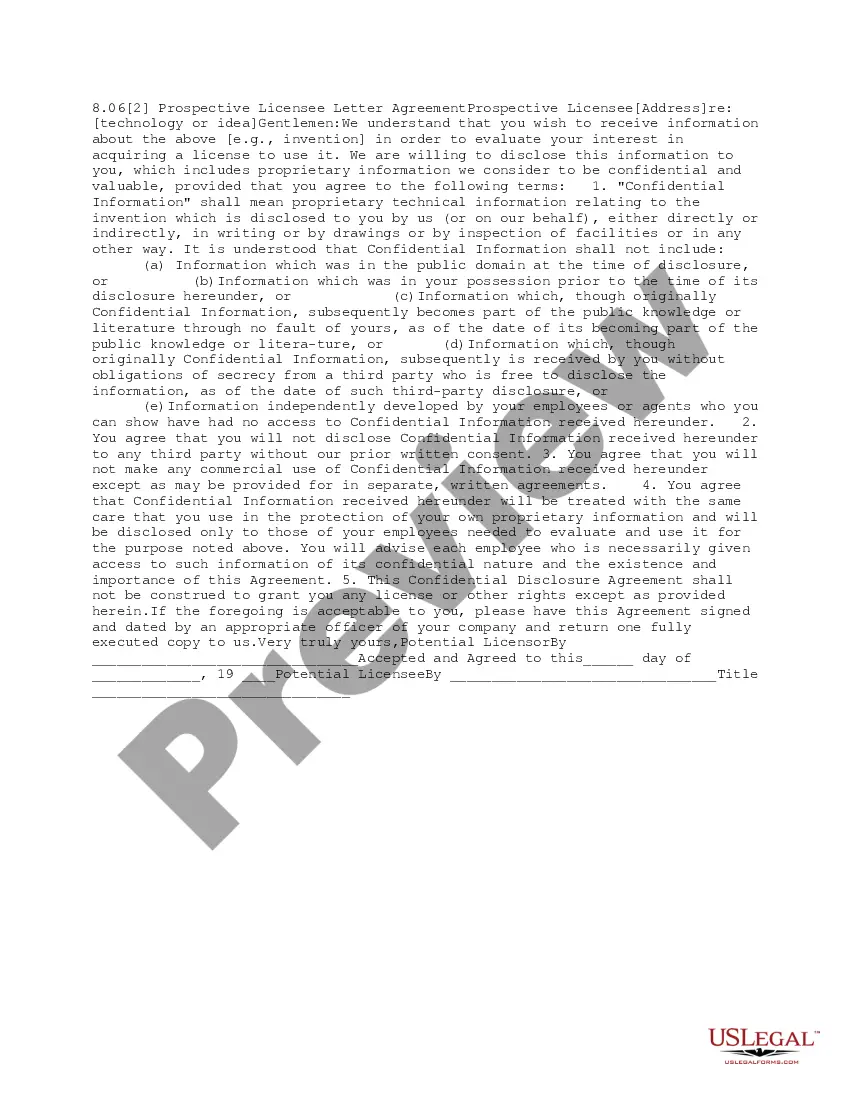
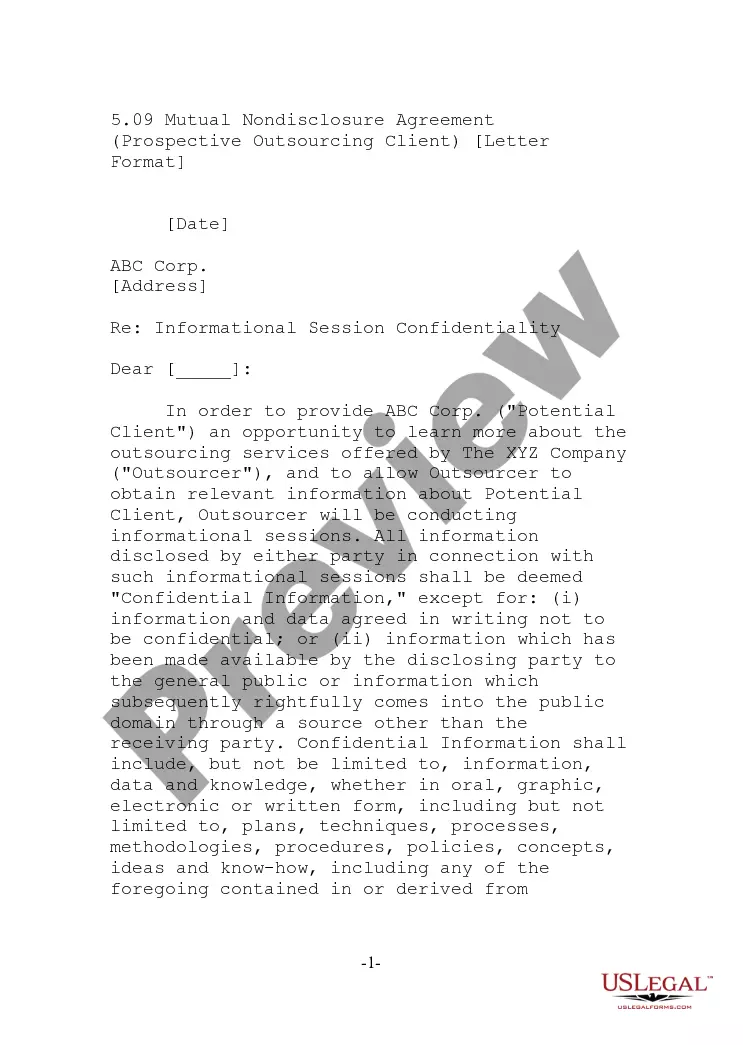
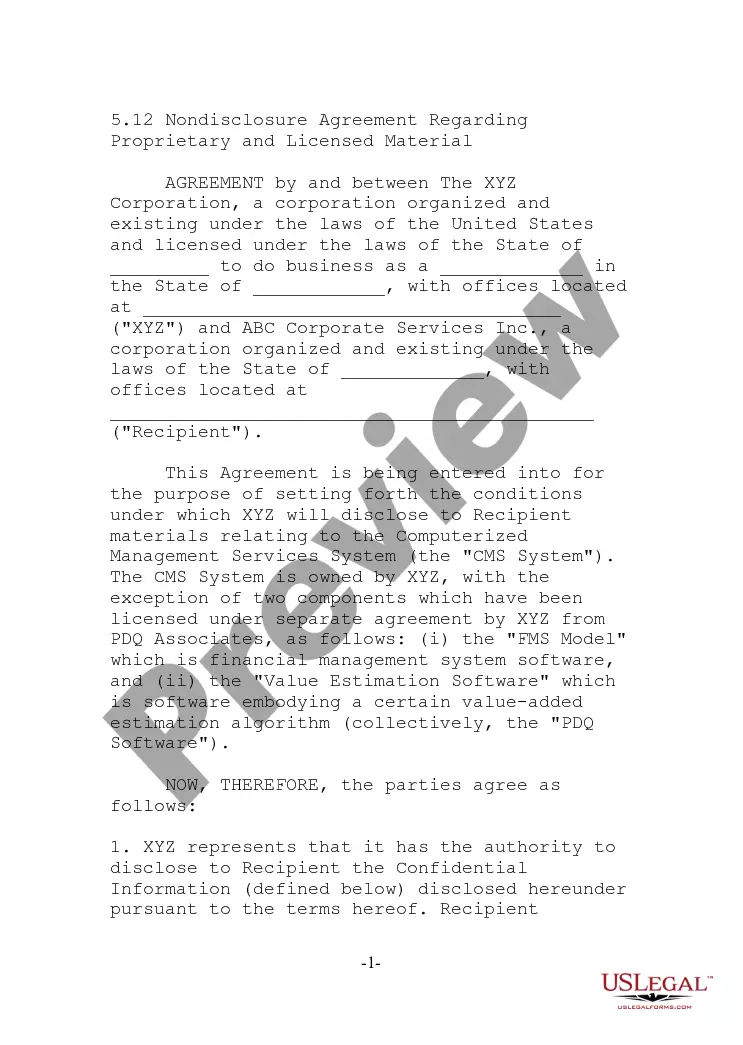
The Prospective Licensee Letter Agreement is a legal document that facilitates the exchange of confidential information between a licensor and a prospective licensee interested in acquiring rights to use a specific technology or idea. This agreement serves to protect sensitive proprietary information during the negotiation process, ensuring that the licensor can disclose necessary details while maintaining confidentiality.
Key components of this form
- Confidential Information: Defines what constitutes confidential information disclosed during the agreement.
- Disclosure Restrictions: Outlines the obligations of the prospective licensee regarding the non-disclosure of confidential information to third parties.
- Limitations on Use: Specifies that information may not be commercially used except under separate agreements.
- Care and Protection: Requires the licensee to protect confidential information with the same level of care as their own proprietary information.
- No License Grant: Clarifies that the agreement does not grant the licensee any rights to use the information beyond evaluation purposes.
- Signatures: Includes spaces for signatures from both parties, indicating acceptance of the terms.
Common use cases
This form is necessary when a company is approached by a potential licensee who wishes to review confidential information related to a specific technology or idea. It is especially relevant during early discussions, prior to formal agreements, to ensure that sensitive information remains protected while both parties evaluate the potential for a licensing arrangement.
Who this form is for
This form should be used by:
- Companies or individuals holding proprietary technology or ideas.
- Prospective licensees interested in acquiring rights to use a specific technology.
- Legal representatives managing intellectual property transactions.
Steps to complete this form
To complete this form, follow these steps:
- Identify the parties involved by entering the names and addresses of the prospective licensee and potential licensor at the top of the letter.
- Clearly state the purpose of the agreement, detailing the specific technology or idea being discussed.
- Review and understand the definitions of Confidential Information and the obligations outlined in the agreement.
- Obtain signatures from authorized representatives of both parties, including dates to confirm agreement to the terms.
- Distribute copies of the signed agreement to all parties involved for their records.
Is notarization required?
This form does not typically require notarization unless specified by local law. It is advisable to confirm legal requirements within your jurisdiction to ensure compliance.
Get your form ready online
Our built-in tools help you complete, sign, share, and store your documents in one place.
Make edits, fill in missing information, and update formatting in US Legal Forms—just like you would in MS Word.
Download a copy, print it, send it by email, or mail it via USPS—whatever works best for your next step.
Sign and collect signatures with our SignNow integration. Send to multiple recipients, set reminders, and more. Go Premium to unlock E-Sign.
If this form requires notarization, complete it online through a secure video call—no need to meet a notary in person or wait for an appointment.
We protect your documents and personal data by following strict security and privacy standards.

Make edits, fill in missing information, and update formatting in US Legal Forms—just like you would in MS Word.

Download a copy, print it, send it by email, or mail it via USPS—whatever works best for your next step.

Sign and collect signatures with our SignNow integration. Send to multiple recipients, set reminders, and more. Go Premium to unlock E-Sign.

If this form requires notarization, complete it online through a secure video call—no need to meet a notary in person or wait for an appointment.

We protect your documents and personal data by following strict security and privacy standards.
Mistakes to watch out for
- Failing to clearly define what constitutes Confidential Information.
- Not specifying the obligations and restrictions on the use of information.
- Overlooking the need for signatures from authorized representatives.
- Neglecting to discuss the potential for commercial use of the disclosed information in a separate agreement.
Benefits of using this form online
- Convenient access to a legally vetted form for licensing negotiations.
- Editable format allows for customization to specific needs and circumstances.
- Drafted by licensed attorneys ensures compliance with legal requirements.
- Efficient online access reduces the time and expense associated with traditional legal services.
Legal use & context
The Prospective Licensee Letter Agreement is enforceable as a binding agreement, provided it is executed correctly and complies with applicable laws. It protects both parties by ensuring confidentiality while discussing licensing opportunities.
Quick recap
- The Prospective Licensee Letter Agreement is crucial for protecting confidential information during licensing discussions.
- Properly completing this form helps foster trust and legal protection for both parties involved.
- It is adaptable for use in various jurisdictions within the U.S., ensuring its broad applicability.
Looking for another form?
Form popularity
FAQ
Know your stuff. Know the downside. Present like a pro. Get it protected. Submit smart! Analyze your targeted licensee. Don't reinvent procedures. Find a champion.
Do your homework. Before you begin negotiating, you need to understand your licensee's business. Start with a term sheet. Manage your expectations. Be patient. Have a win-win attitude. Don't lose your sense of humor. Remember to hold something back. Put yourself in their shoes.
A license agreement is a business contract between two parties. The licensor (the seller of the license) owns the asset being licensed and the licensee (the buyer) pays for the right to use the license. The licensee pays royalties to the owner in exchange for the right to sell the product or use the technology.
Exclusive or non-exclusive. In an exclusive license, the intellectual property holder is licensing the work only to one person, for that particular use/territory. Territory. Use. Attribution. Derivative works. Confidentiality. Time frame. Termination.
What is a Licensing Agreement? A licensing agreement is a contract between two parties (the licensor and licensee) in which the licensor grants the licensee the right to use the brand name, trademark, patented technology, or ability to produce and sell goods owned by the licensor.
An example of a licensing agreement is a contract between the copyright holders of software and another company, allowing the latter to use the computer software for their daily business operations.
Do your homework. Before you begin negotiating, you need to understand your licensee's business. Start with a term sheet. Manage your expectations. Be patient. Have a win-win attitude. Don't lose your sense of humor. Remember to hold something back. Put yourself in their shoes.
Download a template for a licensing agreement. Choose your role as the licensor or licensee. Define the license(s) in the agreement. Decide whether the license is exclusive or not. Settle the matter of fees and payment schedule. Add a renewal date and rules.