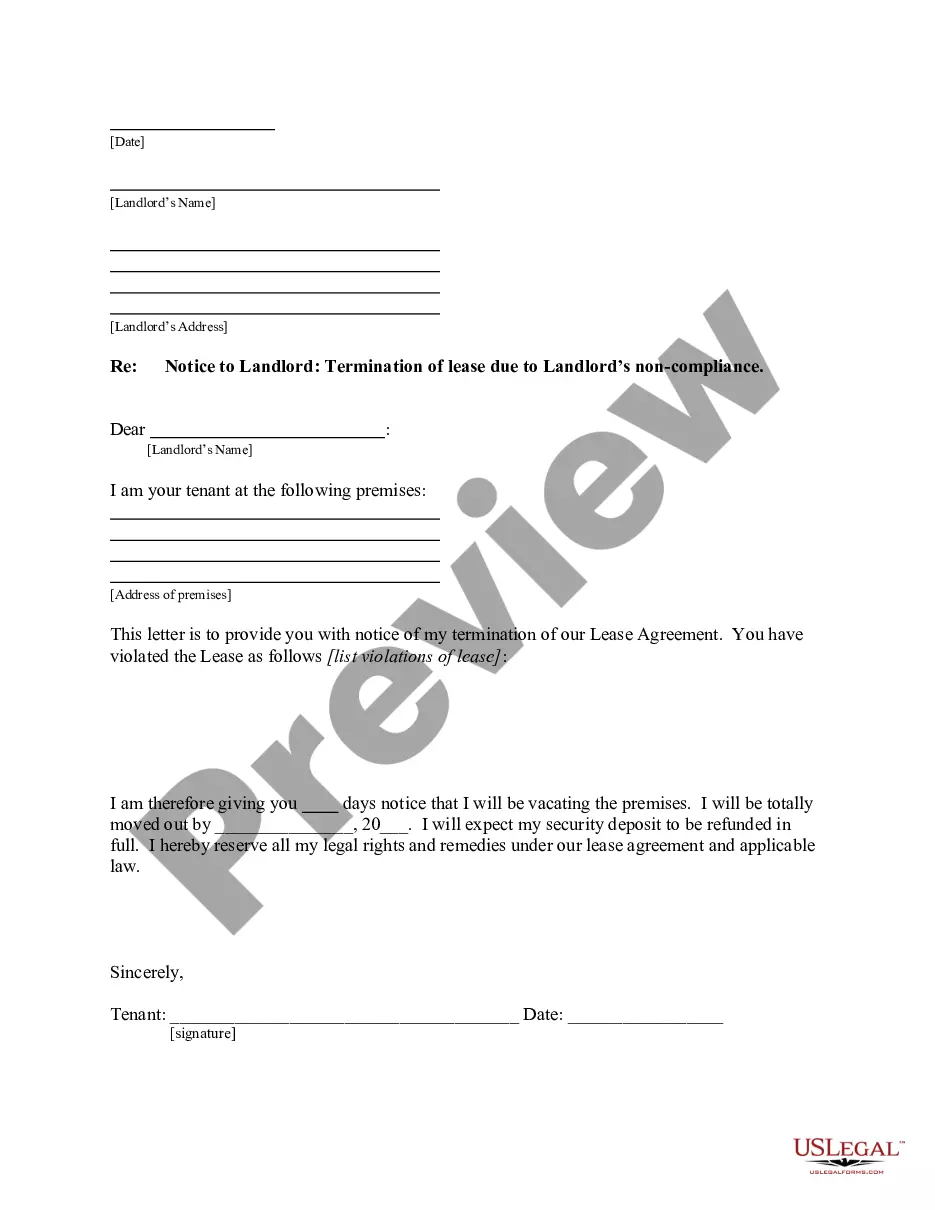
Montana Electrical Contract for Contractor
Overview of this form
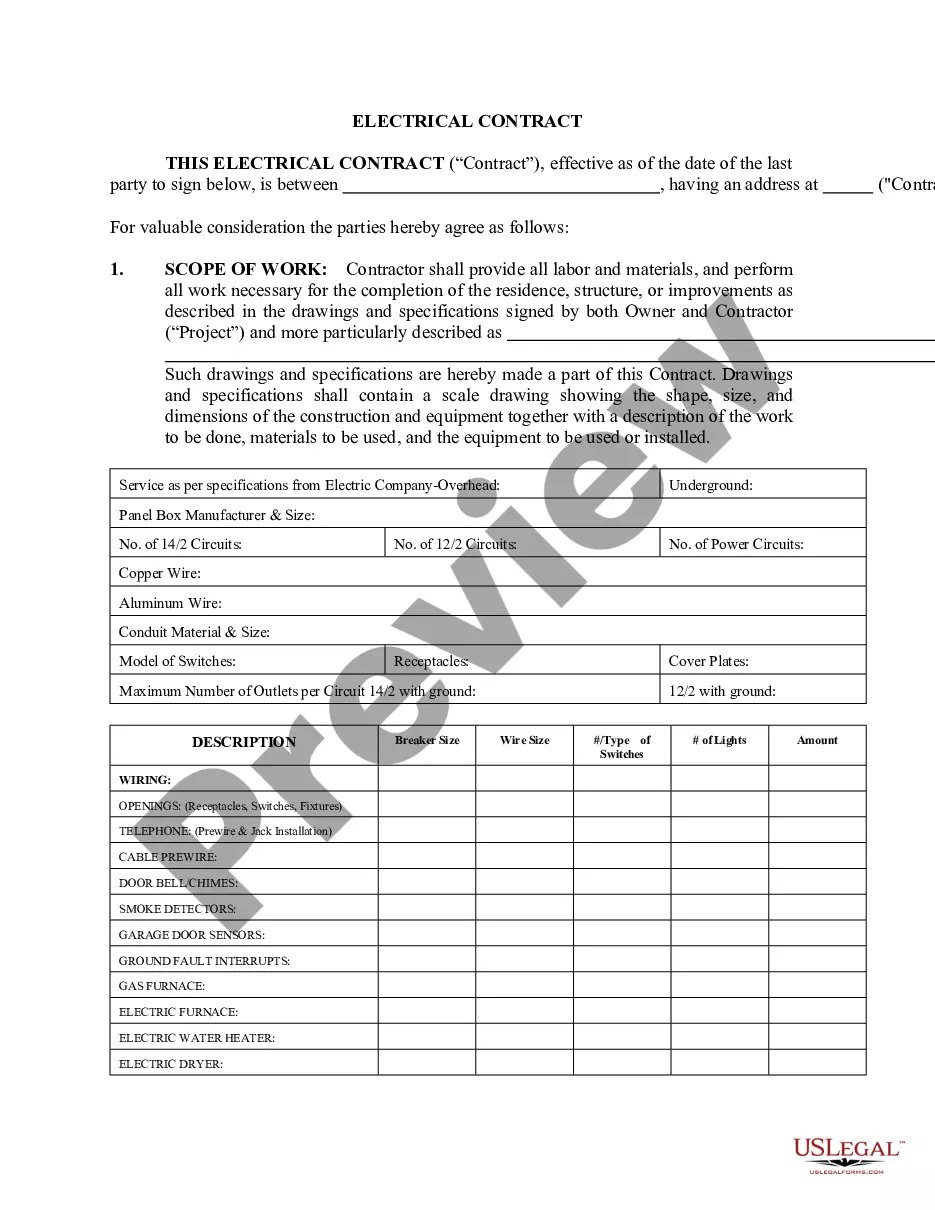
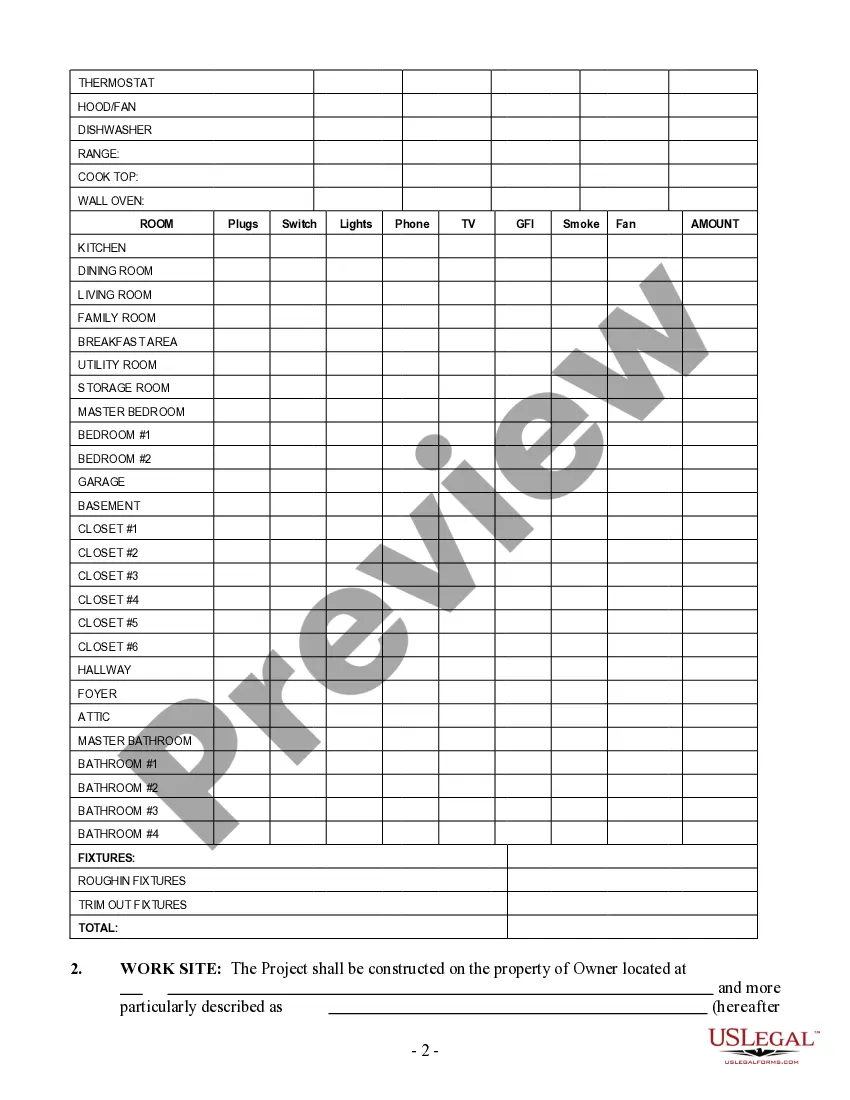
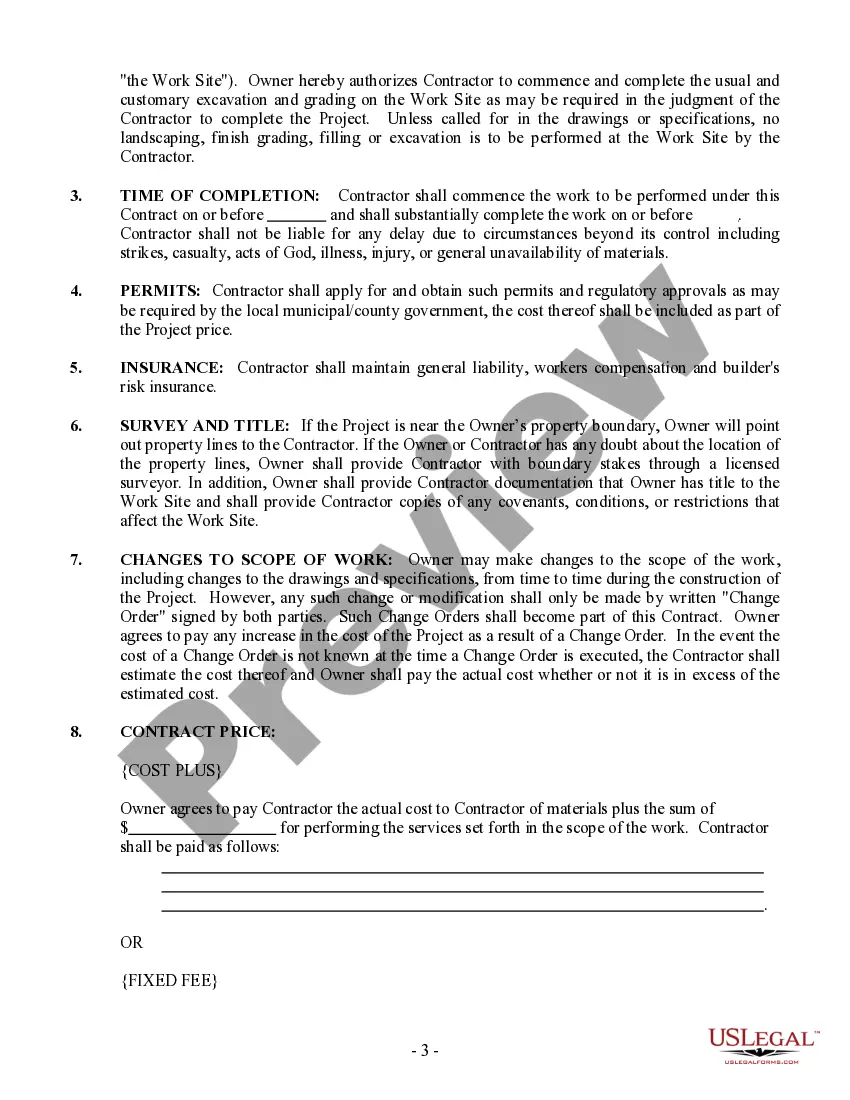
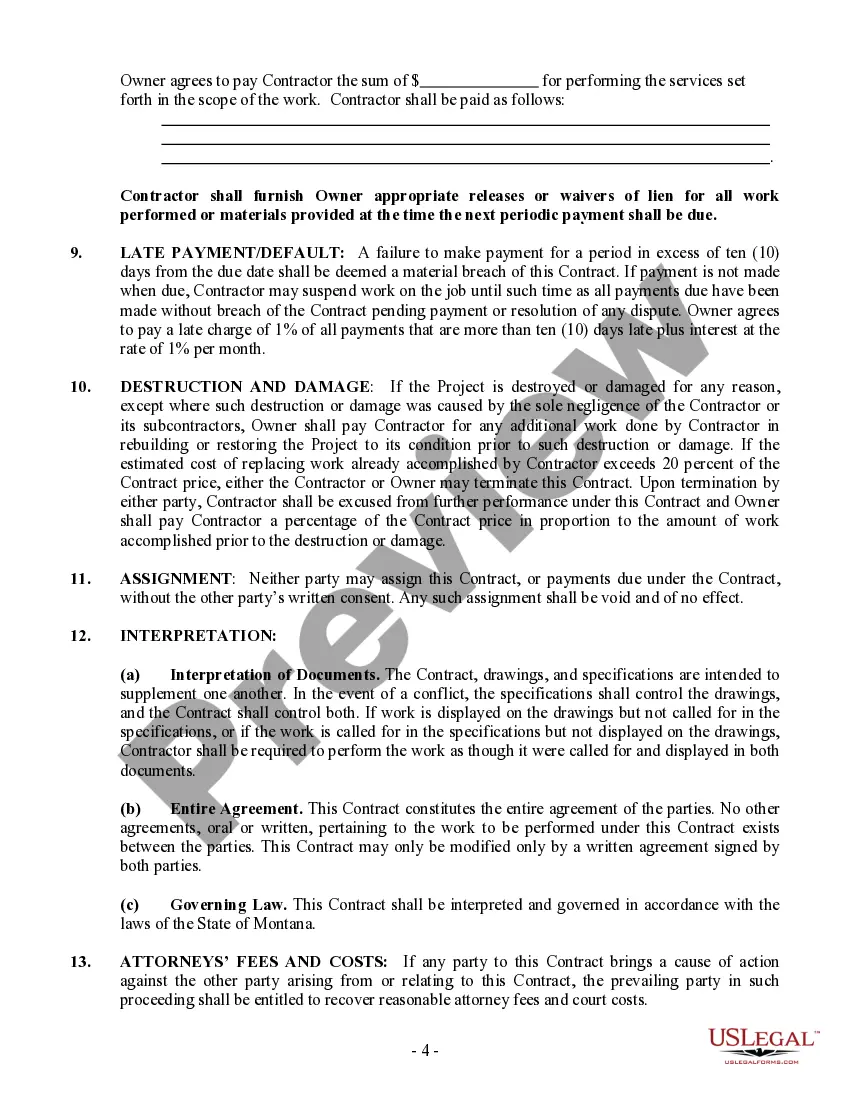
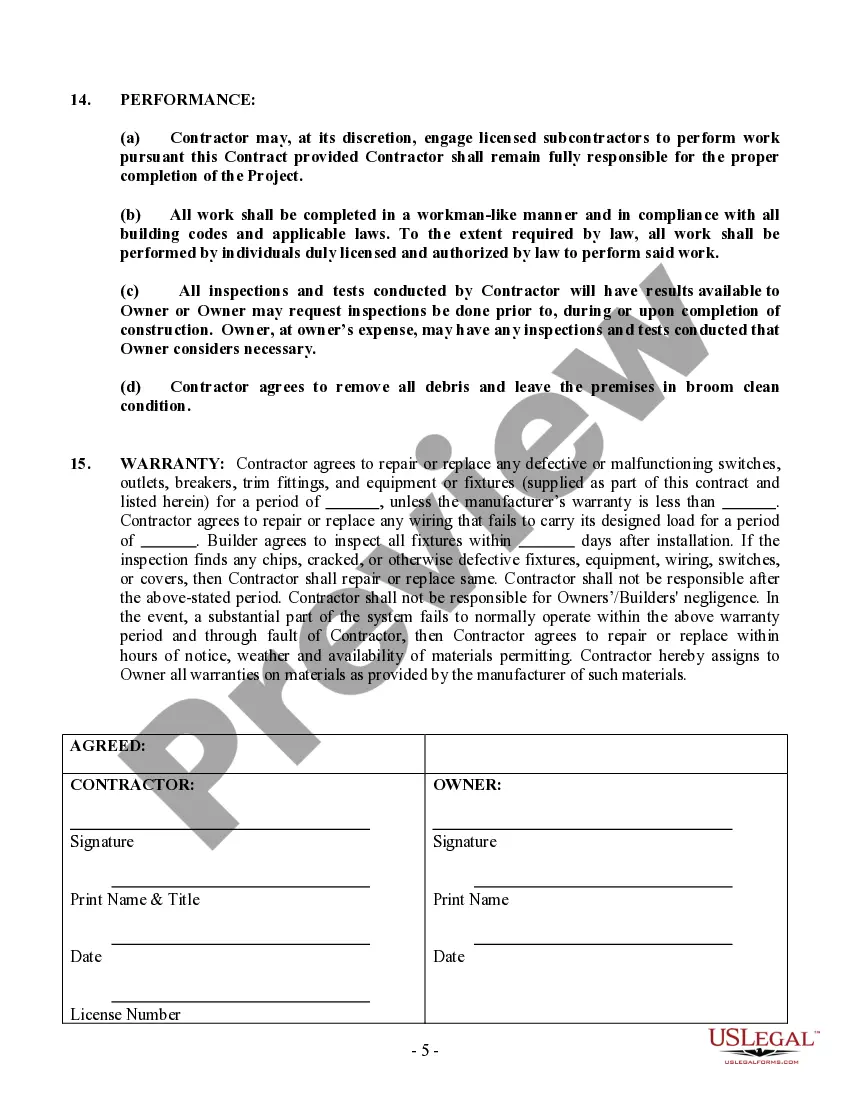
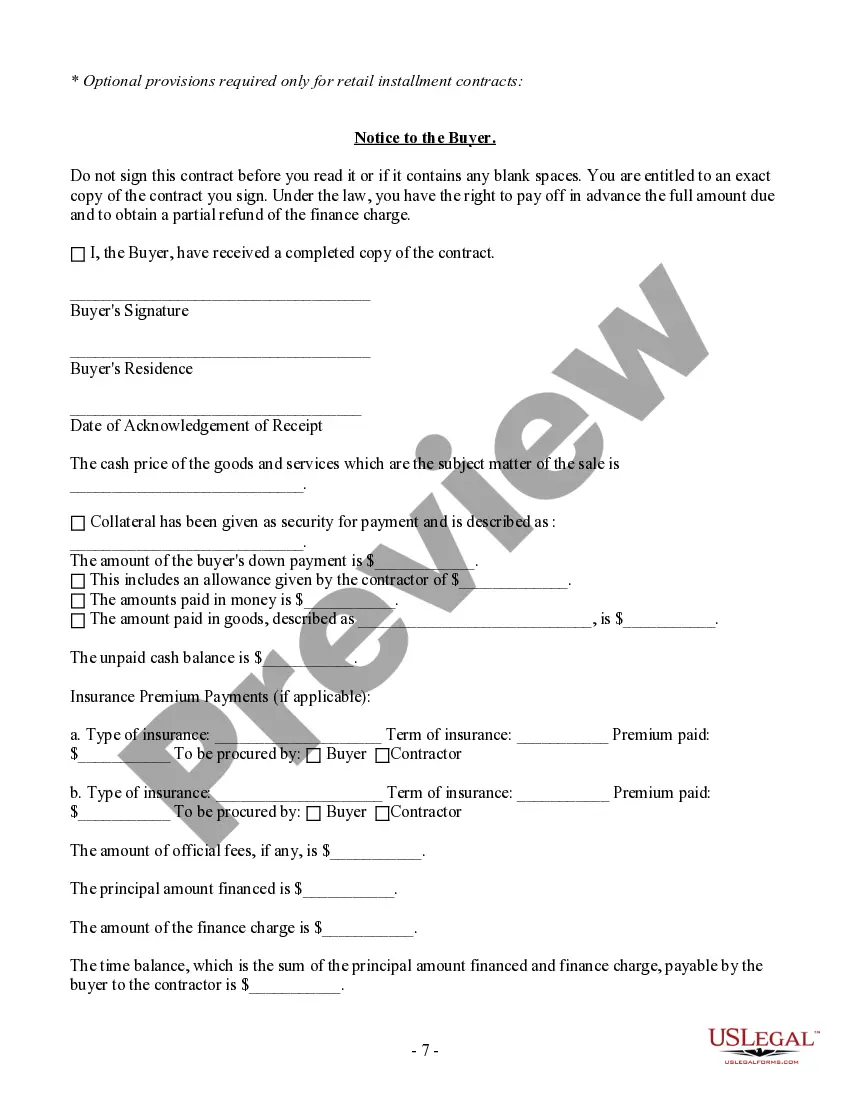
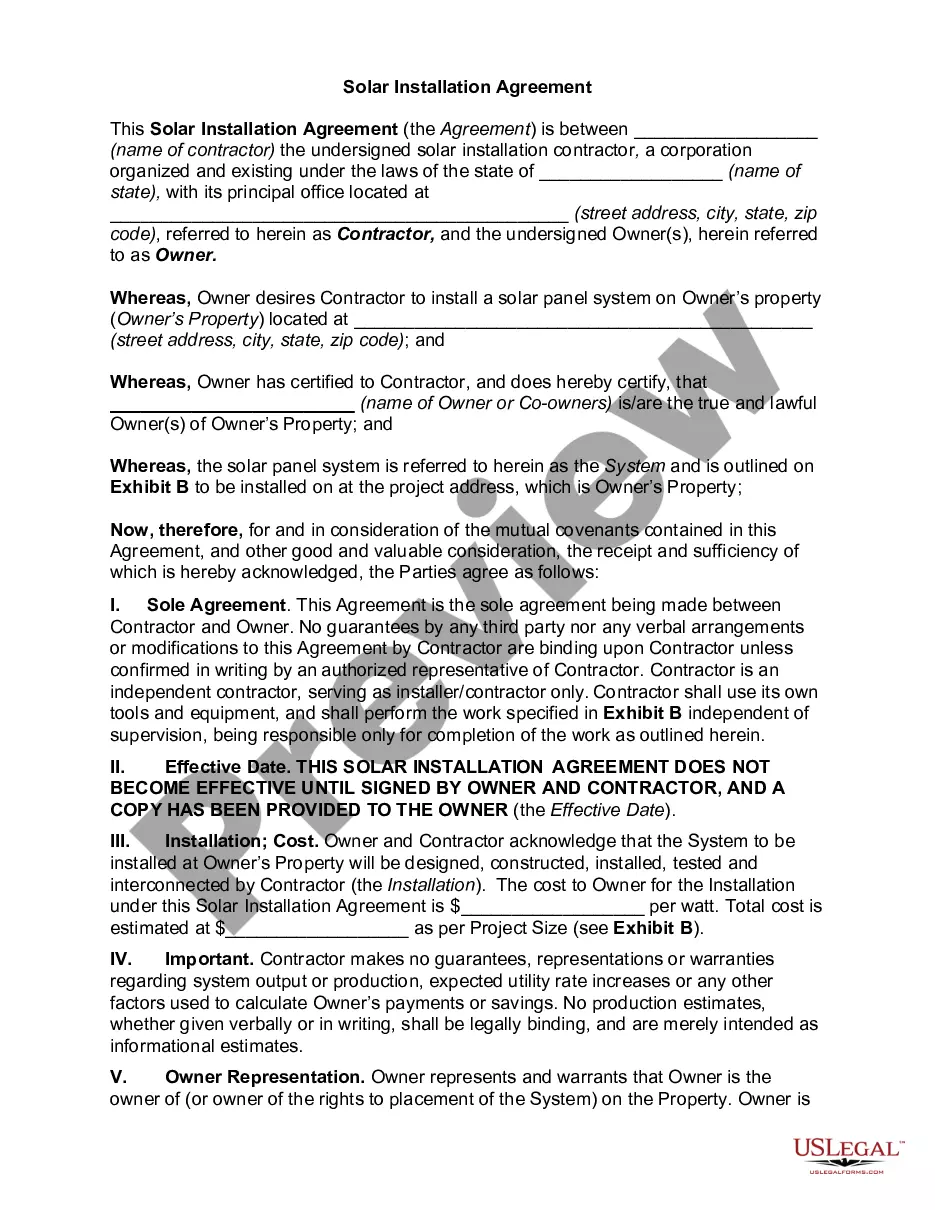
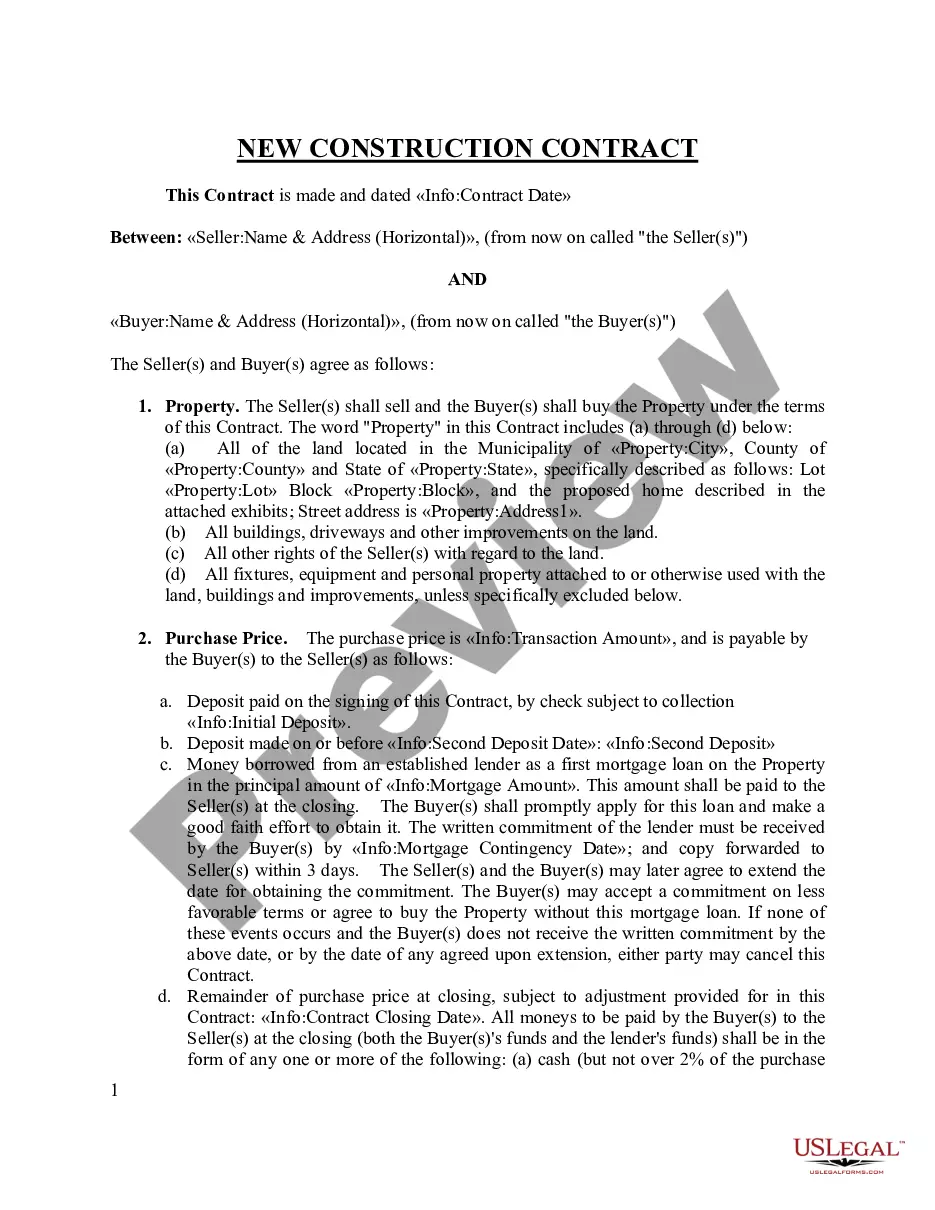
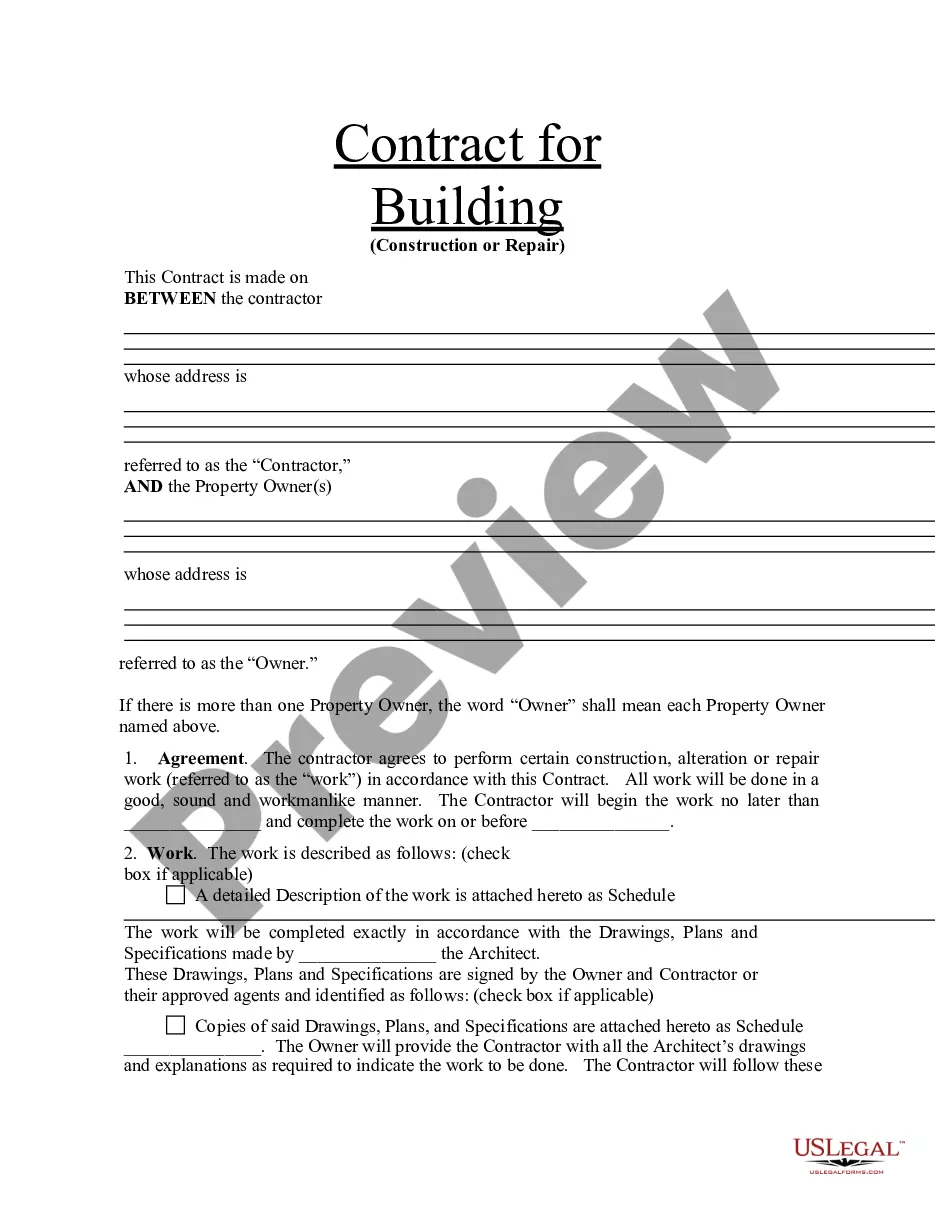
The Electrical Contract for Contractor is a legal document specifically designed for agreements between electrical contractors and property owners. This form allows for arrangements based on either cost plus or fixed fee, and covers essential aspects such as change orders, warranty, and insurance. It is tailored to meet the legal standards in Montana, distinguishing it from general contracts used for construction or services.
Key parts of this document
- Parties involved: Identification of the electrical contractor and the property owner.
- Payment terms: Details on whether the payment will be a fixed fee or based on costs incurred.
- Change orders: Provisions for modifications to the scope of work after the contract is signed.
- Worksite information: Description and location of the site where the work will be performed.
- Warranty and insurance: Clauses outlining the contractor's responsibilities for workmanship and coverage.



Situations where this form applies
This form should be used when a property owner hires an electrical contractor to perform services. It is necessary for projects where specific terms regarding payment structure, changes to the project, and responsibilities are crucial. It is particularly suitable when clear legal protection is required for both parties involved in electrical work at residential or commercial locations in Montana.
Who this form is for
- Electrical contractors engaging in projects for property owners.
- Property owners who require electrical services and wish to formalize their agreement.
- Individuals managing construction or renovation projects that involve electrical work.
Completing this form step by step
- Identify the parties: Clearly fill in the names and contact details of the electrical contractor and property owner.
- Specify payment terms: Indicate whether the arrangement is a cost plus or fixed fee basis.
- Provide worksite details: Enter the address and description of the project location.
- Outline change order procedures: Include how changes to the work will be managed and documented.
- Include warranty and insurance information: Specify the warranty terms and attach proof of insurance if applicable.
Does this document require notarization?
This form does not typically require notarization unless specified by local law. However, both parties should ensure all signatures are obtained to reinforce the contract's validity.
Get your form ready online
Our built-in tools help you complete, sign, share, and store your documents in one place.
Make edits, fill in missing information, and update formatting in US Legal Forms—just like you would in MS Word.
Download a copy, print it, send it by email, or mail it via USPS—whatever works best for your next step.
Sign and collect signatures with our SignNow integration. Send to multiple recipients, set reminders, and more. Go Premium to unlock E-Sign.
If this form requires notarization, complete it online through a secure video call—no need to meet a notary in person or wait for an appointment.
We protect your documents and personal data by following strict security and privacy standards.

Make edits, fill in missing information, and update formatting in US Legal Forms—just like you would in MS Word.

Download a copy, print it, send it by email, or mail it via USPS—whatever works best for your next step.

Sign and collect signatures with our SignNow integration. Send to multiple recipients, set reminders, and more. Go Premium to unlock E-Sign.

If this form requires notarization, complete it online through a secure video call—no need to meet a notary in person or wait for an appointment.

We protect your documents and personal data by following strict security and privacy standards.
Mistakes to watch out for
- Failing to accurately identify all parties involved in the contract.
- Omitting important details regarding payment structure and change orders.
- Neglecting to provide complete worksite information.
Advantages of online completion
- Immediate access to a legally sound and well-drafted contract.
- Easy customization options for specific project needs.
- Time-saving convenience of downloading and filling out the form at your own pace.
- This contract clarifies obligations and responsibilities, reducing the risk of misunderstandings.
- Enforceable under Montana law, ensuring both parties are protected legally.
- Failure to use a proper contract may lead to disputes that could have significant legal consequences.
What to keep in mind
- The Electrical Contract for Contractor is crucial for defining the terms of electrical work agreements.
- Specific clauses help maintain clarity, reducing the risk of disputes.
- Always consider state-specific legal requirements when utilizing contract templates.
Looking for another form?




Form popularity
FAQ
An electrical contractor is different from an electrician; an electrician is an individual tradesman and an electrical contractor is a business person or company that employs electricians.Electricians may work for an electrical contractor, or directly for individuals or companies.
Is My License Only Valid in Montana? for Journeyman Electrical Licenses with Alaska, Arkansas, Colorado, Minnesota, North Dakota, Nebraska, New Hampshire, New Mexico, Oklahoma, South Dakota, Utah, and Wyoming.
Montana law requires construction contractors with employees, corporations or manager-managed limited liability companies in the construction industry to register, which is the same as a license.
Journeyman: The state of Wyoming has a reciprocity agreement for the Journeyman Electrician license with the following states: Utah, Montana, Alaska, Colorado, Arkansas, Oklahoma, New Mexico, South Dakota, Minnesota, Nebraska, North Dakota, and New Hampshire.
California Electrical License ReciprocityCalifornia requires that all electricians get a certification before they can work in the state, and doesn't recognize certifications from other states.
An electrical engineer makes around $93,000 every year. On the other hand, electricians make about $53,000.For example, a project electrical engineer can go up to more than $100,000, while electrical electronic engineers earn around $75,000.
There are some exceptions. Starting with the easiest, there are no statewide low-voltage licensing requirements in Iowa, Kansas, Mississippi, New Hampshire, North Dakota, Ohio and Wisconsin. While Colorado, Indiana, Missouri and Pennsylvania have no statewide requirements, localities in these states do have them.
California has varying reciprocal agreements with Arizona, Nevada and Utah. For more information, see Reciprocal Classifications Listing.
You Could Make Six Figures According to PayScale, the average annual salary for electricians is $55,477. Per the BLS, the highest 10% of electricians earn more than $90,420.Electricians who join unions can make more than those who do not.