Mutual Nondisclosure Agreement - Prospective Outsourcing Client - Letter Format
What this document covers
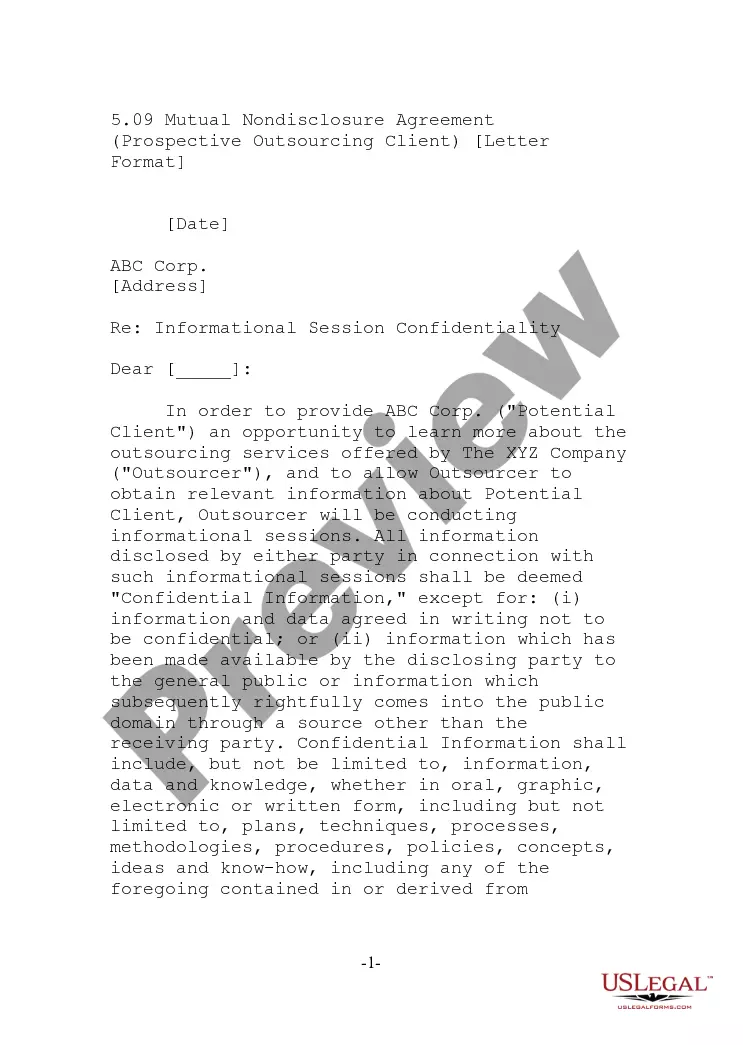
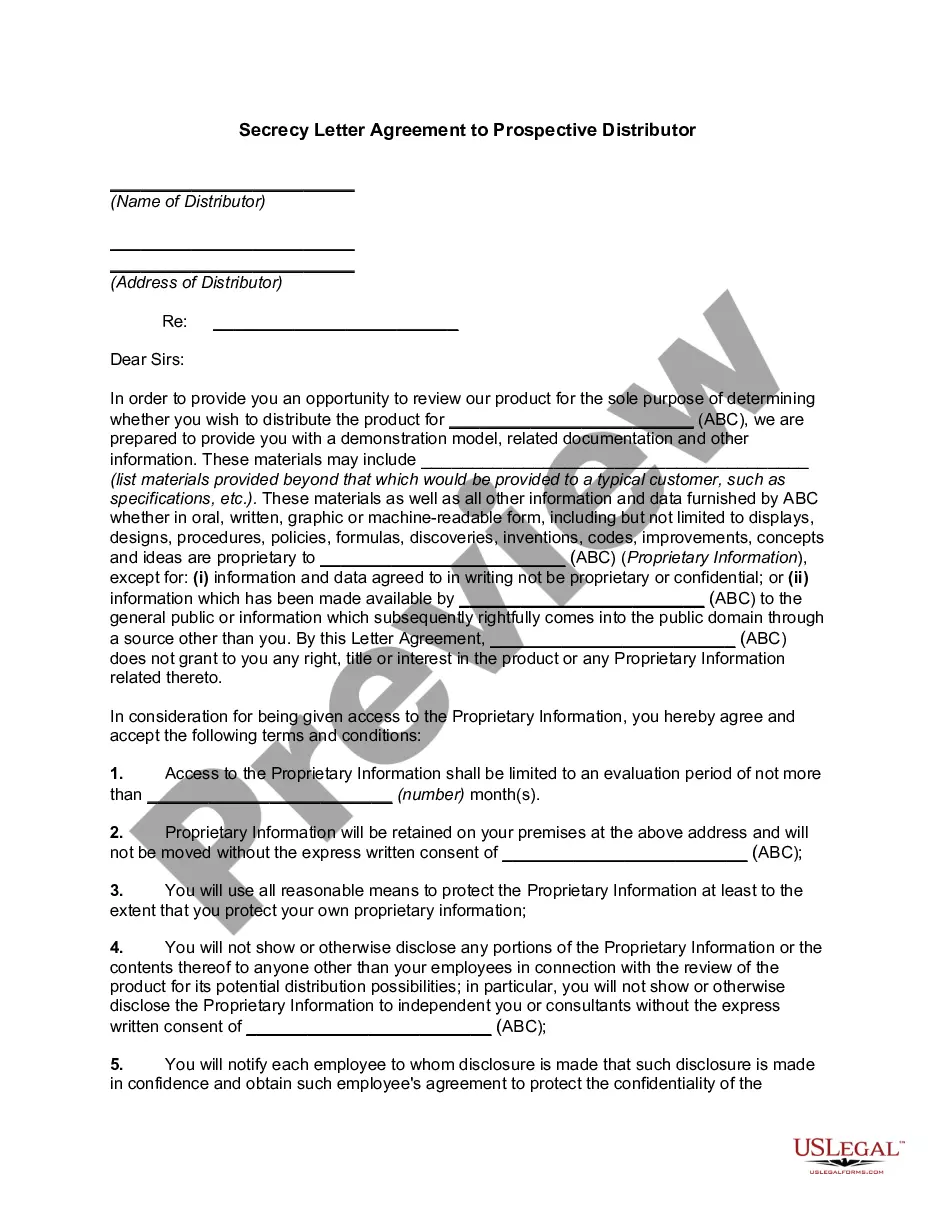
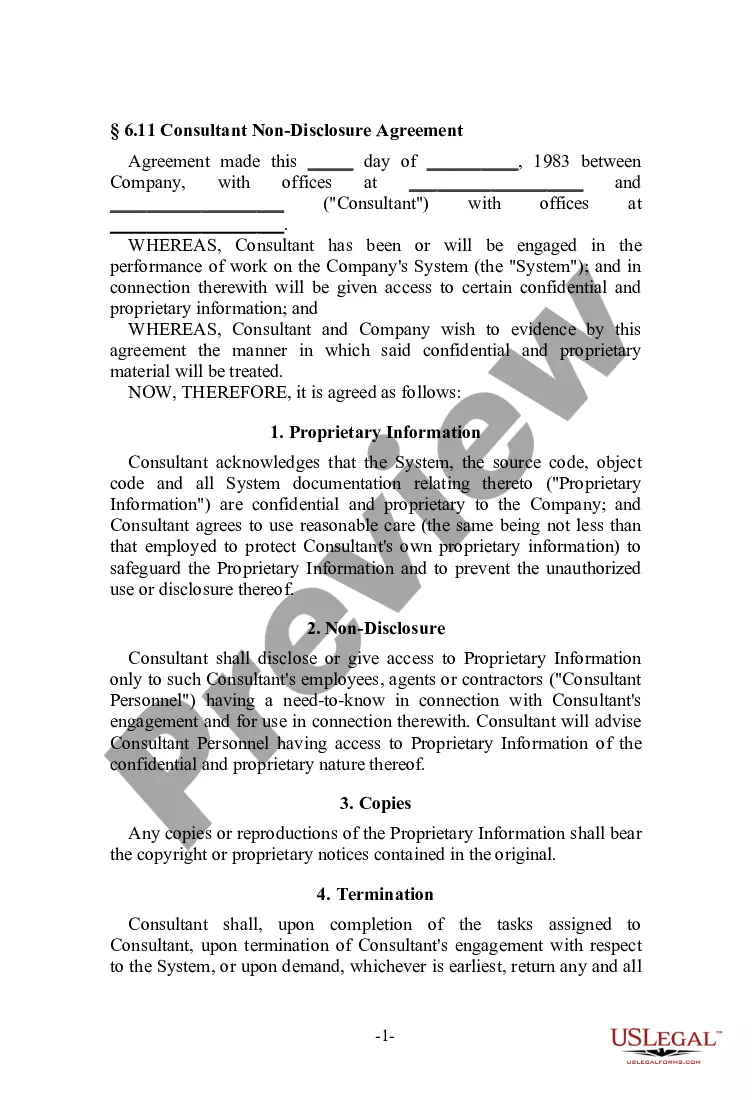
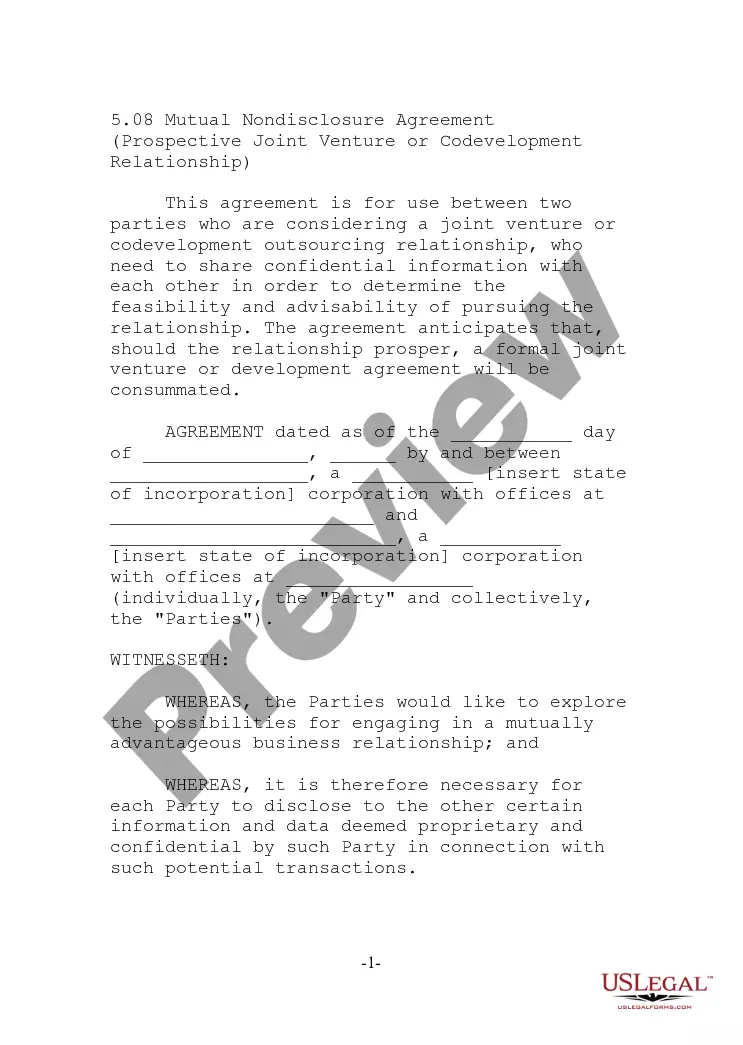
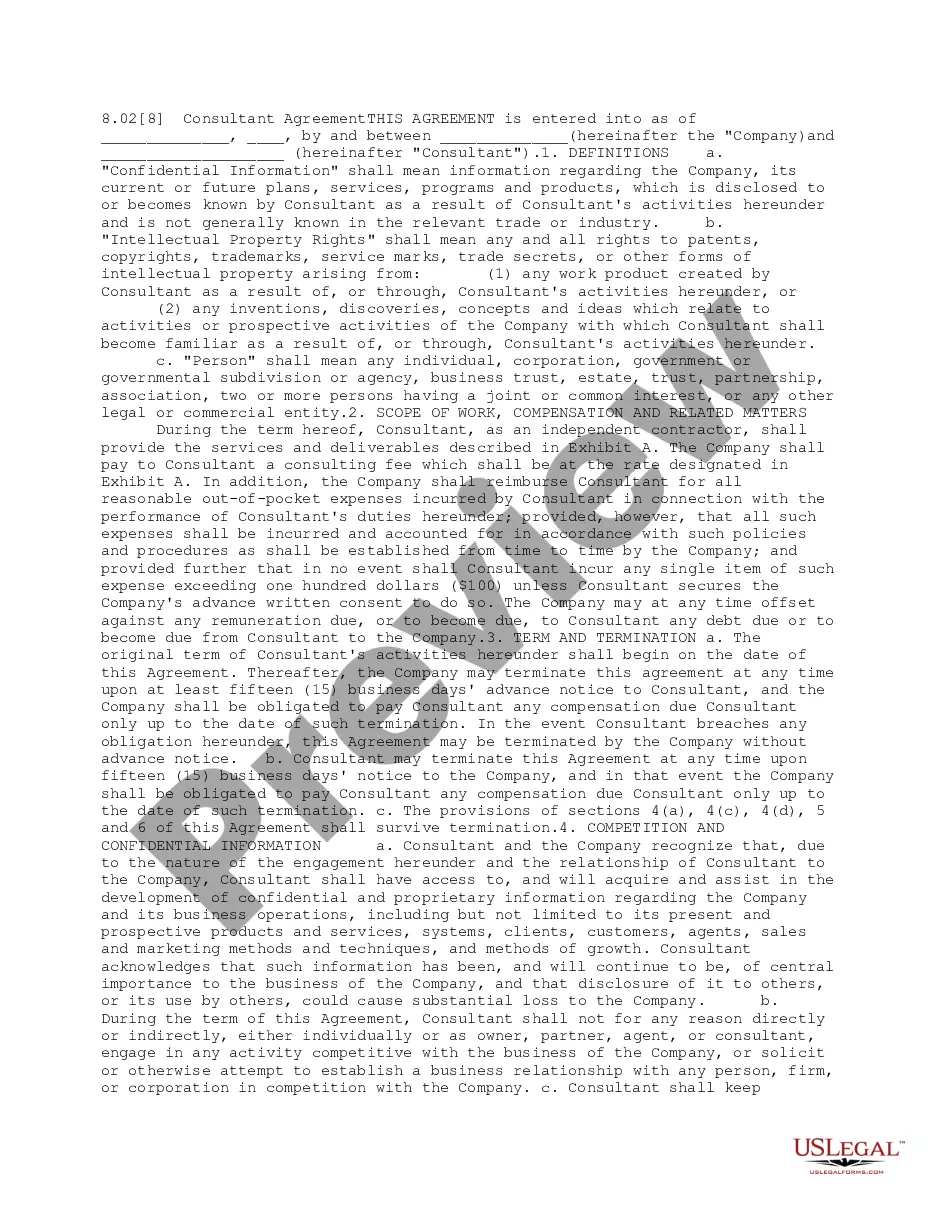
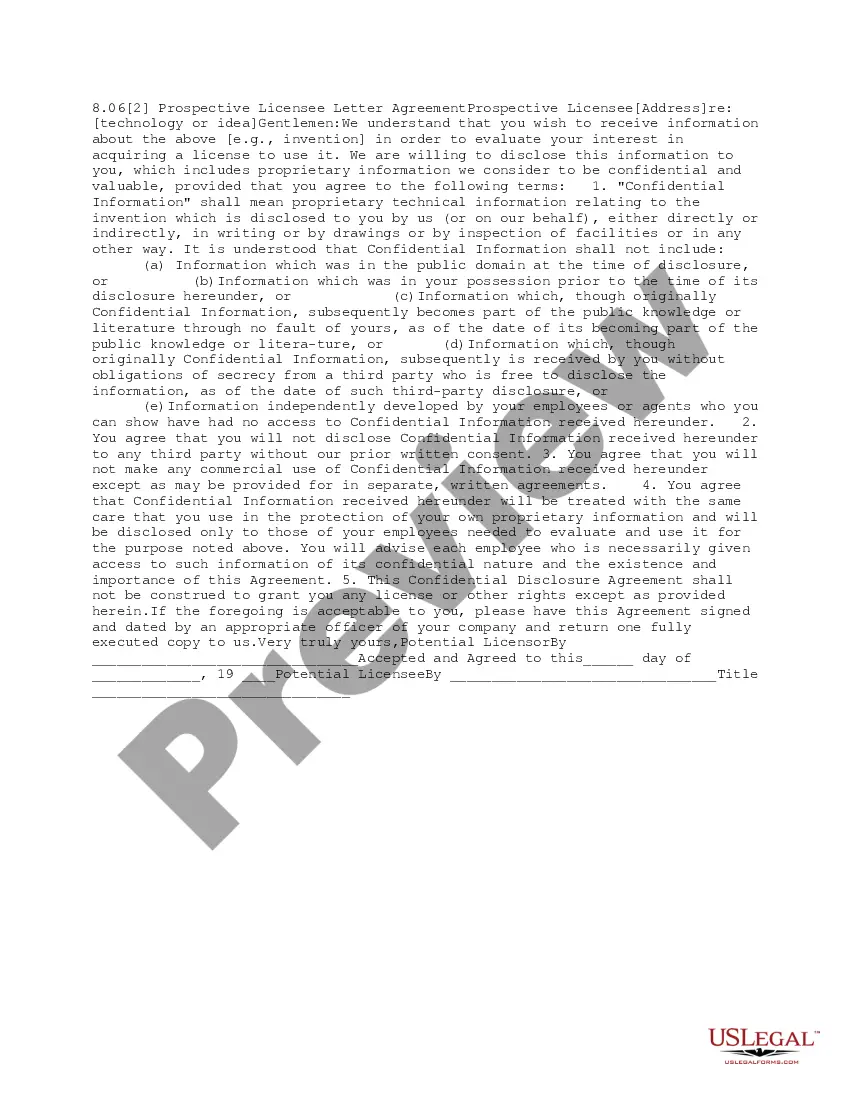
The Mutual Nondisclosure Agreement - Prospective Outsourcing Client (Letter Format) is a legal document designed to protect sensitive information exchanged between a potential client and an outsourcing company during preliminary discussions. This agreement ensures that both parties understand their obligations to keep shared information confidential, distinguishing it from general nondisclosure agreements by specifically addressing situations associated with outsourcing services.
Key components of this form
- Date and addresses of both parties involved.
- Description of what constitutes confidential information.
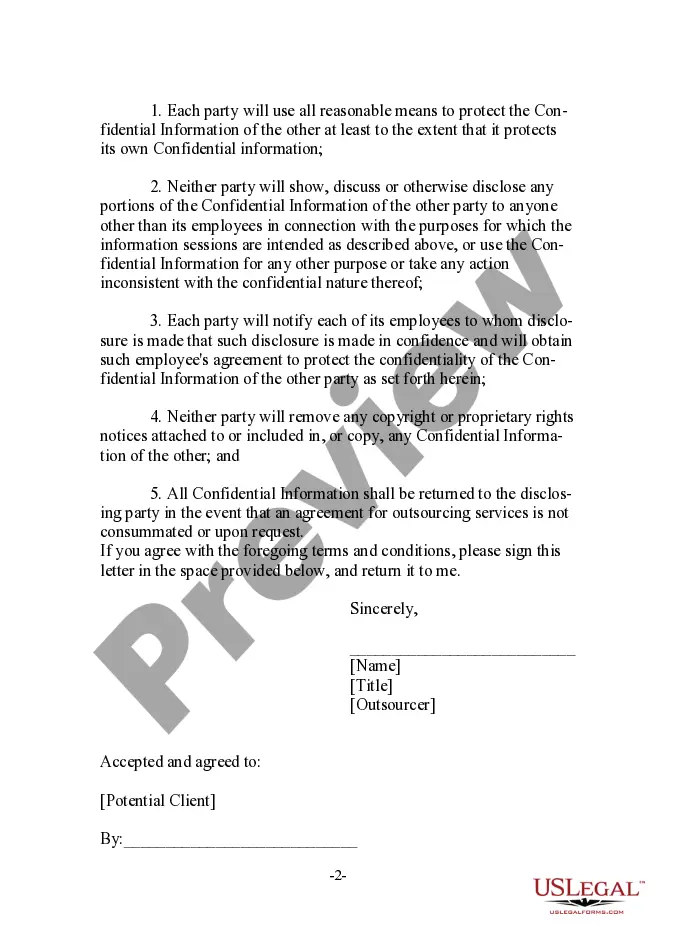
- Terms for protecting and handling confidential information.
- Requirements for employees regarding confidentiality obligations.
- Provisions for returning confidential information if no agreement is reached.
When to use this document
This form is essential when an outsourcing company plans to conduct informational sessions with a potential client, and both parties intend to share sensitive information during these discussions. Use this agreement to safeguard proprietary data, innovative ideas, and any business strategies that need protection before finalizing outsourcing arrangements.
Who this form is for
- Businesses considering outsourcing their services to other companies.
- Potential clients engaging in discussions about outsourcing opportunities.
- Legal professionals assisting clients in drafting or reviewing nondisclosure agreements.
- Startups and established companies looking to share innovative ideas with outsourcing partners.
How to prepare this document
- Identify the parties involved by filling in the names and addresses of both the outsourcing company and the potential client.
- Enter the date at the top of the document.
- Specify what constitutes confidential information clearly and comprehensively.
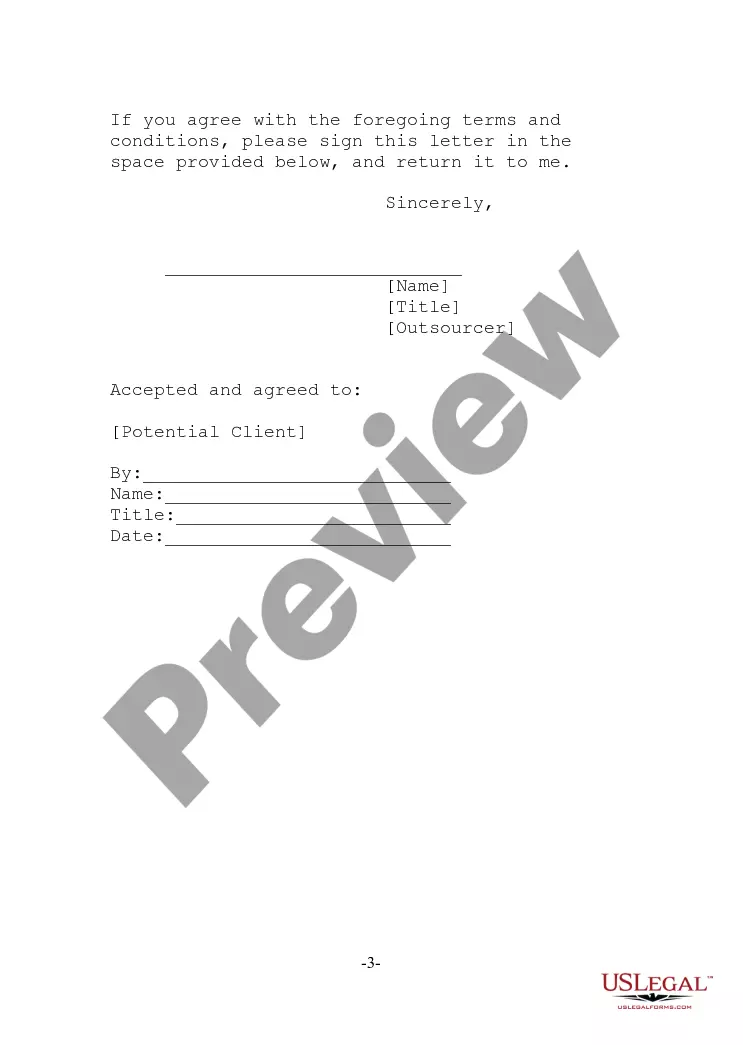
- Obtain signatures from authorized representatives of both parties to indicate acceptance of the terms.
- Ensure all parties understand their obligations before sharing any sensitive information.
Does this form need to be notarized?
This form does not typically require notarization to be legally valid. However, some jurisdictions or document types may still require it. US Legal Forms provides secure online notarization powered by Notarize, available 24/7 for added convenience.
Get your form ready online
Our built-in tools help you complete, sign, share, and store your documents in one place.
Make edits, fill in missing information, and update formatting in US Legal Forms—just like you would in MS Word.
Download a copy, print it, send it by email, or mail it via USPS—whatever works best for your next step.
Sign and collect signatures with our SignNow integration. Send to multiple recipients, set reminders, and more. Go Premium to unlock E-Sign.
If this form requires notarization, complete it online through a secure video call—no need to meet a notary in person or wait for an appointment.
We protect your documents and personal data by following strict security and privacy standards.

Make edits, fill in missing information, and update formatting in US Legal Forms—just like you would in MS Word.

Download a copy, print it, send it by email, or mail it via USPS—whatever works best for your next step.

Sign and collect signatures with our SignNow integration. Send to multiple recipients, set reminders, and more. Go Premium to unlock E-Sign.

If this form requires notarization, complete it online through a secure video call—no need to meet a notary in person or wait for an appointment.

We protect your documents and personal data by following strict security and privacy standards.
Avoid these common issues
- Failing to clearly define what information is considered confidential.
- Not including all relevant parties who will access confidential information.
- Omitting signatures or dates, which can invalidate the agreement.
- Assuming confidentiality lasts indefinitely without stating a timeframe.
Benefits of using this form online
- Easy customization to fit your unique circumstances.
- Immediate access to a professionally drafted document in Word format.
- Time-saving process, allowing you to focus on business decisions instead of paperwork.
- Secure digital storage for future reference or revisions.
Legal use & context
- This agreement is legally binding and protects the confidential information shared during discussions.
- It establishes clear expectations for confidentiality, potentially improving trust in the business relationship.
- Noncompliance with the terms of this agreement can lead to legal ramifications for the party that discloses confidential information.
What to keep in mind
- The Mutual Nondisclosure Agreement is crucial for protecting sensitive information during preliminary outsourcing discussions.
- Clear definitions of confidential information and responsibilities help avoid misunderstandings.
- This form serves various businesses, particularly those involved in outsourcing services.
Looking for another form?

Form popularity
FAQ
Clear. Use simple, plain English. No jargon. Credible. Make sure there are no typos and all the provided information is correct. Answered. Answer all the questions that have been asked (and any that may come after). Tone. Using the right tone, that fits the reader (or customer) and the reason you're contacting them.
General Guidance for Writing to Your Customers and Clients Never use a generic greeting, always use their name. Get to the point quickly and be concise., but don't be impersonal or abrupt. Keep your sentences short and clear. Include everything your client needs to know in the email.
It can begin with the word Dear followed by the person's name or the word To. Include a date at the top of the letter. Begin the letter with a brief introduction. Keep the introduction pleasant and conversational. Thank the client for using your firm and indicate the reason for the letter.
Today's date, or the date you are sending the letter. The sender's address. The inside address. The salutation. The body of the letter.
A client care letter summarises the key information which the client of a solicitor's firm needs to know about how their legal matter is going to be dealt with.
Start by Saying Thank You Use Everyday Language and Stick to One Idea per Sentence. Use Headings and Bullet Point Large Chunks of Information. Avoid Cold, Overly Formal Language. Direct the Customer to any Supportive Documents. Set Expectations With Timeframes.
Begin with a greeting. Thank the recipient. State your purpose. Add your closing remarks. End with a closing.
The opening paragraph states the legal issue the letter is addressing followed by the facts, a discussion of the law as it applies to the facts and a conclusion which is essentially the advice to the client. Often attorneys include headings to lead the client through this process to arrive at the same conclusion.