Joint Nondisclosure Agreement for Use in Technology Transactions
What is this form?
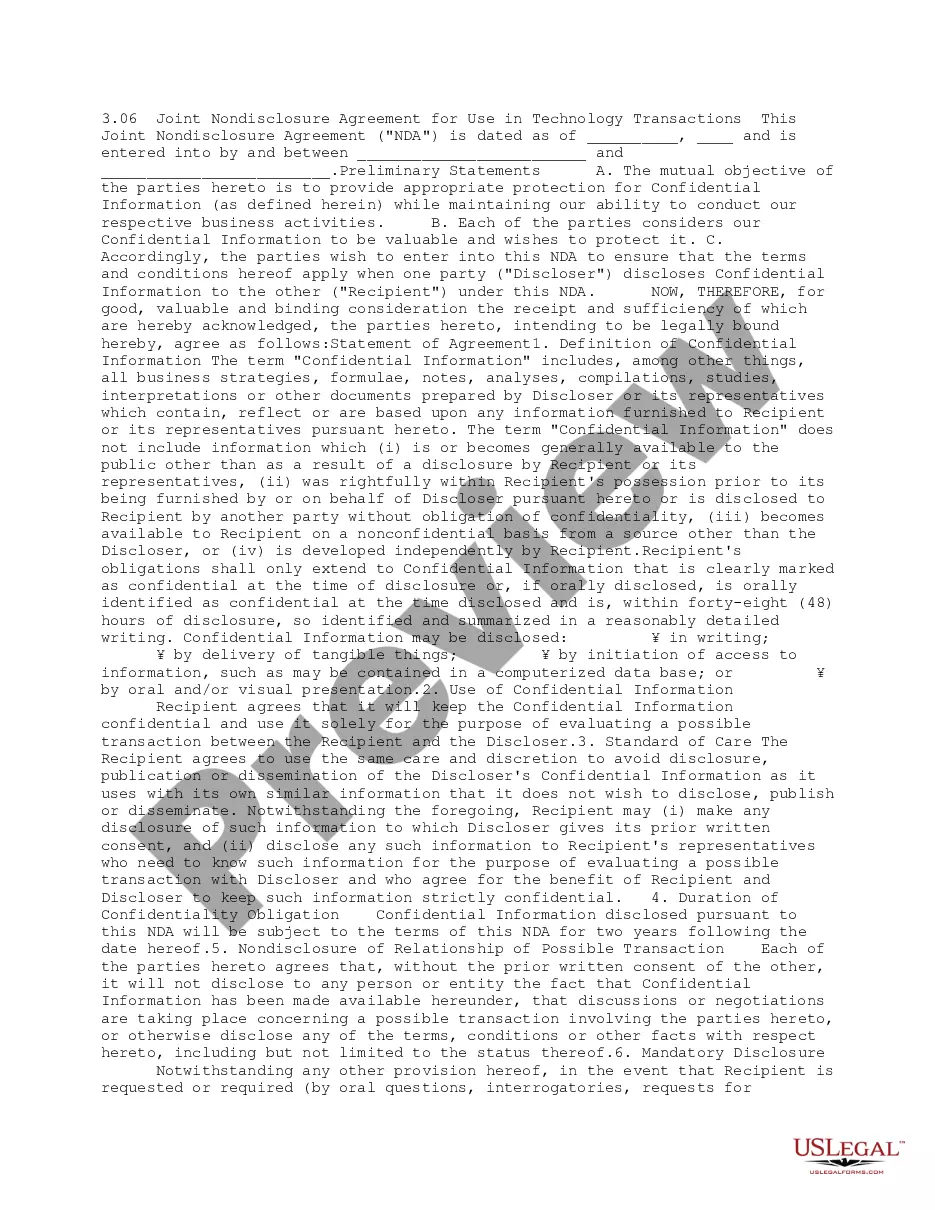
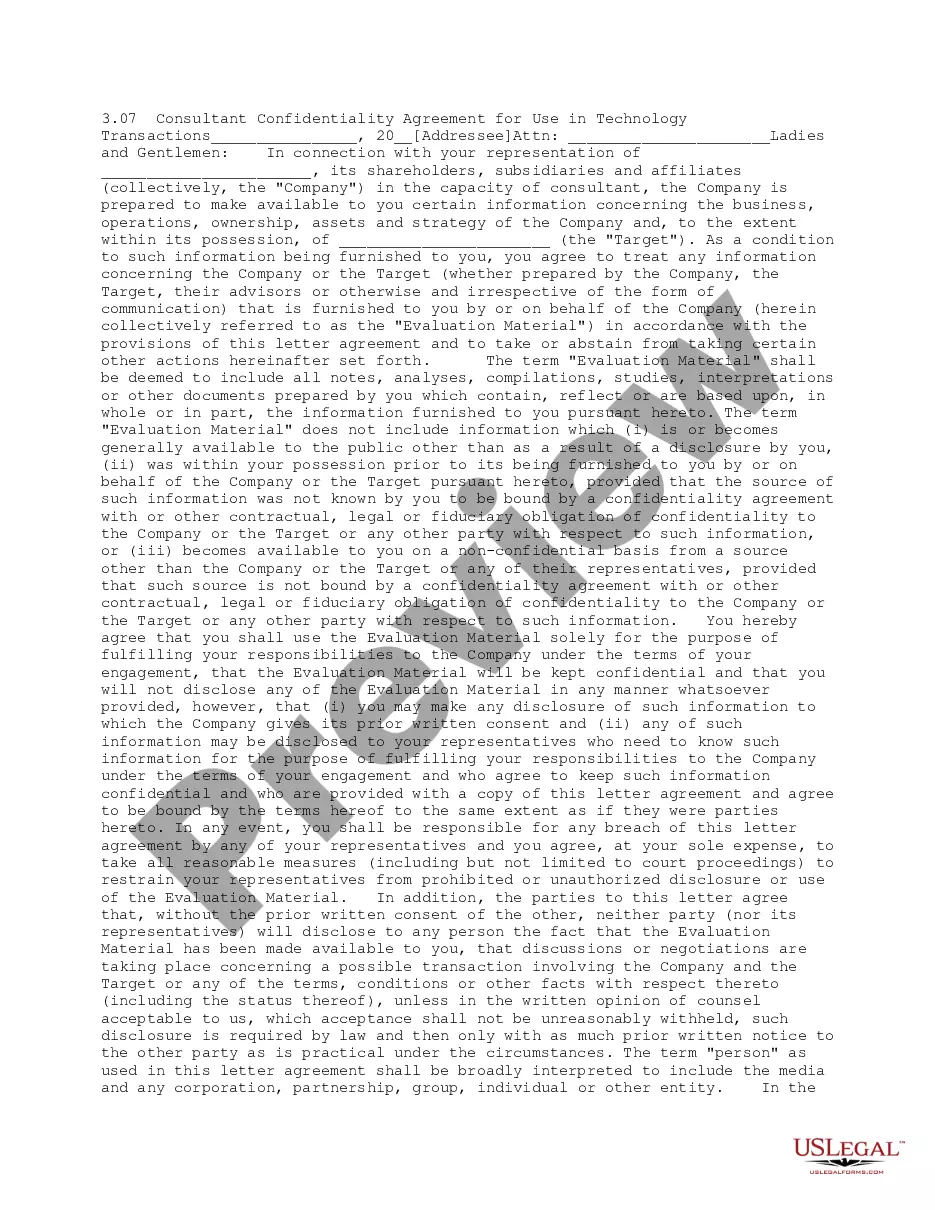
The Joint Nondisclosure Agreement for Use in Technology Transactions is a legal document used to protect confidential information shared between two parties engaged in discussions about a potential business transaction. This agreement clearly defines what constitutes confidential information and outlines the permitted and prohibited uses of this information. It is crucial for businesses in technology sectors to establish trust and maintain confidentiality while exploring partnerships or collaborations.
Key parts of this document
- Definition of Confidential Information: Details what is considered confidential information.
- Use of Confidential Information: Specifies that the information can only be used for evaluating a potential transaction.
- Standard of Care: Outlines the level of care required to protect the confidential information.
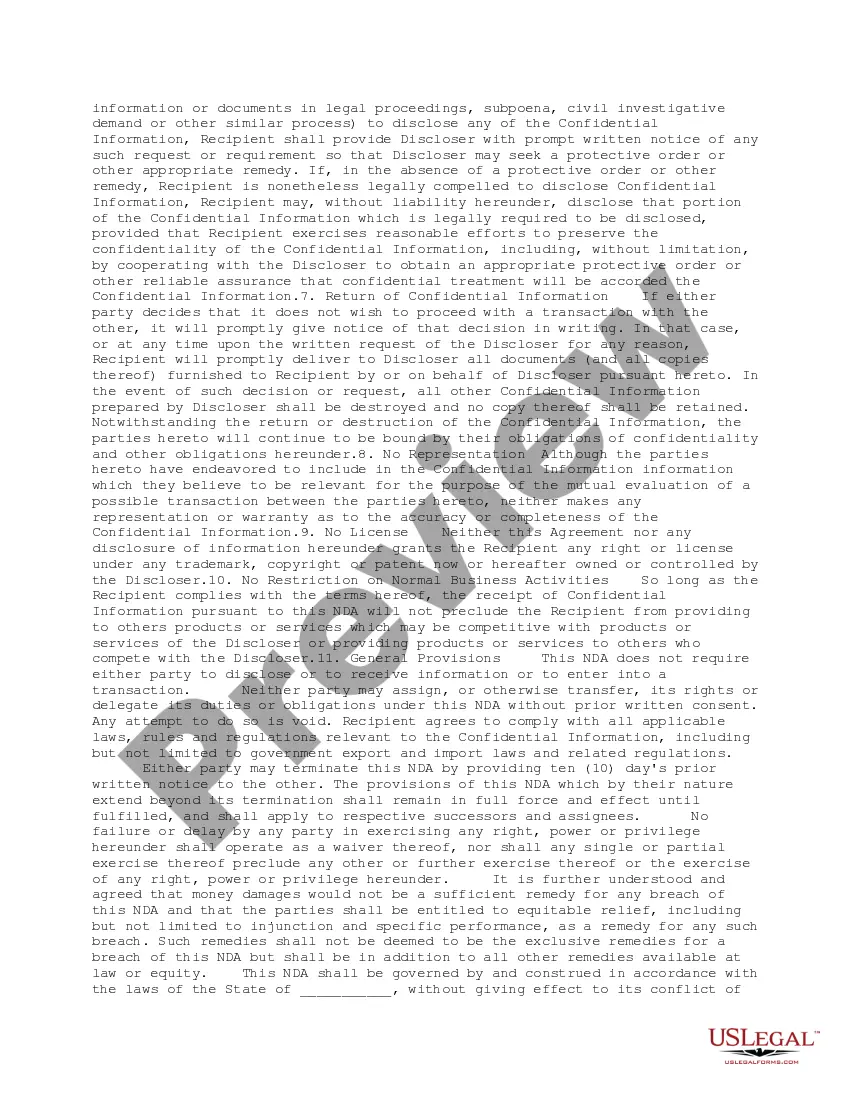
- Duration of Confidentiality Obligation: States that the confidentiality obligations last for two years.
- Return of Confidential Information: Mandates the return or destruction of confidential information if the transaction does not proceed.
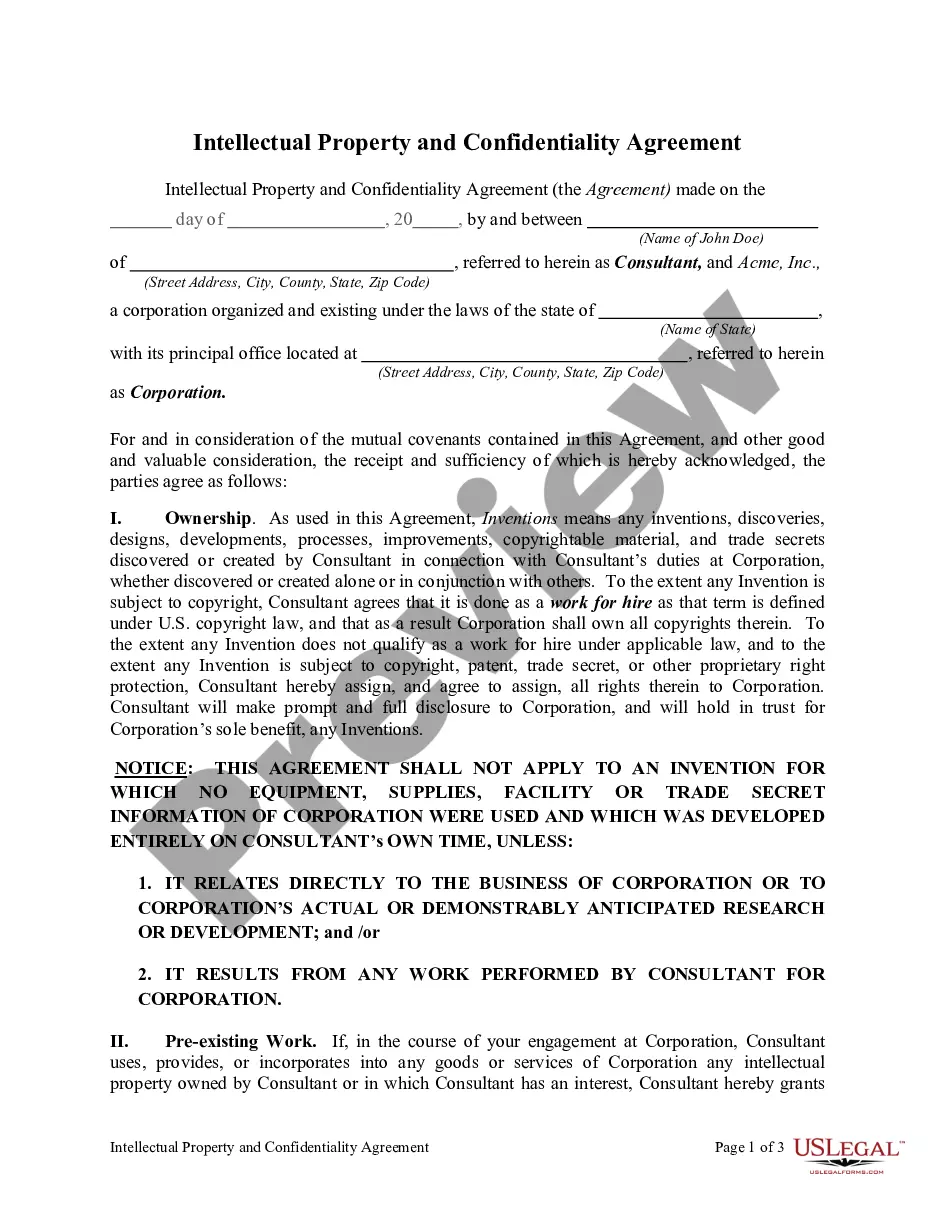
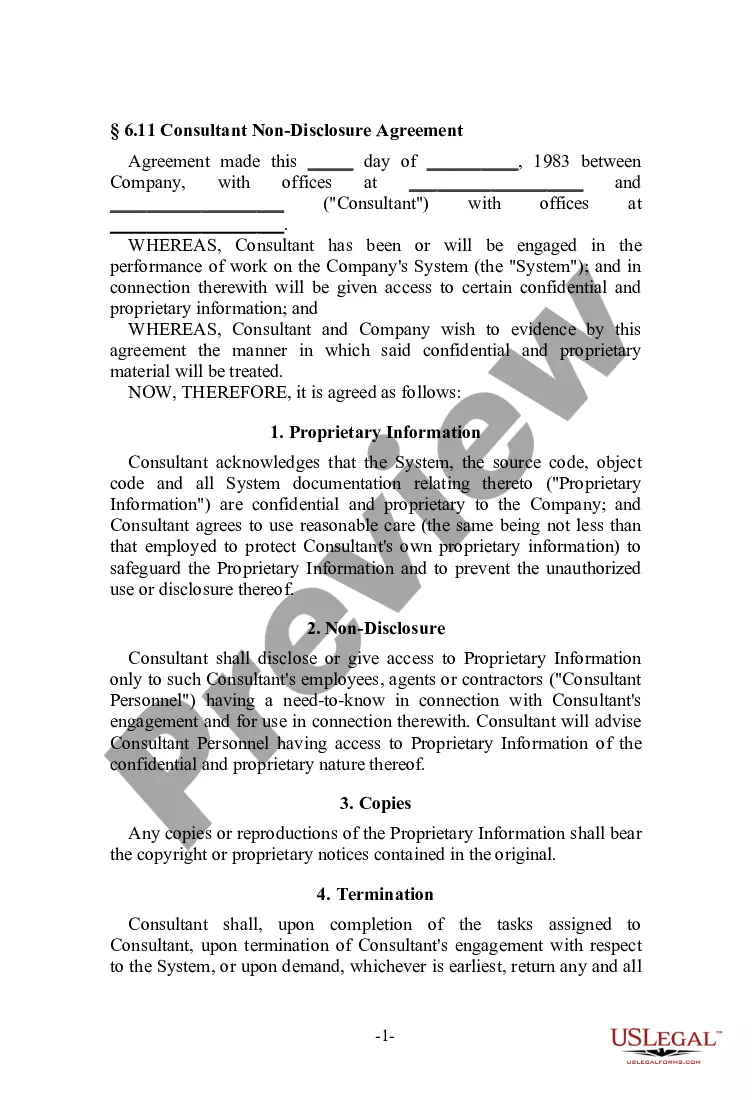
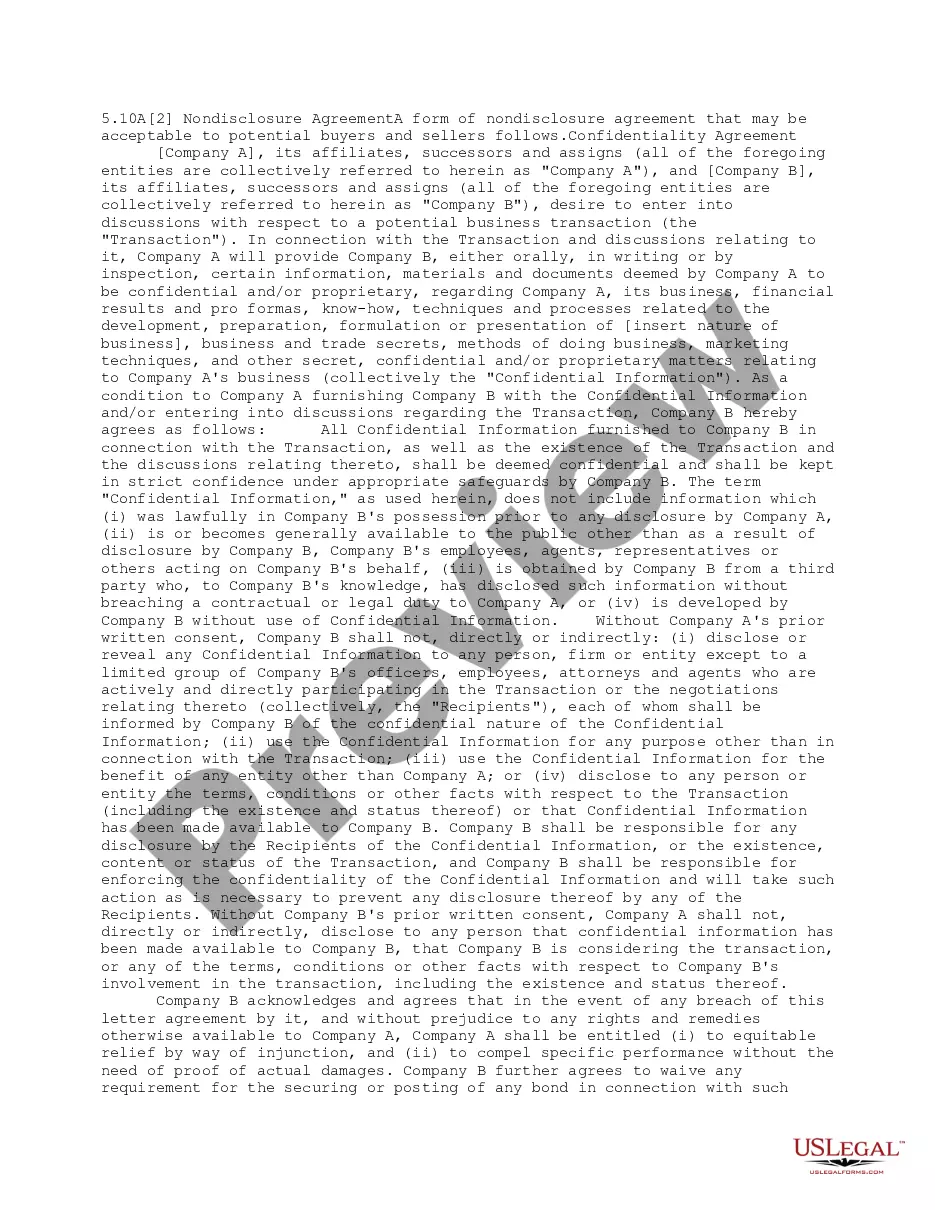
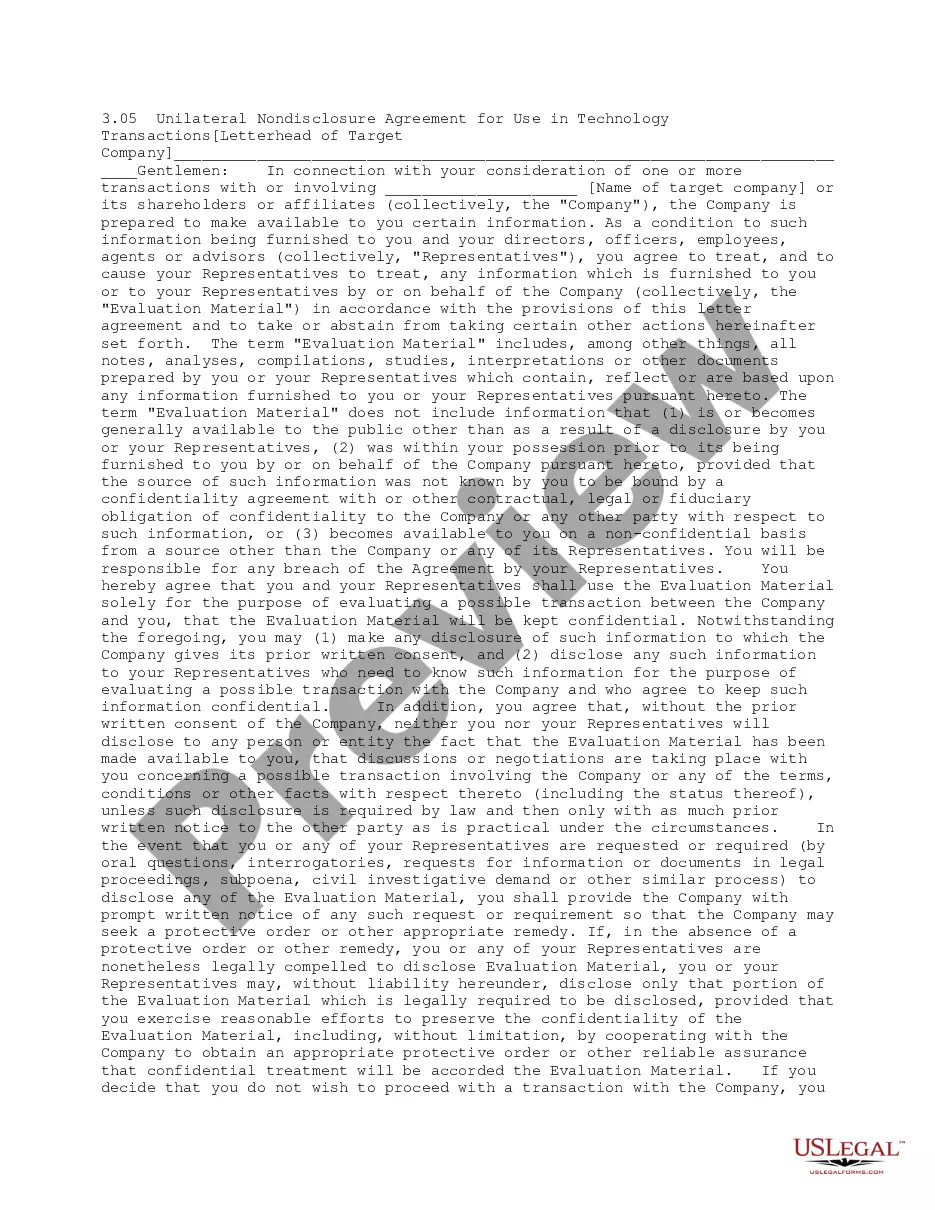
Common use cases
This form should be utilized when two parties are discussing a technology transaction that involves the sharing of sensitive information. Examples include potential partnerships, joint ventures, or software development collaborations. It is essential to have this agreement in place to protect intellectual property and trade secrets during negotiations.
Who can use this document
- Businesses and startups engaging in technology transactions.
- Individuals or organizations sharing proprietary information.
- Legal teams drafting agreements for their clients.
Completing this form step by step
- Identify the parties involved by filling in their names and addresses.
- Enter the date on which the agreement takes effect.
- Define the scope of confidential information by detailing what is considered confidential.
- Specify any conditions for the use of the confidential information.
- Have both parties sign the document, including their names and titles.
Is notarization required?
This form does not typically require notarization unless specified by local law. However, it is advisable to check specific state regulations or consult with a legal expert to ensure compliance.
Get your form ready online
Our built-in tools help you complete, sign, share, and store your documents in one place.
Make edits, fill in missing information, and update formatting in US Legal Forms—just like you would in MS Word.
Download a copy, print it, send it by email, or mail it via USPS—whatever works best for your next step.
Sign and collect signatures with our SignNow integration. Send to multiple recipients, set reminders, and more. Go Premium to unlock E-Sign.
If this form requires notarization, complete it online through a secure video call—no need to meet a notary in person or wait for an appointment.
We protect your documents and personal data by following strict security and privacy standards.

Make edits, fill in missing information, and update formatting in US Legal Forms—just like you would in MS Word.

Download a copy, print it, send it by email, or mail it via USPS—whatever works best for your next step.

Sign and collect signatures with our SignNow integration. Send to multiple recipients, set reminders, and more. Go Premium to unlock E-Sign.

If this form requires notarization, complete it online through a secure video call—no need to meet a notary in person or wait for an appointment.

We protect your documents and personal data by following strict security and privacy standards.
Common mistakes to avoid
- Failing to clearly define what constitutes confidential information.
- Not including a duration for confidentiality obligations.
- Omitting signatures or proper identification of each party.
Benefits of completing this form online
- Convenience of completing and downloading the form from anywhere.
- Editability allows customization to fit specific needs.
- Reliable templates ensure legal compliance and protection.
Legal Use & Context
- This agreement provides a legal framework that ensures confidential information is protected.
- It strains to create enforceable obligations for both parties regarding the treatment of shared information.
- It can be essential in legal disputes regarding breaches of confidentiality.
Key takeaways
Key Takeaways
- A Joint Nondisclosure Agreement is vital for protecting sensitive information in technology transactions.
- Clearly define what constitutes confidential information and its intended use.
- Obtain signatures from all parties to validate the agreement.
- Be mindful of state-specific regulations when using the form.
Looking for another form?
Form popularity
FAQ
On a combined reading of the national and international laws, it can be said that e-agreements are valid and enforceable in the courts, however, since the risk associated with e-signatures are high, for high stake transactions, parties still insist on wet signatures on physical agreements.
NDA documents can now be written, completed, and signed online by all the relevant parties in real-time, regardless of where they reside. Security There is no safe way of avoiding NDA documents to be intercepted, destroyed, or tampered with while on transit than using electronic NDA forms.
If the NDA prohibits you from telling someone you signed it, then yes. If not, then yes, you can tell someone you signed an NDA. In fact, if someone tries to obtain confidential information from you, you probably could tell them that you signed an NDA and therefore refuse to disclose to you that information.
Identify each party in the first section of the form. The NDA form will start by declaring it to be an agreement and identifying who the agreement is between. Whoever is disclosing the information to be protected is the "disclosing party"; write his or her name on this space.
No, it is not necessary for the nondisclosure agreement to be "notarized", nor is it necessary under California law for the signatures on such an agreement to be "witnessed".
The party to be charged must have signed the contract. Since the NDAs benefit you, so long as the other party has signed, that ishould be sufficient.
Identification of the parties. Definition of what is deemed to be confidential. The scope of the confidentiality obligation by the receiving party. The exclusions from confidential treatment. The term of the agreement.
Identify each party in the first section of the form. The NDA form will start by declaring it to be an agreement and identifying who the agreement is between. Whoever is disclosing the information to be protected is the "disclosing party"; write his or her name on this space.
Set the date of the agreement. Describe the two parties, sometimes called the Disclosing Party and the Receiving Party.7feff Include names and identification, so there can be no misunderstanding about who signed the agreement.