Bridge Financing Warrant
What this document covers
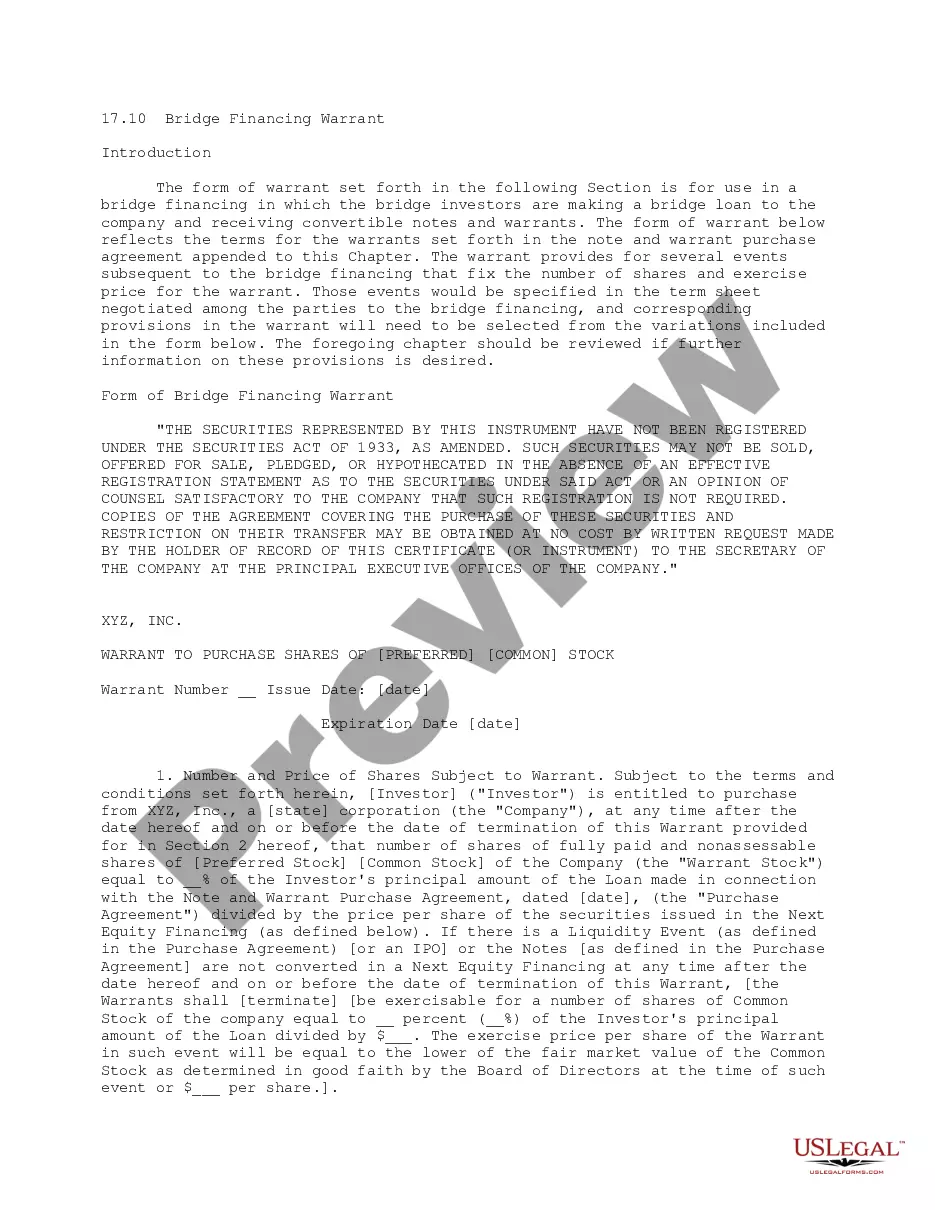
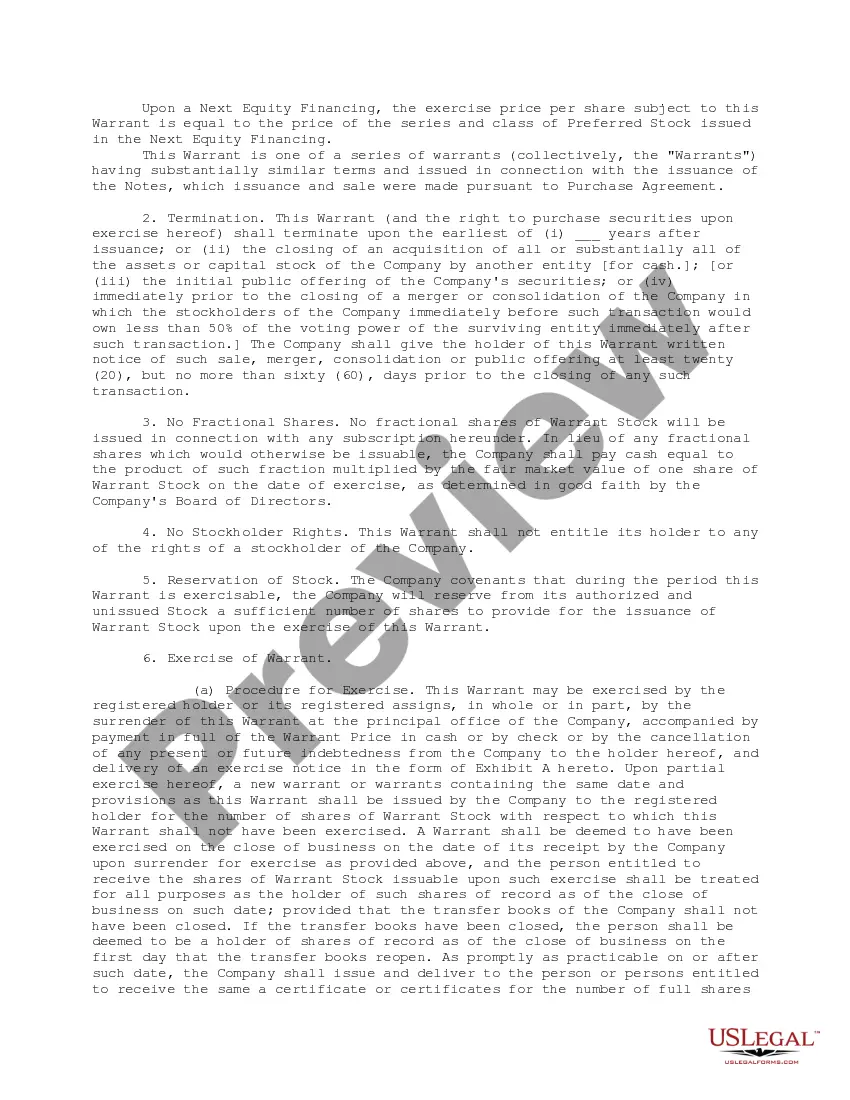
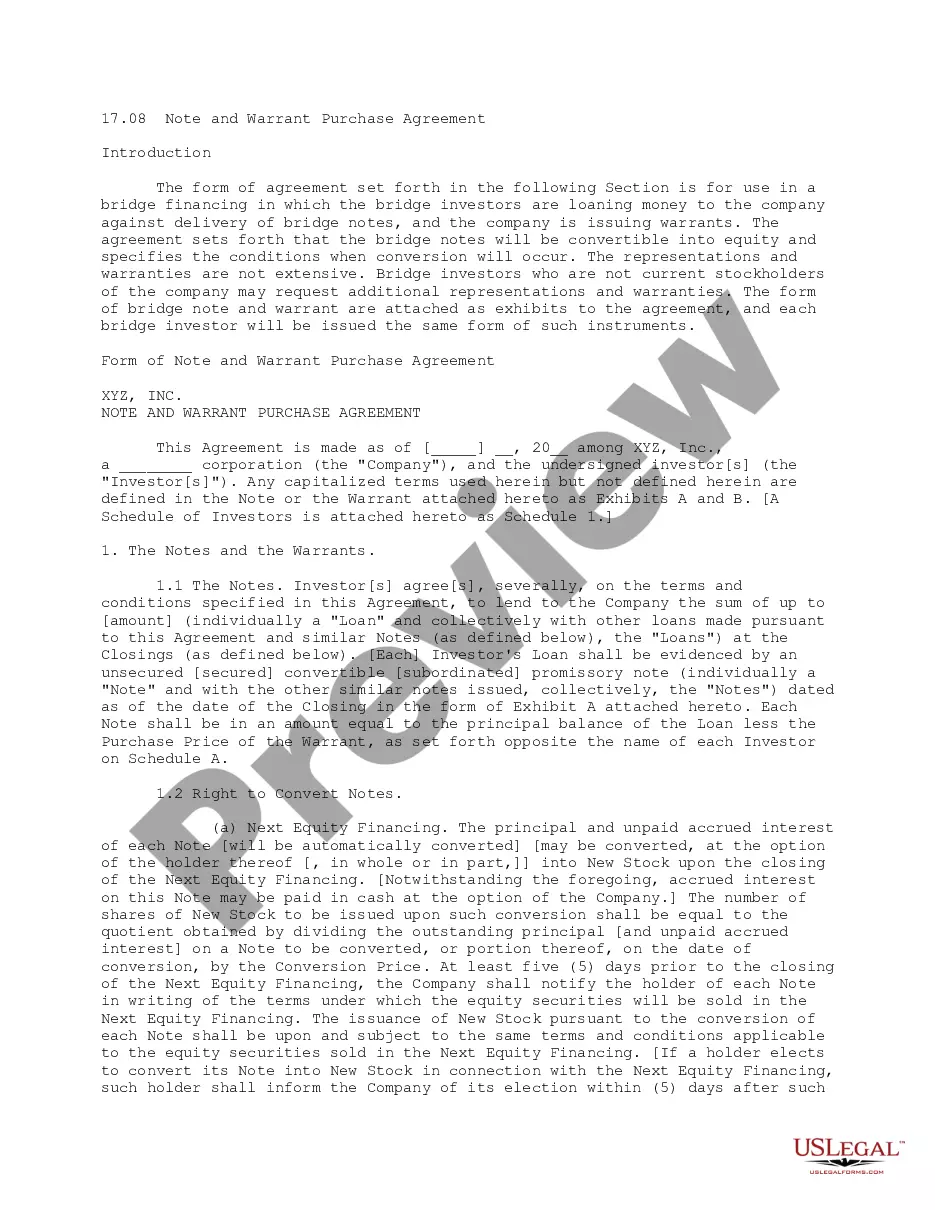
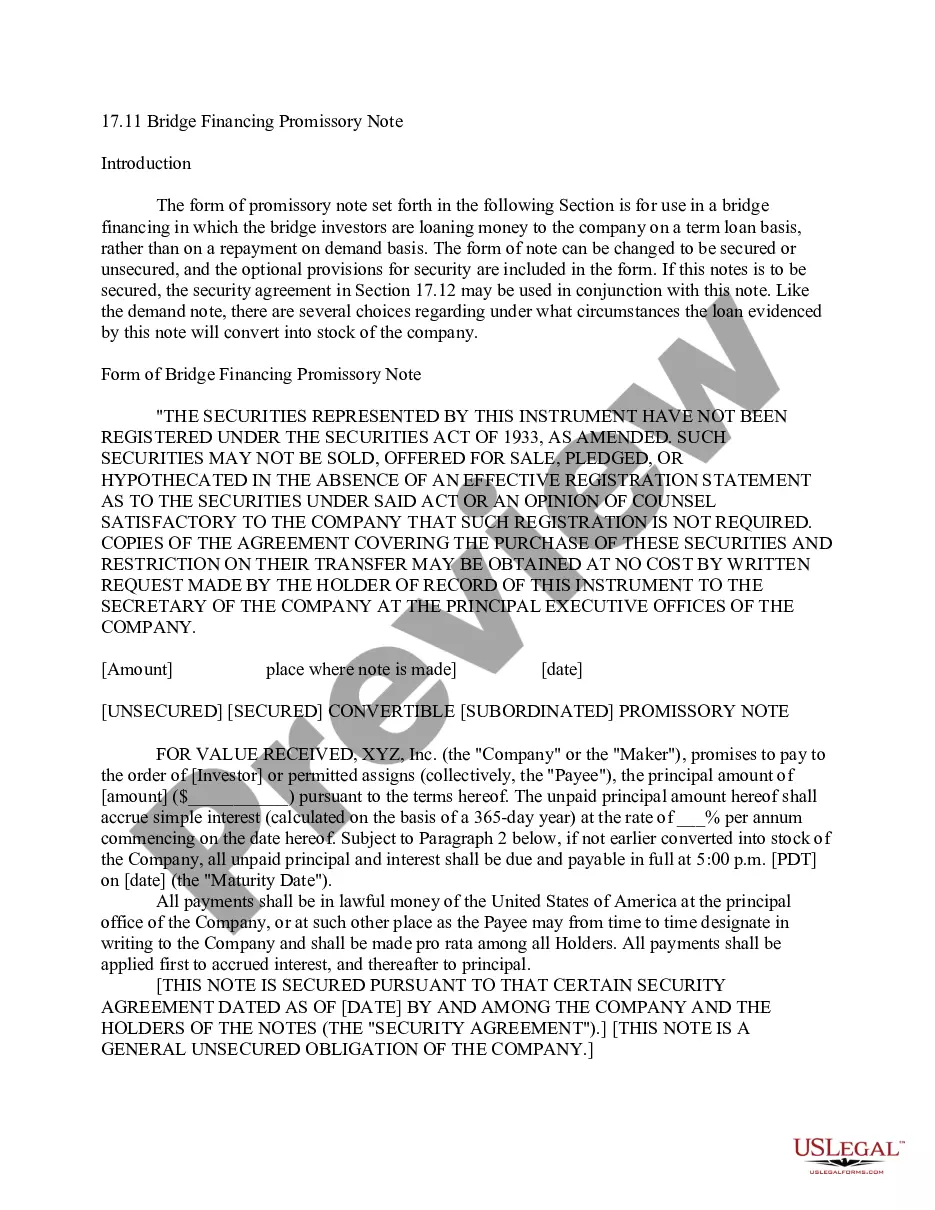
The Bridge Financing Warrant is a legal document that grants investors the right to purchase shares in a company during a bridge financing event. This type of warrant is unique because it is attached to a bridge loan, allowing investors to receive convertible notes and warrants in exchange for their investment. It outlines the number of shares and the exercise price based on certain events during the financing process, distinguishing it from other types of warrants.
Key components of this form
- Identification of the investor and the issuing company.
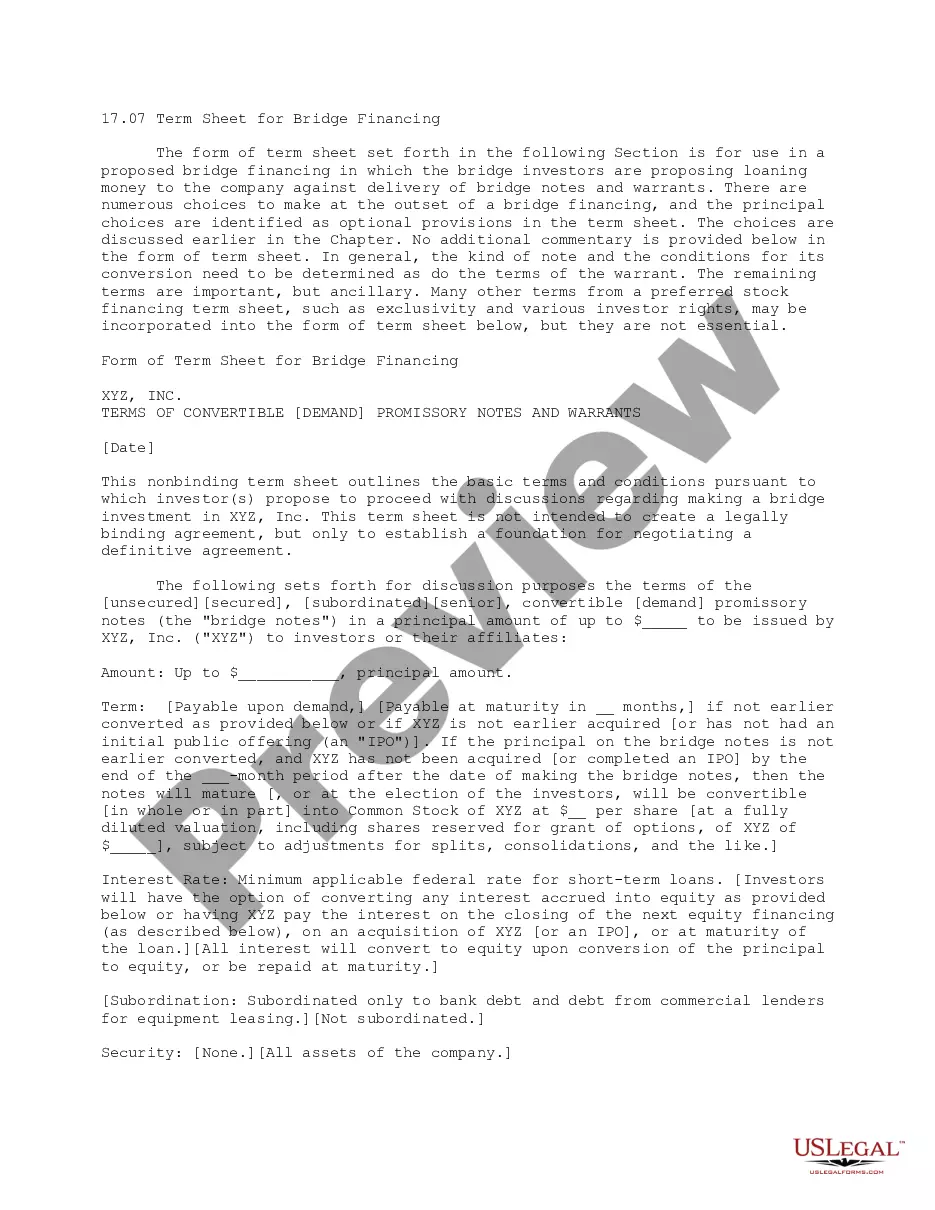
- Share quantity and pricing terms based on future financing events.
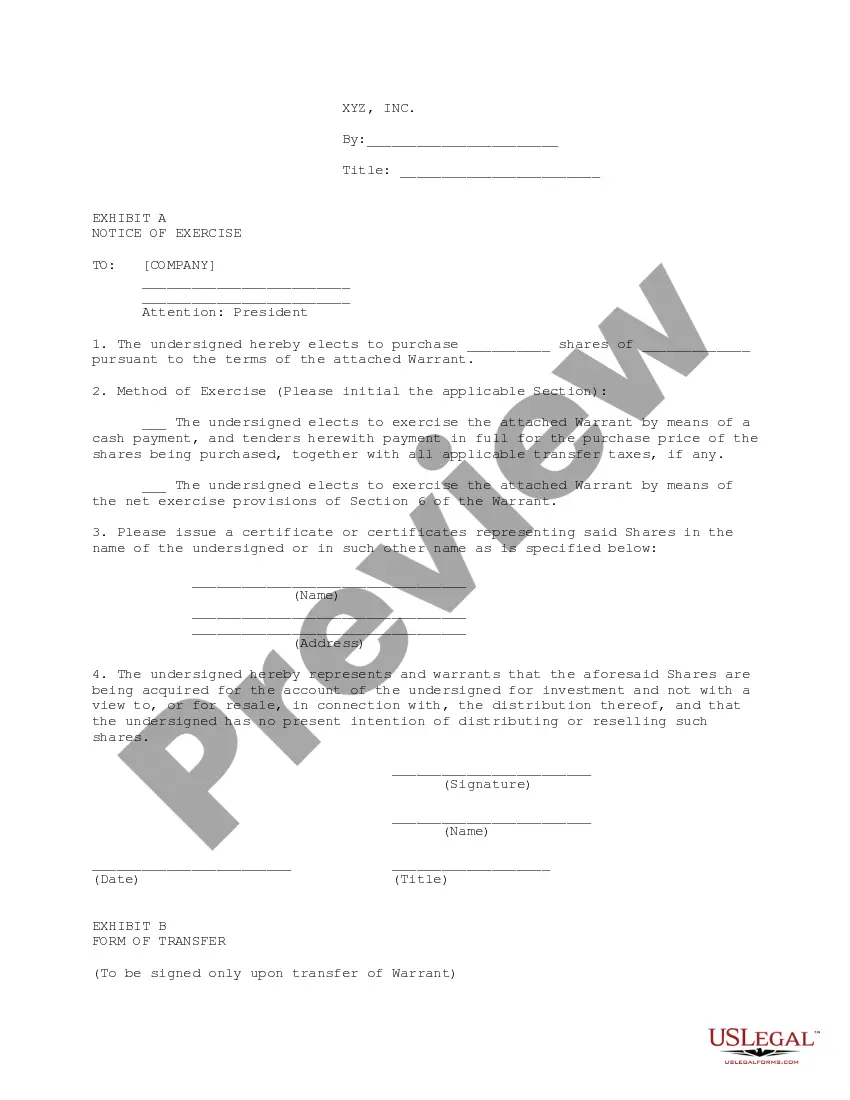
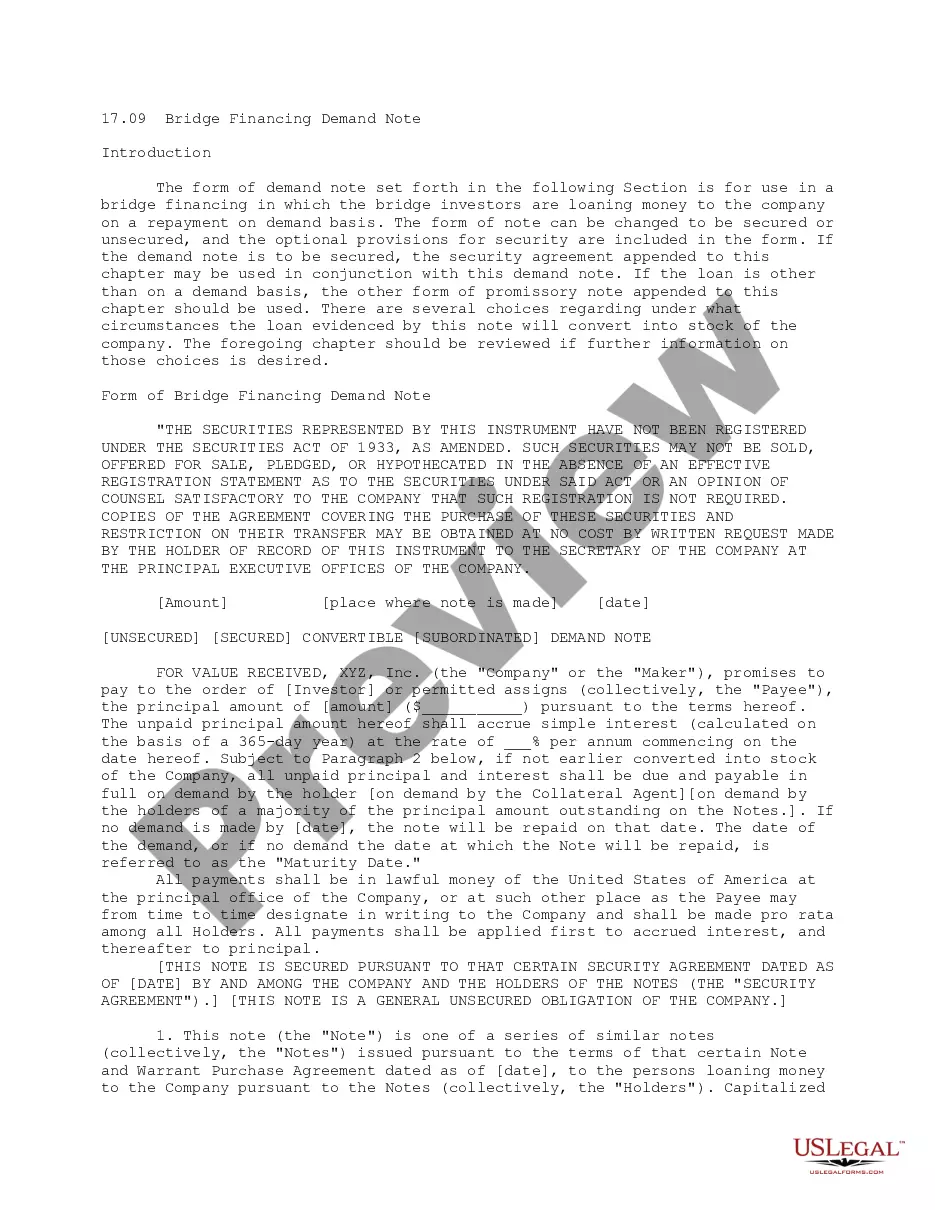
- Provisions for exercising the warrant and the payment methods accepted.
- Conditions under which the warrant may terminate.
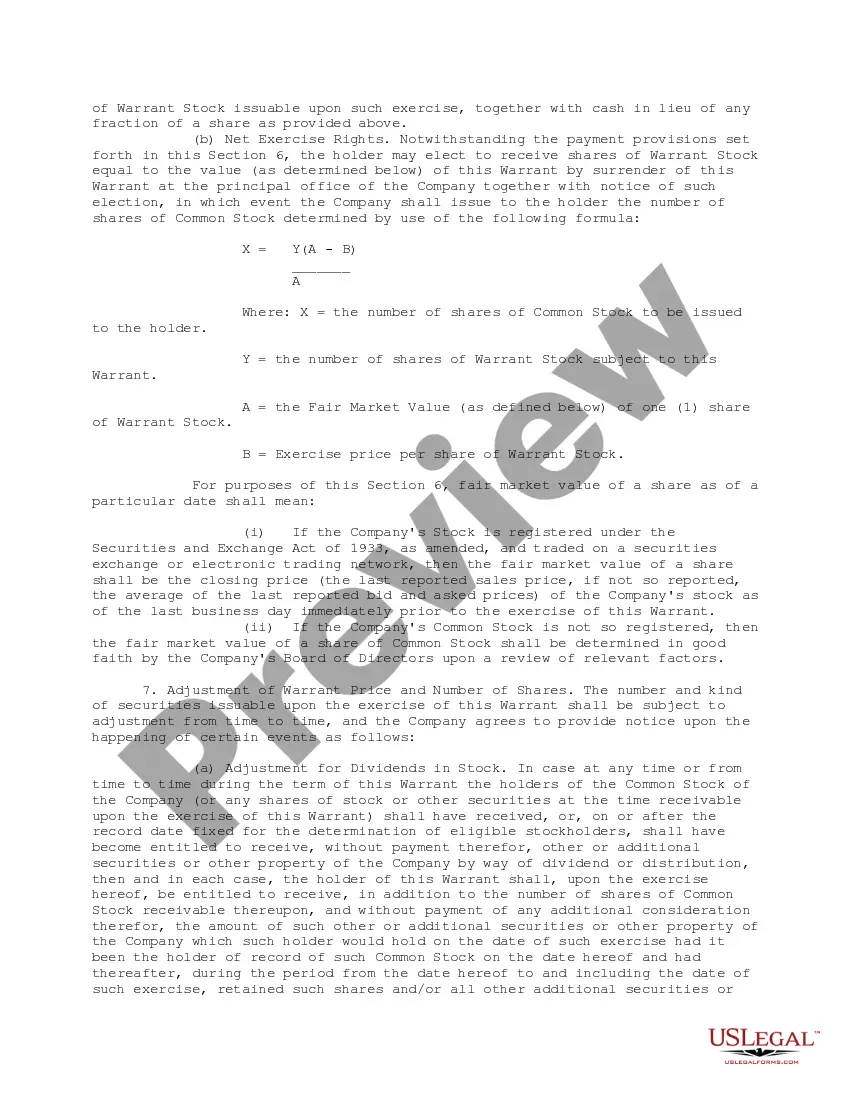
- Provisions for adjustments in share quantity and pricing due to events like stock splits.
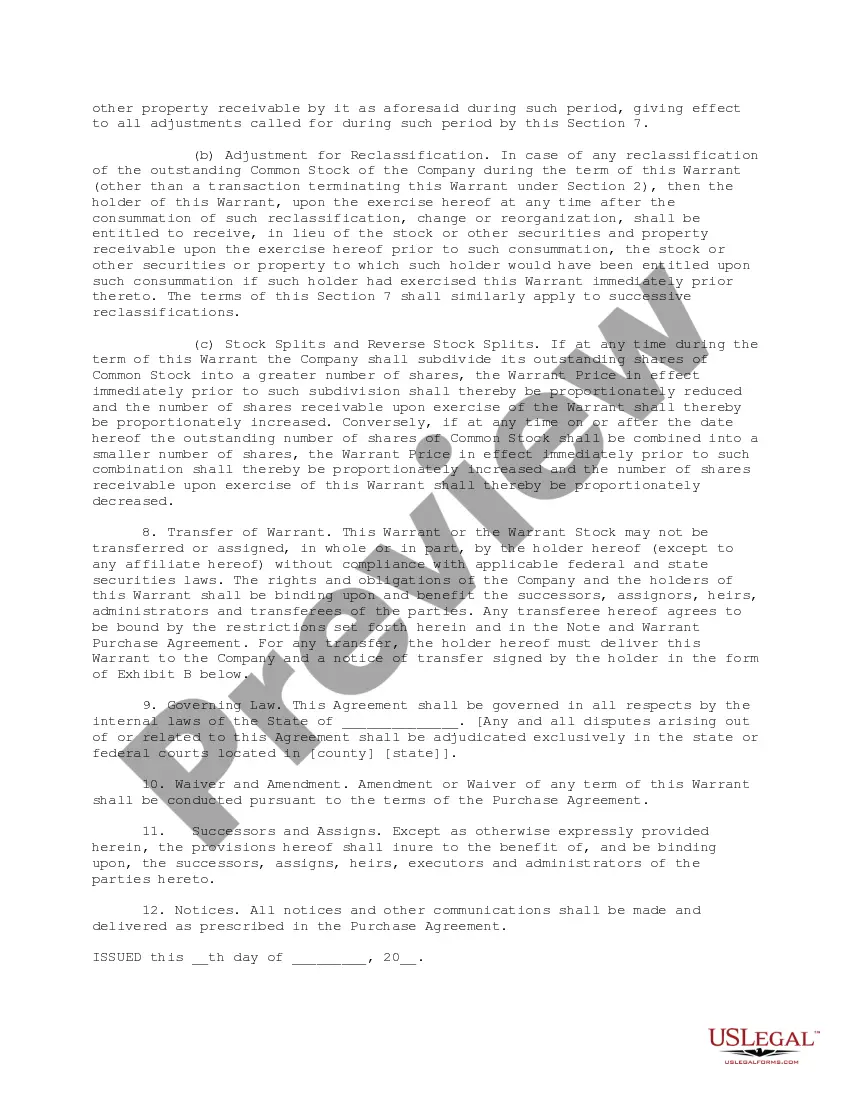
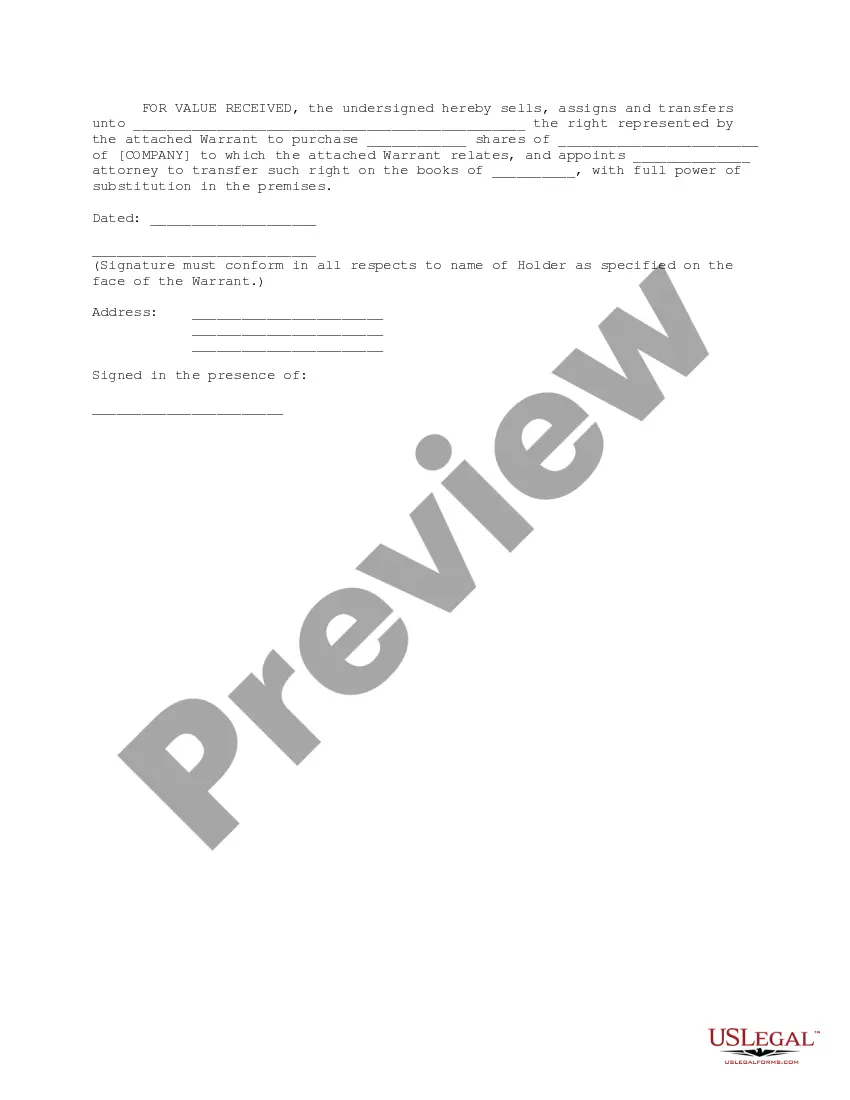
- Notices regarding transferability and rights of the warrant holder.

When to use this form
This form is utilized when investors provide a bridge loan to a company in exchange for convertible notes and the option to purchase company shares through the warrant. It is particularly useful for companies seeking quick financing and for investors looking to benefit from future growth through equity participation.
Who should use this form
- Companies looking to raise capital through bridge financing.
- Investors seeking opportunities to convert debt into equity.
- Corporate legal teams responsible for preparing financing agreements.
Completing this form step by step
- Identify the parties: Fill in the names and details of both the investor and the issuing company.
- Specify the share details: Indicate the number of shares and the exercise price for the warrant.
- Outline termination conditions: Clearly detail the events that will terminate the warrant.
- Provide adjustment provisions: Include terms for stock adjustments or other capital changes.
- Complete signatures: Ensure that the appropriate parties sign the document to validate it.
Notarization guidance
This form does not typically require notarization to be legally valid. However, some jurisdictions or document types may still require it. US Legal Forms provides secure online notarization powered by Notarize, available 24/7 for added convenience.
Get your form ready online
Our built-in tools help you complete, sign, share, and store your documents in one place.
Make edits, fill in missing information, and update formatting in US Legal Forms—just like you would in MS Word.
Download a copy, print it, send it by email, or mail it via USPS—whatever works best for your next step.
Sign and collect signatures with our SignNow integration. Send to multiple recipients, set reminders, and more. Go Premium to unlock E-Sign.
If this form requires notarization, complete it online through a secure video call—no need to meet a notary in person or wait for an appointment.
We protect your documents and personal data by following strict security and privacy standards.

Make edits, fill in missing information, and update formatting in US Legal Forms—just like you would in MS Word.

Download a copy, print it, send it by email, or mail it via USPS—whatever works best for your next step.

Sign and collect signatures with our SignNow integration. Send to multiple recipients, set reminders, and more. Go Premium to unlock E-Sign.

If this form requires notarization, complete it online through a secure video call—no need to meet a notary in person or wait for an appointment.

We protect your documents and personal data by following strict security and privacy standards.
Common mistakes
- Failing to accurately specify the number of shares and exercise price, leading to confusion later.
- Not including all required signatures, which can invalidate the agreement.
- Neglecting to review and adjust the warrant terms based on negotiation outcomes.
- Assuming the form is valid in all states without checking specific local requirements.
Benefits of completing this form online
- Convenience of immediate access to legally compliant documents.
- Editability allows for customization based on specific financing agreements.
- Reliability of forms drafted by licensed attorneys to ensure legal validity.
Legal use & context
- This warrant provides legally binding rights to investors for equity ownership.
- It is essential for compliance with securities laws to ensure proper registration.
- Understanding the terms and conditions is crucial for enforceability in case of disputes.
Key takeaways
- The Bridge Financing Warrant enables investors to convert loans into equity under specific conditions.
- Careful completion of this form is essential to protect investor rights and ensure legal compliance.
- Users should consider state-specific legal requirements when using this form.
Looking for another form?







Form popularity
FAQ
Melanie Bien at mortgage broker Private Finance says bridging finance has its uses, but adds that if you don't have a realistic exit strategy, such as a buyer lined up for your own property, "bridging is extremely risky and should be avoided at all costs".
PRO Avoid Moving Twice. PRO Access equity quickly without selling. PRO Present a stronger purchase offer. PRO Receive bridge loan approval after being denied by banks. PRO Attain a bridge loan against currently listed real estate. PRO Income documentation not required. CON Higher interest rates.
Drawbacks of a bridge loan More expensive than other types of loans: the first major drawback with a bridge loan is that they are costly. Most of the expenses comes from the high amount of fees that they charge. Home-equity loans are generally much cheaper than a bridge loan.
Bridge financing "bridges" the gap between the time when a company's money is set to run out and when it can expect to receive an infusion of funds later on. This type of financing is most normally used to fulfill a company's short-term working capital needs.
A bridge loan is essentially a short term loan taken out by a borrower against their current property to finance the purchase of a new property. Also known as a swing loan, gap financing, or interim financing, a bridge loan is typically good for a six month period, but can extend up to 12 months.
High interest rates: Since lenders have less time to make money on a bridge loan because of their shorter terms, they tend to charge higher interest rates for this type of short-term financing than for conventional loans. Origination fees: Lenders typically charge fees to originate a loan.
Bridge Warrant means the common stock purchase warrant issued on the date hereof to the Bridge Investors to purchase a number of shares of Parent Common Stock equal to the Bridge Warrant Share Number.
However, if the borrower's home does not sell within the brief loan term, they will be responsible for making payments on their first mortgage, the mortgage on their new home and the bridge loan. This makes bridge loans a risky option for homeowners who aren't likely to sell their home in a very short amount of time.
Melanie Bien at mortgage broker Private Finance says bridging finance has its uses, but adds that if you don't have a realistic exit strategy, such as a buyer lined up for your own property, "bridging is extremely risky and should be avoided at all costs".