Note and Warrant Purchase Agreement
About this form
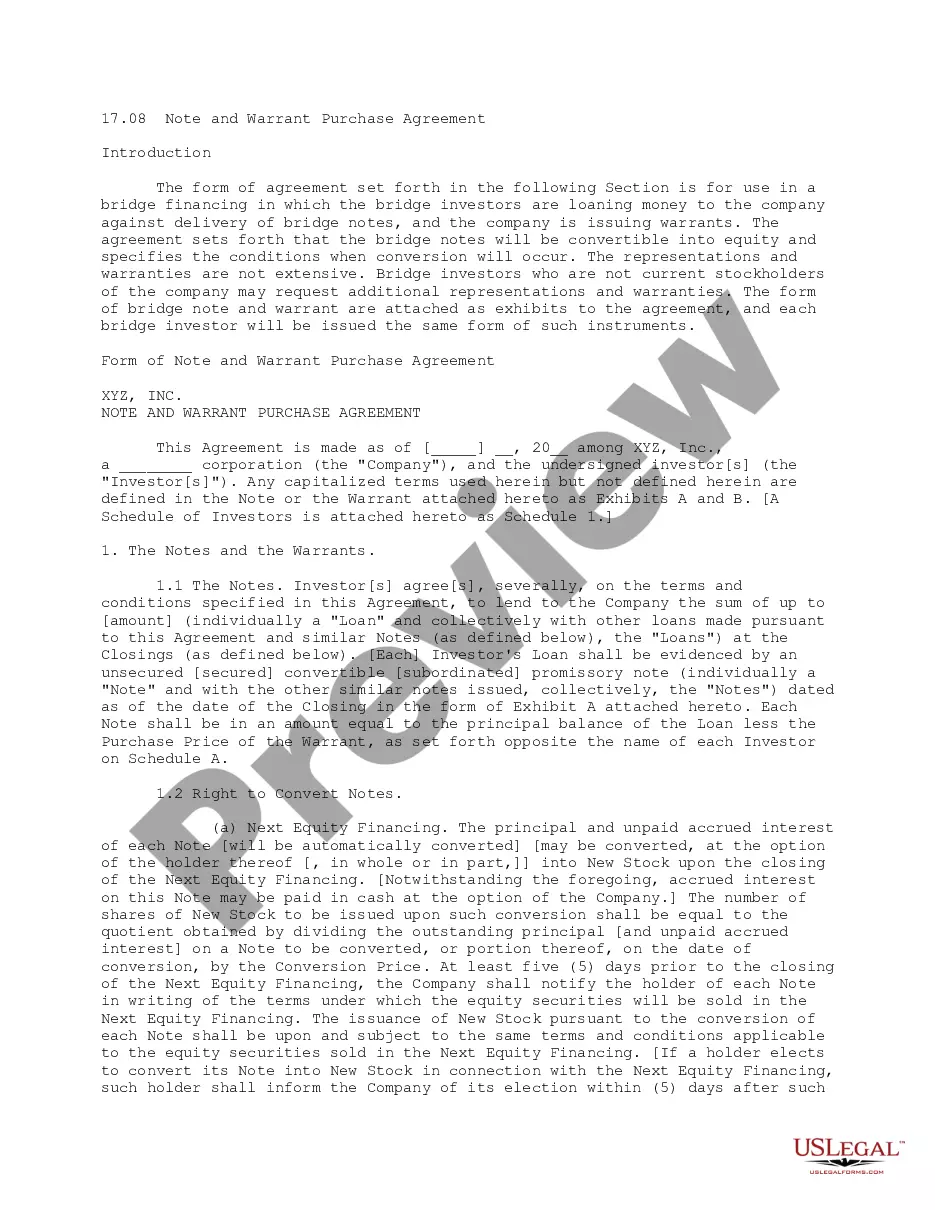
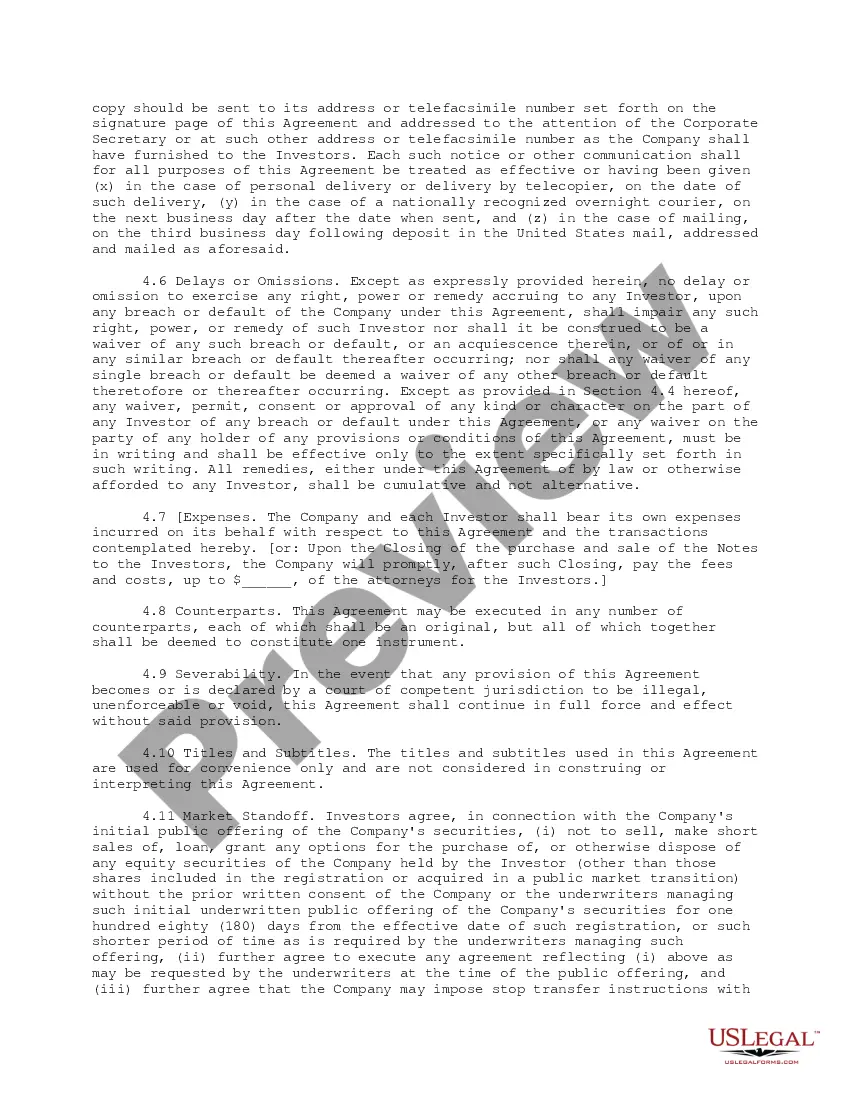
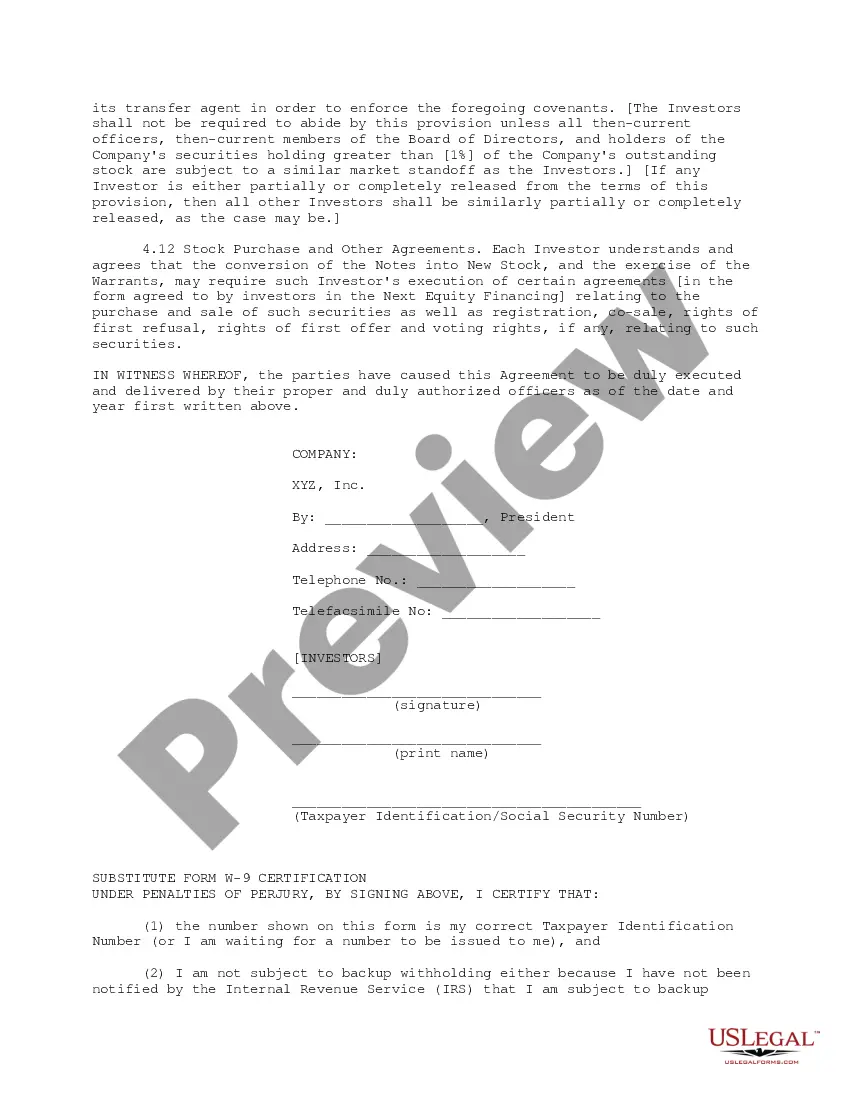
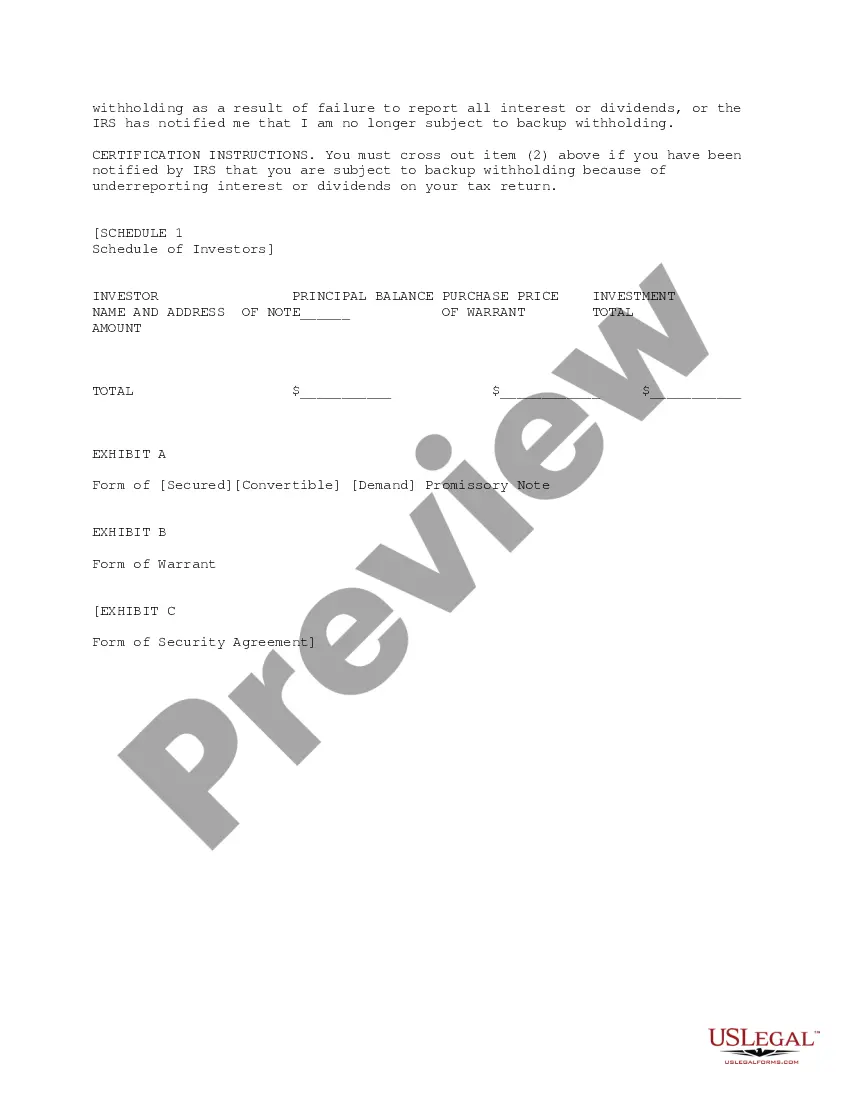
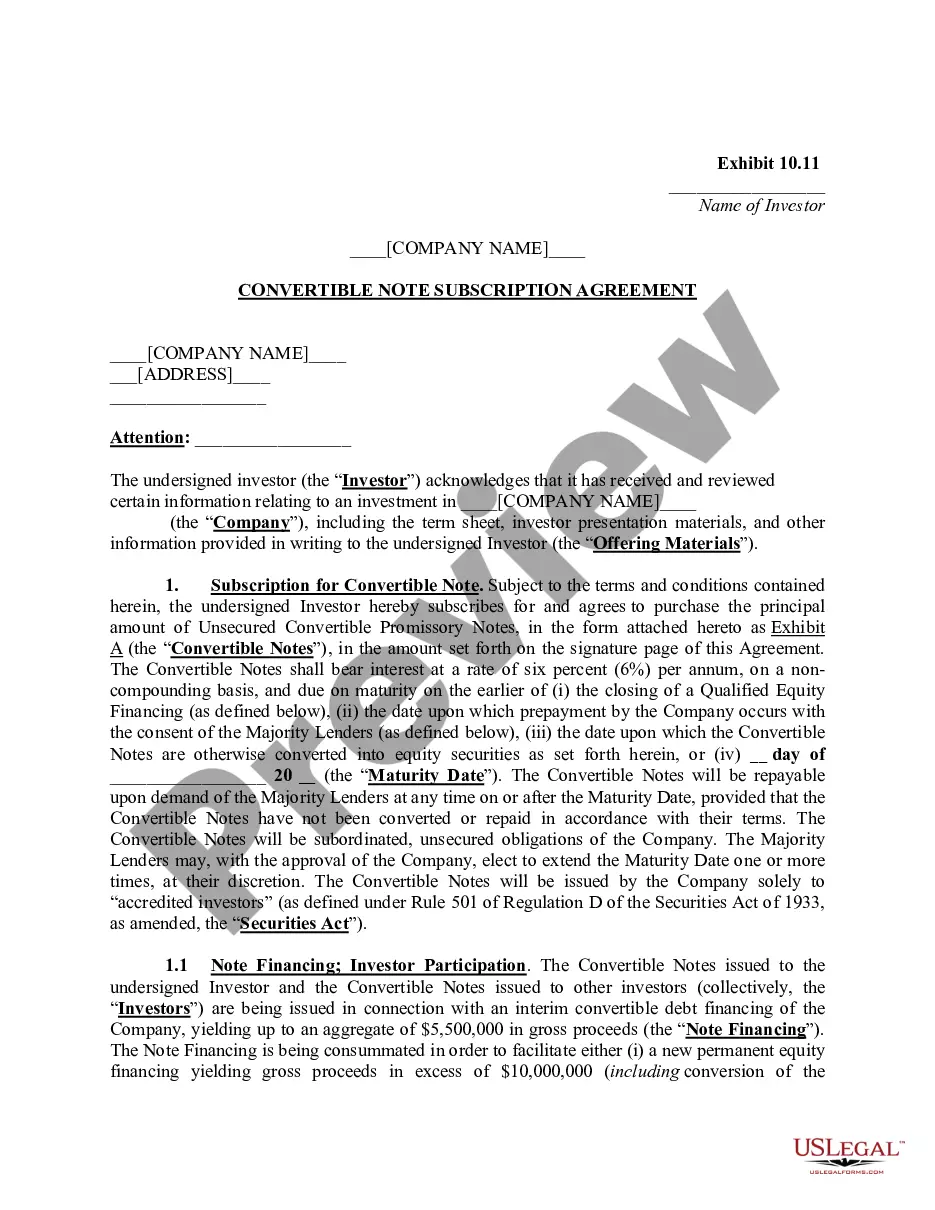
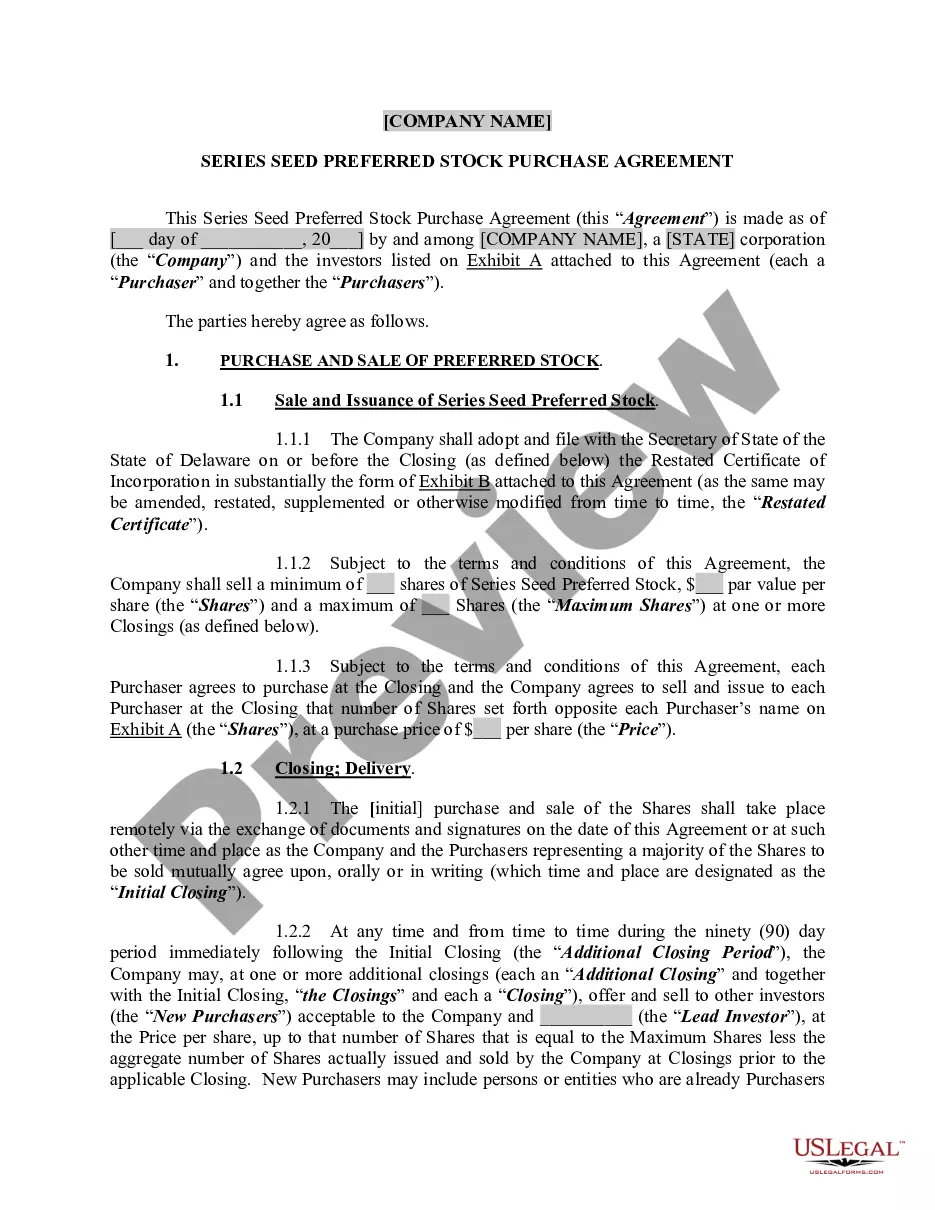
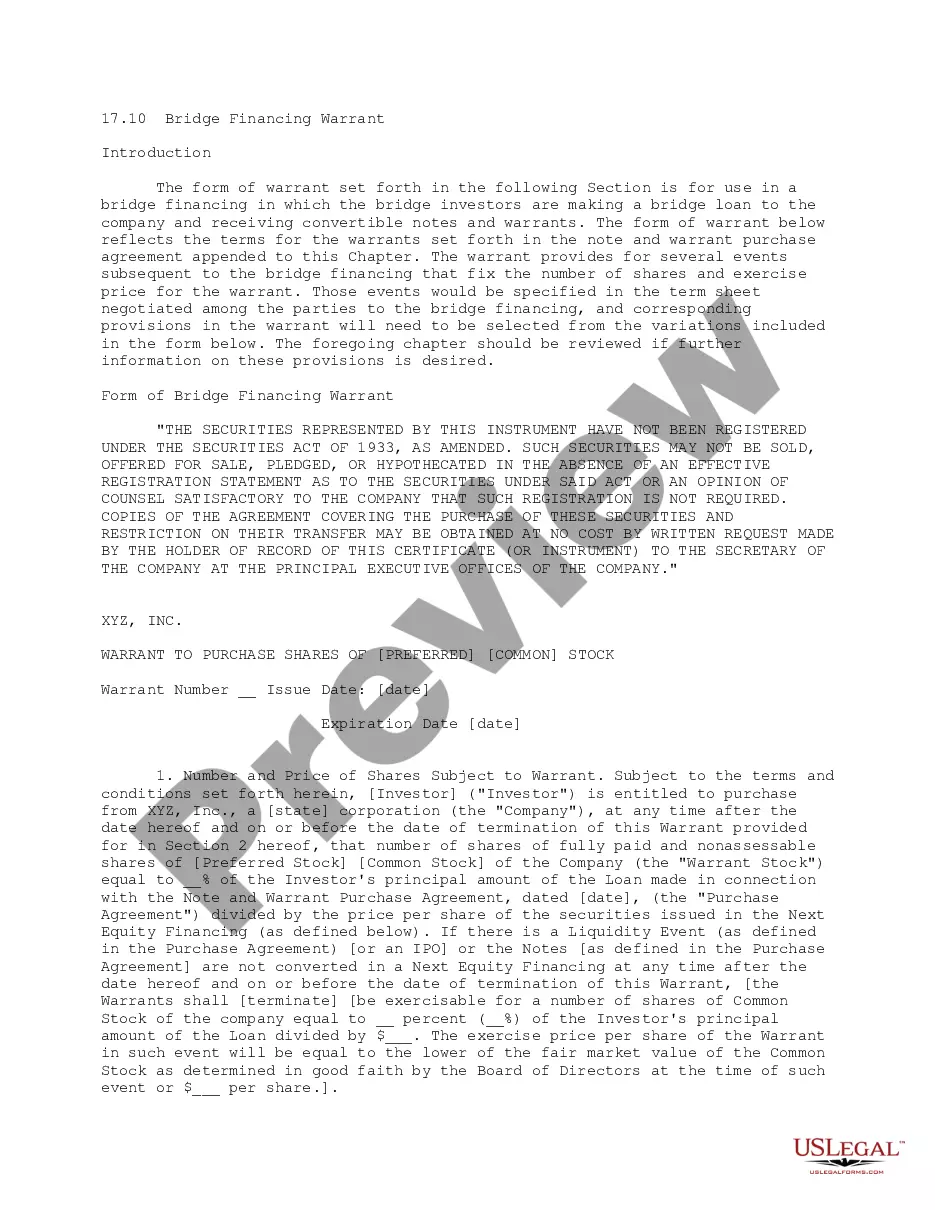
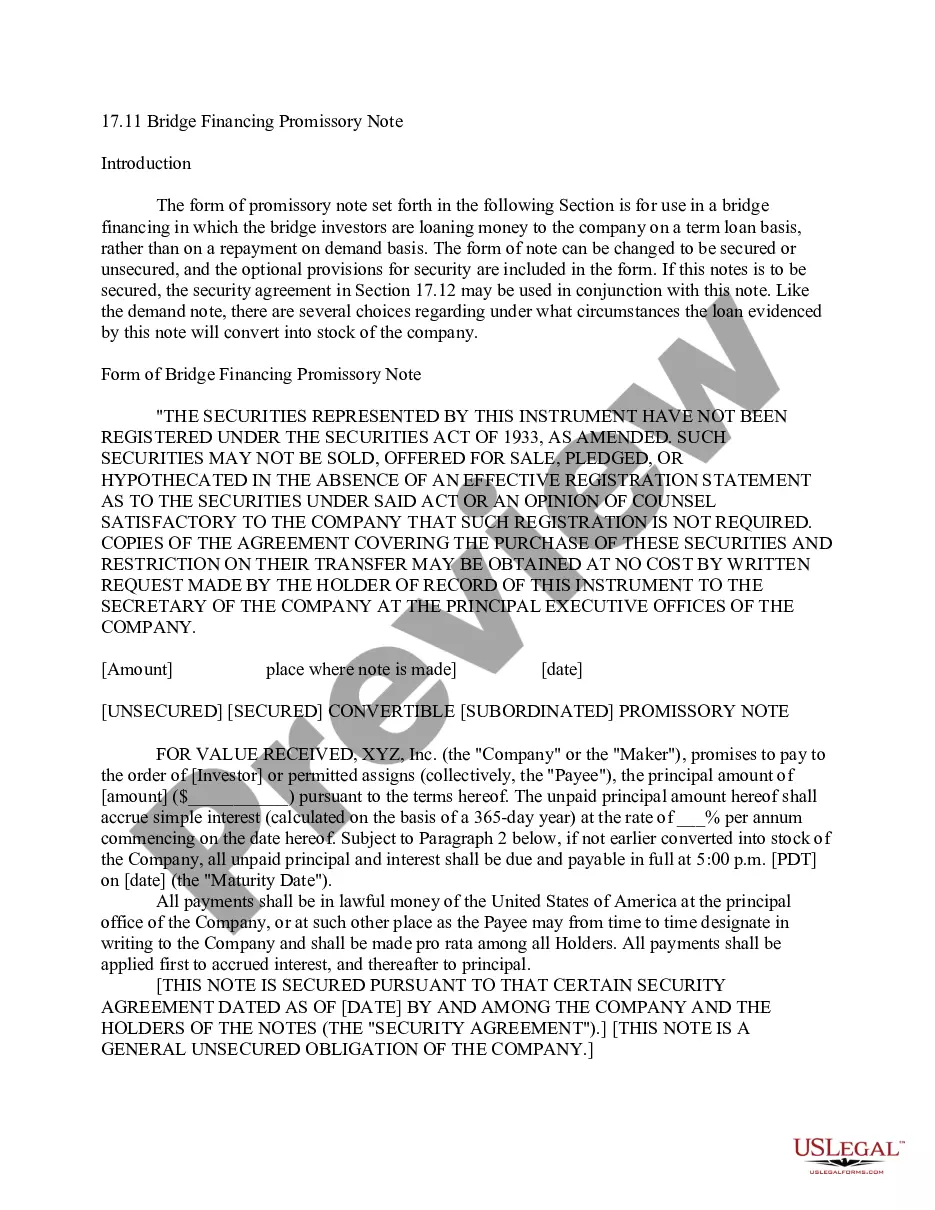
The Note and Warrant Purchase Agreement is a legal document used in bridge financing. In this agreement, investors provide loans to a company in exchange for bridge notes, while the company issues warrants. This document outlines the terms under which these bridge notes can be converted into equity, detailing the conditions for such conversions. Unlike other financing agreements, this form uniquely combines loan and equity elements, allowing investors to transition their loans into ownership stakes in the company.
Form components explained
- Introduction outlining the purpose of the agreement and the parties involved.
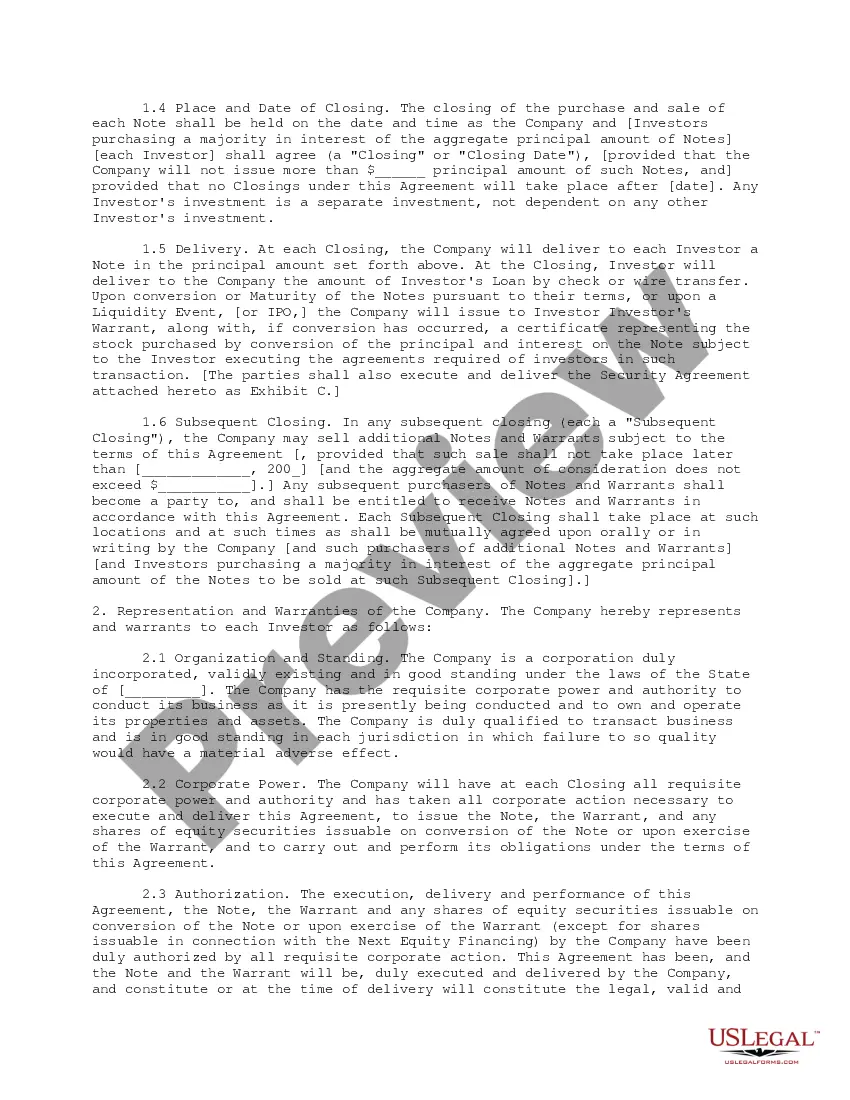
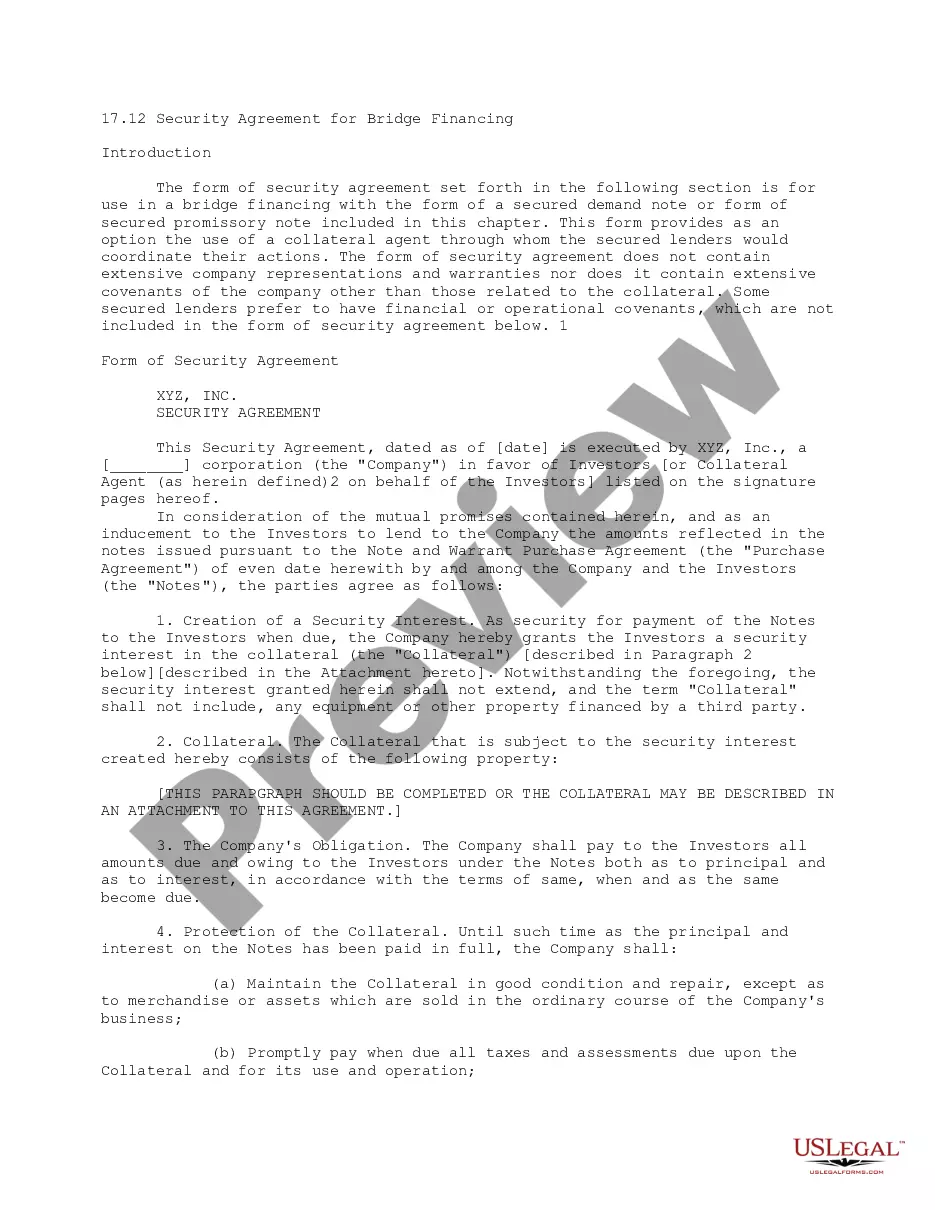
- Details on the bridge notes and the process of securing these loans.
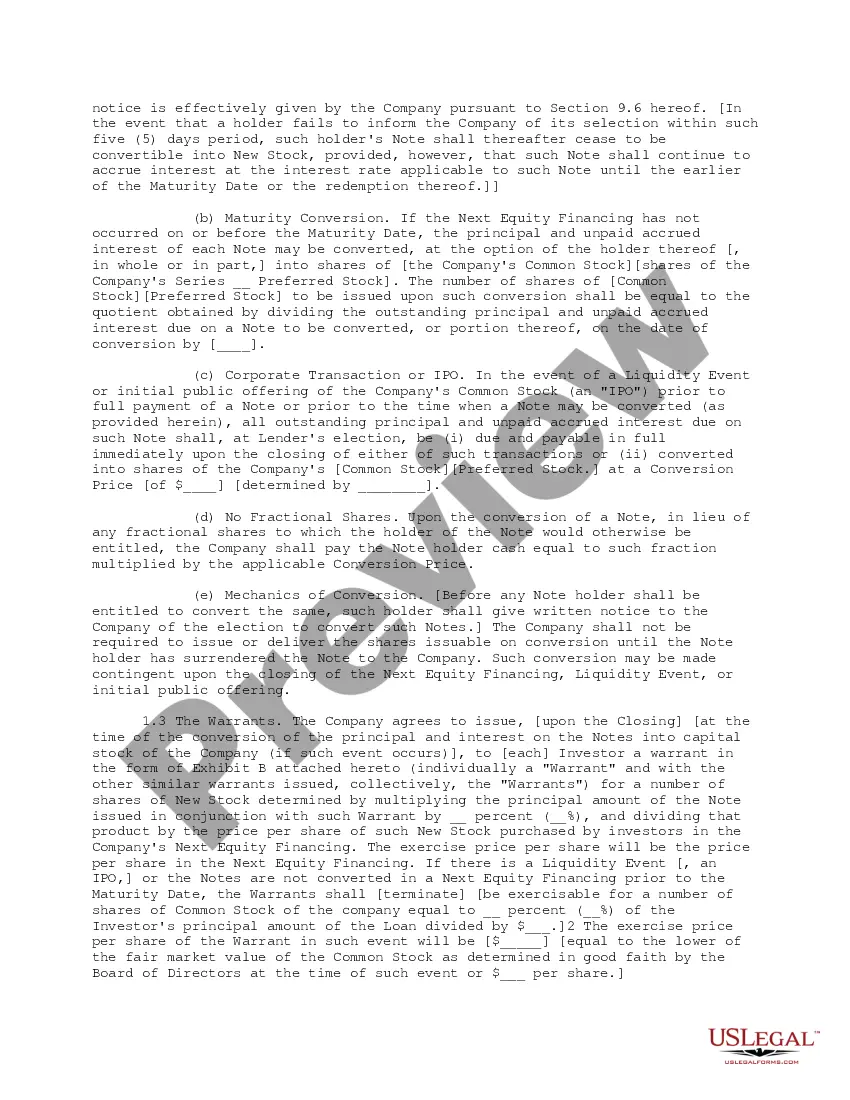
- Conditions for converting the notes into equity during future financing events.
- Warrant issuance terms, including how many shares investors will receive upon conversion.
- Representation and warranties by both the company and investors to ensure transparency and protect interests.
- Details on the event of default and corresponding remedies for investors.
Situations where this form applies
This form is essential when a company seeks bridge financing and needs to secure short-term loans while offering investors a chance to convert their loans into equity later. It is particularly useful for businesses preparing for a larger financing round or initial public offering (IPO) and for investors looking to gain a stake in a promising venture.
Intended users of this form
Eligible Users
- Companies seeking additional funding through bridge loans.
- Investors willing to provide short-term funding with the option to convert to equity.
- Parties interested in understanding the terms of convertible notes and warrants.
How to prepare this document
Steps to Complete the Agreement
- Identify the parties involved: company and investors.
- Specify the loan amounts and conditions under which conversions can occur.
- Fill in the details for the warrants, including how shares will be calculated.
- Enter the closing date where the agreement becomes effective.
- Ensure all parties sign the document to validate the agreements.
Notarization requirements for this form
This form does not typically require notarization unless specified by local law. However, always check for any state-specific requirements to ensure legal validity.
Get your form ready online
Our built-in tools help you complete, sign, share, and store your documents in one place.
Make edits, fill in missing information, and update formatting in US Legal Forms—just like you would in MS Word.
Download a copy, print it, send it by email, or mail it via USPS—whatever works best for your next step.
Sign and collect signatures with our SignNow integration. Send to multiple recipients, set reminders, and more. Go Premium to unlock E-Sign.
If this form requires notarization, complete it online through a secure video call—no need to meet a notary in person or wait for an appointment.
We protect your documents and personal data by following strict security and privacy standards.

Make edits, fill in missing information, and update formatting in US Legal Forms—just like you would in MS Word.

Download a copy, print it, send it by email, or mail it via USPS—whatever works best for your next step.

Sign and collect signatures with our SignNow integration. Send to multiple recipients, set reminders, and more. Go Premium to unlock E-Sign.

If this form requires notarization, complete it online through a secure video call—no need to meet a notary in person or wait for an appointment.

We protect your documents and personal data by following strict security and privacy standards.
Typical mistakes to avoid
- Failing to include all parties' signatures, which can render the agreement unenforceable.
- Neglecting to specify interest rates and terms of conversion, leading to disputes later.
- Overlooking state-specific terms that may be necessary for compliance.
Benefits of using this form online
- Convenient access to a readily downloadable template drafted by licensed attorneys.
- Editability allows users to tailor the agreement to their specific needs.
- Increased reliability of the form due to its attorney oversight, reducing potential legal issues.
- The Note and Warrant Purchase Agreement is a legally binding contract, enforceable as long as all parties adhere to its terms.
- This agreement is crucial in establishing the rights and obligations of both the company and investors.
- Investors should be aware that the securities issued under this agreement may not be freely tradable and could be restricted under securities laws.
Key takeaways
- The Note and Warrant Purchase Agreement serves as a vital tool for bridge financing.
- Clarity on conversion terms protects both the company and investors.
- Proper completion of this form can prevent future legal issues and misunderstandings.
Looking for another form?
Form popularity
FAQ
A stock warrant is a contract between a company and an individual. It gives the individual the right to trade that company's shares at a certain price on or before a certain date. The price is known as the strike price, while the date is known as the expiration date.
In short, A Warrant is as good as any other simpler equity investment, just with a leveraged effect. First make sure the company in question has a fundamental upside. If the value of the share is less than the exercise price, the Warrant becomes worthless.
Companies typically issue warrants to raise capital and encourage investors to buy stock in their firms. They receive funds when they sell the warrants and again when stocks are purchased using the warrant.A stock warrant is a way to test drive a stock before you dive in.
A stock warrant represents the right to purchase a company's stock at a specific price and at a specific date. A stock warrant is issued directly by a company to an investor. Stock options are purchased when it is believed the price of a stock will go up or down.
Warrants differ from rights in that they must be purchased from a broker for a commission and usually qualify as marginable securities. Both rights and warrants conceptually resemble publicly traded call options in some respects. The value of all three instruments inherently depends on the underlying stock price.
Most stock warrants are similar to call options in that they provide the holder the right, but not the obligation, to buy shares of a company at a specified price (strike price) before the warrant expires. Unlike a listed option, a warrant is issued by a company instead of an option writer.
Warrants are long-term options that allow investors to buy common stock at a fixed price until some future date. Typically, a warrant is issued by a company as a "sweetener" to attract investors when the company sells shares.It makes no sense to buy the warrant if you think the stock price will be flat.