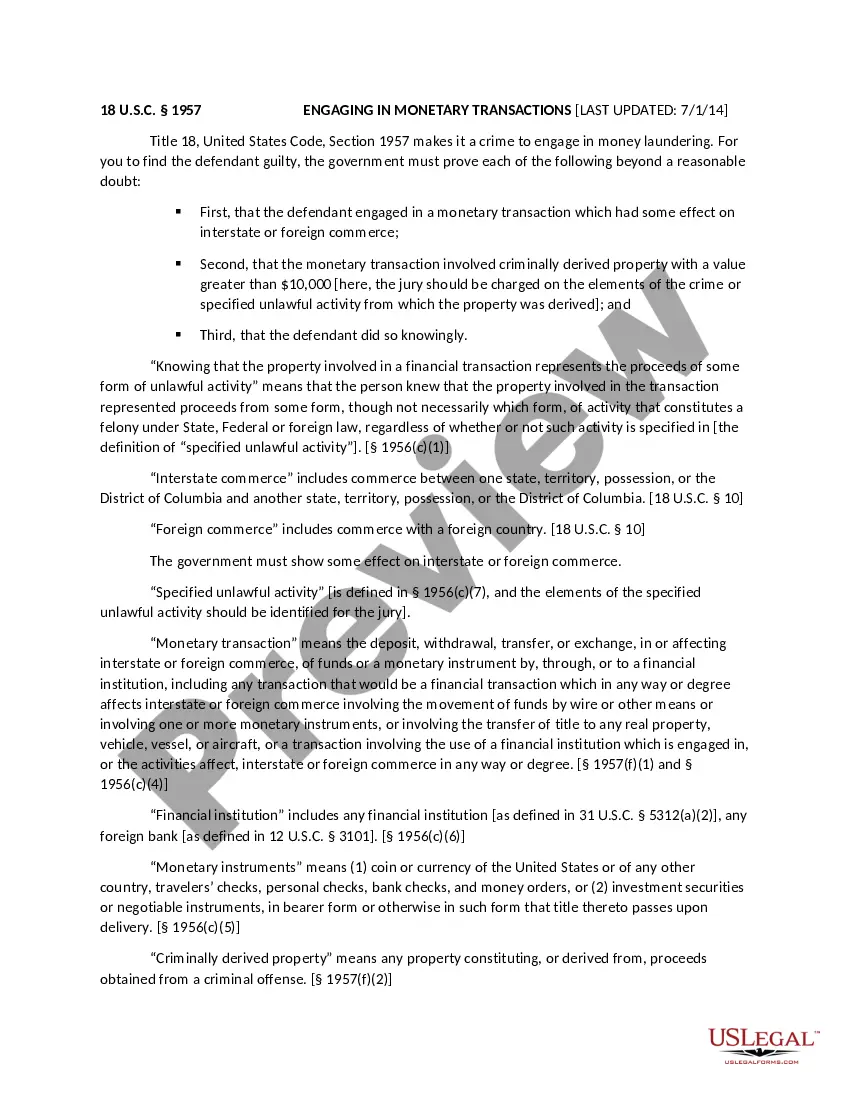
Security Agreement for Bridge Financing
What this document covers
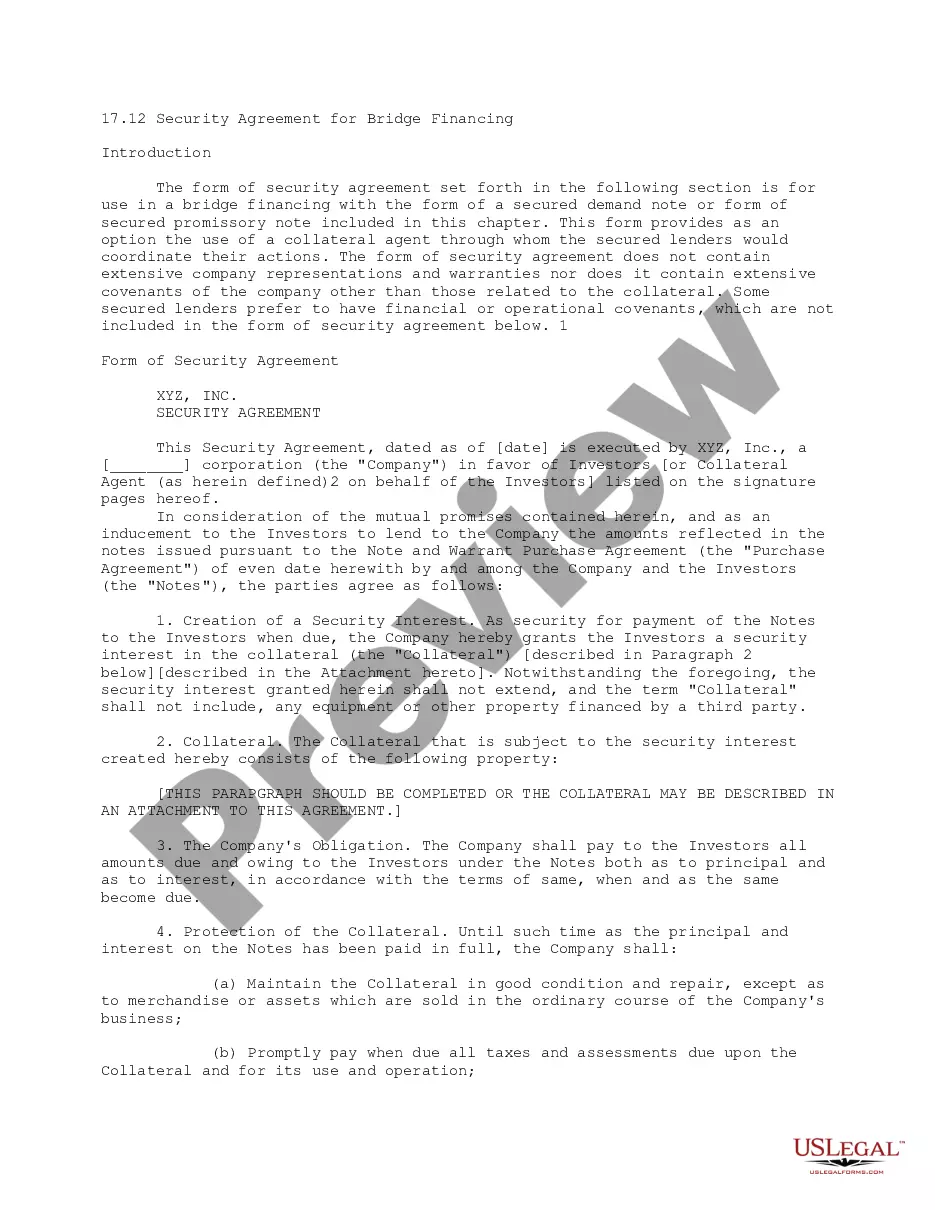
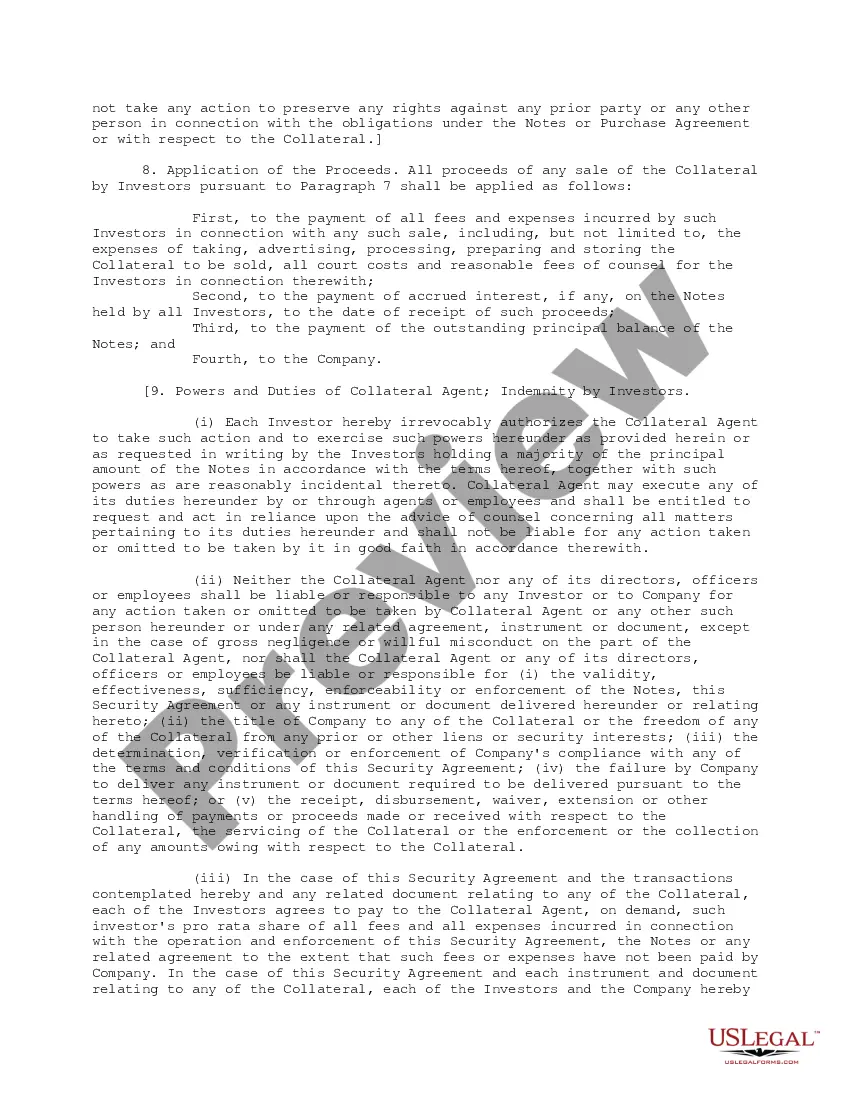
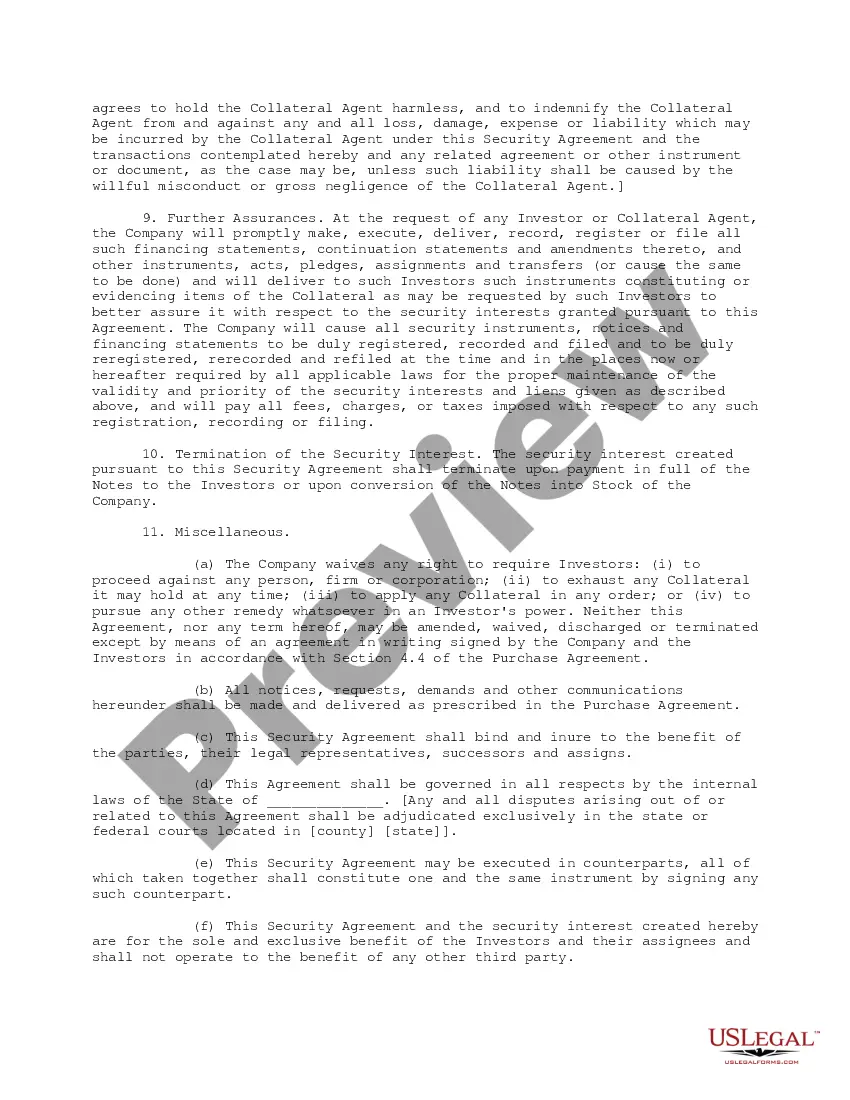
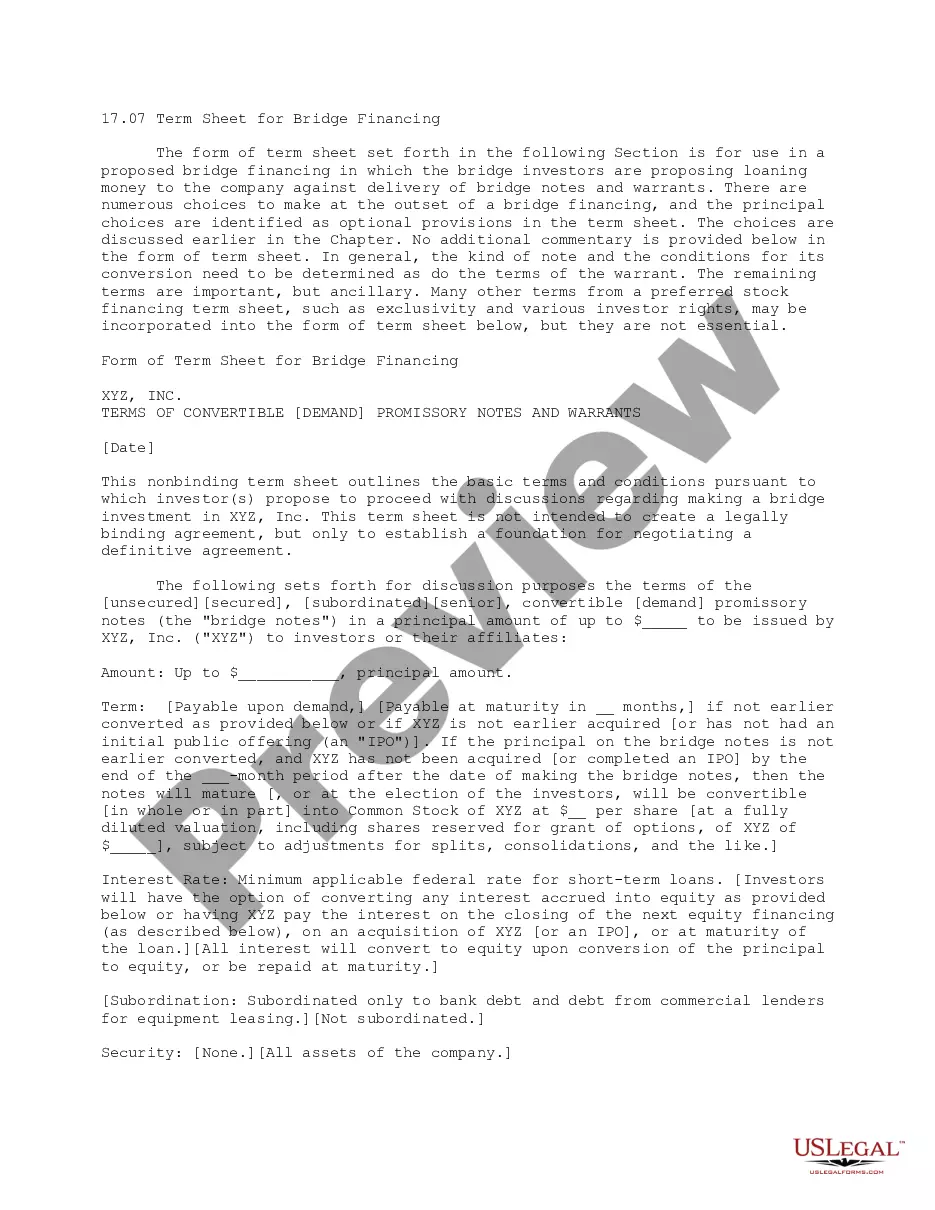
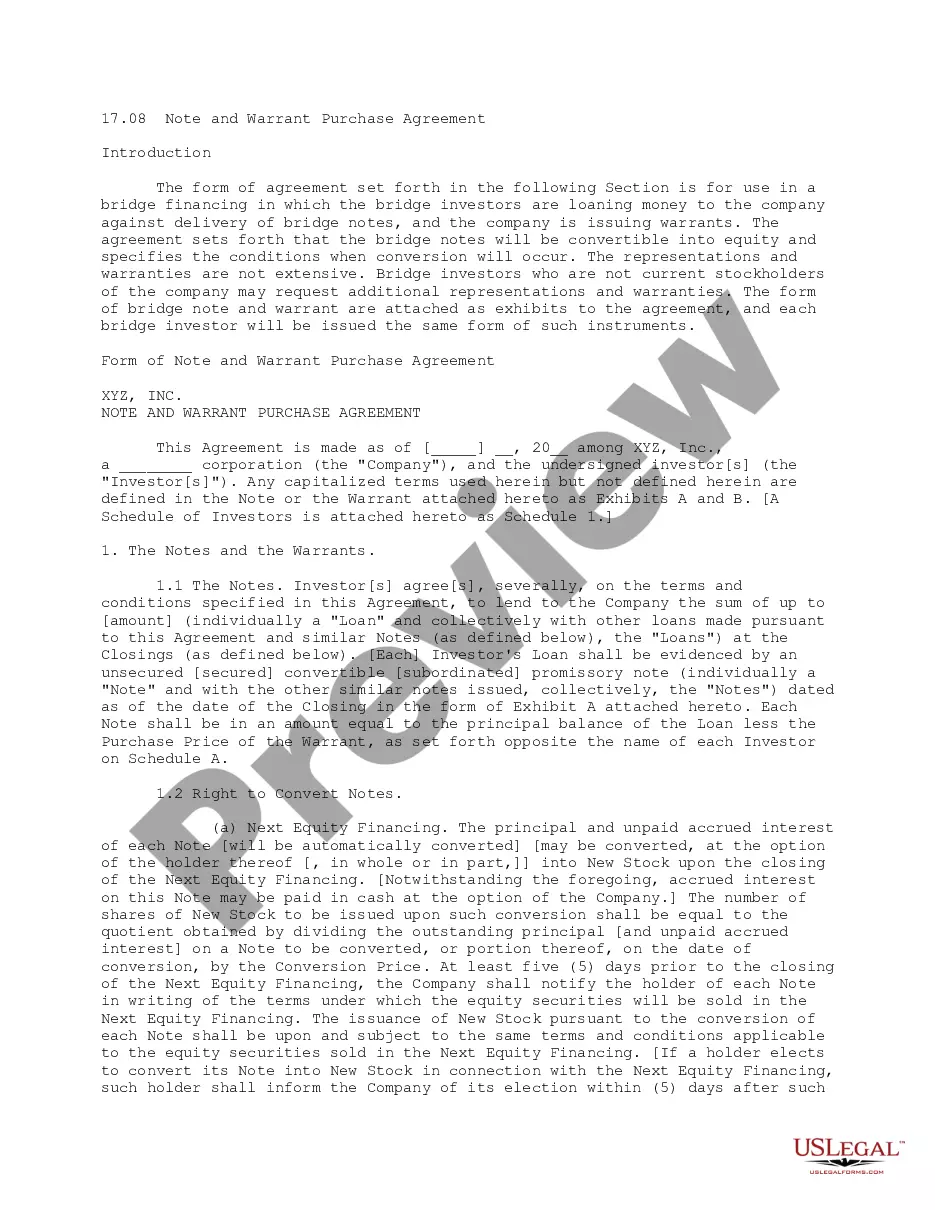
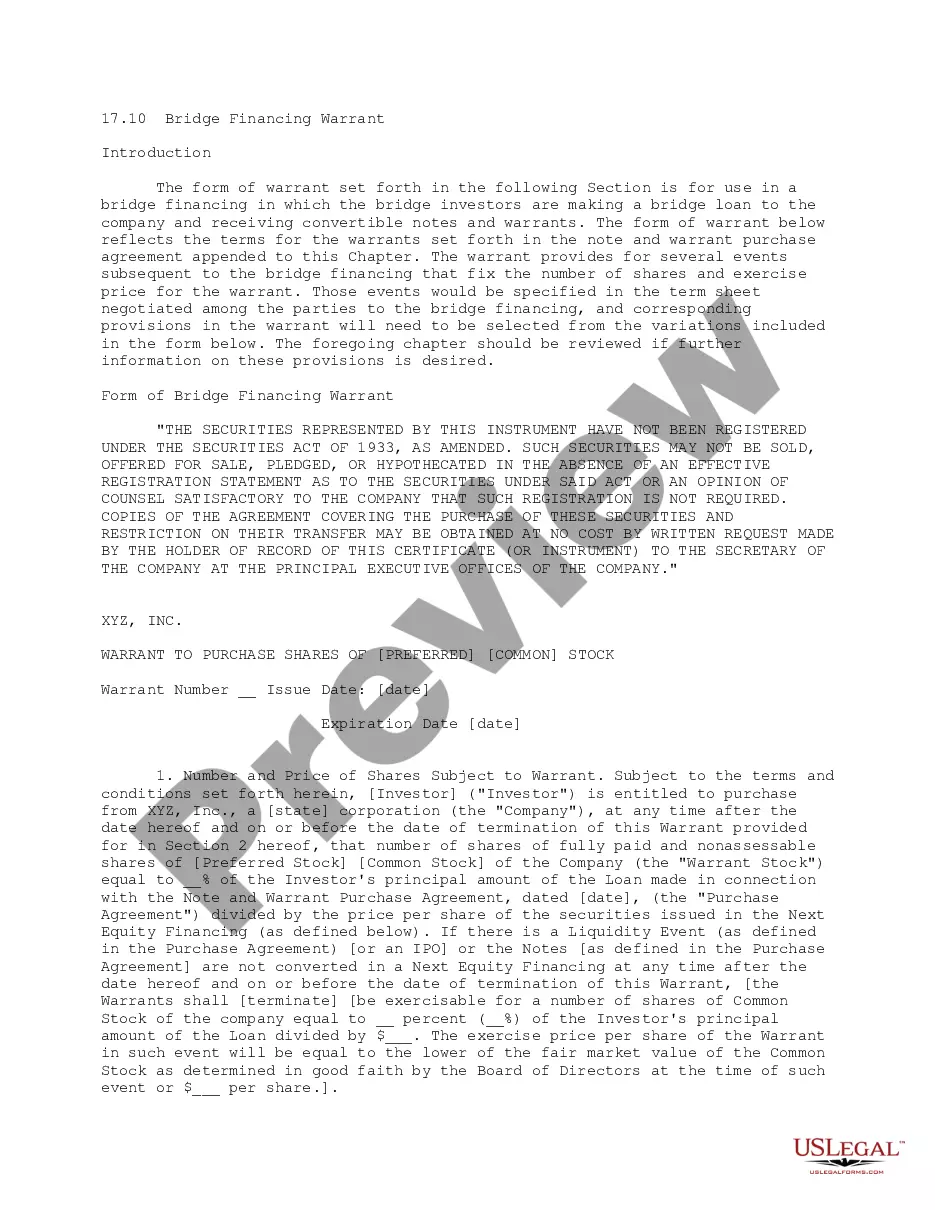
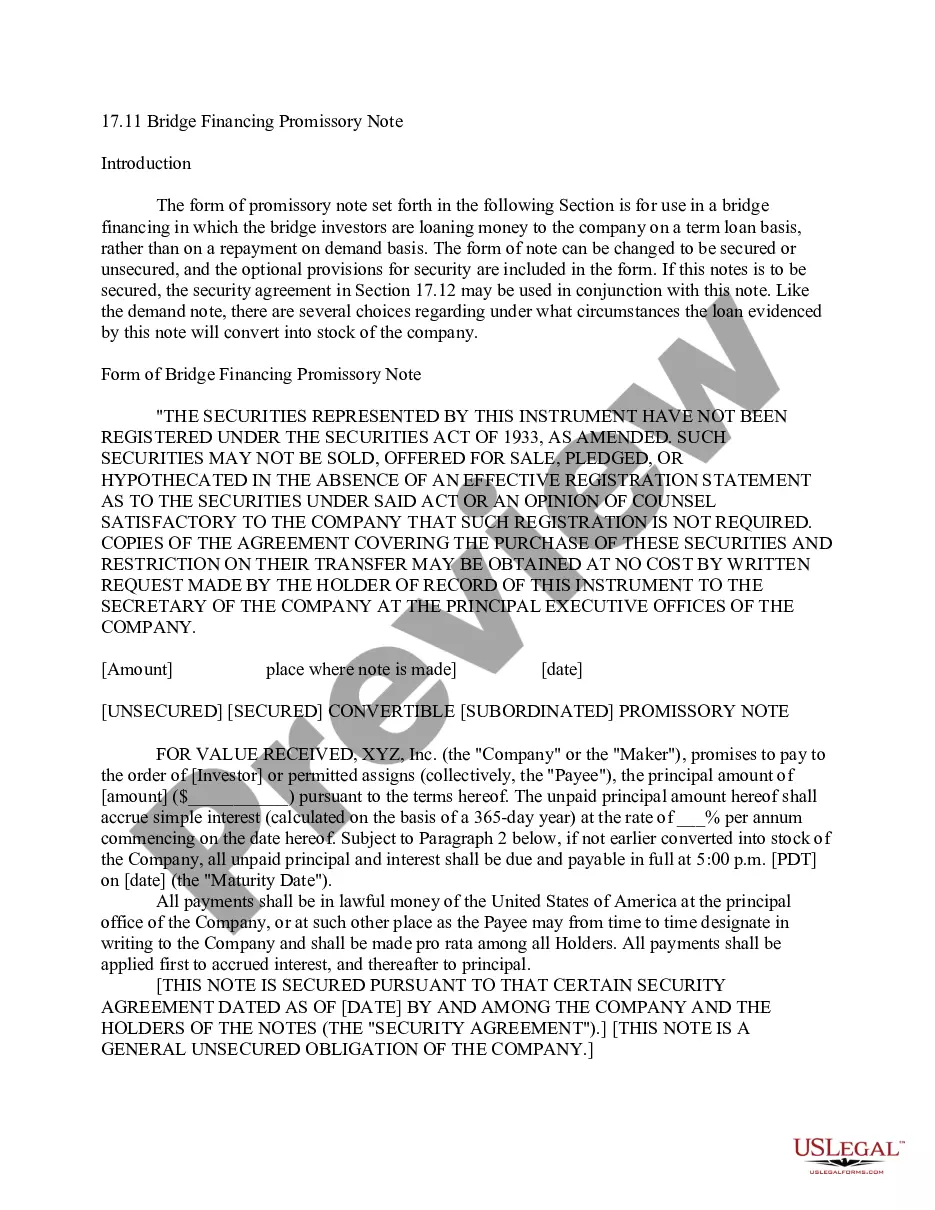
The Security Agreement for Bridge Financing is a legal document that outlines the terms of a secured financial arrangement used during bridge financing transactions. This type of agreement is specifically designed for use with secured demand notes or secured promissory notes. It provides the framework for securing loans with collateral, offering lenders a claim on specific assets in case of default. Unlike other agreements, this form focuses primarily on the collateral and does not include extensive representations or operational covenants from the borrower, making it straightforward for users with varying levels of legal expertise.
What’s included in this form
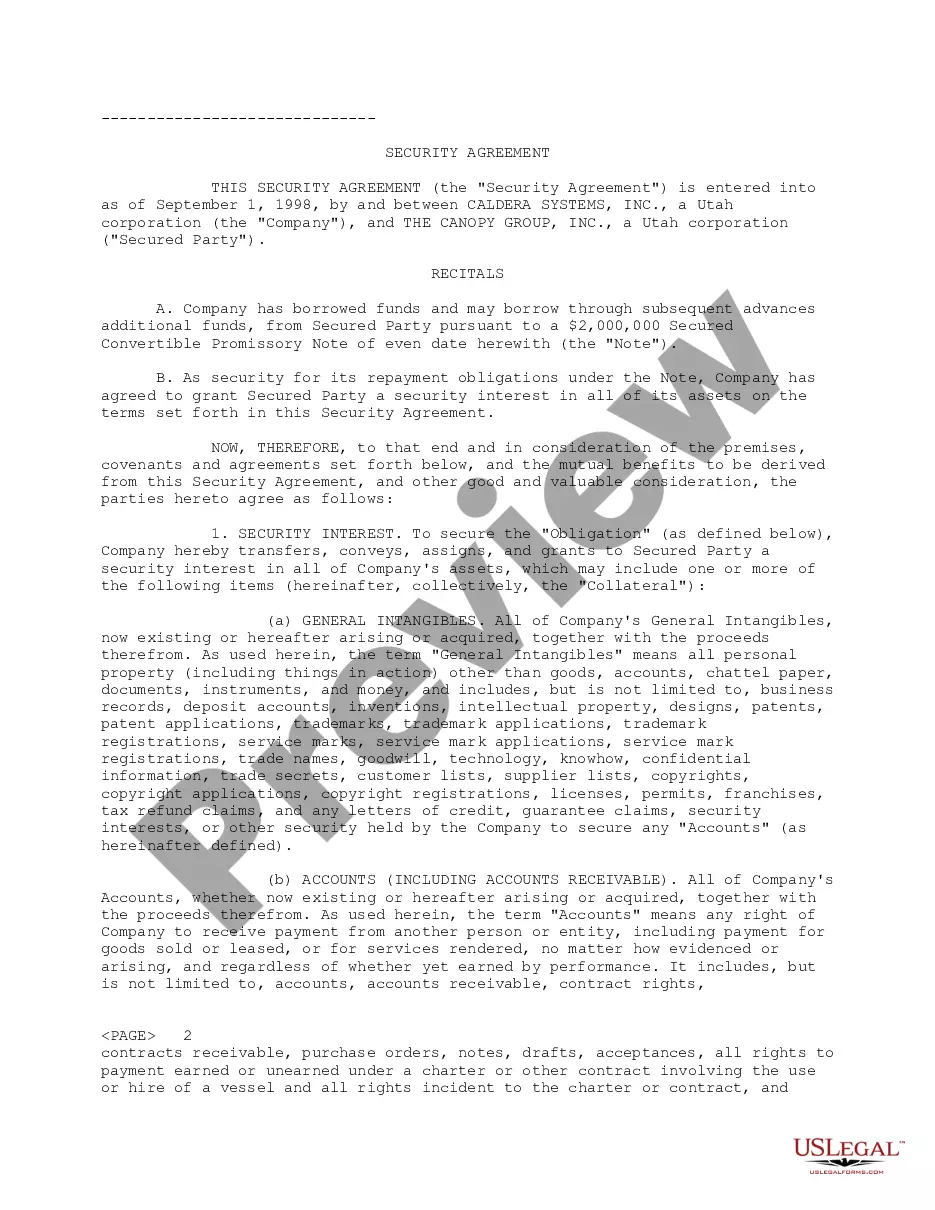
- Introduction outlines the purpose and parties involved in the agreement.
- Creation of a security interest defines the collateral being used to secure the loan.
- Obligations of the company detail the payment responsibilities regarding principal and interest.
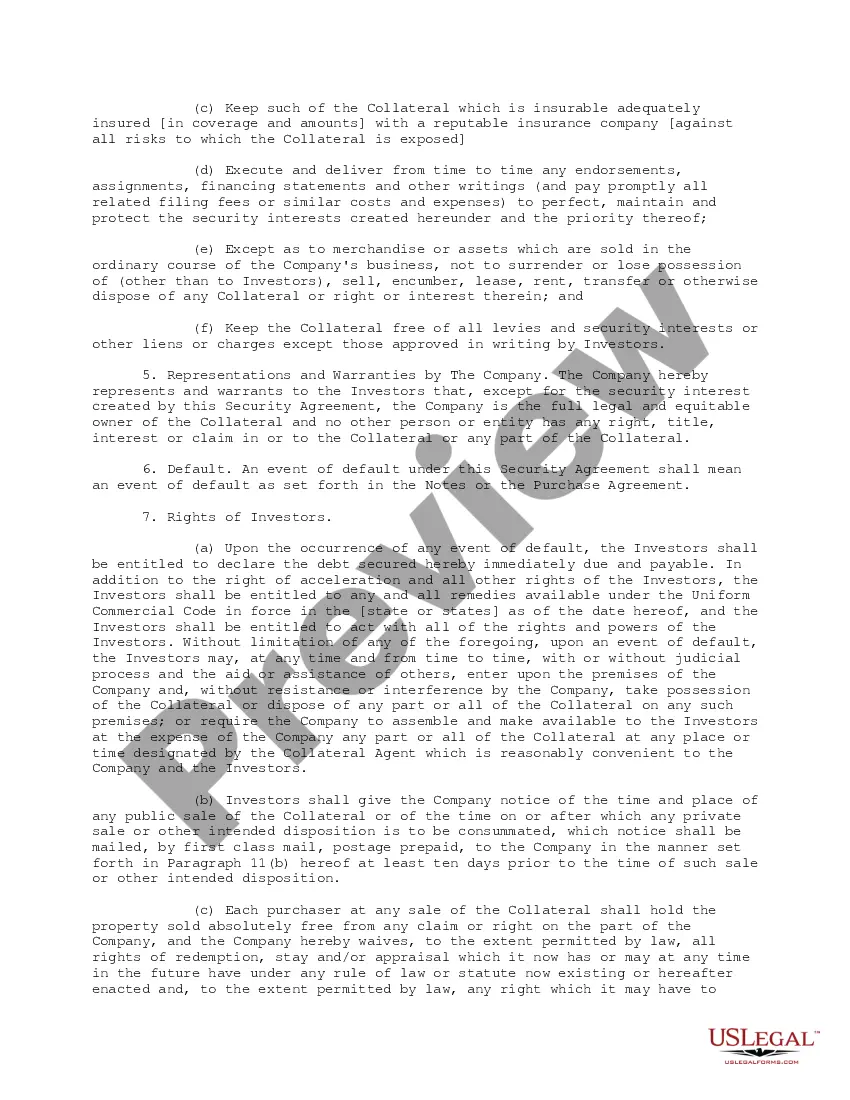
- Protection of the collateral includes requirements for maintaining and insuring the secured assets.
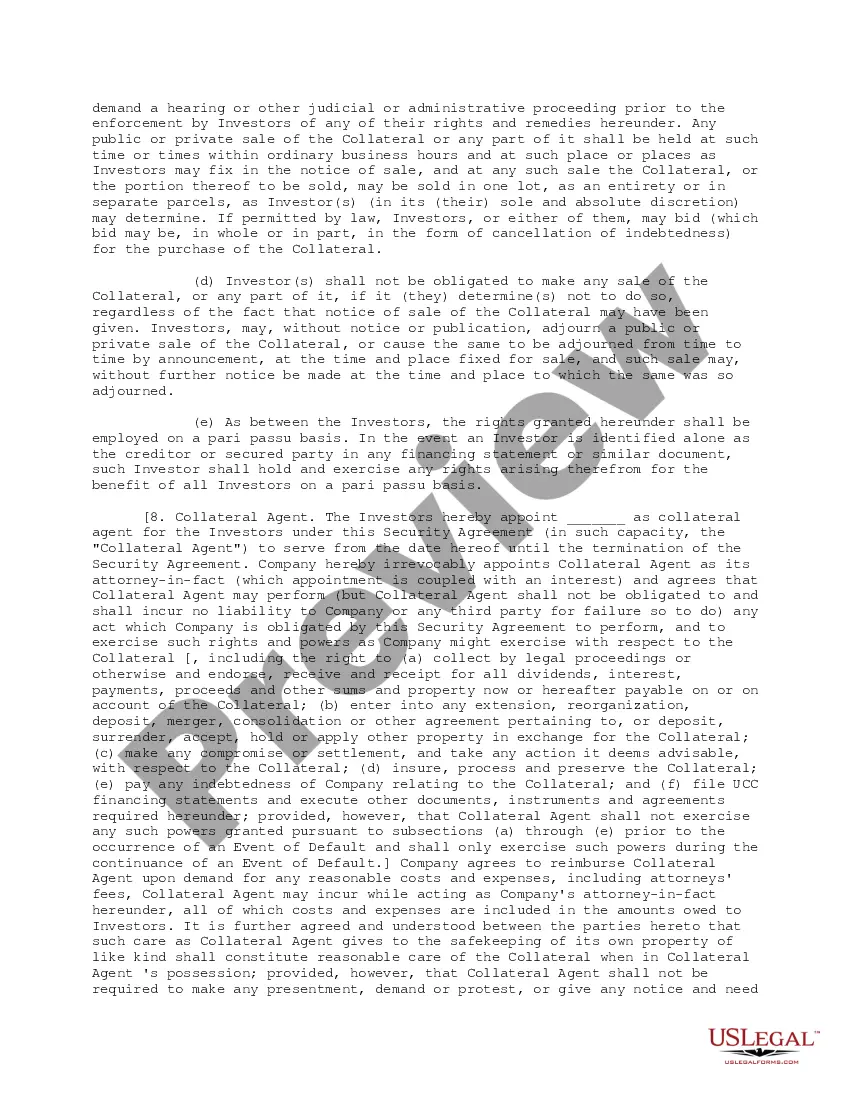
- Default provisions specify what constitutes a breach of the agreement and the rights of lenders.
- Application of proceeds details how any proceeds from the sale of collateral will be allocated.
Common use cases
This form should be used when a business seeks temporary financingâoften referred to as bridge financingâbefore securing long-term funding. It is particularly useful when a company needs immediate cash flow to meet obligations or invest in opportunities while awaiting expected income or financing. The security agreement ensures that lenders have a claim on specified collateral if the borrower cannot meet payment obligations.
Who this form is for
This form is intended for:
- Companies seeking bridge financing to cover short-term capital needs.
- Lenders or investors who provide funding and require security interests in collateral.
- Legal professionals assisting clients in negotiating or drafting financial agreements.
Completing this form step by step
Steps to complete this form:
- Identify the parties involved, including the borrowing company and the lenders.
- Specify the collateral that will secure the loan within the agreement.
- Clearly outline the company's obligations for payment of the loan principal and interest.
- Detail the protections to be maintained for the collateral, including insurance requirements.
- Include signatures from all parties to finalize the agreement.
Notarization guidance
This form does not typically require notarization unless specified by local law. Users should always verify if their specific situation requires notarization to ensure legal validity.
Get your form ready online
Our built-in tools help you complete, sign, share, and store your documents in one place.
Make edits, fill in missing information, and update formatting in US Legal Forms—just like you would in MS Word.
Download a copy, print it, send it by email, or mail it via USPS—whatever works best for your next step.
Sign and collect signatures with our SignNow integration. Send to multiple recipients, set reminders, and more. Go Premium to unlock E-Sign.
If this form requires notarization, complete it online through a secure video call—no need to meet a notary in person or wait for an appointment.
We protect your documents and personal data by following strict security and privacy standards.

Make edits, fill in missing information, and update formatting in US Legal Forms—just like you would in MS Word.

Download a copy, print it, send it by email, or mail it via USPS—whatever works best for your next step.

Sign and collect signatures with our SignNow integration. Send to multiple recipients, set reminders, and more. Go Premium to unlock E-Sign.

If this form requires notarization, complete it online through a secure video call—no need to meet a notary in person or wait for an appointment.

We protect your documents and personal data by following strict security and privacy standards.
Common mistakes
Common mistakes to avoid:
- Failing to clearly define the collateral, which can lead to disputes.
- Neglecting to outline the company's obligations in detail, which may result in misunderstandings.
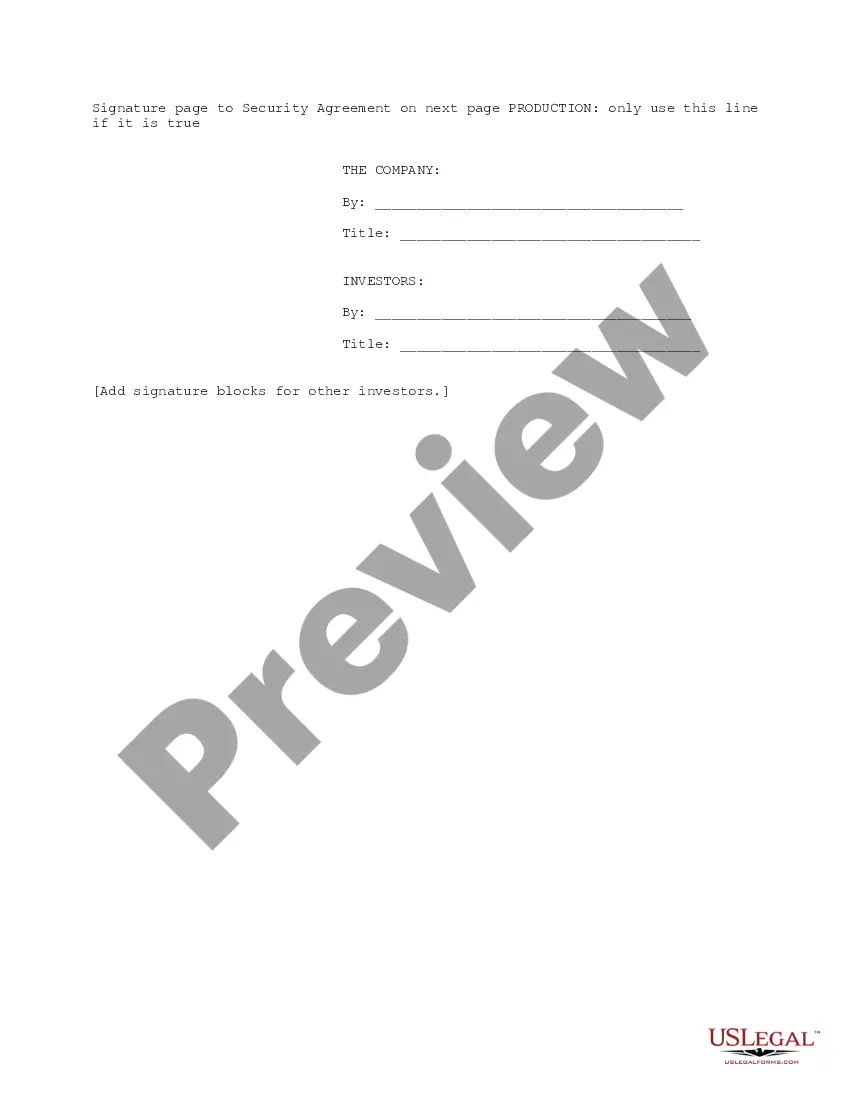
- Not including signature blocks for all investors involved, leading to an unenforceable agreement.
Why use this form online
Benefits of using this form online:
- Convenience of downloading and customizing the form to fit specific needs.
- Easy access to attorney-drafted templates, ensuring legal compliance.
- Quick turnaround, allowing users to promptly address business financing needs.
Legal use & context
- This agreement creates a legal framework for investors to secure their interest in the collateral.
- It is enforceable under the Uniform Commercial Code that governs security interests.
- Limitations may exist based on the stateâs interpretation of the law related to secured transactions.
Summary of main points
Key takeaways:
- The Security Agreement for Bridge Financing is crucial for securing loans with specific collateral.
- It outlines responsibilities for both lenders and borrowers, focusing primarily on the collateral involved.
- This form is suitable for companies needing fast funding solutions while outlining lender protections.
Looking for another form?

Form popularity
FAQ
A security agreement refers to a document that provides a lender a security interest in a specified asset or property that is pledged as collateral.In the event that the borrower defaults, the pledged collateral can be seized by the lender and sold.
Security agreements and financing statements are often confused with one another. The primary difference is that the financing statement largely serves as notice that a creditor possesses security interest in the debtor's assets or property. The financing statement is not a contract.
A bridge loan is a temporary financing option designed to help homeowners bridge the gap between the time your existing home is sold and your new property is purchased. It enables you to use the equity in your current home to pay the down payment on your next home, while you wait for your existing home to sell.
It is usually issued by an investment bank or venture capital firm. Equity financing (equity-for-capital swap) can also be an option for those seeking bridge financing. In all cases, bridge loans are expensive because lenders bear a significant portion of default risk loaning the funds for a short period.
It allows the user to meet current obligations by providing immediate cash flow. Bridge loans are short term, up to one year, have relatively high interest rates, and are usually backed by some form of collateral, such as real estate or inventory.
A bridge loan is short-term financing used until a person or company secures permanent financing or removes an existing obligation. Bridge loans are short term, typically up to one year. These types of loans are generally used in real estate.
With reference to lending, security or collateral, is an asset that is pledged by the borrower as protection in case he or she defaults on the repayment.Security should be important to the lender, whether the borrower is an individual, or a company.
A general security agreement creates a security interest in all present and future assets of the borrower. This means the lender would have access to all assets your business owns now and any future assets your business purchases as collateral for the loan issued.
Mortgage and security interest are two similar terms, both referring to a collateral created in order to secure a debt by one party to the other.The basic difference is that mortgage is a traditional way of securing obligations under the common law, typically used in property transactions.