Standard Term Sheet
What this document covers
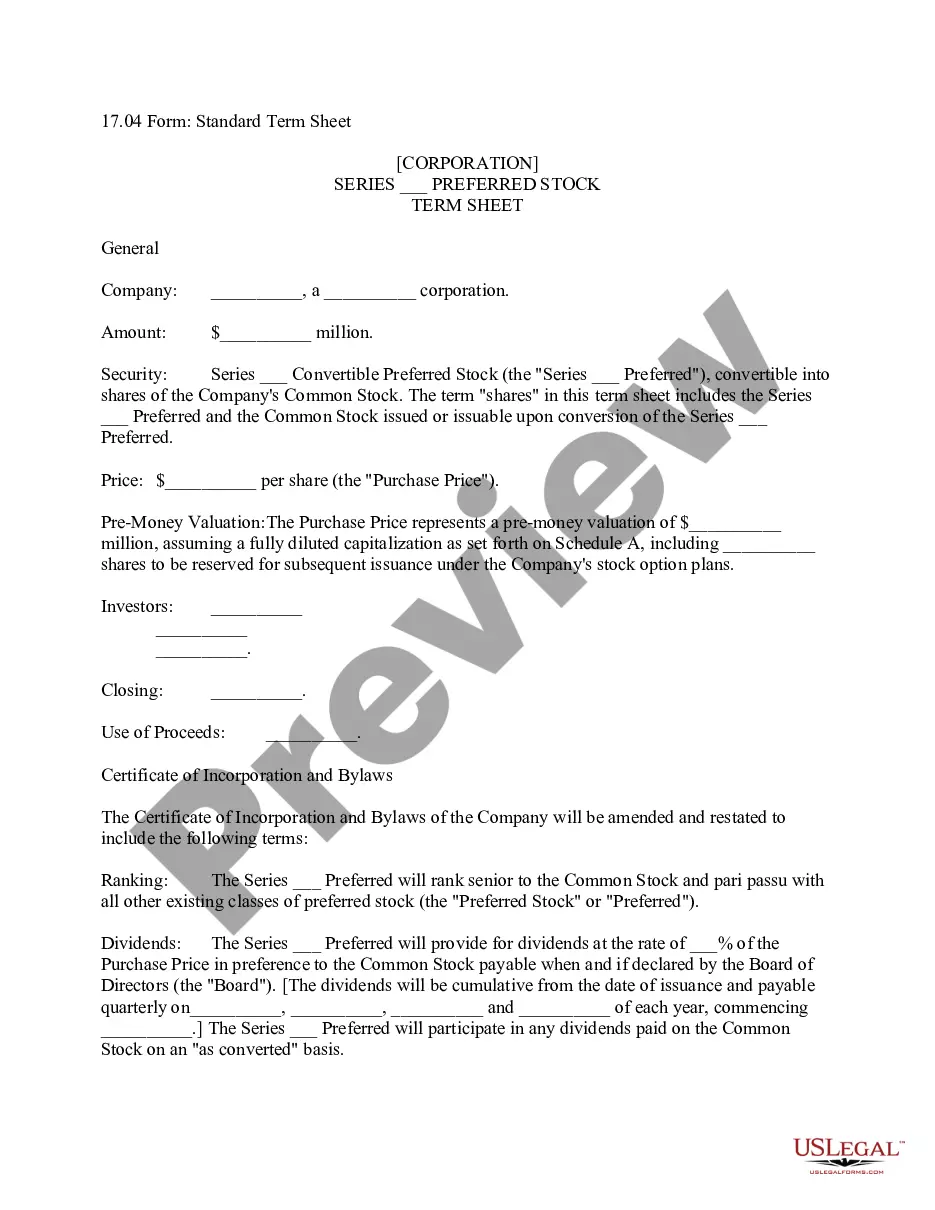
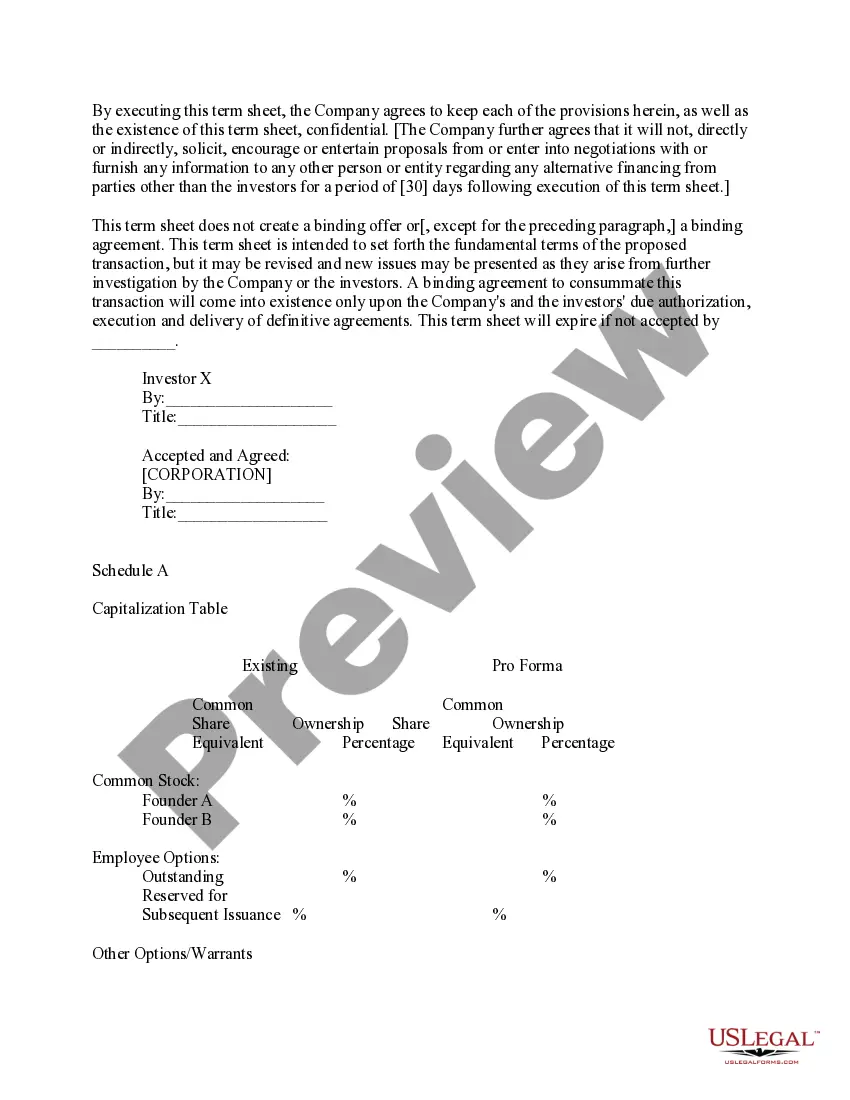
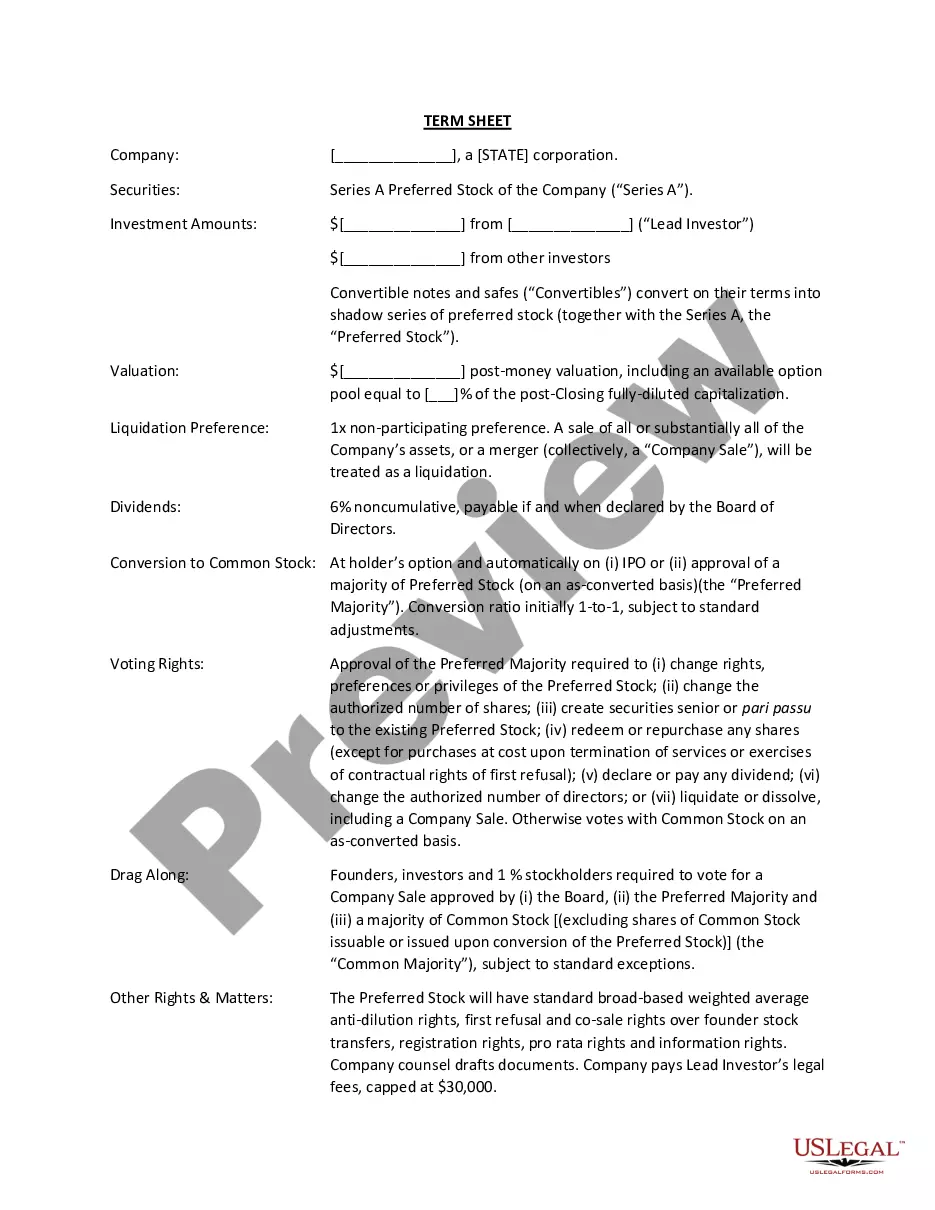
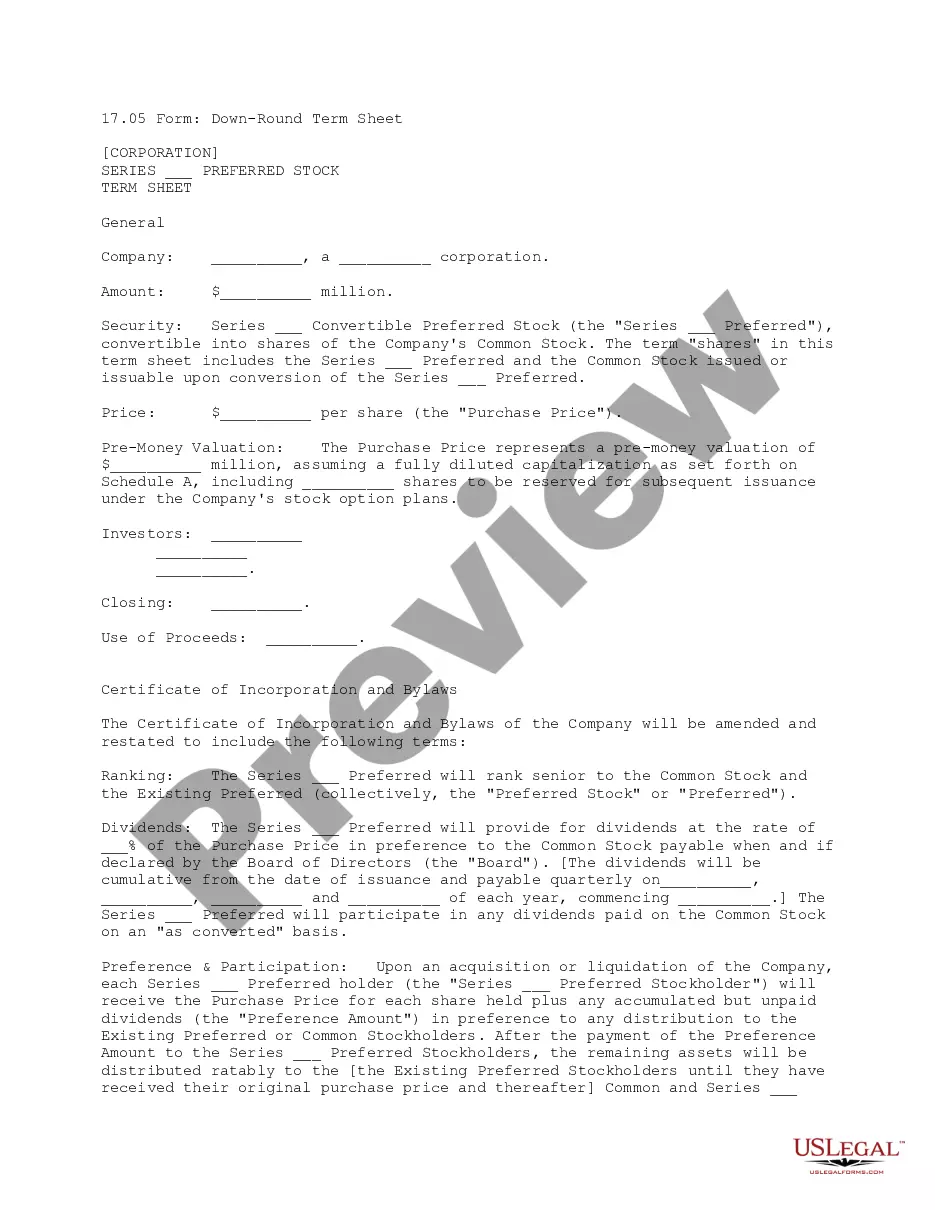
The Standard Term Sheet is a key document used in corporate and business settings. It outlines the terms and conditions of a proposed investment or transaction between a company and its investors. This document provides a framework for negotiating detailed agreements and differs from similar forms by providing a template that is easy to adapt according to the specific circumstances of each transaction.
Key components of this form
- Company name and type of corporation.
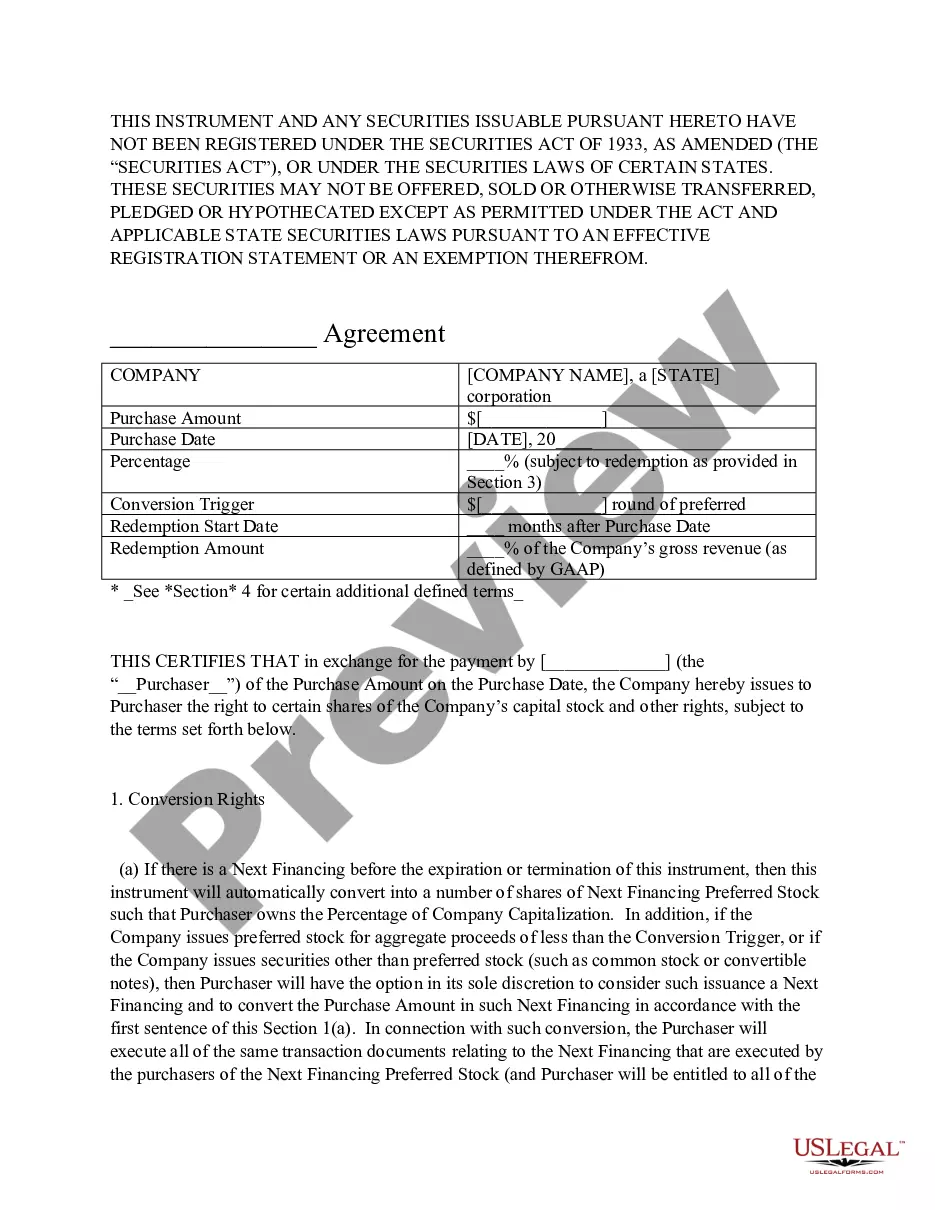
- Amount of investment and security details.
- Purchase price and pre-money valuation information.
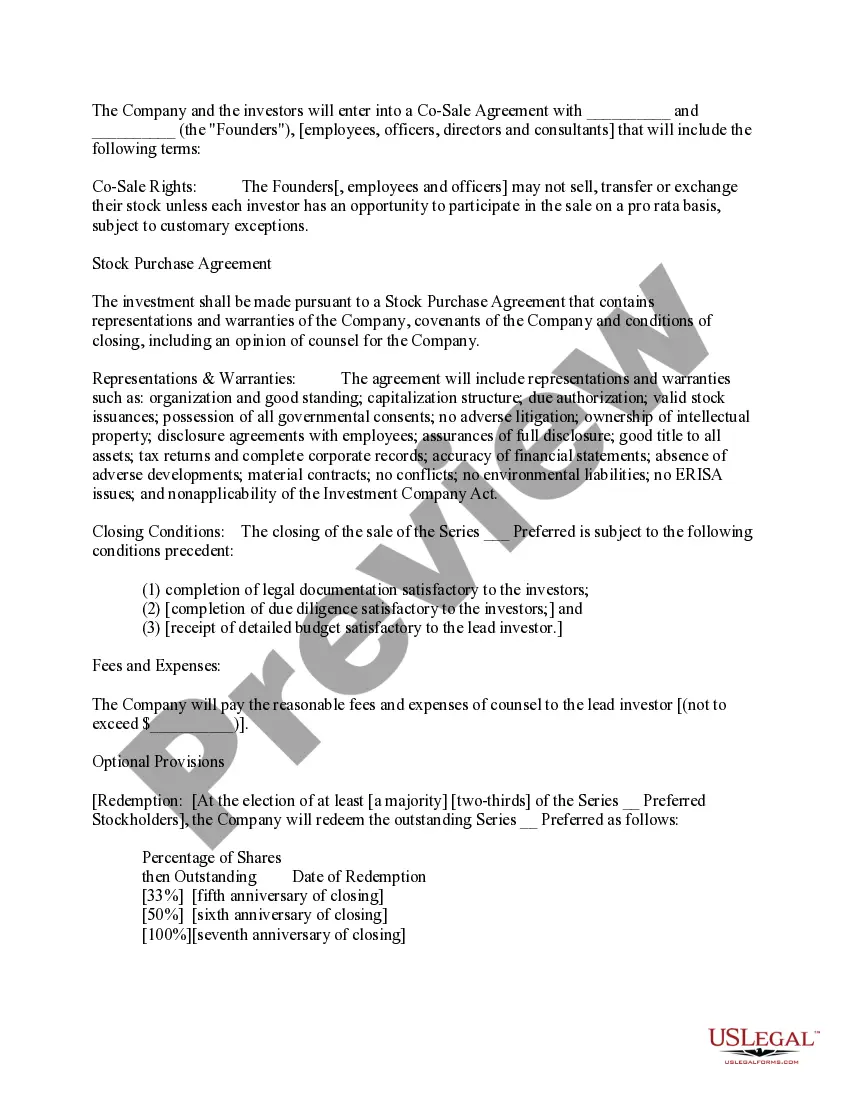
- Investor details and terms of closing.
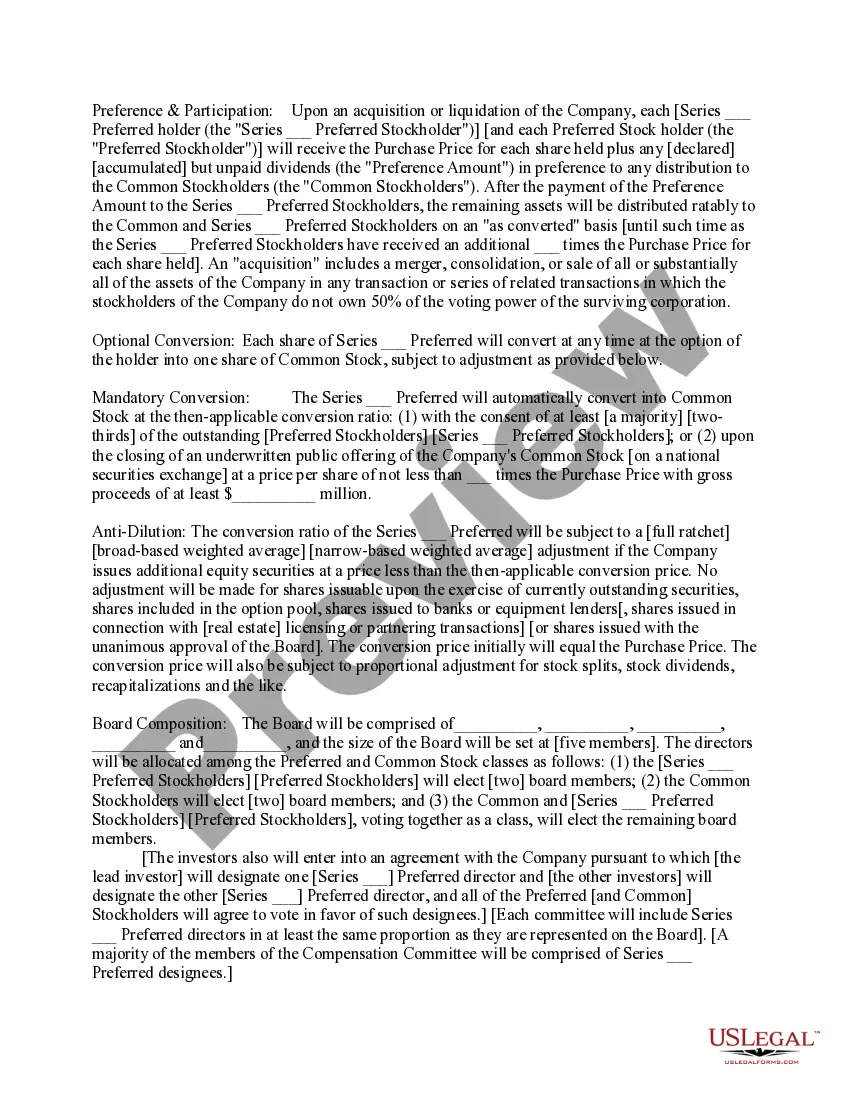
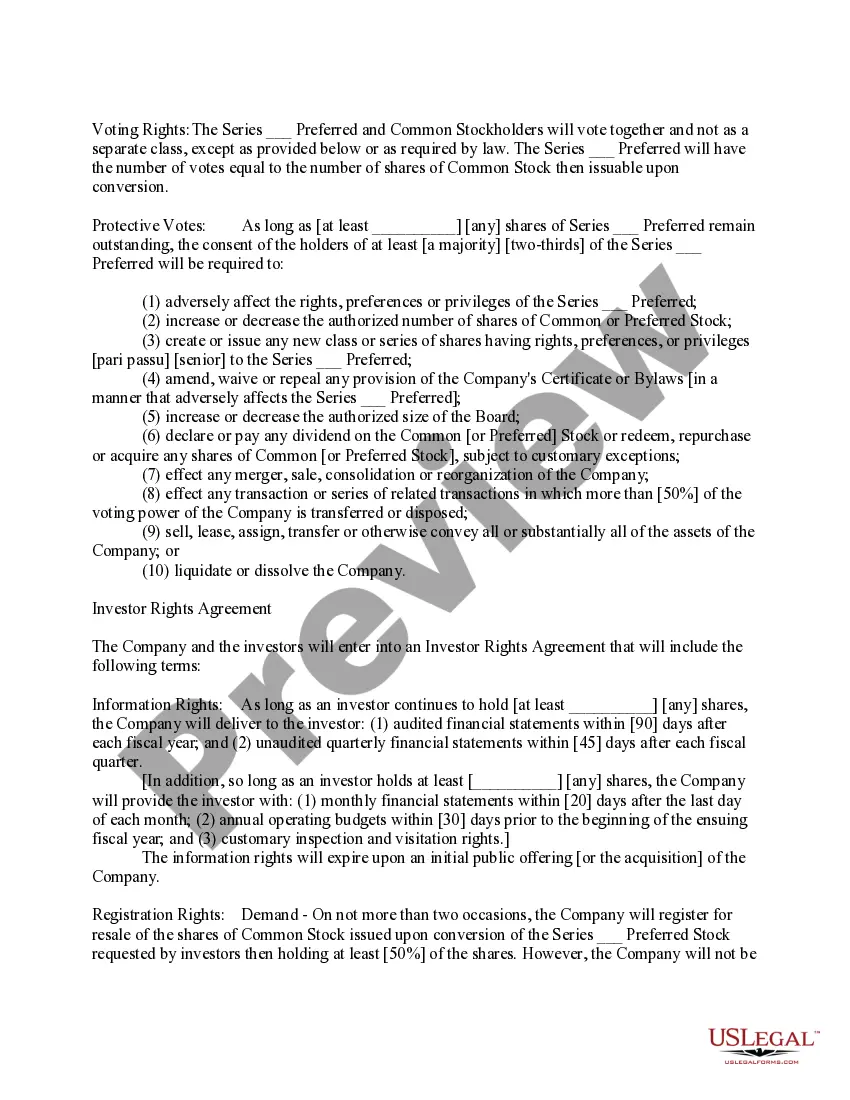
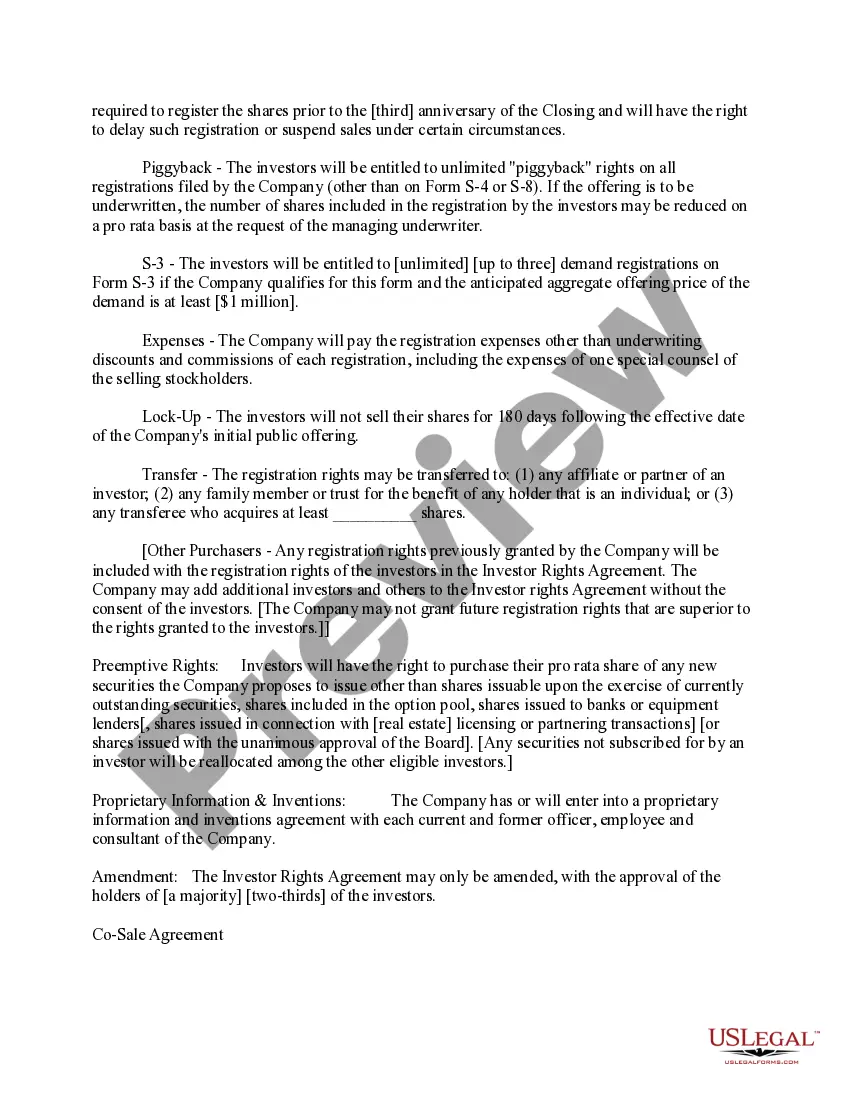
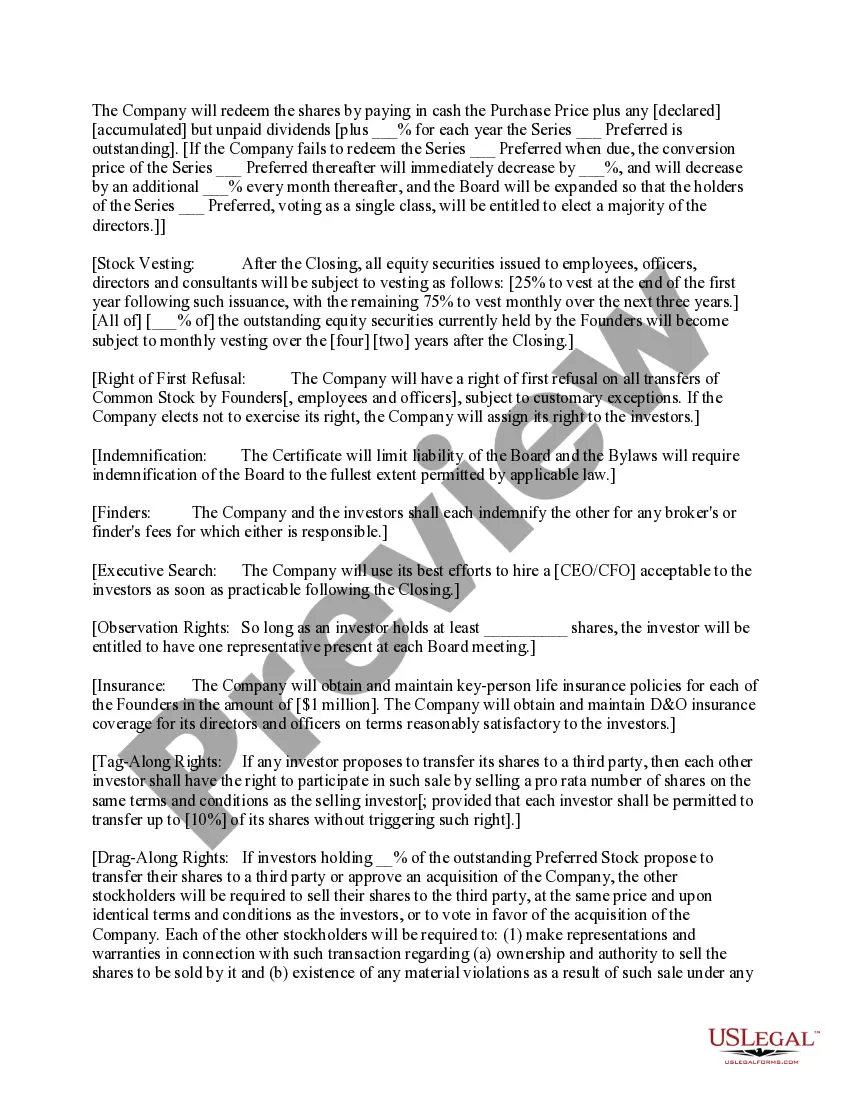
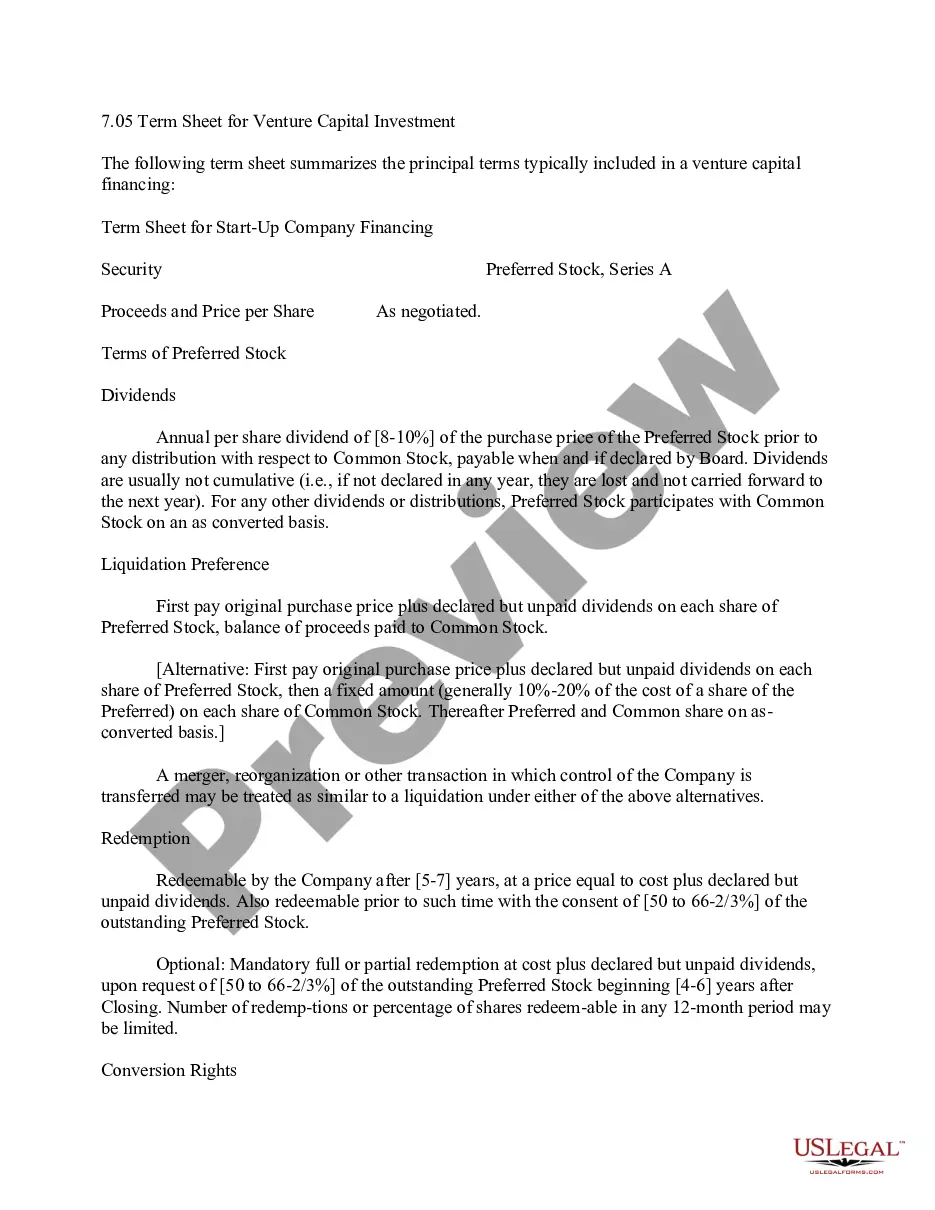
- Provisions regarding dividends and liquidation preferences.
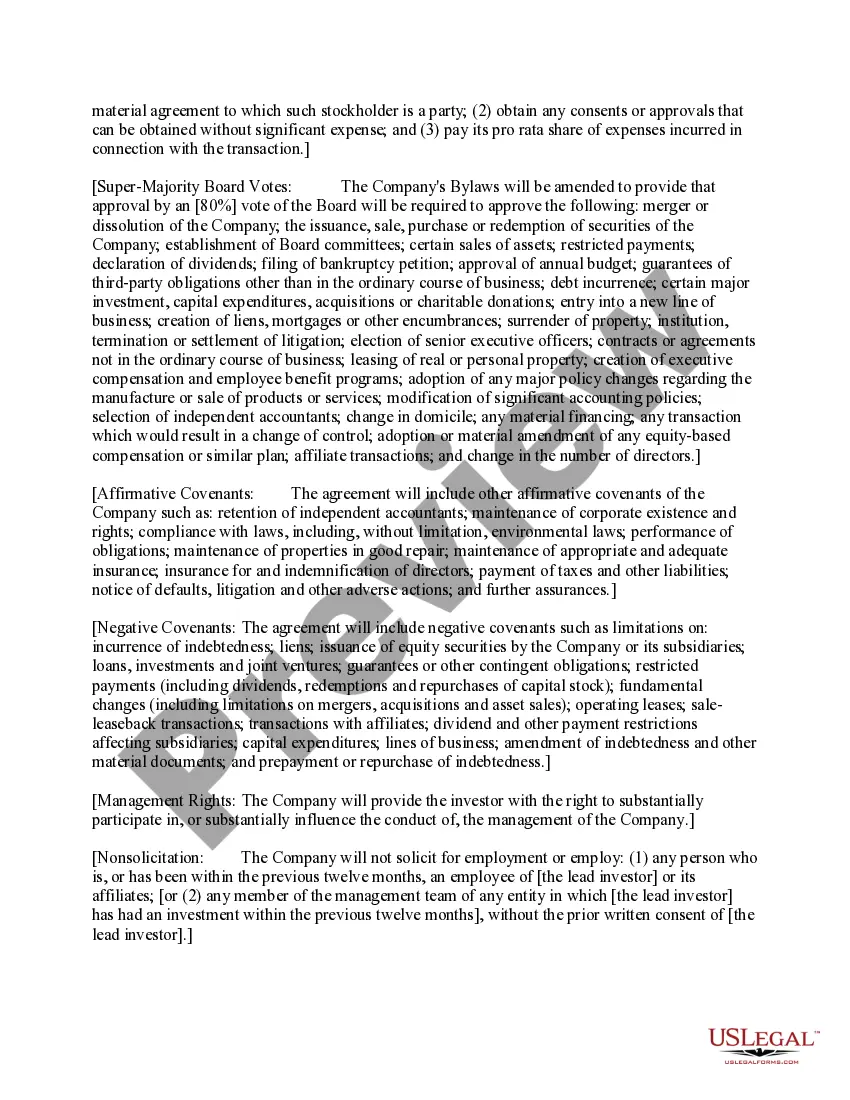
- Terms for conversion, board composition, and voting rights.
- Amendments and acknowledgement of confidentiality.

When this form is needed
This form is essential when a corporation is seeking to raise capital through preferred stock offerings. It should be used when negotiating terms with potential investors to ensure that all parties are on the same page regarding the expectations and obligations related to the investment.
Who can use this document
- Corporate executives and board members involved in financial transactions.
- Founders and owners of startups seeking investments.
- Investors looking to formalize the terms of their investments in startups or existing businesses.
- Legal professionals drafting or reviewing investment agreements.
Instructions for completing this form
- Identify the corporation's name and type on the first line of the document.
- Specify the investment amount and the type of preferred stock being offered.
- Fill in the purchase price and the pre-money valuation for the investment.
- List the names and details of all investors involved in the agreement.
- Detail the terms of dividends and any special rights associated with the preferred stock.
- Ensure all parties sign and date the term sheet to indicate their agreement to the terms outlined.
Does this form need to be notarized?
This form does not typically require notarization unless specified by local law. Be sure to check any local requirements that may apply in your state.
Get your form ready online
Our built-in tools help you complete, sign, share, and store your documents in one place.
Make edits, fill in missing information, and update formatting in US Legal Forms—just like you would in MS Word.
Download a copy, print it, send it by email, or mail it via USPS—whatever works best for your next step.
Sign and collect signatures with our SignNow integration. Send to multiple recipients, set reminders, and more. Go Premium to unlock E-Sign.
If this form requires notarization, complete it online through a secure video call—no need to meet a notary in person or wait for an appointment.
We protect your documents and personal data by following strict security and privacy standards.

Make edits, fill in missing information, and update formatting in US Legal Forms—just like you would in MS Word.

Download a copy, print it, send it by email, or mail it via USPS—whatever works best for your next step.

Sign and collect signatures with our SignNow integration. Send to multiple recipients, set reminders, and more. Go Premium to unlock E-Sign.

If this form requires notarization, complete it online through a secure video call—no need to meet a notary in person or wait for an appointment.

We protect your documents and personal data by following strict security and privacy standards.
Mistakes to watch out for
- Failing to include all necessary details about investor rights and responsibilities.
- Incorrectly stating the purchase price or valuation amounts.
- Not specifying the voting rights of preferred stockholders, which can lead to misunderstandings.
- Omitting signatures or dates, which may invalidate the agreement.
Why use this form online
- Convenient access allows users to download and complete the form from anywhere.
- Editable formats enable customization to meet specific business needs.
- Drafted by licensed attorneys, ensuring legal compliance and relevance.
- Streamlines the negotiation process by providing a clear structure for investment terms.
Looking for another form?



Form popularity
FAQ
A term sheet usually has some provisions that are called out as being binding even though the rest of the term sheet is typically not binding. These binding provisions give the non-breaching party a right to sue for breach of those "binding" provisions.
Investors: Those who are investing money into the business. Amount Raised: Total amount raised to date. Price Per Share: Price of each share. Pre-Money Valuation: Value of the company before investment. Capitalization: Company's shares multiplied by share price.
A term sheet is a nonbinding agreement that shows the basic terms and conditions of an investment. The term sheet serves as a template and basis for more detailed, legally binding documents.
The approach to the final and binding agreement includes negotiating and signing the terms sheet, conducting due diligence, having legal counsel draft the final documents, and having a closing where all parties sign.
How much money is expected from the VC, or venture capitalist, to the founder of the startup, A detailed overview of the financial side of the investment, and. The power and controls given to the VCs.
A term sheet is a bullet-point document outlining the material terms and conditions of a potential business agreement, establishing the basis for future negotiations between a seller and buyer. It is usually the first documented evidence of possible acquisition. It may be either binding or non-binding.
Investors: Those who are investing money into the business. Amount Raised: Total amount raised to date. Price Per Share: Price of each share. Pre-Money Valuation: Value of the company before investment. Capitalization: Company's shares multiplied by share price.
Take the Time to Woo Multiple Investors. Do Your Due Diligence When Finding Investors. Negotiate A Term Sheet Better by Understanding the Terminology. Hire a Good Lawyer to Assist You. Prioritize the Non-Negotiables of Your Term Sheet. Be Prepared to Negotiate with Your Investor. Watch for Red Flags.