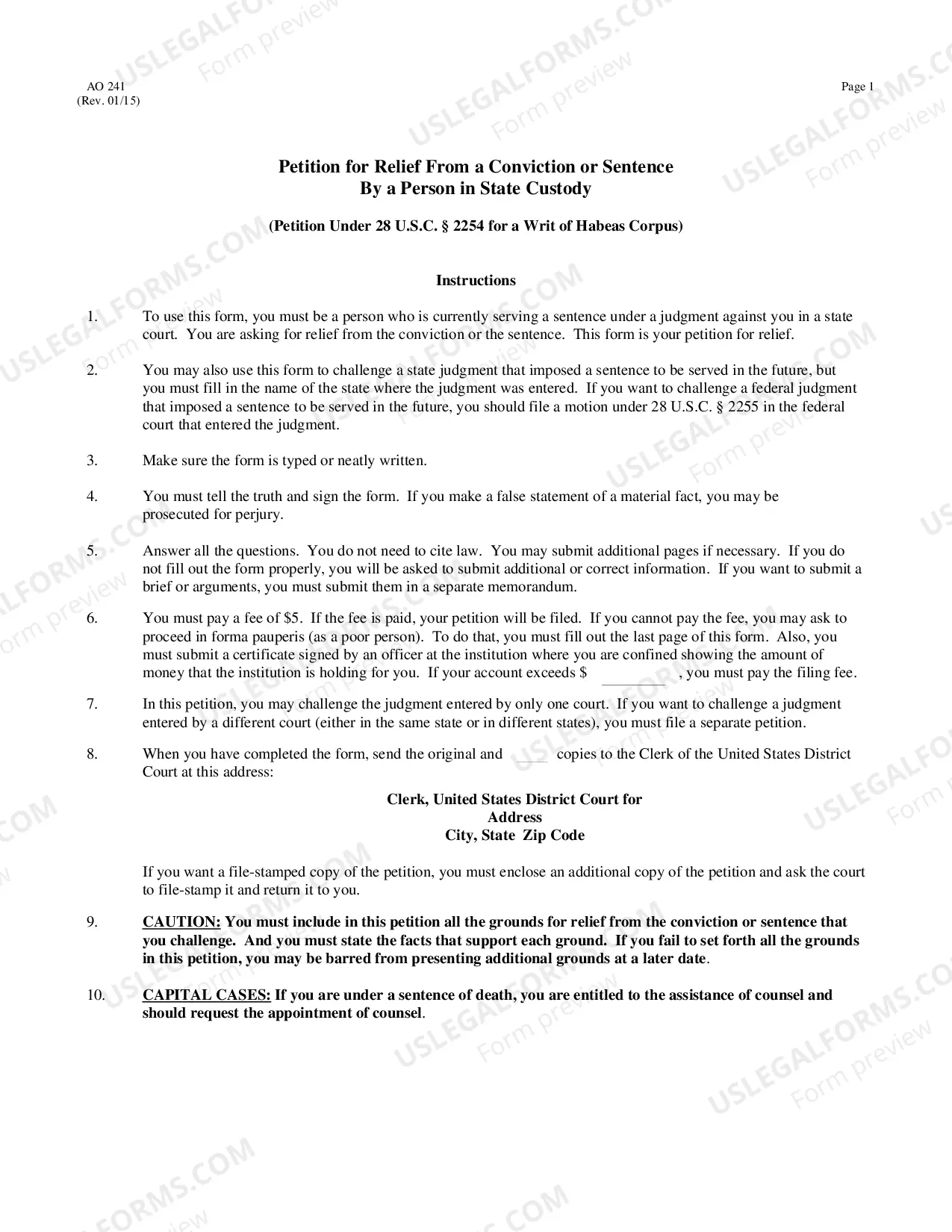
Resume for Database Administrator
About this form
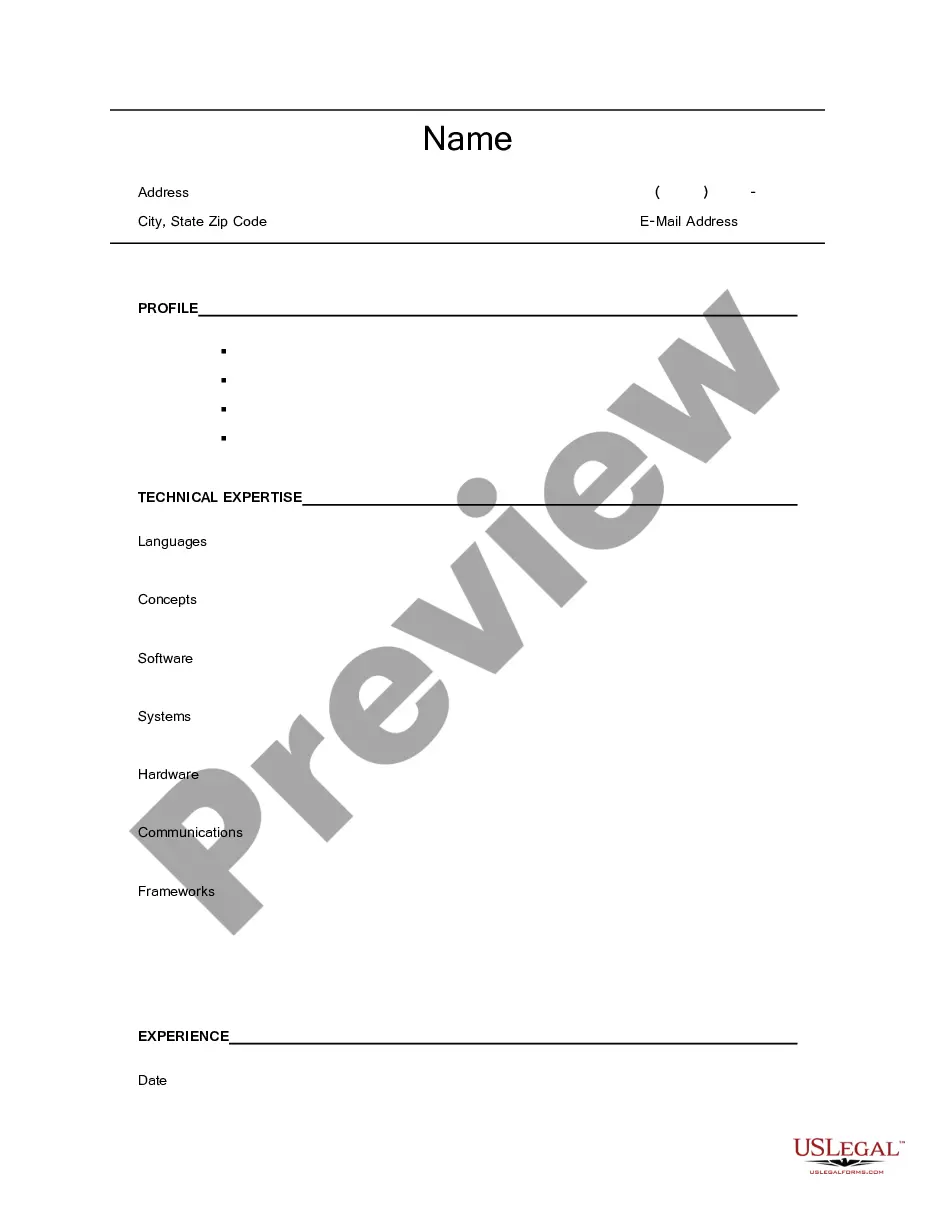
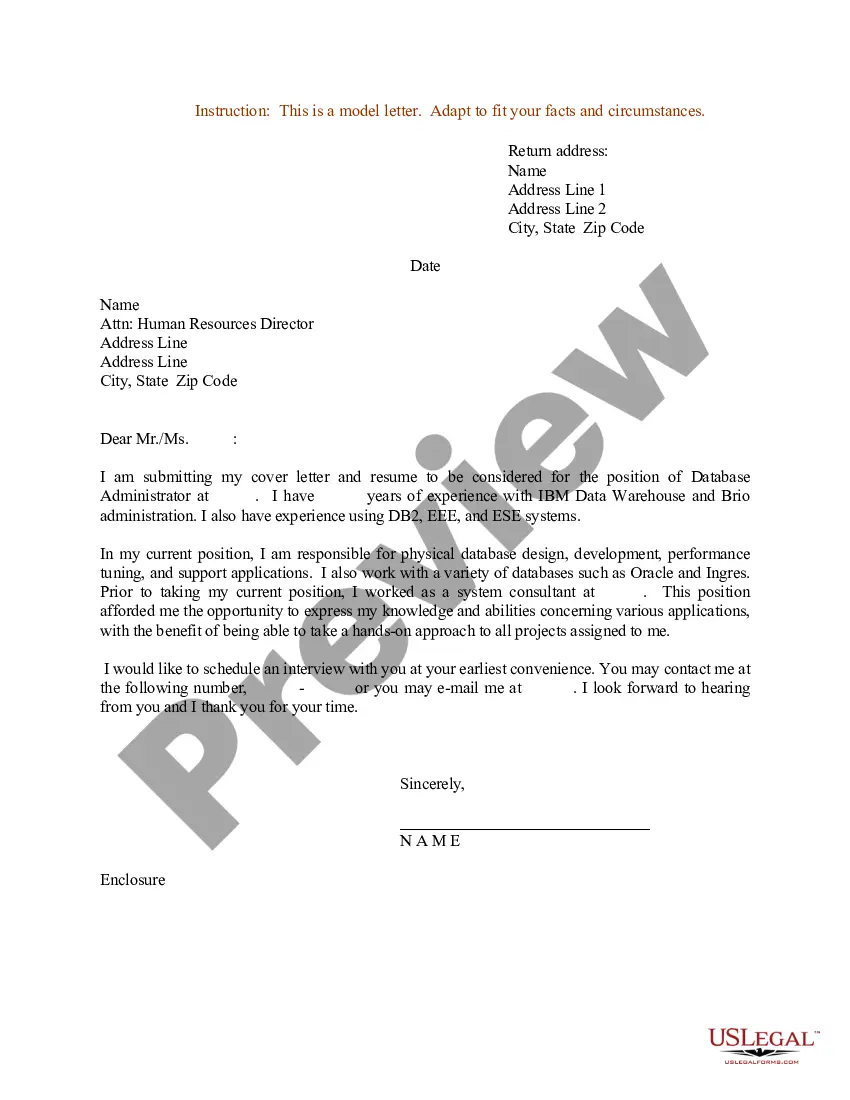
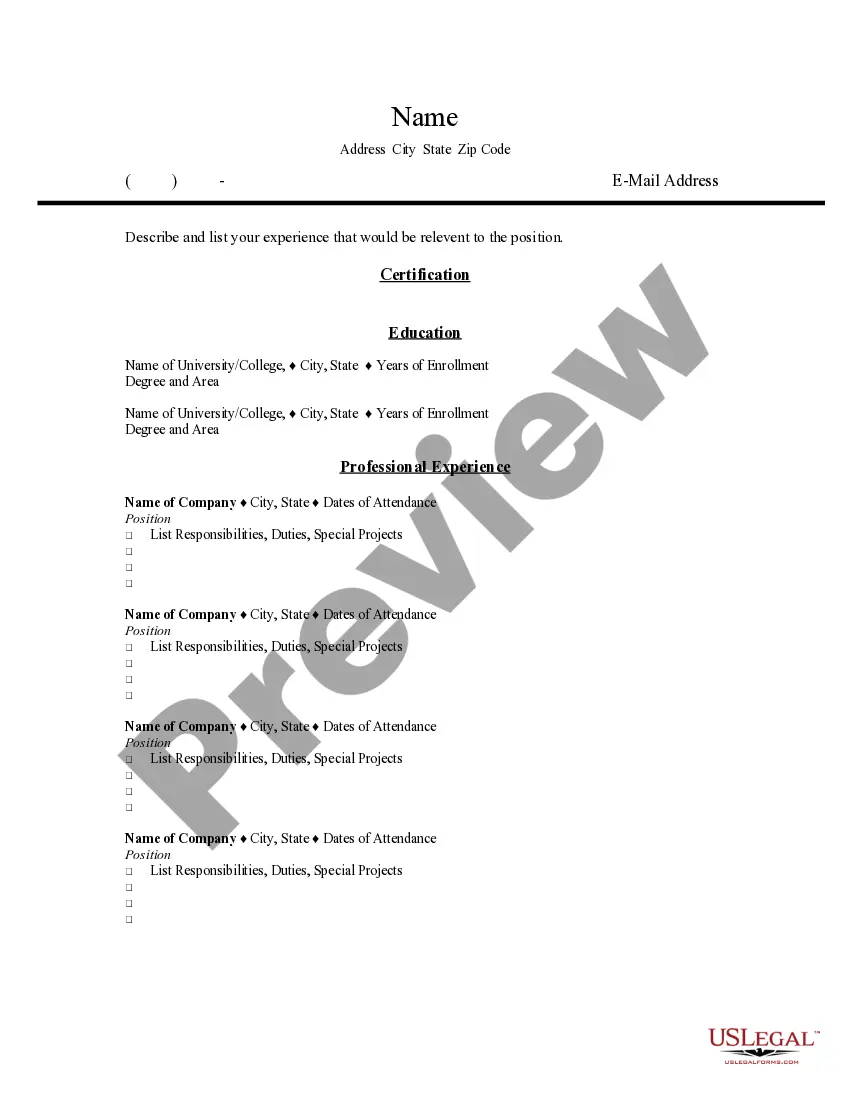
The Resume for Database Administrator is a professional document designed to highlight the skills and experience of individuals seeking employment as database administrators. This form serves as a guide to create a compelling resume that displays relevant technical skills, educational background, and work experience in a clear and organized manner. Unlike generic resume templates, this specific form is tailored to the job requirements of database administration.
Key parts of this document
- Contact information: Includes sections for name, phone number, email address, and LinkedIn profile.
- Summary statement: A brief summary highlighting key strengths and career goals related to database administration.
- Technical skills: A dedicated section for listing relevant software knowledge and technical competencies specific to database management.
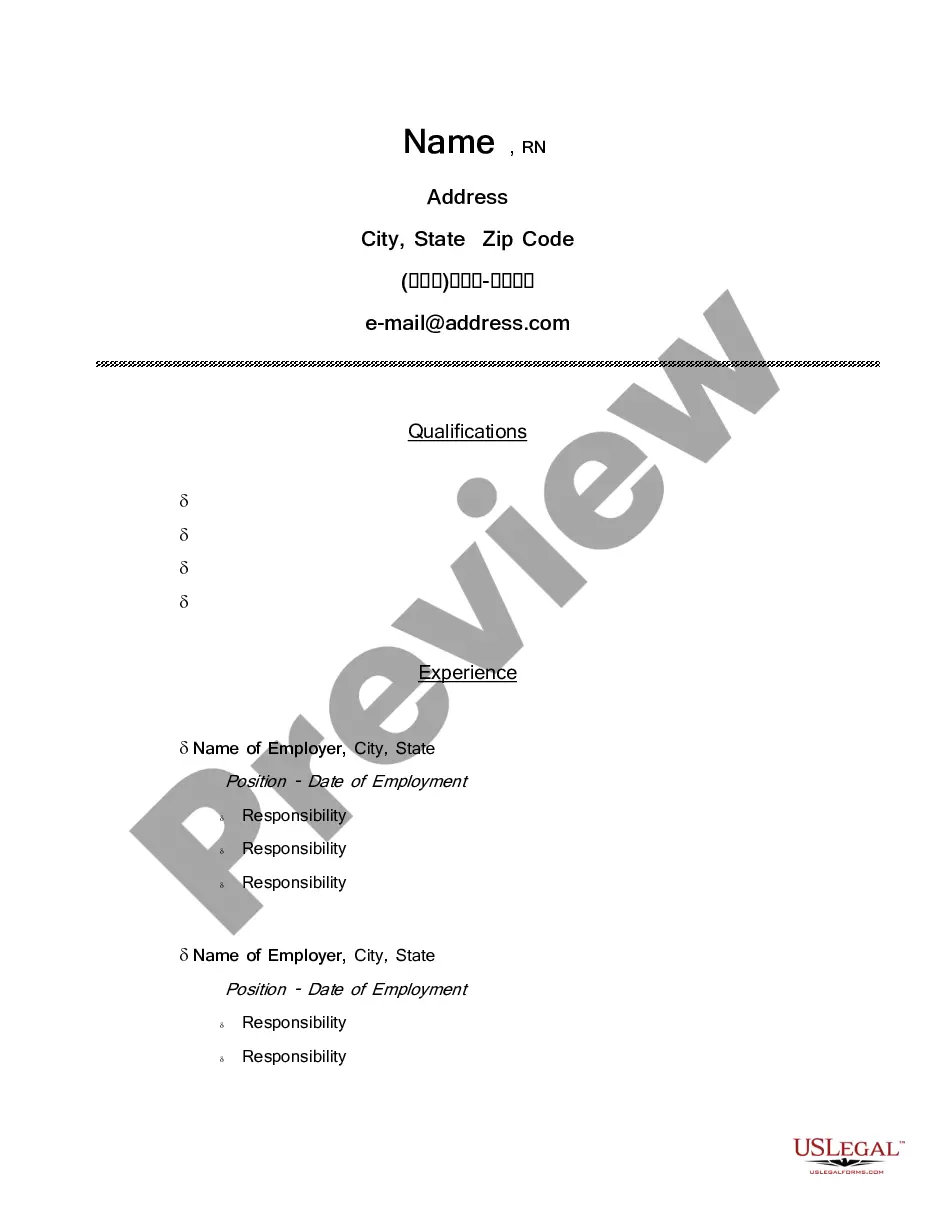
- Professional experience: Fields for detailing previous job roles, including responsibilities and achievements directly related to database administration.
- Education: Sections to include degrees, certifications, and relevant training in related fields.

When this form is needed
This form should be used when applying for roles in database administration. You may need this form if you are a recent graduate looking for your first job in the field, a seasoned professional updating your resume, or someone transitioning into a database-related position from another IT role. It helps ensure your resume matches industry standards and effectively presents your qualifications.
Who this form is for
- Job seekers applying for database administrator positions.
- Recent graduates with relevant degrees in computer science or information technology.
- Professionals with experience in database management seeking to update or enhance their resumes.
- Individuals transitioning from another IT-related role into database administration.
Completing this form step by step
- Start by entering your contact information at the top of the resume.
- Craft a summary statement that encapsulates your career objectives and primary skills.
- List your technical skills related to database management and ensure they are pertinent to the job description.
- Detail your professional experience in chronological order, emphasizing achievements and relevant duties.
- Include your education background and any certifications related to database technologies.
Does this form need to be notarized?
This form does not typically require notarization unless specified by local law. It is a personal document that can be used as part of job applications without the need for a notary public.
Get your form ready online
Our built-in tools help you complete, sign, share, and store your documents in one place.
Make edits, fill in missing information, and update formatting in US Legal Forms—just like you would in MS Word.
Download a copy, print it, send it by email, or mail it via USPS—whatever works best for your next step.
Sign and collect signatures with our SignNow integration. Send to multiple recipients, set reminders, and more. Go Premium to unlock E-Sign.
If this form requires notarization, complete it online through a secure video call—no need to meet a notary in person or wait for an appointment.
We protect your documents and personal data by following strict security and privacy standards.

Make edits, fill in missing information, and update formatting in US Legal Forms—just like you would in MS Word.

Download a copy, print it, send it by email, or mail it via USPS—whatever works best for your next step.

Sign and collect signatures with our SignNow integration. Send to multiple recipients, set reminders, and more. Go Premium to unlock E-Sign.

If this form requires notarization, complete it online through a secure video call—no need to meet a notary in person or wait for an appointment.

We protect your documents and personal data by following strict security and privacy standards.
Common mistakes to avoid
- Failing to tailor the resume to specific job postings, which can decrease the chance of being noticed by recruiters.
- Neglecting to proofread the document for grammatical errors or typos.
- Listing outdated or irrelevant skills that do not pertain to database administration.
Why use this form online
- Conveniently downloadable, allowing for immediate access and use.
- Editable format lets users customize the resume to reflect their unique qualifications.
- Provides a professional layout that helps in presenting information clearly to potential employers.
Legal use & context
- The Resume for Database Administrator is not a legally binding document but serves as a means to present oneâs qualifications professionally.
- Employers typically do not have legal recourse based on resumes unless false information leads to significant damages.
- It's essential to ensure the information provided is accurate and reflects the applicant's true skills and experiences.
Quick recap
- The Resume for Database Administrator is essential for job seekers in this field.
- Focusing on relevant skills, experience, and education increases the effectiveness of the resume.
- Utilizing this template ensures conformity to industry standards.
Looking for another form?
Form popularity
FAQ
Patience. Meticulous attention to detail. A logical approach to work. The ability to prioritise tasks. Problem-solving skills. Good organisational skills. Communication and interpersonal skills.
Software installation and Maintenance. Data Extraction, Transformation, and Loading. Specialised Data Handling. Database Backup and Recovery. Security. Authentication. Capacity Planning. Performance Monitoring.
Prioritize your most excellent achievements and write them in your SQL programmer resume summary. Add more sections that show your other skills or activities related to SQL. Certifications, publications and training all work as brownie points in a SQL resume.
Prioritize your most excellent achievements and write them in your SQL programmer resume summary. Add more sections that show your other skills or activities related to SQL. Certifications, publications and training all work as brownie points in a SQL resume.
Analytical skills. DBAs must be able to monitor a database system's performance to determine when action is needed. Communication skills. Detail oriented. Logical thinking. Problem-solving skills.
Database administrators ensure databases run efficiently. Database administrators use specialized software to store and organize data, such as financial information and customer shipping records. They make sure that data are available to users and secure from unauthorized access.
Tie your system admin resume to the job as if with 40,000 zip ties. Use bullet points that match the job description. Find skills and qualities in the job ad. Finally, use dedicated "other" sections to show you live and breathe sysadmin work.
SQL, Oracle, Java, C++, C#, PHP, MySQL. . NET. ETL. NoSQL (CouchDB, MongoDB) Designing database structures and tables. Optimizing SQL queries to integrate with applications. Developing functions, views, and stored procedures. Creating database automation.
Database skills are abilities and knowledge that are required for database related roles such as database development and database administration.Skills may also be related to a particular aspect of databases such as database architecture or security.