Child Custody and Visitation Questionnaire
About this form
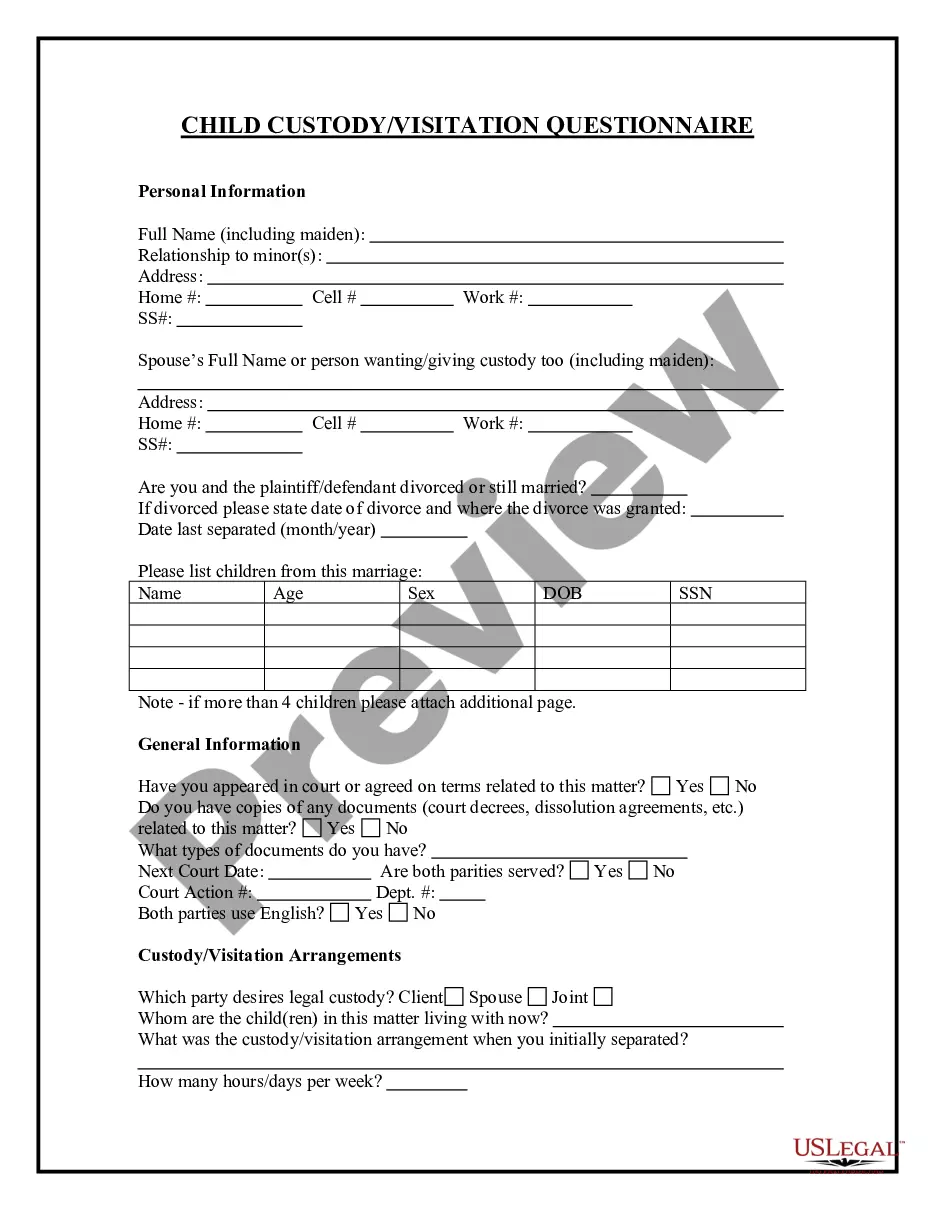
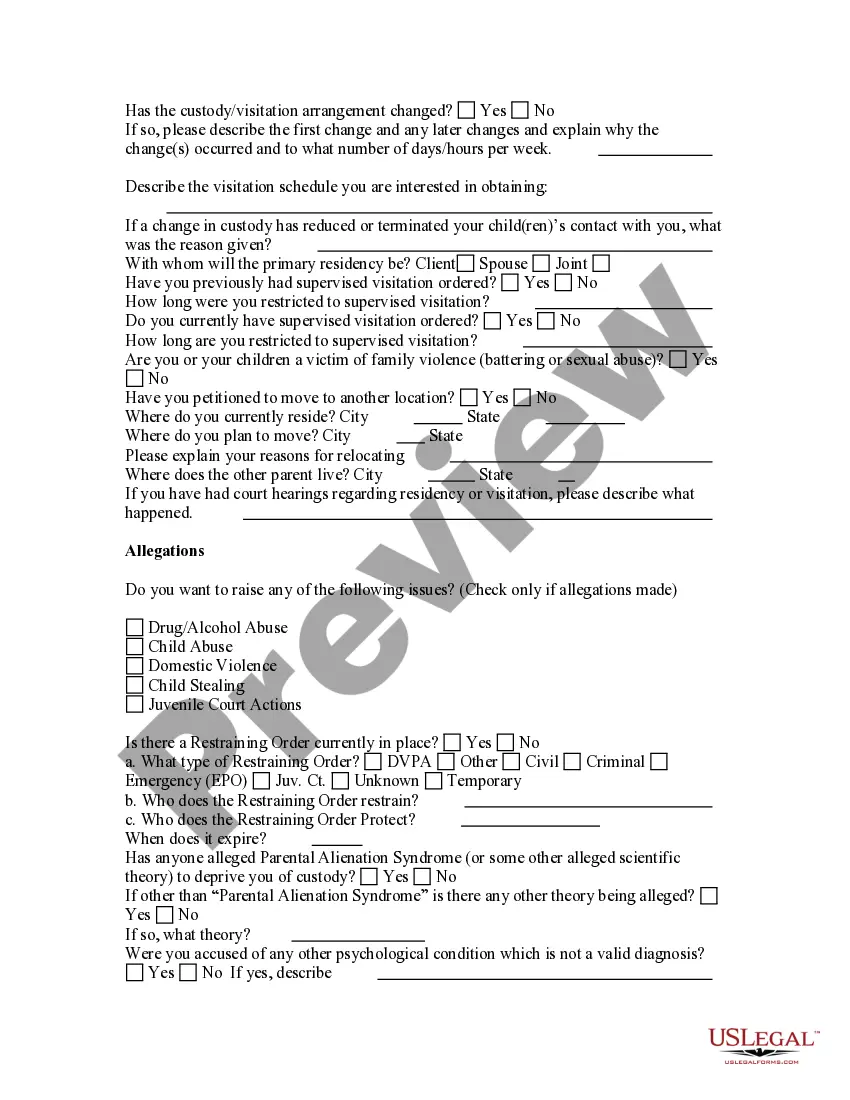
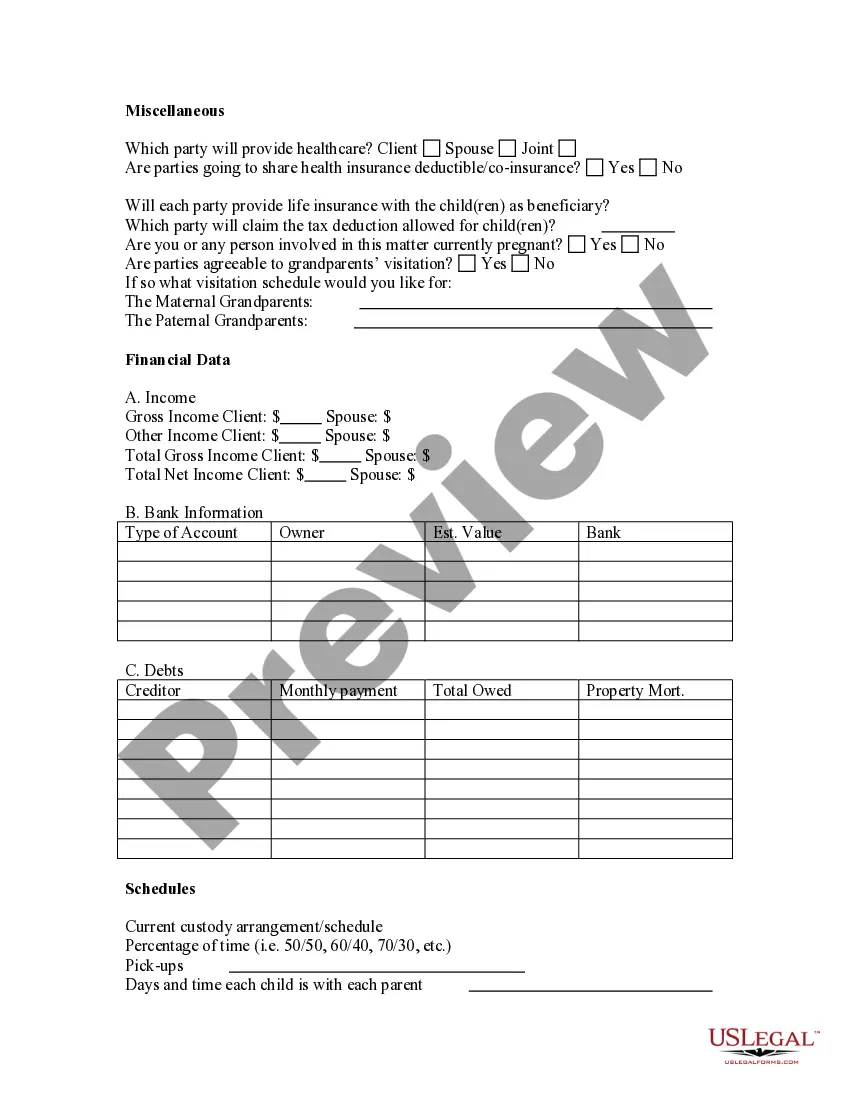
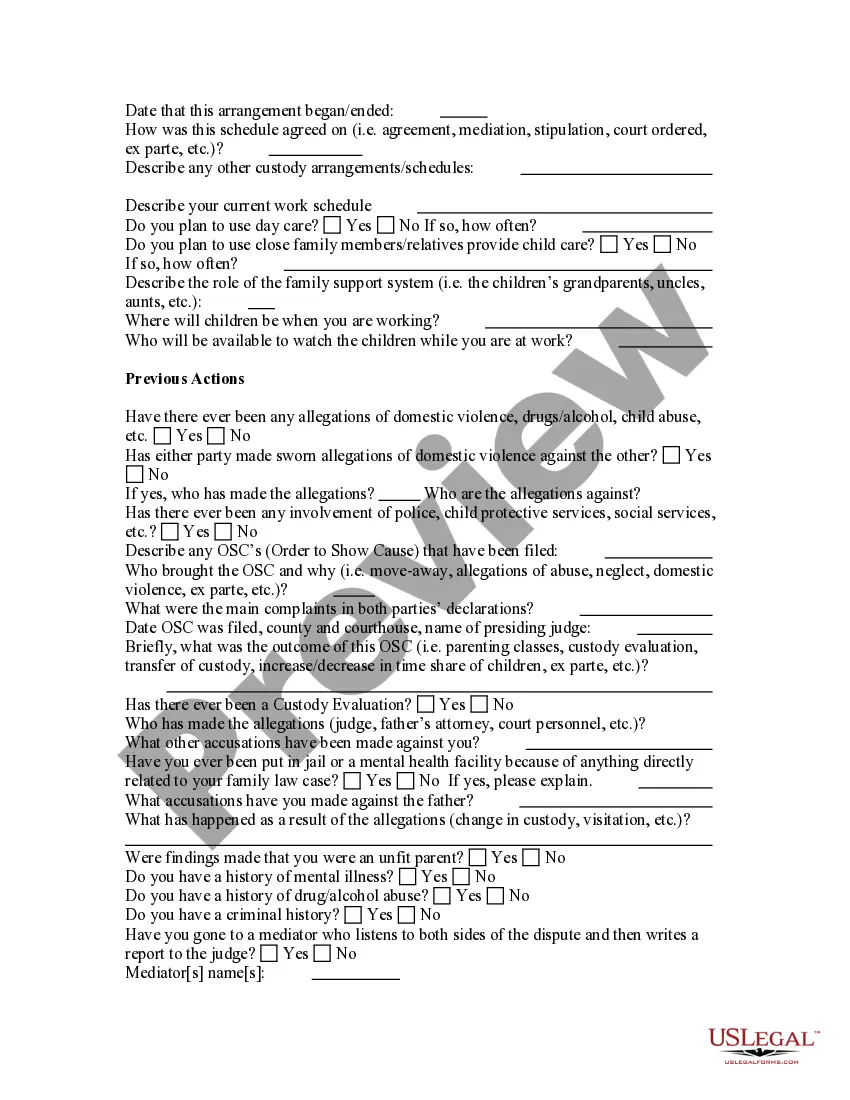
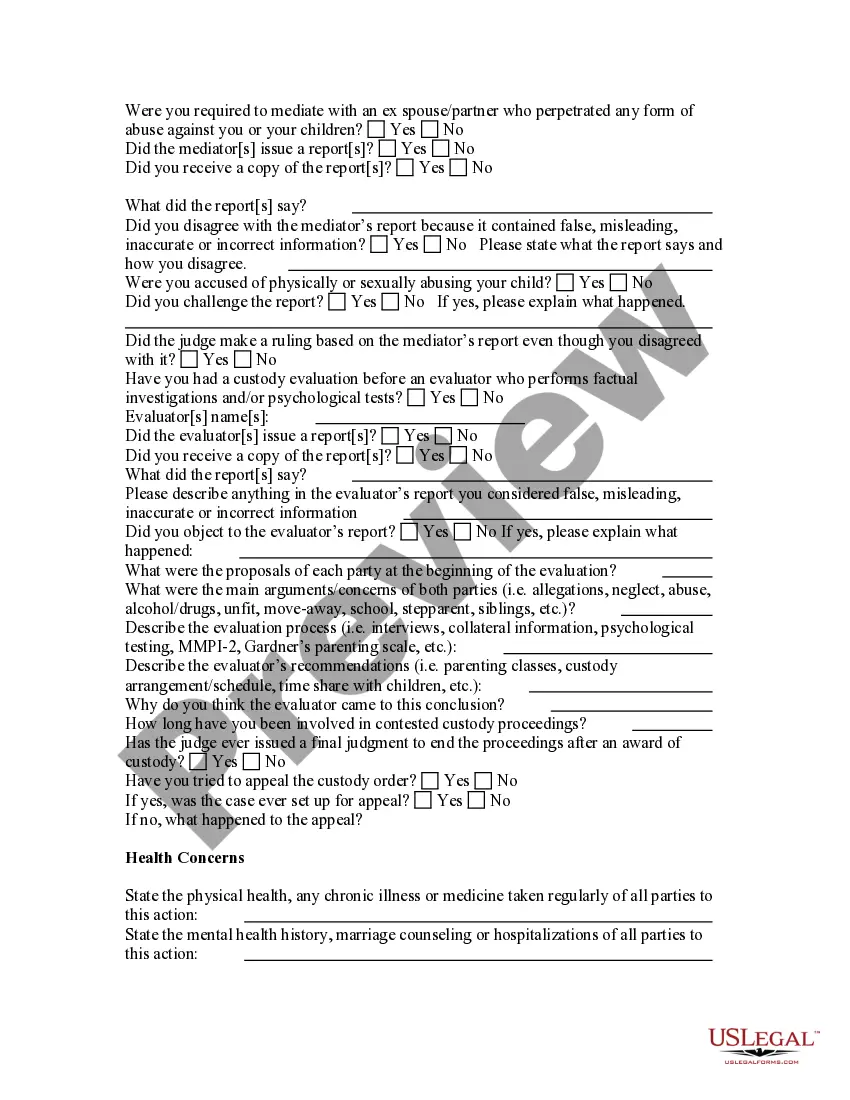
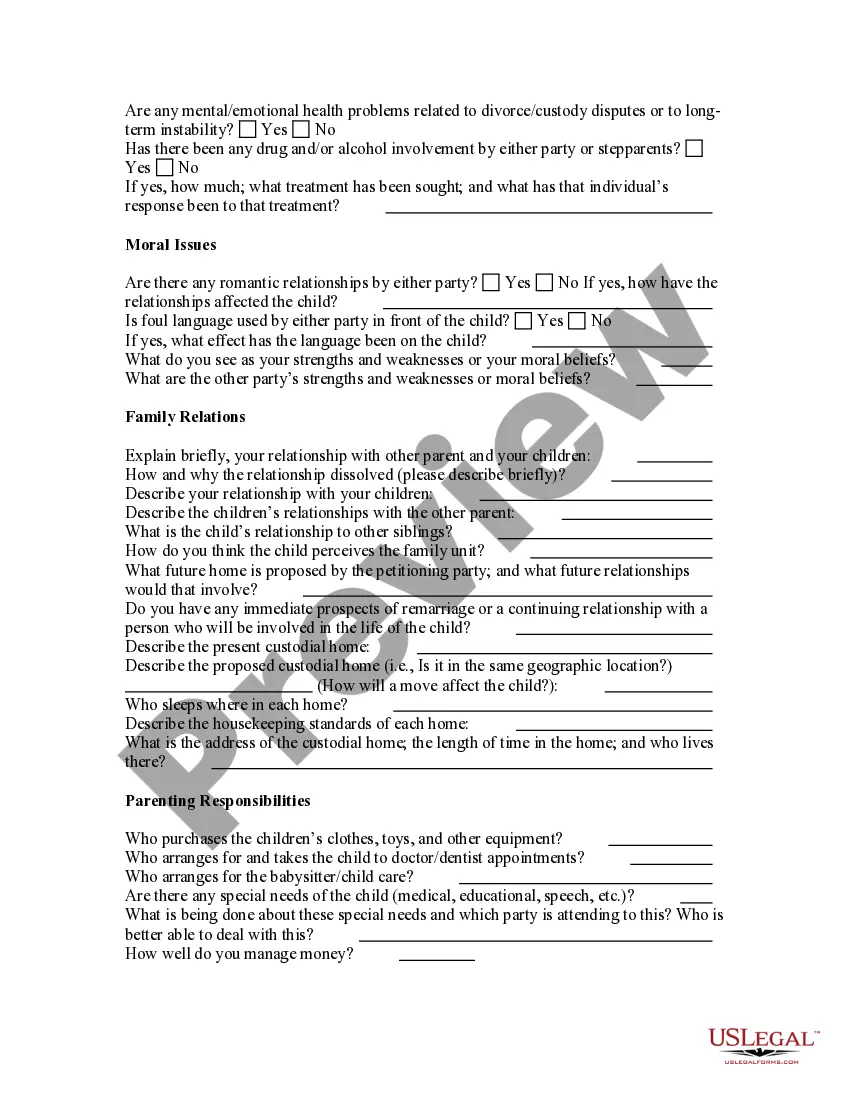
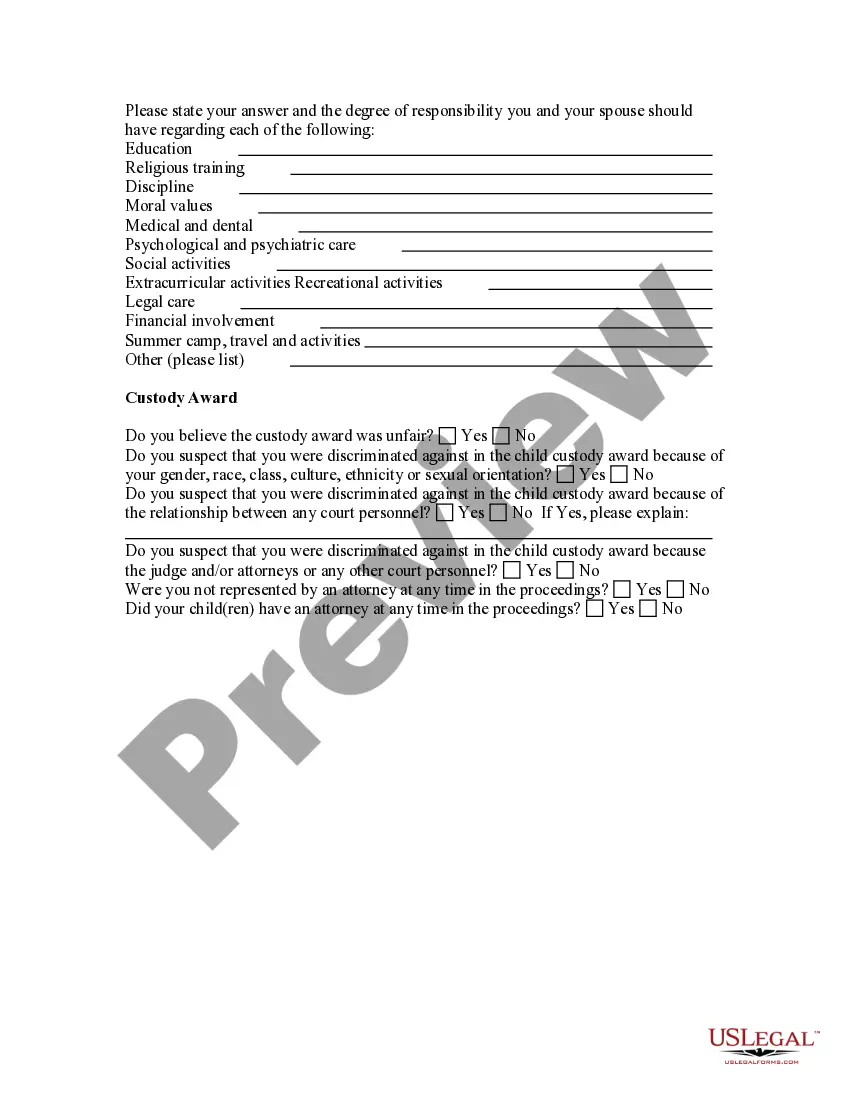
The Child Custody and Visitation Questionnaire is a legal document designed to help parents articulate their concerns, preferences, and relevant details regarding child custody and visitation. This form enables a systematic approach to gathering essential information, making it easier for attorneys to assess the situation and develop a strategy. Unlike generic forms, this questionnaire is specifically tailored for custody matters, ensuring that all pertinent issues are addressed effectively.
Key parts of this document
- General information about prior court appearances and agreements.
- Provision for documenting any existing legal documents pertaining to custody.
- Section addressing issues related to child abuse, domestic violence, and restraining orders.
- Questions aimed at identifying current custody arrangements and visitation preferences.
Common use cases
This questionnaire is useful when parents are engaged in or are about to initiate a custody dispute. It helps clarify all relevant aspects of the situation before entering legal proceedings. Additionally, attorneys can use it during initial consultations with new clients to assess their custody cases thoroughly.
Intended users of this form
- Parents seeking custody or visitation rights concerning their children.
- Attorneys gathering information from new clients in custody matters.
- Individuals involved in child custody disputes who need to outline their positions clearly.
- Those preparing for court appearances related to child custody or visitation.
How to prepare this document
- Identify the parties involved, including parents and children.
- Provide details regarding any previous court cases or agreements.
- Document any existing custody orders or legal documents.
- Address potential issues like domestic violence or restraining orders if applicable.
- State your preferences for custody arrangements and visitation schedules.
Does this form need to be notarized?
This form does not typically require notarization to be legally valid. However, some jurisdictions or document types may still require it. US Legal Forms provides secure online notarization powered by Notarize, available 24/7 for added convenience.
Get your form ready online
Our built-in tools help you complete, sign, share, and store your documents in one place.
Make edits, fill in missing information, and update formatting in US Legal Forms—just like you would in MS Word.
Download a copy, print it, send it by email, or mail it via USPS—whatever works best for your next step.
Sign and collect signatures with our SignNow integration. Send to multiple recipients, set reminders, and more. Go Premium to unlock E-Sign.
If this form requires notarization, complete it online through a secure video call—no need to meet a notary in person or wait for an appointment.
We protect your documents and personal data by following strict security and privacy standards.

Make edits, fill in missing information, and update formatting in US Legal Forms—just like you would in MS Word.

Download a copy, print it, send it by email, or mail it via USPS—whatever works best for your next step.

Sign and collect signatures with our SignNow integration. Send to multiple recipients, set reminders, and more. Go Premium to unlock E-Sign.

If this form requires notarization, complete it online through a secure video call—no need to meet a notary in person or wait for an appointment.

We protect your documents and personal data by following strict security and privacy standards.
Typical mistakes to avoid
- Failing to fully disclose prior court matters or agreements.
- Leaving sections unanswered which can create ambiguity.
- Not providing supporting documentation when applicable.
- Overlooking relevant details related to child welfare or safety.
Why complete this form online
- Convenient access from home, allowing users to fill it out at their own pace.
- Editability enables users to modify responses as needed before final submission.
- Structured format ensures that no important information is overlooked.
- Reduces the time and cost typically associated with in-person consultations.
Looking for another form?
Form popularity
FAQ
What Is Your Financial Status? What Type of Custody Arrangement Are You Seeking? How Is Communication With the Other Parent? Do You Have Any Existing Arrangements?
A parenting time schedule. Information about how the parents will make decisions for the child. Information about finances and expenses. Parenting provisions (rules about raising the child) Any other information you want to include.
Write clearly, and use your own words. Use bulleted lists for your major points. Don't insult or bash your ex. Attach evidence such as pay stubs or bank statements, but redact SSN and account numbers. Affirm that you are making your statement under oath, and under penalty of perjury.
Parenting Schedule. Holidays and Special Dates. Travel and Vacations. Extended Family and Friends. Schedule Changes. Making Important Decisions. Expenses. Communicating With Kids When Away.
You do not have to do any official paperwork if you agree about child arrangements. You can write down what you've agreed in a Parenting Plan if you want a record. If you want to make your agreement legally binding, a solicitor can help with the paperwork.
Even though wills are considered more complicated contracts, they can still be handwritten to be considered legally enforceable.It is important to note that even if a written requirement is required under the Statute of Frauds, a handwritten agreement will still work to make the document legally binding.
Listen to Your Lawyer. Eric Audras/Getty Images. Be Aware of the Evaluator's Role. The evaluator is an independent expert. Be Honest. Prepare for Your Meeting. Make a Good Impression. Have a Positive Attitude. Stick to Parenting Issues. Cooperate.
1A history of child abuse.2A history of substance abuse.3A history of domestic violence.4The parent's ability to make age-appropriate decisions for a child.5The parent's ability to communicate with a child.6Psychiatric concerns.7The parent's living conditions.8The child's opinion.How Does a Family Court Determine If a Parent Is Unfit? - Boyd Law\nwww.boydlawlosangeles.com > how-does-a-family-court-determine-if-a-pa...
Has one parent been the primary caretaker, or have the parents shared the responsibility?What is the mental and physical health status of the parents?Will the child be in a stable home environment?8 Common Child Custody Questions & Answers - Talking Parents\ntalkingparents.com > blog > october-2019 > child-custody-questions