Request For Permission To Arrange a Musical Composition
Overview of this form
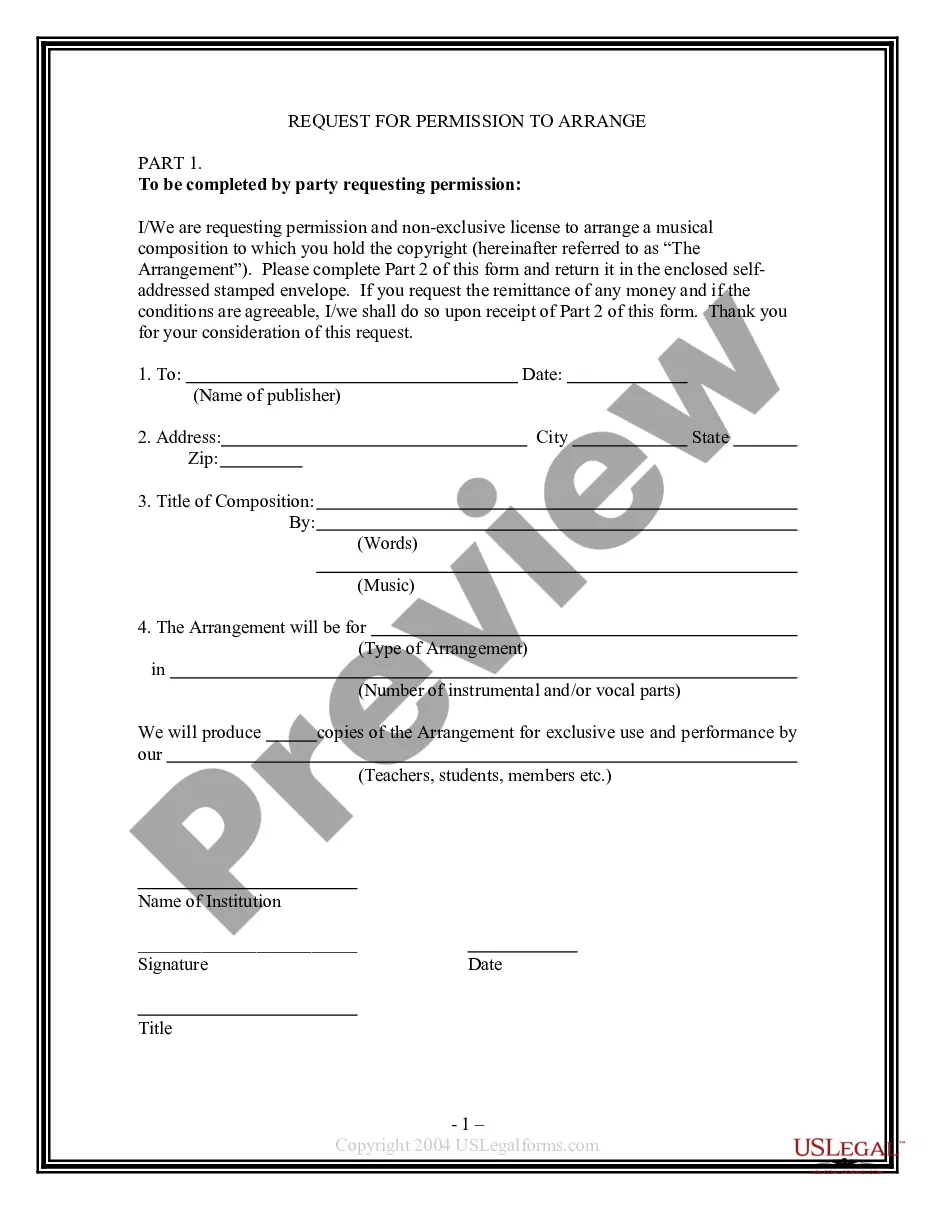
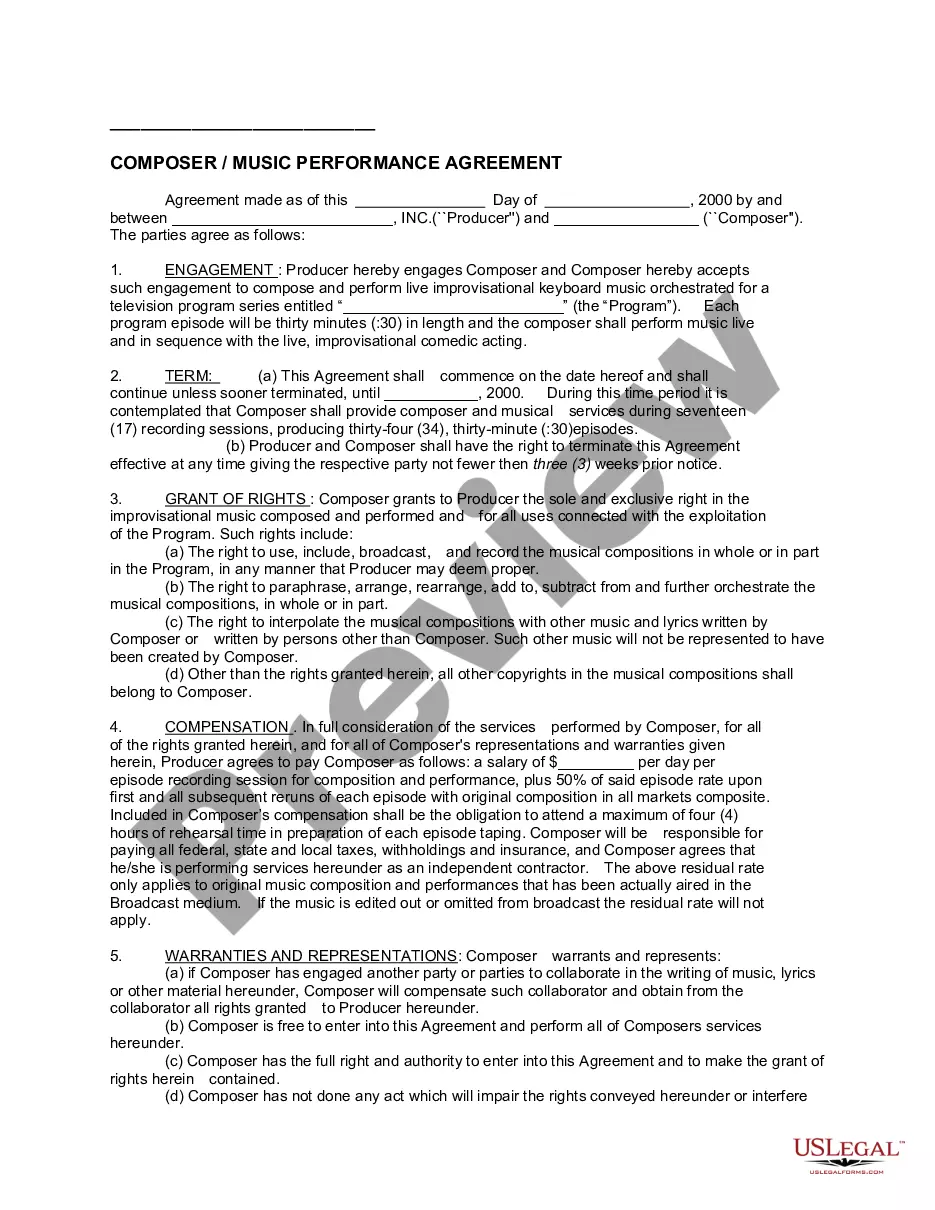
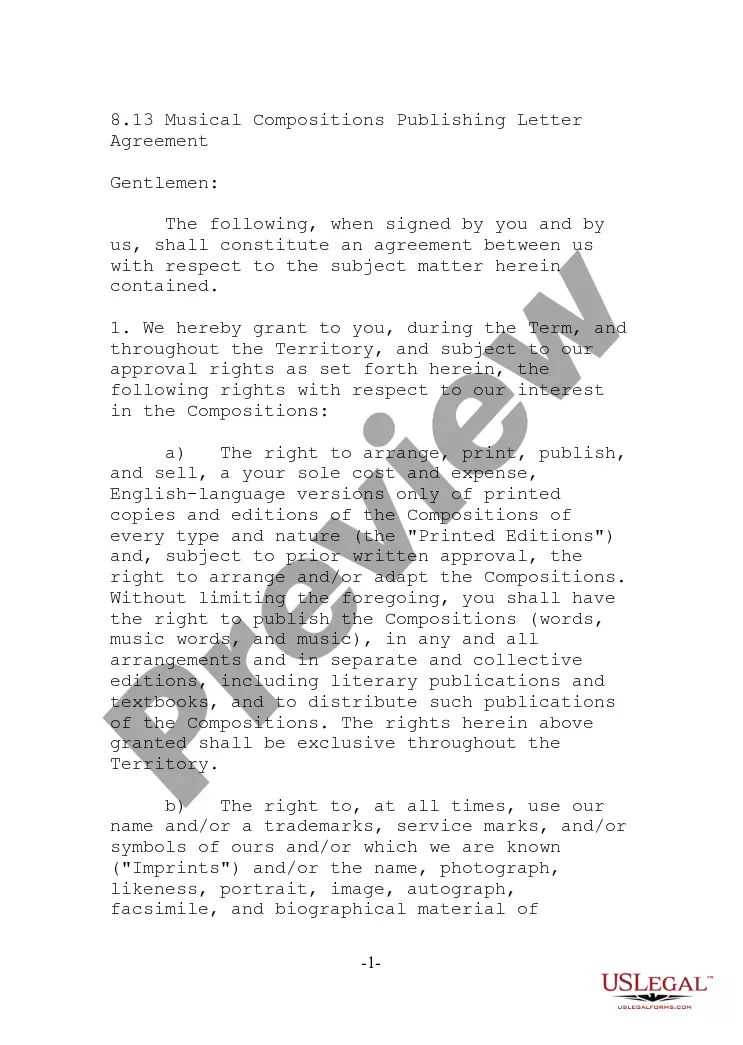
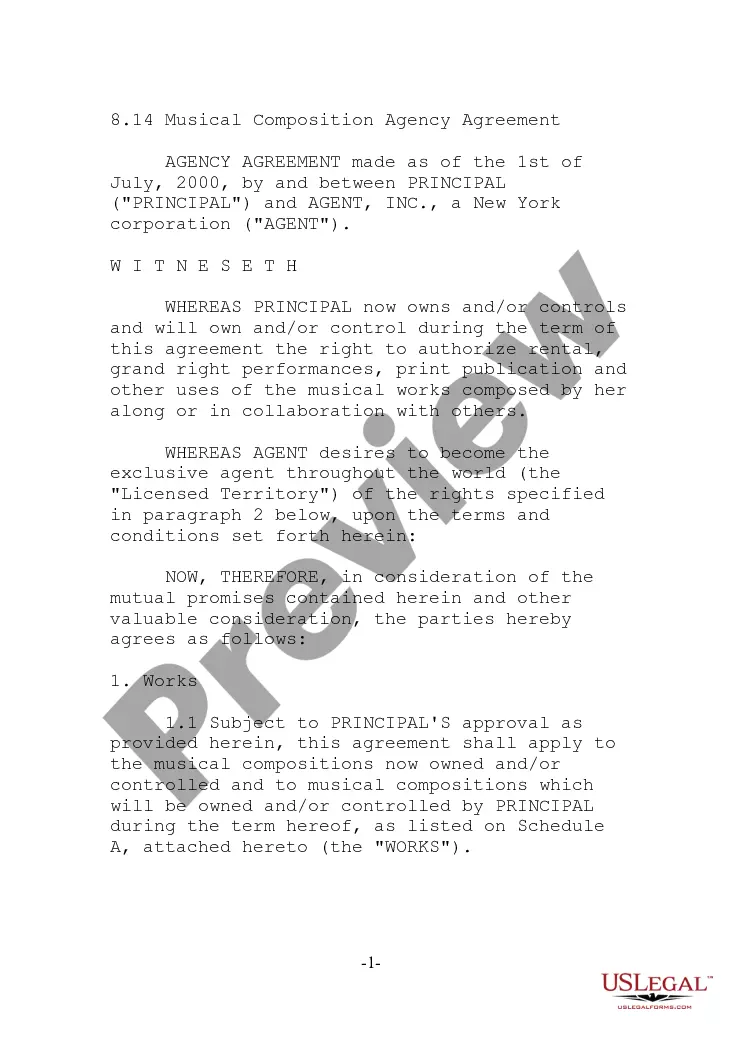
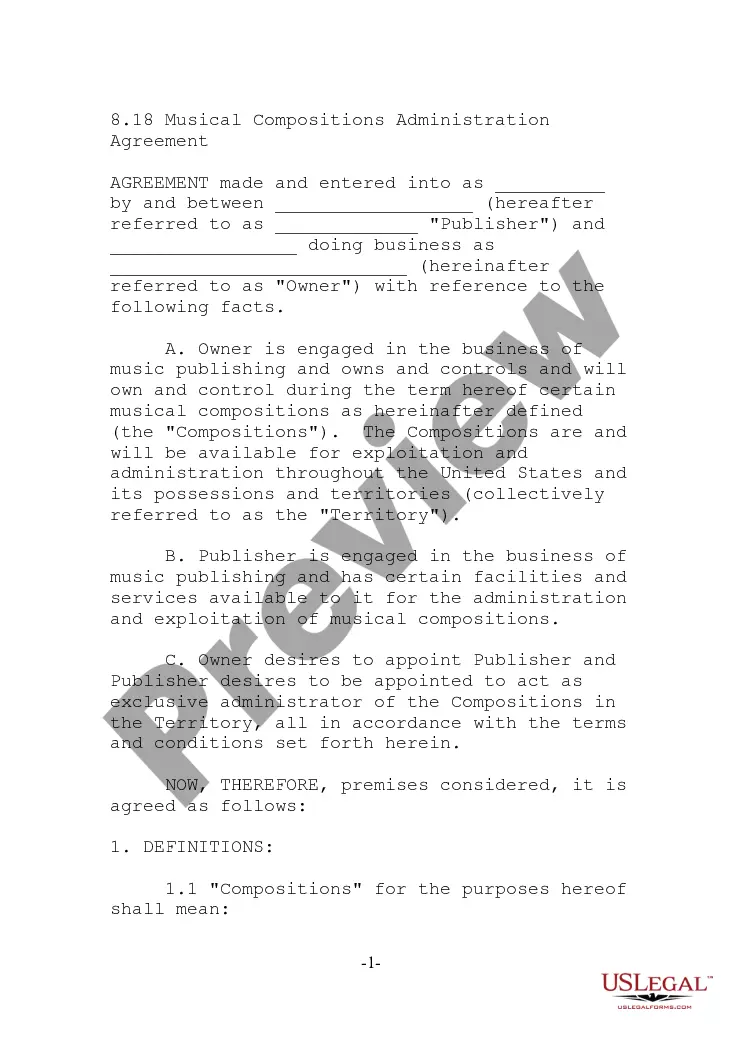
The Request for Permission to Arrange a Musical Composition form is used to seek authorization from a music publisher to create an arrangement of a specific musical piece. This form is essential for legally obtaining permission to modify and reproduce a musical work, distinguishing it from mere licenses or contracts that do not cover arrangement rights.
Key components of this form
- Identification of the party requesting permission
- Details about the musical composition being arranged
- Purpose of the arrangement
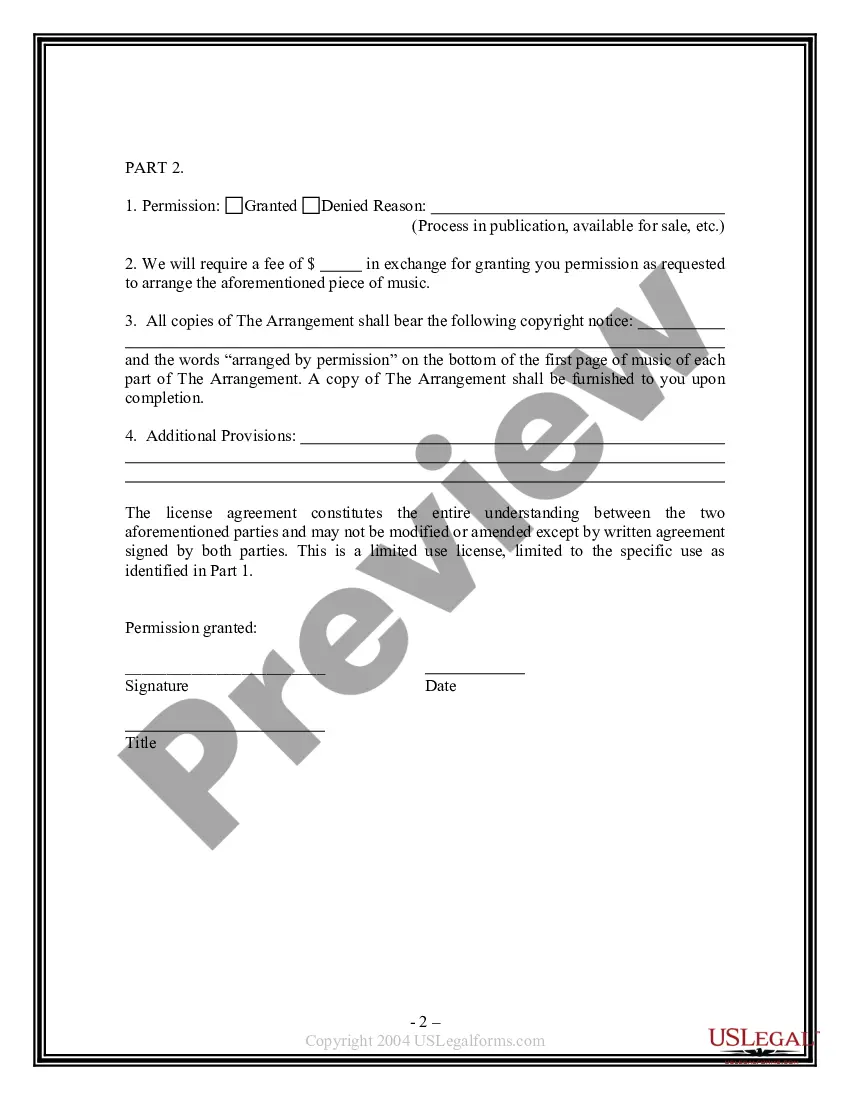
- Space for the publisher's response and decision
- Signatures of both parties confirming the agreement
When to use this form
You should use this form when you intend to arrange a musical composition, such as a song or instrumental piece, and require formal permission from the original publisher. This is particularly relevant for musicians, composers, and arrangers looking to expand their repertoire or adapt existing works for new performances or recordings.
Who can use this document
- Musicians and composers looking to create arrangements of existing music
- Educational institutions requiring permissions for school performances
- Music producers and arrangers working on recording projects
- Anyone seeking to legally modify and reproduce a musical work
Steps to complete this form
- Identify the requesting party by entering their name and contact information.
- Provide details about the musical composition, including title and original publisher.
- Specify the purpose of your arrangement clearly.
- Sign the request to confirm the information provided.
- Submit the form to the publisher and await their decision.
Does this document require notarization?
In most cases, this form does not require notarization. However, some jurisdictions or signing circumstances might. US Legal Forms offers online notarization powered by Notarize, accessible 24/7 for a quick, remote process.
Get your form ready online
Our built-in tools help you complete, sign, share, and store your documents in one place.
Make edits, fill in missing information, and update formatting in US Legal Forms—just like you would in MS Word.
Download a copy, print it, send it by email, or mail it via USPS—whatever works best for your next step.
Sign and collect signatures with our SignNow integration. Send to multiple recipients, set reminders, and more. Go Premium to unlock E-Sign.
If this form requires notarization, complete it online through a secure video call—no need to meet a notary in person or wait for an appointment.
We protect your documents and personal data by following strict security and privacy standards.

Make edits, fill in missing information, and update formatting in US Legal Forms—just like you would in MS Word.

Download a copy, print it, send it by email, or mail it via USPS—whatever works best for your next step.

Sign and collect signatures with our SignNow integration. Send to multiple recipients, set reminders, and more. Go Premium to unlock E-Sign.

If this form requires notarization, complete it online through a secure video call—no need to meet a notary in person or wait for an appointment.

We protect your documents and personal data by following strict security and privacy standards.
Avoid these common issues
- Failing to provide complete contact information for the requesting party.
- Not specifying the purpose of the arrangement adequately.
- Neglecting to review the publisher's authorization for any additional conditions.
Why complete this form online
- Convenient access to the form from anywhere at any time.
- Editable format allows for filling in details easily before printing.
- Reliable template drafted by licensed attorneys, ensuring legal compliance.
What to keep in mind
- The Request for Permission to Arrange a Musical Composition is essential for legally modifying a musical work.
- Ensure you accurately complete all sections to avoid delays in permission approval.
- Double-check any specific state requirements related to this form.
Looking for another form?




Form popularity
FAQ
ALWAYS GIVE CREDIT TO OWNERS! No matter what content you Re-post/share, you should always give proper credit to owners. Appeal if you want to use the Music! Make slight changes to the music! Use Copyrighted Free Music for your Videos!
Determine if the song is under copyright or is under public domain. Identify and contact the rights owner or the artist. Negotiate the price. Transfer the rights.
If you want to arrange a piece of music that you don't own, you need permission from the rights holder. This includes any changes to the melody, harmony, rhythm or instrumentation. You can check who owns the music on our database. Once you have permission, you can arrange the work.
Determine if permission is needed. Identify the owner. Identify the rights needed. Contact the owner and negotiate whether payment is required. Get your permission agreement in writing.
A: In general, you may not use someone else's work without their consent no matter how much you change it. However, under the fair use defense, you may use small portions of a work for purposes such as commentary, criticism, news reporting, or scholarly reports.
Fair use allows limited use of copyrighted material without permission from the copyright holder for purposes such as criticism, parody, news reporting, research and scholarship, and teaching. There are four factors to consider when determining whether your use is a fair one.
Find a Song You Want to Arrange. Find the Sheet Music/Original Score. Label Basic Chords/Roots of the Chords. Fiddle Around With Chord Structure. Start With Block Chords. Move Into Broken Chords. Learn the Melody One Note at a Time (Disregard Chords in Melody) Sync Chords with Melody.
Learn from the experts. Listen to your favourite tracks and try to work out what it is in the arrangements that makes them work. Be critical of your own work. Learn music theory. Try using vocals on their own. Use space wisely. Vary your choruses. Avoid the clash. Try unusual instruments.
Arranging a copyrighted musical work requires the permission of the copyright owner.The arrangement cannot change the basic melody or fundamental character of the work. (United States Copyright Law: A Guide for Music Educators)