USLegal Pamphlet on Contempt of Court
What is this form?
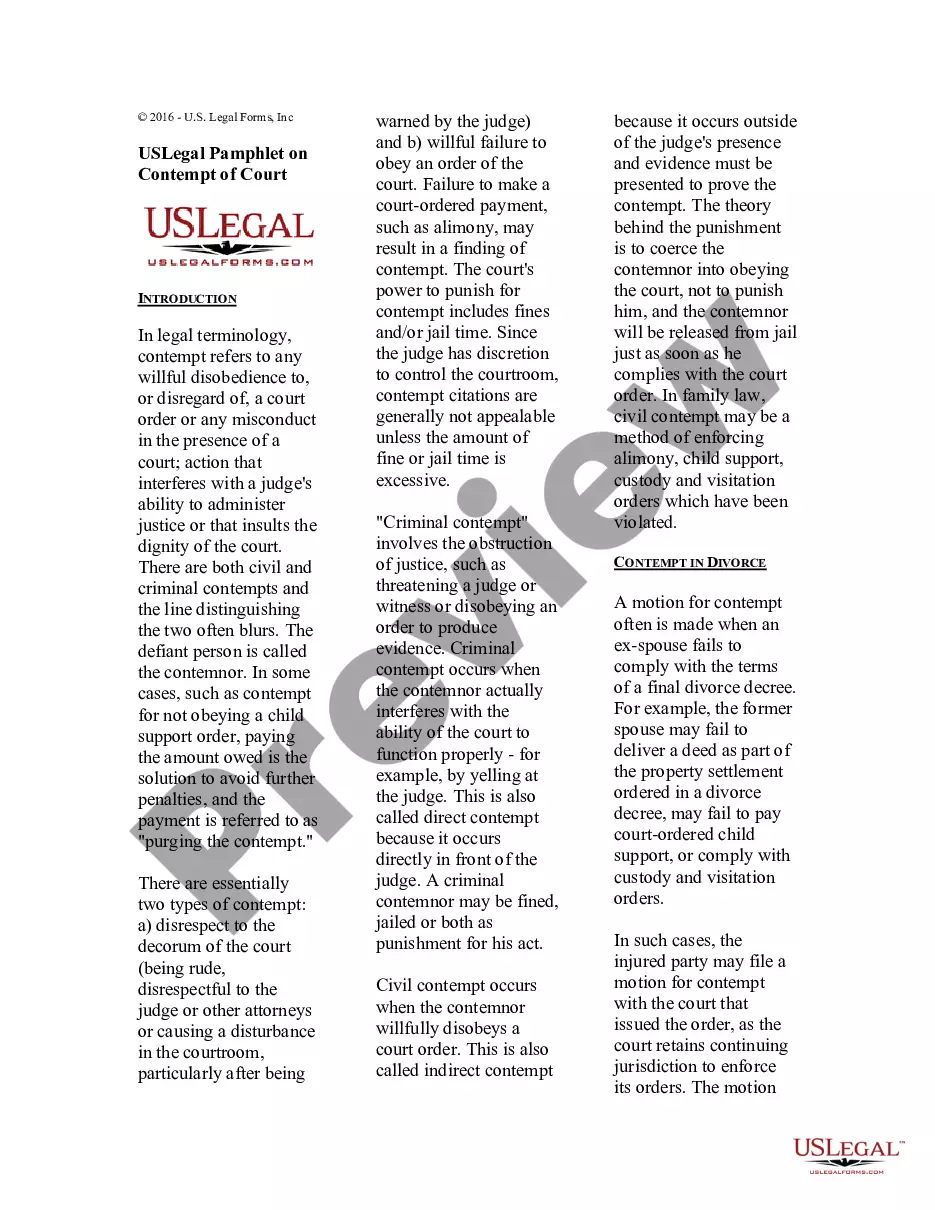
The USLegal Pamphlet on Contempt of Court provides a comprehensive overview of the contempt process in both civil and criminal matters. This pamphlet explains how contempt motions are filed and enforced, particularly in divorce cases. It highlights the differences between civil and criminal contempt, making it easier for individuals to understand when and how to use this legal resource.
What’s included in this form
- Definition of contempt as willful disobedience to a court order.
- Explanation of civil versus criminal contempt.
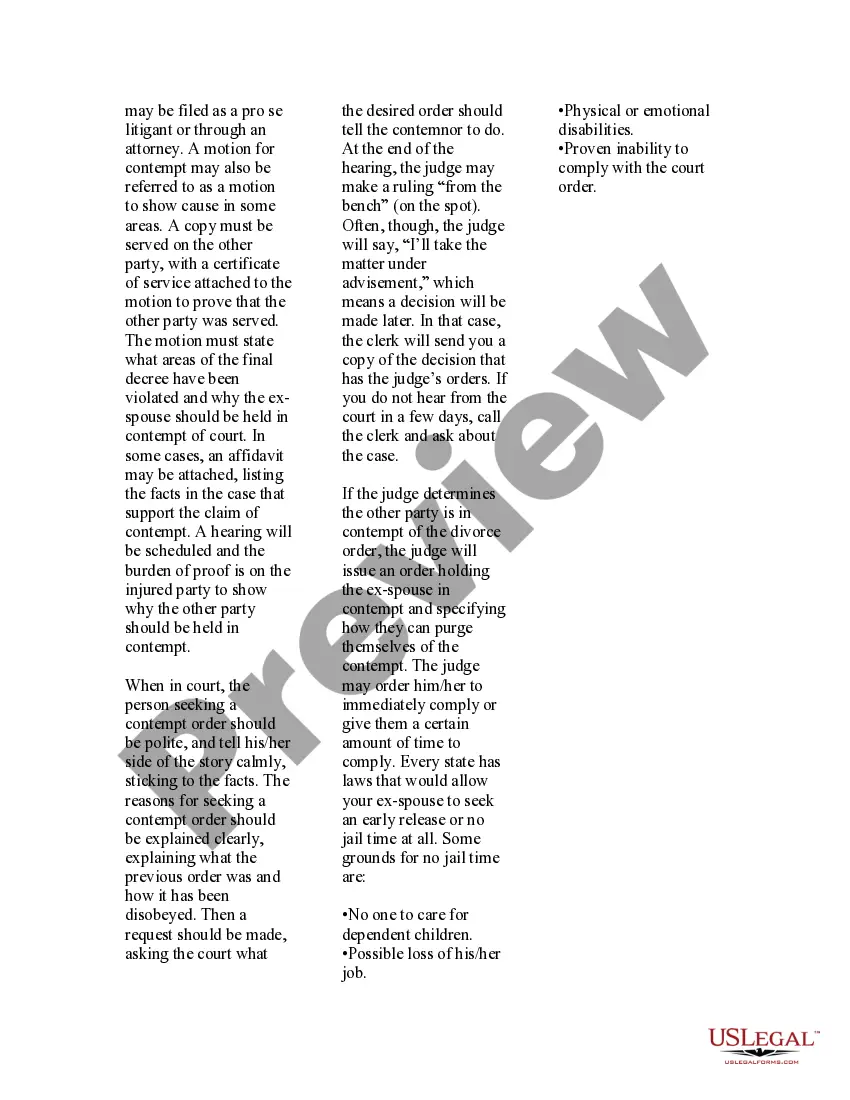
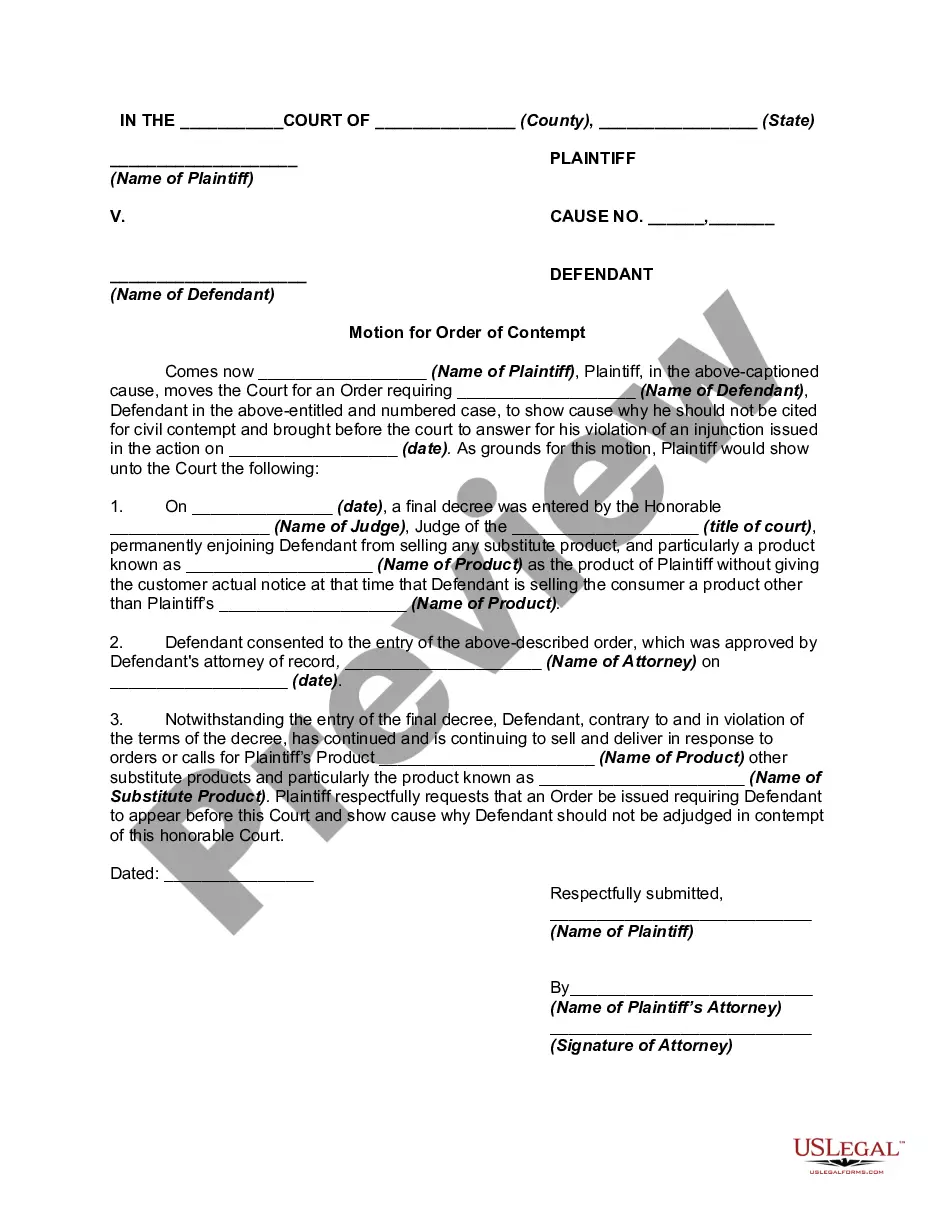
- Guidance on filing a contempt motion, including necessary documentation.
- Specific considerations for contempt in divorce situations.
- Details on the consequences of contempt, including potential penalties.
When to use this form
This pamphlet is essential when an individual believes that a party has violated a court order. It is particularly relevant in divorce cases where one spouse fails to adhere to agreements related to alimony, child support, or visitation rights. The form is valuable for understanding the required legal steps to address the contempt, ensuring proper procedure is followed for enforcing court orders.
Who can use this document
- Individuals involved in a divorce or custody dispute.
- Those seeking to enforce a court order related to support or property settlement.
- Individuals wanting to understand their rights and obligations regarding court orders.
- Pro se litigants filing motions without an attorney.
Instructions for completing this form
- Identify the specific court order that has been violated.
- Gather evidence to support your claim of contempt.
- Prepare the motion for contempt, clearly stating the violations.
- Serve the motion on the other party with proof of service.
- Attend the scheduled hearing and present your case to the judge.
Does this document require notarization?
This form usually doesn’t need to be notarized. However, local laws or specific transactions may require it. Our online notarization service, powered by Notarize, lets you complete it remotely through a secure video session, available 24/7.
Get your form ready online
Our built-in tools help you complete, sign, share, and store your documents in one place.
Make edits, fill in missing information, and update formatting in US Legal Forms—just like you would in MS Word.
Download a copy, print it, send it by email, or mail it via USPS—whatever works best for your next step.
Sign and collect signatures with our SignNow integration. Send to multiple recipients, set reminders, and more. Go Premium to unlock E-Sign.
If this form requires notarization, complete it online through a secure video call—no need to meet a notary in person or wait for an appointment.
We protect your documents and personal data by following strict security and privacy standards.

Make edits, fill in missing information, and update formatting in US Legal Forms—just like you would in MS Word.

Download a copy, print it, send it by email, or mail it via USPS—whatever works best for your next step.

Sign and collect signatures with our SignNow integration. Send to multiple recipients, set reminders, and more. Go Premium to unlock E-Sign.

If this form requires notarization, complete it online through a secure video call—no need to meet a notary in person or wait for an appointment.

We protect your documents and personal data by following strict security and privacy standards.
Common mistakes to avoid
- Failing to serve the other party properly, which can lead to dismissal.
- Not providing sufficient evidence to support the claim of contempt.
- Rushing through the hearing without clearly stating the pertinent facts.
Why complete this form online
- Convenience of completing the form from your own home.
- Access to templates that are easy to edit and customize.
- Reliability with forms drafted by licensed attorneys.
Legal use & context
- Contempt motions are essential tools for enforcing court orders.
- Understanding the distinction between civil and criminal contempt can improve legal strategy.
- Judges have discretion in applying penalties for contempt, which can include fines and jail time.
Summary of main points
- The USLegal Pamphlet on Contempt of Court outlines key legal concepts and processes involved in addressing contempt.
- Filing a motion for contempt is a critical step for enforcing court orders in divorce cases.
- Understanding state-specific rules is important when using this pamphlet as a resource.
Looking for another form?



Form popularity
FAQ
At the hearing, you will have to swear to tell the truth before you present your case. As the party alleging contempt, you will probably speak first. Keep your explanation of how your ex disobeyed a court order brief and only talk about the reasons you asked for the contempt action.
Depending on the infraction, contempt of court consequences can include fines, compensatory visitation, a modification to the custody arrangement, and in some instances even jail time. In most cases, if someone is held in contempt, the court will first give them the opportunity to make amends for the violation.
If a person is found to be in contempt, the court is able to impose sanctions, which may include the following: jail time (usually 1-30 days) ordering the party held in contempt to pay the money owed. ordering the party held in contempt to pay the other party's attorney's fees.
There is a valid court order in effect. The other person knows about the court order. The facts show a plain violation of the order. You have given the person notice of the contempt hearing and a chance to be heard. Contempt is an appropriate remedy for the violation.
Thus, if a Court finds that a party is in contempt then there are several remedies depending on the violation. Under California Code of Civil Procedure Section 1218, remedies include community service, imprisonment and fines.Yes, there are several alternatives to filing a contempt action with the court.
A violation of PC 166 is typically a misdemeanor. A criminal contempt action is punishable by: custody in county jail (not state prison) for up to six months, and/or. a maximum fine of $1,000.
If someone doesn't comply with a court order, they can be held in contempt of court. You may need to file a motion for a judge to hold someone in contempt, typically for violation of a child support or custody order. Most courts have forms you can use, so you can usually do this on your own without an attorney.
California Code of Civil Procedure 1218(c) state that for each act of contempt, the convicted spouse or parent shall be fined up to $1000 and or imprisoned for up to five days. Notice that this is for each act of contempt.
Complete two court forms. Complete forms Verified Motion and Affidavit for Citation for Contempt of Court (JDF 1816) and Order to Issue Citation and Citation to Show Cause (JDF 1817). File the forms with the court. Notify the person who hasn't paid. Go to the hearing.