Complaint for Personal Injury and Wrongful Death Due to Train or Automobile Accident
What this document covers
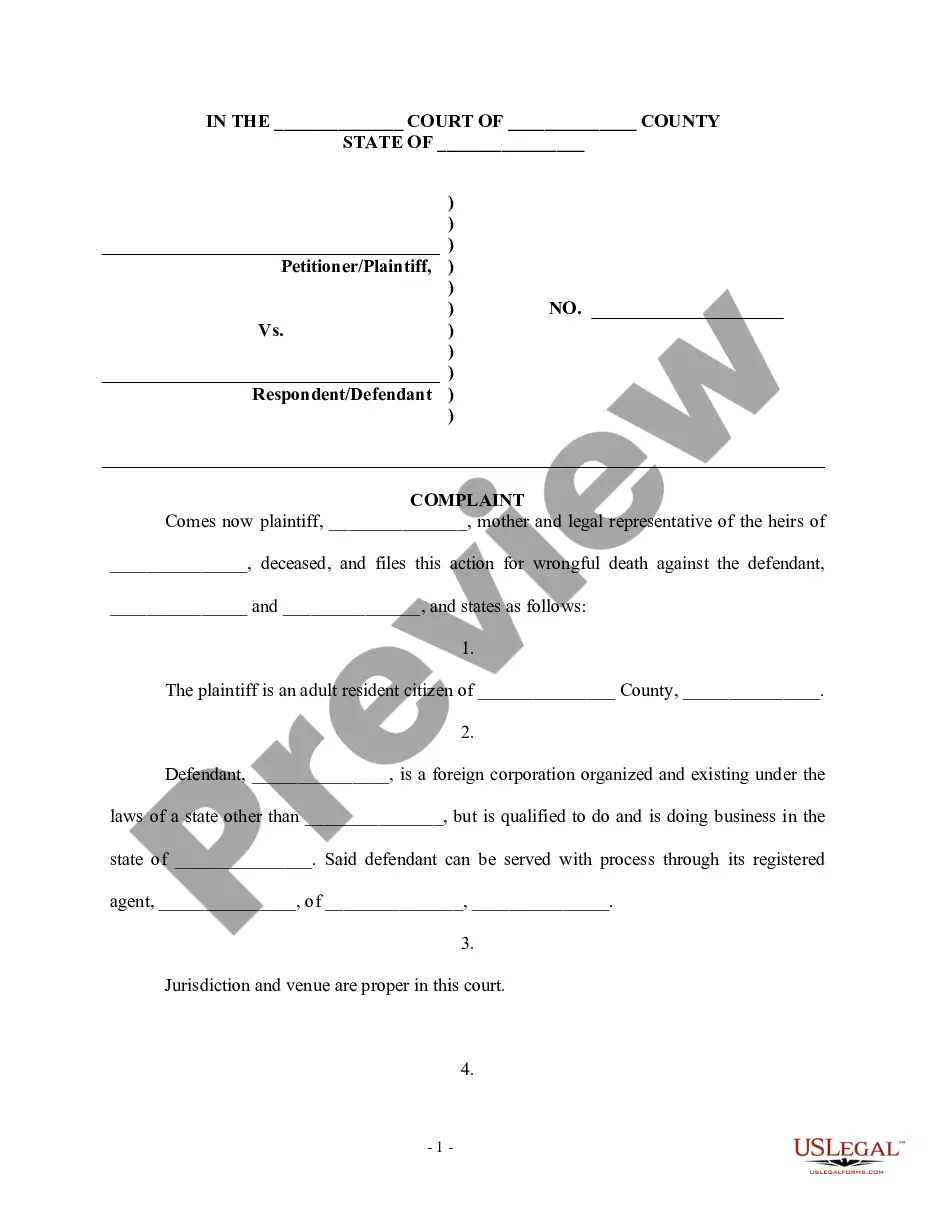
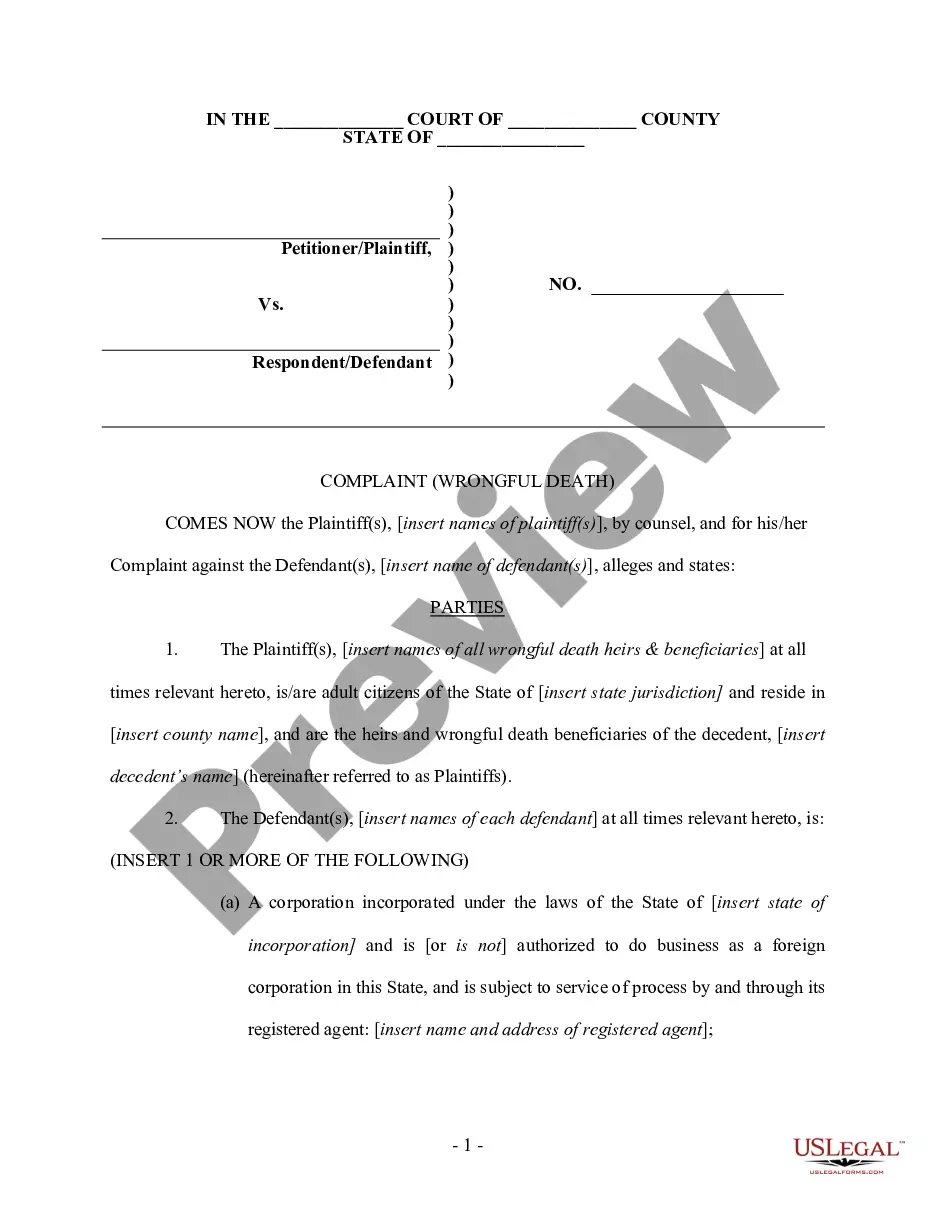
This Complaint for Personal Injury and Wrongful Death Due to Train or Automobile Accident is a legal document used to initiate a personal injury case stemming from a collision between a train and an automobile that resulted in the death of the automobile driver. This form outlines the claims against the defendant, specifying the negligence that led to the fatality. Understanding the unique aspects of this form can help you properly address the legal procedures related to personal injury and wrongful death cases involving train and automobile accidents.
What’s included in this form
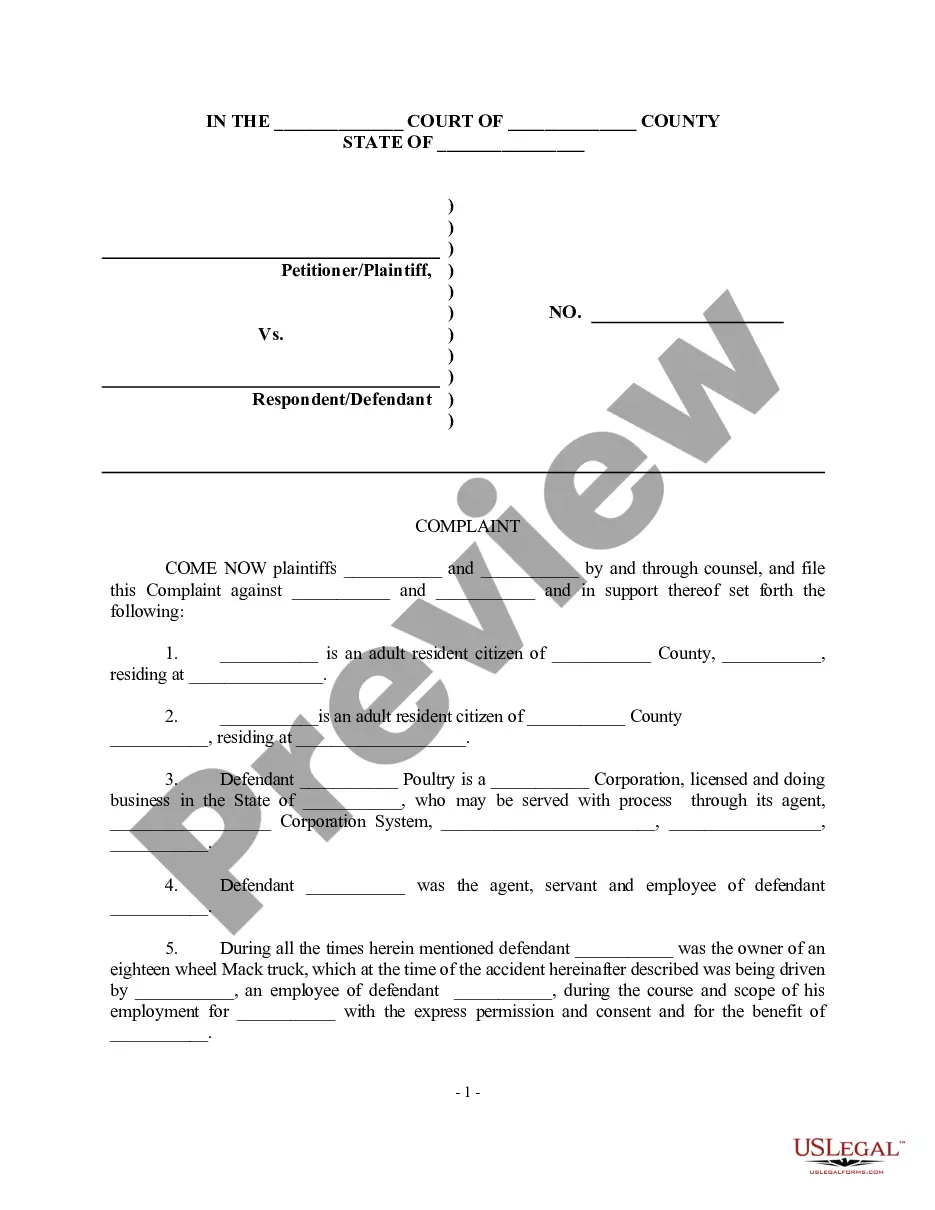
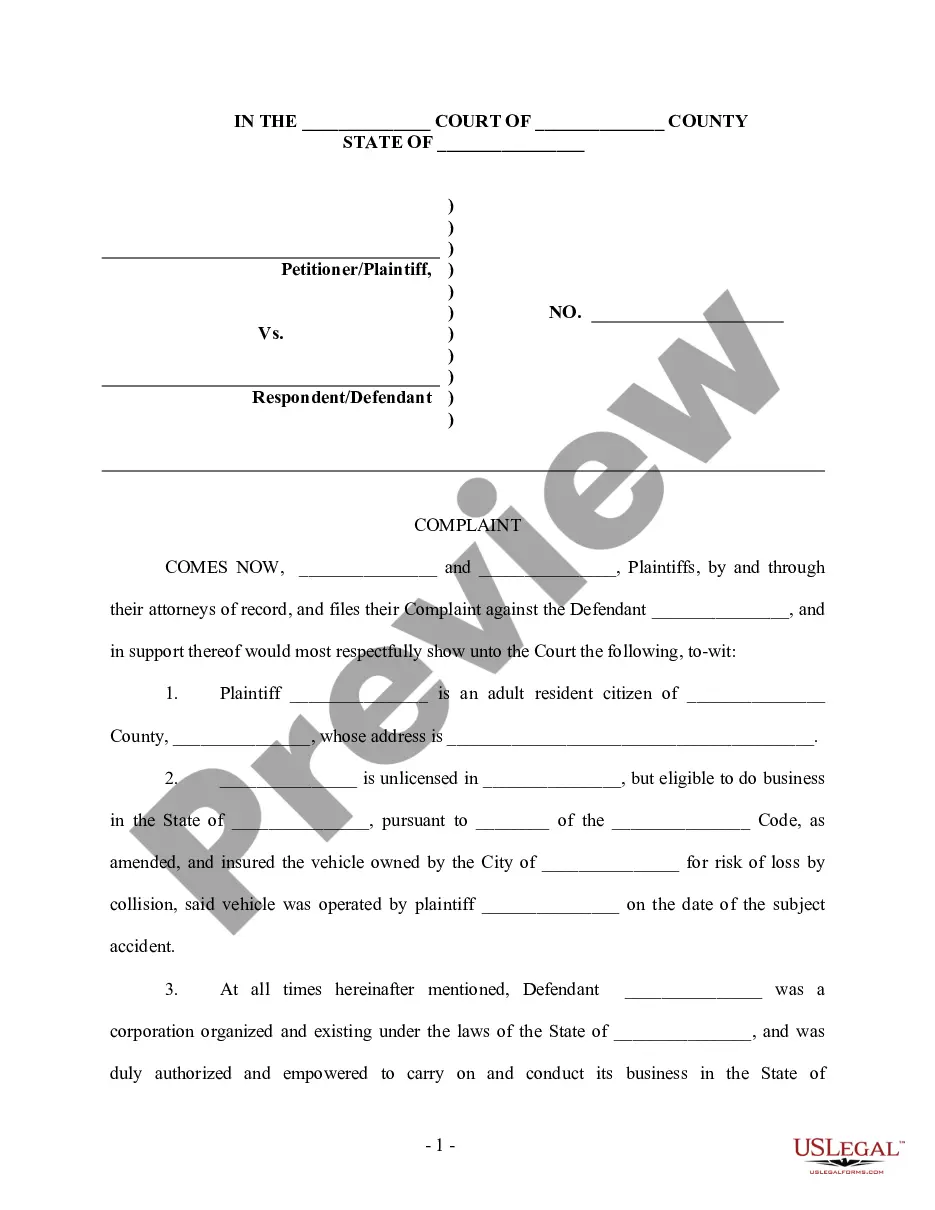
- Identification of the plaintiff and defendant.
- Jurisdiction and venue details.
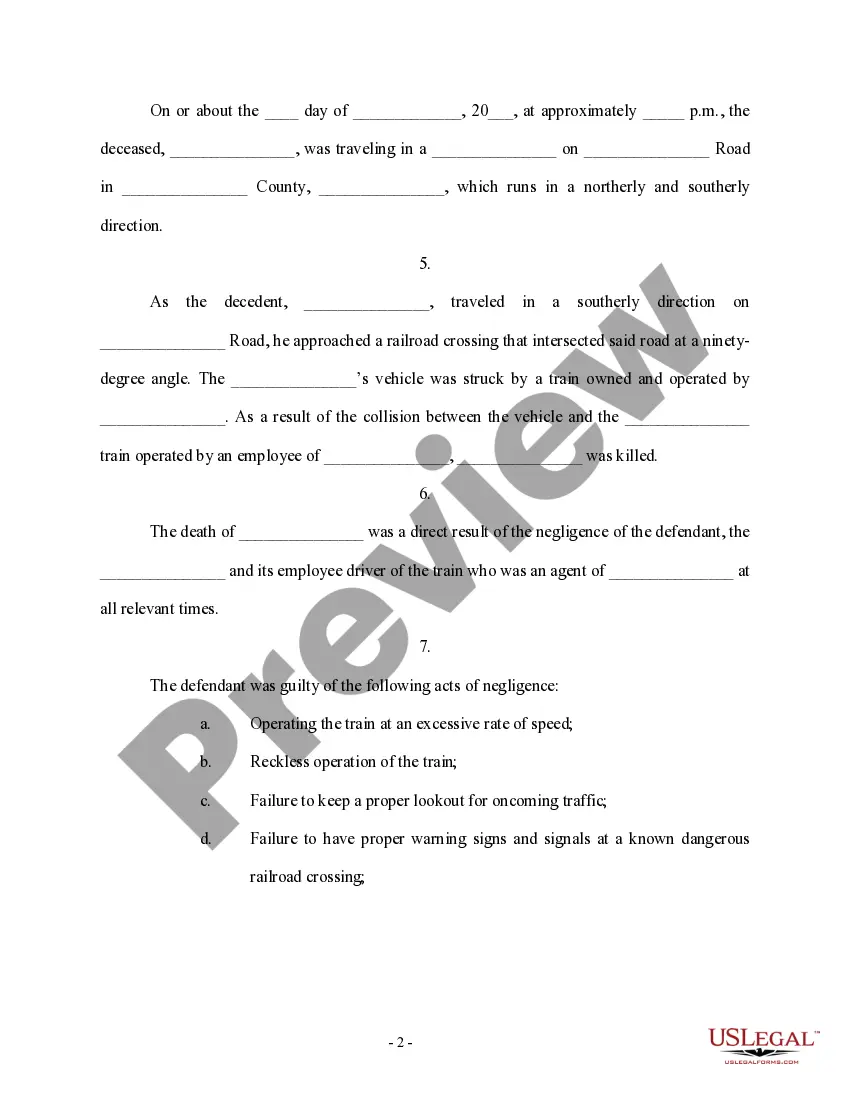
- Incident description, including date, time, and location.
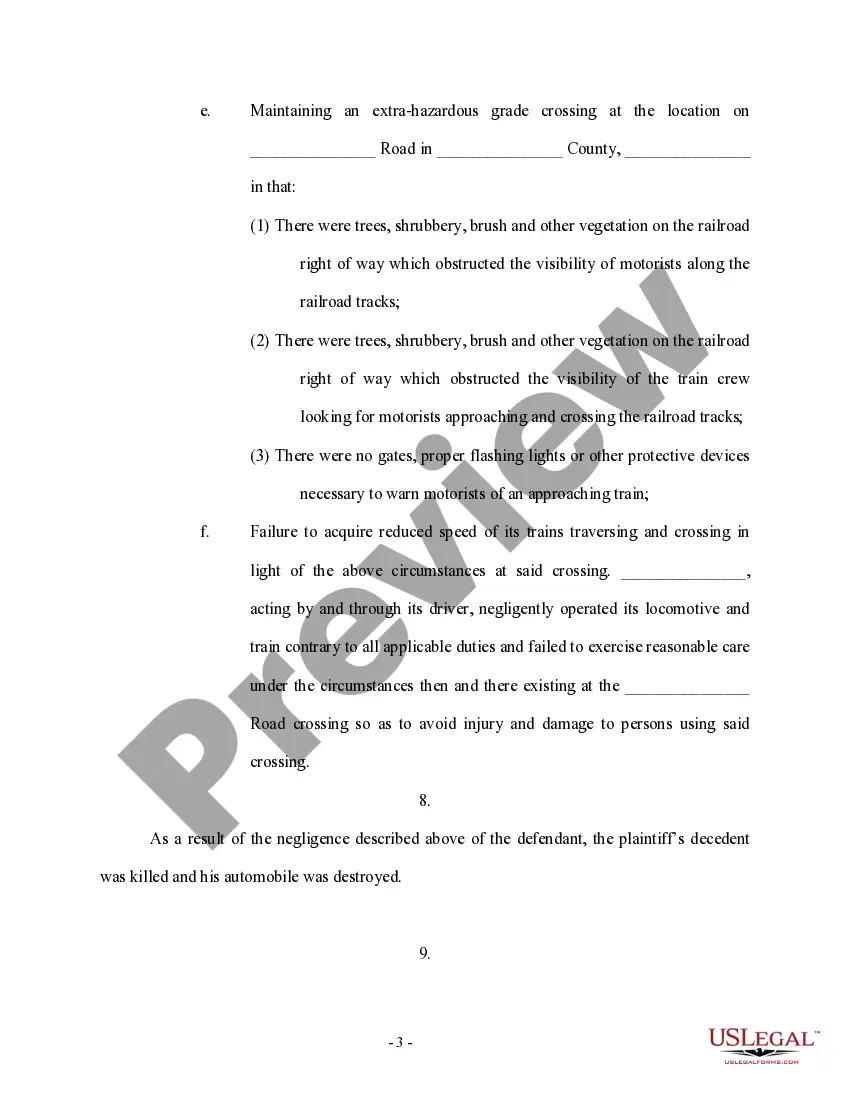
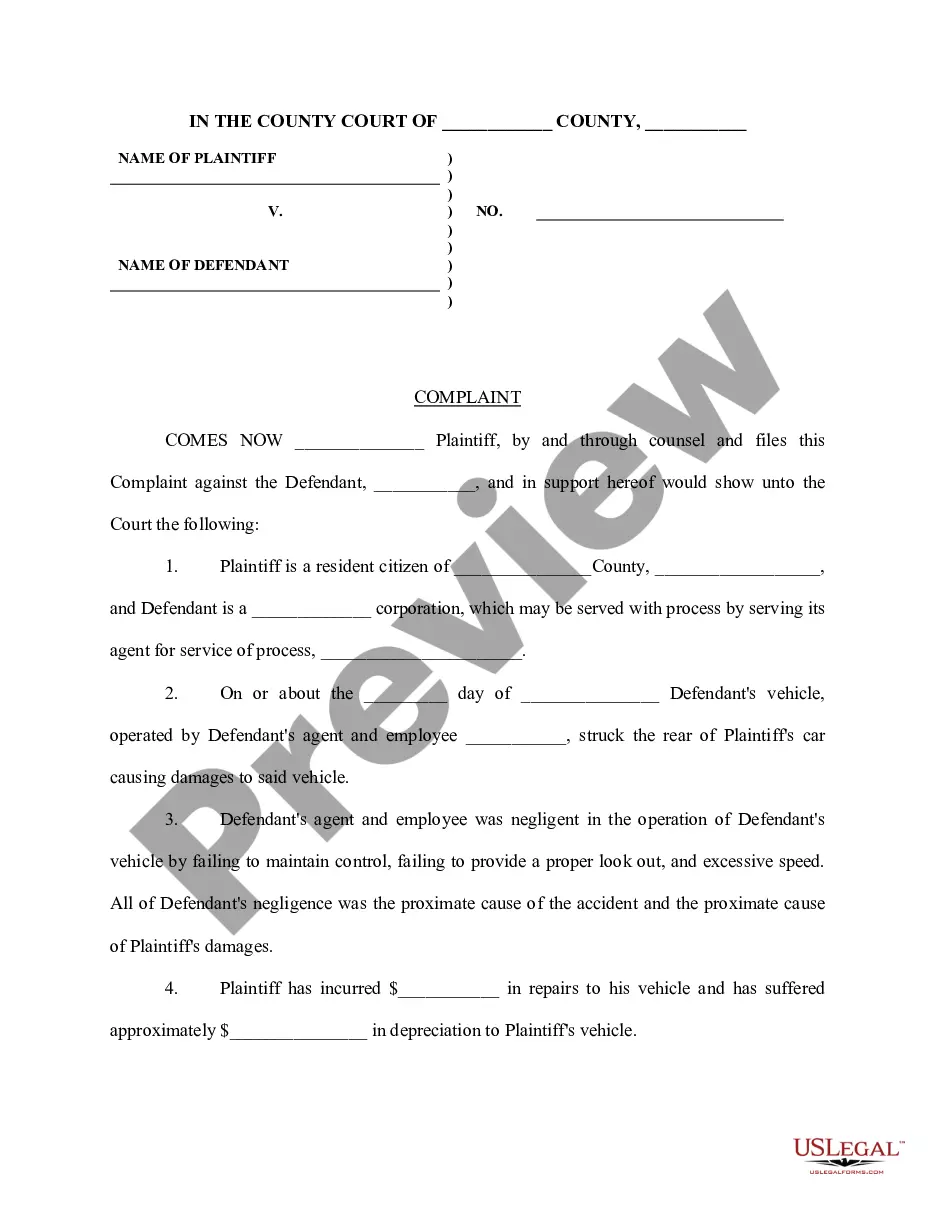
- Specific allegations of negligence by the defendant.
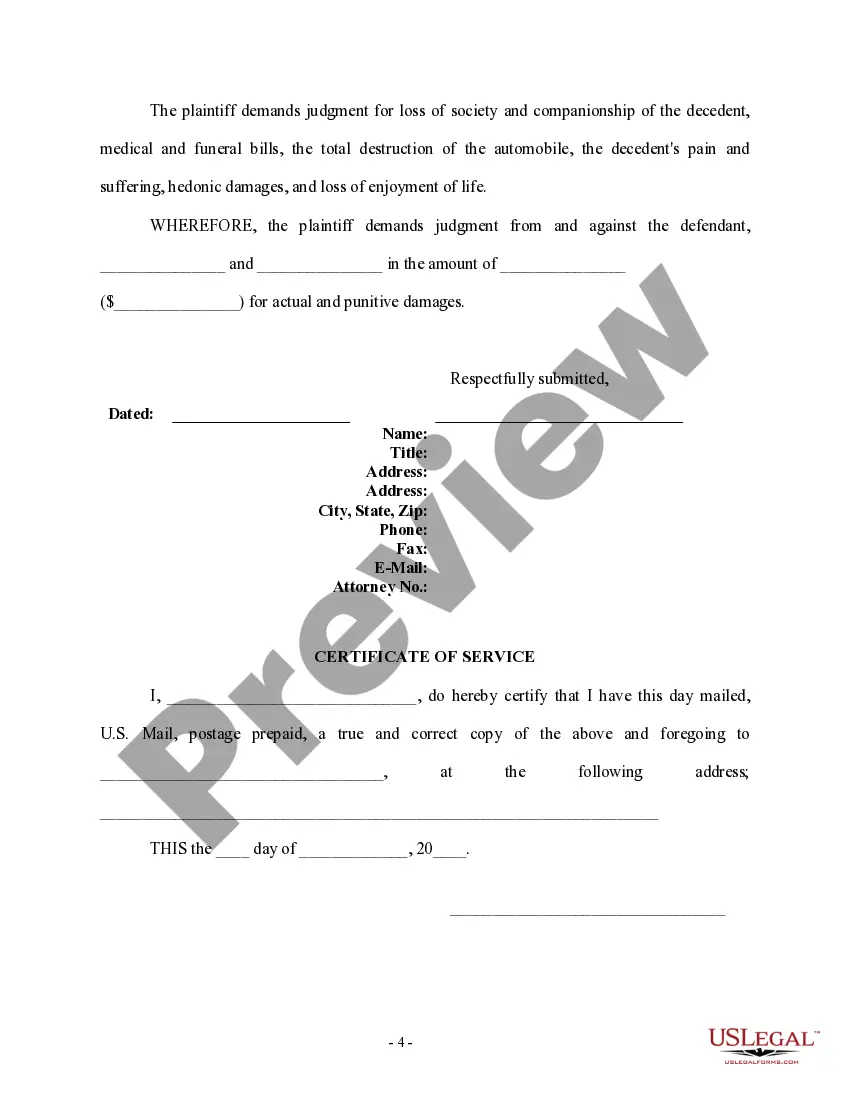
- Statement of damages suffered by the plaintiff.
- Signature and certification of service.

When to use this form
This form should be used when an individual seeks legal recourse following a train-automobile accident that resulted in personal injury or wrongful death. It is particularly applicable when the driver of the automobile dies due to the negligence of the train operator or the railroad company. If you believe negligent actions led to a fatal incident, this complaint will allow you to formally present your case in court.
Who this form is for
- Individuals seeking to file a personal injury lawsuit related to a train-automobile accident.
- Representatives or family members of a deceased individual due to such an accident.
- Legal professionals assisting clients with cases of wrongful death resulting from vehicular accidents with trains.
Steps to complete this form
- Identify and enter the full names and addresses of the plaintiff and defendant.
- Specify the relevant details about the incident including the date, time, and location of the accident.
- Clearly outline the defendant's negligent actions that led to the incident.
- Detail the damages incurred, including funeral costs and loss of companionship.
- Include your signature and date, along with any required certification of service.
Is notarization required?
This form does not typically require notarization unless specified by local law. Ensure you check local regulations to confirm any additional requirements before submission.
Get your form ready online
Our built-in tools help you complete, sign, share, and store your documents in one place.
Make edits, fill in missing information, and update formatting in US Legal Forms—just like you would in MS Word.
Download a copy, print it, send it by email, or mail it via USPS—whatever works best for your next step.
Sign and collect signatures with our SignNow integration. Send to multiple recipients, set reminders, and more. Go Premium to unlock E-Sign.
If this form requires notarization, complete it online through a secure video call—no need to meet a notary in person or wait for an appointment.
We protect your documents and personal data by following strict security and privacy standards.

Make edits, fill in missing information, and update formatting in US Legal Forms—just like you would in MS Word.

Download a copy, print it, send it by email, or mail it via USPS—whatever works best for your next step.

Sign and collect signatures with our SignNow integration. Send to multiple recipients, set reminders, and more. Go Premium to unlock E-Sign.

If this form requires notarization, complete it online through a secure video call—no need to meet a notary in person or wait for an appointment.

We protect your documents and personal data by following strict security and privacy standards.
Typical mistakes to avoid
- Failing to clearly outline the negligence claims against the defendant.
- Omitting key incident details such as date and location of the accident.
- Not specifying the damages sought in the complaint.
- Incomplete or incorrect information about the parties involved.
Benefits of using this form online
- Convenience of downloading and completing the form at your own pace.
- Editability to customize the form to fit your specific needs.
- Accessibility to legally vetted templates drafted by licensed attorneys.
Legal use & context
This form serves as an official complaint in a civil lawsuit for wrongful death and personal injury. It is intended for use in relevant jurisdictions and must comply with specific local laws regarding personal injury and wrongful death claims.
Summary of main points
- The form is essential for initiating a personal injury lawsuit related to a train-automobile accident.
- It must clearly outline the negligent actions and resulting damages to be effective.
- Consult state-specific guidelines to ensure compliance with local laws.
Looking for another form?

Form popularity
FAQ
Pain and suffering can be part of a lawsuit in California for most personal injuries, including: Car accidents. Intentional torts. Medical malpractice.
If you cause a car accident and you were driving around without any car insurance coverage (likely in violation of your state's laws), you're most likely going to be personally liable for any resulting injuries to other drivers and passengers, as well as any vehicle damage.
Following a Car Accident, you can sue the responsible party for all damages as result of the accident. To pursue a personal injury claim for damages that you incurred, you must file your suit against the responsible party within 2 years from the date of the accident.
If someone hits you from behind, it is virtually never your fault, regardless of why you stopped. A basic rule of the road requires a driver to be able to stop his or her vehicle safely if traffic is stopped ahead. A driver who cannot stop safely is not driving as safely as the person in front.
Typically, in the case of a car accident, a personal lawsuit directly against the other driver is not necessary because in most cases there are insurance companies involved. In other words, suing an individual directly after an accident is typically a last resort to acquiring compensation from an at-fault driver.
Your average car accident settlement might be approximately $21,000. It is likely to fall somewhere between $14,000 and $28,000. The settlement is generally higher for more severe or permanent injuries. You'll also get paid more if the other driver was found to be driving under the influence.
Yes, you can file a lawsuit after you've agreed to a settlement with the insurance company. However, it's very possible that the judge will throw your lawsuit out of the court. After hearing your lawsuit, the defendant will inform the judge of the settlement agreement.
If a person is at fault in an accident while they are driving a car they don't own, the owner and driver might both be responsible for the accident. An owner can be liable if the driver was an 'agent' of the owner.