Complaint regarding Train and Automobile Collision
What is this form?
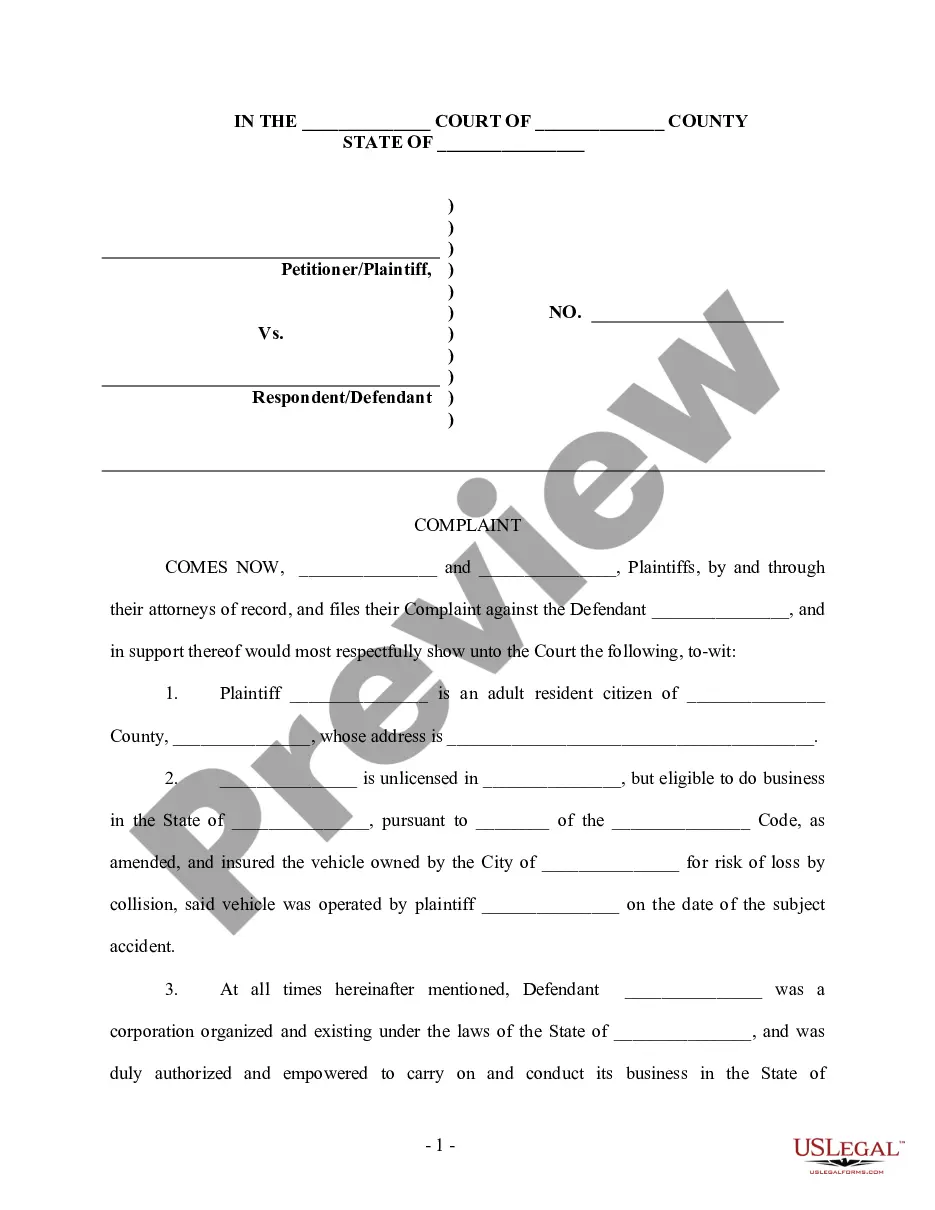
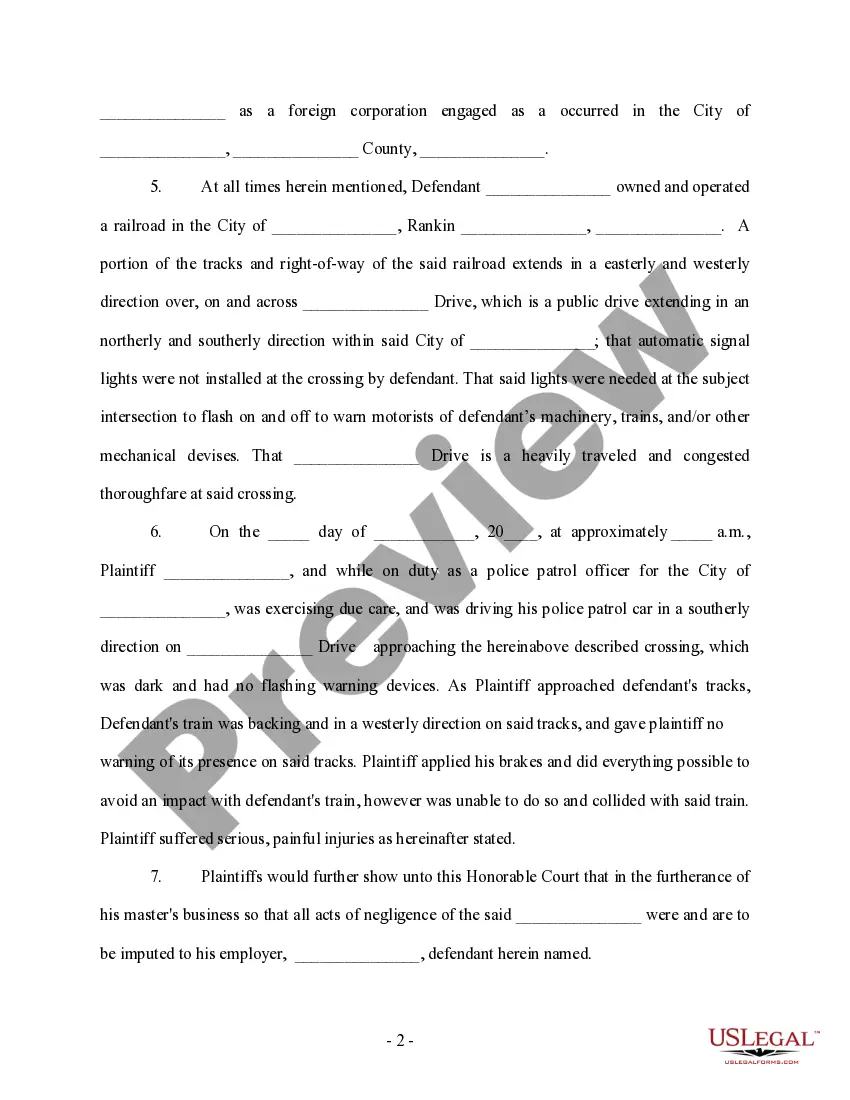
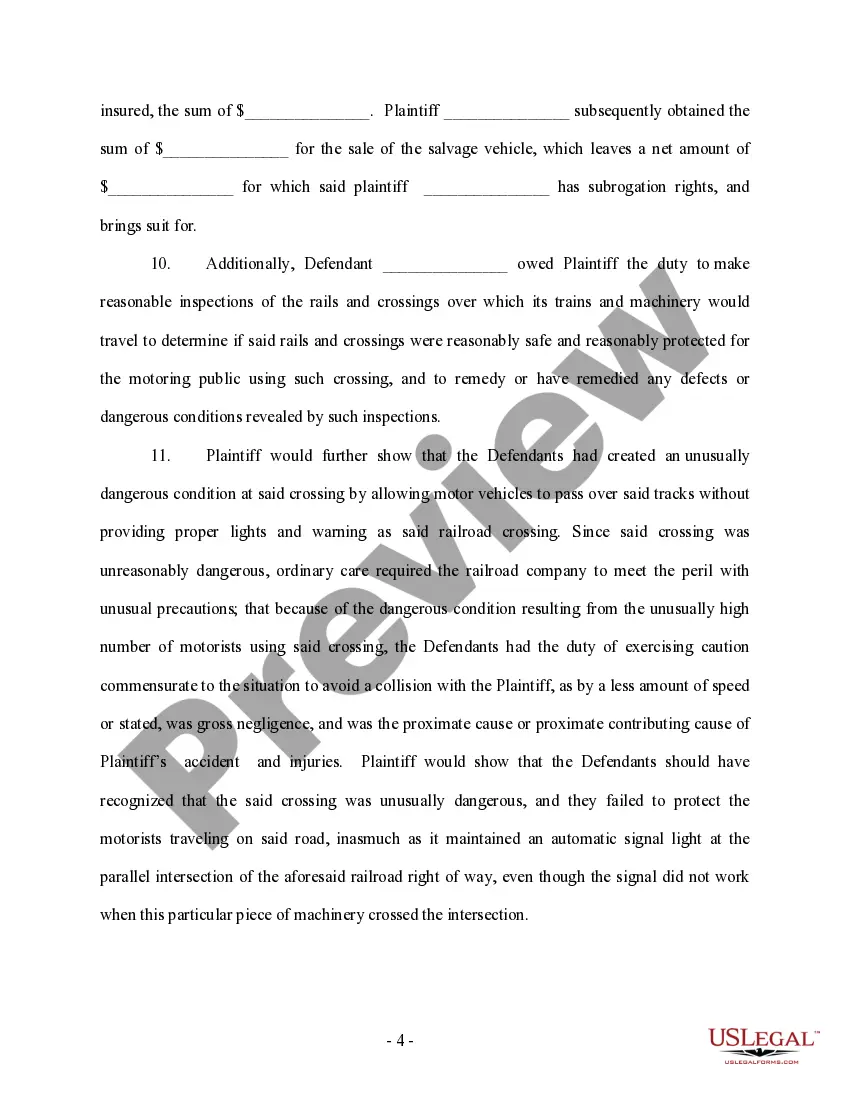
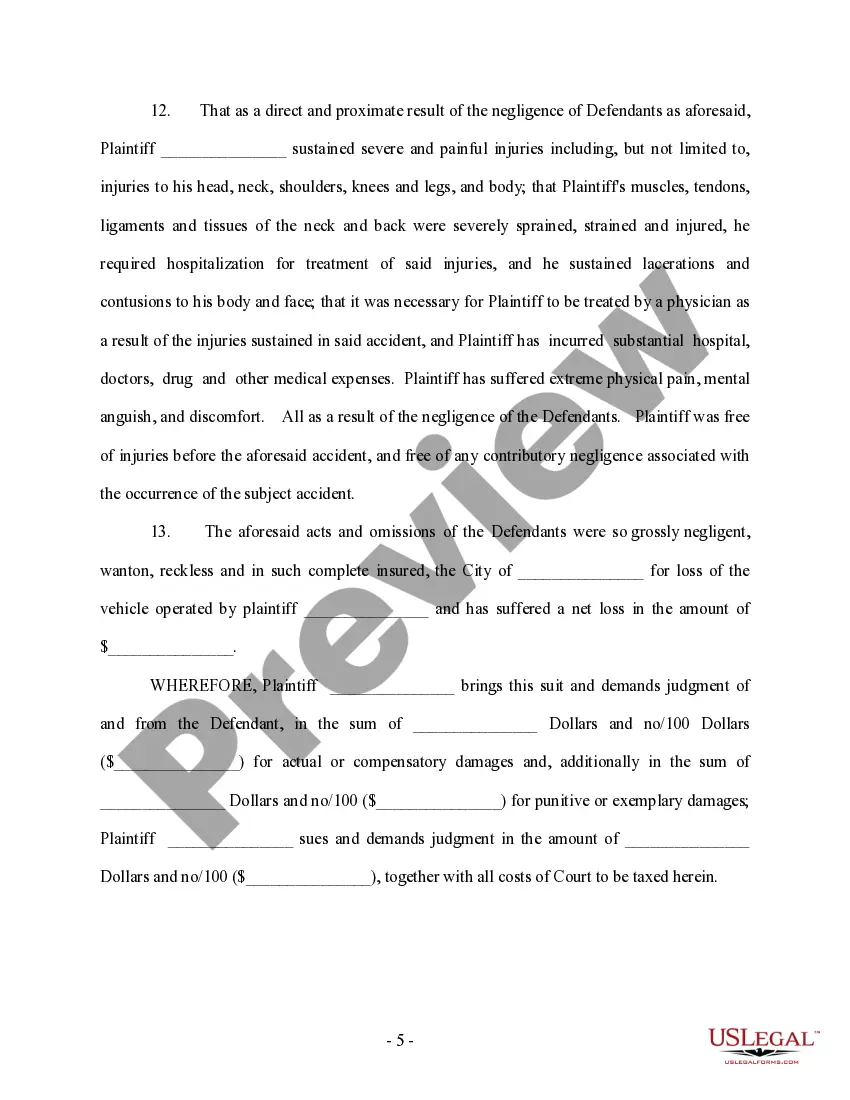
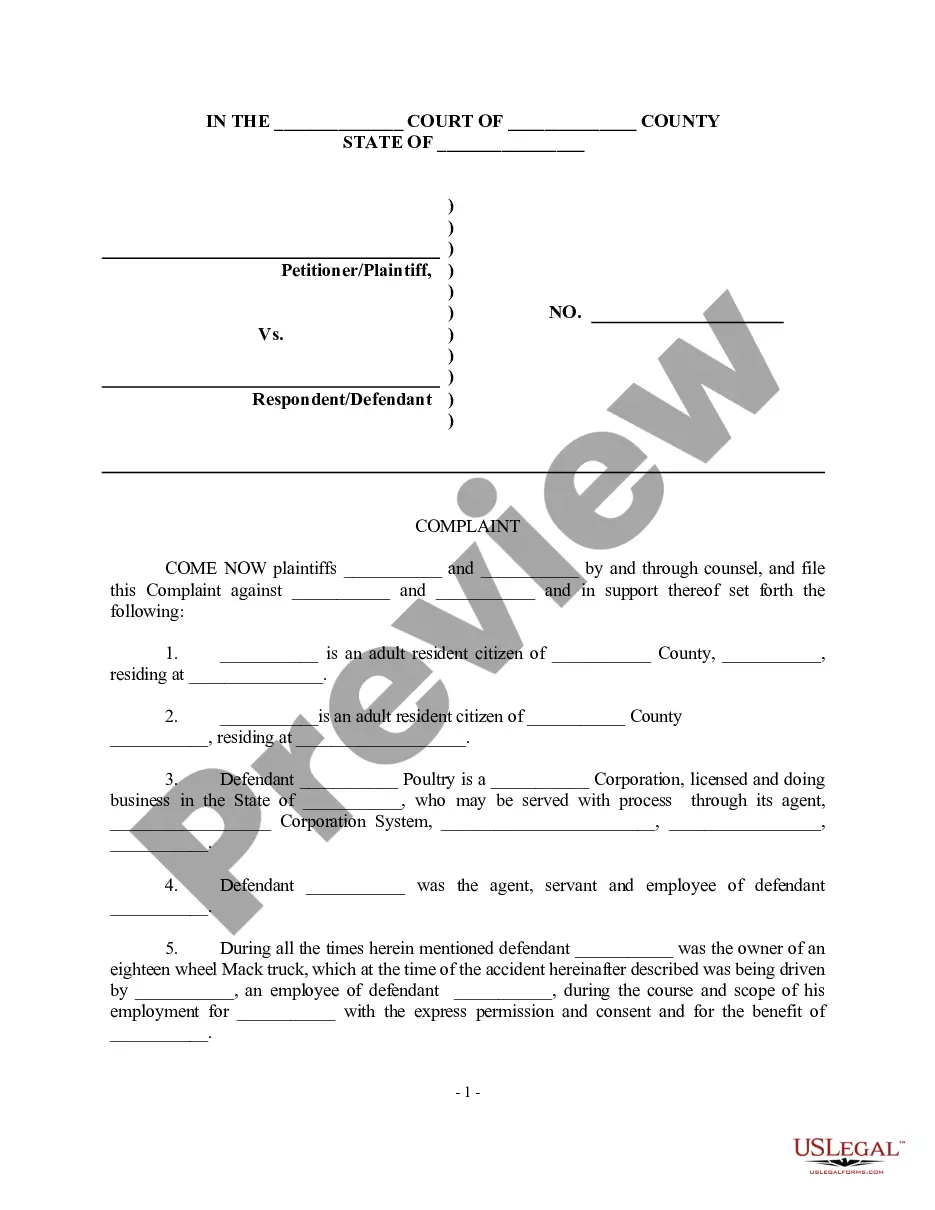
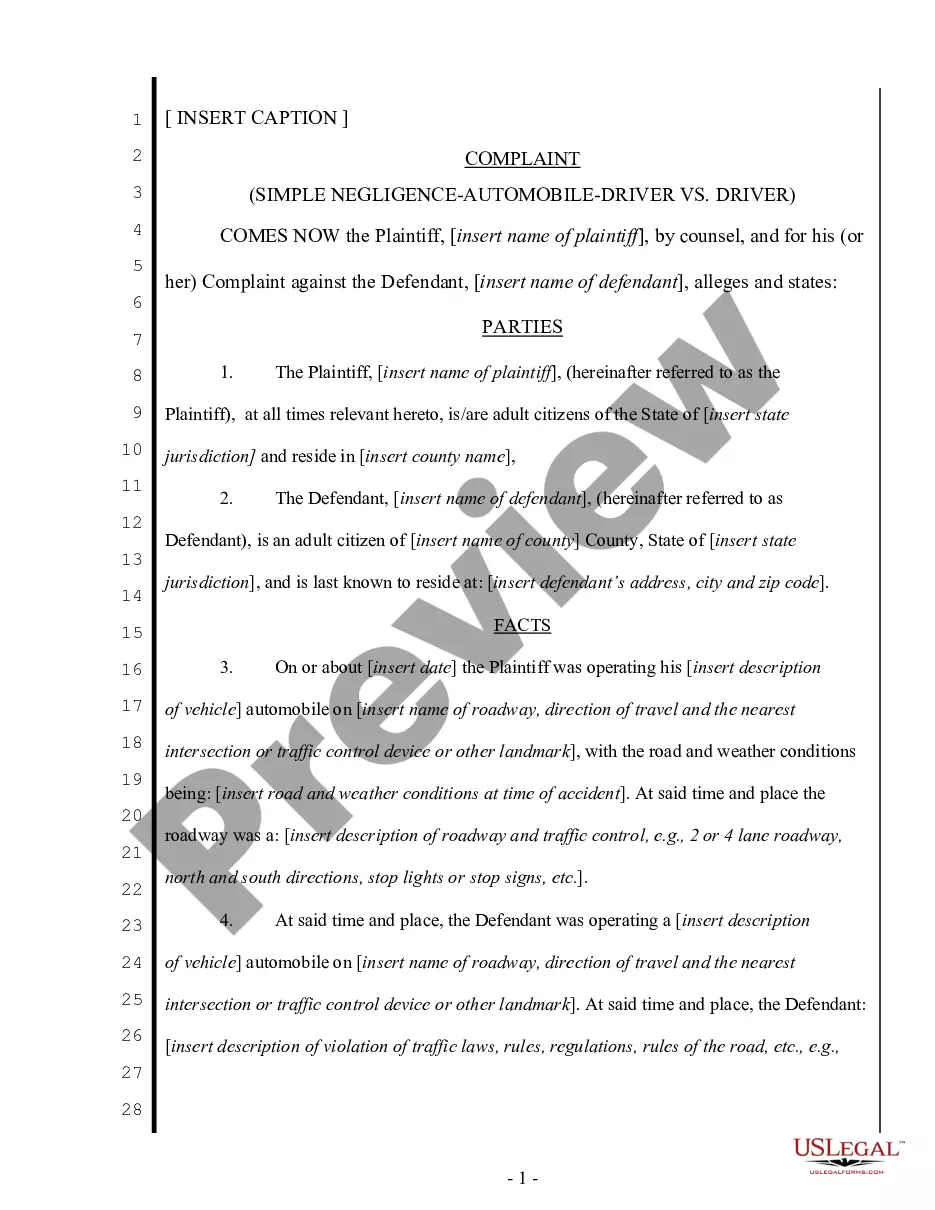
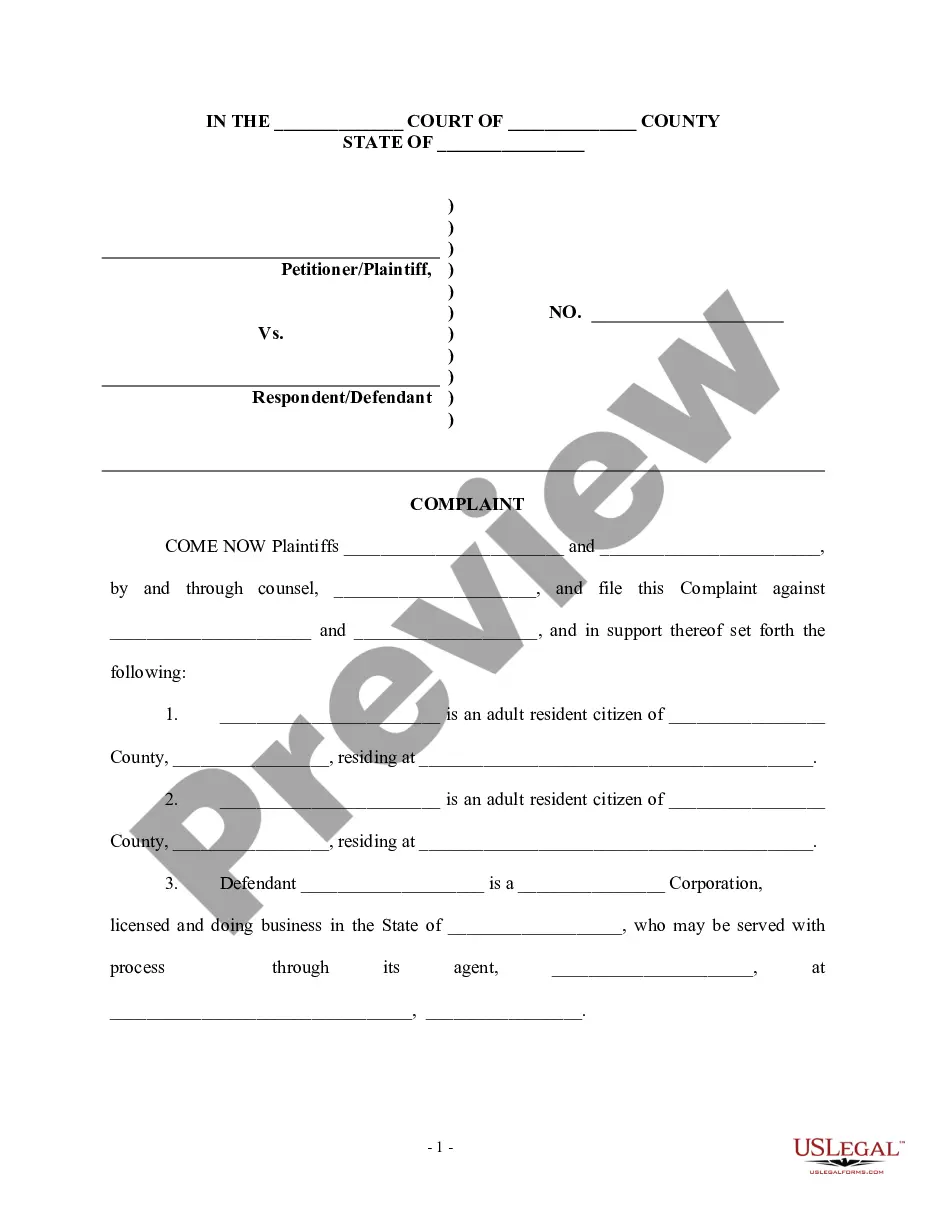
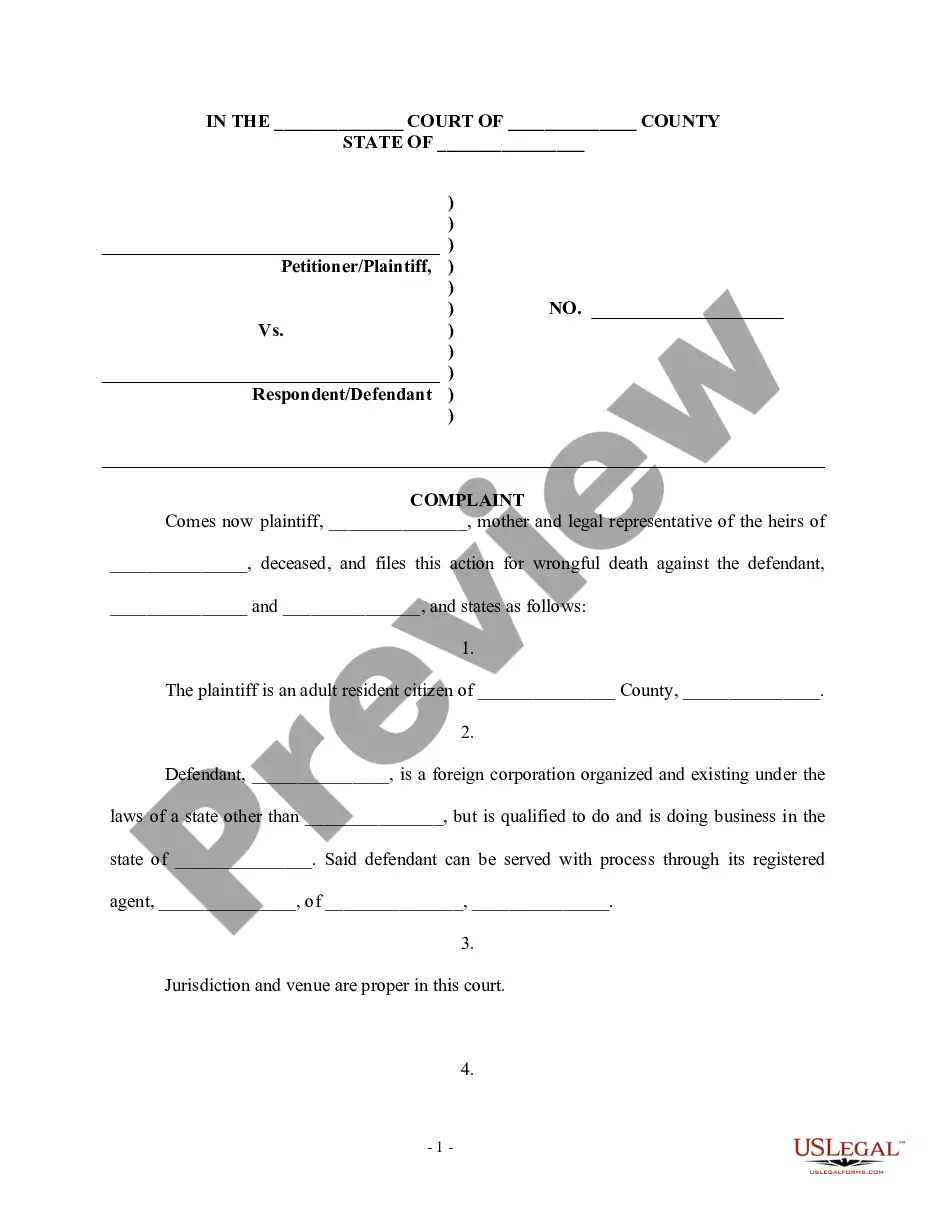
The Complaint regarding Train and Automobile Collision is a legal document that outlines a plaintiff's claims in a personal injury case resulting from a collision at a railroad crossing. This form is used to allege negligence by the defendant, specifically the failure to provide adequate warning devices at the crossing, which contributed to the incident. It serves to initiate legal proceedings and seeks compensation for damages incurred in the collision, distinguishing it from other personal injury forms by focusing specifically on incidents involving trains and vehicles.
What’s included in this form
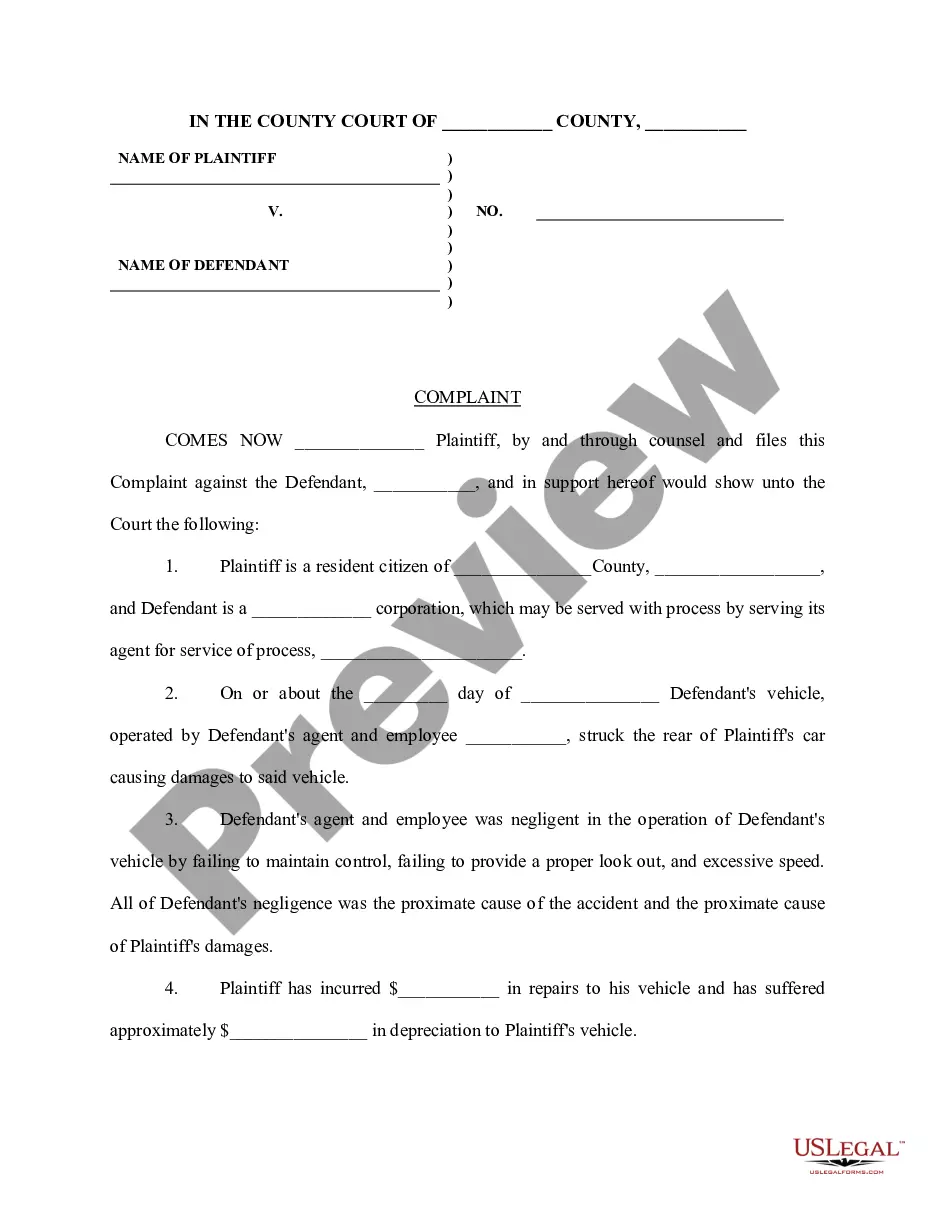
- Identification of the plaintiff and defendant, including their legal status and business eligibility.
- A detailed account of the incident, including the date, time, location, and circumstances surrounding the collision.
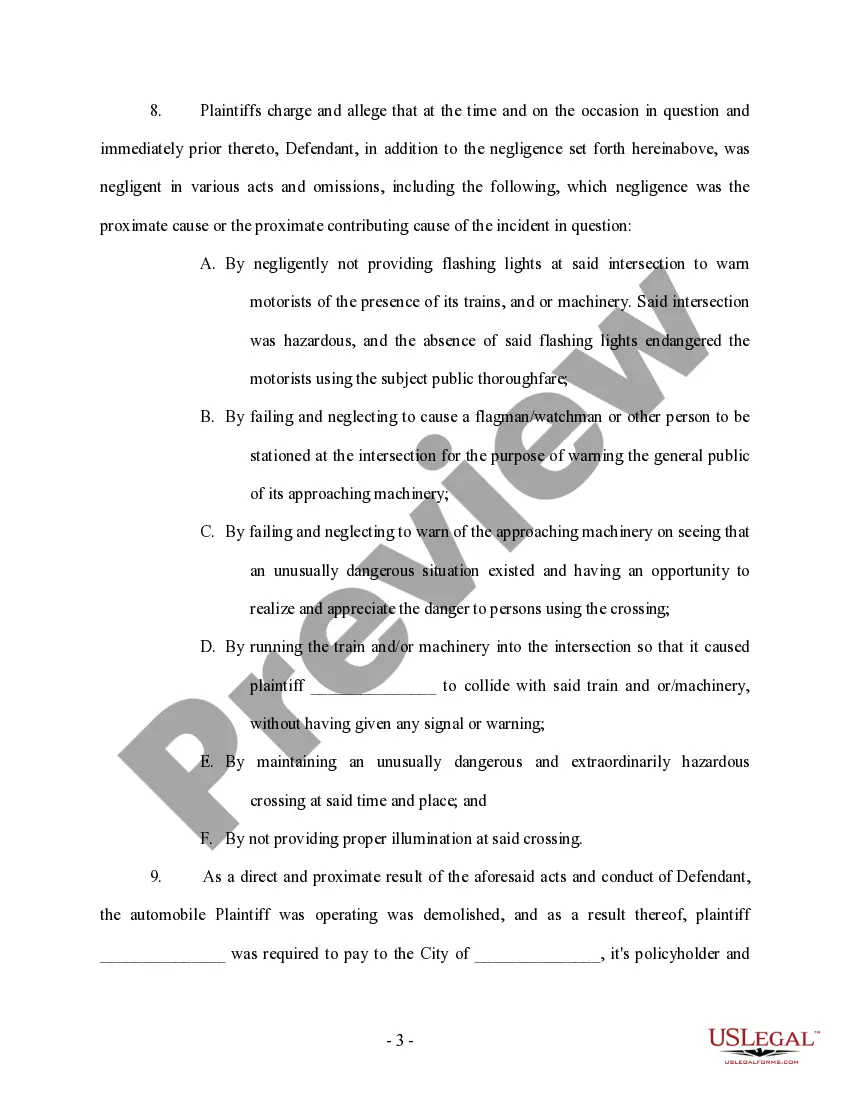
- Allegations of negligence against the defendant, including specific acts that contributed to the accident.
- Claims for damages, outlining the extent of injuries and financial losses resulting from the collision.
- A demand for compensation, specifying the amount sought and the basis for this amount.
Common use cases
This form should be used when an individual has been injured in an accident involving a train and a vehicle due to the alleged negligence of the railroad company, such as the failure to install warning lights at a crossing. It is essential for cases where the injured party seeks to formally initiate a lawsuit for recovery of damages related to personal injuries and property damage incurred during the incident.
Who this form is for
- Individuals who have sustained injuries in a collision at a railroad crossing involving a train.
- Police officers or other first responders who were involved in or witnessed the incident.
- Anyone needing to claim damages for property loss resulting from such accidents.
How to prepare this document
- Identify the plaintiff by entering their name, address, and county of residence.
- Specify the defendant's information, including legal status and any relevant corporate details.
- Provide detailed facts surrounding the incident, including the date, time, and circumstances of the collision.
- List the specific acts of negligence committed by the defendant that led to the accident.
- Detail the injuries sustained and the damages sought, including any medical expenses incurred.
Does this document require notarization?
This form does not typically require notarization to be legally valid. However, some jurisdictions or document types may still require it. US Legal Forms provides secure online notarization powered by Notarize, available 24/7 for added convenience.
Get your form ready online
Our built-in tools help you complete, sign, share, and store your documents in one place.
Make edits, fill in missing information, and update formatting in US Legal Forms—just like you would in MS Word.
Download a copy, print it, send it by email, or mail it via USPS—whatever works best for your next step.
Sign and collect signatures with our SignNow integration. Send to multiple recipients, set reminders, and more. Go Premium to unlock E-Sign.
If this form requires notarization, complete it online through a secure video call—no need to meet a notary in person or wait for an appointment.
We protect your documents and personal data by following strict security and privacy standards.

Make edits, fill in missing information, and update formatting in US Legal Forms—just like you would in MS Word.

Download a copy, print it, send it by email, or mail it via USPS—whatever works best for your next step.

Sign and collect signatures with our SignNow integration. Send to multiple recipients, set reminders, and more. Go Premium to unlock E-Sign.

If this form requires notarization, complete it online through a secure video call—no need to meet a notary in person or wait for an appointment.

We protect your documents and personal data by following strict security and privacy standards.
Typical mistakes to avoid
- Failing to properly identify all parties involved in the incident.
- Omitting critical details about the circumstances of the collision.
- Not detailing all damages, such as medical expenses or vehicle repair costs.
- Submitting the form beyond the legal deadline for filing a complaint.
Benefits of completing this form online
- Convenience of completing the form at your own pace.
- Editable templates allow for corrections and updates before printing.
- Access to expert-drafted legal language ensuring compliance with legal standards.
Looking for another form?

Form popularity
FAQ
There are three collisions in a crash. crushes, taking some of the energy of the crash. of a CR. brain hitting the skull or being torn as the skull fractures.
In physics, a collision is any event in which two or more bodies exert forces on each other in a relatively short time.When an astronomical object merges with a black hole, they are considered to collide.
There are two types of collisions: Inelastic collisions: momentum is conserved, Elastic collisions: momentum is conserved and kinetic energy is conserved.
1 : an act or instance of colliding : clash. 2 : an encounter between particles (such as atoms or molecules) resulting in exchange or transformation of energy.
Collision Insurance covers damage to your vehicle in the event of a covered accident involving a collision with another vehicle.Comprehensive car insurance pays for damage to your vehicle caused by covered events such as theft, vandalism or hail, which are not collision-related.
Generally, collision coverage comes into play because a driver gets into a car accident. Comprehensive is a separate coverage from collision. It helps cover different types of losses that are usually not the result of driving the vehicle, such as theft, hail or fallen trees.
Noun. the act of colliding; a coming violently into contact; crash: the collision of two airplanes. a clash; conflict: a collision of purposes. Physics. the meeting of particles or of bodies in which each exerts a force upon the other, causing the exchange of energy or momentum.
Distracted, Speeding or Drunk: The Top Three Causes of Car Accidents.
The First Collision: Vehicular Collision. The first collision is when a vehicle collides with another object. The Second Collision Rule: Human Collision. The Third Collision Rule: Internal Collision.