Authorization for Wage and Employment Information with Revocation of Any Previous Authorizations
Overview of this form
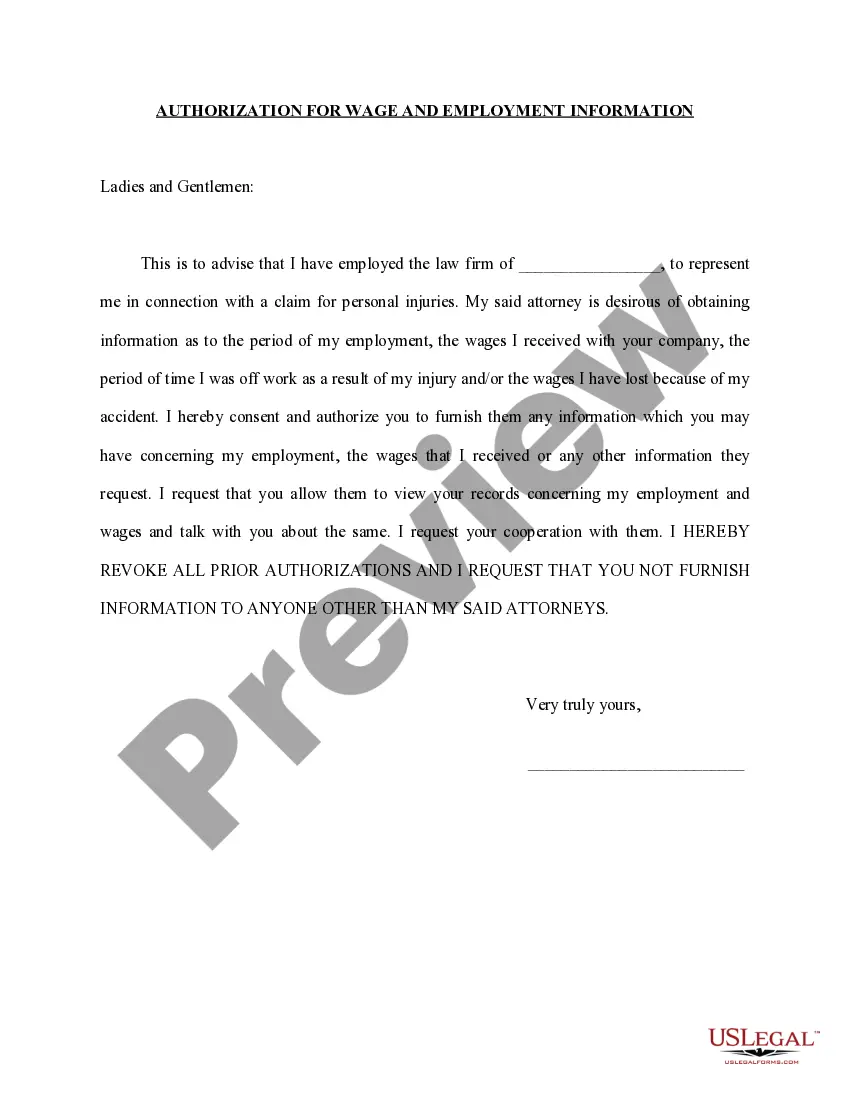
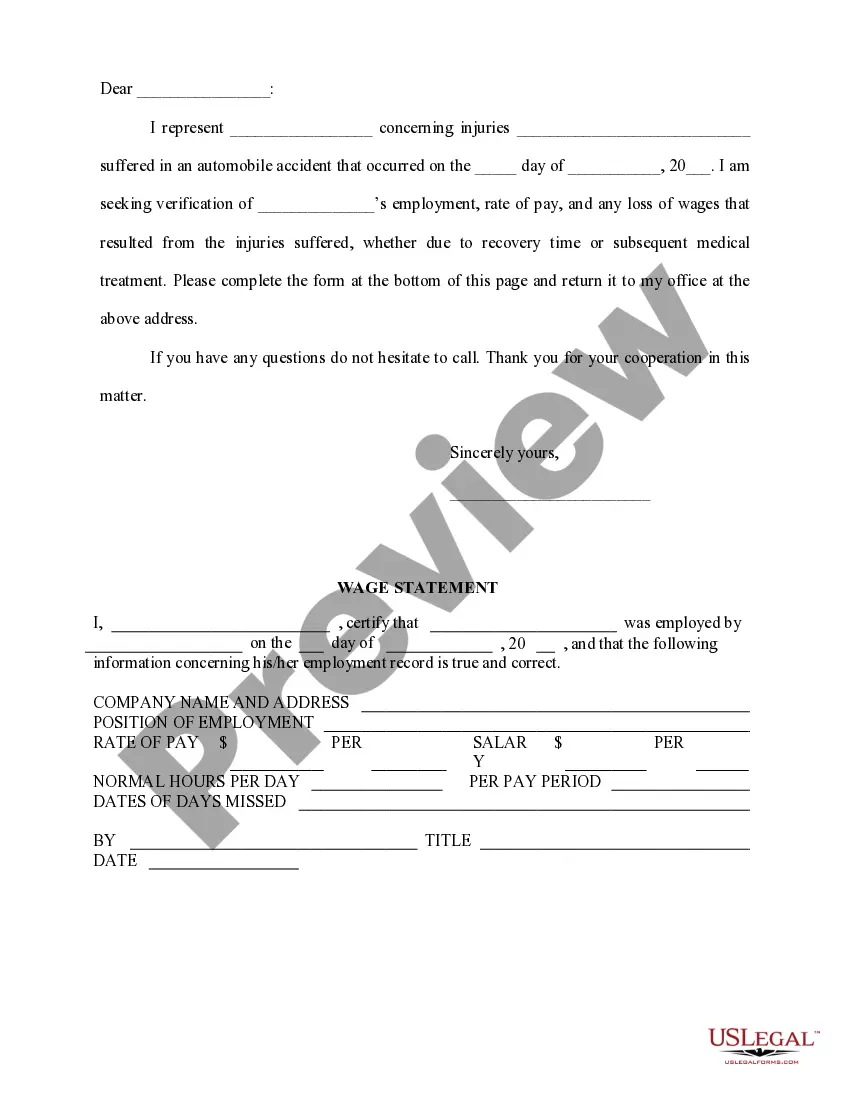
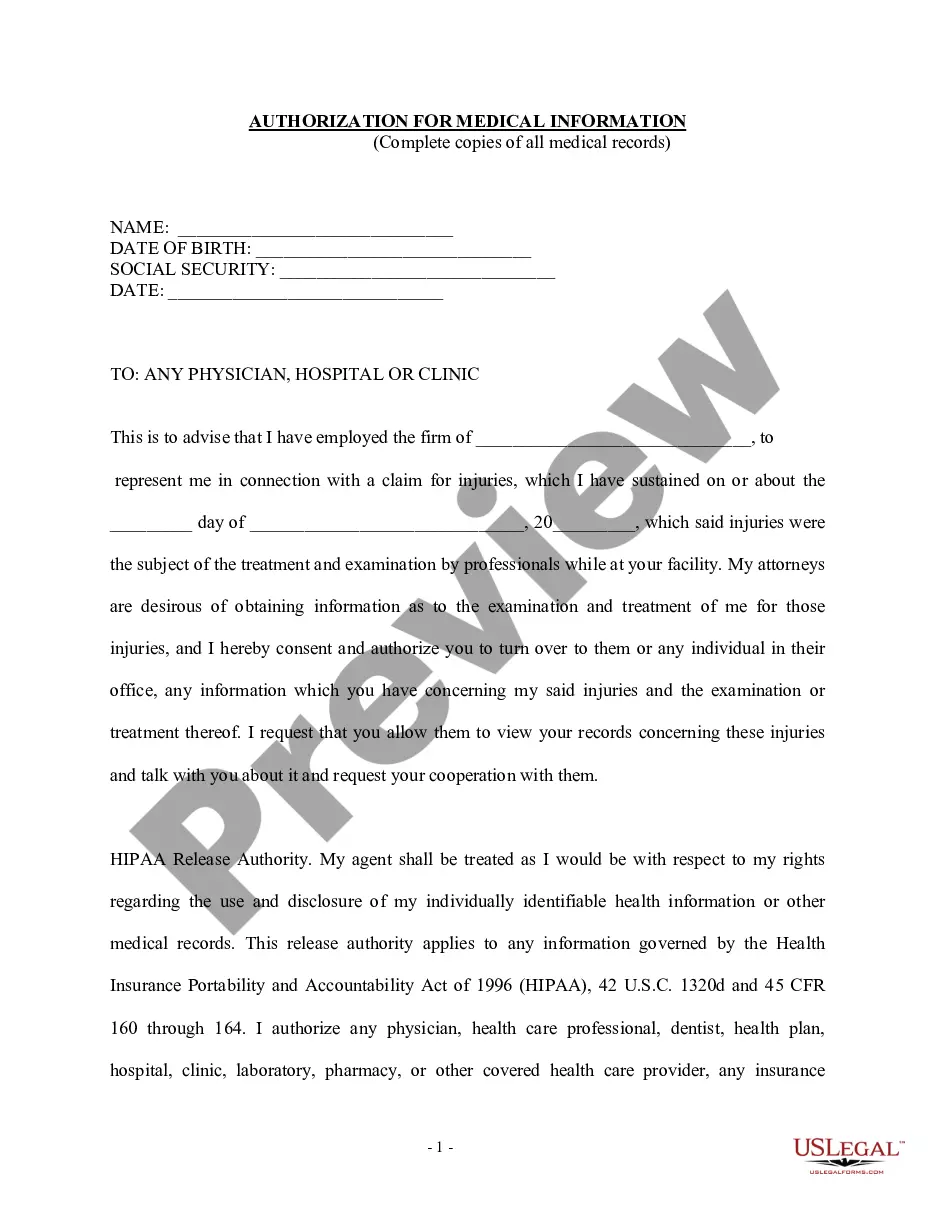
The Authorization for Wage and Employment Information with Revocation of Any Previous Authorizations is a legal document that allows an attorney to obtain specific employment-related information on behalf of a plaintiff pursuing a personal injury claim. This form authorizes the release of the plaintiff's employment records, including wages and periods of absence due to injury, while revoking any previous authorizations for the same purpose. It serves to streamline communication between the employer and the attorney to facilitate the legal process.
What’s included in this form
- Identification of the attorney representing the plaintiff.
- Details regarding the plaintiff's employment period and wages.
- Authorization for the employer to release employment records to the attorney.
- Revocation of any prior authorizations related to the release of information.
- Request for the employer's cooperation with the attorney.
When to use this document
This form is typically used when a plaintiff has sustained a personal injury and has hired an attorney to represent them in a claim. The attorney needs access to the plaintiff's wage and employment information to build a strong case, particularly when assessing damages related to lost wages or time off work due to the injury. It's important to use this form when the plaintiff wishes to ensure confidentiality and control over who can access their personal employment information.
Intended users of this form
Individuals who should consider using this form include:
- Plains who have retained an attorney for personal injury claims.
- Attorneys representing clients in personal injury cases.
- Employers responding to requests for information from attorneys.
Steps to complete this form
- Fill in the name of your attorney or law firm in the designated space.
- Specify details about your employment, including periods worked and wages earned.
- Sign and date the form to indicate your consent to release the information.
- Clearly state your revocation of any previous authorizations within the form.
- Provide the completed form to your attorney for submission to your employer.
Does this document require notarization?
This form does not typically require notarization unless specified by local law. However, having the authorization notarized can provide an additional level of validation, particularly in sensitive legal matters.
Get your form ready online
Our built-in tools help you complete, sign, share, and store your documents in one place.
Make edits, fill in missing information, and update formatting in US Legal Forms—just like you would in MS Word.
Download a copy, print it, send it by email, or mail it via USPS—whatever works best for your next step.
Sign and collect signatures with our SignNow integration. Send to multiple recipients, set reminders, and more. Go Premium to unlock E-Sign.
If this form requires notarization, complete it online through a secure video call—no need to meet a notary in person or wait for an appointment.
We protect your documents and personal data by following strict security and privacy standards.

Make edits, fill in missing information, and update formatting in US Legal Forms—just like you would in MS Word.

Download a copy, print it, send it by email, or mail it via USPS—whatever works best for your next step.

Sign and collect signatures with our SignNow integration. Send to multiple recipients, set reminders, and more. Go Premium to unlock E-Sign.

If this form requires notarization, complete it online through a secure video call—no need to meet a notary in person or wait for an appointment.

We protect your documents and personal data by following strict security and privacy standards.
Common mistakes to avoid
- Failing to include the attorney's name, which can delay the process.
- Not accurately detailing the employment duration or wage information.
- Overlooking the signature or date, which can invalidate the authorization.
Benefits of using this form online
- Convenience of immediate access from anywhere.
- Editable templates allow you to tailor the form to your specific needs.
- Reliable legal information from licensed attorneys ensures accuracy.
What to keep in mind
- This form allows attorneys to access important employment records needed for personal injury claims.
- It revokes any previous authorizations, providing clear legal boundaries for information sharing.
- Using this form ensures that all necessary details are gathered efficiently and legally.
Looking for another form?

Form popularity
FAQ
Identify yourself by yourself as accurately as possible. Introduce the person or entity to whom you wish to grant authority. Mention their name, their ID number, and how they relate to you. Specify the scope of the authority, that is the allowed actions. Specify any exclusions if any.
The authorization statement is located at the bottom of every job application, just above the signature field. It is a fully customizable field, that allows your organization to add any legal terms to which the applicant is agreeing by submitting the job application.
A signature authorization letter is a formal letter that allows a person to appoint someone else to be the signature authority for any required work on his/her behalf when unavailable.
An authorization form is a document that is duly endorsed by an individual or organisation which grants permission to another individual or organisation to proceed with certain actions.In many instances, it serves as a legal permit that validates the action being taken by such an individual or organisation.
A signature authorization letter is a formal letter that allows a person to appoint someone else to be the signature authority for any required work on his/her behalf when unavailable.
A credit card authorization form is a document, signed by a cardholder, that grants a merchant permission to charge their credit card for a period of time as written in that document.
An authorization is a detailed document that gives covered entities permission to use protected health information for specified purposes, which are generally other than treatment, payment, or health care operations, or to disclose protected health information to a third party specified by the individual.