Bill of Cost - Personal Injury
What this document covers
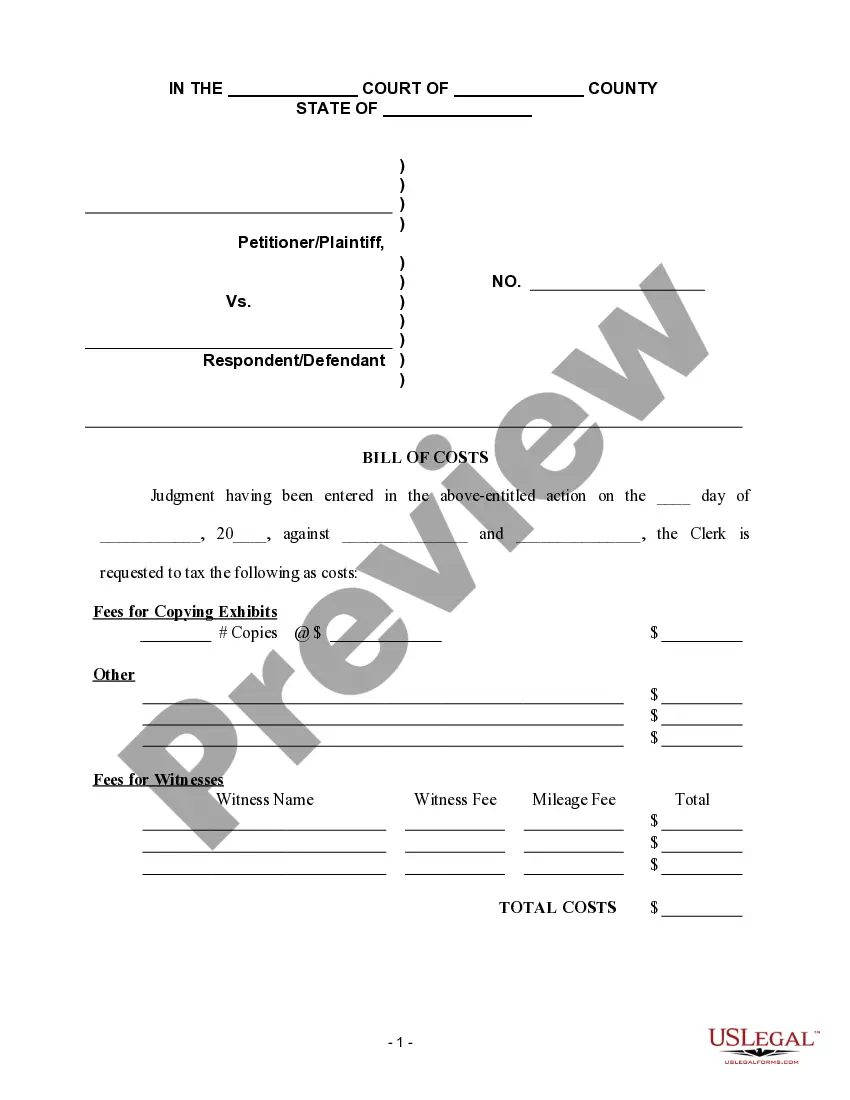
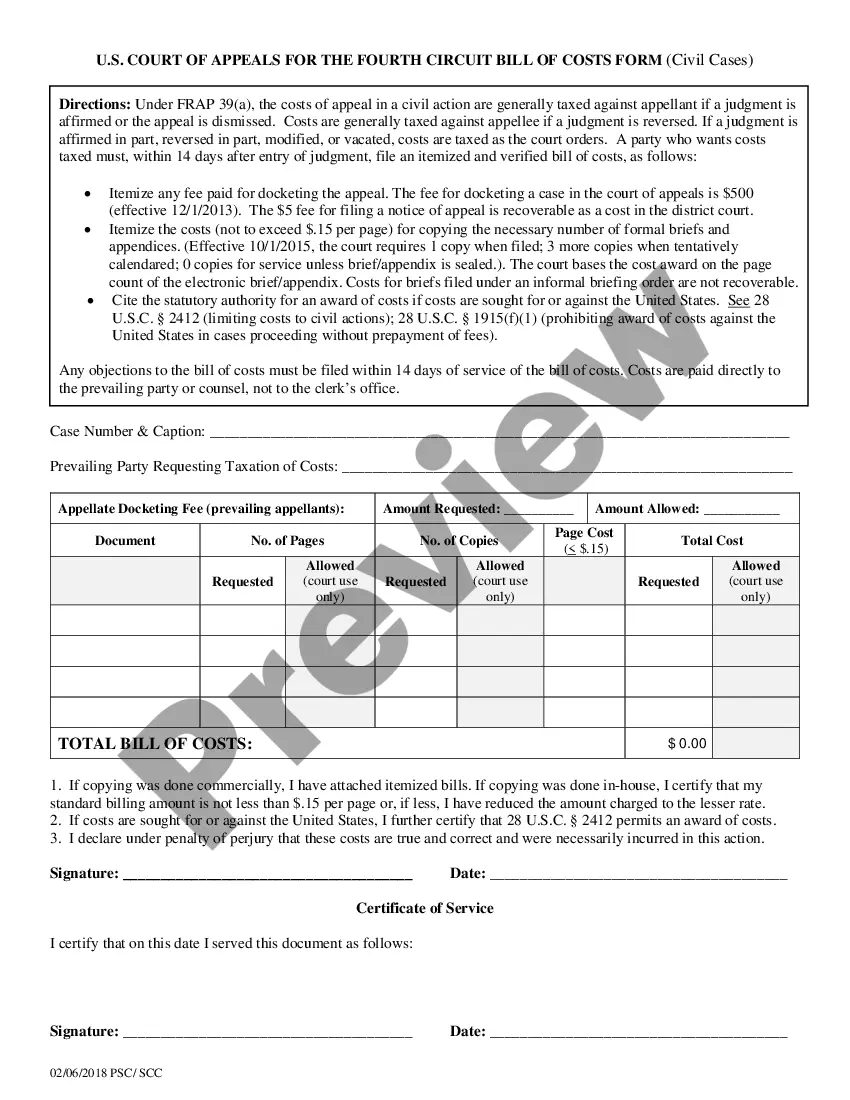
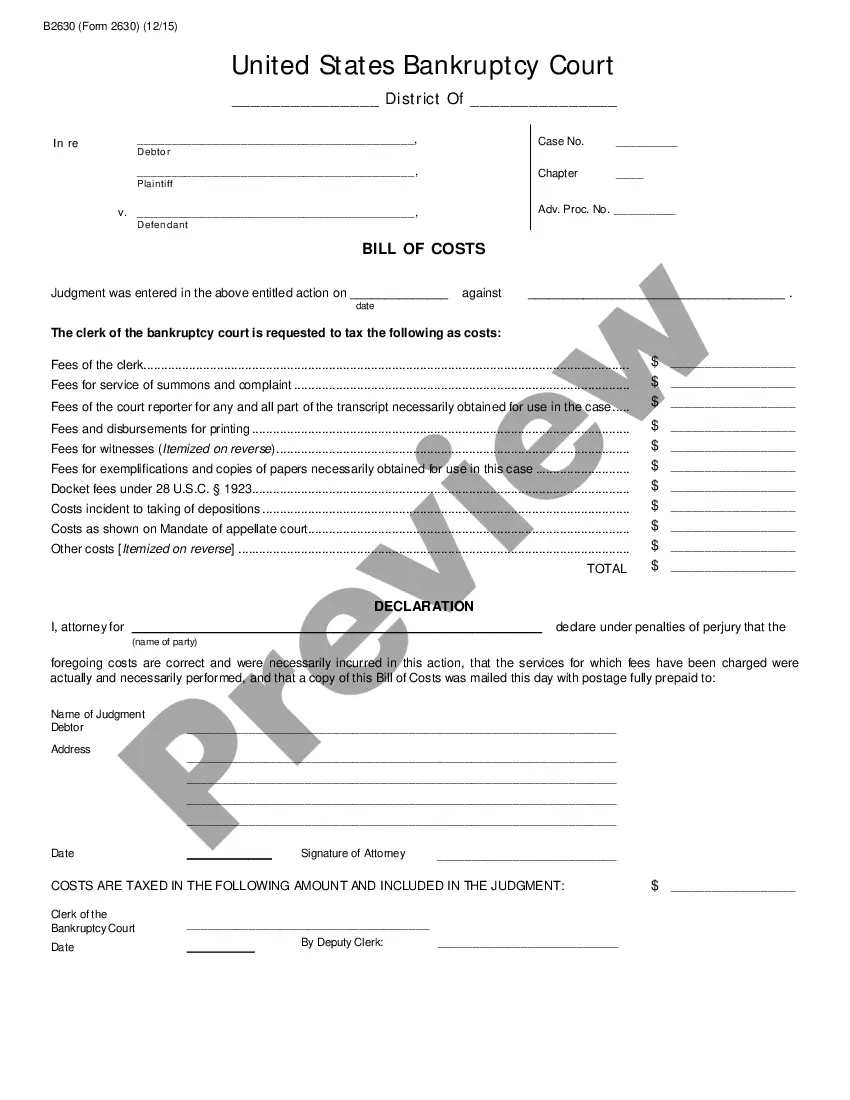
The Bill of Cost for Personal Injury is a legal document submitted to the court that outlines the expenses incurred by the defendant following a judgment in a personal injury case. This form differentiates itself from other legal documents by specifically detailing costs, such as witness fees and copying charges, associated with the defense in a personal injury action. The purpose of this form is to formally record these costs, making it clear what expenses should be accounted for in conjunction with the judgment.
What’s included in this form
- Costs for copying exhibits and other relevant documents.
- Fees for witnesses, including name, fee, and mileage expenses.
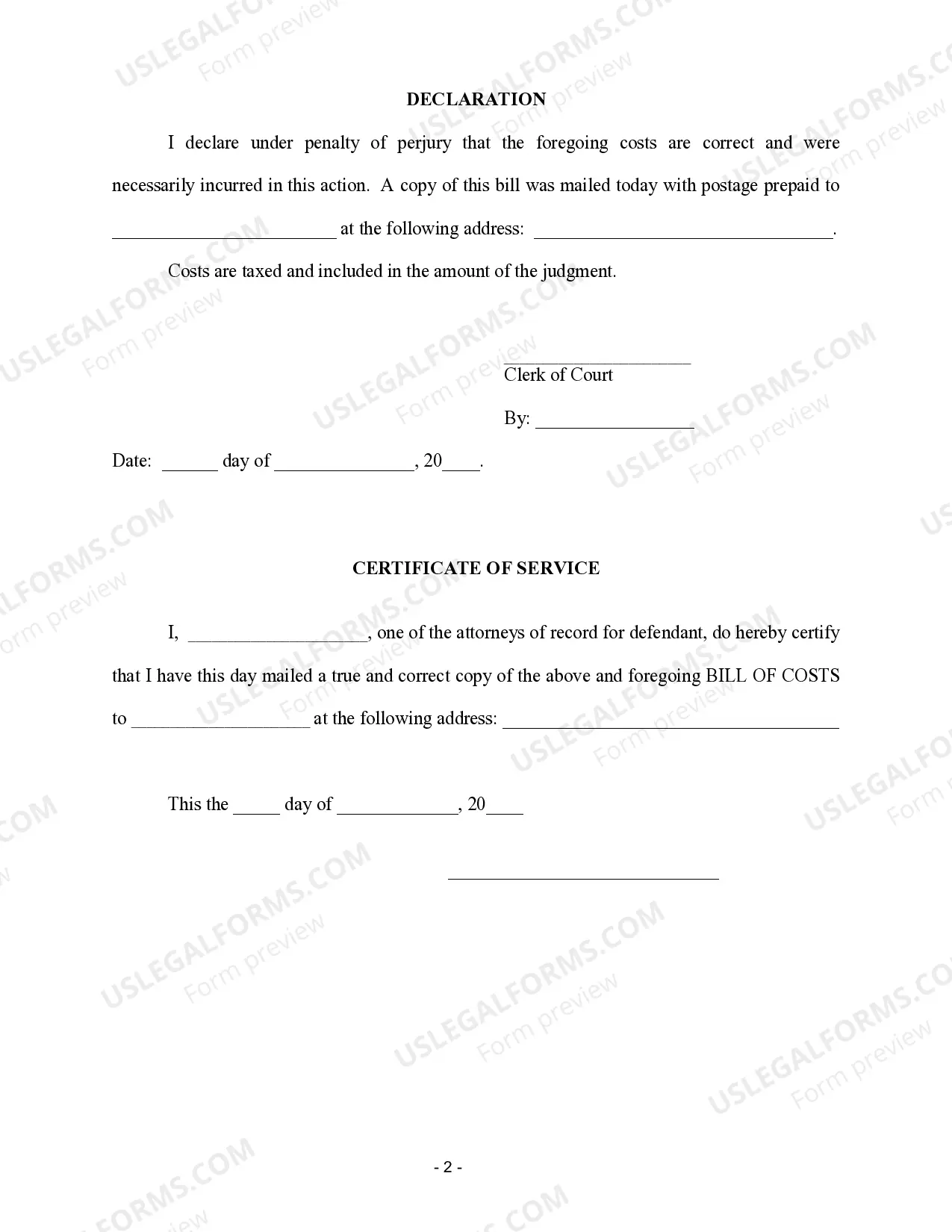
- Total costs declaration confirming the accuracy and necessity of the listed expenses.
- Clerk of court details for filing confirmation.
- Certificate of service to confirm distribution of the bill to designated parties.
Common use cases
This form should be used when a defendant in a personal injury case seeks to recover costs after a favorable judgment. It is necessary to formally document all incurred expenses related to the legal action, ensuring that these costs are part of the judgment amount. Instances may include submitting evidence of costs after a trial or during post-trial motions where the defendant aims to recover legal expenses.
Who this form is for
This form is primarily intended for:
- Defendants in personal injury actions who have received a judgment in their favor.
- Attorneys representing defendants in personal injury cases.
- Individuals seeking to formally record and recover specific expenses incurred during the litigation process.
How to prepare this document
- Identify and list all applicable costs, including fees for copying documents and witness expenses.
- Provide the total amount of costs incurred as a result of the legal action.
- Complete the declaration of correctness, affirming that the costs are accurate and necessary.
- Fill in the required information regarding service, noting the recipient's name and address.
- Sign and date the form as required for filing.
Notarization guidance
This form does not typically require notarization to be legally valid. However, some jurisdictions or document types may still require it. US Legal Forms provides secure online notarization powered by Notarize, available 24/7 for added convenience.
Get your form ready online
Our built-in tools help you complete, sign, share, and store your documents in one place.
Make edits, fill in missing information, and update formatting in US Legal Forms—just like you would in MS Word.
Download a copy, print it, send it by email, or mail it via USPS—whatever works best for your next step.
Sign and collect signatures with our SignNow integration. Send to multiple recipients, set reminders, and more. Go Premium to unlock E-Sign.
If this form requires notarization, complete it online through a secure video call—no need to meet a notary in person or wait for an appointment.
We protect your documents and personal data by following strict security and privacy standards.

Make edits, fill in missing information, and update formatting in US Legal Forms—just like you would in MS Word.

Download a copy, print it, send it by email, or mail it via USPS—whatever works best for your next step.

Sign and collect signatures with our SignNow integration. Send to multiple recipients, set reminders, and more. Go Premium to unlock E-Sign.

If this form requires notarization, complete it online through a secure video call—no need to meet a notary in person or wait for an appointment.

We protect your documents and personal data by following strict security and privacy standards.
Common mistakes
- Failing to accurately list all incurred costs.
- Omitting essential signatures or dates on the form.
- Not providing sufficient details for witness expenses.
- Neglecting to send a copy to the opposing party or the court.
Benefits of using this form online
- Convenience of completing the form at any time from any location.
- Editability allows for corrections and updates before final submission.
- Access to templates can save time and ensure compliance with legal standards.
- Instant access to legal form support if needed during the completion process.
Looking for another form?








Form popularity
FAQ
How Much Compensation Is Typical in Personal Injury Cases? More than half of our readers received payouts ranging from just $3,000 to $25,000. But another 26% of readers received over $25,000, making the overall average $52,900.
A general rule is 75% to 100% higher than what you would actually be satisfied with. For example, if you think your claim is worth between $1,500 and $2,000, make your first demand for $3,000 or $4,000. If you think your claim is worth $4,000 to $5,000, make your first demand for $8,000 or $10,000.
Contingency Fee Percentages In the majority of cases, a personal injury lawyer will receive 33 percent (or one third) of any settlement or award. For example, if you receive a settlement offer of $30,000 from the at fault party's insurance company, you will receive $20,000 and your lawyer will receive $10,000.
On the low end, an injury case might settle for only a few thousand dollars. But many personal injury cases settle for much more. An average personal injury settlement amount is anywhere between $3,000 and $75,000.
This means that if you are successful in your personal injury claim case, the defendant has to pay all or most of your legal expenses in addition to your personal injury compensation award. The defendant will pay for the solicitors' professional fees, engineer's fees, medical report fees and other expert report fees.
Depending on what part of the country the case is in, and the attorney's experience and level of expertise, a standard rate for a personal injury lawyer might range from $150 to $400 per hour. Since a trial can take upwards of 50 or 60 hours -- sometimes significantly upwards!