Notice to Take Deposition Subpoena Duces Tecum
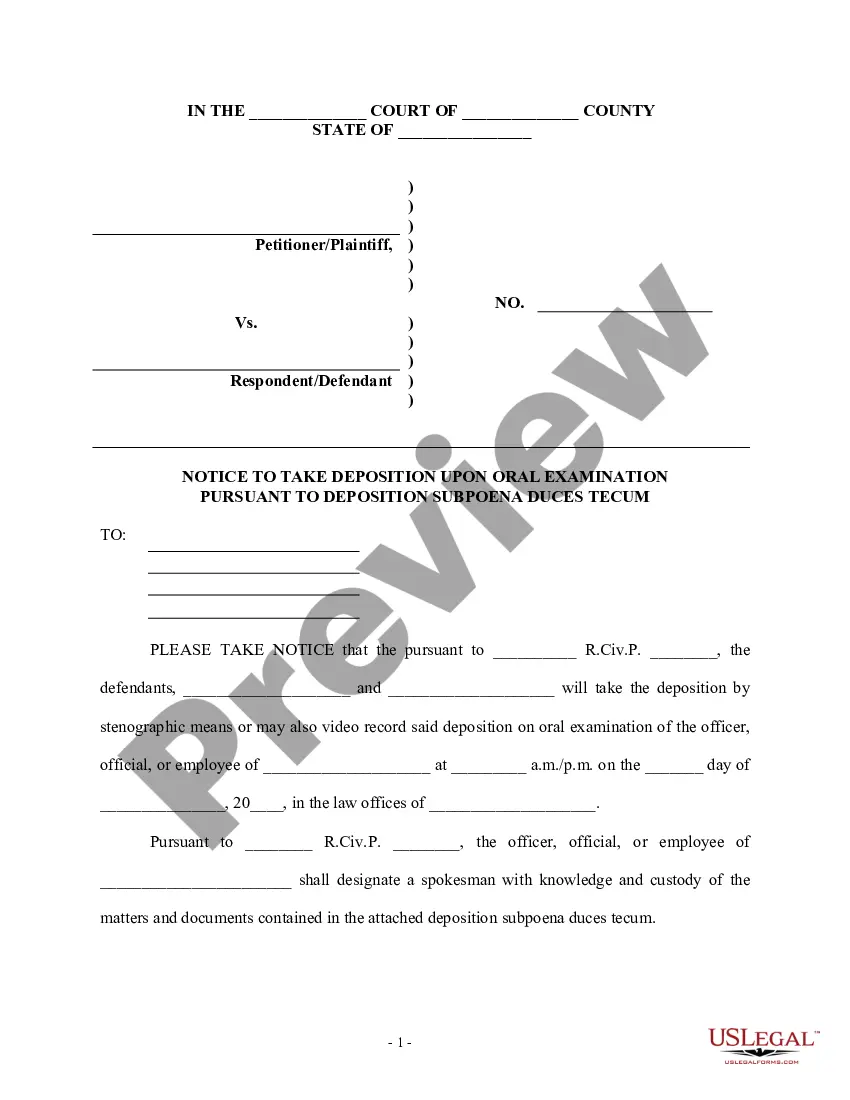
About this form
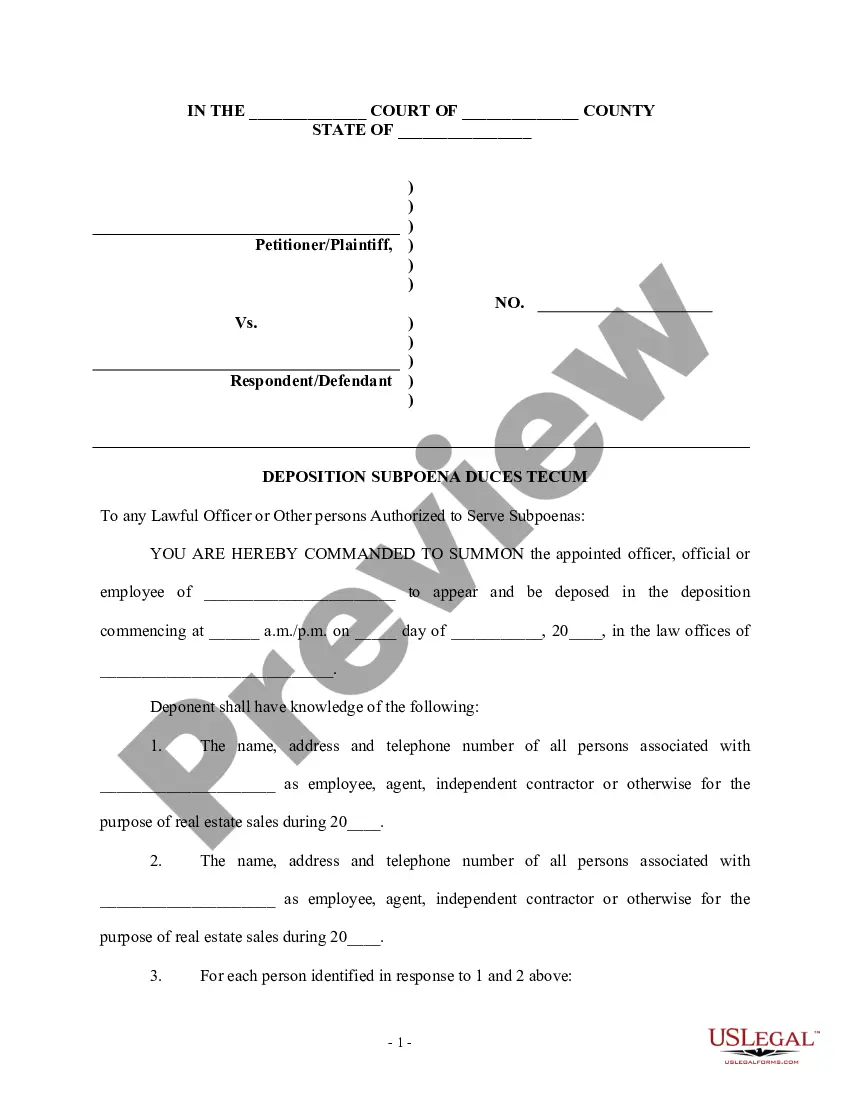
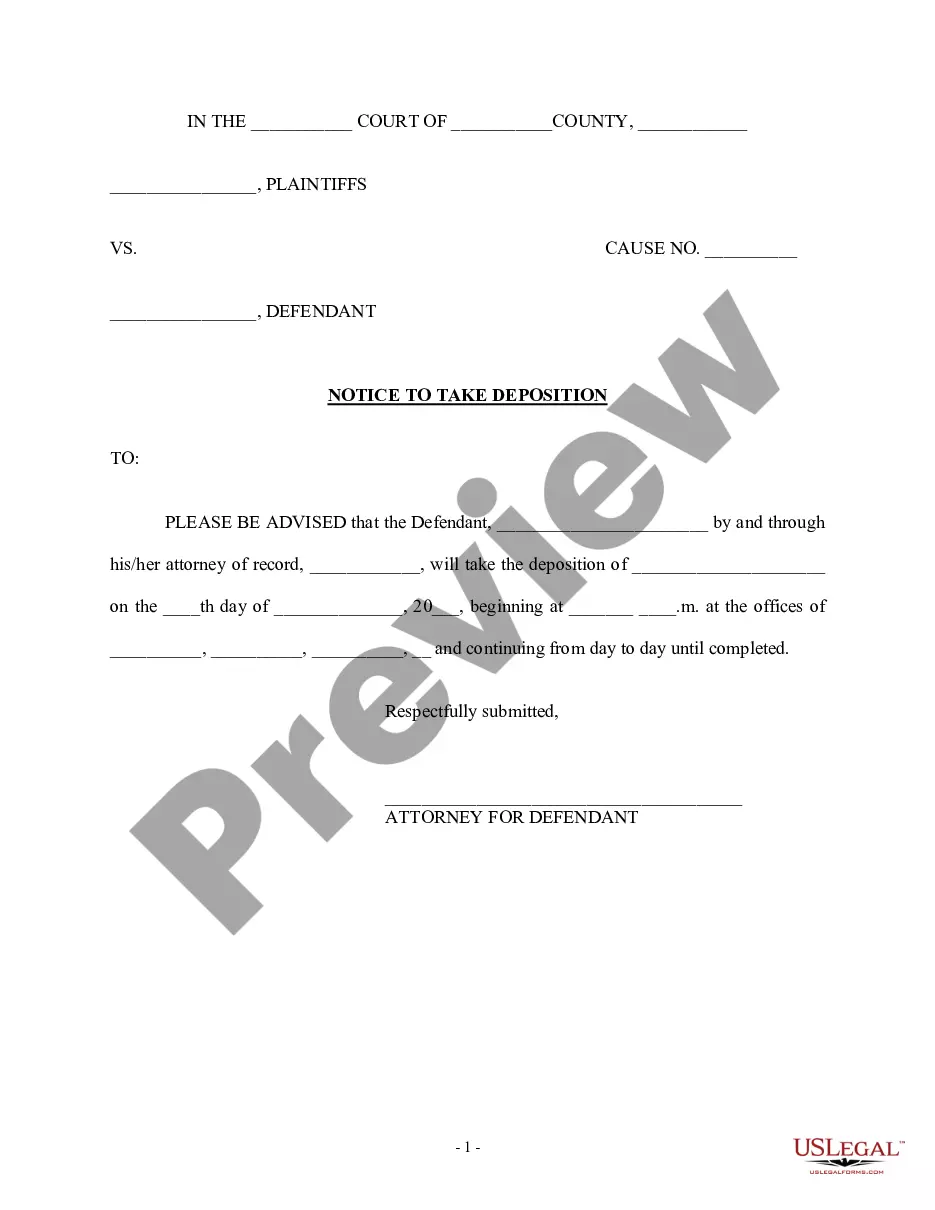
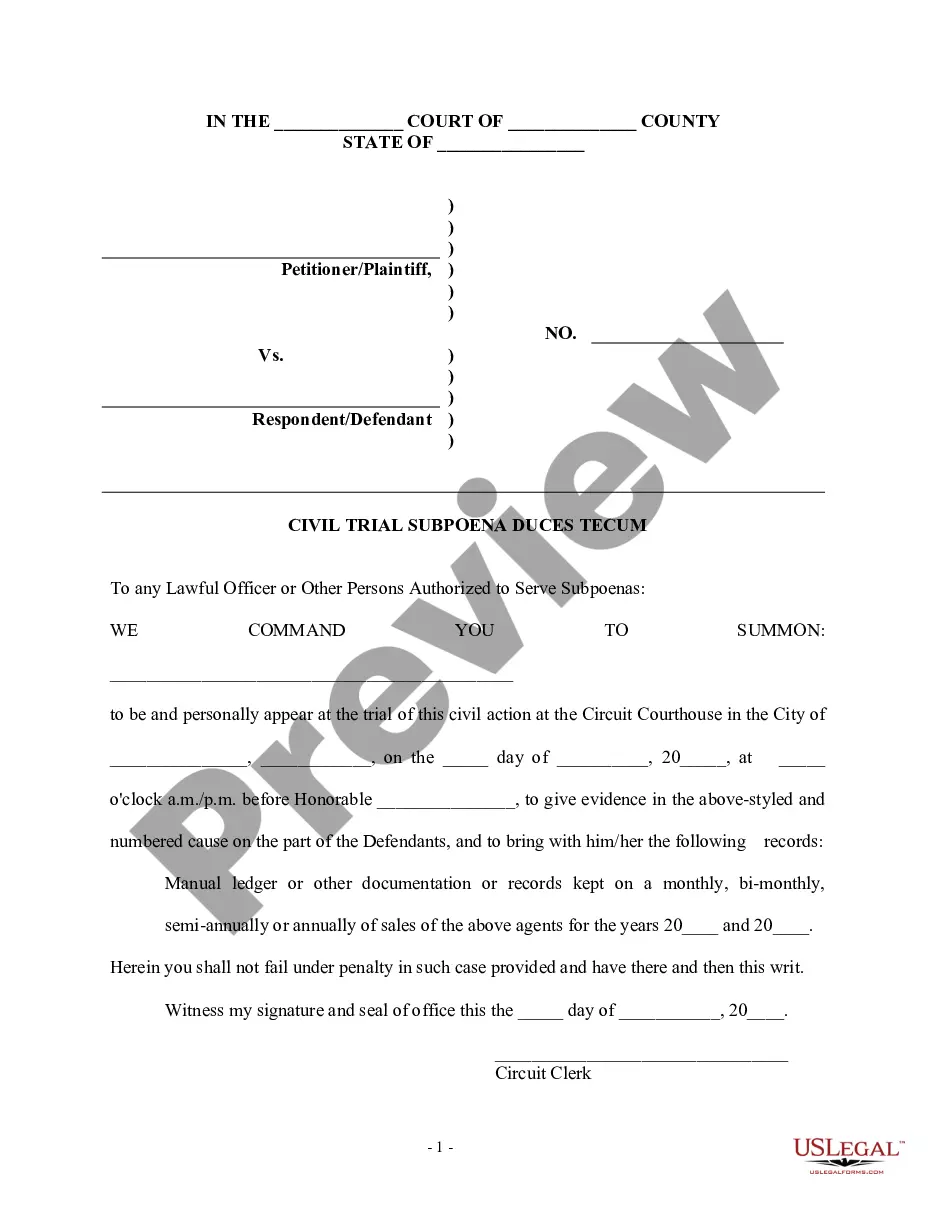
The Notice to Take Deposition Subpoena Duces Tecum is a legal document issued by the defendant to notify a party about an upcoming deposition. This form specifically allows the requesting party to obtain documents and information relevant to the case during the deposition. Unlike other deposition notices, this subpoena also requires the deponent to bring specific materials to the session.
Main sections of this form
- Designation of a spokesman with knowledge of the requested documents.
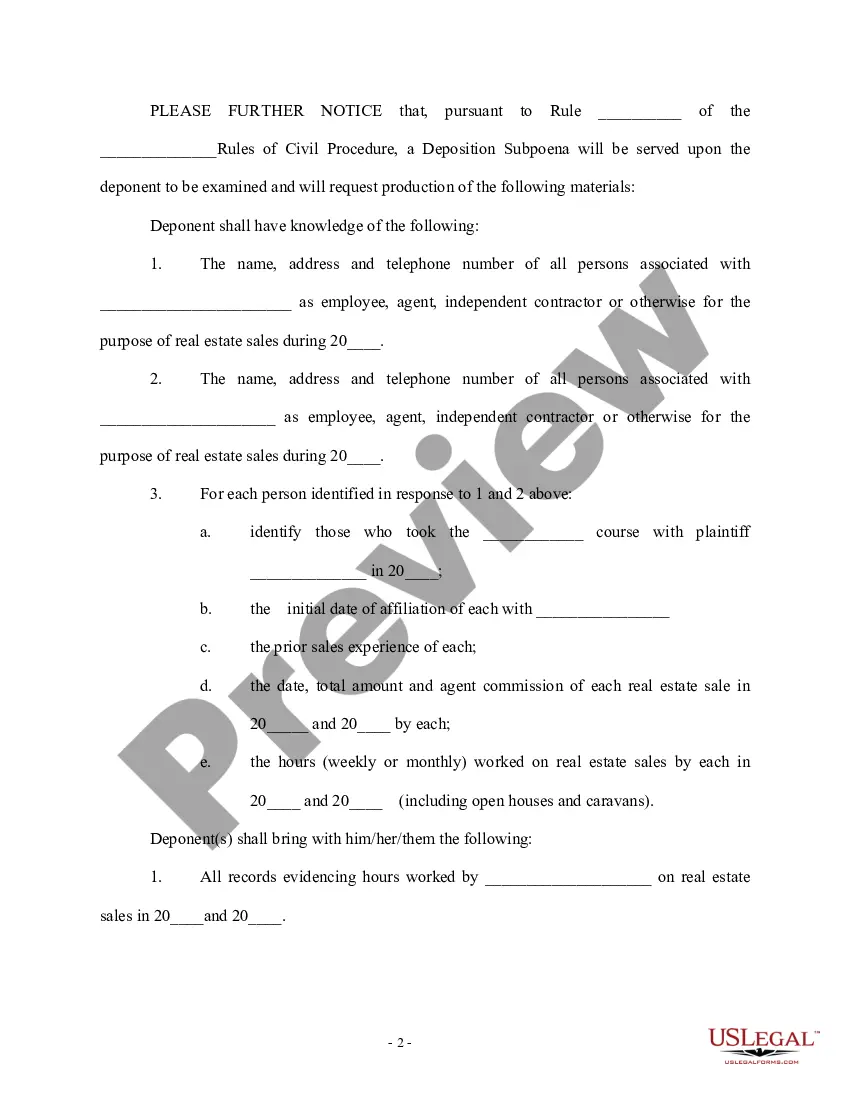
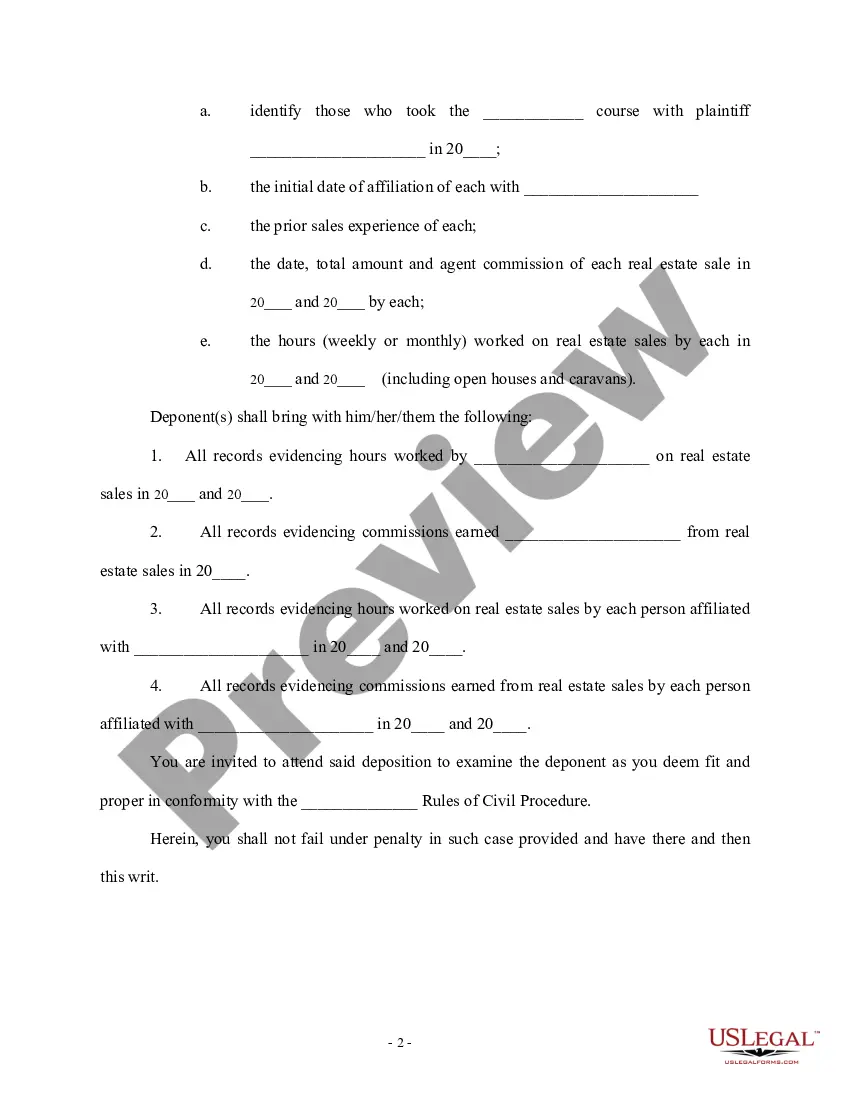
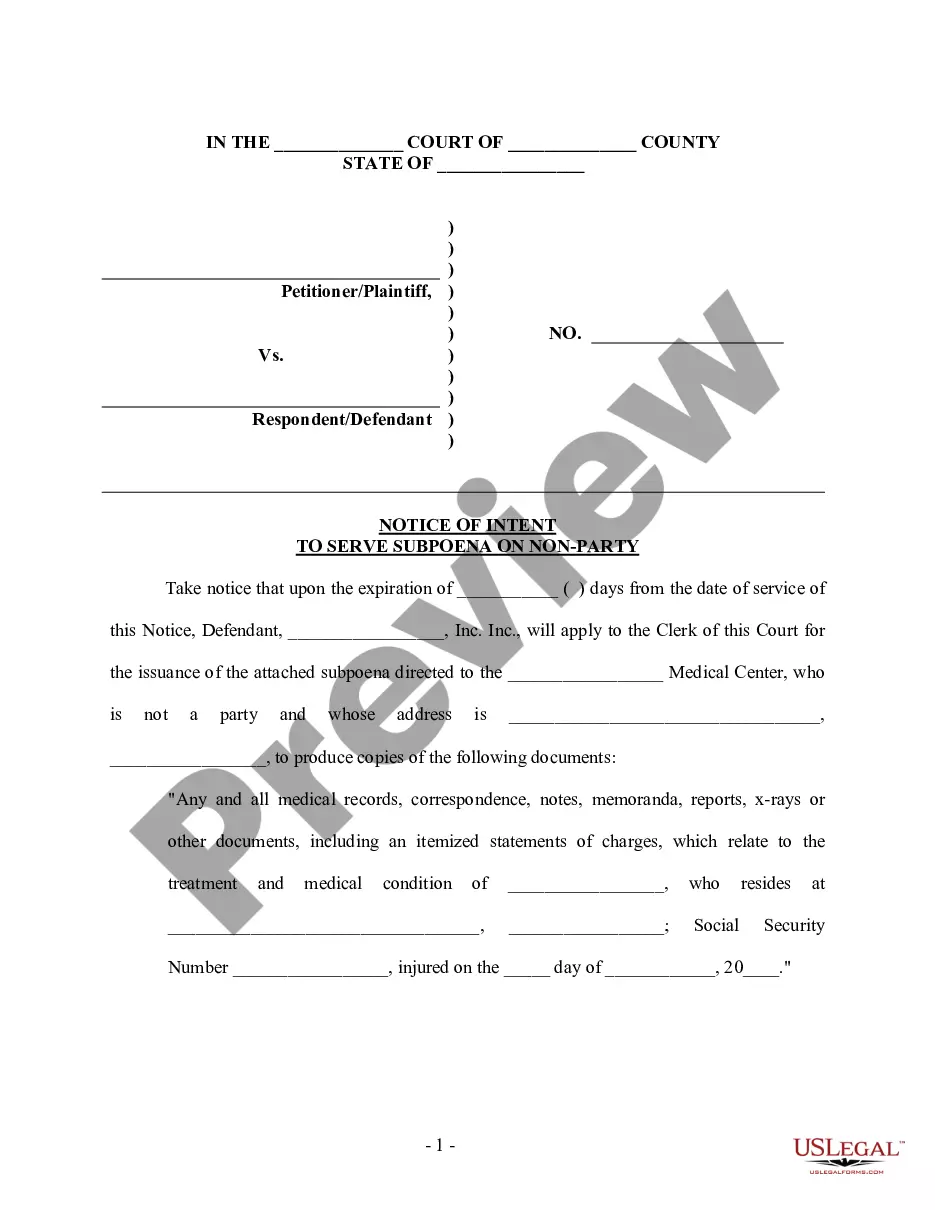
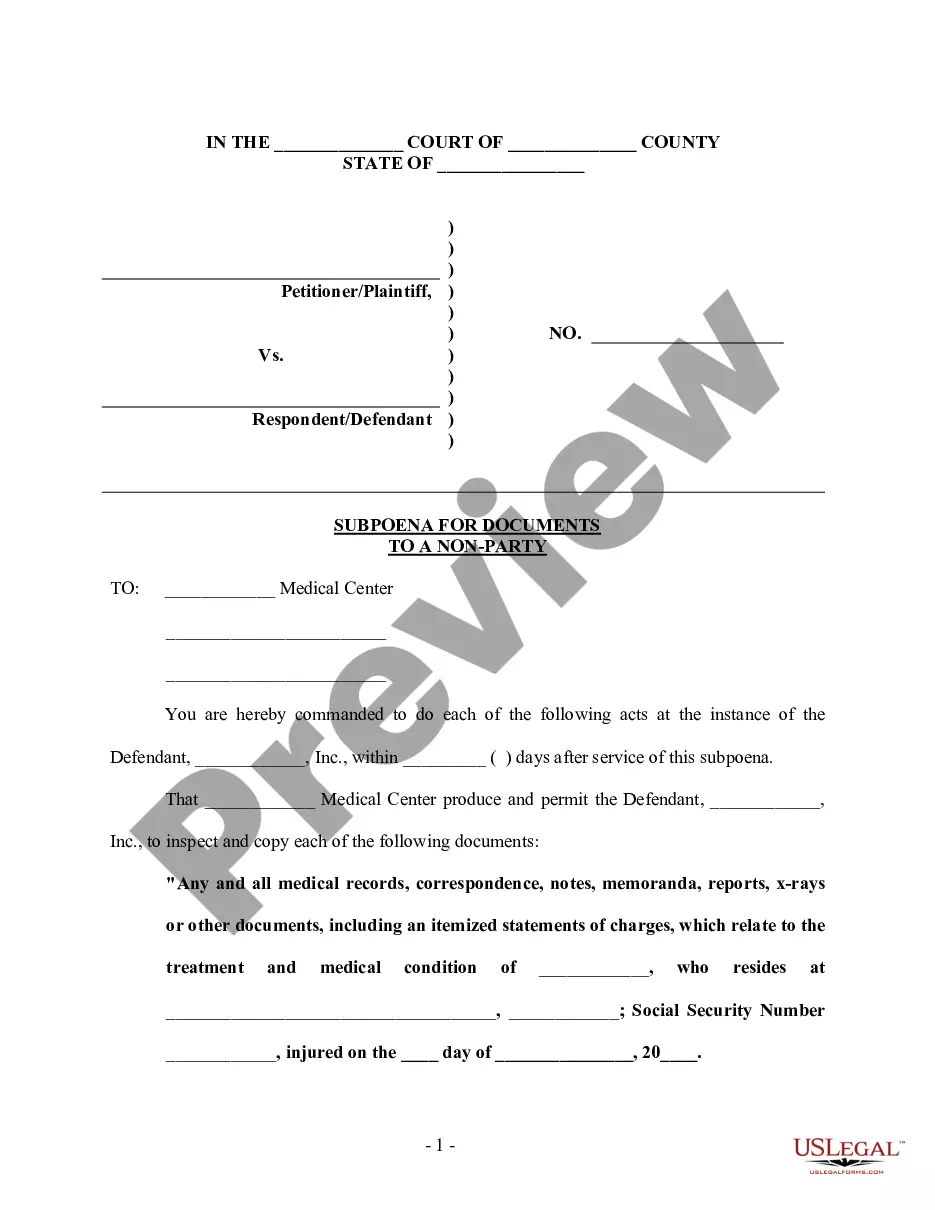
- Details of the documents and matters to be discussed during the deposition.
- Information about individuals associated with the entity in question.
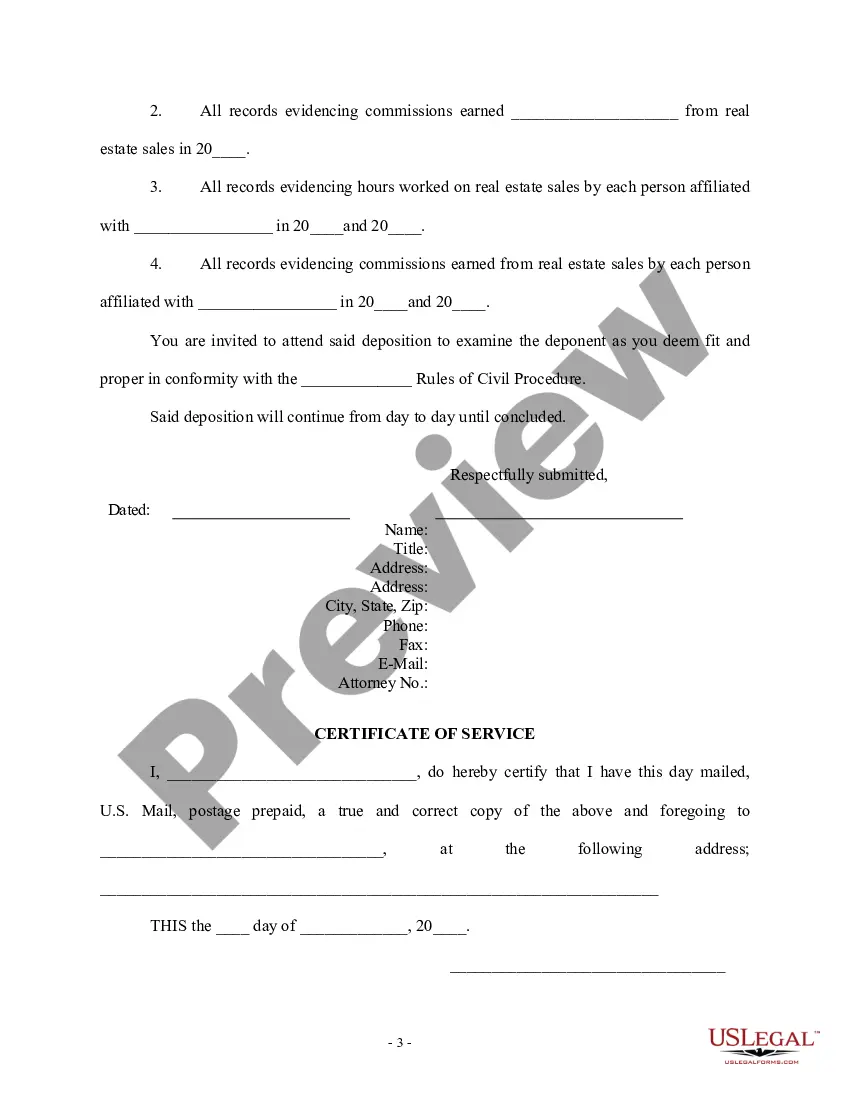
- Requirements for the deponent to produce specific records regarding real estate sales.
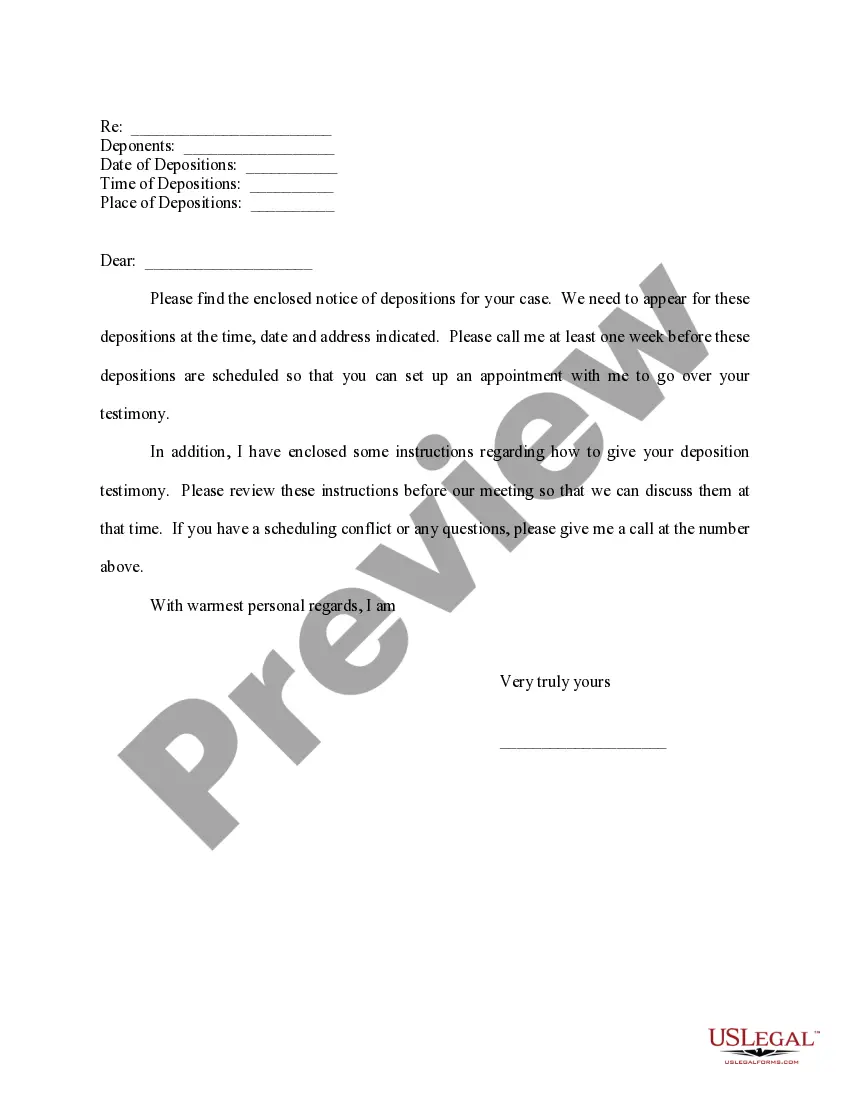
- Instructions on the deposition date, time, and location.
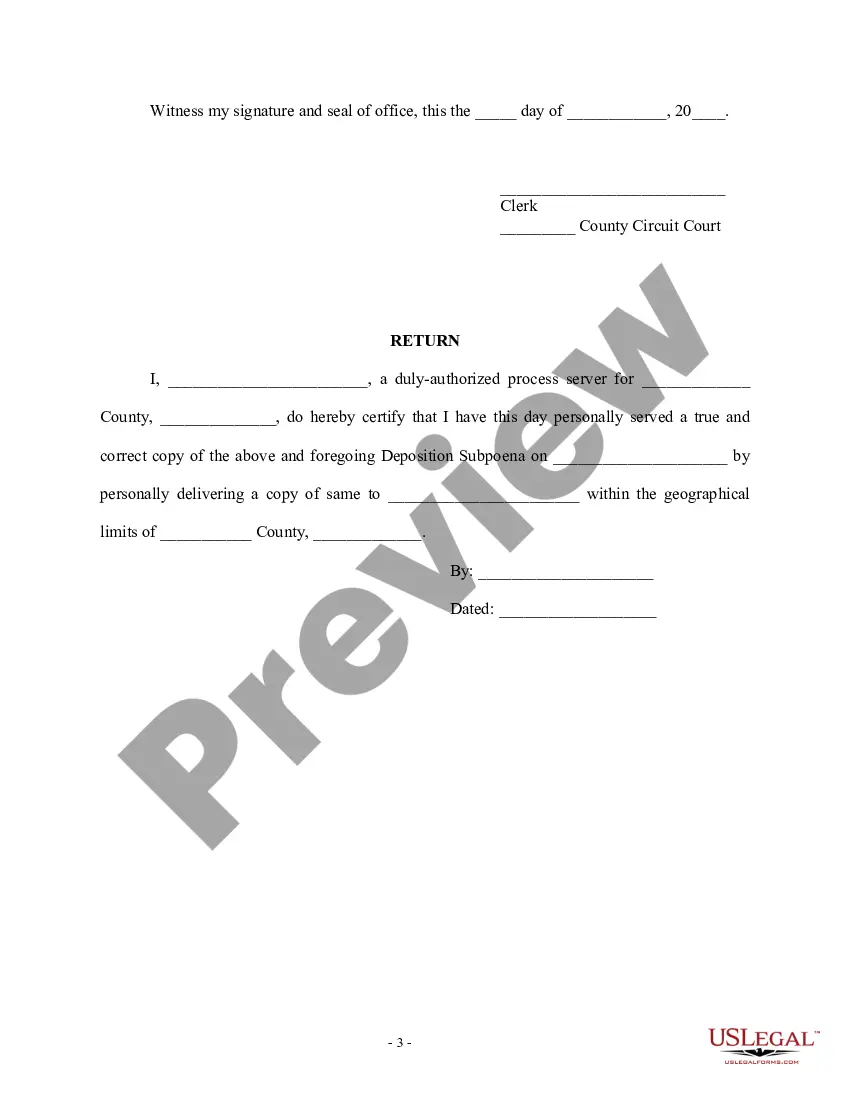
- Signatory lines for the issuing authority and process server.
Situations where this form applies
This form is used when a party involved in litigation needs to conduct a deposition and requires specific documents related to the case. It is essential in scenarios where the availability of particular records, such as sales history or commissions, is crucial for presenting evidence in court. This form is particularly relevant in real estate cases or other legal matters where documentation of transactions or activities is necessary.
Who this form is for
This form is intended for:
- Defendants in legal proceedings requiring depositions.
- Attorneys representing clients in civil litigation.
- Parties seeking relevant documents and testimony from witnesses.
- Individuals or businesses involved in real estate legal issues.
Instructions for completing this form
- Enter the applicable rule number from the Rules of Civil Procedure.
- Designate the official or employee responsible for providing the requested information.
- List the materials and records that the deponent must bring to the deposition.
- Specify the name, address, and contact information of individuals involved in real estate transactions.
- Fill in details regarding the deposition date, time, and location.
- Sign and date the document before serving it to the deponent.
Notarization guidance
This form does not typically require notarization to be legally valid. However, some jurisdictions or document types may still require it. US Legal Forms provides secure online notarization powered by Notarize, available 24/7 for added convenience.
Get your form ready online
Our built-in tools help you complete, sign, share, and store your documents in one place.
Make edits, fill in missing information, and update formatting in US Legal Forms—just like you would in MS Word.
Download a copy, print it, send it by email, or mail it via USPS—whatever works best for your next step.
Sign and collect signatures with our SignNow integration. Send to multiple recipients, set reminders, and more. Go Premium to unlock E-Sign.
If this form requires notarization, complete it online through a secure video call—no need to meet a notary in person or wait for an appointment.
We protect your documents and personal data by following strict security and privacy standards.

Make edits, fill in missing information, and update formatting in US Legal Forms—just like you would in MS Word.

Download a copy, print it, send it by email, or mail it via USPS—whatever works best for your next step.

Sign and collect signatures with our SignNow integration. Send to multiple recipients, set reminders, and more. Go Premium to unlock E-Sign.

If this form requires notarization, complete it online through a secure video call—no need to meet a notary in person or wait for an appointment.

We protect your documents and personal data by following strict security and privacy standards.
Avoid these common issues
- Failing to specify all required documents and information in the subpoena.
- Not properly designating a spokesman with authority.
- Omitting essential details about the deposition location and time.
- Not following state-specific rules when completing the form.
- Neglecting to sign the form before delivery.
Advantages of online completion
- Convenient access to legal templates drafted by licensed attorneys.
- Editable forms to tailor content to your specific case needs.
- Time-saving with easy downloads and instant preparation.
- Reliable and up-to-date forms comply with current legal standards.
Legal use & context
- Deposition subpoenas should be precise in their requests to ensure compliance.
- Using this form correctly enhances the enforceability of the deposition process.
- Consult with legal counsel to understand your rights and obligations when issuing a subpoena.
Quick recap
- The Notice to Take Deposition Subpoena Duces Tecum is crucial for obtaining evidence in litigation.
- Correctly completing the form is vital for a successful deposition.
- Always check state-specific regulations when using this form.
Looking for another form?


Form popularity
FAQ
The Notice to Take Deposition Subpoena Duces Tecum is a civil‑action document that both notices a deposition and requires the production of specified documents at the session. It designates a spokesman with knowledge of the requested documents, sets out the documents and topics for discussion (including records about real estate sales), and provides the deposition date, time, location, and signatories.
A subpoena duces tecum for deposition is a command that accompanies the deposition notice and requires the deponent to bring specified documents to the session. In this form, it identifies the documents and matters for discussion and specifies when and where the deposition occurs, along with the necessary signatures.
It means the notice not only informs about the deposition but also includes a requirement to produce documents during the session. The form ties the deposition to a specific documents production plan, naming what records must be brought and discussed, and confirms the date, time, location, and responsible signatories.
A subpoena is a formal order to appear or to produce documents, while a notice of deposition simply informs parties a deposition will occur. This form combines both functions, serving as a deposition notice and as a subpoena duces tecum that requires the deponent to bring specific records.
A subpoena commands appearance, while a subpoena duces tecum also requires the production of documents. This form uses a subpoena duces tecum with a deposition notice, so it both schedules the deposition and specifies materials the deponent must bring.
The key difference is the duces tecum requirement: it compounds the deposition with a production obligation for particular documents at the session (for example, real estate records), and it includes a designated spokesman, explicit production details, a date/time, location, and signatories.