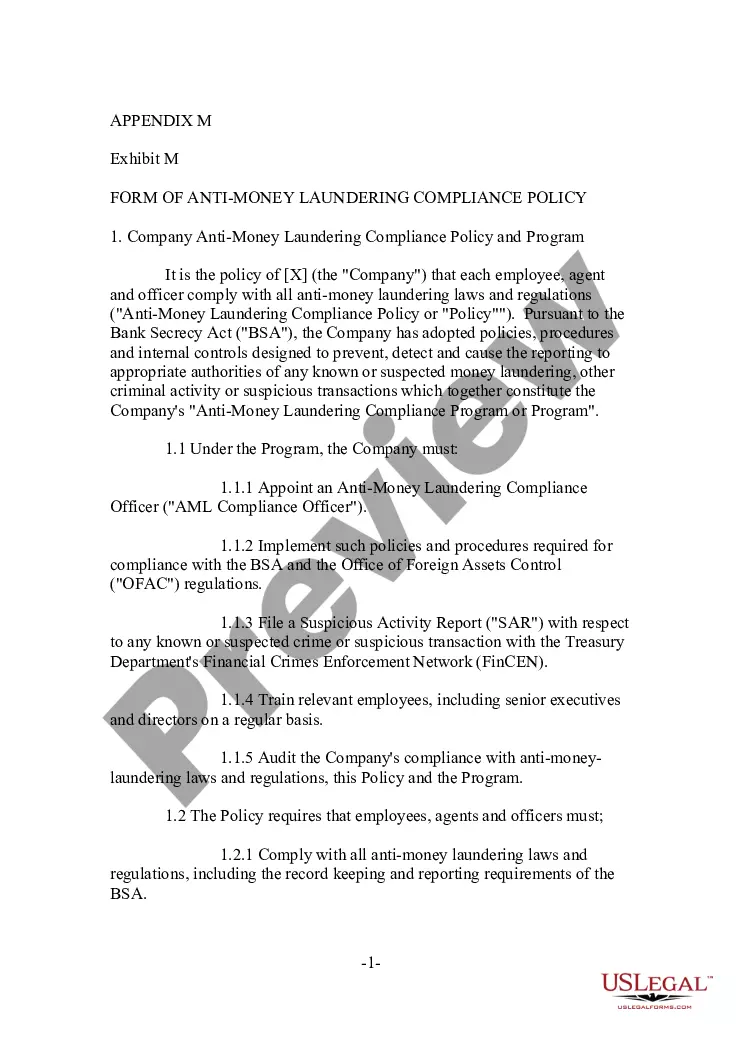
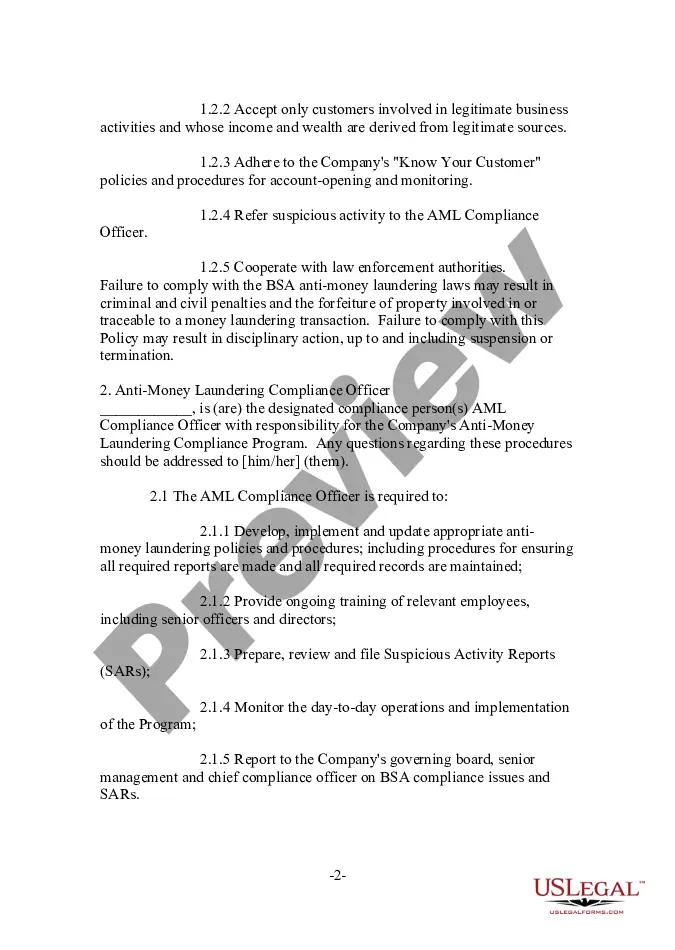
Form of Anti-Money Laundering Compliance Policy
Overview of this form
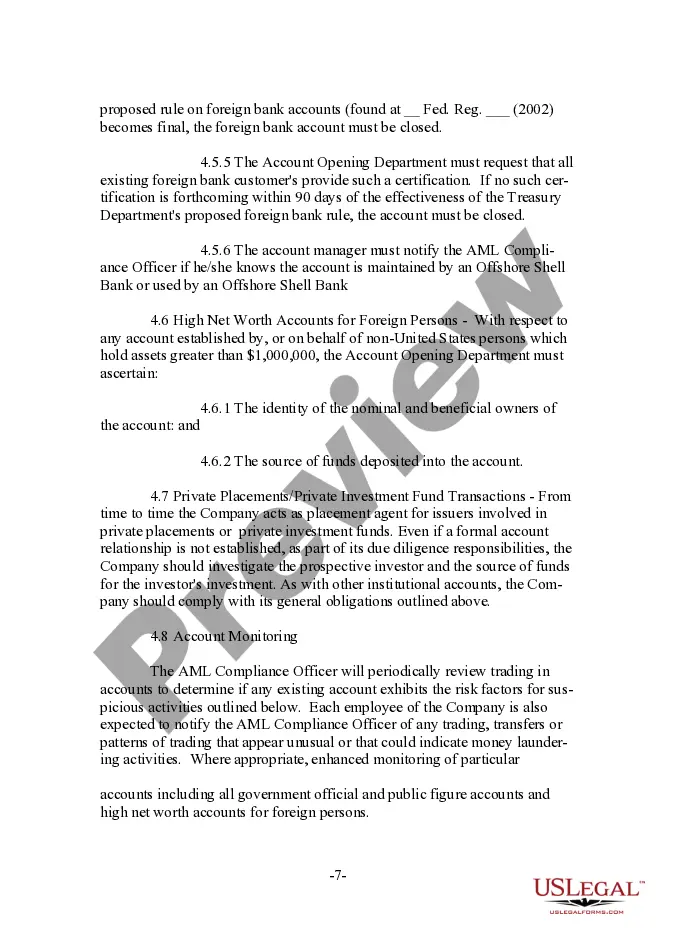
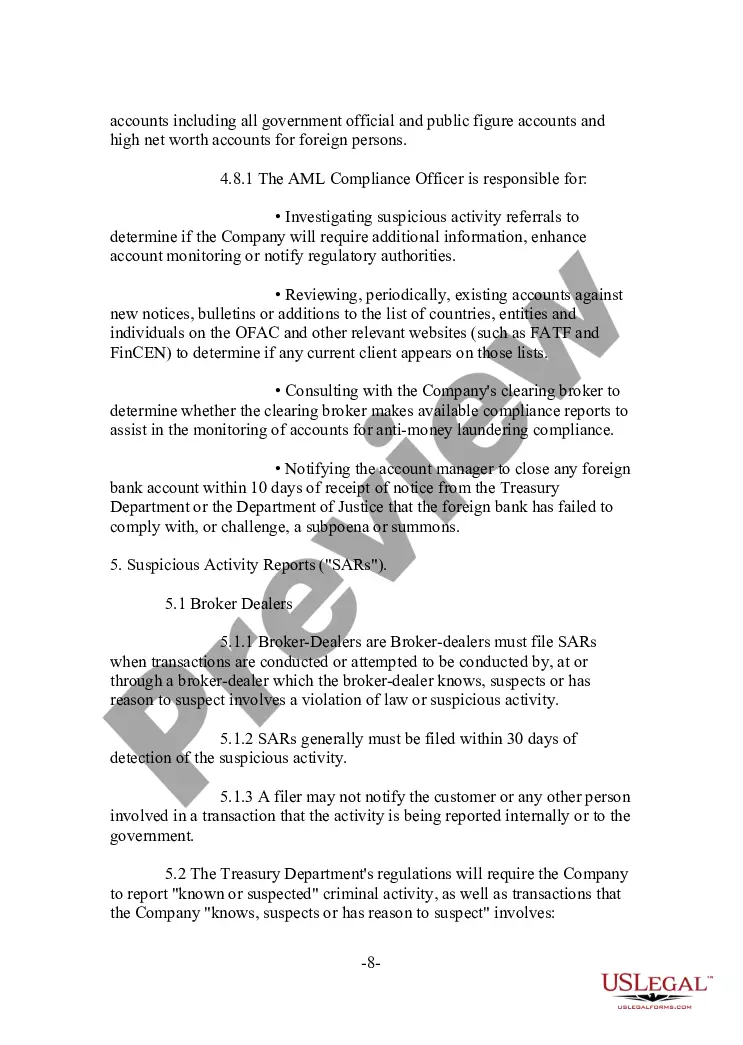
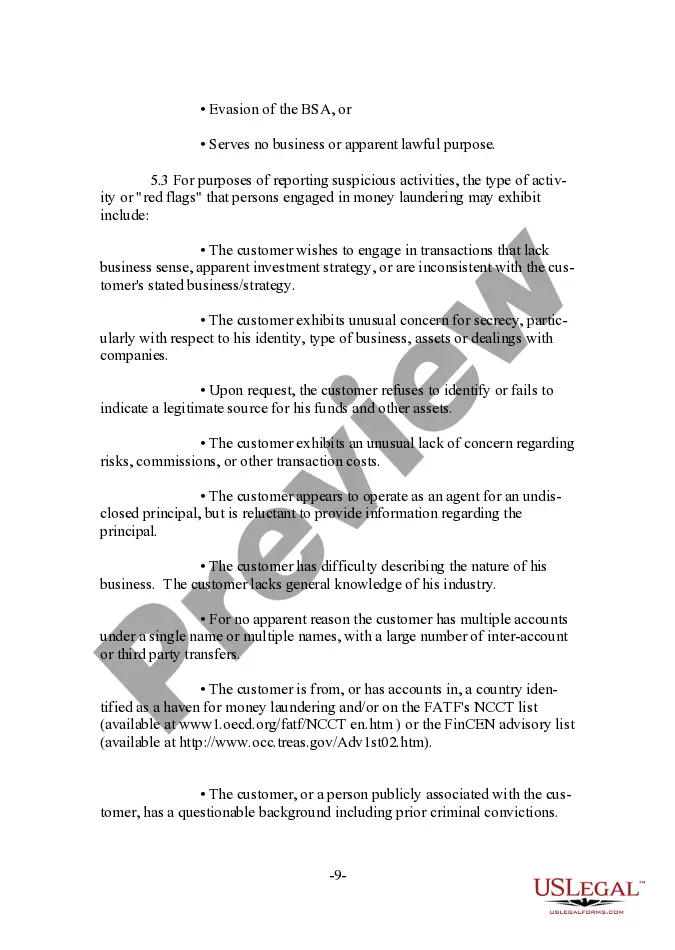
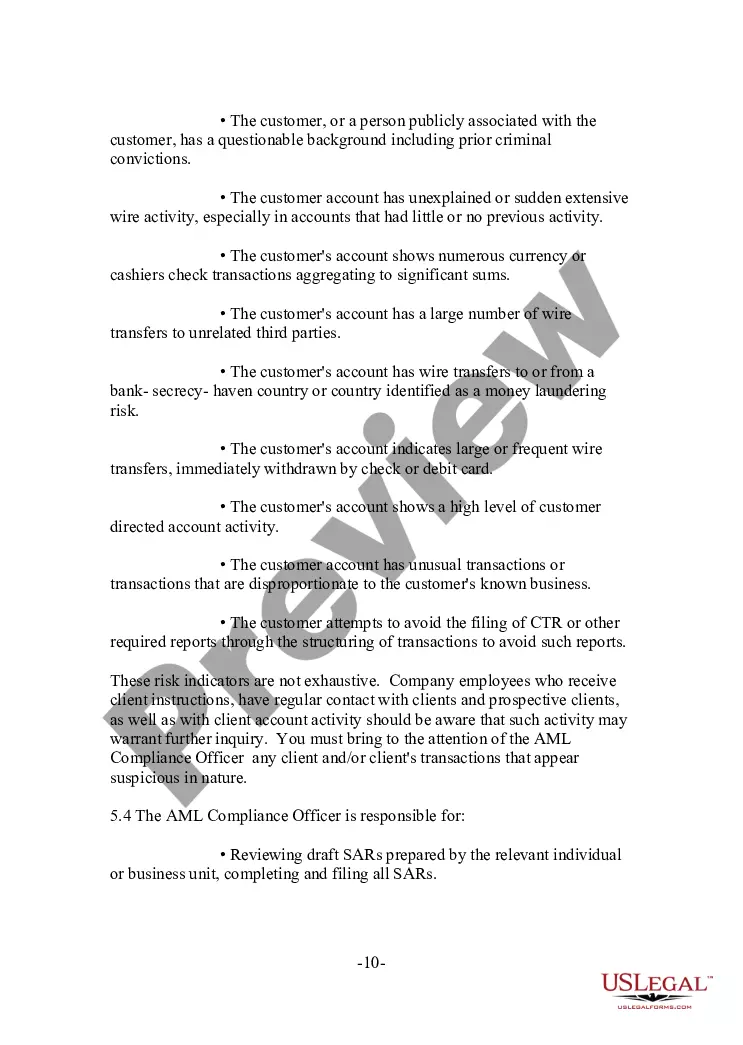
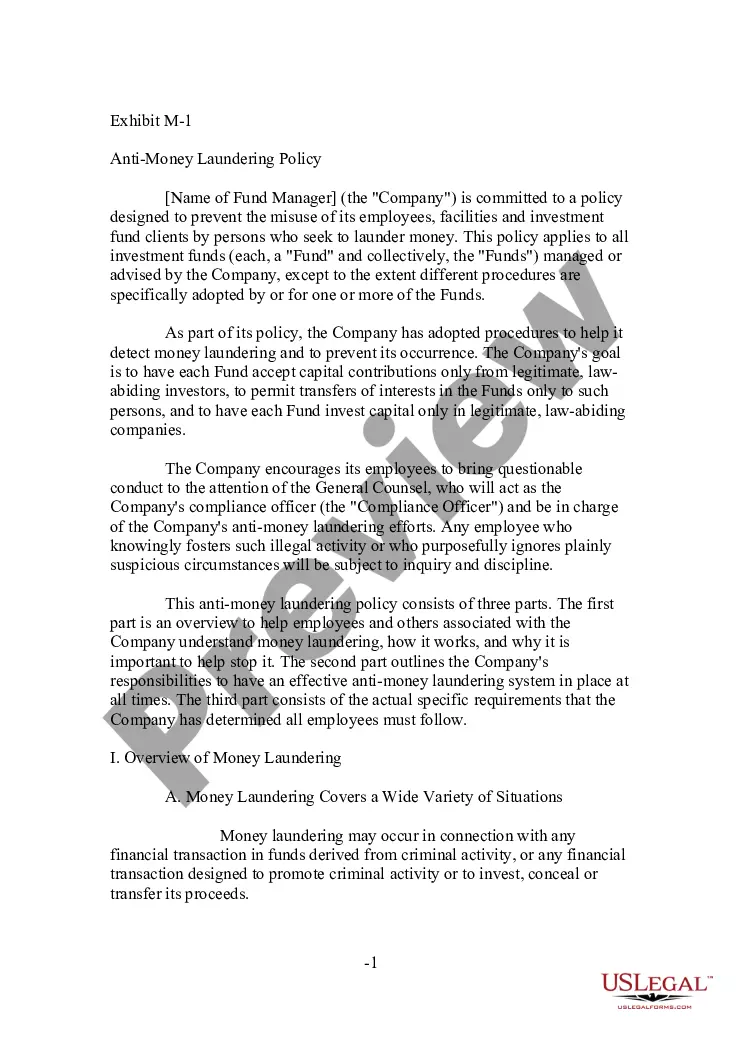
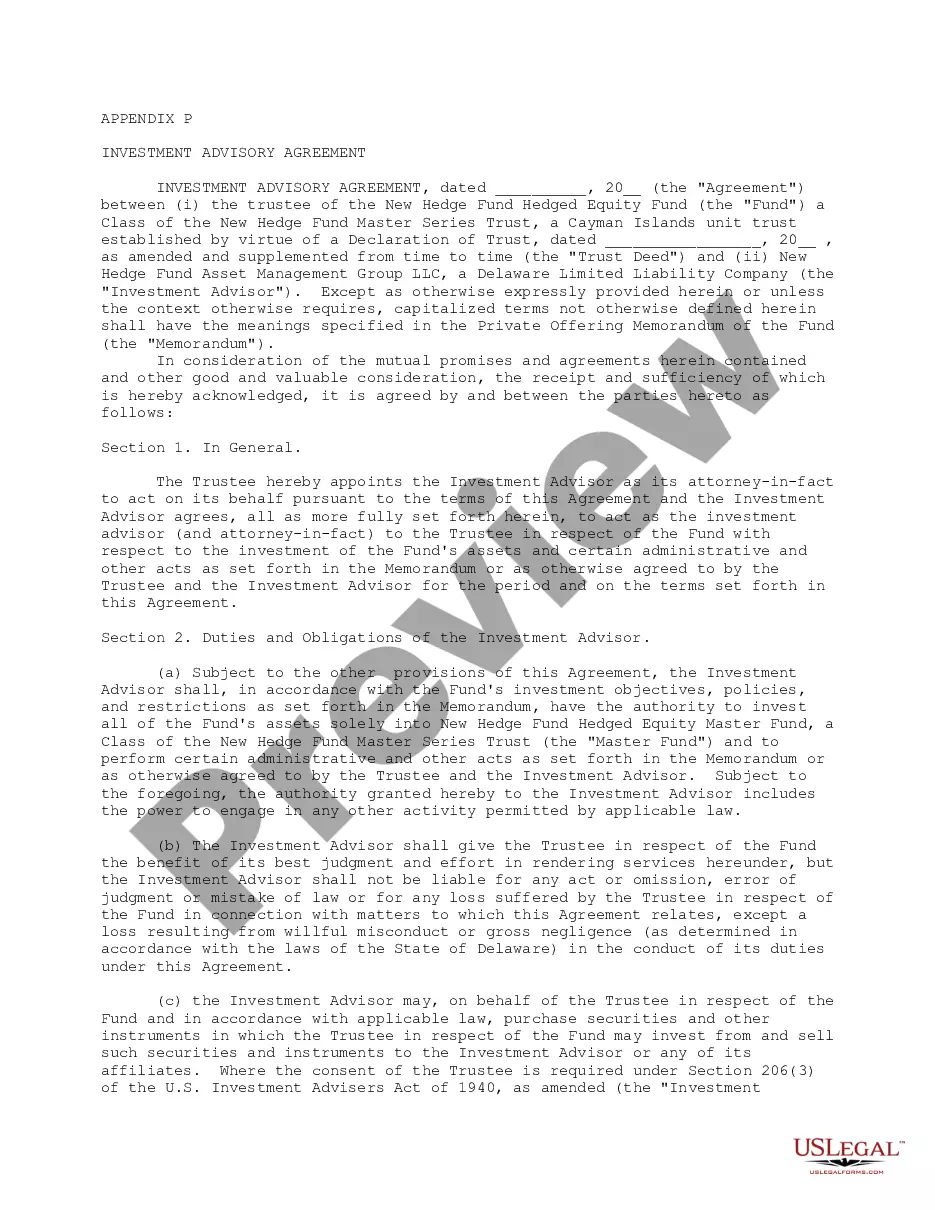
The Form of Anti-Money Laundering Compliance Policy is a standard document created for private equity companies to outline their policies regarding anti-money laundering (AML) laws and regulations. This policy is designed to help organizations establish a comprehensive compliance program that detects and prevents money laundering and related criminal activities. By implementing this form, companies ensure they adhere to the Bank Secrecy Act and maintain a proactive stance against potential financial crimes.
What’s included in this form
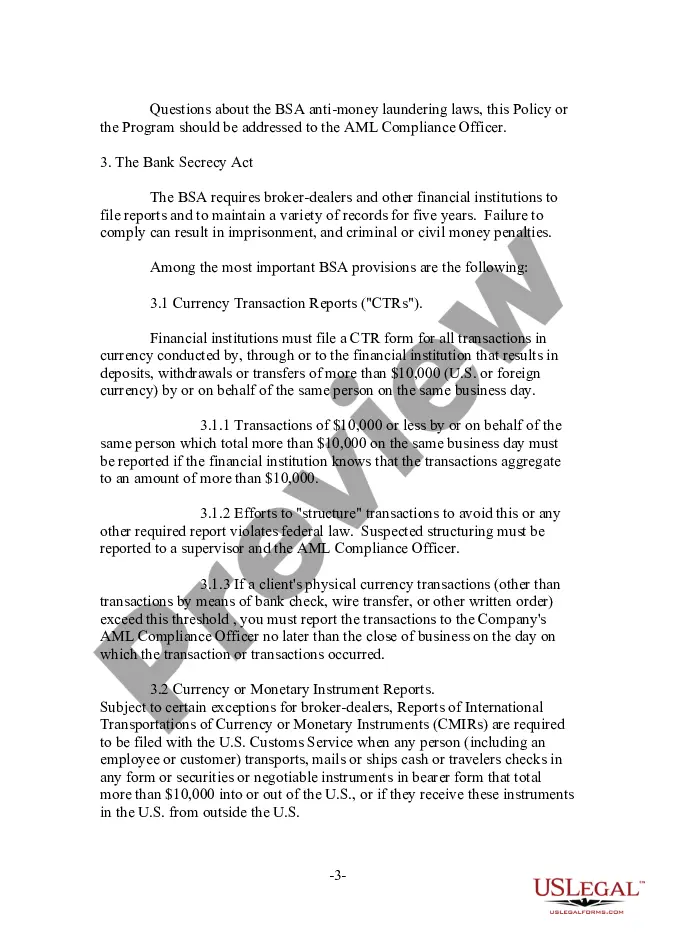
- Company policy statement regarding compliance with AML laws and regulations.
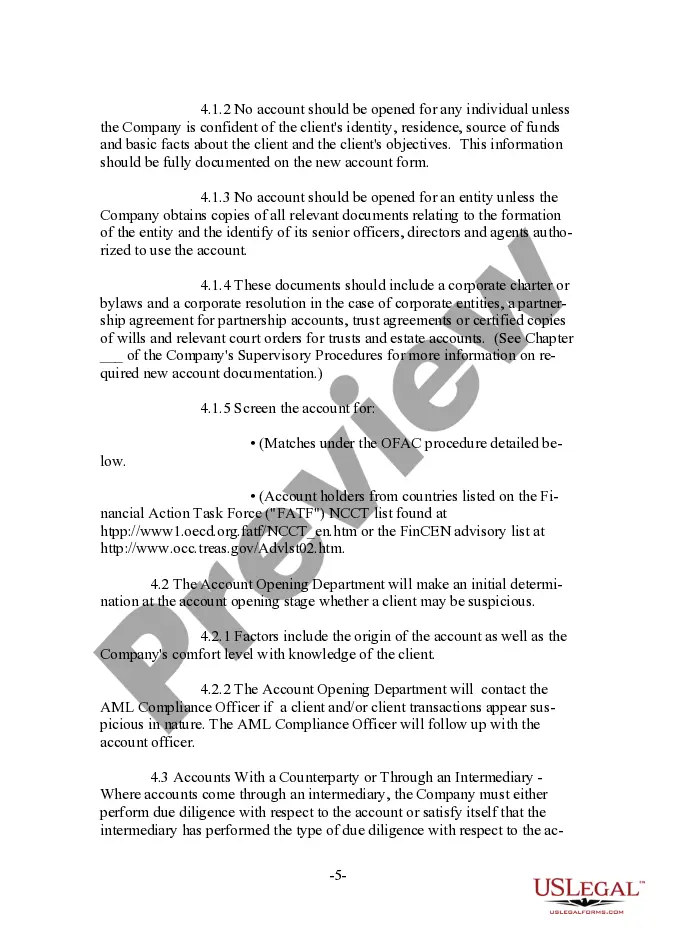
- Designation of an Anti-Money Laundering Compliance Officer (AML Compliance Officer).
- Procedures for filing Suspicious Activity Reports (SARs) and training employees.
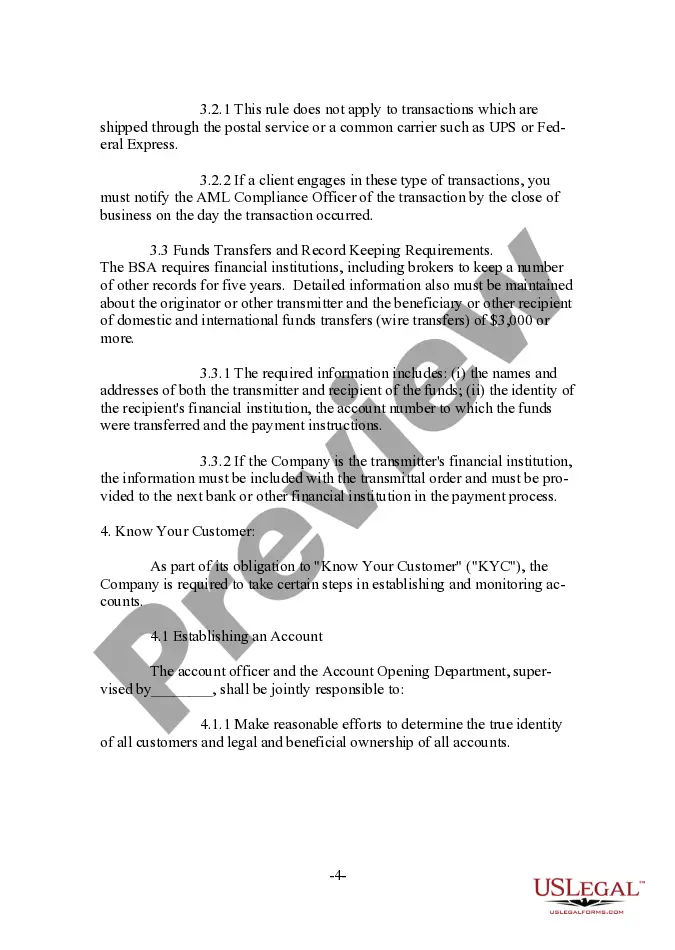
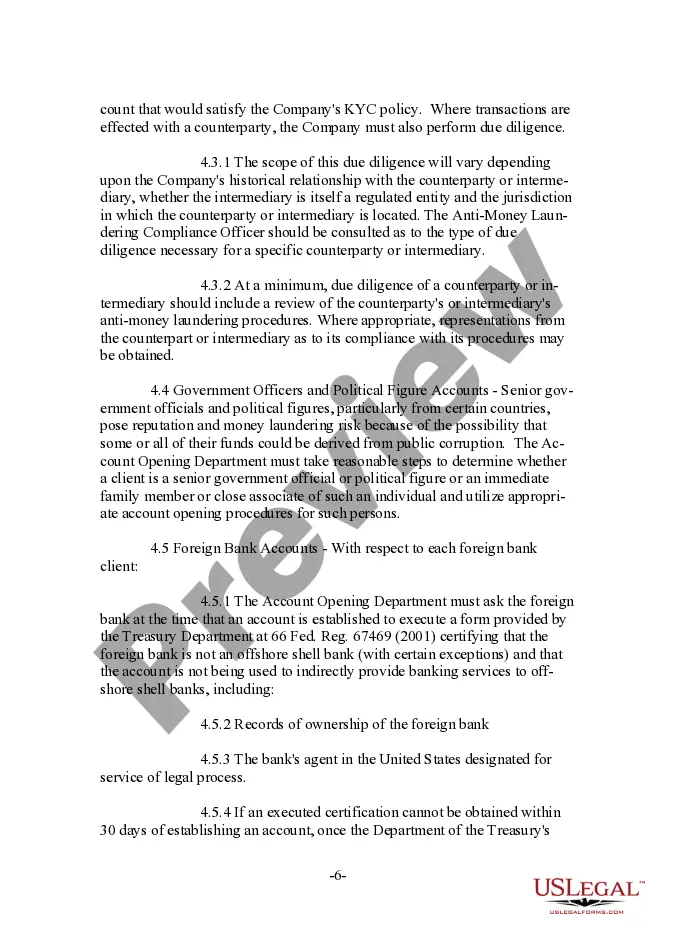
- Know Your Customer (KYC) practices including client identification and monitoring.
- Requirements for record-keeping and reporting under the Bank Secrecy Act.

When this form is needed
This form should be used when establishing or updating an anti-money laundering compliance program in a private equity firm or financial institution. It is essential for organizations handling substantial financial transactions, who need to comply with federal regulations and safeguard against money laundering risks. Additionally, this form can be used during employee onboarding to inform new hires of the company's AML policies.
Who can use this document
- Private equity firms seeking to establish an AML compliance program.
- Financial institutions required to adhere to AML regulations.
- Compliance officers tasked with developing and enforcing company policies.
- Employees involved in customer onboarding and transaction monitoring.
Steps to complete this form
- Identify and appoint an Anti-Money Laundering Compliance Officer.
- Detail the specific anti-money laundering policies and procedures your company will adopt.
- Ensure training procedures are specified for employees regarding AML compliance.
- Include provisions for filing SARs when suspicious activities are detected.
- Establish record-keeping protocols to comply with the Bank Secrecy Act requirements.
Is notarization required?
This form does not typically require notarization to be legally valid. However, some jurisdictions or document types may still require it. US Legal Forms provides secure online notarization powered by Notarize, available 24/7 for added convenience.
Get your form ready online
Our built-in tools help you complete, sign, share, and store your documents in one place.
Make edits, fill in missing information, and update formatting in US Legal Forms—just like you would in MS Word.
Download a copy, print it, send it by email, or mail it via USPS—whatever works best for your next step.
Sign and collect signatures with our SignNow integration. Send to multiple recipients, set reminders, and more. Go Premium to unlock E-Sign.
If this form requires notarization, complete it online through a secure video call—no need to meet a notary in person or wait for an appointment.
We protect your documents and personal data by following strict security and privacy standards.

Make edits, fill in missing information, and update formatting in US Legal Forms—just like you would in MS Word.

Download a copy, print it, send it by email, or mail it via USPS—whatever works best for your next step.

Sign and collect signatures with our SignNow integration. Send to multiple recipients, set reminders, and more. Go Premium to unlock E-Sign.

If this form requires notarization, complete it online through a secure video call—no need to meet a notary in person or wait for an appointment.

We protect your documents and personal data by following strict security and privacy standards.
Mistakes to watch out for
- Failing to update the policy regularly to reflect changes in laws or regulations.
- Not providing adequate training for employees on AML compliance.
- Neglecting to appoint a qualified Anti-Money Laundering Compliance Officer.
- Inadequate record-keeping or failure to file Suspicious Activity Reports on time.
Advantages of online completion
- Convenience of downloading and customizing the form to fit specific company needs.
- Quick access to legal documents without the need for in-person consultations.
- Editable format that allows for easy updates as regulations change.
- Cost-effective solution for maintaining compliance without hiring external legal counsel.
Legal use & context
- The Anti-Money Laundering Compliance Policy forms part of the compliance framework required under federal law.
- It helps protect the firm from legal penalties associated with money laundering and financial crimes.
- This policy should be integrated with overall compliance and risk management strategies to be enforceable.
Quick recap
- The Anti-Money Laundering Compliance Policy is essential for compliance with financial regulations.
- Designating an AML Compliance Officer is crucial for oversight and implementation.
- Regular training and updated record-keeping are necessary to maintain compliance.
Looking for another form?





Form popularity
FAQ
AML, Anti-Money Laundering, also known as Prevention of Money Laundering, is closely related to the KYC (Know Your Customer) process.Thus, the relationship between the KYC and AML processes is essential to prevent money laundering in contractual relationships and transactions.
There are four pillars to an effective BSA/AML program: 1) development of internal policies, procedures, and related controls, 2) designation of a compliance officer, 3) a thorough and ongoing training program, and 4) independent review for compliance.
Currently, institutional AML programs are based on the five pillars: internal policies, procedures and controls; designation of an AML officer; employee training; independent testing; and customer due diligence (CDD).
Current UK photo card Driving Licence (Full or provisional only if not already used to confirm identity) Firearms or shotgun certificate. Bank/Credit Union/Building Society/Credit Card statement or passbook (within last 3 months) Council tax bill, demand letter or payment book (within last 12 months)
An AML compliance program should focus on the internal controls and systems the institution uses to detect and report the financial crime. The program should involve a regular review of those controls in order to measure their effectiveness in meeting compliance standards.
Internal operations regulations. User vetting and processing policies. Account reviews and reconciliations. Transaction monitoring and detection. Reporting protocol in case of illegal financial activity.
UK/EU/EEA Drivers Licence (if UK Drivers Licence not used as ID) Must be valid, not expired. Bank, Building Society or Credit Union Statement. Dated with 3 months. Credit Card Statement. UK, EU, EEA Mortgage statement. Utility Bill. Telephone Bill. Council Tax. Tenancy Agreement.
Anti-Money Laundering (AML) is a set of policies, procedures, and technologies that prevents money laundering. It is implemented within government systems and large financial institutions to monitor potentially fraudulent activity.
Anti-money laundering (AML) refers to the laws, regulations and procedures intended to prevent criminals from disguising illegally obtained funds as legitimate income. Though anti-money laundering laws cover a limited range of transactions and criminal behavior, their implications are far-reaching.