Summary of Principal Terms
Overview of this form
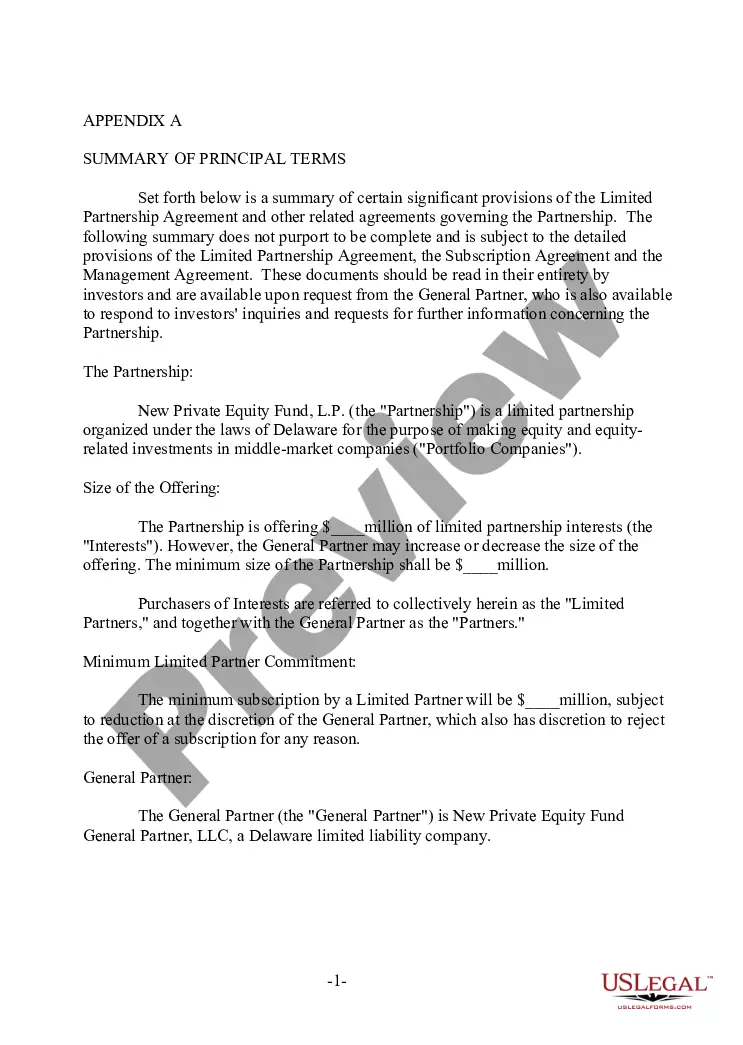
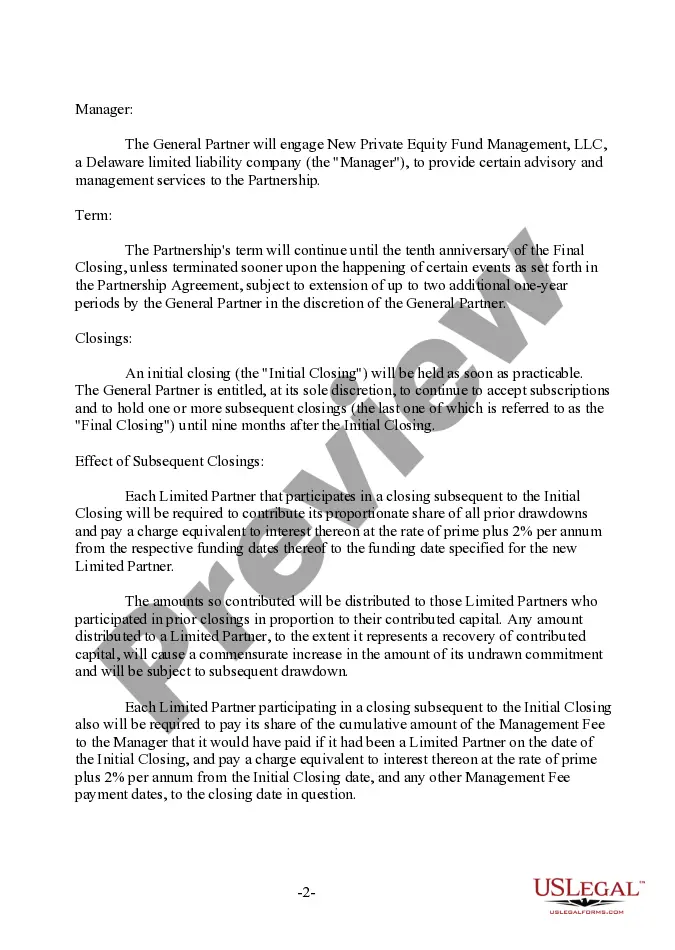
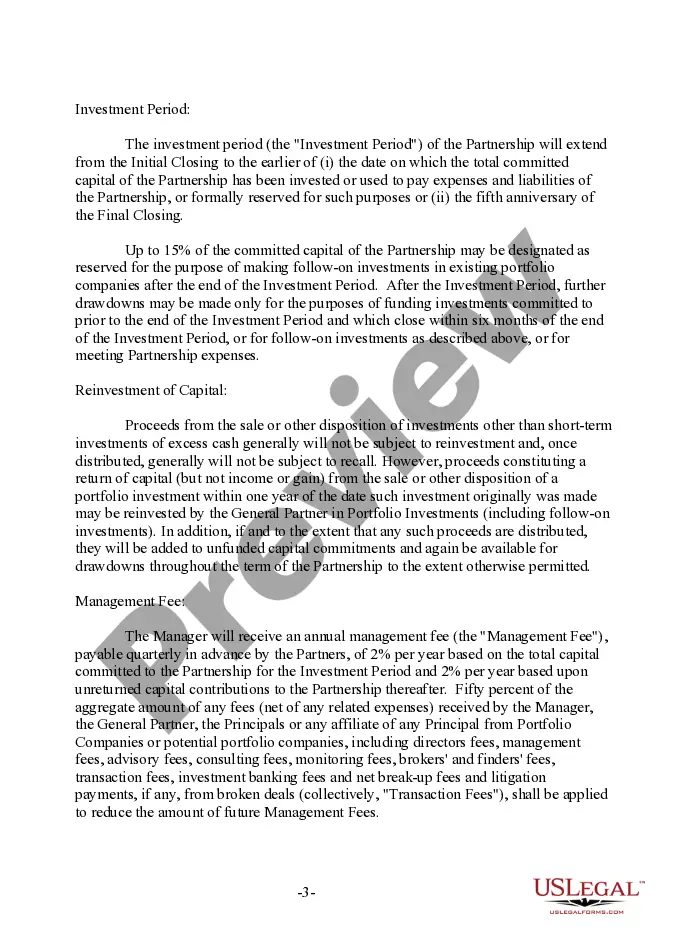
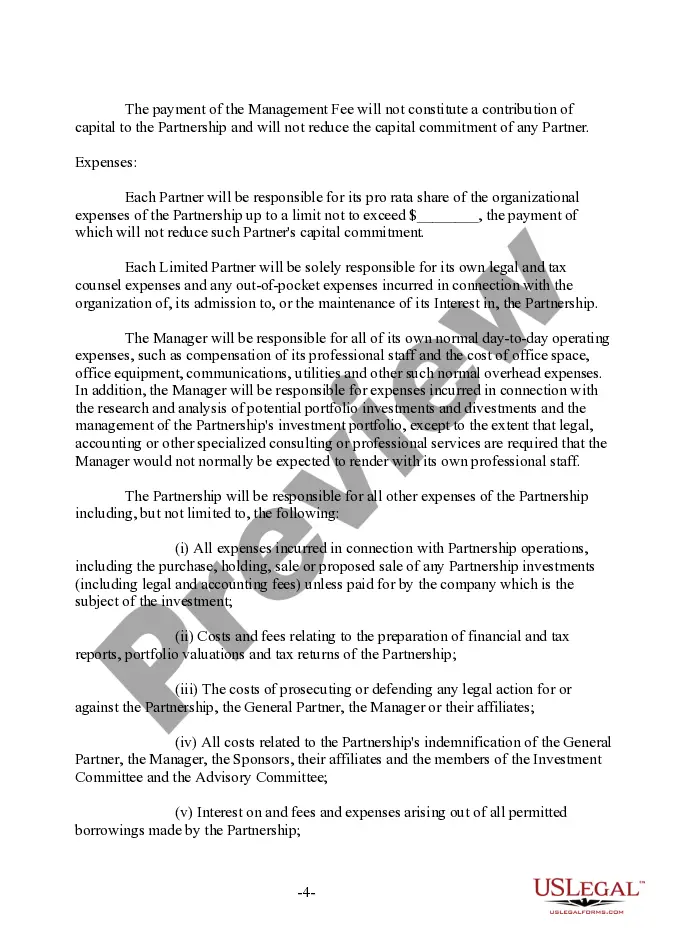
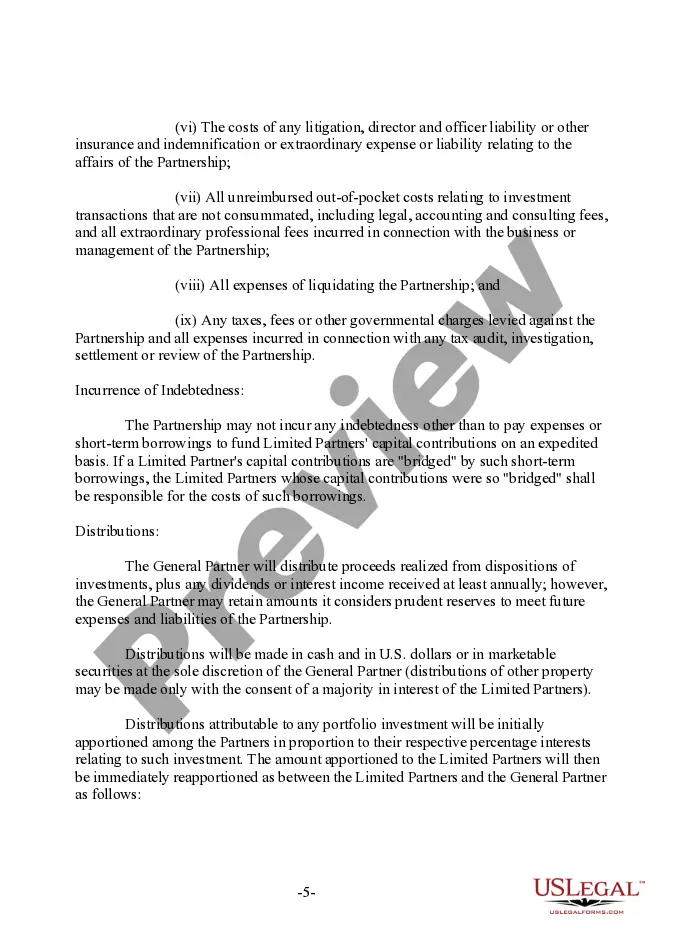
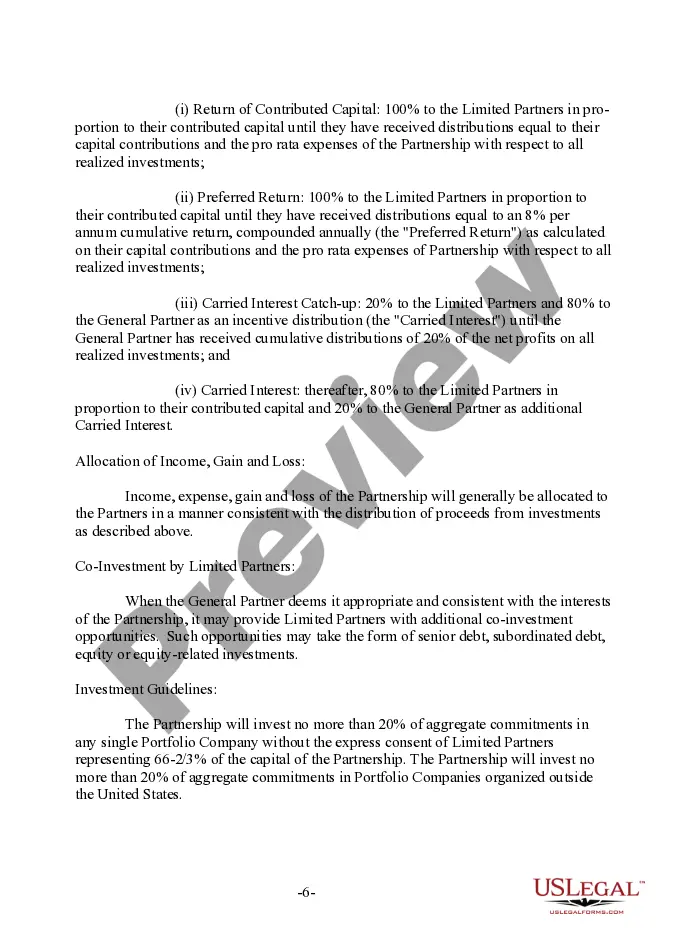
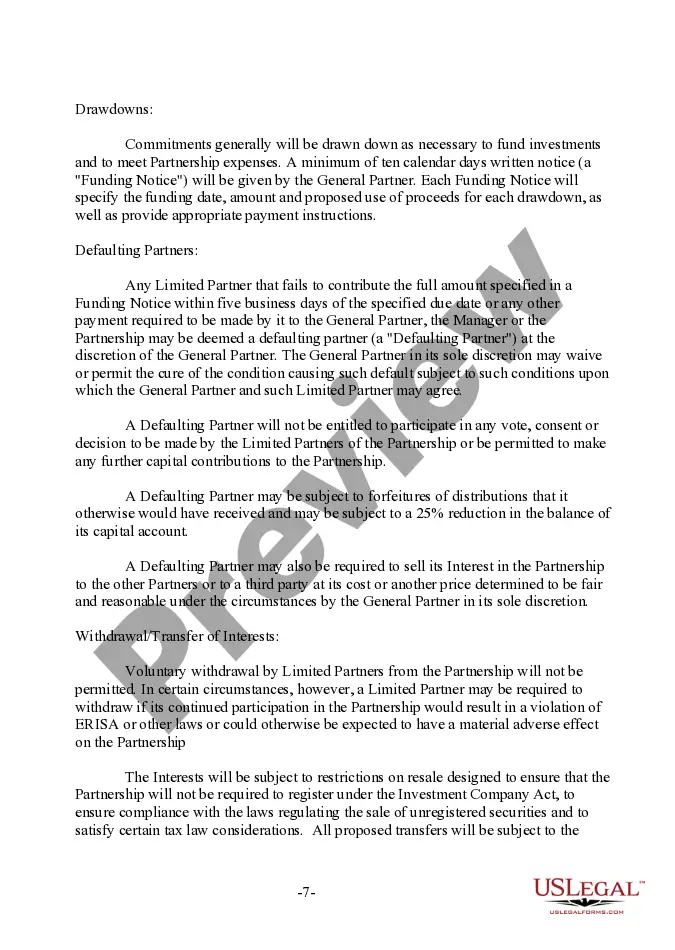
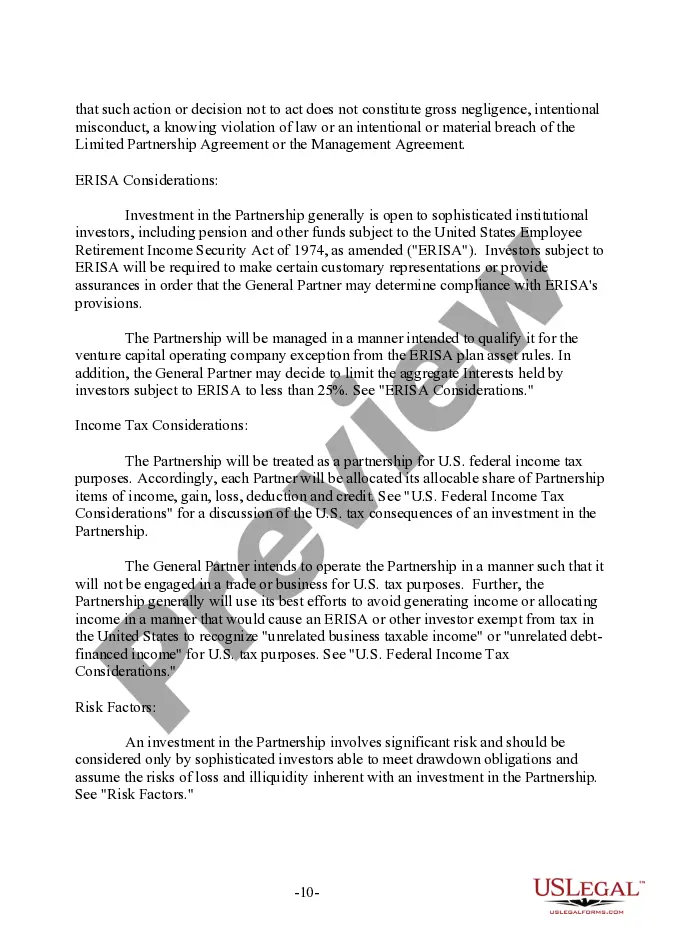
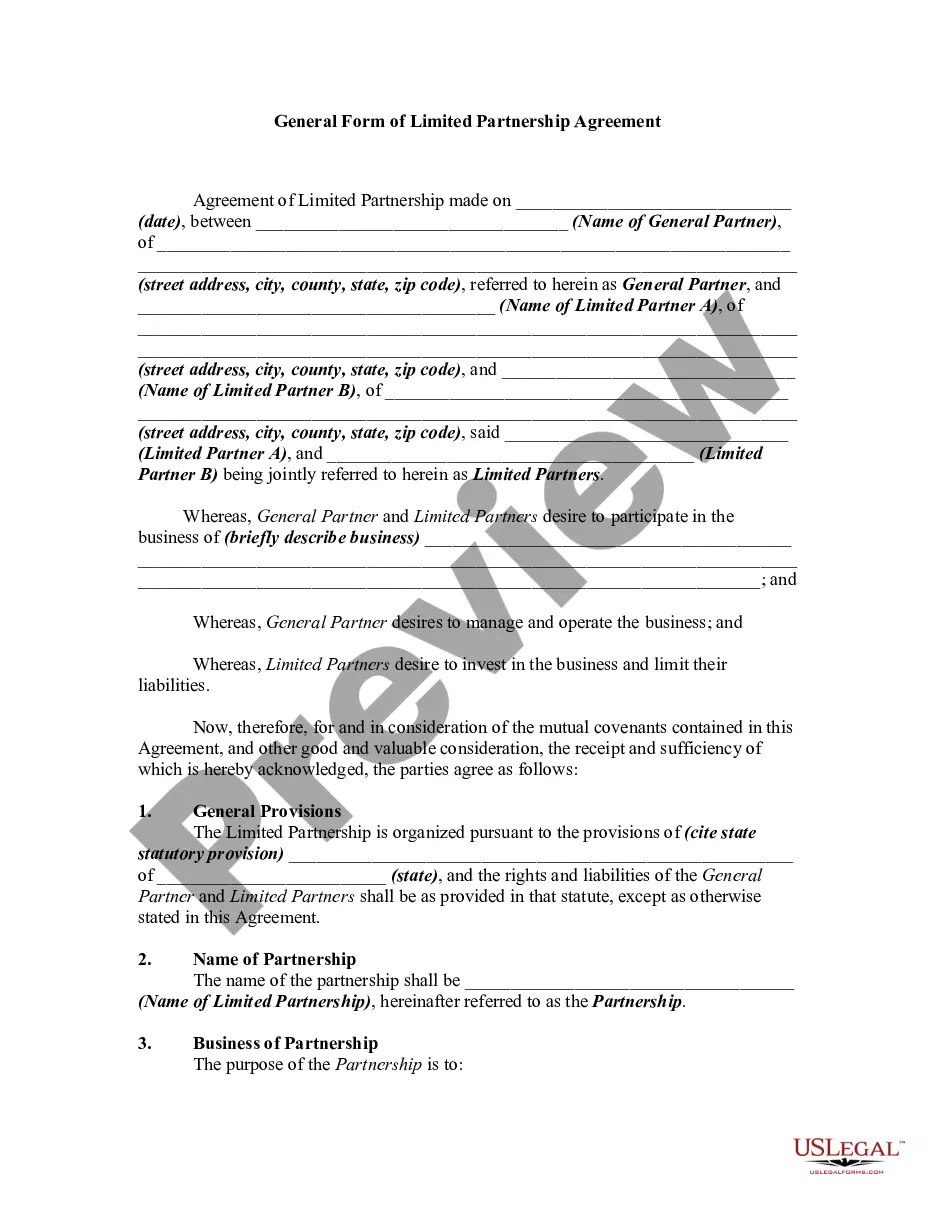
The Summary of Principal Terms is a legal document that provides a concise overview of the significant provisions found in the Limited Partnership Agreement and related agreements governing a private equity partnership. This form serves to summarize key aspects of the partnership's investment strategy, terms, and management structure, ensuring that potential investors have a clear understanding of the essentials before proceeding. Unlike other more detailed forms, this summary helps facilitate informed decision-making without overwhelming the user with legal jargon or excessive detail.
Key components of this form
- Overview of the partnership and its purpose.
- Details about the offering size and minimum investment requirements.
- Information on the roles of the General Partner and Manager.
- Investment and distribution guidelines.
- Provisions regarding drawdowns and defaulting partners.
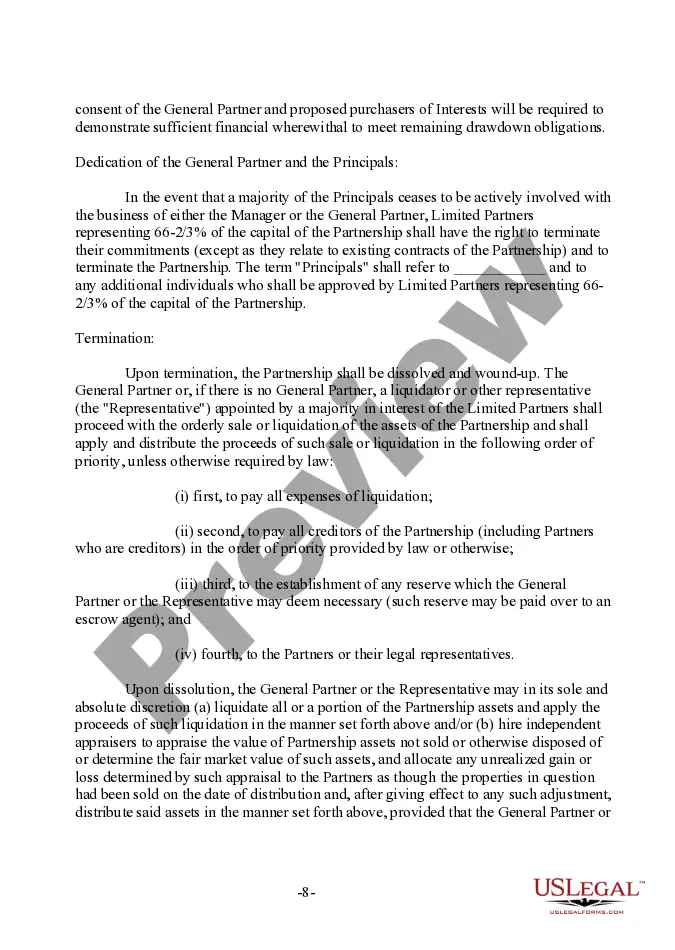
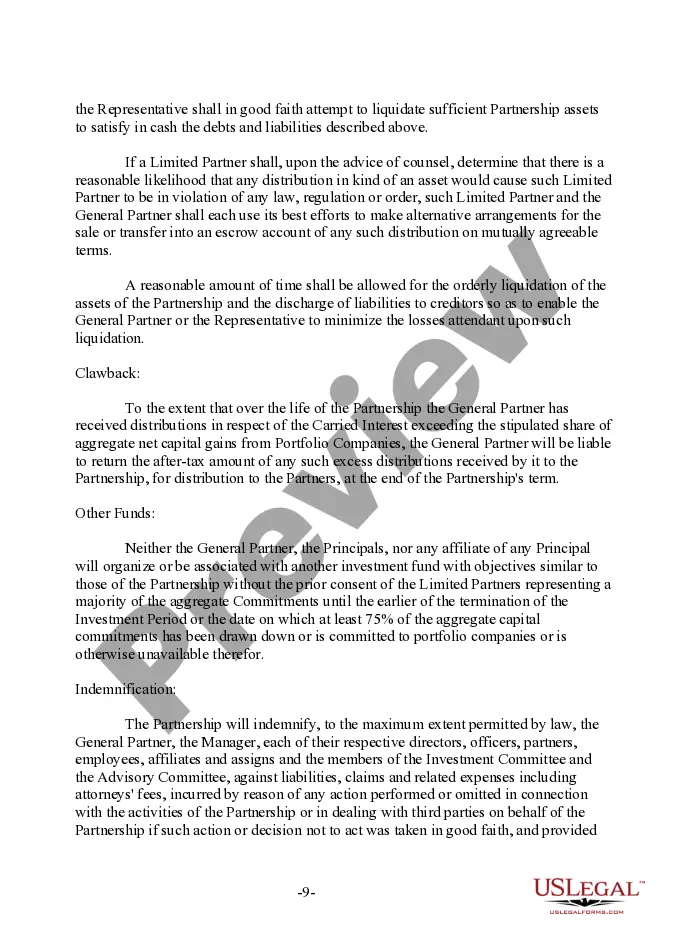
- Descriptions of partnership dissolution and termination procedures.

When to use this form
This form is utilized when seeking to summarize the essential terms of a Limited Partnership Agreement for potential investors. It is particularly useful in private equity settings, allowing parties to quickly grasp the partnership structure, investment strategy, and their obligations. If you are preparing an investment proposal or need a clear summary of partnership terms for discussion with investors, this form is appropriate.
Intended users of this form
Potential users of the Summary of Principal Terms include:
- Private equity fund managers.
- Investors considering partnership participation.
- Legal professionals drafting or reviewing partnership agreements.
- Financial advisors working with clients on investment strategies.
How to prepare this document
- Identify the partnership and its purpose clearly.
- Provide the specific details regarding the offering size and minimum investment amounts.
- Outline the roles and responsibilities of the General Partner and Manager.
- Specify the investment guidelines and any important terms regarding distributions.
- Ensure all parties understand and agree to the provisions related to drawdowns and partner obligations.
Does this document require notarization?
This form does not typically require notarization to be legally valid. However, some jurisdictions or document types may still require it. US Legal Forms provides secure online notarization powered by Notarize, available 24/7 for added convenience.
Get your form ready online
Our built-in tools help you complete, sign, share, and store your documents in one place.
Make edits, fill in missing information, and update formatting in US Legal Forms—just like you would in MS Word.
Download a copy, print it, send it by email, or mail it via USPS—whatever works best for your next step.
Sign and collect signatures with our SignNow integration. Send to multiple recipients, set reminders, and more. Go Premium to unlock E-Sign.
If this form requires notarization, complete it online through a secure video call—no need to meet a notary in person or wait for an appointment.
We protect your documents and personal data by following strict security and privacy standards.

Make edits, fill in missing information, and update formatting in US Legal Forms—just like you would in MS Word.

Download a copy, print it, send it by email, or mail it via USPS—whatever works best for your next step.

Sign and collect signatures with our SignNow integration. Send to multiple recipients, set reminders, and more. Go Premium to unlock E-Sign.

If this form requires notarization, complete it online through a secure video call—no need to meet a notary in person or wait for an appointment.

We protect your documents and personal data by following strict security and privacy standards.
Avoid these common issues
- Failing to include complete details about drawdown procedures.
- Not specifying the minimum investment amount leading to confusion among investors.
- Neglecting to outline the roles of key parties, causing uncertainty about responsibilities.
- Using overly complex language that may deter potential investors from understanding terms.
Why use this form online
- Convenience of downloading and accessing the form anytime.
- Editability allows for quick updates based on specific partnership terms.
- Reliability of using professionally drafted templates created by licensed attorneys.
Legal use & context
- The Summary of Principal Terms is legally binding when properly executed.
- This document serves as a summary of more extensive agreements; therefore, reading the full agreements is recommended for complete understanding.
- Potential legal limits may apply based on individual state laws regarding partnership agreements.
Looking for another form?


Form popularity
FAQ
Affidavit. An Affidavit is a sworn written statement made before an official or anyone who may legally administer an oath. Amending Agreement. Amortization Schedule. Articles of Incorporation. Assignment. Assignment of Partnership Interest. Assignment of Trade Name.
9 Necessary Legal Documents for a Business. Memorandum of Understanding. Registration of the Trademark. Non-Disclosure Agreements. Employee Contracts Along with Offer Letters. Shareholders Agreement. The Service Agreement of Directors. Business Plan.
Their signature is proof of their acceptance of the contract. The signature binds both parties to the terms. Getting the contract notarized proves each party signed the document (since no one can claim their signature was forged). The document has the notary's mark and seal.
Generally, a document is legal if its creator intends for it to be enforceable in a court of law. In order for a document to be legal, it must also adhere to the laws of the jurisdiction where it will be enforced. The document should also be properly signed, witnessed and filed to be considered legal.
Plan Out the Document Before You Begin. Write with Clear and Concise Language. Ensure the Correct Use of Grammar. Be as Accurate as Possible. Make Information Accessible. Ensure All Necessary Information Is Included. Always Use an Active Voice. Pay Attention to Imperatives.
A legal document, in general, is a document where two or more parties enter into an agreement and it is confirmed by the placement of their signatures at the end. The term legal documents have a very broad term when it comes to discovery and court required documents.Many people attest to the verbal agreement theory.
Legal documents are defined as a written proof of the limitations and extent of a person's rights and privileges in a clear and specific manner. A common example of a legal document that you may be familiar to is the Last Will and Testament.
Emails. Business Letters. Business Reports. Transactional Documents. Financial Reports and Documents.
Corporate bylaws. Non-disclosure agreements. Purchase agreements. Employment contracts. Loan agreements. Employment and independent contractor agreements. Consulting agreements. Partnership agreements.