Subordination of Mortgage and Attornment Agreement
What this document covers
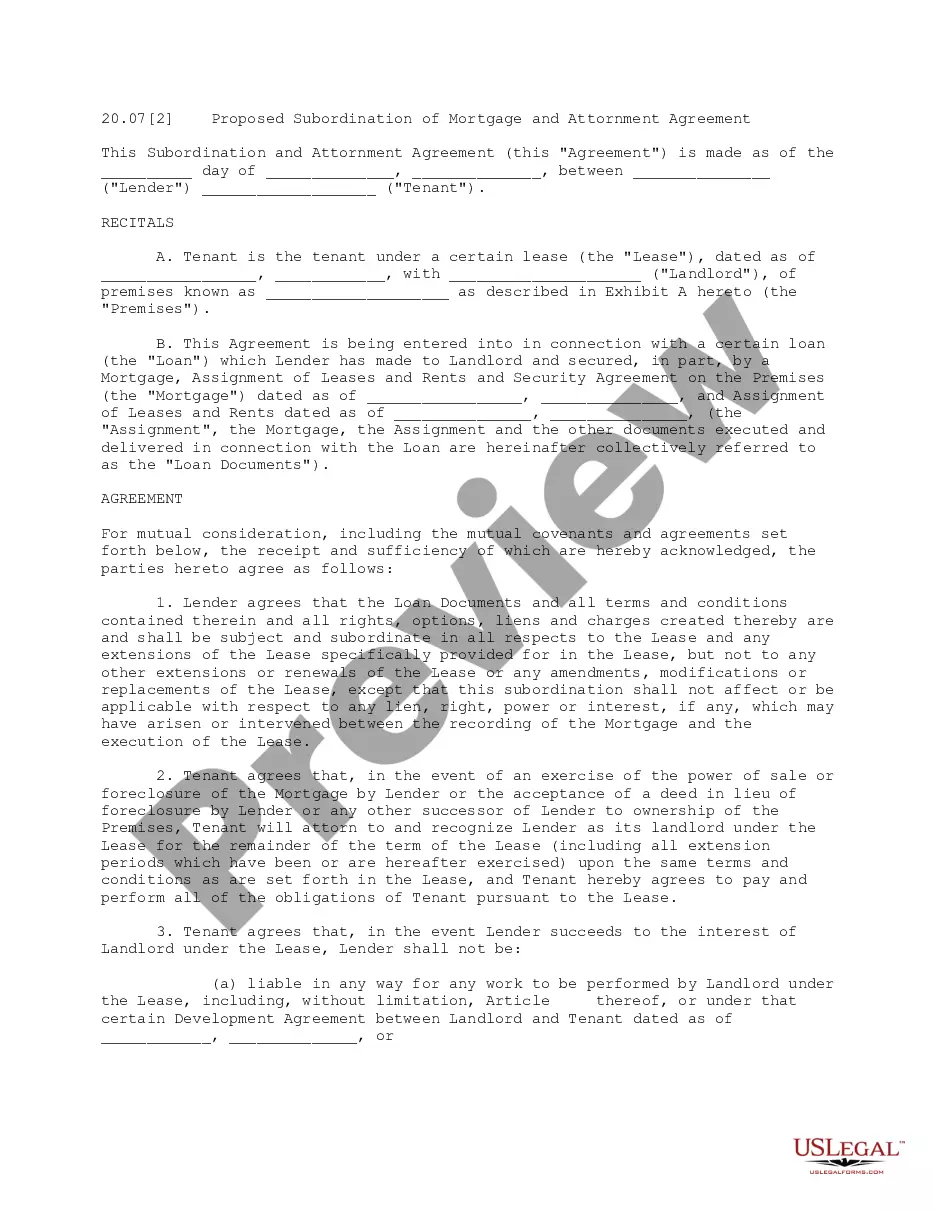
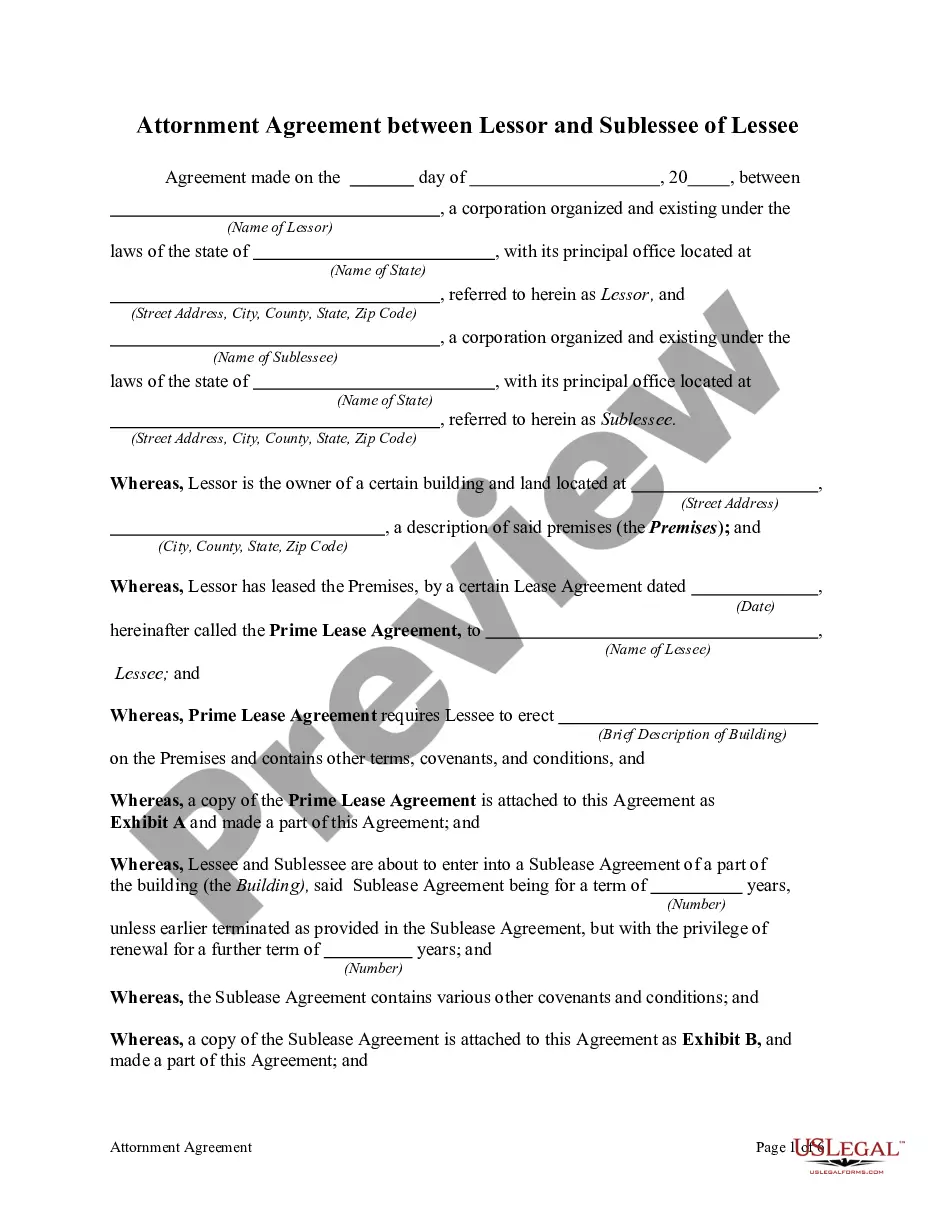
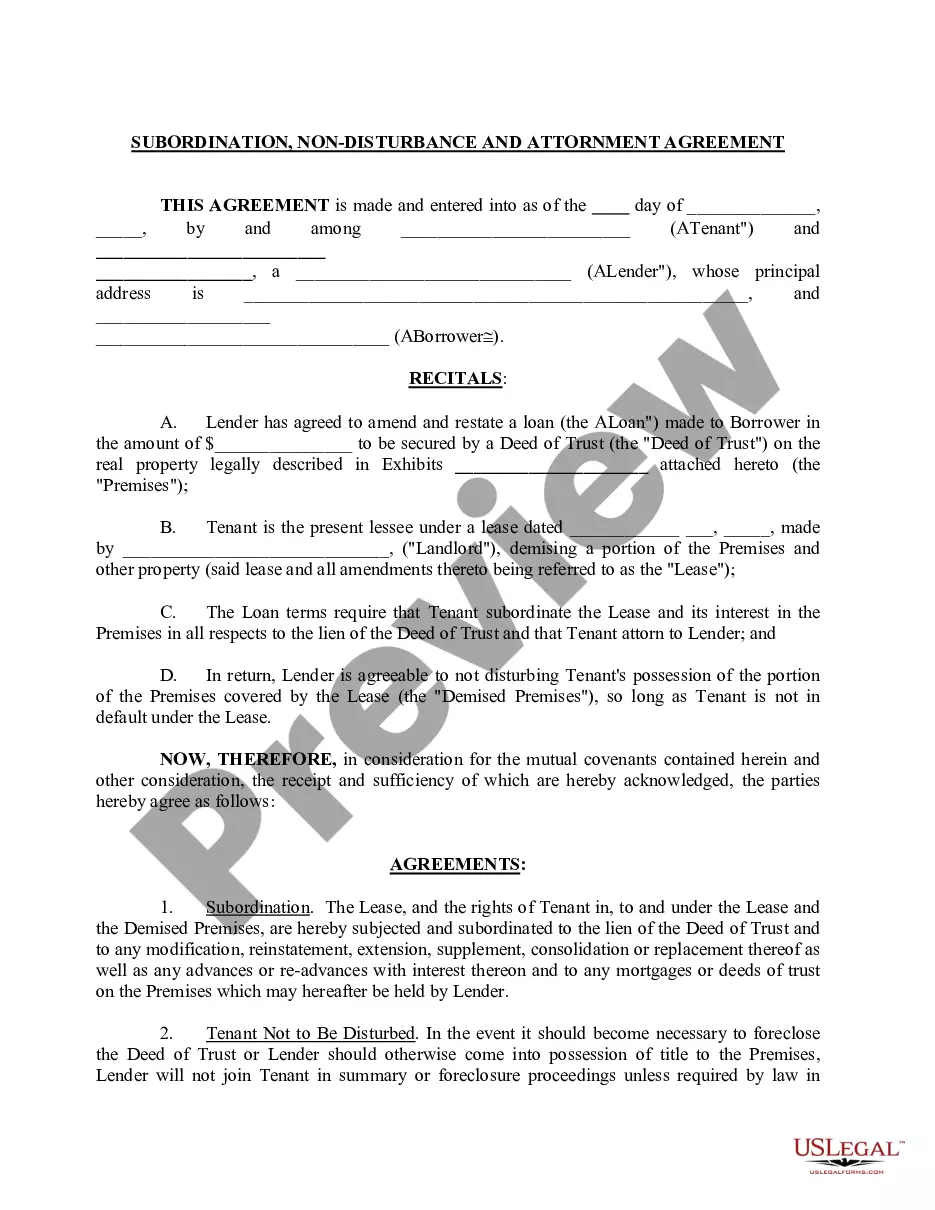
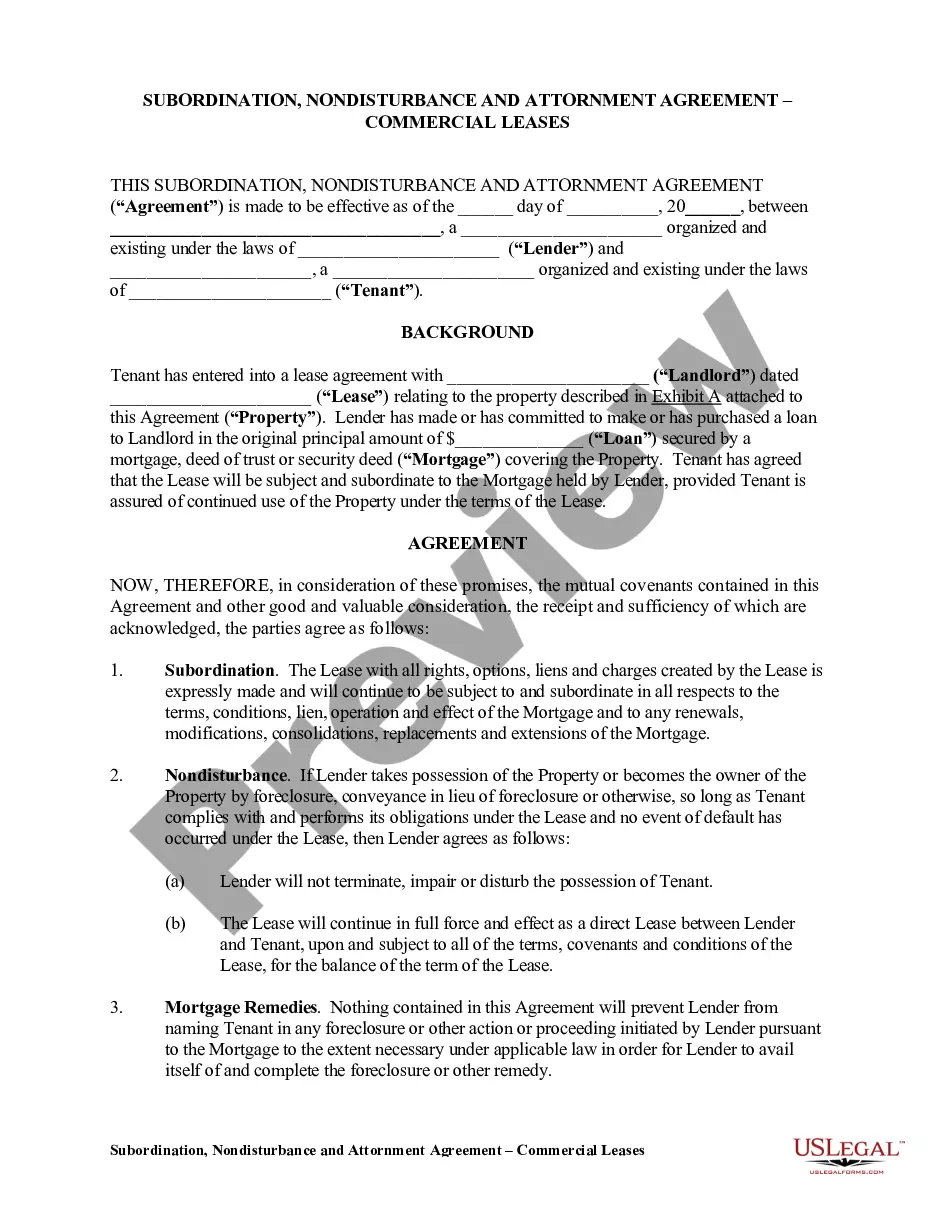
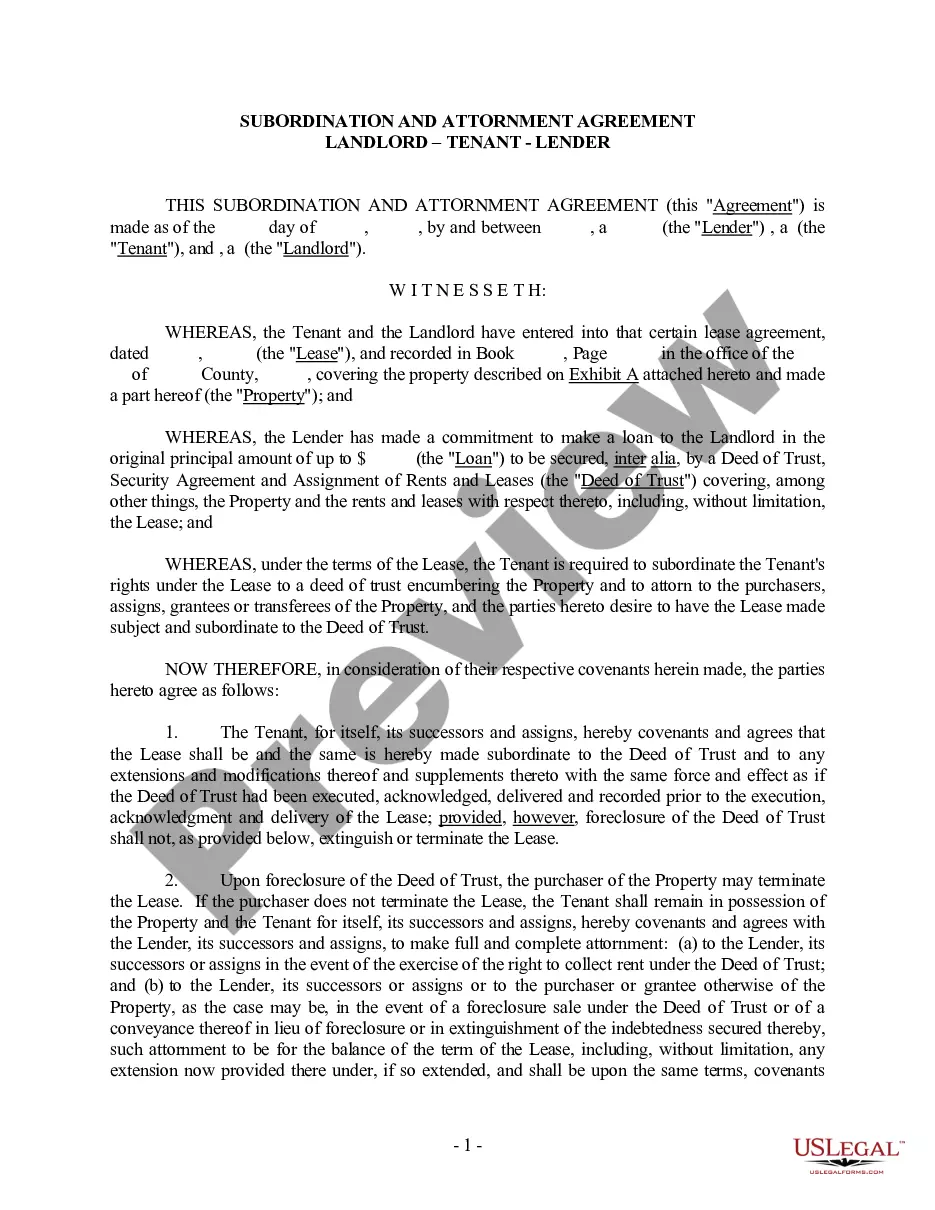
The Subordination of Mortgage and Attornment Agreement is a legal document that establishes an agreement between a lender and a tenant regarding leasehold rights in relation to a mortgage. This form is crucial when a lender needs to secure a loan made to a landlord while ensuring that the tenant's lease remains in effect, even if ownership changes hands. Unlike other lease agreements, this one addresses the subordination of the mortgage to the lease and outlines the tenant's obligations towards the lender should the landlord default.
Form components explained
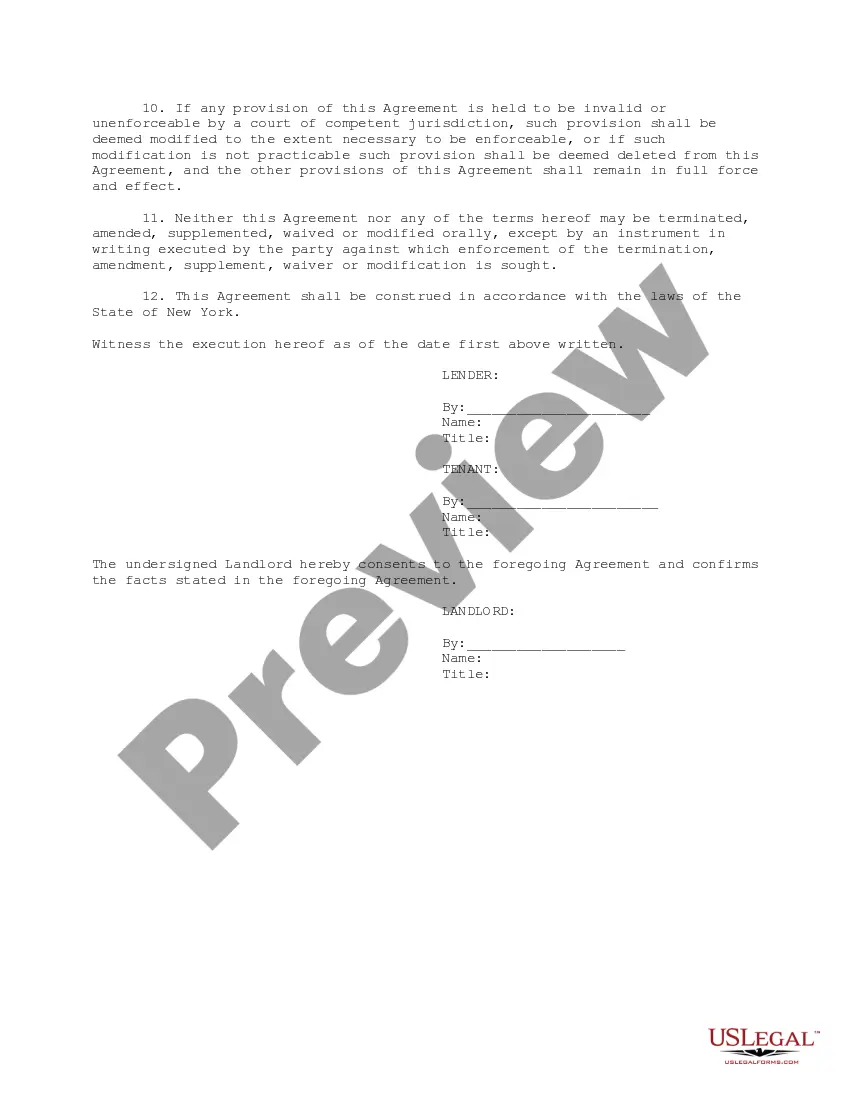
- Identification of the parties involved: Lender, Tenant, and Landlord.
- Recitals detailing the original lease and mortgage arrangements.
- Subordination clause stating that the lease is prioritized over the mortgage.
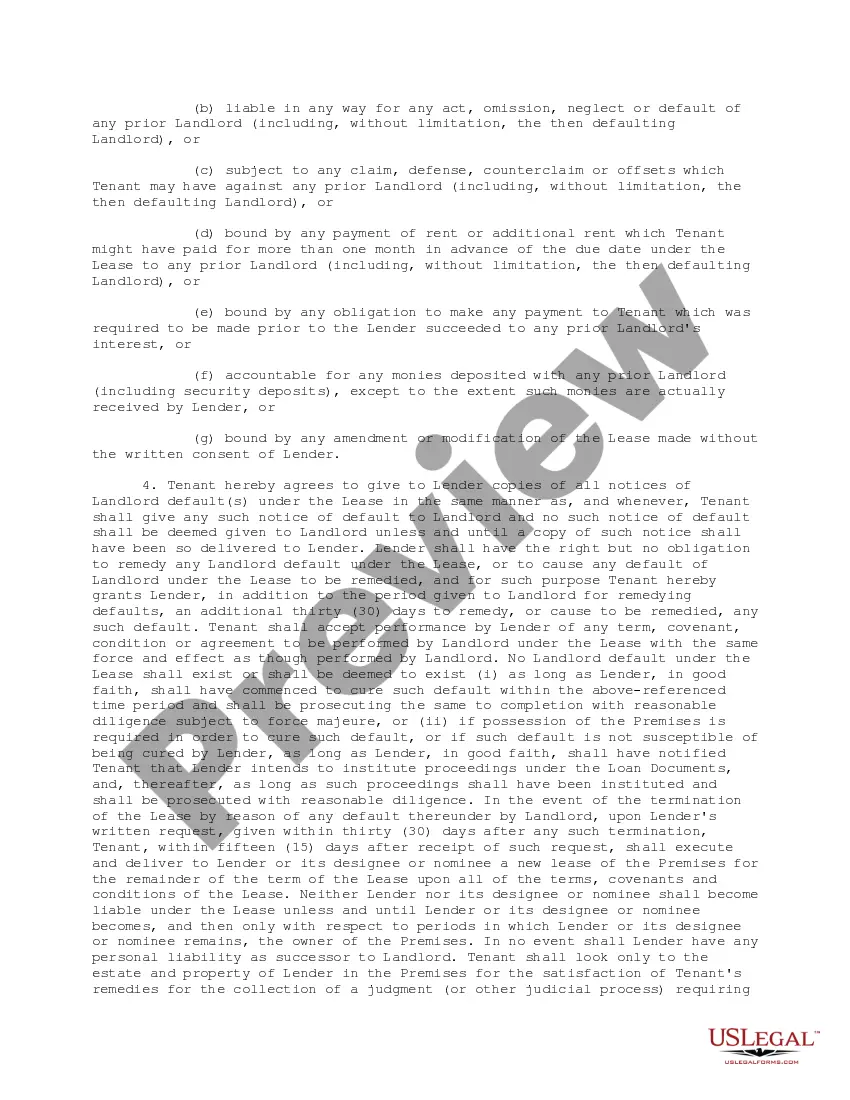
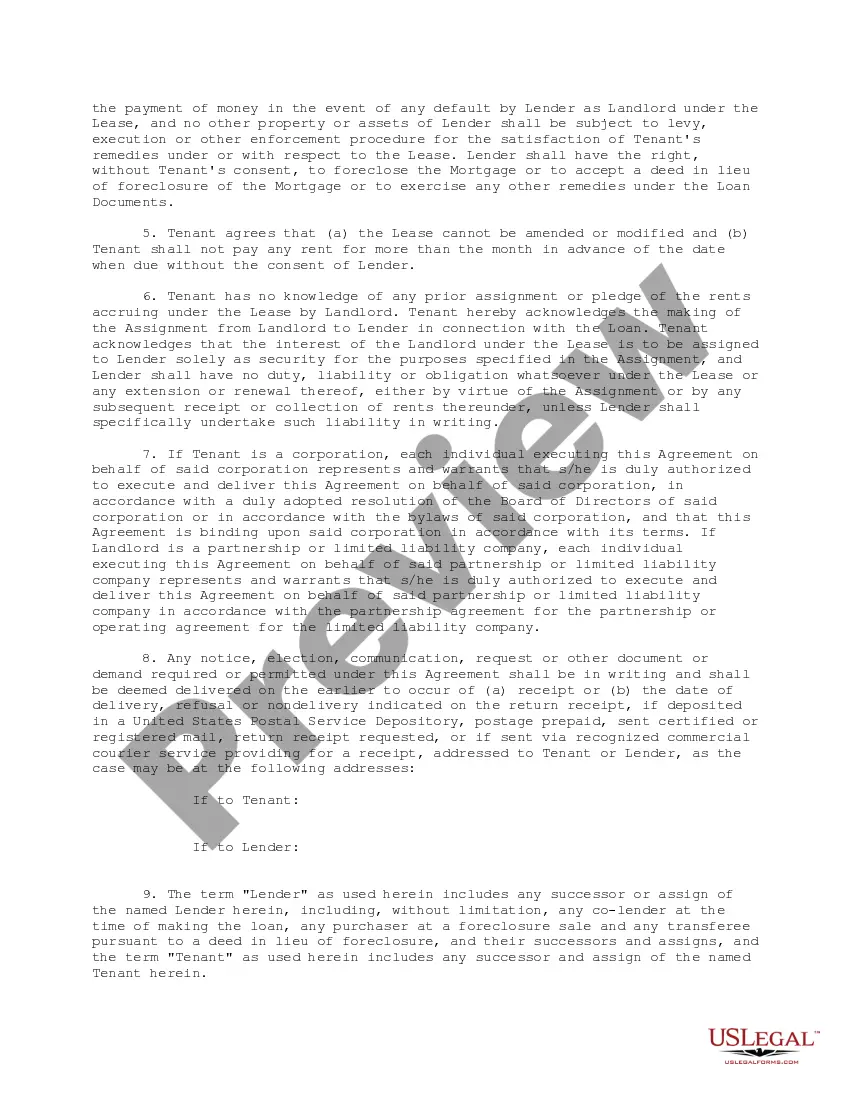
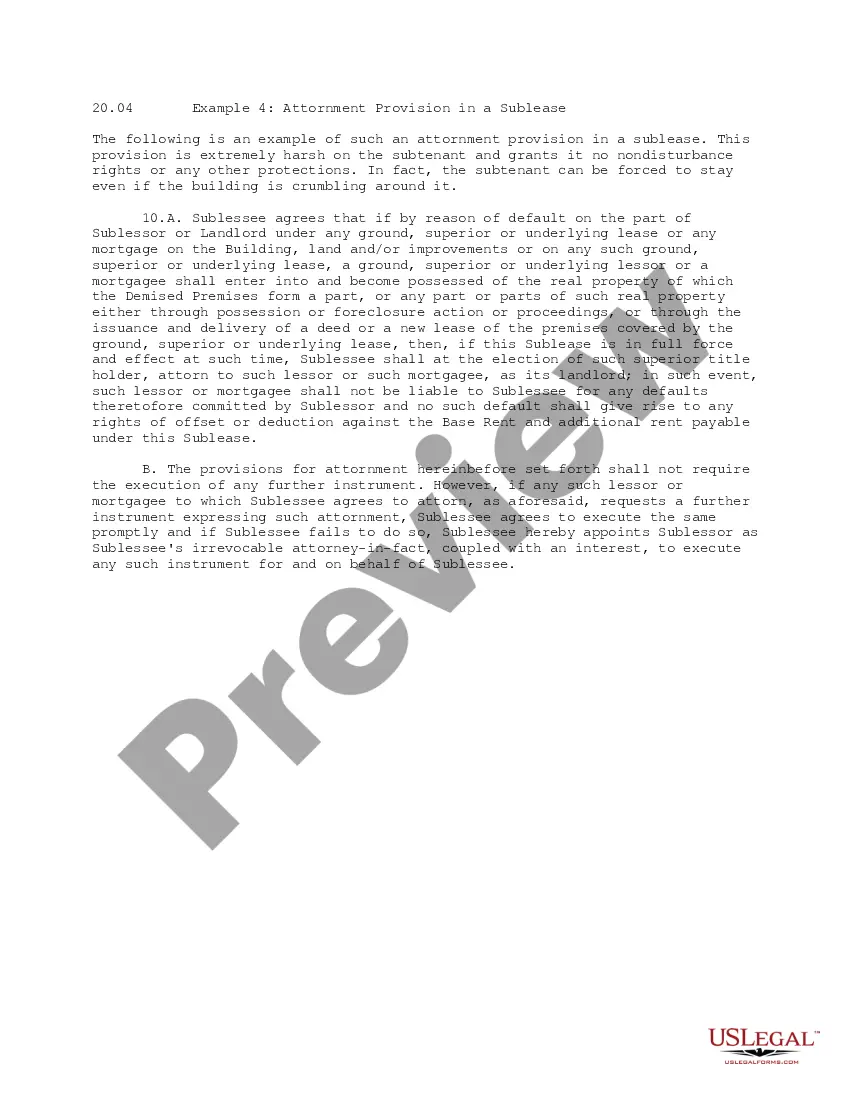
- Attornment clause outlining the tenant's obligation to recognize the lender as the new landlord in case of foreclosure.
- Exemptions from liability for the lender concerning landlord obligations and defaults.
- Provisions for notices regarding landlord defaults and remedies.
When to use this form
This form should be used when a tenant is leasing property from a landlord who has taken out a mortgage. It is essential in situations where the lender may need to take ownership of the property due to the landlord's default. This agreement protects the tenant's rights by ensuring that their lease remains valid even if the property changes ownership due to foreclosure or other actions by the lender.
Who this form is for
- Landlords who have secured a mortgage on leased properties.
- Lenders providing loans secured by real estate with existing leases.
- Tenants looking to protect their rights in case of landlord foreclosure.
- Legal representatives or real estate professionals assisting in lease and mortgage transactions.
Instructions for completing this form
- Identify the parties: Fill in the names of the lender, tenant, and landlord.
- Specify the property: Clearly describe the premises being leased.
- Enter dates: Include the relevant dates for the agreement and original lease.
- Signatures: Ensure all parties sign and date the agreement to validate it.
- Provide notice information: Include the addresses for sending notices between parties.
Does this document require notarization?
In most cases, this form does not require notarization. However, some jurisdictions or signing circumstances might. US Legal Forms offers online notarization powered by Notarize, accessible 24/7 for a quick, remote process.
Get your form ready online
Our built-in tools help you complete, sign, share, and store your documents in one place.
Make edits, fill in missing information, and update formatting in US Legal Forms—just like you would in MS Word.
Download a copy, print it, send it by email, or mail it via USPS—whatever works best for your next step.
Sign and collect signatures with our SignNow integration. Send to multiple recipients, set reminders, and more. Go Premium to unlock E-Sign.
If this form requires notarization, complete it online through a secure video call—no need to meet a notary in person or wait for an appointment.
We protect your documents and personal data by following strict security and privacy standards.

Make edits, fill in missing information, and update formatting in US Legal Forms—just like you would in MS Word.

Download a copy, print it, send it by email, or mail it via USPS—whatever works best for your next step.

Sign and collect signatures with our SignNow integration. Send to multiple recipients, set reminders, and more. Go Premium to unlock E-Sign.

If this form requires notarization, complete it online through a secure video call—no need to meet a notary in person or wait for an appointment.

We protect your documents and personal data by following strict security and privacy standards.
Common mistakes
- Failing to complete all necessary fields, such as names and relevant dates.
- Not providing adequate notice provisions, leading to communication issues.
- Omitting signatures from all parties involved, which can invalidate the agreement.
- Not understanding the implications of subordination on tenant rights.
Benefits of using this form online
- Easy access to professionally drafted forms that meet legal requirements.
- Editable templates allow for customization to fit specific agreements.
- Downloadable formats enable immediate documentation and record-keeping.
- Secure payment and privacy protocols to protect your information.
Looking for another form?
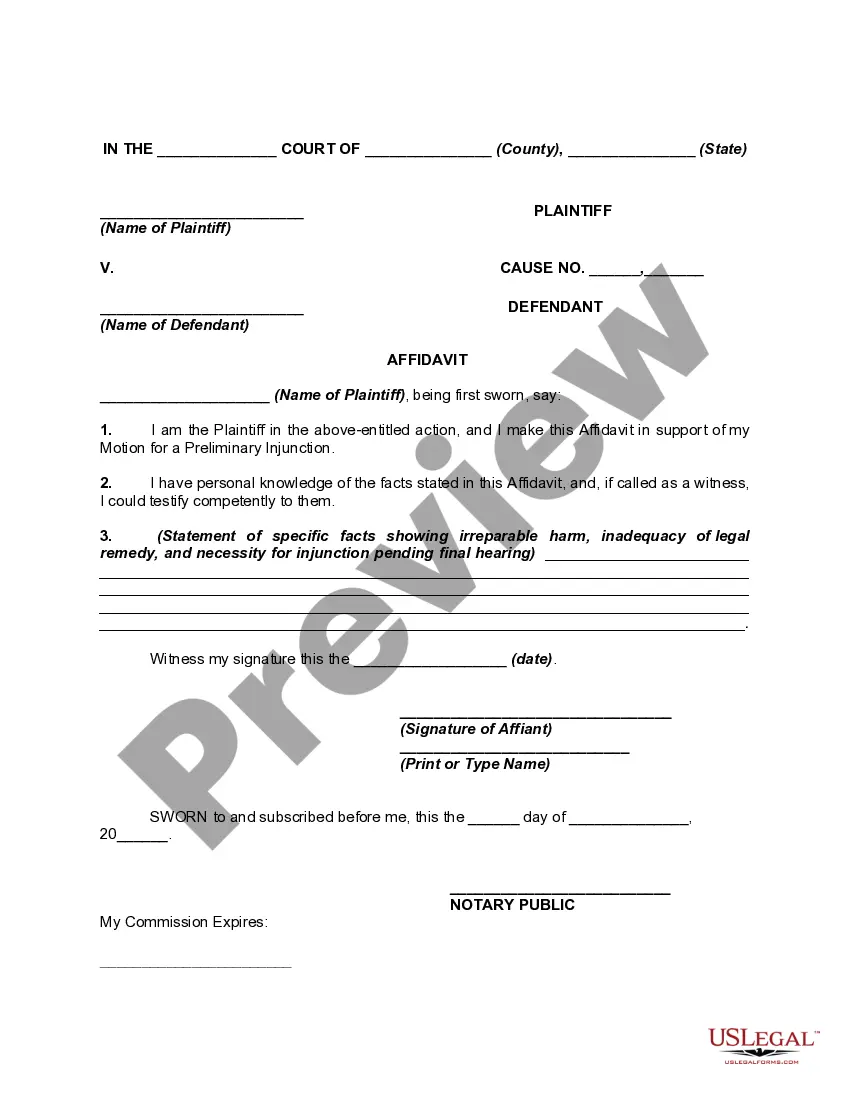
Form popularity
FAQ
And many lenders charge a fee to review the subordination package, a fee that might run as high as $100. Your lender will probably pass this fee to you.
A subordination agreement often comes up when a home has a first and a second mortgage, and the borrower wants to refinance the first mortgage. If you have two mortgages on your home and refinance the first loan, the refinancing lender might require a subordination agreement.
A subordination agreement is a legal document that establishes one debt as ranking behind another in priority for collecting repayment from a debtor. The priority of debts can become extremely important when a debtor defaults on payments or declares bankruptcy.
Subordination is the tenant's agreement that its interest under the lease will be subordinate to that of the lender.Attornment is the tenant's agreement to become the tenant of someone other than the original landlord and who has now taken title to the property.
But as property values are going up and the demand for refinance isn't as much, it seems that the subordination process has gotten a little easier. Typically, it takes two to three weeks to get the resubordination paperwork through, and it is likely to set you back $200 to $300.
Resubordination is the process of keeping the first mortgage in first place, ahead of other mortgages. When you refinance your first mortgage, the lender will insist on resubordinating the home equity loan or line of credit. The equity lender isn't required to resubordinate.
Subordination clauses in mortgages refer to the portion of your agreement with the mortgage company that says their lien takes precedence over any other liens you may have on your property.The primary lien on a house is usually a mortgage. However, it's also possible to have other liens.
Subordination is the process of ranking home loans (mortgage, HELOC or home equity loan) by order of importance.Through subordination, lenders assign a lien position to these loans. Generally, your mortgage is assigned the first lien position while your HELOC becomes the second lien.
In the case of commercial property changing hands, an attornment clause in a subordination, non-disturbance, and attornment (SNDA) agreement requires the tenant to acknowledge a new owner as their landlord and to continue paying rent regardless of whether the property changes hands through a normal sale or a