Onerous Approach to Default Remedy Clause
Understanding this form
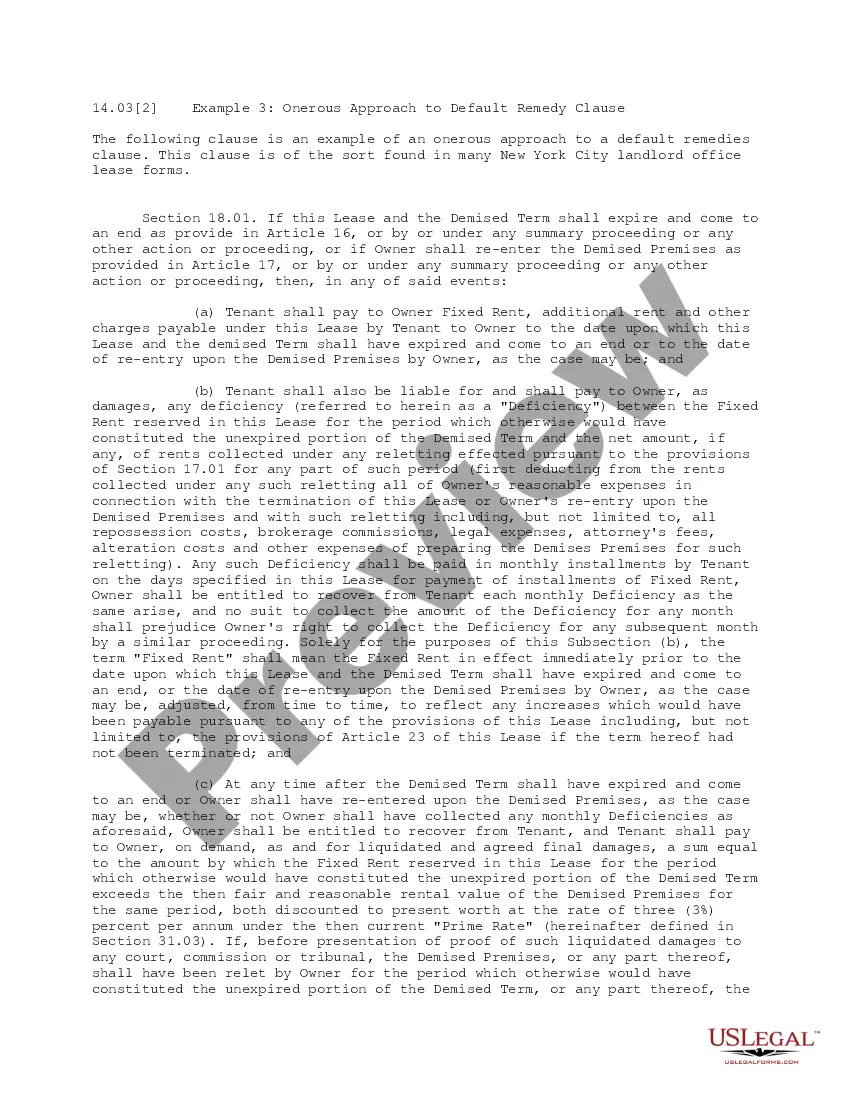
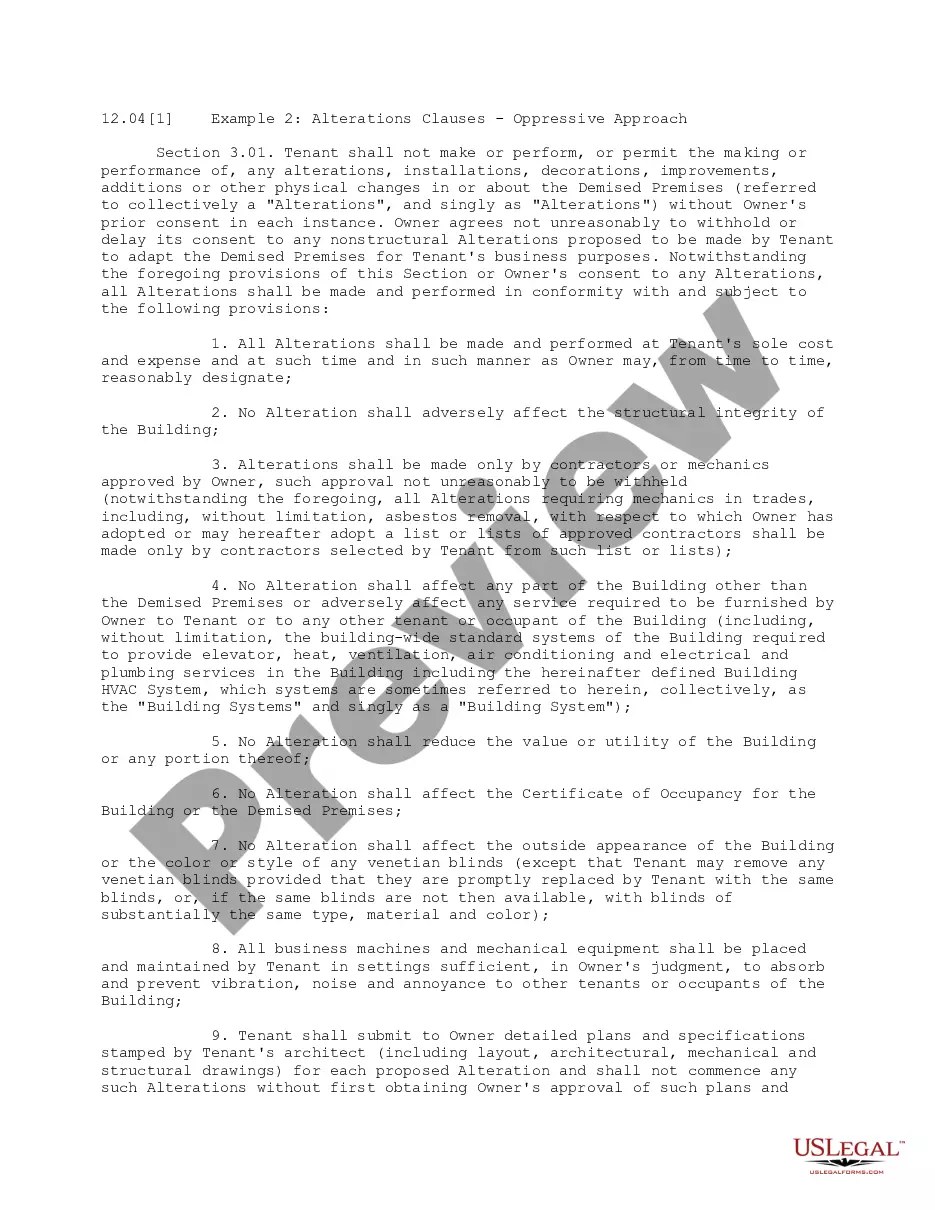
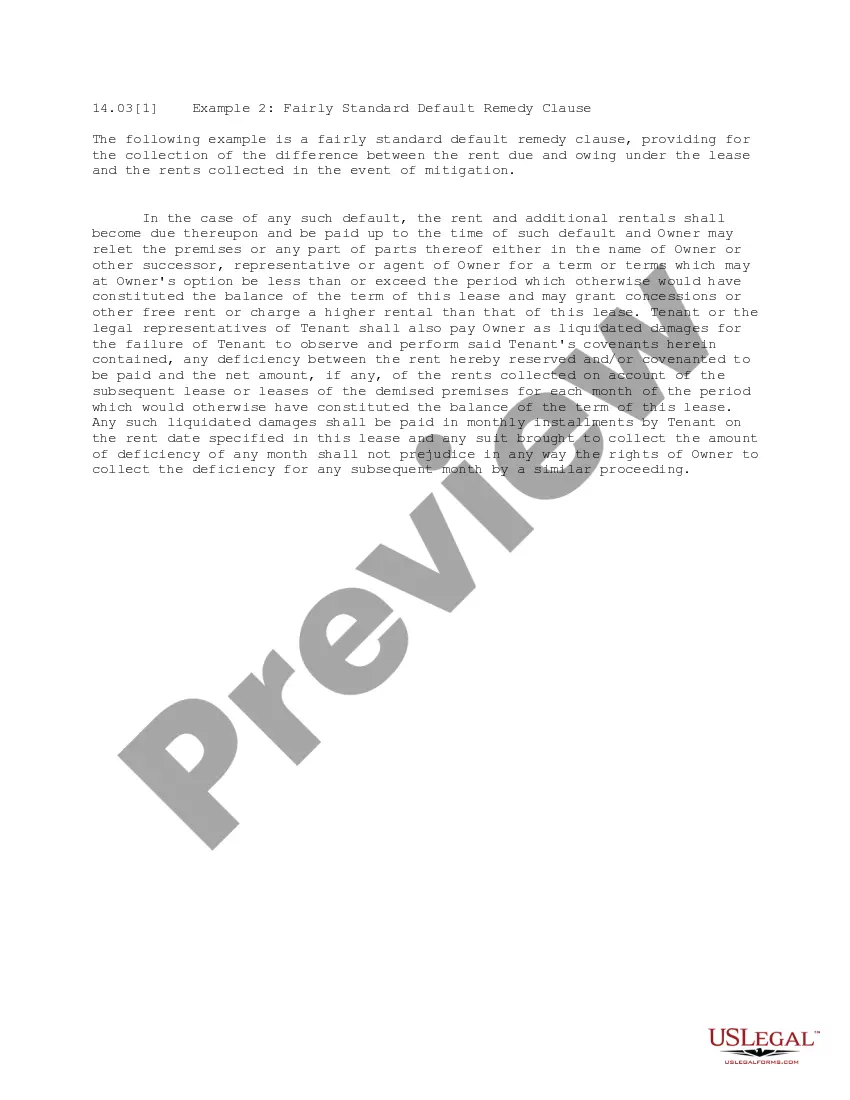
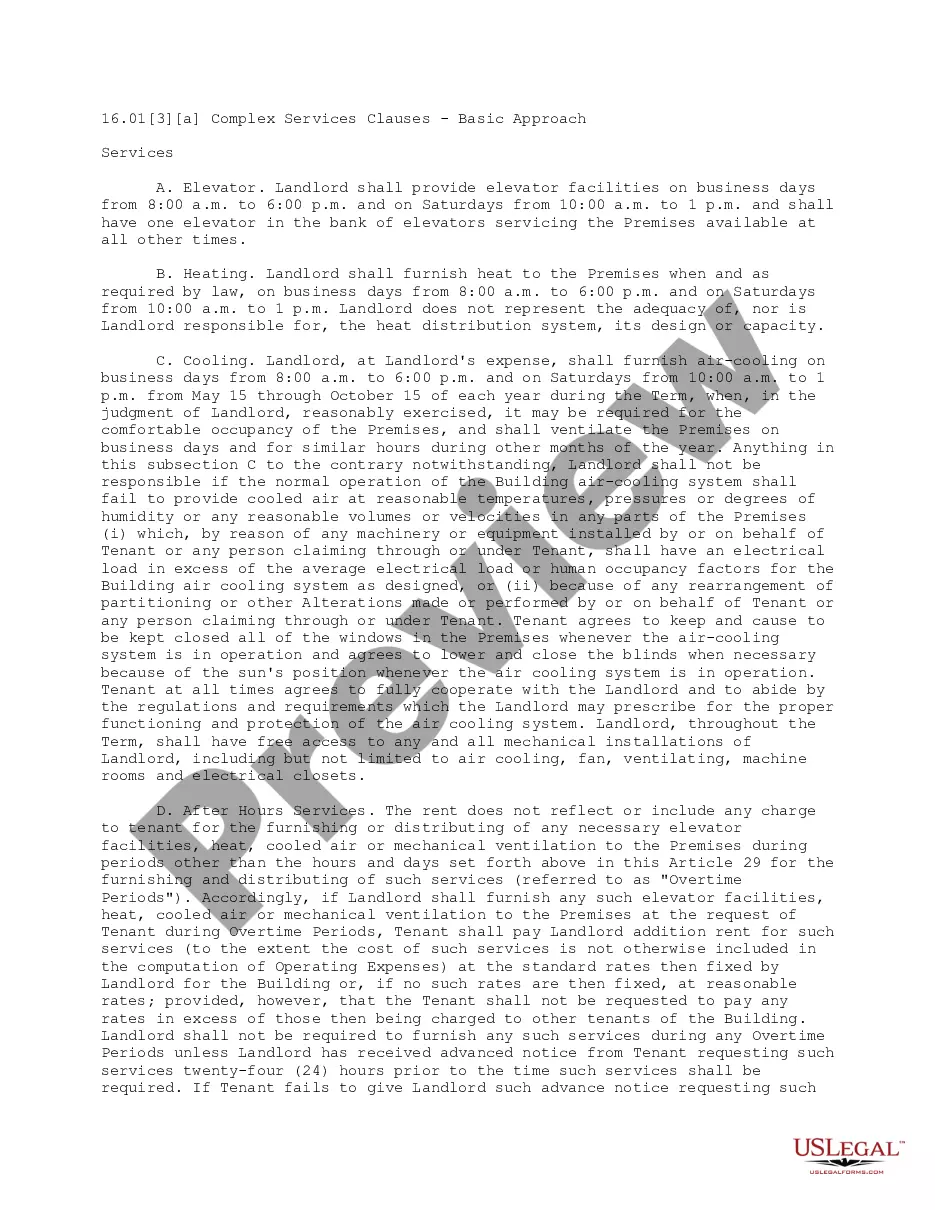
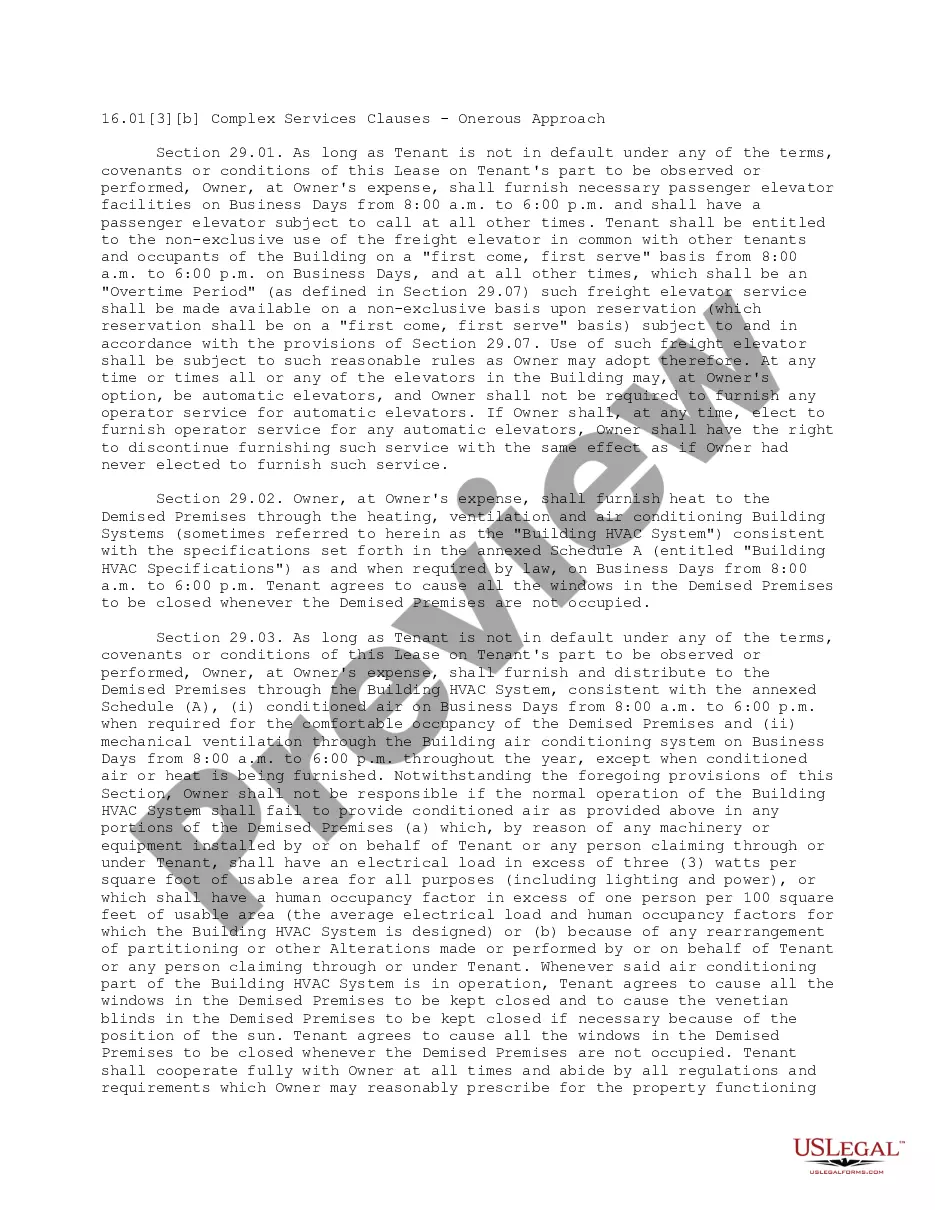
The Onerous Approach to Default Remedy Clause is a specific provision commonly included in office leases, particularly in New York City. This clause outlines the obligations and liabilities of the tenant in the event of a lease default or termination. It differs from standard default remedies clauses by containing stringent requirements for the tenant, impacting their responsibilities significantly in case of lease termination or re-entry by the landlord.
Key components of this form
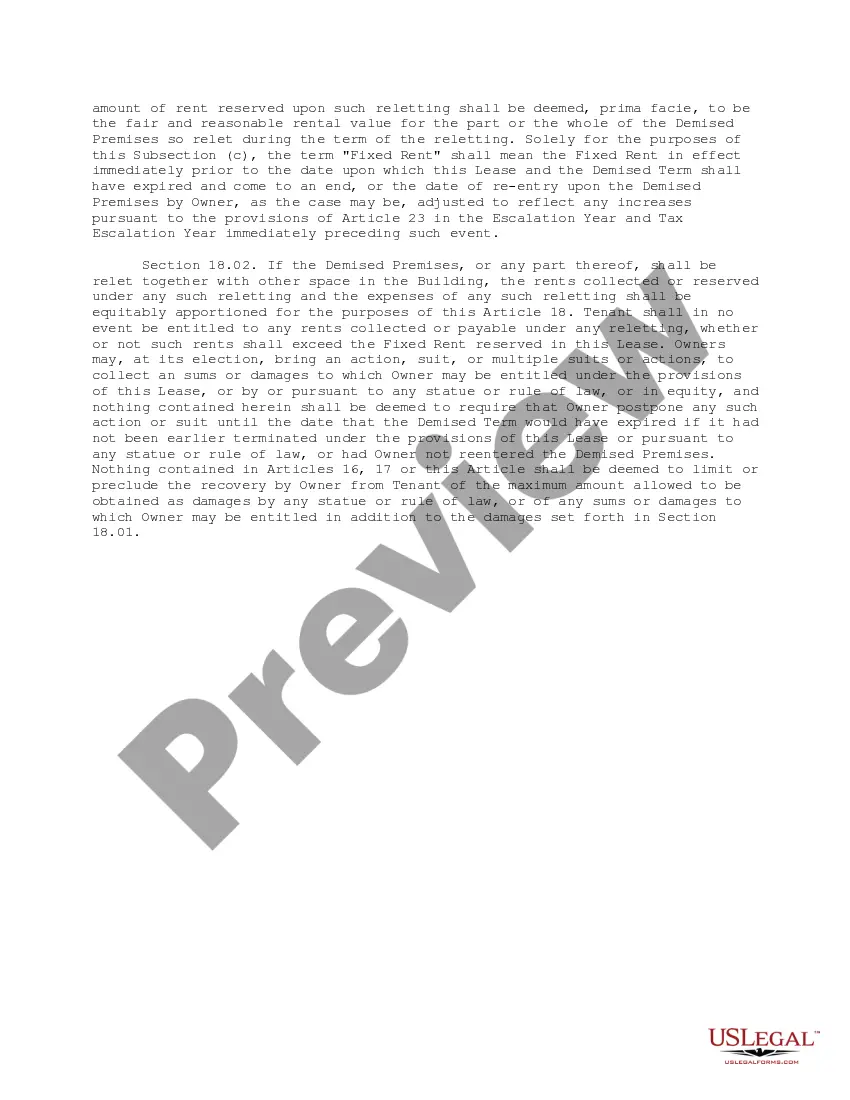
- Section 18.01 details the rent payments and additional charges due upon lease termination.
- Tenants are liable for any deficiencies between the fixed rent and the amount received from reletting the premises.
- Section 18.02 addresses how rents from reletting are managed, especially in conjunction with other leased spaces.
- Outlines the landlord's rights to pursue damages without waiting for the lease to expire under certain conditions.
- Clarifies that the landlord can collect maximum allowable damages as defined by law.
When this form is needed
This form should be used by landlords and property owners when drafting office leases that require strict compliance in the event of a tenant default. It is particularly relevant during negotiations where the landlord seeks more robust enforcement rights should the tenant fail to fulfill their lease obligations. It is also beneficial during lease renewals to ensure that all terms are clearly defined and legally enforceable.
Who this form is for
- Commercial landlords looking to include stringent default remedies in their office lease agreements.
- Tenants who are negotiating lease terms may want to review this clause to understand their potential liabilities.
- Attorneys and legal professionals specializing in commercial real estate who are drafting or reviewing lease agreements.
Completing this form step by step
- Identify the parties involved in the lease agreement, including the landlord and tenant.
- Clearly specify the property or premises covered under the lease.
- Include all relevant terms such as the duration of the lease, fixed rent, and additional charges.
- Detail the clauses regarding tenant liabilities in the event of a default or termination.
- Ensure all parties sign and date the document to formalize the agreement.
Does this form need to be notarized?
In most cases, this form does not require notarization. However, some jurisdictions or signing circumstances might. US Legal Forms offers online notarization powered by Notarize, accessible 24/7 for a quick, remote process.
Get your form ready online
Our built-in tools help you complete, sign, share, and store your documents in one place.
Make edits, fill in missing information, and update formatting in US Legal Forms—just like you would in MS Word.
Download a copy, print it, send it by email, or mail it via USPS—whatever works best for your next step.
Sign and collect signatures with our SignNow integration. Send to multiple recipients, set reminders, and more. Go Premium to unlock E-Sign.
If this form requires notarization, complete it online through a secure video call—no need to meet a notary in person or wait for an appointment.
We protect your documents and personal data by following strict security and privacy standards.

Make edits, fill in missing information, and update formatting in US Legal Forms—just like you would in MS Word.

Download a copy, print it, send it by email, or mail it via USPS—whatever works best for your next step.

Sign and collect signatures with our SignNow integration. Send to multiple recipients, set reminders, and more. Go Premium to unlock E-Sign.

If this form requires notarization, complete it online through a secure video call—no need to meet a notary in person or wait for an appointment.

We protect your documents and personal data by following strict security and privacy standards.
Common mistakes to avoid
- Failing to clearly outline the tenant's responsibilities under the default clause.
- Not specifying all charges that could contribute to the deficiency calculation.
- Neglecting to address how rents from reletting will be apportioned fairly.
Advantages of online completion
- Convenience of downloading and filling out forms at any time.
- Editability allows users to tailor the clause to specific needs or circumstances.
- Access to expertly drafted legal forms ensures compliance with relevant laws.
Legal use & context
- This clause is enforceable under New York real estate law, ensuring the landlord's rights are protected.
- Properly completed, it can serve as a critical tool in a landlord's efforts to recover lost rent.
- Clarity in obligations helps mitigate disputes between landlords and tenants post-termination.
Main things to remember
- The Onerous Approach to Default Remedy Clause imposes strict obligations on tenants in lease agreements.
- Landlords can use this clause to protect their interests in case of lease termination.
- Understanding this form is crucial for both landlords and tenants to navigate their respective rights and obligations.
Looking for another form?
Form popularity
FAQ
A remedies clause sets forth the parties' intention to provide for equitable remedies for breach of contract, in addition to or instead of just monetary relief. A remedies clause can also be used to limit the relief the parties can obtain upon breach of the contract.
A contract is not a legal concept.A contract is legally enforceable because it meets the requirements and approval of the law.
ONEROUS CONTRACT, civil law. One made for a consideration given or promised, however small.
Onerous contract A contract in which the unavoidable costs of meeting the obligations under the contract exceed the economic benefits expected to be received under it.
It is an established common law principle that if a party proposes a contract term that is 'particularly onerous or unusual', the term will not be incorporated into the contract unless it has been fairly and reasonably brought to the counterparty's attention.
A default clause is a provision in a legal contract that states what will happen if either party in a contract defaults or fails to hold up their end of the agreement. These clauses can be found in any type of contract including loan agreements, lease agreements, and property agreements.
1 : involving, imposing, or constituting a burden : troublesome an onerous task onerous regulations an onerous mortgage. 2 : having legal obligations that outweigh the advantages an onerous contract.
Having or involving obligations or responsibilities, especially legal ones, that outweigh the advantages: an onerous agreement.
Per IAS 37, onerous contracts should be classified as provisions. So, if you've identified a specific contract as onerous, you're required to recognize the current obligation as a liability and list it on your company's balance sheet. This action should be taken at the first indication that a loss may be anticipated.