Louisiana Amended Answer and Reconventional Demand
What is this form?
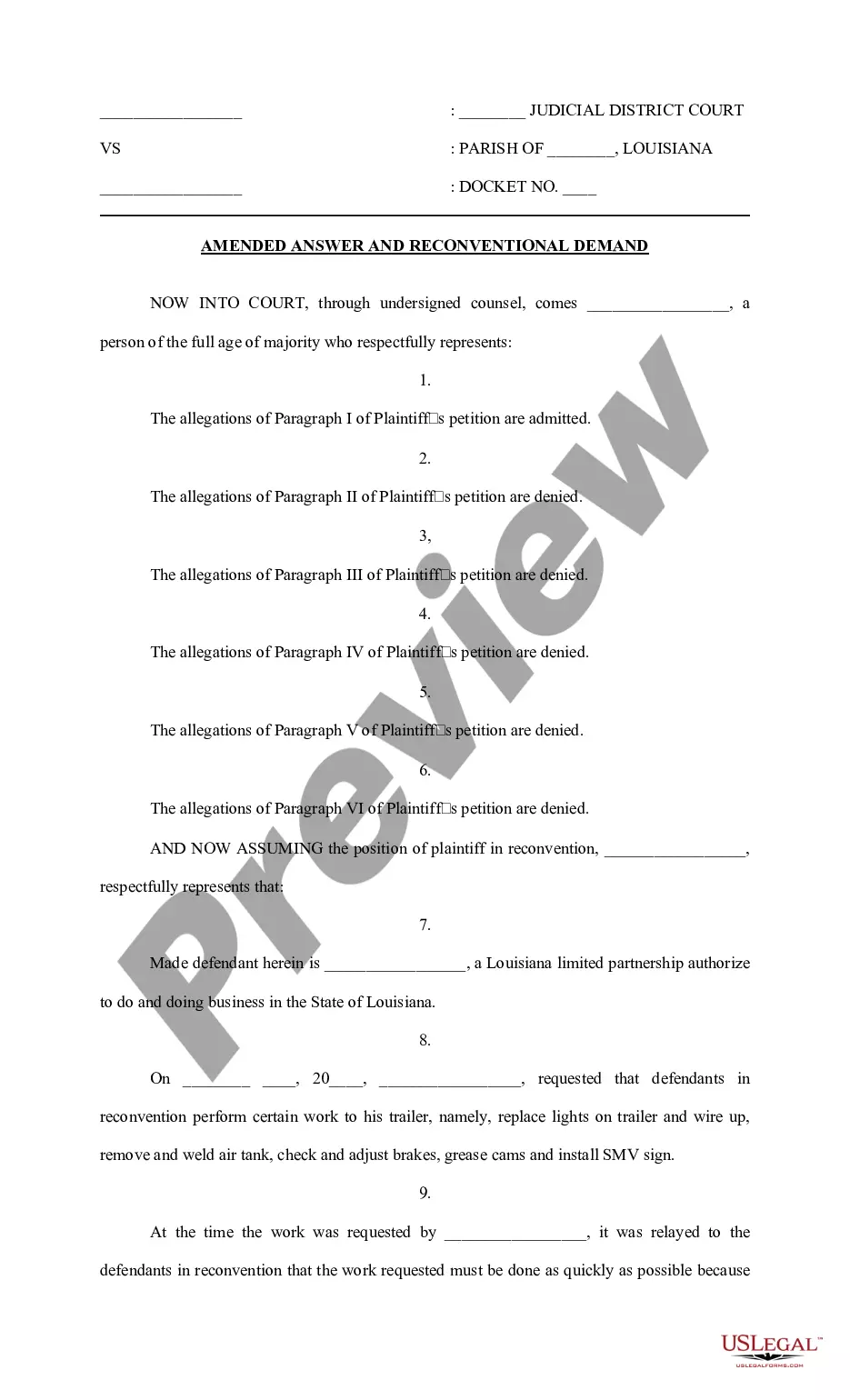
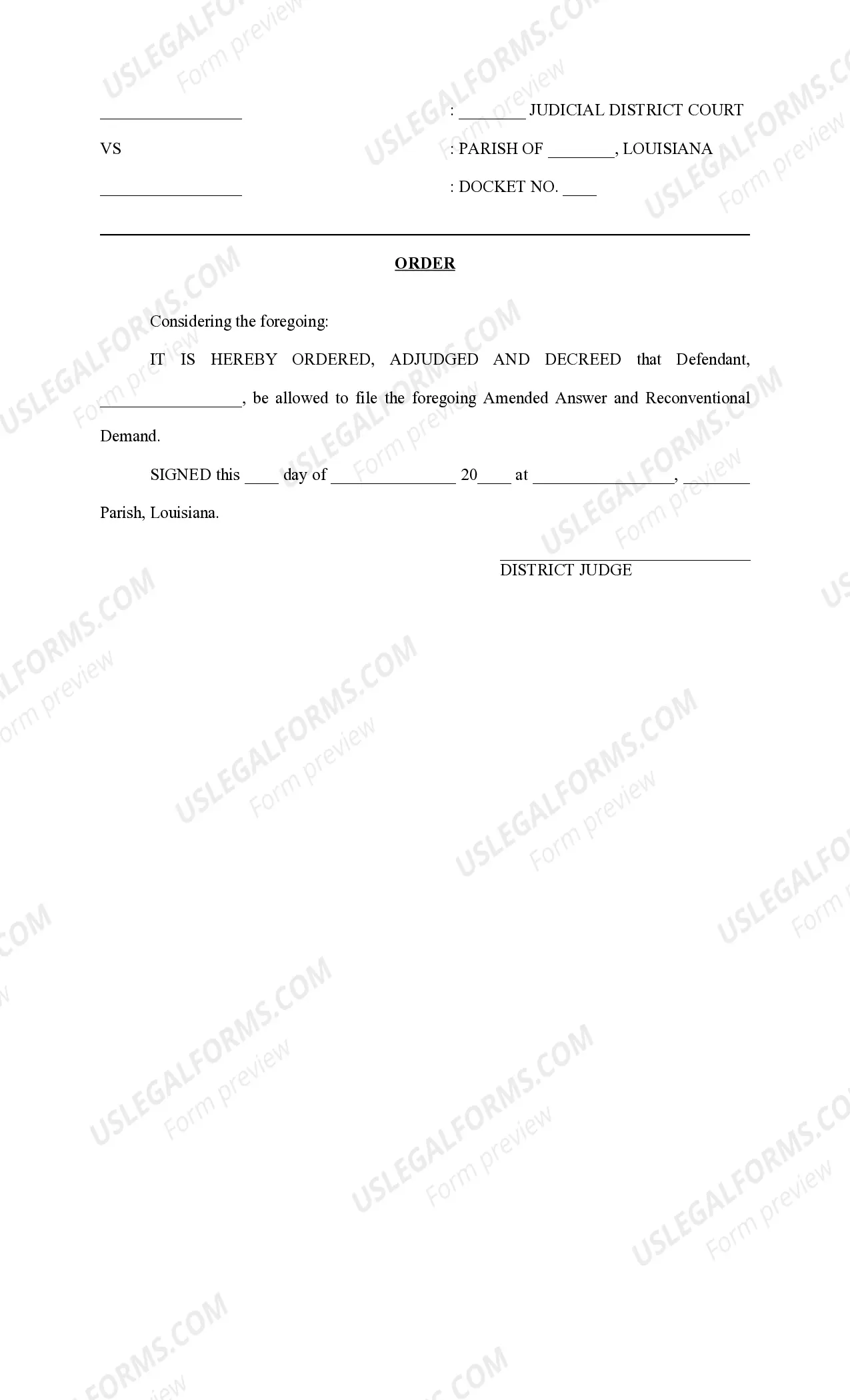
The Amended Answer and Reconventional Demand is a legal document filed by a defendant in a civil case. This form allows the defendant to respond to the plaintiff's allegations while also bringing a new claim against the plaintiff for damages suffered. It differs from standard answers by allowing the defendant to assume the role of a plaintiff in a reconventional demand.
Form components explained
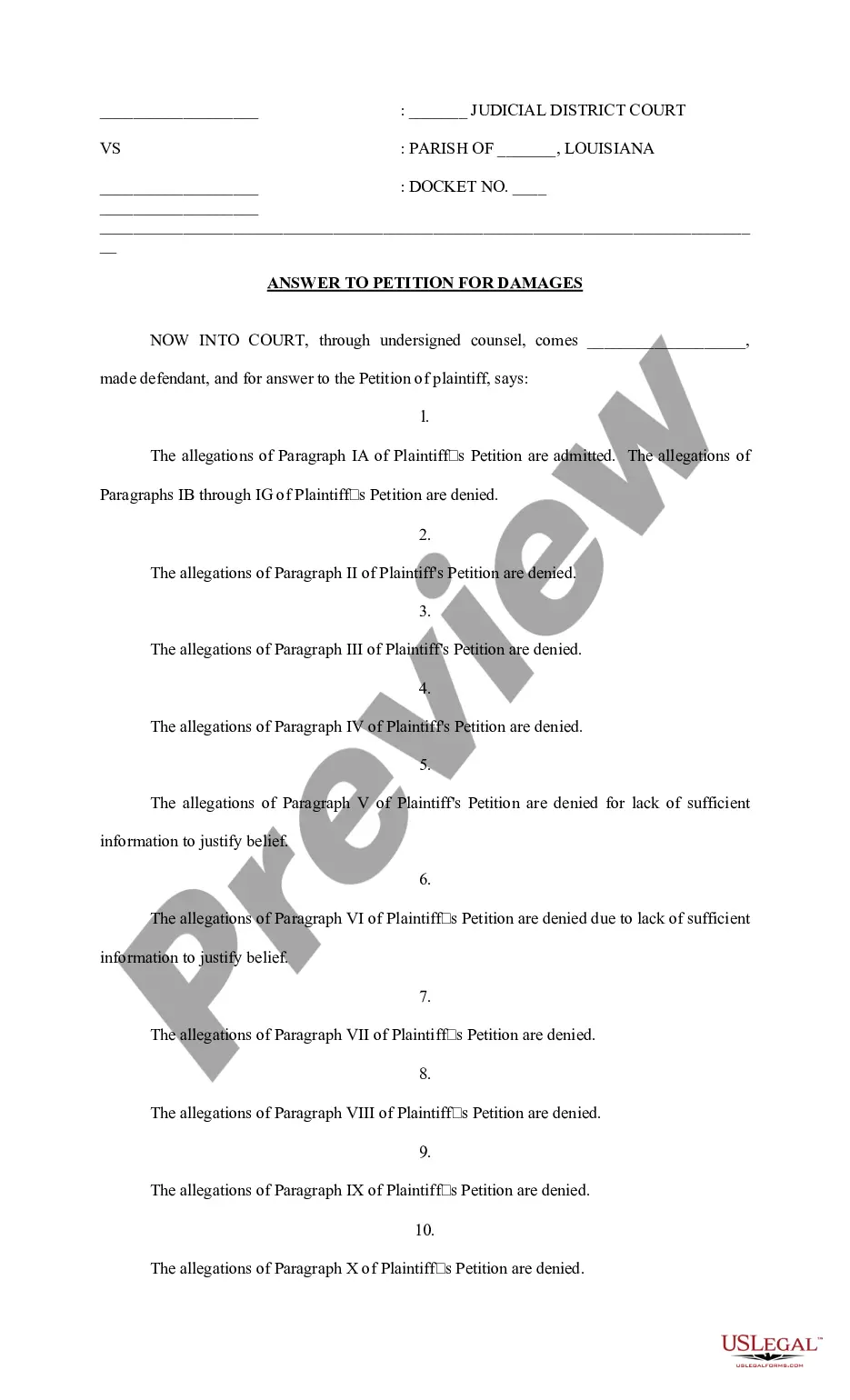
- Caption: includes court details and docket number.
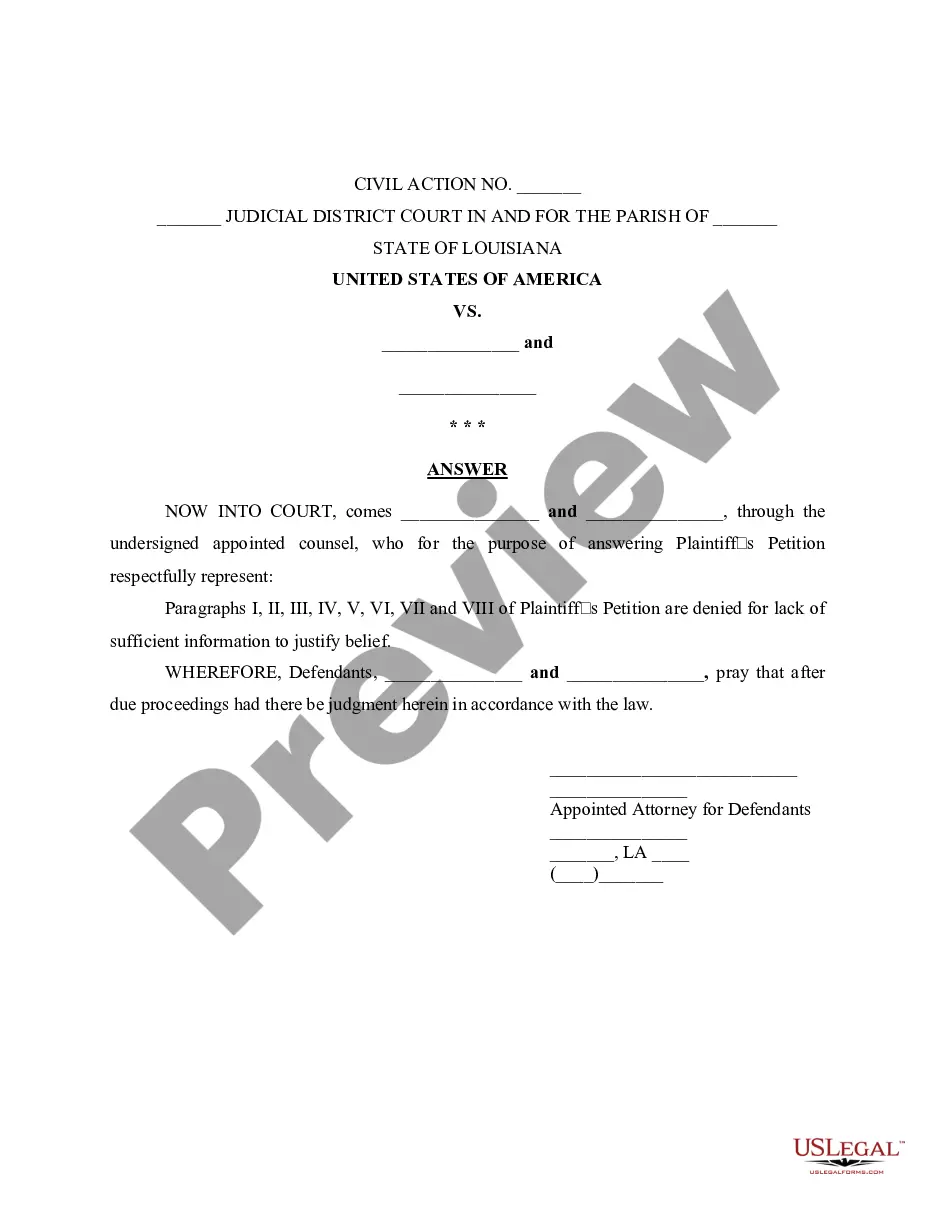
- Defendant's admissions and denials: responses to each allegation in the plaintiff's petition.
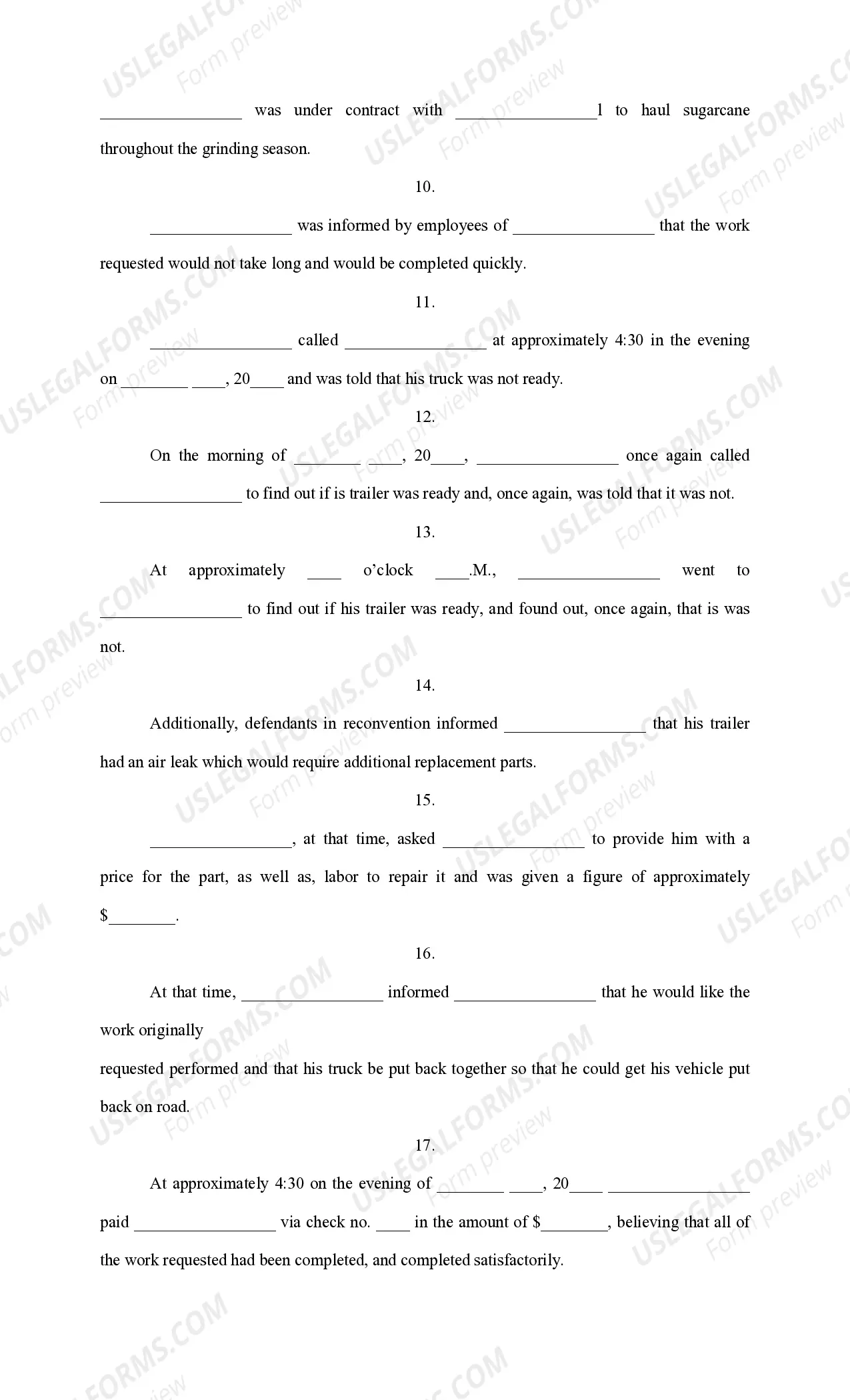
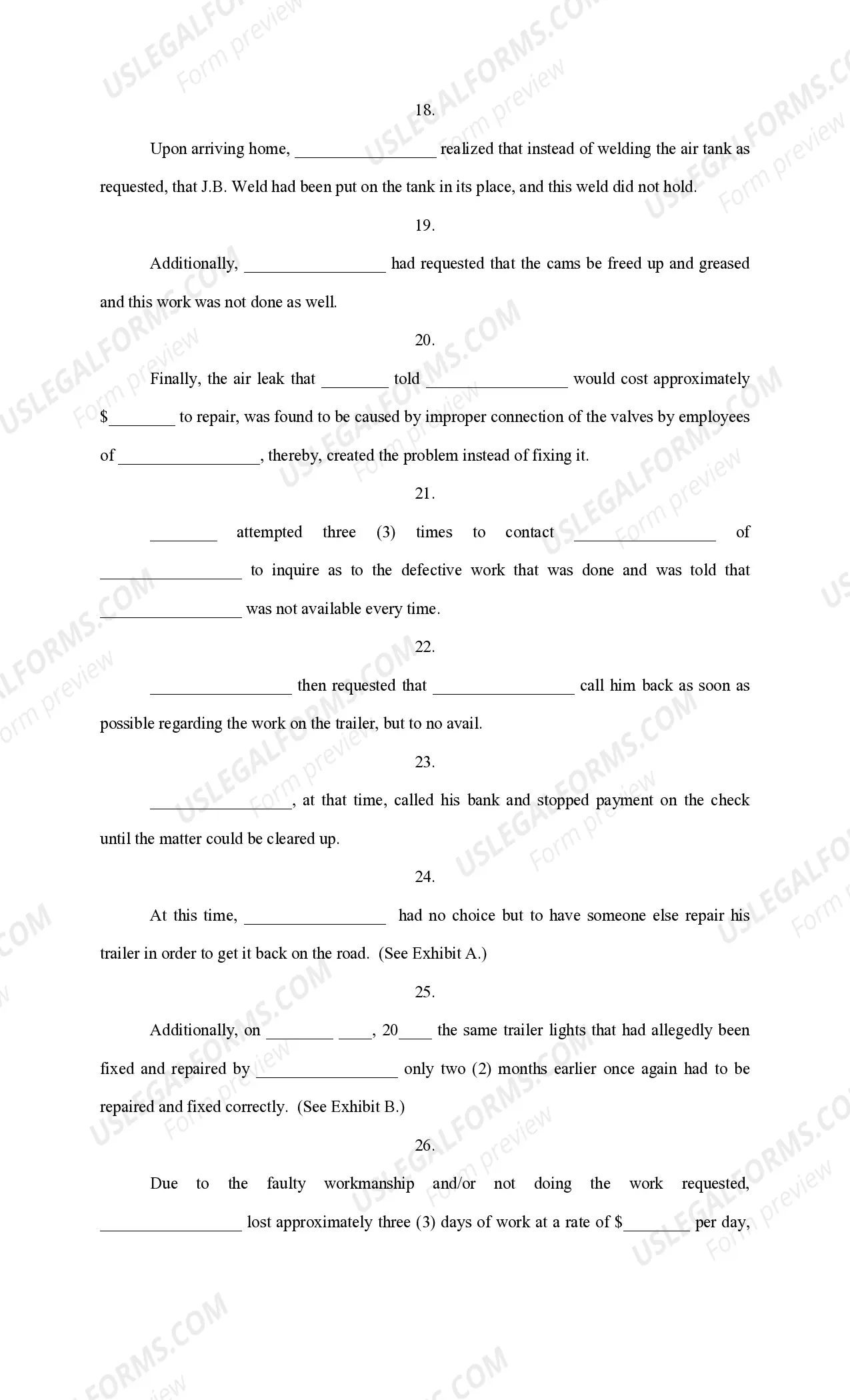
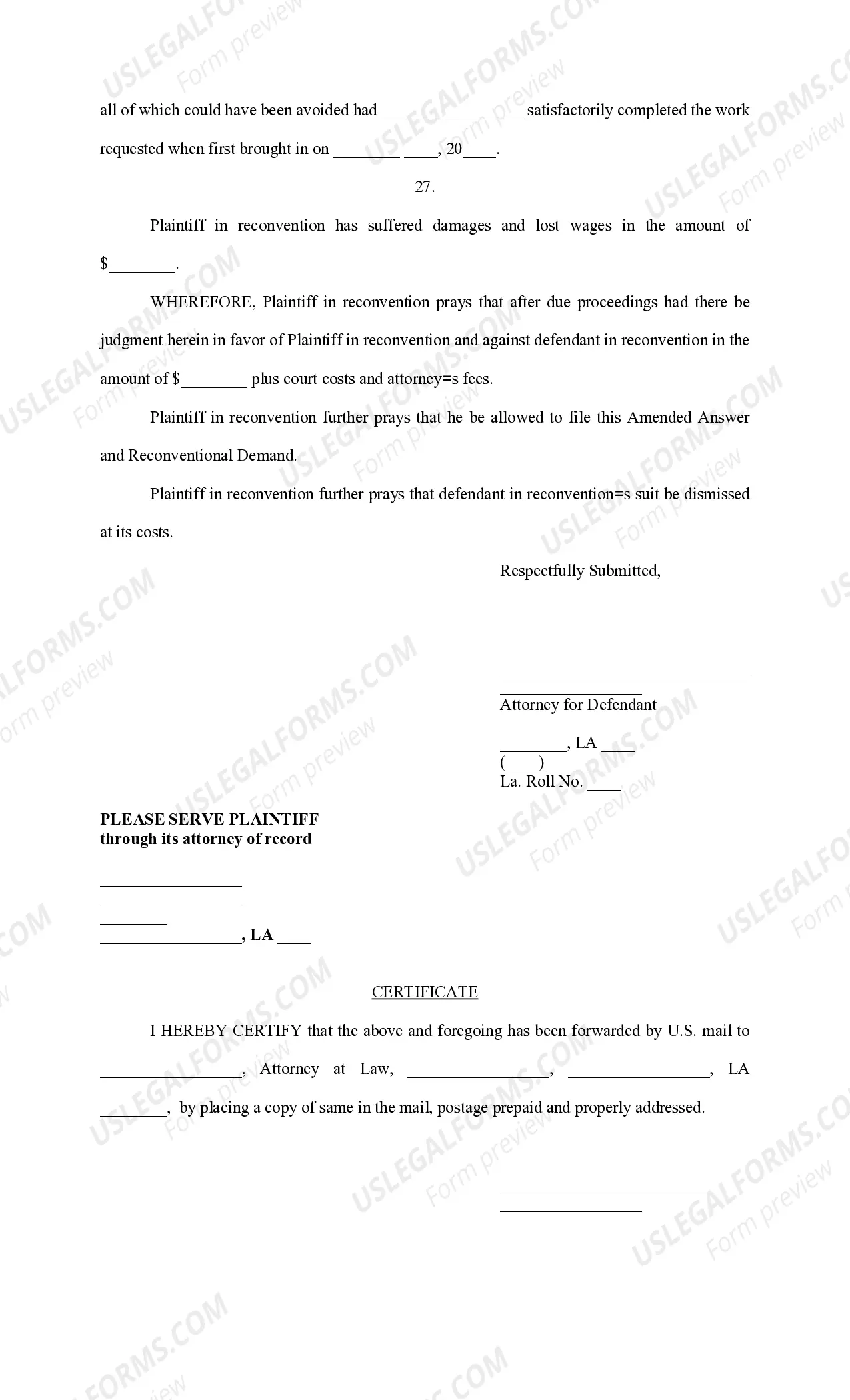
- Facts for reconvention: outlines the defendant's claims against the plaintiff, detailing the issue at hand.
- Request for judgment: specifies relief sought from the court.
- Verification and signature of the attorney for the defendant.
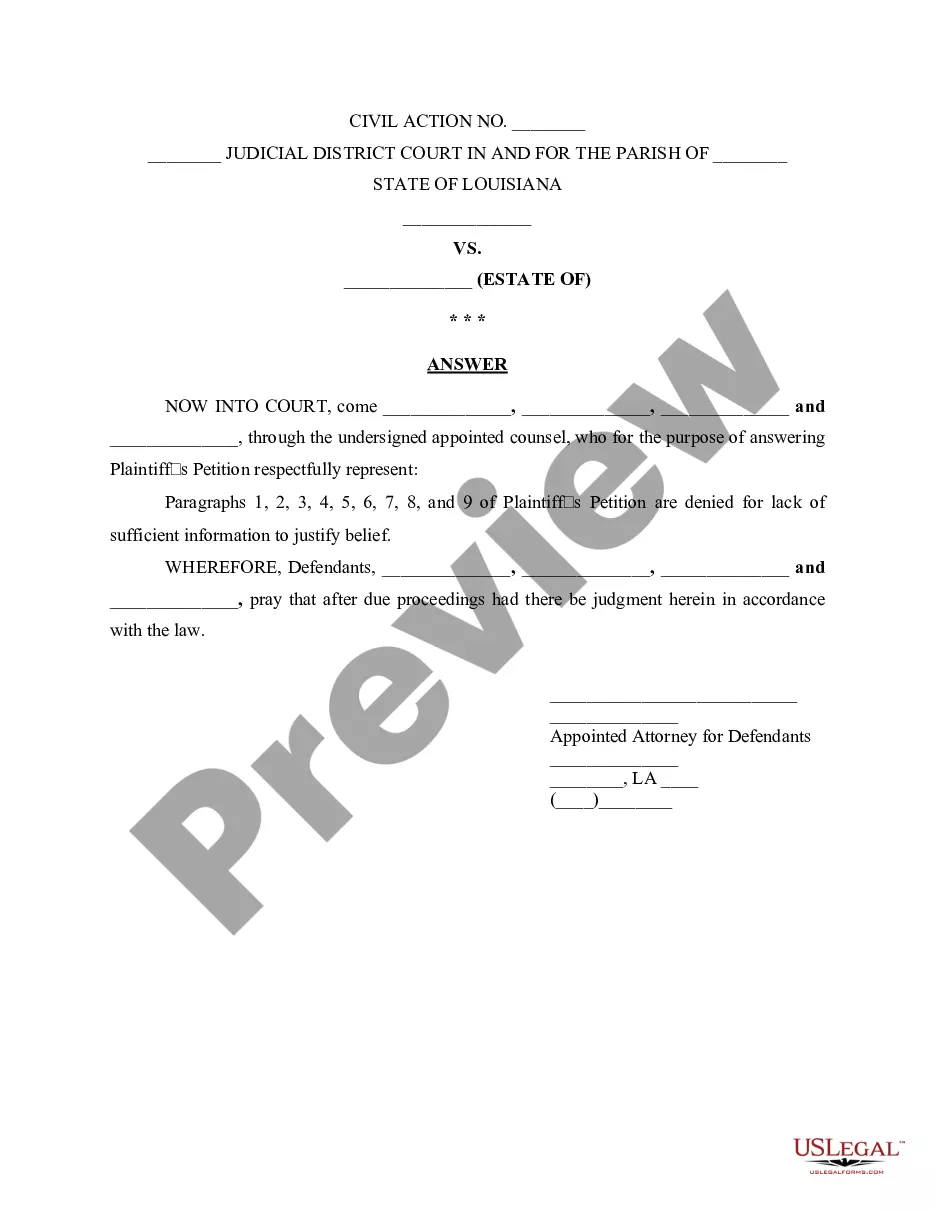
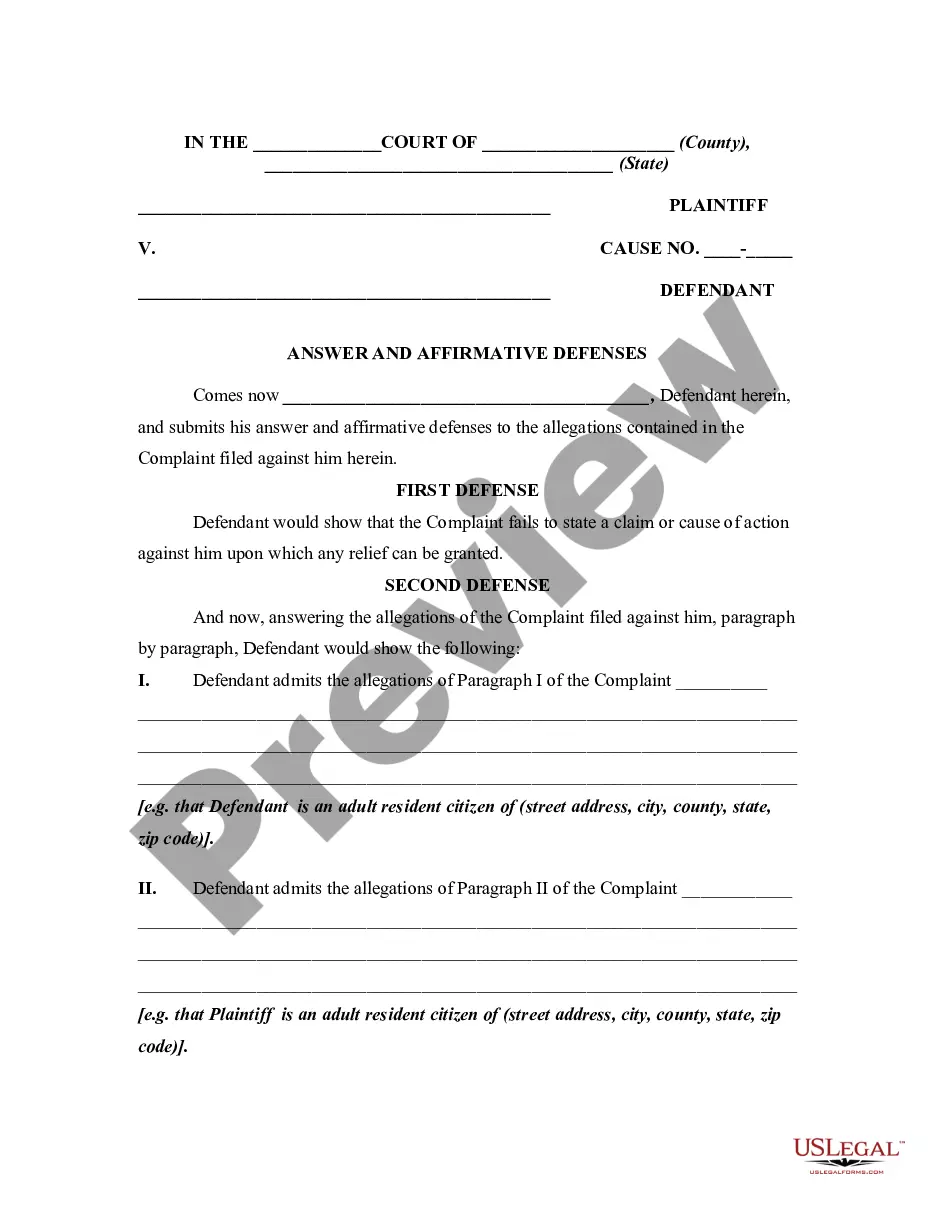
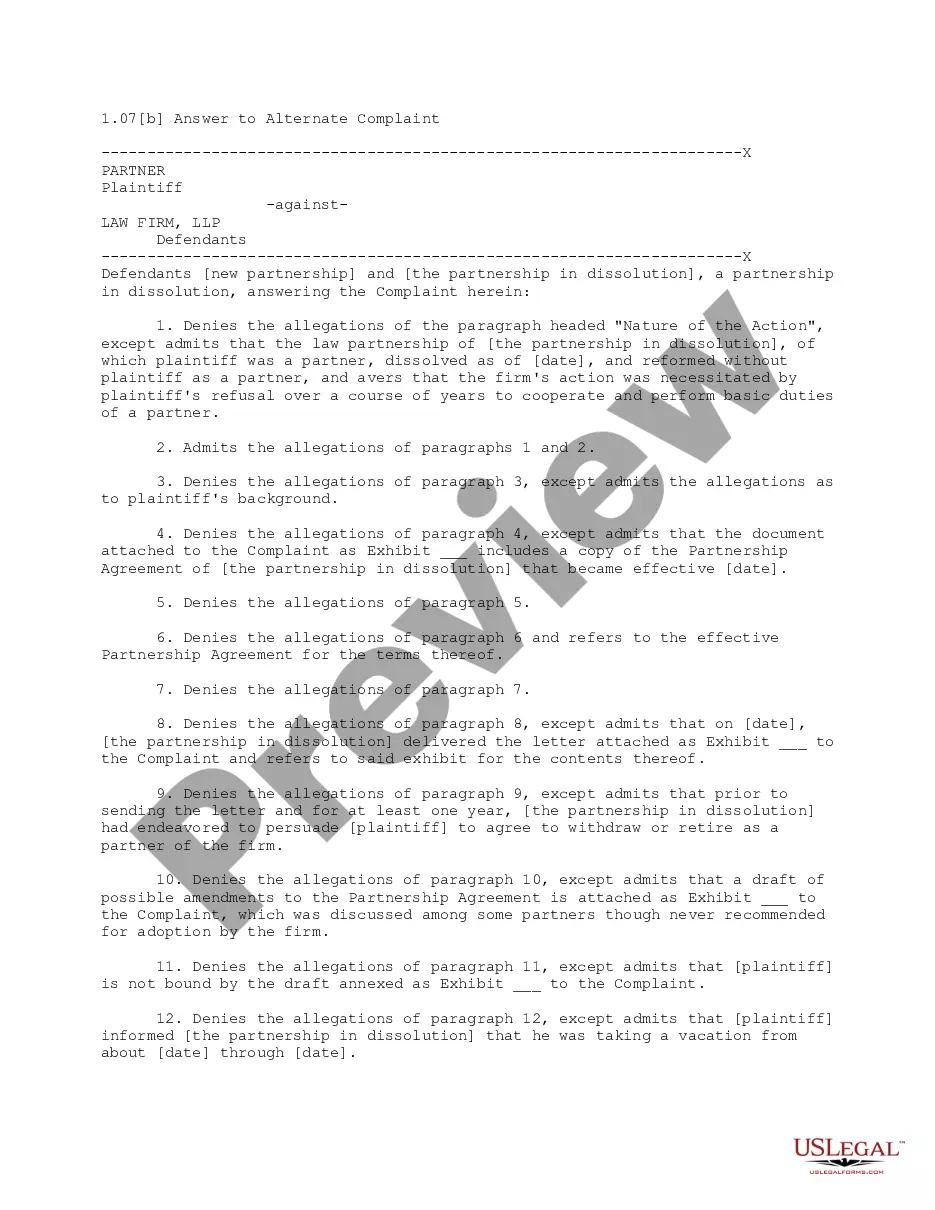
Situations where this form applies
This form should be used when a defendant needs to answer a plaintiff's allegations while also asserting their own claim against the plaintiff. It is particularly appropriate in cases involving disputes over services, like failed repairs or contract disagreements, where the defendant believes they have incurred damages due to the plaintiff's actions.
Who should use this form
- Defendants in civil lawsuits who wish to respond to claims made against them.
- Defendants who have suffered damages as a result of the plaintiff's actions and wish to seek compensation.
- Individuals or businesses involved in disputes over service-related issues, such as repair work or contracts.
How to complete this form
- Enter the court details, including the parish and docket number.
- Specify the date and parties involved in the case.
- Respond to each paragraph of the plaintiff's petition by admitting or denying the allegations.
- Provide a detailed account of the facts supporting your claims in reconvention.
- State the relief sought in terms of damages and costs clearly.
- Sign and date the document in the presence of your attorney.
Does this document require notarization?
In most cases, this form does not require notarization. However, some jurisdictions or signing circumstances might. US Legal Forms offers online notarization powered by Notarize, accessible 24/7 for a quick, remote process.
Get your form ready online
Our built-in tools help you complete, sign, share, and store your documents in one place.
Make edits, fill in missing information, and update formatting in US Legal Forms—just like you would in MS Word.
Download a copy, print it, send it by email, or mail it via USPS—whatever works best for your next step.
Sign and collect signatures with our SignNow integration. Send to multiple recipients, set reminders, and more. Go Premium to unlock E-Sign.
If this form requires notarization, complete it online through a secure video call—no need to meet a notary in person or wait for an appointment.
We protect your documents and personal data by following strict security and privacy standards.

Make edits, fill in missing information, and update formatting in US Legal Forms—just like you would in MS Word.

Download a copy, print it, send it by email, or mail it via USPS—whatever works best for your next step.

Sign and collect signatures with our SignNow integration. Send to multiple recipients, set reminders, and more. Go Premium to unlock E-Sign.

If this form requires notarization, complete it online through a secure video call—no need to meet a notary in person or wait for an appointment.

We protect your documents and personal data by following strict security and privacy standards.
Common mistakes to avoid
- Failing to respond to each allegation, which may be seen as an admission.
- Not clearly stating the facts of the reconventional demand.
- Omitting the request for judgment or relief sought.
Why use this form online
- Immediate access to a legally vetted document tailored to your needs.
- Edit and customize the form to fit your specific case details.
- Convenience of downloading and filing without the need for an appointment with an attorney.
Legal use & context
- This form is legally binding once filed and accepted by the court.
- The reconventional demand allows defendants to seek redress for damages while simultaneously defending against the original claims.
Main things to remember
- The Amended Answer and Reconventional Demand allows a defendant to respond to a lawsuit and assert their own claims.
- It is crucial to clearly admit or deny allegations to avoid unintended admissions.
- Tailoring the facts and claims to your specific situation is essential for a successful case.
Looking for another form?
Form popularity
FAQ
The Louisiana Amended Answer and Reconventional Demand is a civil-pleading filed by a defendant to answer the plaintiff’s claims while also asserting a counterclaim for damages (the reconventional demand). It should be used when the defendant wants to address each allegation and present a reconventional claim in one filing. The form includes caption, admissions and denials, facts for reconvention, request for judgment, and attorney verification.
Yes. In Louisiana, when the plaintiff amends a petition, the defendant can use the Amended Answer and Reconventional Demand to respond to the updated allegations and, if applicable, to bring a reconventional demand for damages. The form guides you to provide admissions and denials for each allegation, outline facts for reconvention, and request relief.
By filing the Amended Answer and Reconventional Demand. The form requires responding to each plaintiff allegation with admissions or denials, setting out facts for reconvention, and specifying the relief sought. It also requires a caption with court details and a verification signed by the defendant’s attorney.
An amended pleading lets the party update allegations and, in this form, to add a reconventional claim for damages. It records the defendant’s admissions/denials, the facts for reconvention, the relief requested, and attorney verification, all in one document.
To amend a petition means to modify or add to the original pleading with new or revised claims or facts. In Louisiana, if the plaintiff amends, the defendant may use the Amended Answer and Reconventional Demand to respond and to present a reconvention claim in the same filing.
This form combines answering the plaintiff’s amended allegations and presenting a reconventional claim in a single filing. It differs from a plain Answer or a separate reconventional demand by consolidating admissions/denials, reconvention facts, relief requested, and attorney verification in one document.